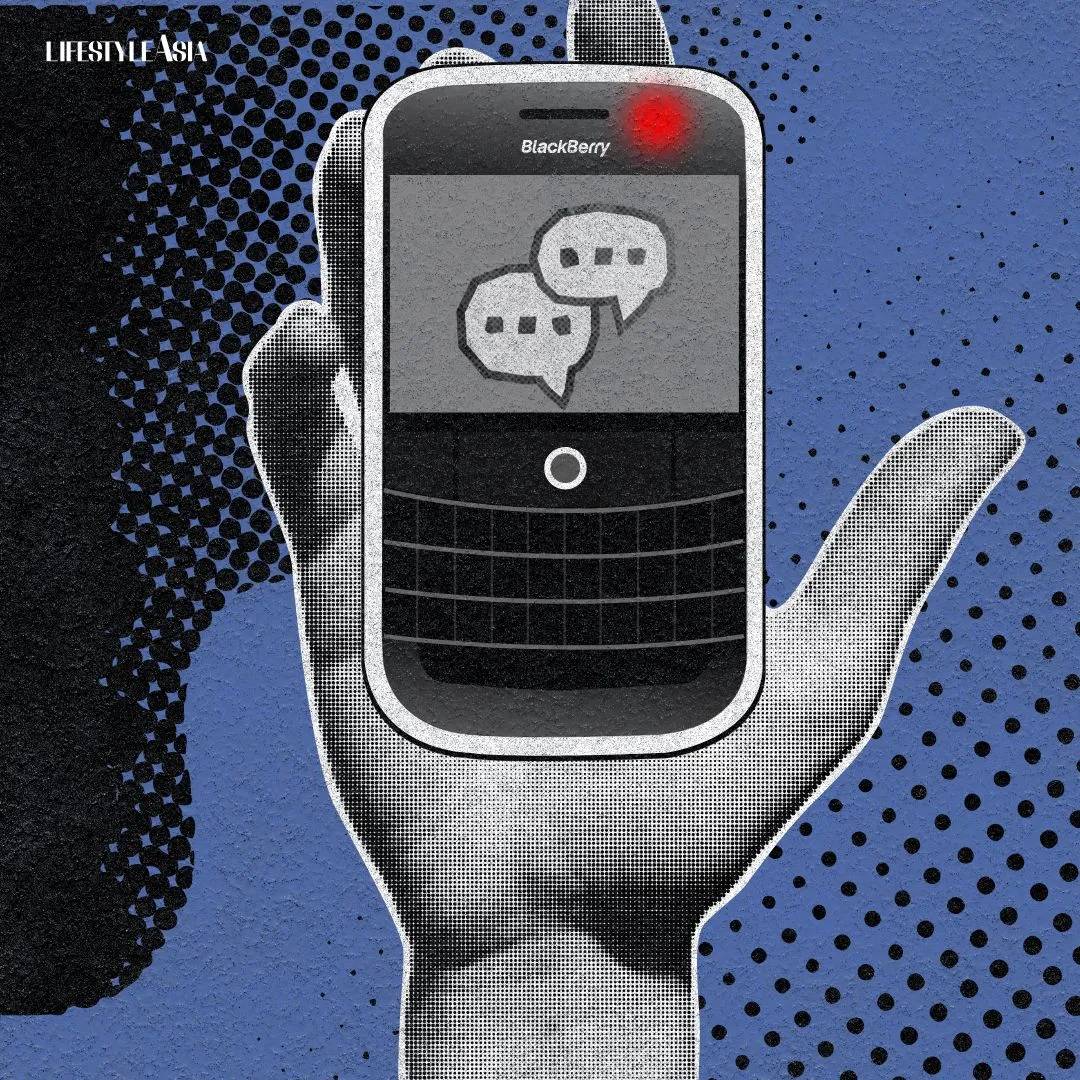
Why a generation raised on smartphones is looking back to BlackBerry for focus and intentional connection.
Before we had mini-supercomputers in our pockets, there was a time when phones were valued for their efficiency in quick communication. “What’s your BBM?” was a common question, referring to BlackBerry Messenger—not to be confused with the current Philippine president. Sadly, that era is officially over; it has been three years since the company discontinued its legacy devices and operating systems.
The well-loved and uber-popular phone was a key player in the 2000s and 2010s. It-girls like Serena vander Woodsen and Blair Waldorf from Gossip Girl, Paris Hilton, and Kim Kardashian famously used it, solidifying its status as a cultural icon.


I vividly remember the thrill of typing on a QWERTY keypad, navigating limited applications with the trackpad, and spotting a new notification from the blinking LED light. It was simplicity at its finest. However, that very simplicity eventually became its downfall, as BlackBerry failed to compete with other big tech companies that were starting to create all-in-one devices that could easily fit in your pocket.
As everyone embraced touchscreen smartphones from Apple and Samsung, the simplicity of BlackBerry became a thing of the past. However, it is seeing a bit of a resurgence in 2025, thanks to Gen Z. Often dubbed the TikTok Generation, they long for a more balanced lifestyle away from constant connectivity. This craving for simplicity has positioned them at the forefront of the cellphone’s comeback.
READ ALSO: Digital Decay: Why You Need To Save The Things That Matter
BlackBerry, Digital Cameras, And Being Disconnected
In today’s modern world, everything can be accomplished with a simple tap of a finger. With the constant flow of information, connection fatigue has become a reality. Now people are seeking purpose and entertainment beyond the internet. They are craving deeper, more genuine connections.
This is reflected in Gen Z’s gradual rediscovery of old-school technology from the 2000s and 2010s. Just last year, handheld digital cameras were trending, as the generation embraced the nostalgic, low-resolution photos they produced. They also appreciated that using these cameras allowed them to disconnect from the bells and whistles of today’s smartphones.
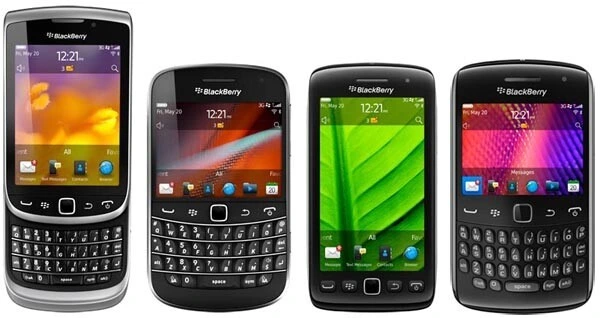
Similarly, the recent BlackBerry comeback has been driven by a desire to streamline communication. Users enjoy the QWERTY keyboard that makes texting easier, the UX design that prioritizes quickly sorting through emails and messages, and the blinking LED light that instantly signals a new notification. No frills, no distractions—just a simple cellphone that keeps you connected with friends while keeping you disconnected from social media and algorithms.
It offers a focused communication experience for those who value privacy and intentional interaction. The philosophy behind seeking specialized devices for specific needs boils down to a growing technological movement—digital minimalism.
Digital Minimalism In the Era Of Advanced Technology
Digital minimalism is a philosophy of engaging with technology that values intention over impulse, reclaiming autonomy in an attention-driven world. As outlined by TechTarget, it encourages people to define personal values and navigate technology through that lens—discern what tools are genuinely useful, minimize the rest, and reintroduce only what aligns with their core purpose. Think of it as deliberately choosing a handful of trusted apps, much like once choosing a BlackBerry solely for its reliable QWERTY keyboard—nothing extra, just an effective, meaningful connection.
In the frenzy of notifications, social media pings, and the dopamine-fueled urge to scroll, the need for digital boundaries has become urgent—especially for younger users. A Forbes piece highlights that significantly reducing leisure screen time—say, to about three hours per week—can boost children’s mental health. It’s a clear reminder that minimalism isn’t about avoiding technology; it’s a strategy to interrupt the default overload, encourage richer off-screen connections, and create space for the real, unfiltered moments that matter.
Ultimately, digital minimalism offers a path back to the clarity and tactile pleasure of the “less-is-more” days. It’s about “simplifying your digital life so it works for you, not against you,” and remembering that it’s a journey—not a finish line—requiring ongoing vision and discipline. Like the satisfying click of a BlackBerry key and the focused buzz of its LED—simple signals, genuine purpose—digital minimalism seeks to distill our tech down to what truly enriches our lives.