Video essays aren’t just videos; they’re arguments, stories, and journeys. These five examples show why watching people exploring topics they love is pure magic.
When people ask why I have YouTube Premium, my go-to answer is that I don’t have the patience for a 15-second ad. The truth, though, is that I pay for the subscription so I can watch video essays uninterrupted. I’ll admit it: I’m obsessed with video essays. There’s something about watching people passionately explore and explain topics that interest them—and, by extension, me—that I can’t get enough of.
Beyond the substance of their content, video essays rely heavily on visuals to illustrate arguments and examples. They are often structured like written essays, complete with an introduction, argument, evidence, and conclusion. The interplay of images, clips, and narration not only reinforces the point being made but also adds layers of meaning that words alone may struggle to convey, making the experience both informative and immersive.
Enough talking, let’s watch. We’ve picked five video essays that prove why this format is pure magic. From jaw-dropping visuals to stories that stick, they are entertaining, enlightening, and, perhaps, even worth that YouTube Premium subscription.
READ ALSO: The Words That Told Us Everything About 2025
The 4 Stages of Chic
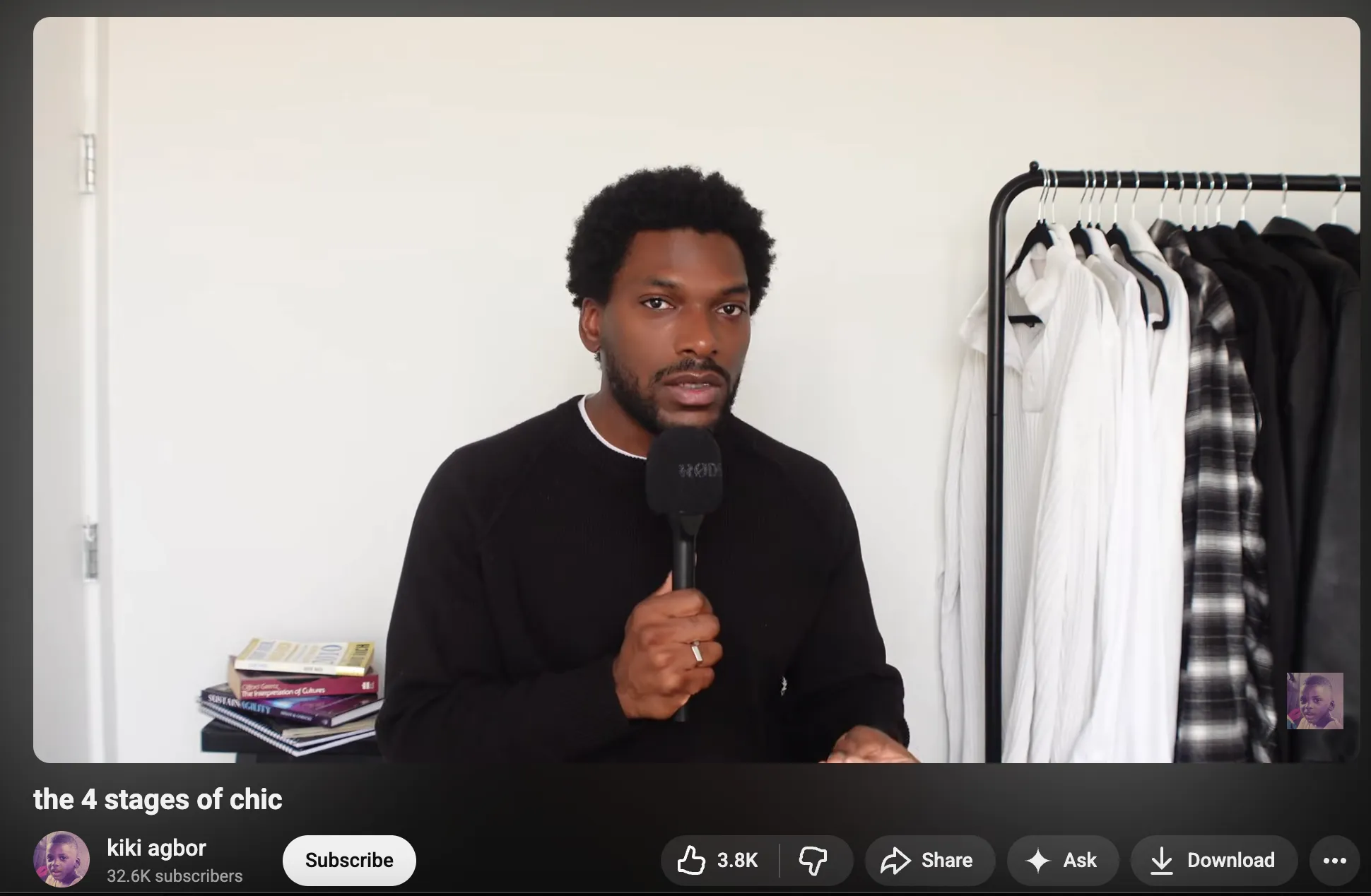
In “The 4 Stages of Chic,” fashion commentator and creator Kiki Agbor reframes what it means to be “chic.” Moving beyond the surface-level idea of style, he charts it as a journey—one that’s as much psychological as it is sartorial. Agbor breaks chicness into four progressive stages, each reflecting how a person interacts with their clothes, their body, and the world around them. By the end, the message is clear: being chic isn’t about ticking off luxury labels or mastering a “quiet luxury” uniform—it’s about self-knowledge.
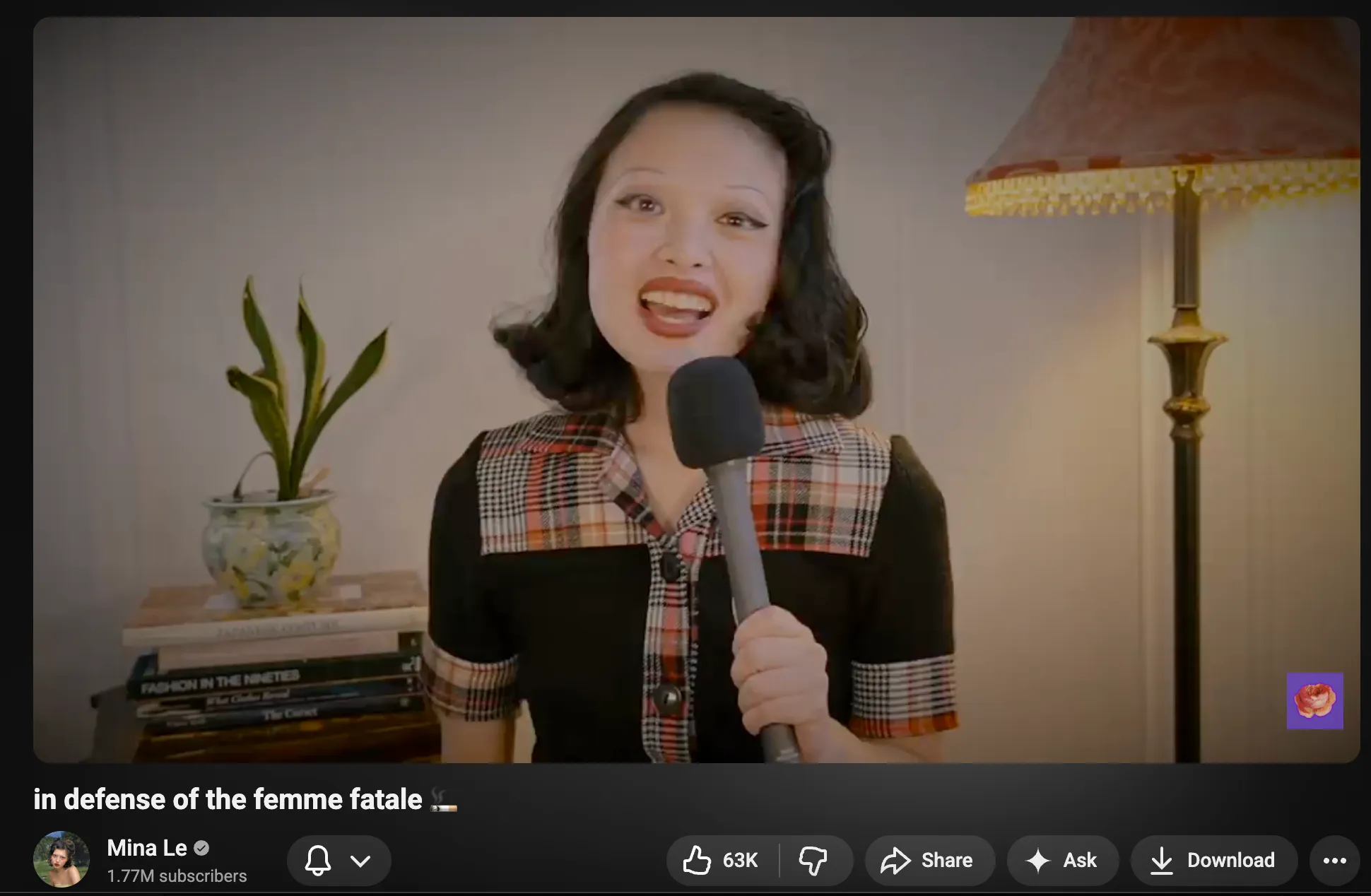
In Defense of the Femme Fatale
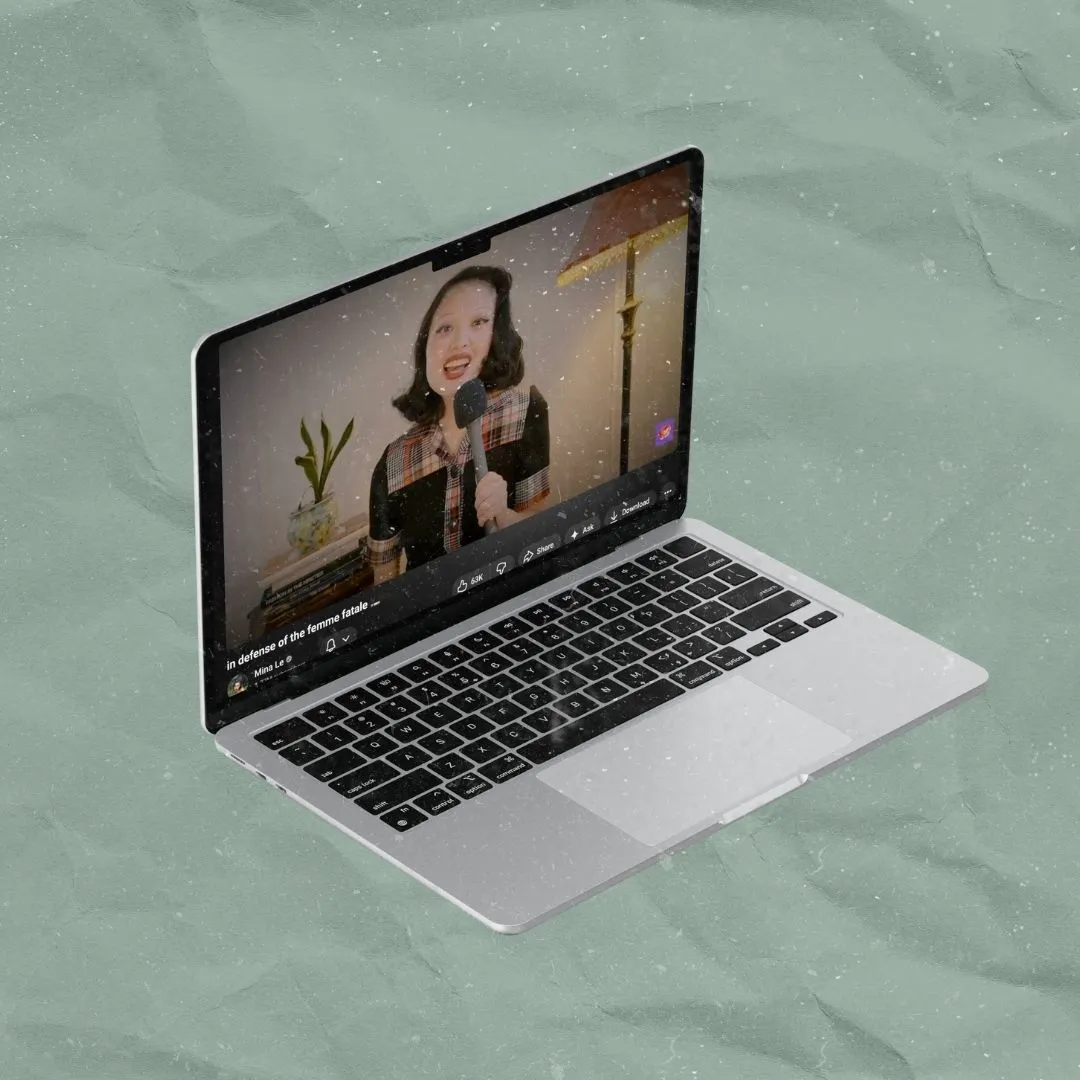
Mina Le’s video essay “In Defense of the Femme Fatale” reclaims the “dangerous woman” of 1940s film noir. Rather than mere villains, these women are products of post-war male anxiety, punished on screen for wielding the independence they’d earned during WWII. Le shows how their wit, sexuality, and defiance are survival tools in a world that offers them little power, framing the femme fatale not as evil, but as a subversive figure challenging a society that prizes submissive, “nurturing” women. In the end, she’s not a cautionary tale, but she’s a woman fighting for her life.
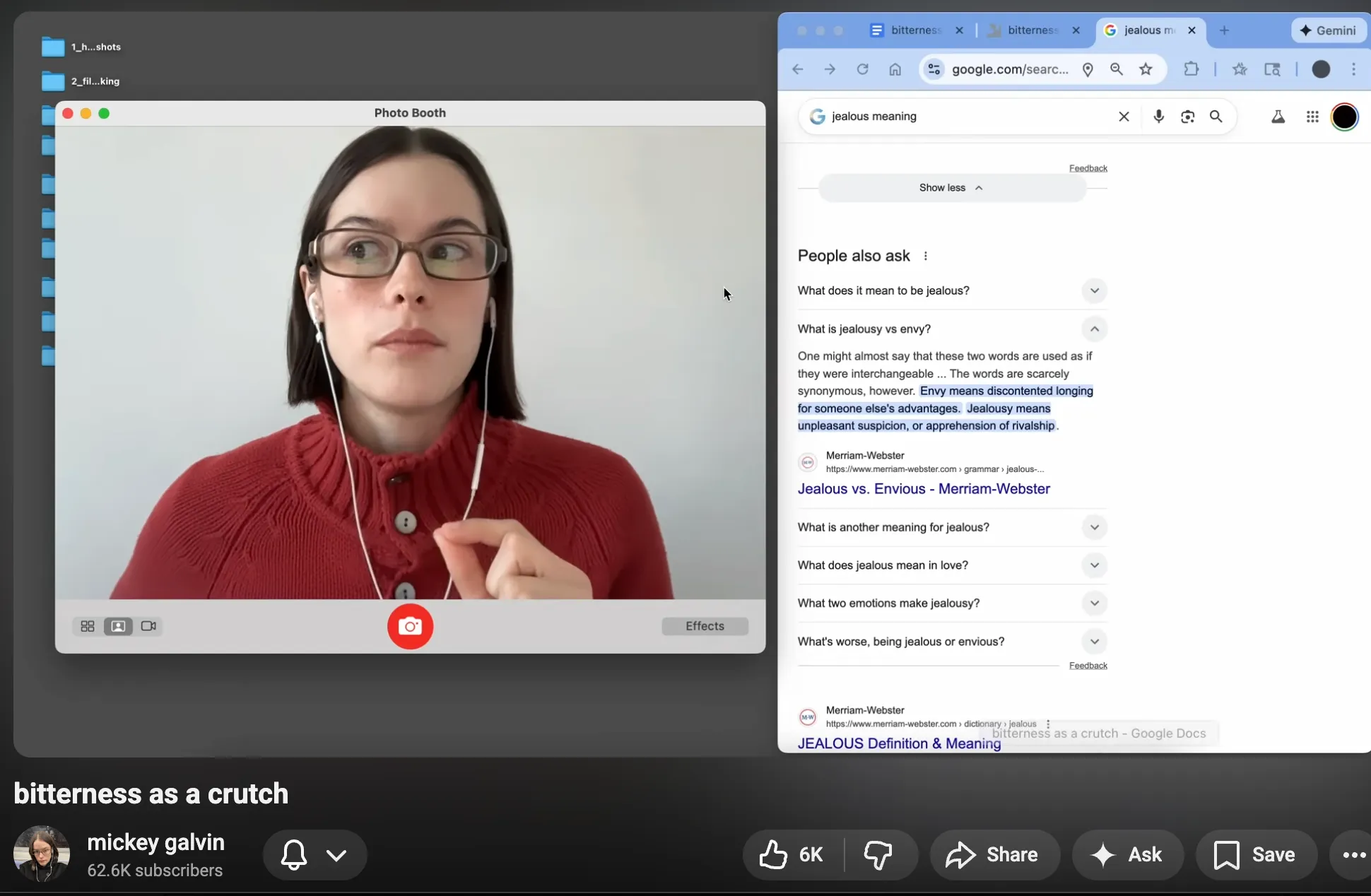
Bitterness as a Crutch
Mickey Galvin’s video essay “Bitterness as a Crutch” looks at how envy, failure, and unmet expectations shape the way we cope with life. She argues that bitterness often acts as a crutch, letting us blame luck or the “system” instead of facing our own limits. Galvin separates simple envy from toxic resentment, showing how the latter tears others down rather than inspiring growth, and uses examples from high achievers like Matt Damon to remind us that success alone can’t fill internal voids. The takeaway is clear: letting go of bitterness and accepting life as messy, random, and imperfect is the path to resilience. Shot in a screen-recorded, digital-collage style, the video feels like a quiet late-night conversation with your own conscience.
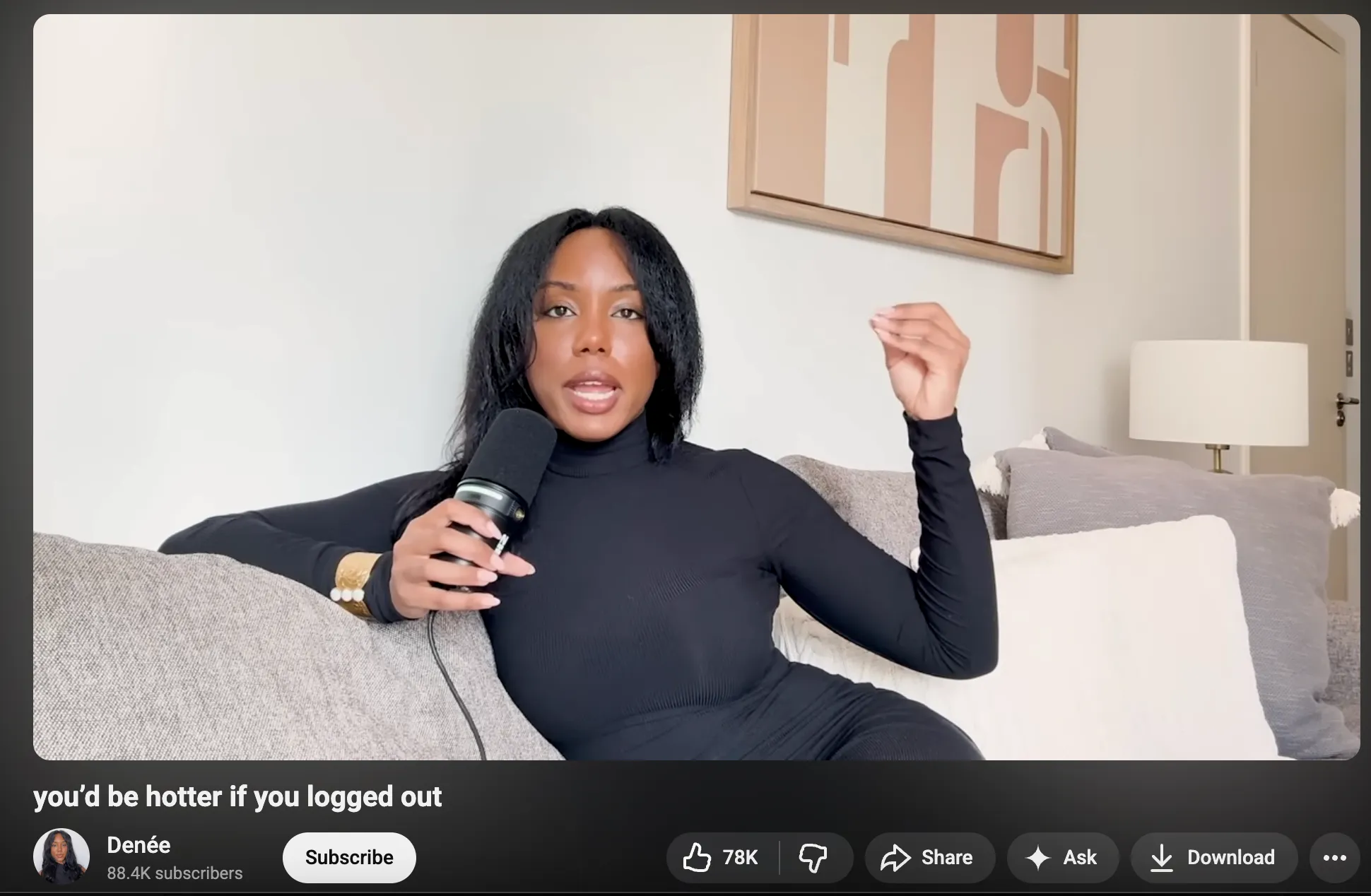
You’d Be Hotter If You Logged Out
The video essay “You’d Be Hotter If You Logged Out” by Denee Tamia explores our obsession with watching other people’s lives online. She argues that it’s not social media we’re addicted to, but the act of monitoring, which hijacks attention and blurs our sense of self. Logging off, Tamia suggests, is a way to reclaim focus, mental energy, and presence, helping us live our own lives rather than scrolling through everyone else’s highlight reel.
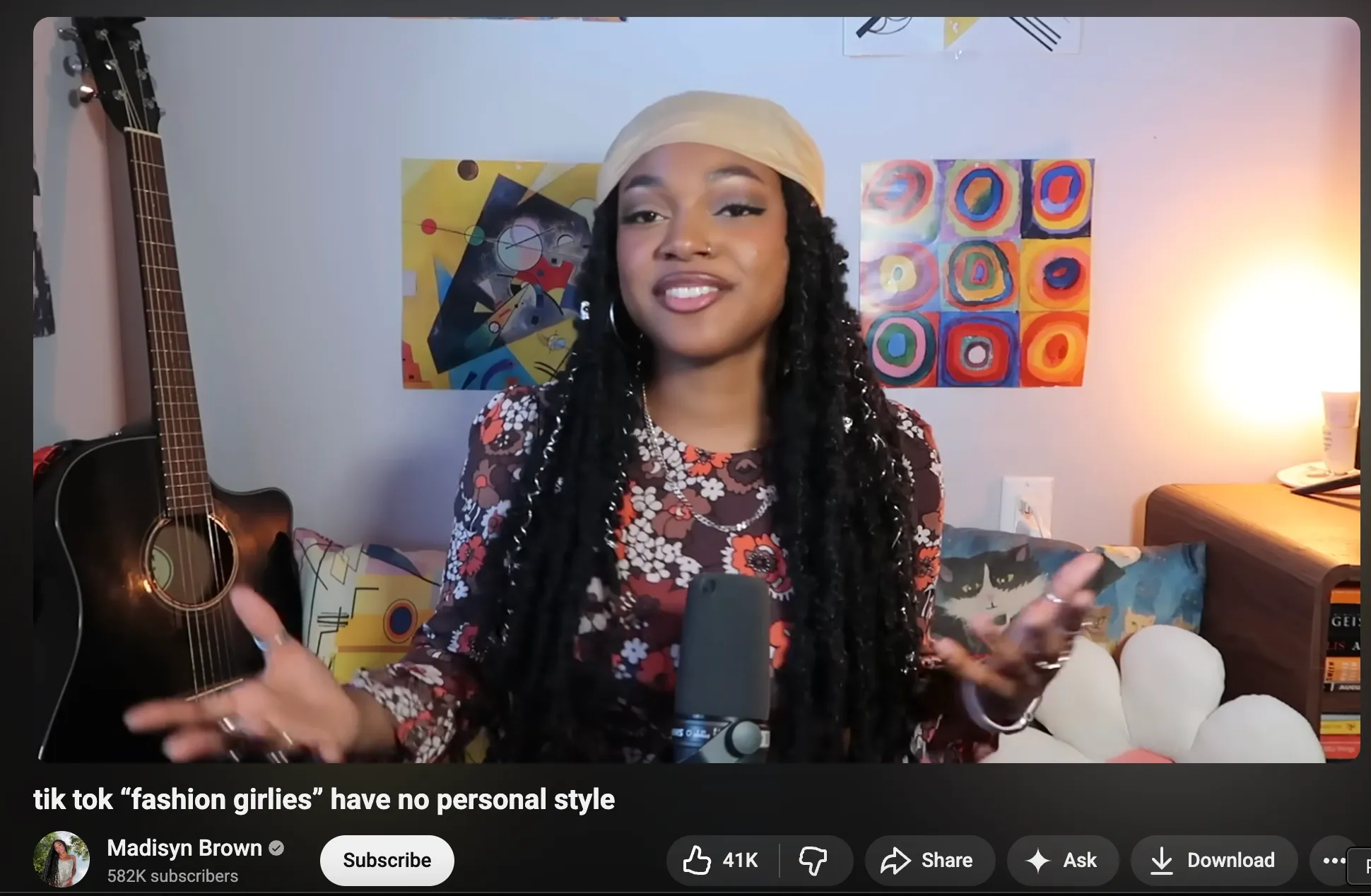
TikTok ‘Fashion Girlies’ Have No Personal Style
In “TikTok ‘Fashion Girlies’ Have No Personal Style,” Madisyn Brown argues that algorithm-driven micro-trends have replaced genuine self-expression with uniform must-have items. From charm-covered bags to dupe cultureCultureshared traditions, beliefs, values, customs, arts, and social practices that define the identity and way of life of a community, society, or nation.Go to Culture Glossary and viral boots, TikTok pressures creators to follow checklists instead of cultivating personal taste. The result is style dictated by virality, not personality.
Frequently Asked Questions
Five standout video essays include “The 4 Stages of Chic” by Kiki Agbor, which reframes chicness as self-knowledge; “In Defense of the Femme Fatale” by Mina Le on film noir and gender; “Bitterness as a Crutch” by Mickey Galvin on envy and resilience; “You’d Be Hotter If You Logged Out” by Denee Tamia on digital obsession; and “TikTok ‘Fashion Girlies’ Have No Personal Style” by Madisyn Brown on algorithm-driven trend culture.
“The 4 Stages of Chic” by fashion commentator Kiki Agbor reframes chicness as a psychological and sartorial journey rather than a matter of luxury labels or style formulas. Agbor maps four progressive stages that reflect how a person interacts with their clothes, body, and self-perception, arguing that true chicness is rooted in self-knowledge rather than external markers.
Mina Le’s “In Defense of the Femme Fatale” reclaims the dangerous women of 1940s film noir as products of post-war male anxiety rather than villains. Le argues that their wit, sexuality, and defiance were survival tools in a world that offered women little power, reframing the femme fatale as a subversive figure resisting a society that punished female independence.
Mickey Galvin’s video essay argues that bitterness functions as a psychological crutch, allowing people to attribute failure to luck or systemic forces rather than confronting personal limitations. Galvin distinguishes between simple envy and toxic resentment, and contends that accepting life as messy and imperfect — rather than clinging to bitterness — is the foundation of genuine resilience.
Created by Madisyn Brown, the essay argues that algorithm-driven micro-trends on TikTok have replaced authentic self-expression with checklist-style consumption — from charm-covered bags to dupe culture and viral footwear. Brown contends that TikTok’s trend cycle pressures users to dress according to virality rather than personal taste, producing a homogenized aesthetic that masquerades as individual style.