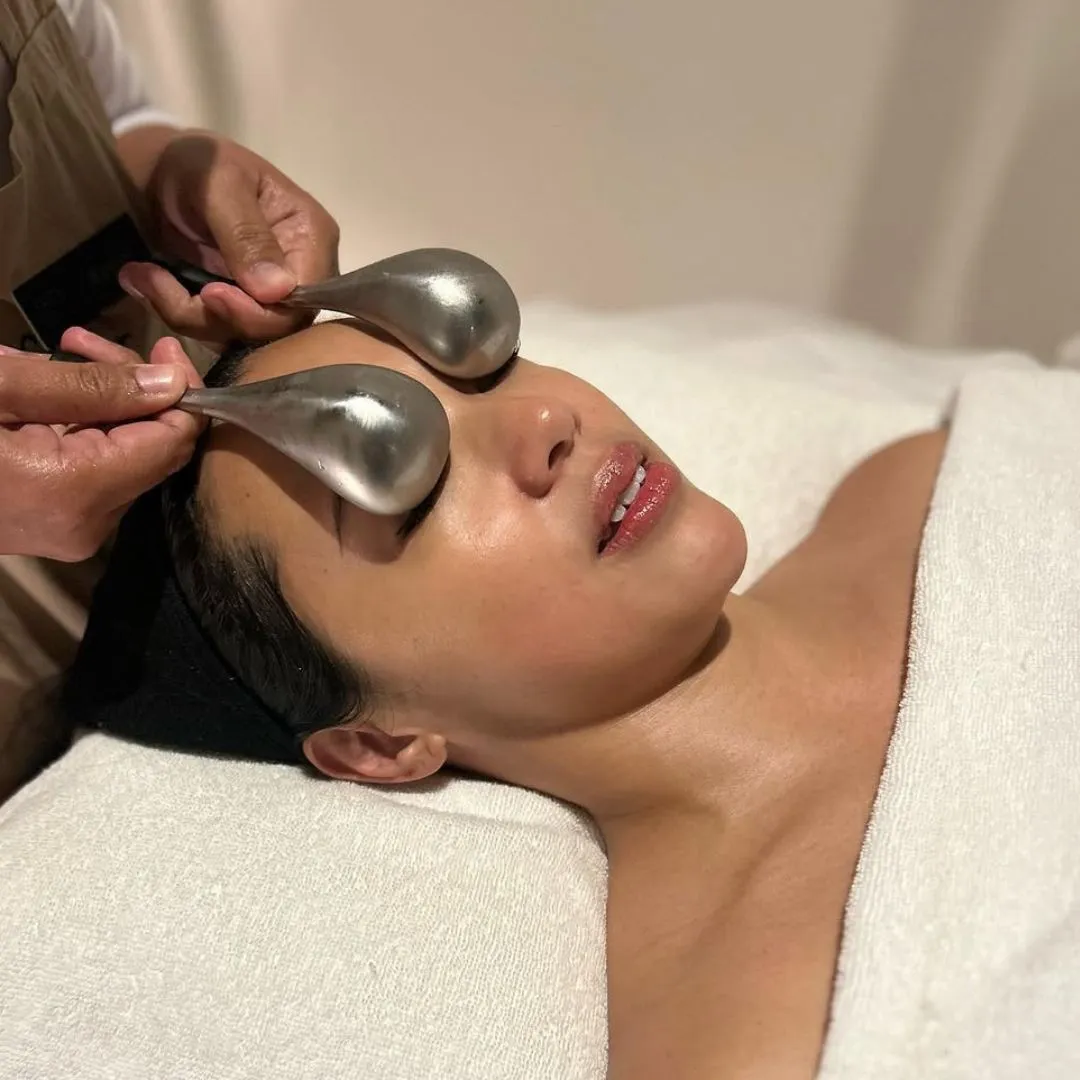
More than a beauty trend, manual lymphatic drainage is a gentle massage that supports detox, relieves bloating, eases fatigue, and leaves you feeling renewed.
Ever heard of a massage that actually energizes you instead of putting you to sleep? One that tackles water retention, fatigue, and bloating all at once? That’s manual lymphatic drainage, and it’s more than just a beauty treatment. Beyond skincare and body sculpting, it supports overall wellness and helps your body naturally detox. You’ve probably spotted the word “lymphatic” blowing up on TikTok and wondered what the fuss is about. It’s not something you learn about in school, but just like every part of your body, your lymphatic system deserves a little TLC. If you’ve been meaning to try it out but want to know more before jumping into your first session, we break down the often misunderstood treatment with an expert.
READ ALSO: The Sounds We Sleep To: Podcasts, White Noise, And The Art Of Drifting Off
Ask The Expert
Rene McHugh-Rodrigo is a Filipino-American based in the Philippines, with a background in clinical herbal medicine. She earned her degree in the United States and is currently completing her master’s in clinical herbal medicine, which remains her primary focus.
Alongside her work in herbal medicine, she is also a longtime wellness entrepreneur. She has owned a spa since 2014 and is the founder of Face Sculpt at Shangri-La The Fort, a concept that has earned recognition for its lymphatic massage treatments. To deepen her expertise in manual therapies, she trained at the Dr. Vodder School International. She also completed three years of studies in Chinese medicine at Ateneo de Manila University, integrating herbal medicine, lymphatic work, and traditional diagnostic principles into her practice.
How would you explain what the lymphatic system actually does?
Rene: A lot of people don’t really know what the lymphatic system is. It looks similar to what you would see, like your blood vessels. It looks similar to that, but even smaller, even tinier, and even more delicate. It sits right under your skin, so you don’t need to press hard to access it. The lymphatic system is basically your body’s cleanup crew; it moves excess fluid, waste, inflammation, and other immune byproducts out of the tissue.
But the thing with the lymphatic system, unlike your cardiovascular system (your blood, basically), is that the blood has a heart to pump it through the body. The lymphatic system doesn’t have any of that. It relies so heavily on movement, on different kinds of modalities, because we don’t have a lymphatic system heart: […] breath, gentle stimulation, things like that.
When people come in for lymphatic drainage, what are they usually hoping to feel or change?
Rene: Because lymphatic massage has become trendy, I’m sure you know this on TikTok—people are doing their face. They use a gua sha. Initially, people want to be slimmer, look sculpted, and have better skin. But the lymphatic system is so much more than just that. I always tell all of our clients and some of my patients, ‘You should feel less heaviness and less puffiness.’
So when you do our Body Sculpt, whenever I’m training the girls—like I train our therapists—we’ll do the Body Sculpt on the legs, right? We’ll do it for five minutes using the correct lymphatic massage technique. And I’ll ask them, ‘I’ll do it on one leg. Lift this leg, and then lift the other leg.’ And they can already feel the difference. So, it’s not just the actual fat tissues or water retention. A lot of that is really lymphatic tissue that needs to be pushed.
It also helps you get better digestion and less bloating, and you might feel clearer, lighter, and calmer. So not just physically, but also in your mind. And it helps a lot with recovery support. A lot of people are starting to understand that sports massage is great for deep tissue, but lymphatic massage is great for that extra boost of recovery because it supports the immune system directly.
What are some of the most common misconceptions you hear about lymphatic drainage?
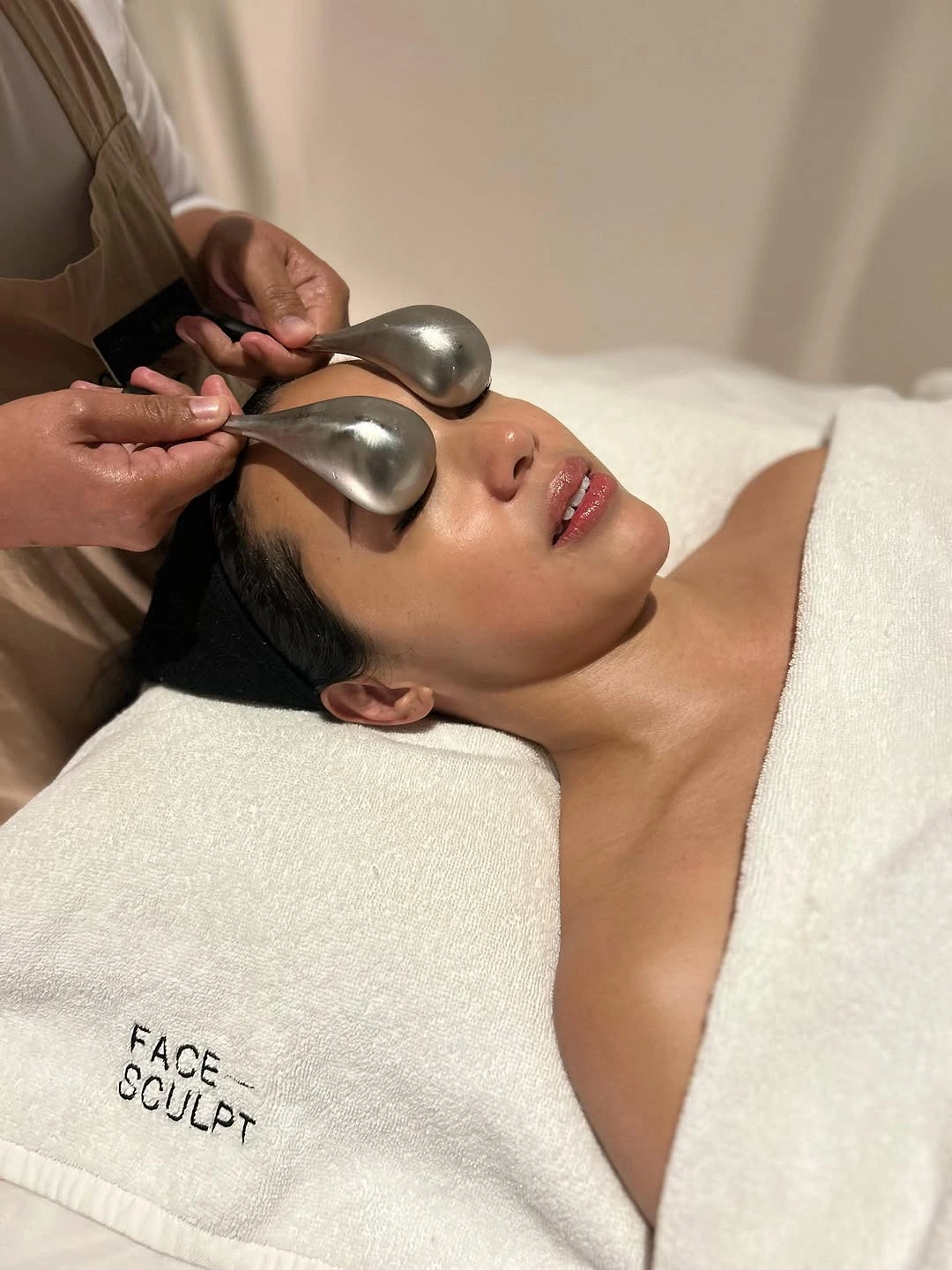
Rene: So the first misconception is hard pressure, even when you’re using gua sha. We use gua sha at Face Sculpt, and I also use it in clinical practice. But I will say one thing: I studied traditional Chinese medicine. I studied applied lymphatic modalities. Gua sha is a scraping tool. It is not traditionally used to move lymphatic fluid. It is a heavy tool. You know this already; you see them everywhere. They’re made of stone, steel, or something hard. They’re great for muscles and for getting muscle tension out. We use it for scraping in traditional Chinese medicine to bring blood forward. That’s obviously not a lymphatic-guided modality we’re pursuing.
So that’s the first thing: that hard pressure equals better results. That’s not true. The lighter the pressure, the better. And it’s actually what we call zero pressure. And what we’re doing is that, if you have a lymphatic drainage massage by a certified manual lymphatic drainage therapist, such as myself, you will notice we use no oil. We’re trying to move the skin gently. So we’re trying to create a deviation in the skin.
The lymphatic vessels are very leaky. They’re not closed and tight like blood vessels. So what happens is that when you put pressure on it, the lymphatic fluid shoots out of them. And the fluids have to be picked up by the system again, returning it to the lymphatic system. Deep massages over time can damage your lymphatic system, so I always tell people, ‘Have a deep massage when you need it, but always tell the therapist, “Try a soft massage,” because you don’t want to damage the lymphatic capillaries or the lymphatic system in that process.’
What kind of shifts do clients often notice, not just physically, but in how they feel day to day?
Rene: So normally, I’ll get feedback from clients who say that that night they slept better, they had a clear head during the daytime. Another nice one I hear a lot is that they’re less reactive or less irritable. And this is really common in those who are in their menopause stage, for women, because their mood shifts out of their control, so they get very irritable very easily. But when they have lymphatic massages, they actually have less reactivity and then regular digestion. So I get a lot of good comments about digestion. And the other thing is feeling settled in their body.
We try to activate or calm the nervous system. That’s really one of the most important parts of having an MLD massage. I teach all of our therapists at both of my spas. I teach them that when they put their hands on someone else, that’s already an energy transfer, and that energy goes both ways.
If they’re going to be fast, the client’s mind won’t be where they want it to be. And the client might actually be irritable after the massage, so the session might not be good. But if they try to focus on calmness, they feel it when the client starts to feel calm—like sleepy and really rested—and actually the therapists begin to feel that too.
Is lymphatic drainage more of a special-occasion thing, or does it fit into a regular wellness routine?
Rene: The nice thing about lymphatic massage is that if you were going to a wedding and wanted a really nice, fresh glow, it’s perfect. Absolutely perfect for a special occasion.
But as I said earlier, the lymphatic system needs consistent, let’s say, exercise. So the best way to do that is to have a manual lymphatic drainage massage. And so it’s essential as a regular wellness activity. I myself am having a lymphatic drainage massage at least once a week. That’s intense, though I will say that if we see clinical patients… for example, I don’t massage just anyone. I actually only focus on post-op patients or those with lymphatic concerns, like lymphedema.
So, I focus on medical patients and post-operative patients: they’ve had a nose job; or if they’ve had a facelift, a breast augmentation; or maybe they broke their leg, and they had a surgery on their leg. I do those to prevent swelling and to help rebuild the lymphatic system.
But those people will come three times a week. So, if you’re a normal person with a normal lymphatic system, especially if you have weight loss goals, adding lymphatic massage to your routine, let’s say once or twice a month, is the best. I always say twice a month, once for the face and then once for the body, and you’re good
What kinds of people or lifestyles do you notice respond best to lymphatic drainage?
Rene: So, good candidates for lymphatic drainage are, if you’re coming in for the regular therapist, not someone like me: anyone who’s high-stress, [like] travelers. Travelers are a big draw, and that’s why we chose a hotel location. Because I always say, if you’re going to take a flight, have a lymphatic massage before and after, or before you leave and right when you come back.
People who are sedentary, who sit at screens a lot, [do] screen-heavy work, work in offices, and don’t get up a lot. It’s really important to have a lymphatic massage.
[Those with] hormonal shifts, so like I said earlier, menopause, those women who have hormonal disorders, even men who go through really high-stress changes, like high cortisol, [are also] very important.
And then post-illness or burnout recovery. So if you’re someone who experiences burnt out, fatigue, chronic fatigue, that’s perfect. And then post-illness: not when you have an active illness, but after you’ve recovered.
How do you adjust a session to meet someone’s needs that day, whether it’s stress, bloating, recovery, or simply rest?
Rene: Obviously, everything I’ve mentioned is just about looking at their health history. For example, when you book a session—I always use Face Sculpt as an example because it’s the lymphatic massage business I have where I practice as well—even if you’re coming in just for a face massage, we ask a bunch of questions like ‘Have you had any past surgeries, lymph nodes removed, illnesses, things like that?’
If we need to make adjustments, our team is prepared. We can make adjustments due to surgeries, lymph node removal, and energy levels. If someone is exhausted, we can offer them a different kind of massage. Maybe they’re coming in for the face, but we’ll offer them an RTLD, which is an authentic lymphatic calming massage, because it gives them the best benefits.
People with digestive issues sometimes require us to adjust pressure. If someone has had surgeries, as I said, or internal problems such as hormone or thyroid issues, which is a big one because we work along the neck a lot, we try to avoid certain areas. We adjust that way, and we adjust pressures.
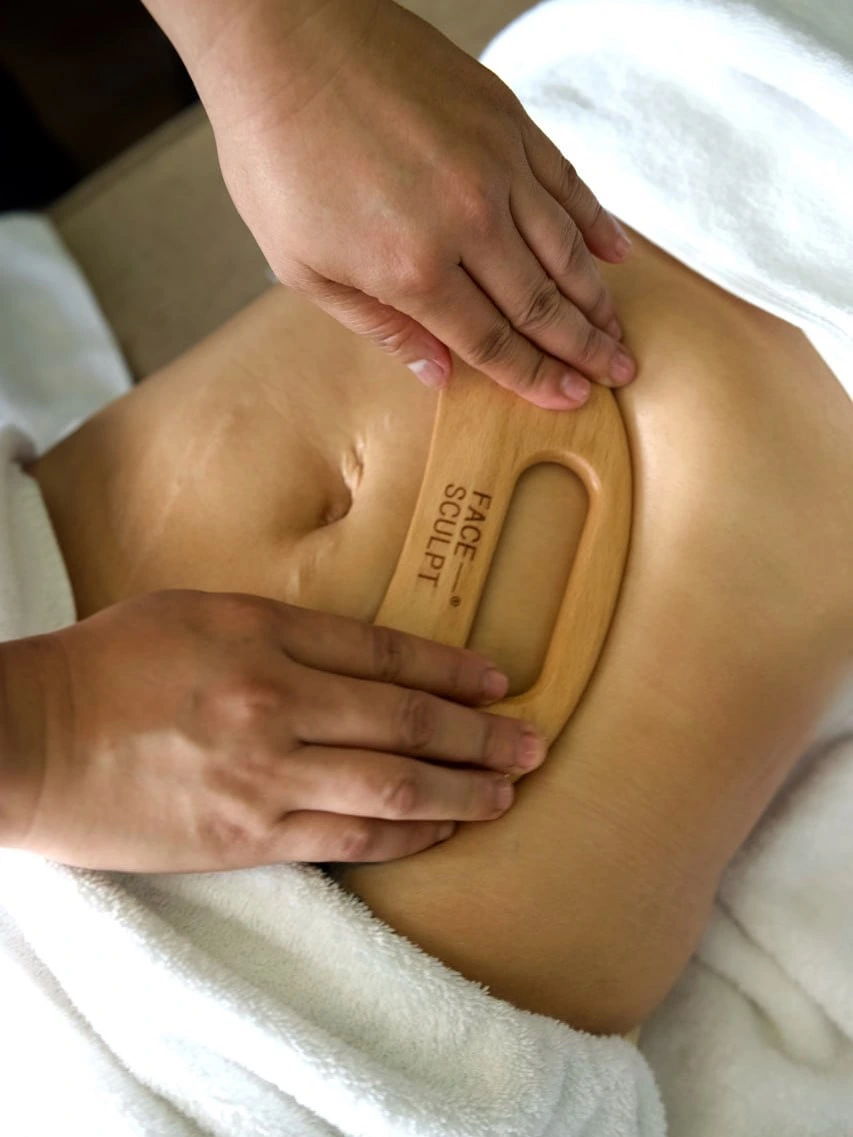
Pressure is another thing we adjust. Even though I said zero pressure, there are times when I instruct therapists to go a bit deeper in certain areas, such as the stomach for digestion. This is really to stimulate good digestion. A lot of people nowadays suffer from chronic constipation and things like that because of stress.
Adjusting the session is integral to an MLD therapist. I always tell all of my therapists that I train, “If you cannot adjust to your client, then there’s no point in you doing a cookie-cutter massage for everybody, because they are not going to benefit from it.” It’s through the Q&A, the waiver, and the questionnaire that we can adjust, and we do. That’s a whole world of itself.
For someone trying it for the first time, what usually surprises them the most?
Rene: First and foremost is pressure. And if they come to me for post-op, they are expecting a massage, like an oil massage by an expert, but it’s really a no-oil massage. My therapists use oils, but I use no oil because that’s exactly how I can really stimulate the lymphatic system.
So they’re surprised by those things, but also by how relaxing it actually is. The soft touch and the rhythmic flow really relax them, and sometimes we also have emotional release. In terms of what I was talking about earlier, regarding therapists and the client, that’s an energy exchange. And sometimes, if a therapist really gets it right, there might be an emotional release.
Some patients might have an emotional moment and cry. But this is really just because, in TCM, we view the body as a system in which chi should constantly flow and move. If it gets stuck somewhere, as it does in this area, when we finally try to have it flow again, there might be some emotional release because it was emotions that got it stuck there in the first place, not just lifestyle. And so there is a huge energetic factor to massage, really.
And then they also get surprised that they’re more energized after, rather than thinking, ‘Oh, I’m going to go home and sleep.’ They actually have more energy. They feel lighter. Like, that’s the best expectation.
What’s one simple way someone can support their lymphatic health in daily life, even outside of a session?
Rene: The best exercise for lymphatic health, actually, is swimming. If you ever have the opportunity to swim, do it. Get in, and it’s like getting in neck-deep. If you have a bathtub, you can soak all the way down to your chin. That’s the best way because it creates a zero-gravity environment where gravity is not competing with your fluids.
Other ways, obviously, are walking a lot. Everybody says, “Walk 10,000 steps” or whatever, but just walk. When you can, walk up and down stairs.
The biggest pump for the lymphatic system is actually your diaphragm during deep breathing. So when you go to Face Sculpt, we actually ask the client, “Can you please take three deep breaths for me before we start?” Some clients probably don’t do it, but we really encourage you to practice deep belly breathing. When the diaphragm expands, all the vessels, including your cardiovascular system, dilate, then contract. That’s an excellent pumping system. So if you meditate, that’s great already.
Then, gentle morning movement. Movement all day long is important, especially in the morning when you have just woken up, because you’ve been lying down for a long time. Getting up and, honestly, for me, even just doing some jumping jacks, and you’re going to be good. Lastly, hydrate consistently—water, water, water.
All photos courtesy of Face Sculpt
Frequently Asked Questions
Manual lymphatic drainage (MLD) is a gentle massage technique that uses light, rhythmic pressure to move excess fluid, waste, and immune byproducts through the lymphatic system. Unlike the cardiovascular system, the lymphatic system has no pump — it relies on movement, breath, and external stimulation such as MLD to circulate lymphatic fluid effectively.
Rene McHugh-Rodrigo is a Filipino-American clinical herbalist and wellness entrepreneur based in the Philippines. She is the founder of Face Sculpt at Shangri-La The Fort in Manila, trained at the Dr. Vodder School International in manual lymphatic drainage, and completed three years of Chinese medicine studies at Ateneo de Manila University.
Beyond reducing puffiness and water retention, lymphatic drainage has been associated with improved digestion, reduced bloating, better sleep, mental clarity, lower irritability, nervous system regulation, and recovery support following illness, surgery, or burnout. Practitioners note that its immune system benefits make it distinct from conventional deep-tissue massage.
For general wellness and weight loss goals, once or twice a month is recommended — ideally one facial and one body session. Post-operative or clinical patients may require sessions three times a week. Medical lymphatic therapists like Rene McHugh-Rodrigo practice MLD weekly themselves, though this frequency is considered intensive for non-clinical use.
The most common misconception is that firmer pressure produces better results. Manual lymphatic drainage uses near-zero pressure because the lymphatic vessels sit just beneath the skin and are significantly more delicate than blood vessels. Deep pressure can actually damage lymphatic capillaries over time — the lighter the touch, the more effectively the technique moves lymphatic fluid.