From acne and hair removal to tattoo fading and skin tightening, here’s a grounded look at the most accessible laser treatments: how they work, what they do, and what to realistically expect.
Growing up, lasers felt like something reserved for cartoons, spy movies, and science fiction. Aside from the occasional laser pointer—once passed off as a toy—the idea that lasers could be used to target something as specific as a skin concern felt far-fetched. Now that we’re all grown up, these powerful beams have stepped out of fantasy and into reality. What once seemed futuristic is now a legitimate, precise procedure.
Today, we’re doing a deep dive into laser treatments, focusing only on the common ones that are widely accessible (nothing too intense). Just a quick disclaimer: I’m not a medical doctor or professional. Everything shared here is based on research and general information.
READ ALSO: Designer Makeup And Skincare In Manila You Need To Try
Laser For Acne And Marks
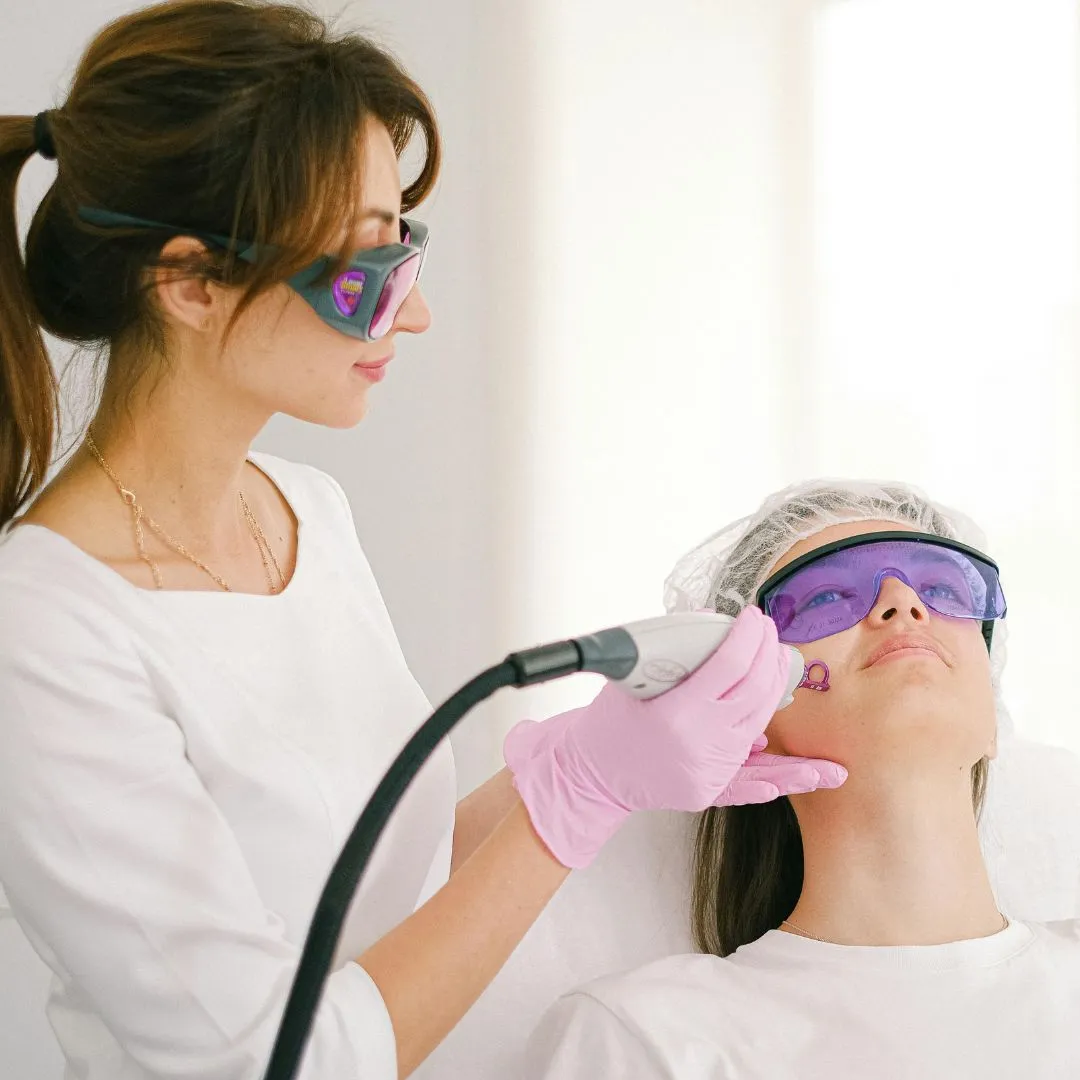
When we talk about how lasers actually work on acne, it helps to think of them as tools that go beyond “just shining a light.” Dermatologists use specific wavelengths of light or laser energy to target acne at its root causes. The idea isn’t that one session will zap every pimple away instantly; rather, multiple treatments gradually help clear breakouts by addressing the factors that drive acne in the first place, often alongside other topical or prescription treatments.
What you feel and see after a laser session can vary from person to person. Many people notice redness or swelling that fades within hours or a day, and the clearest results tend to show up several weeks after a series of treatments. While these therapies can significantly improve acne and sometimes maintain clearer skin long-term with occasional follow-ups and touch-ups, there’s no guarantee of total clearance. Furthermore, dermatologists still recommend combining lasers with good skincare and other acne treatments for the best outcomes.
Laser For Hair Removal
Laser hair removal isn’t about manually ripping hair out like waxing or shaving. Instead, it’s a concentrated beam of light that targets the pigment (melanin) in your hair: it heats the hair follicle, damaging it so it can’t grow back as quickly, or at all, in that cycle. Because the laser affects follicles in the active growth phase, not all hairs are hit in a session, which is why the process involves spreading treatments over time to catch more hairs in that growth stage.

And about results: don’t expect it to be one-and-done. Most people will need roughly six to eight sessions, generally spaced six to eight weeks apart, to see a significant reduction in hair growth. After a full series, many folks enjoy months or even years of smoother skin, but laser hair removal isn’t truly permanent: some hairs may eventually grow back, usually finer and lighter than before.
Tattoo Removal
Laser tattoo removal is a way to say goodbye to the permanent decision you might’ve made while drunk. How does it work? Think of the laser as a highly precise light that targets the ink sitting beneath your skin’s surface and breaks its pigment particles into much smaller bits. Those tiny fragments are then carried away by your body’s immune system over time, which is why results aren’t instant, and why a single laser pass doesn’t make a tattoo disappear right away. The laser itself is carefully chosen depending on the ink colors, depth, and size of your tattoo; the process is then repeated in pulses across the area until the ink visibly lightens.
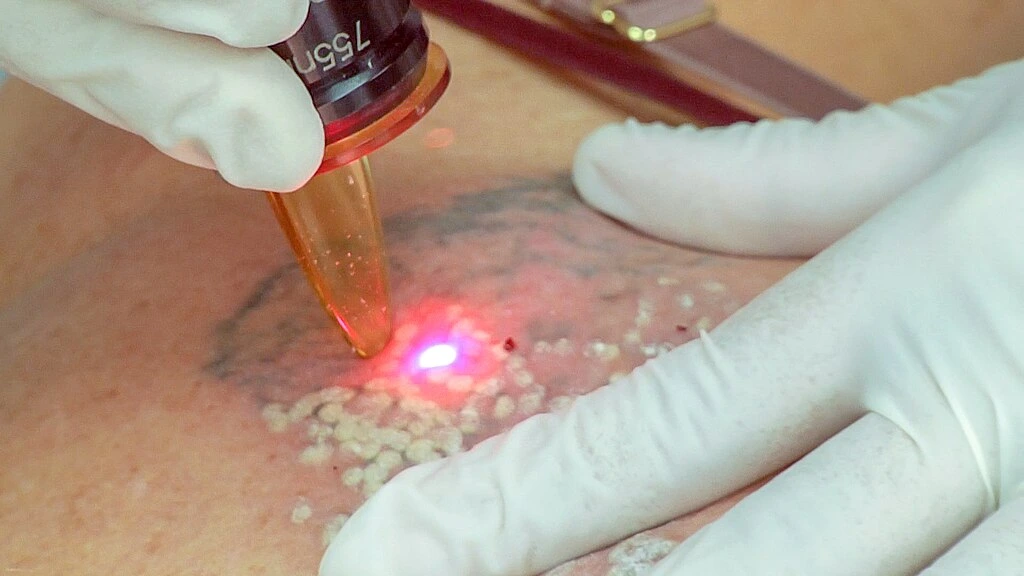
Because permanent tattoos are made up of layered and deeply embedded ink, complete removal takes patience and multiple sessions. According to the Cleveland Clinic, most people require roughly six to twelve laser treatments spaced weeks apart before they see their best results, and even then, some colors or deeply injected pigments can be stubborn and might not fade entirely. Between sessions, your skin needs time to heal and your body needs to flush out the broken-down ink, which is also why dermatologists plan treatment schedules carefully.
Skin Tightening
As for how laser skin tightening actually works, it’s about using controlled heat to give your skin a wake‑up call. A handheld laser delivers energy below the surface of your skin, kind of like a warm pulse that gently heats deeper layers. That heat triggers your body’s natural response to make more collagen and elastin, which are proteins that help keep skin firm and springy. Over time, this can make the skin look tighter, smoother, and less crepey without cutting or removing the top layers of skin.
Most people notice some improvement after one treatment, but the best results usually build gradually over time. Dermatologists generally recommend a series of about three to six sessions, often spaced a few weeks apart, to see the fuller tightening effect and longer‑lasting results. The procedure itself is minimally invasive with little downtime; when paired with proper care and sunscreen, results can continue improving over the months after your last session.
Frequently Asked Questions
Laser treatments for acne use specific wavelengths of light or laser energy to target the root causes of breakouts rather than surface-level symptoms. Multiple sessions are typically required, with results appearing gradually over several weeks. Dermatologists generally recommend combining laser treatments with topical or prescription skincare for the best outcomes, as no single treatment guarantees complete clearance.
Most people require approximately six to eight laser hair removal sessions, spaced six to eight weeks apart, to achieve significant reduction in hair growth. Results are long-lasting but not permanent — some hairs may eventually regrow, typically finer and lighter than before. Because the laser targets follicles in their active growth phase, multiple sessions are needed to treat hairs at different stages of the growth cycle.
Laser tattoo removal works by targeting ink particles beneath the skin’s surface with a precisely chosen laser wavelength, breaking them into smaller fragments that the body’s immune system gradually flushes away. The Cleveland Clinic notes that most people require six to twelve sessions spaced weeks apart before seeing their best results. Some colors and deeply embedded pigments may not fade entirely.
Laser skin tightening uses controlled heat delivered below the skin’s surface to stimulate collagen and elastin production — the proteins responsible for skin firmness and elasticity. Most dermatologists recommend three to six sessions, spaced a few weeks apart, for optimal results. The procedure is minimally invasive with little downtime, and results continue to improve over the months following the final session.
Laser hair removal is not considered fully permanent. While most people experience significant and long-lasting reduction in hair growth after a full series of six to eight sessions, some hairs may eventually regrow — usually finer and lighter than the original. Occasional follow-up sessions may be needed to maintain results over time.