Daloy Dance Company heads to Yeosu, South Korea, with Bari-Bari and Agos, two works exploring nature, community, and our connection to the environment.
For its upcoming presentation at the 2026 World Island Fair in Yeosu, South Korea, Daloy Dance Company features two works that explore the relationship between people and the environment across generations. Led by founder and artistic director Ea Torrado, the Metro Manila-based contemporary dance company will present selected excerpts from Bari-Bari alongside Agos, a new live work choreographed by emerging Daloy artists Julienne Depatillo and Sebio Guevara.
READ ALSO: Why Have There Been No Women National Artists For Visual Arts (Until Now)?
Daloy Dance Company Travels From La Union To Yeosu
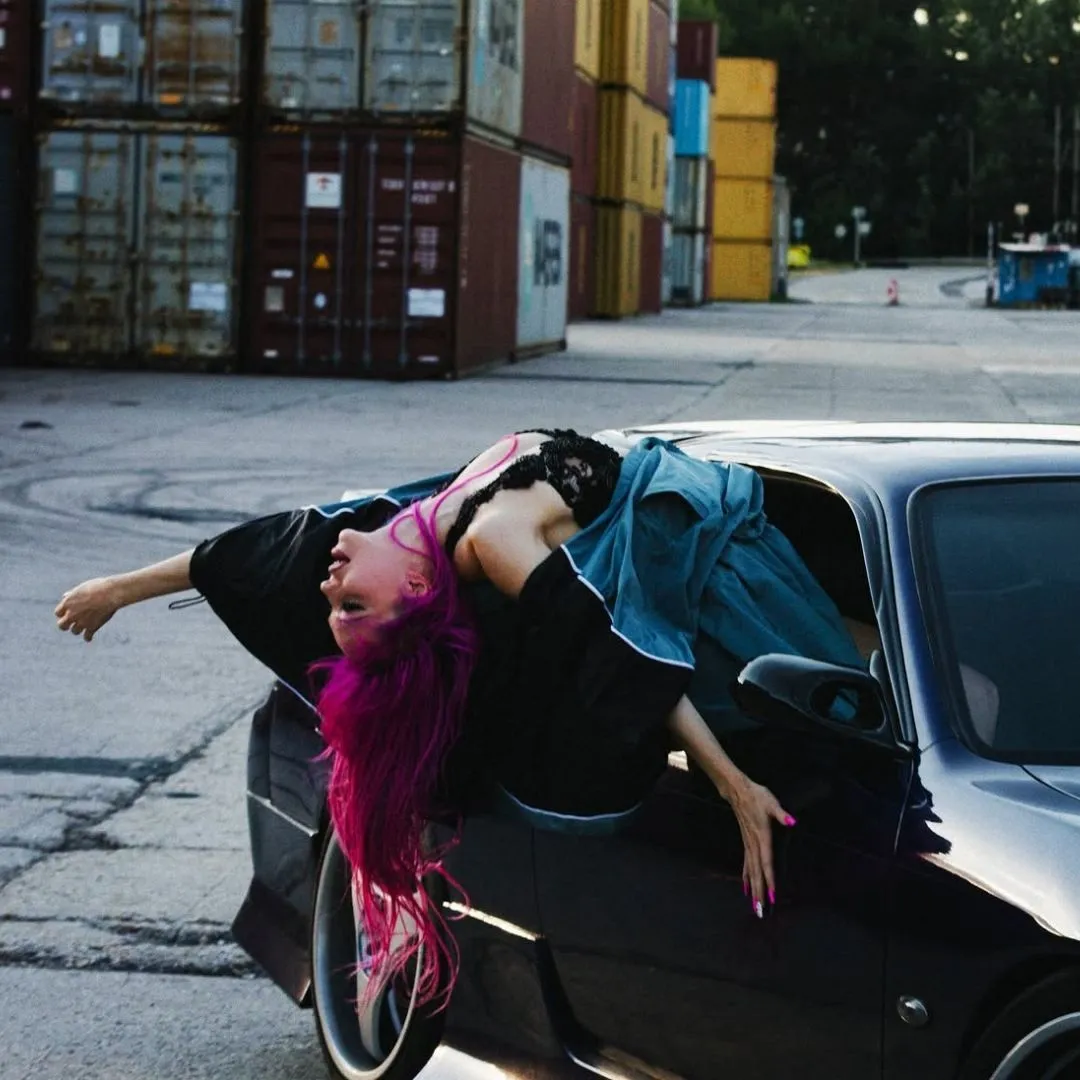
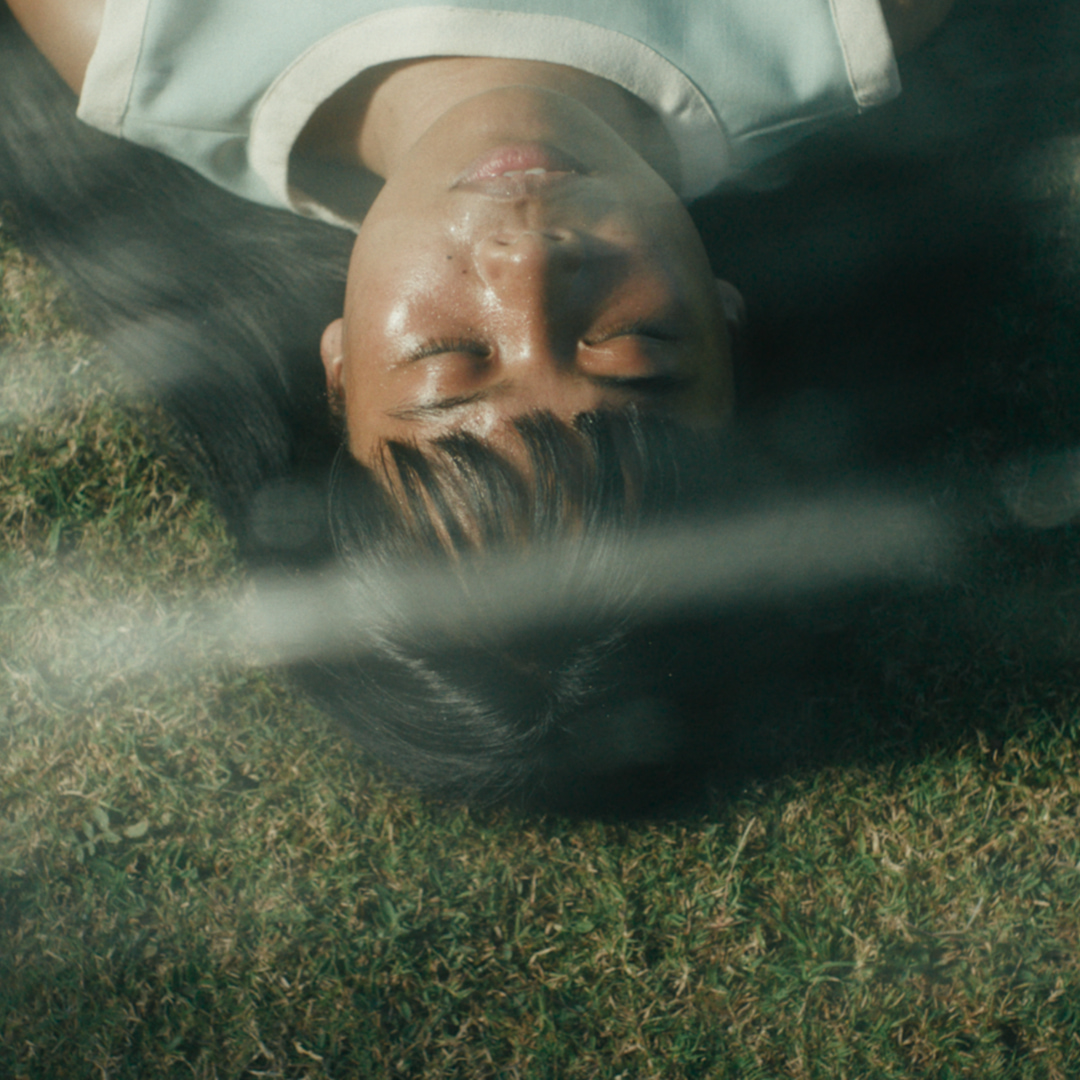
Created in 2020 to 2021 while Torrado was living near the sea in La Union, Bari-Bari is an environmental dance film that melds movement, interviews, environmental testimony, and images of bodies moving through the land and waters. The film explores plastic pollution, environmental stewardship, and cultural memory, drawing from the Ilokano expression bari-bari, which relates to the Filipino phrase tabi-tabi po, an expression of reverence for places where elemental spirits are believed to dwell. The film was co-directed by Torrado and videographer Chino Neri, with costumes by Filipino visual artist Leeroy New.
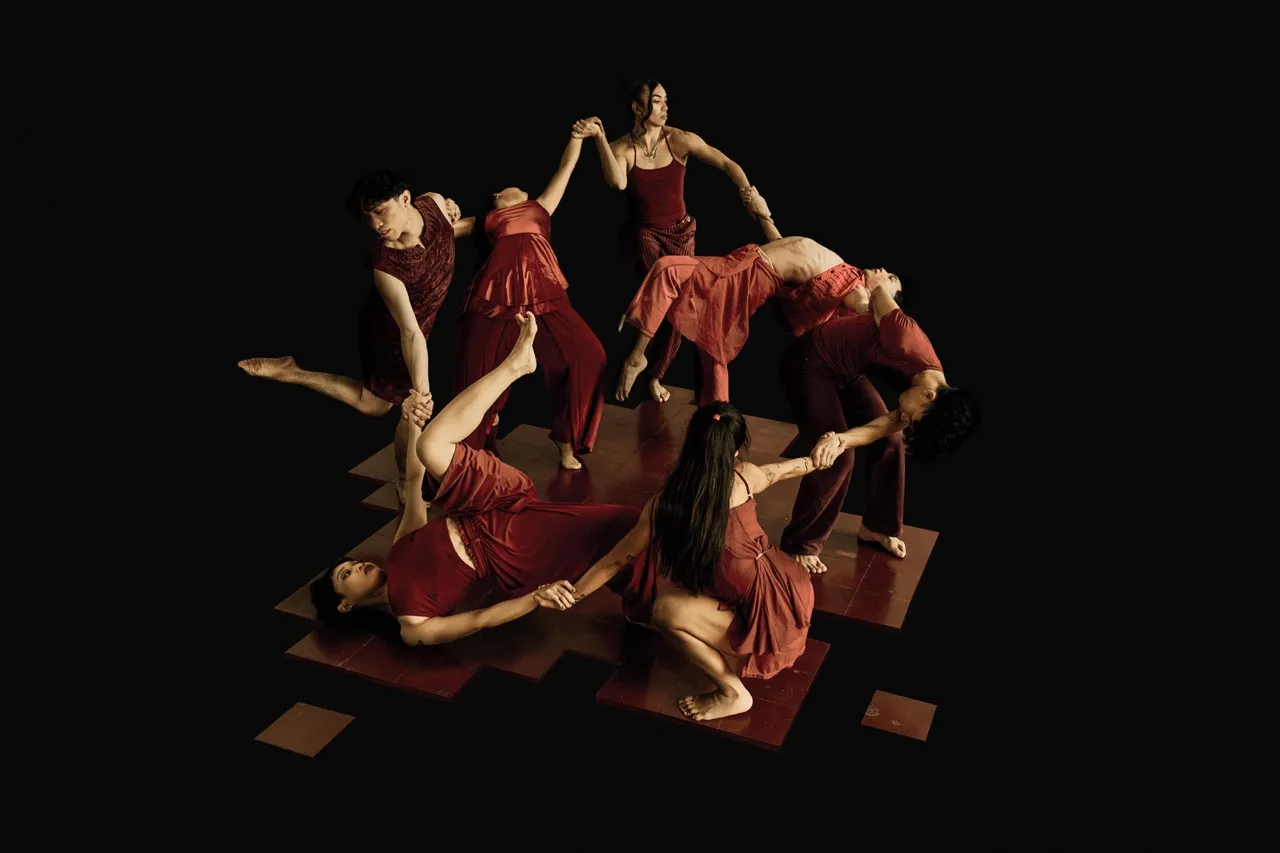
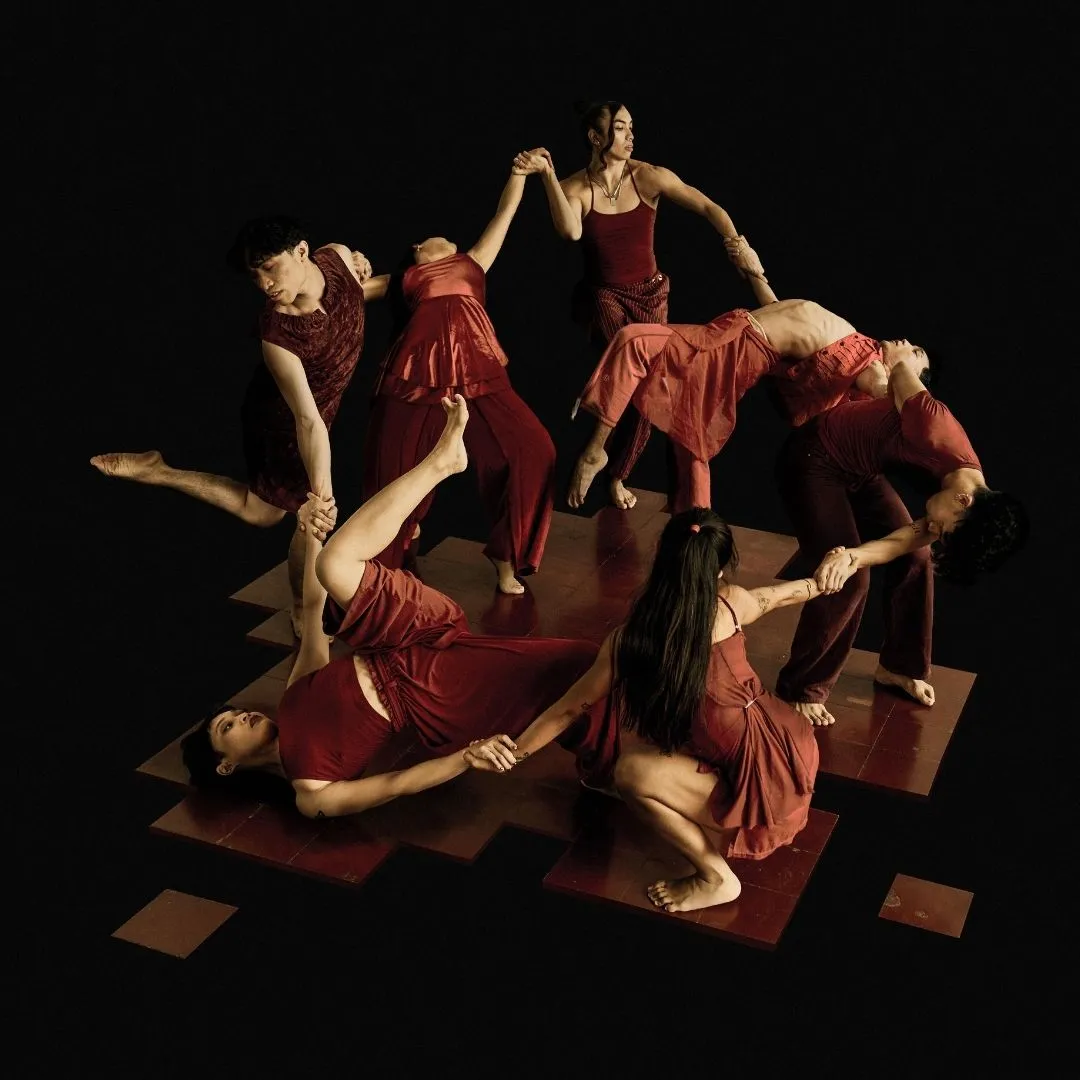
Onstage, Agos offers a new perspective through the choreographic voices of Depatillo and Guevara. The piece considers interconnectedness, community, collective responsibility, and humanity’s relationship with the environment, while giving the younger artists space to develop their own movement language. Agos stands as its own work, creating a conversation with Bari-Bari when the two are experienced together.
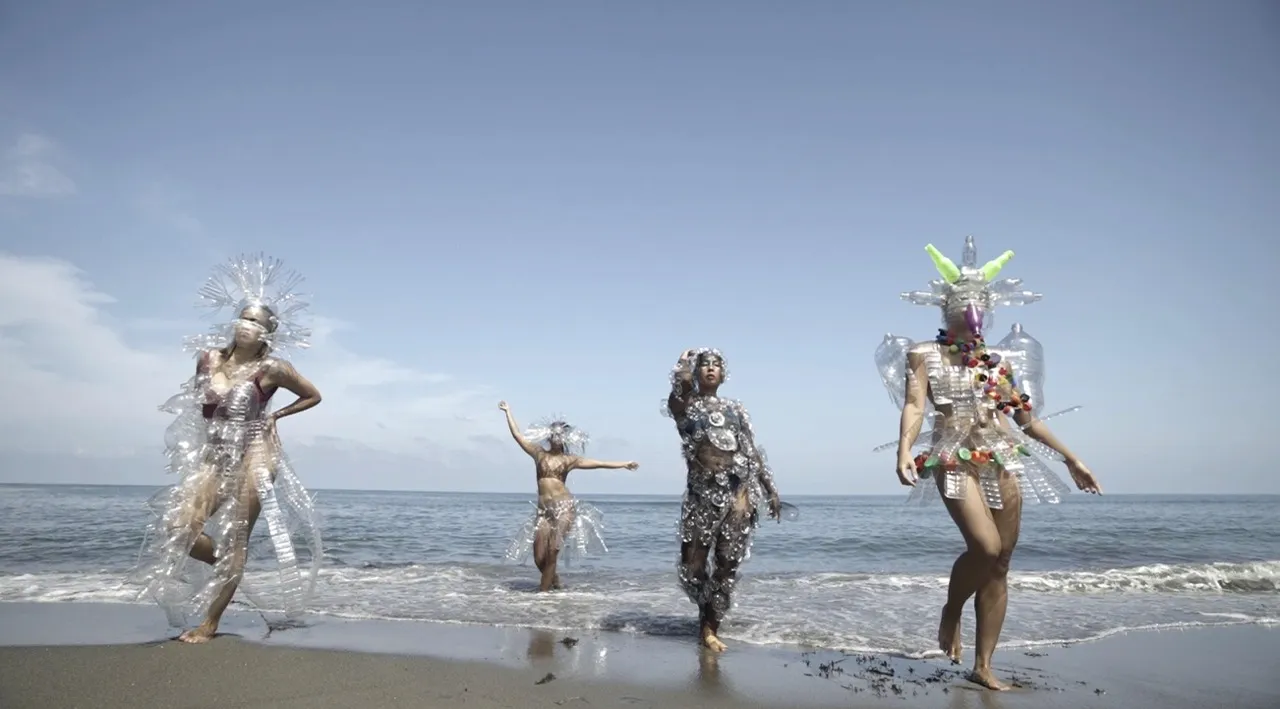
The presentation also traces a geographic connection through water: from La Union, where Bari-Bari was created; to Mindoro, represented by the Philippine Pavilion; and finally to Yeosu, the Korean maritime city hosting the World Island Fair. The Philippine Pavilion places Puerto Galera and Mindoro at the center of an exhibition featuring contemporary art, marine biodiversity, Mangyan cultural heritage, Tamaraw conservation, environmental education, and eco-cultural tourism.
Catch Daloy Dance Company In Yeosu
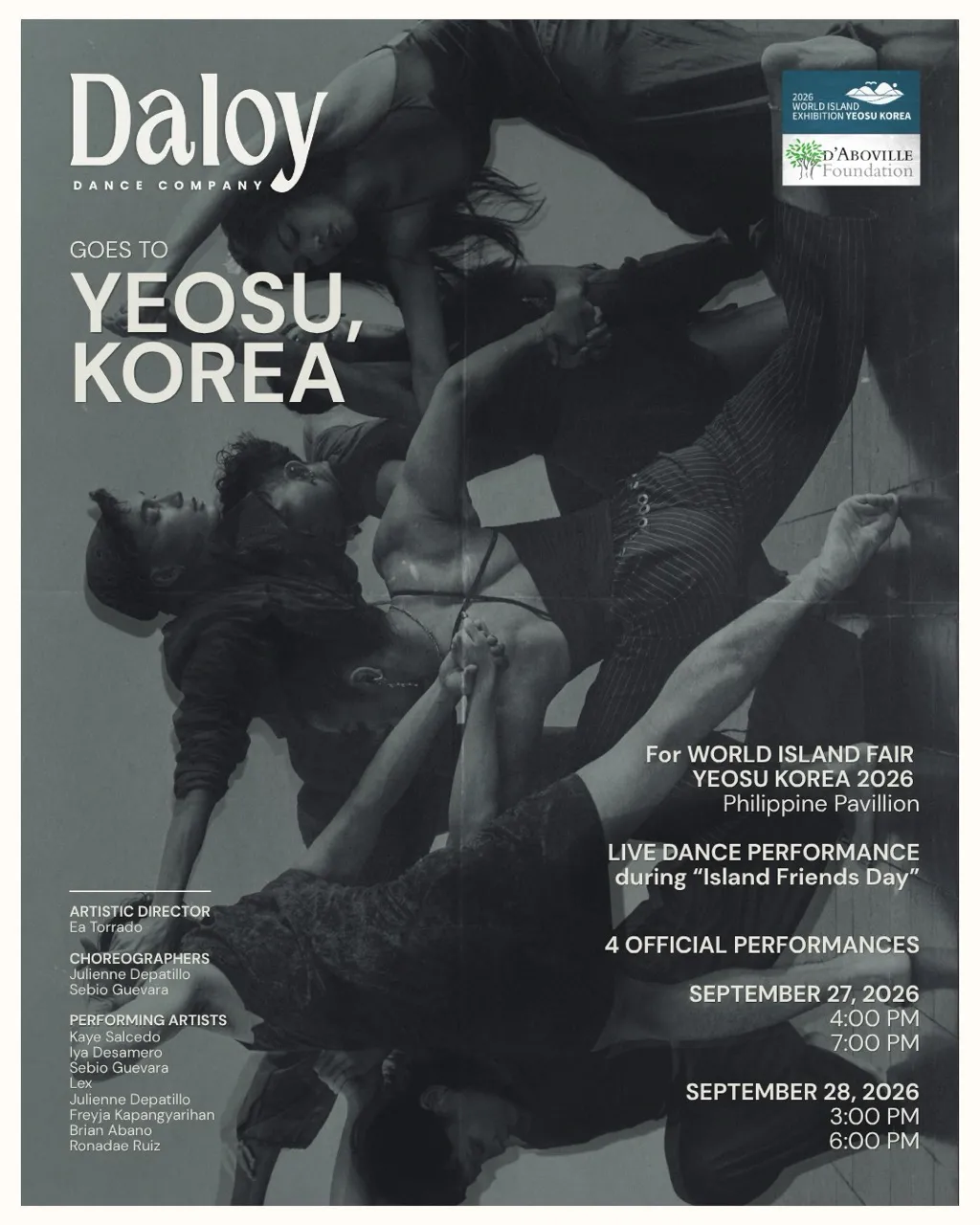
Daloy Dance Company will stage four official performances of Agos on September 27 and 28, 2026, as part of the 2026 World Island Fair in Yeosu, South Korea. Performances are scheduled for 4 PM. and 7 PM on September 27, followed by 3 PM and 6 PM on September 28.
The Yeosu performances are co-produced by the D’Aboville Foundation and Demo Farm, Inc., a French-Filipino nonprofit that has worked in Mindoro since 2004 across environmental conservation, Indigenous rights, cultural heritage, sustainable agriculture, and responsible tourism.
Photos courtesy of Daloy Dance Company
Frequently Asked Questions
Daloy Dance Company will present selected excerpts from Bari-Bari, an environmental dance film, alongside Agos, a new live contemporary dance work choreographed by Julienne Depatillo and Sebio Guevara.
Daloy Dance Company will have four official performances on September 27 and 28, 2026, at the 2026 World Island Fair in Yeosu, South Korea. The performances are scheduled for 4 p.m. and 7 p.m. on September 27, and 3 p.m. and 6 p.m. on September 28.
Bari-Bari is an environmental dance film created in 2020–2021 while Daloy founder and artistic director Ea Torrado was living near the sea in La Union. It explores plastic pollution, environmental stewardship, cultural memory, and the Filipino relationship with nature.
Agos is a new contemporary dance work choreographed by emerging Daloy artists Julienne Depatillo and Sebio Guevara. It explores interconnectedness, community, collective responsibility, and humanity’s relationship with the environment.
Bari-Bari and Agos are separate works with their own creative processes and movement languages. At the World Island Fair, excerpts from Bari-Bari will be projected on large screens while Agos is performed live, creating a conversation between two generations of Daloy artists and their approaches to environmental concerns.