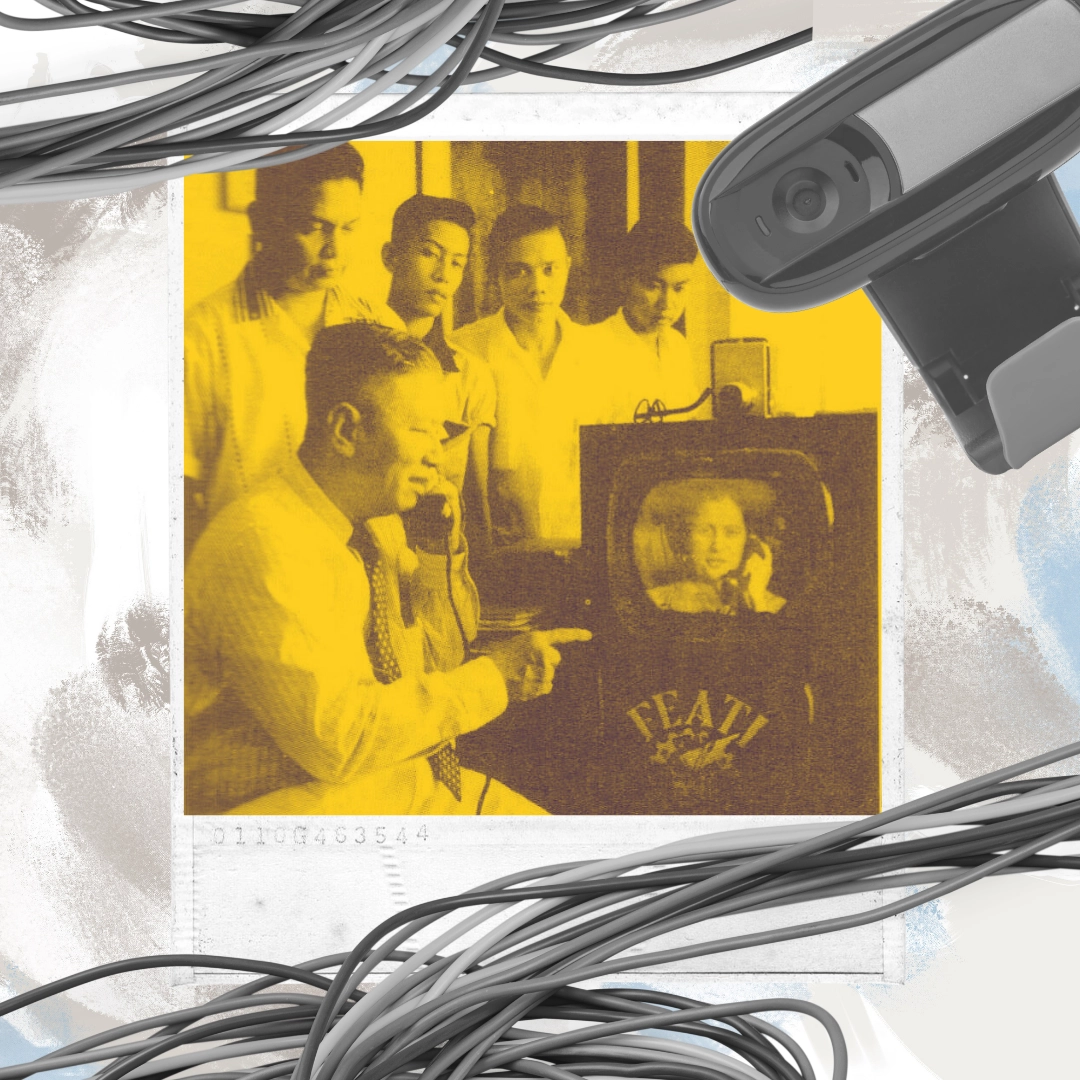
Way before Zoom links and Google Meet invites became the norm, Filipino scientist Gregorio Y. Zara had already built technology that lets people see and speak to one another across distances.
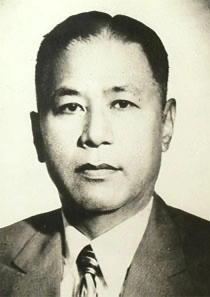
The tricky thing about Filipino scientists is that the country has produced some truly remarkable ones. The longstanding issue, however, lies in the lack of support, documentation, and preservation—gaps that, admittedly, make it difficult for us to fully recognize and celebrate our local brilliance. So it’s easy to believe that many of history’s influential names and their contributions have quietly faded into the background. One such name that certainly wasn’t in many of our school textbooks, yet ought to be, is Gregorio Y. Zara, the father of today’s video conferencing technology.
Yes, reader, I was today-years-old when I learned that a Filipino was already envisioning the future, decades before Zoom, FaceTime, Google Meet, and the like entered the picture (or rather, the call). Now I can’t say for certain if he’s the primary inventor of today’s technology: as these things go, great inventions are usually the fruits of multiple efforts. It doesn’t help that there aren’t a lot of reliable resources discussing Zara, save for a few professional profiles and articles. But, armed with enough curiosity to go digging, I’ve gathered what I could to form a clear picture of who the man was and what exactly he managed to achieve (spoiler: some pretty amazing things).
READ ALSO: Paz Marquez-Benitez: A Filipina Literary Icon And Pioneer
Who Was Gregorio Y. Zara?
Born on March 8, 1902 in Lipa City, Batangas, Gregorio Y. Zara was a scientist with quite the resume. Already gifted and brilliant at a young age, he graduated valedictorian in both elementary and high school, according to Asia Research News, before earning his Bachelor of Science degree in Mechanical Engineering at the Massachusetts Institute of Technology (yes, the MIT) in 1926. He would then go on to earn his M.S. in Aeronautical Engineering from the University of Michigan before pursuing a PhD in Physics from the Sorbonne University of Paris in 1930.
Throughout his career, Zara developed 30 patents under his name for various devices and equipment, though the most prominent breakthrough among them was the invention of the “Photo Phone Signal Separator Network” in 1954, an early form of video conferencing that he patented, though it was never meant to be sold commercially.
Again, many sources will say he invented the “first” two-way video telephone, but that’s not a claim I can substantiate. While his creation is, indeed, something to praise and be proud of, other inventors and companies around the world, namely American telecommunication conglomerate AT&T and German inventor Georg Schubert, were already working on similar prototypes during the 1930s (which failed to catch the attention of investors for quite some time due to how expensive they were to operate).
Still, you have to admit, the fact that a Filipino was among the first people to be Zoom-ing and Skype-ing, with his own patented machine, is pretty amazing. We can’t deny that he’s a name that needs to be included in the list of those that helped lay the groundwork for today’s video conference-centric world.
Zara Has Entered The Call…And Yeah, He Can See You
So what was this “Photo Phone Signal Separator Network”? (A mouthful, for sure.) As the name suggests, it enabled the transmission of both audio and video signals across long distances through separate channels. According to the Intellectual Property Office of the Philippines, that meant transmitting moving images through light waves, and voice or sound through modulated radio frequencies on another, simultaneously, using just one frequency. Today’s gadgets work in a similar fashion, with more technologically advanced hardware that’s considerably less bulky than those used by Zara and his peers.
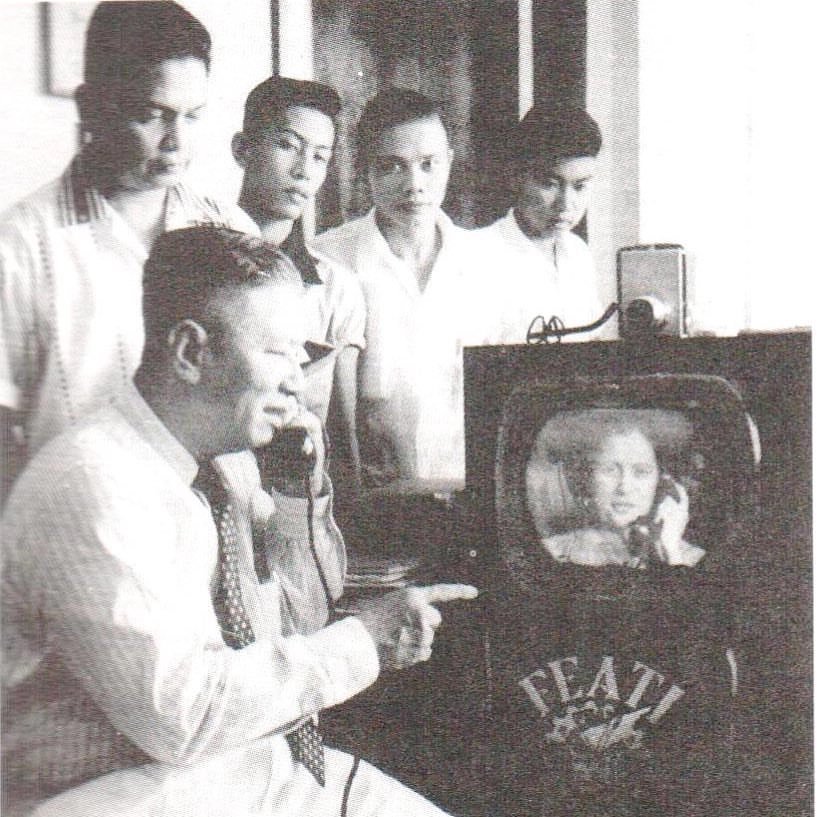
As for documentation, we do have this photo that shows Zara using the device, looking at a television-like screen showcasing a woman on the other side of the call, the both of them able to see and hear each other.
More Than Video Conferencing
The two-way telephone wasn’t Zara’s only contribution to the world. He also discovered a law of electrical kinetic resistance, which was named “The Zara Effect,” after him; invented an alcohol-based fuel that was used in an airplane flown at the Manila International Airport on September 30, 1954; and already began working on improved methods of harnessing solar energy through a solar water heater (SolarSorber), sun stove, and solar battery, as detailed in a report by The Kahimyang Project.
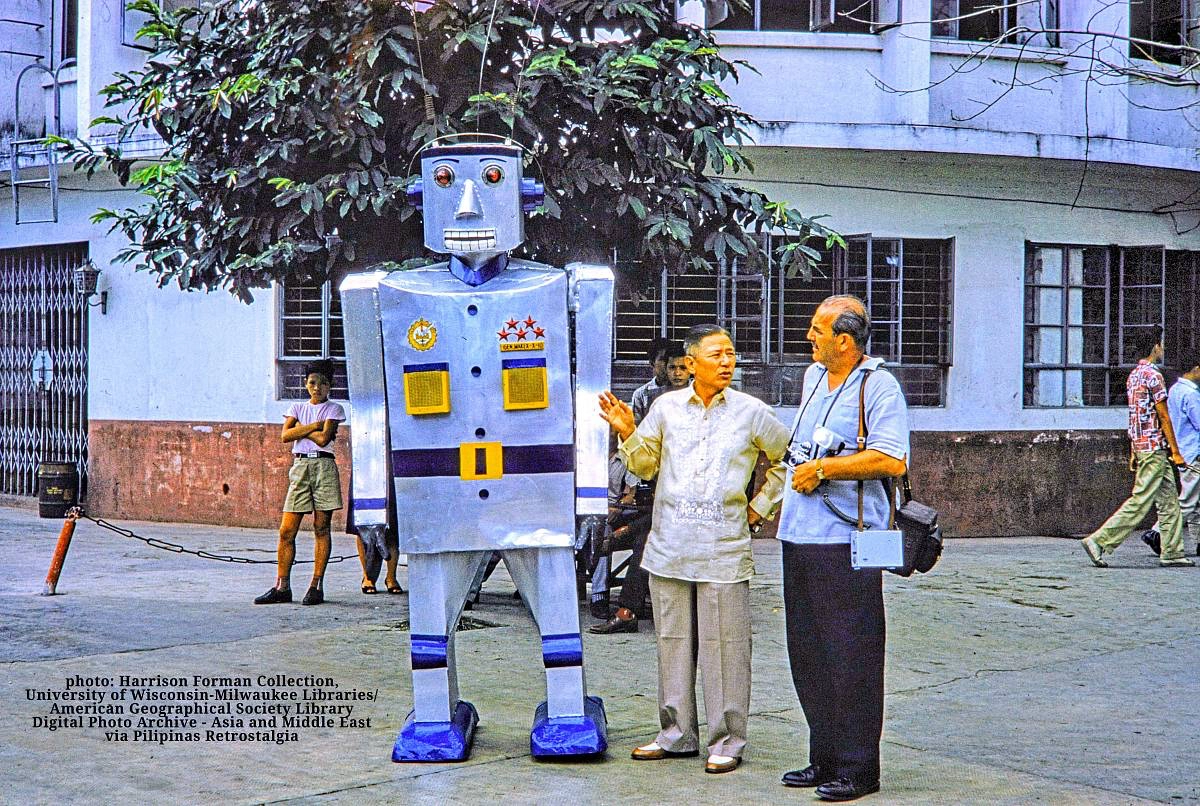
He also, apparently, invented a robot called General Marex X-10, which was capable of talking, walking, and obeying directions. The only way I can prove this is through a photo from American photographer Harrison Forman, under the University of Wisconsin-Milwaukee Libraries. This happened around the time Zara was teaching at Far Eastern Air Transport Incorporated (FEATI) University in the 1960s, a leading educational institution for aviation in the Philippines. One user in the Facebook group the photo was posted in, Pilipinas Retrostalgia, was once a student at FEATI, and confirmed that the robot was an attraction during foundation day celebrations.
Zara eventually passed away from heart failure on October 15, 1978 at the age of 76, but not without his well-deserved title. He was conferred the National Scientist Award that same year, and given a a state funeral at the Libingan ng mga Bayani.
So yeah, as I said, pretty amazing. It’s information like this that, obscure and difficult to find as it may be, makes you wonder just how much talent has dissipated from our collective consciousness over the years. Zara might not be the definitive inventor of video conferencing, but the next time you enter an online meeting or chat with a loved one abroad, think about a fellow Filipino who already started weaving the threads of this connective future long before the world ever believed in its commercial viability.
Zara says it best in a quote shared by the National Academy of Science and Technology (NAST) Philippines: “What we are today and how we live will be determined by our continuing search for truth and knowledge beyond present frontiers.”