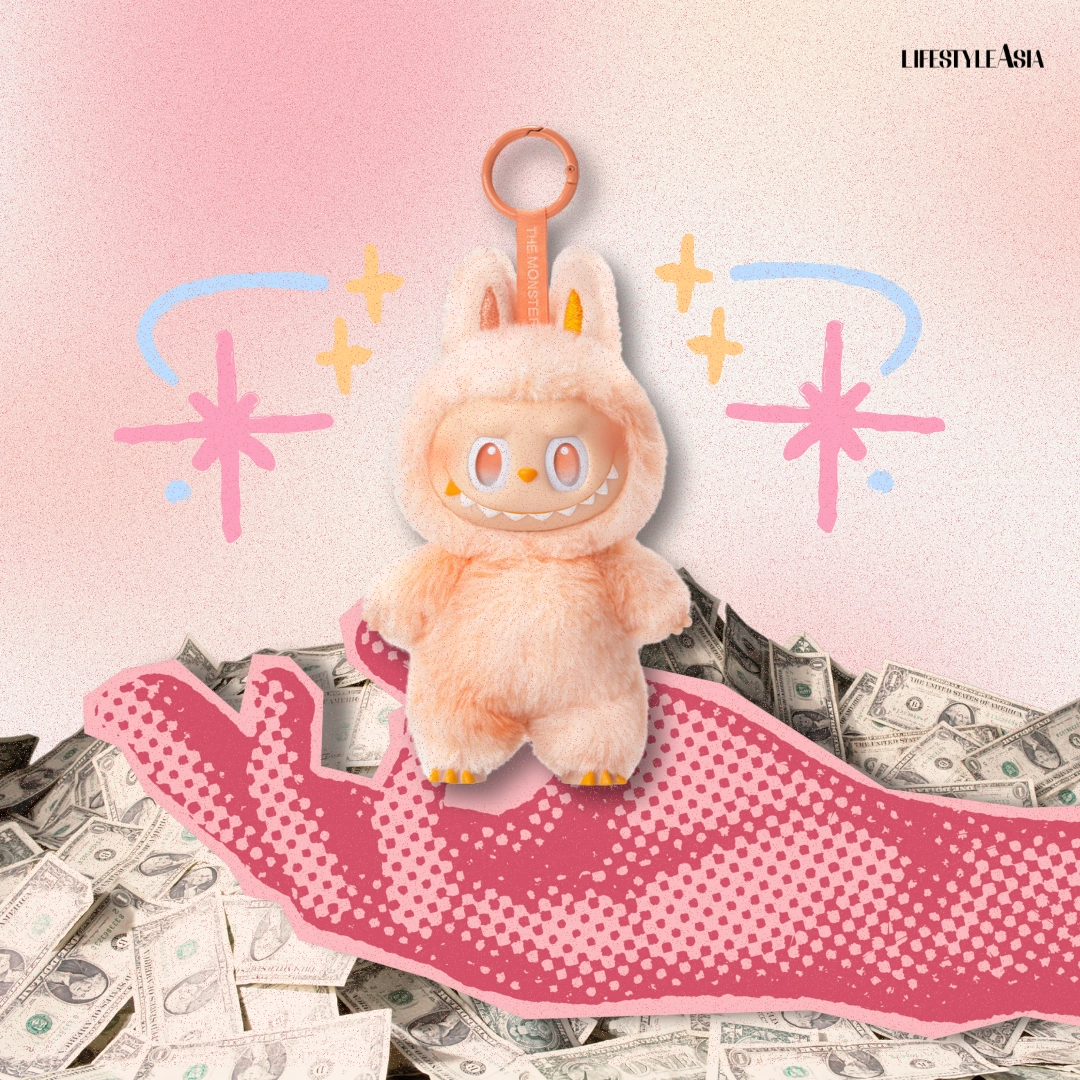
Blind boxes—like those of Pop Mart’s Labubu characters—are having a moment; sure, it might just be a passing trend, but it’s certainly a pop culture phenomenon.
The year is 2025. You step inside a Fully Booked (pick any branch, really) and find people flocking some displays. Then, you look around and find even more people in a winding line, each balancing what appears to be several small boxes in their arms. It’s a diverse crowd: you have your average Manila titas armed with designer handbags, young professionals, high school students, grade schoolers with their parents, and couples. It’s difficult to describe the demographic, but far easier to spot what unites them: an eclectic mix of adorable and oftentimes endearingly quirky collectible characters enclosed in colorful packages—or “blind boxes,” as they’re formally referred to.
When I say “you,” I really mean “I,” but this specific scene—one I’ve seen so many iterations of as a frequent visitor of the local bookstore—is something I assume most Filipinos have experienced or witnessed at least once in their lives. Alright, let’s say you don’t go to Fully Booked: surely you’ve seen those weird, fuzzy, rabbit-like creatures with sharp teeth and silly grins dangling from the bags of relatives, friends, celebrities, and strangers, both in real life and across social media. These “elvish creatures” designed by Hong Kong artist Kasing Lung are called Labubu—and today, they’re one of the most popular characters of Chinese toy company Pop Mart, having quickly become the face of this blind box craze.
If it sounds like I’m speaking gibberish or an alien language, I get it. The world of blind boxes is a complex ecosystem that I can’t hope to fully capture. But armed with curiosity and research—while having quietly observed from the sidelines and even participated in the blind box craze to a certain extent—I think I can at least help unpack (or rather, unbox) why and how this all came to be for the uninitiated, and those curious about the intricacies of their current obsession.
READ ALSO: The Death Of Chunky Sneakers And The Rise Of Thin Shoes
What’s A Blind Box?
Pop Mart defines a “blind box” as a sealed package that contains a figure—though, as the name implies, buyers don’t know what kind of figure is inside until they open the packaging. This adds an element of surprise to the product, which as you can guess, gets people really excited. Though more than just keeping figures a surprise, the blind box system does a couple more things to up the ante, so to speak.
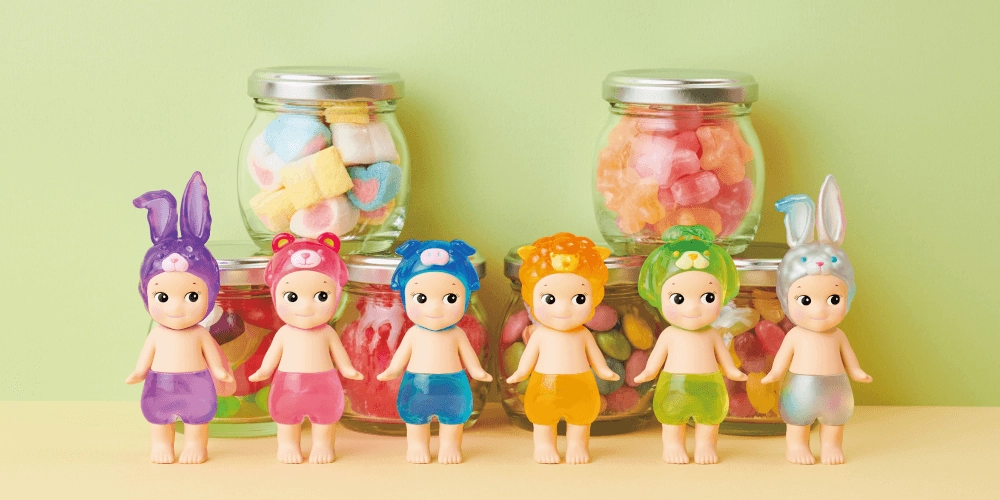
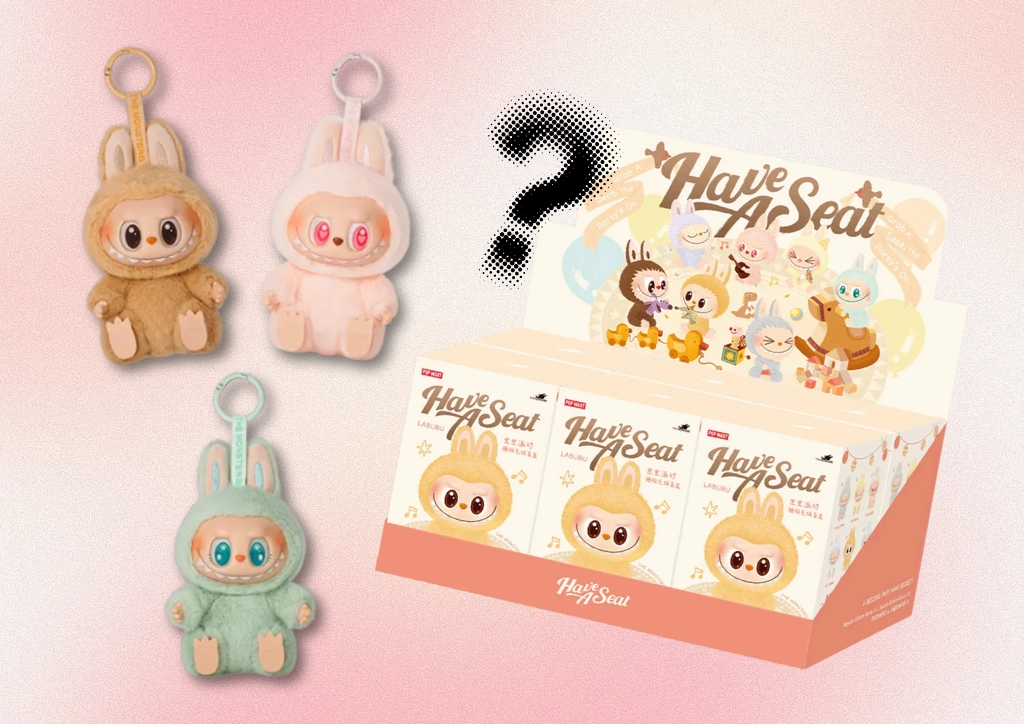
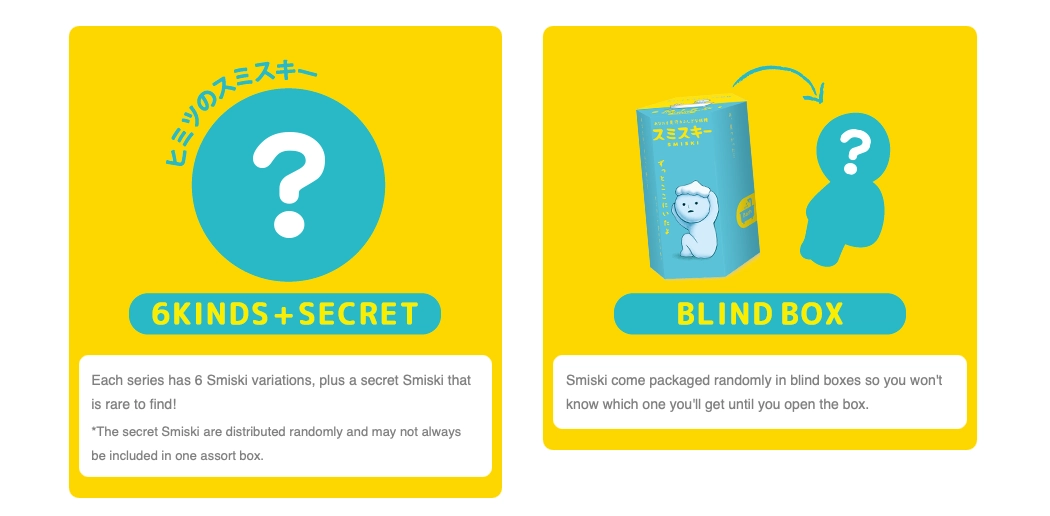
Normally, blind boxes are released as “sets.” A single character can be featured in dozens of sets, which are usually themed—resulting in modifications to their poses, costumes, and other elements of their design. A single set will have a certain amount of unique figures: for instance, a flower-themed set of 12 will have 12 unique figures. In this set, you could possibly get what’s called a “secret,” “hidden,” or “chase” figure: a very rare, extra design that you have maybe a one in 144 chance of getting.
Think of it as the golden ticket or lottery jackpot. Sure, the other figures are still nice—and maybe you’re the type of person who’ll be content with anything you get—but for many avid collectors, it’s the “chase” that comes with seeking these secret items that pumps an extra dose of dopamine and adrenaline into their hobby.
As with any collectible, the items within these blind boxes have a secondary market. Whether opened or unopened, it’s here where buyers can resell or trade their blindboxes—either in hopes of getting their favored design, or making some extra cash by selling the rare or secret items they get.
It’s A Surprise: The Origins Of A Trend
The success and popularity of blind boxes seem to have happened overnight, especially for those new to the collectible scene. You can now divide life into two hilarious categories: before Labubu and after Labubu. But blind boxes, and the cute little characters they revolve around, are nothing new—even preceding the inception of hit manufacturer Pop Mart itself, though they can safely be credited for having brought it to an even broader audience around the world.
Blind boxes trace their origins, unsurprisingly, to Japan—the land of everything adorable and collectible. Charming characters are quotidian here, from the country’s iconic Sanrio gang to its huggable city mascots. Then there’s the concept of the blind box, which may have been born from the Japanese New Year tradition of fukubukuro that gained traction in the 1980s: “lucky bags” that merchants would give out during festivities, each sealed to hide the surprise contents inside.
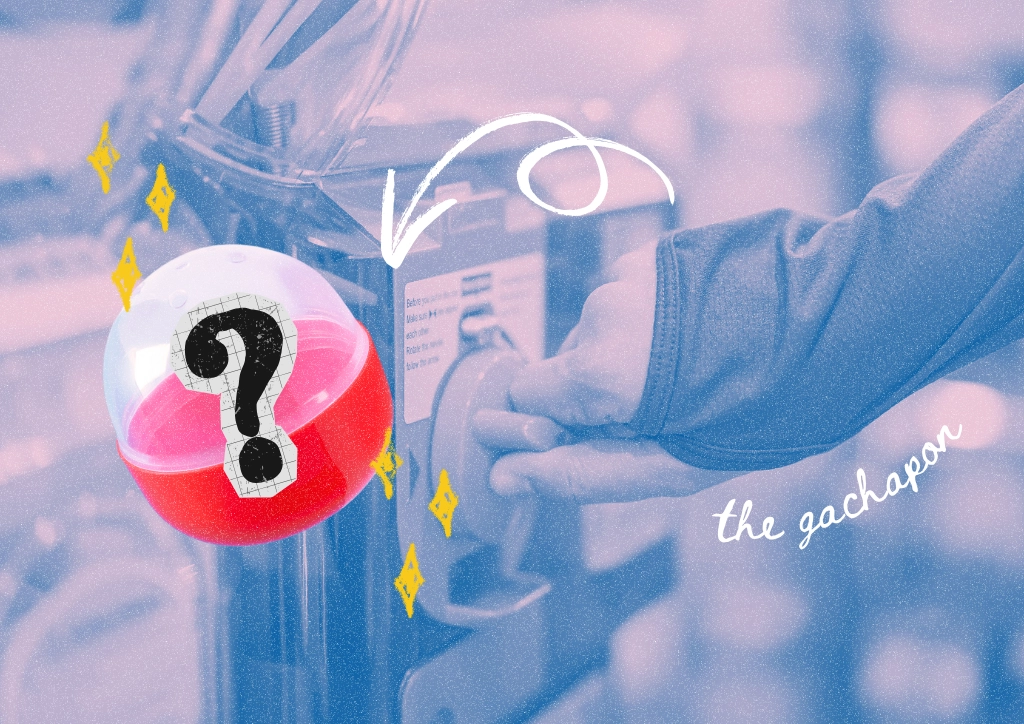
Japan’s beloved gachapon machines also work within a similar system: an assortment of toys in a series are placed inside plastic egg-like capsules, which are then placed inside a special machine. Customers can purchase tokens for one toy, inserting them into the machine, twisting a knob, and waiting for a capsule to roll down—participating in the thrill that comes with never knowing what you’ll get.
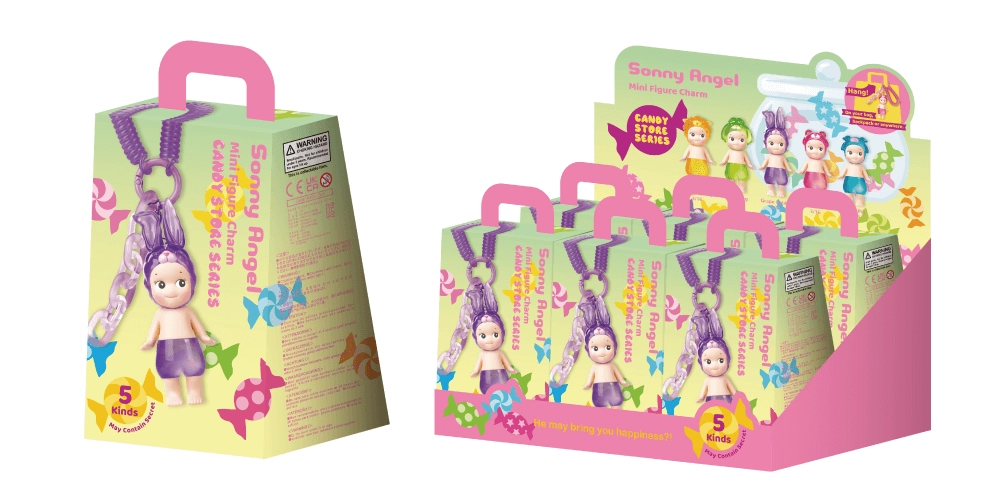
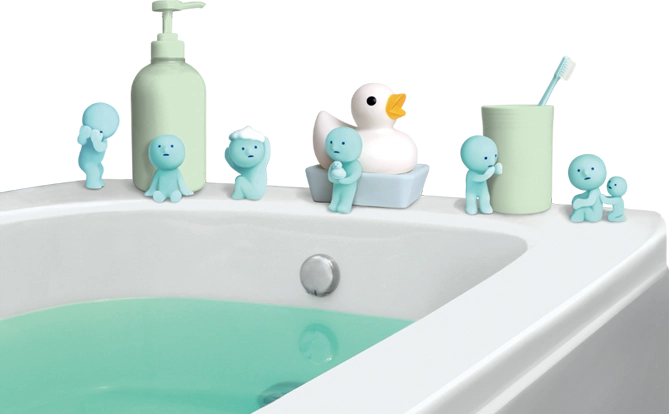
Even before Pop Mart exploded, Japanese brands were already selling blind box collectibles. Fully Booked, despite being a bookstore, managed to somehow predict and jump into the trend far before Pop Mart entered the country, already selling Sonny Angel and Smiski figures (more about these little guys later). I recall my mom and sister buying a few Sonny Angels and Smiskis during this strange, liminal period of inactivity; initially, I couldn’t understand why they were fawning over naked babies in hats, and green, bald glow-in-the-dark humanoids priced at roughly ₱500 pesos each, but I’m eating my words now with a few of my own (what can I say, I’ve fallen for their je ne sais quoi).
The Blind Box Boom
Sonny Angel and Smiski figures were already experiencing a rise in popularity due in large part to social media: users, particularly girls who were aiming to achieve that artsy and cute aesthetic, would incorporate the figures in photos or add them to videos for that pop of whimsy.
Speaking of videos, unboxing videos featuring these blind box figures also began to gain steam: viewers not only got to participate (secondhand) in the suspense of the reveal, but were also encouraged to buy and unbox their own surprises. Just search for these reveals on TikTok, and you’ll find yourself falling down a long, seemingly unending rabbit hole.
Then Pop Mart comes into the picture and really brings the blind box hype to a frenzy. Entrepreneur Wang Ning began Pop Mart in 2010: back then, it was a store that sold a myriad of items. However, he and his partners eventually decided to specialize in just toys—their bestselling items in 2014. Inspired by the idea of gashapon, he packaged these toys in blind boxes, and collaborated with different artists to create lines based on their own characters.
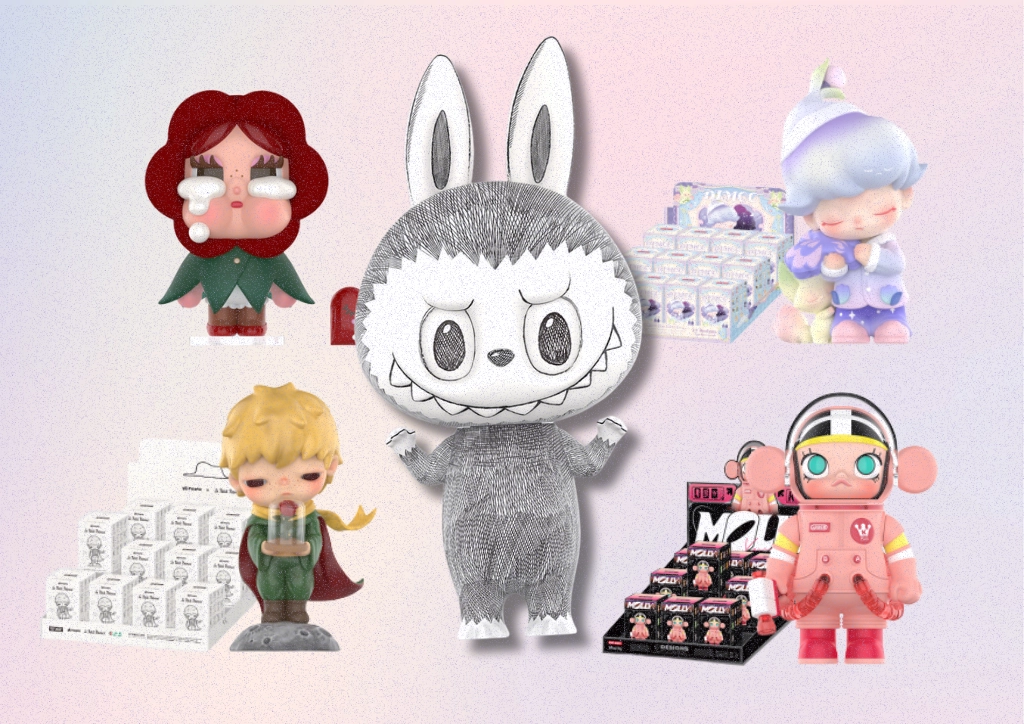
One such artist was Kasing Lung, whose Labubu creatures initially appeared as children’s book characters. Part of the Pop Mart line “The Monsters,” these mischievous beings form a tribe with their fair share of lore: the small, tail-less members are called “Labubu,” while the leaders of the group, “Zimomo,” are bigger and possess tails. These figures come in different sets and editions, some more like displayable statues, others taking the form of soft bag charms (the “keyring” series)—arguably the most popular version of the Labubu line. They can cost anywhere from ₱600 to ₱11,000 depending on the kind of figure you’re getting.
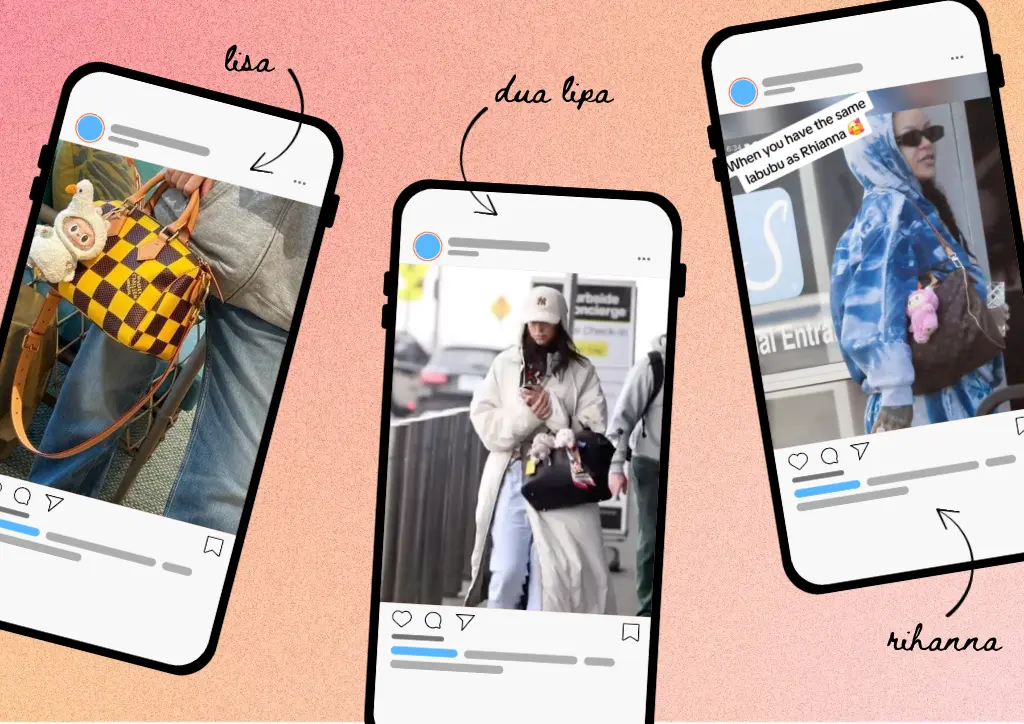
Like Sonny Angel and Smiski, influencer power played a big role in the Labubu’s rise to fame. Yet its explosion was further bolstered by big celebrity names. Rihanna was pictured with a hot pink Labubu of her own, Emma Roberts made a funny Instagram story featuring her Labubu obsession with the song “Oops!…I Did it Again,” and Dua Lipa had a pair of Labubus hanging on her bag too. The celebrity who gave the critters a big spotlight, however, was none other than Lisa of the K-pop group Blackpink. Besides proudly showcasing a Labubu on her Louis Vuitton bag, she also went all out during a Vanity Fair interview, giving viewers the lowdown on her obsession with Pop Mart—the video has more than two million views, and if that’s not the ultimate marketing gift, I don’t know what is.
We can write off the Labubu and blind box craze as a passing fad—but more than a year since its explosion, the trend is still going strong. It’s not just Labubus, of course, though they’re the ones we see most often. The power of Pop Mart comes from its wide range of characters, and their limitless iterations—there’s really something for everyone.
The Pop Mart Empire
Pop Mart’s first pop-up store in the Philippines arrived at the SM Mall of Asia; I didn’t see its early days myself, but based on stories from friends, the line snaked past the entrance for days. I don’t find that particularly hard to believe, given the constant stream of crowds coming in and out of various Fully Booked branches, which sell just a fraction of Pop Mart’s collectibles; as well as the many customers I see crowding the Pop Mart pop-up in SM Makati.
I can only imagine the excitement, hype, and downright insanity outside of the country. Recently, the BBC reported that Pop Mart stores have pulled all Labubu dolls from their 16 UK branches due to skirmishes that happened while customers were lining up—in one branch, an intense fight broke out between a customer and employee. The New York Times details how people in a Pop Mart store in Los Angeles queued overnight just for a chance to get merchandise. Fans of the toys have expressed outrage at resellers who aggressively hoard and sell figures at unreasonable prices.
Pop Mart, for better or worse, isn’t just capturing people’s attention; it has become a point of fixation for many—and therefore one of the most lucrative businesses out there today. And why wouldn’t it be? The whole system is built to keep buyers on their toes, to encourage them to come back for more. Either they buy an entire box series to save themselves the trouble of chasing rare figures; or they buy in increments, waiting to finally get what they’re searching for. Bloomberg states that Pop Mart is “defying the trade war,” managing to be a bright spot in China’s economy despite all odds.
Pop Mart’s e-commerce platform kept it alive even during the pandemic, as the South China Morning Post details, and it continues to be a fast growing business with more than 200 stores in 21 countries; over 1,000 vending machines selling their products; and even licensing deals with Walt Disney and Universal Studios.
Just last April, Forbes announced that Pop Mart chairman and CEO Wang Ning became $1.6 billion richer in a single day. What’s more, the Pop Mart International Group currently holds a fortune of roughly $16.1 billion, according to the Forbes Real Time Billionaires List.
In 2024, around 40% of the company’s total revenue came from sales outside of mainland China, based on the brand’s official annual report. Yet JPMorgan Chase predicts that these overseas sales may shoot to 65% by 2027, as the South China Morning Post reports. In May this year, Pop Mart also eclipsed $38.3 billion in market capitalization, making it the seventh most valuable company in the Hong Kong stock market.
Addiction, Comfort Characters, And Everything In Between
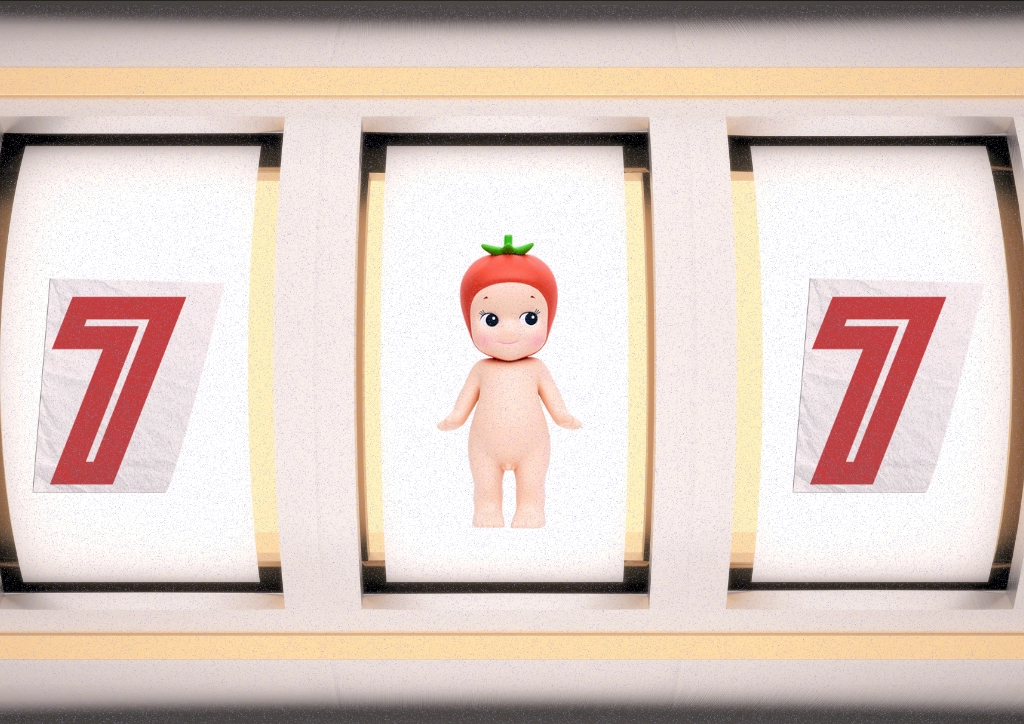
It might be time to address the elephant in the room after soaking up all this information: is the obsession with blind boxes a kind of addiction? There’s no clear answer, for now, but the system seems all too familiar: it may just be the spiritual successor to gambling (though collecting toys is ostensibly more harmless than slouching in front of a slot machine the whole day).
One study for BMC Psychology by Xia, F., Xu, Y., Zhang, H. et al. states that while the uncertainty that comes with blind boxes can enhance their market performance “through the lens of positive emotional experiences and optimistic outlooks,” this very same strategy can also result in “abnormal consumer purchasing behaviors, such as impulse buying and addictive consumption.” In other words, the unpredictability of blind boxes can be thrilling, but the breathless race towards a desired outcome can also keep you stuck in an endless loop of buying to complete a set or series.
Another study by Shoufeng Chen for the Journal of Education, Humanities and Social Sciences points to the use of scarcity marketing in blind boxes: the release of limited edition items, including secret figures, that increases demand and keeps consumers purchasing these products.
“Post-purchase rationalization is a strategy used by consumers to justify their purchase decisions when they feel doubt or regret,” the study writes. “Pop Mart taps into this by offering limited editions or rare items that encourage collectors to view each purchase as a potential future investment, further rationalizing repeat purchases. Consumers also downplay the financial costs by focusing on the joy of participating in the ‘collecting’ culture and community, reinforcing their purchasing behavior. Over time, this rationalization strengthens customer loyalty and keeps the blind box craze alive.”
A part of the blind box experience is either getting the same figures or ones you don’t want—and when that happens, there’s an itch that tells you “just one more time” as you buy another box (or more), except it’s never the last time. Rinse and repeat. It’s consumerism at its finest, if we’re to take a more cynical approach to things.
But this isn’t a call-out to anyone who enjoys the blind box collecting hobby. This writer has experienced the kind of “happiness hit” that happens when you get a box, pop it open, and find something cute. I’ve felt that itch a few times, though I personally can’t go any deeper—it’s not a wallet-friendly pastime by any stretch of the imagination, which I suppose, makes it a luxury.
While studies will clinically examine this sense of community that comes with collecting toys, I’ve seen it play out in real time among strangers and friends. There’s undeniably a kind of joy that arises when you get exactly what you hoped for. I see a unique kind of camaraderie when groups of friends open their boxes at the same time, comparing figures and taking pictures together. Quite a few collectors even take their figures with them wherever they go, ready to make them the star of their next food or travel photoshoot.
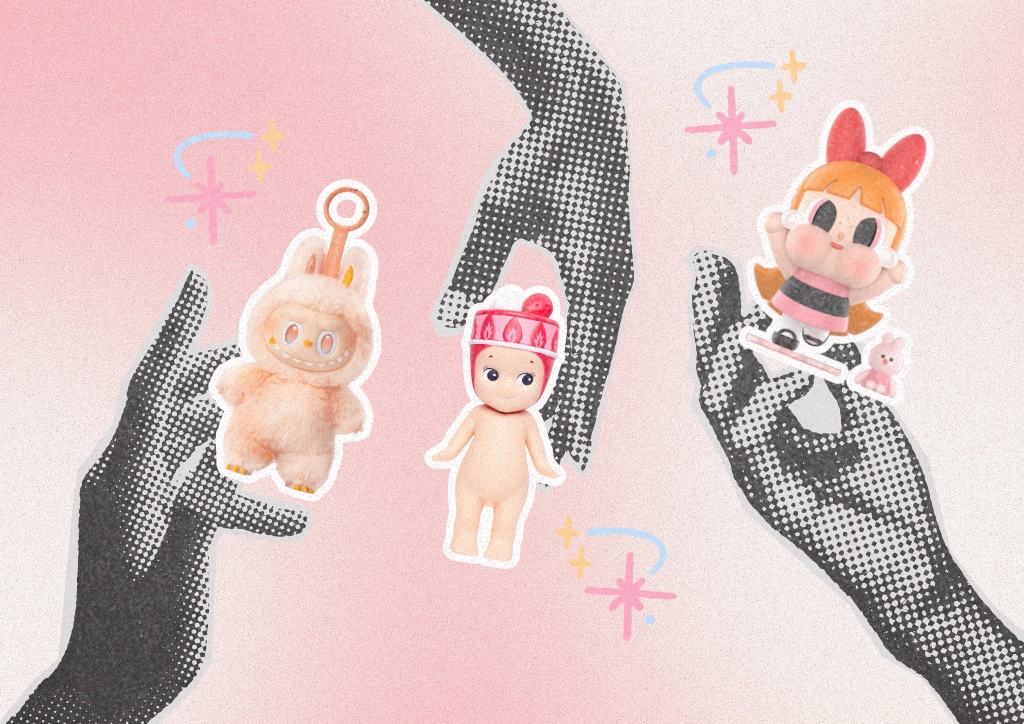
Is it “healing your inner child,” as the internet likes to call it? Maybe. In such a stressful, fast-paced, busy world, are we really so aghast at the idea that people find comfort in the things they loved as kids? Something soft and sweet, and yes very silly, in a society that can feel quite hostile and complicated, is a welcome thing. It doesn’t take much to understand that, and it makes sense when you look at the origin of some of these blind box stars. Sonny Angel, for instance, was created by Japanese designer Toru Soeya in 2004 to alleviate the stresses of young working women in Japan. Smiski, those humanoid figures with humorously vacant expressions, were meant to bring a sense of wonder and happiness into the lives of people through their funny poses.
Who knows if the blind box craze is here to stay? Humans are naturally volatile, prone to dropping trends as fast as they pick them up (only for them to return in some other form years later). I’ll end with this scene I witnessed a few weeks ago between a young couple: they’re opening Pop Mart’s Crybaby x Powerpuff Girls-themed blind boxes together. The woman stomps her feet in mock frustration, sighing as she pulls out a Mojo Jojo figure; the man smiles, showing his own matching toy. “Maybe next time,” he comforts her. They both laugh, and really who knows if they’ll get what they’re looking for—they seem happy in that moment, something that may one day be a pleasant memory, and perhaps that’s what it’s all about.
Photos from the Pop Mart, Sonny Angel, and Smiski websites (unless specified).