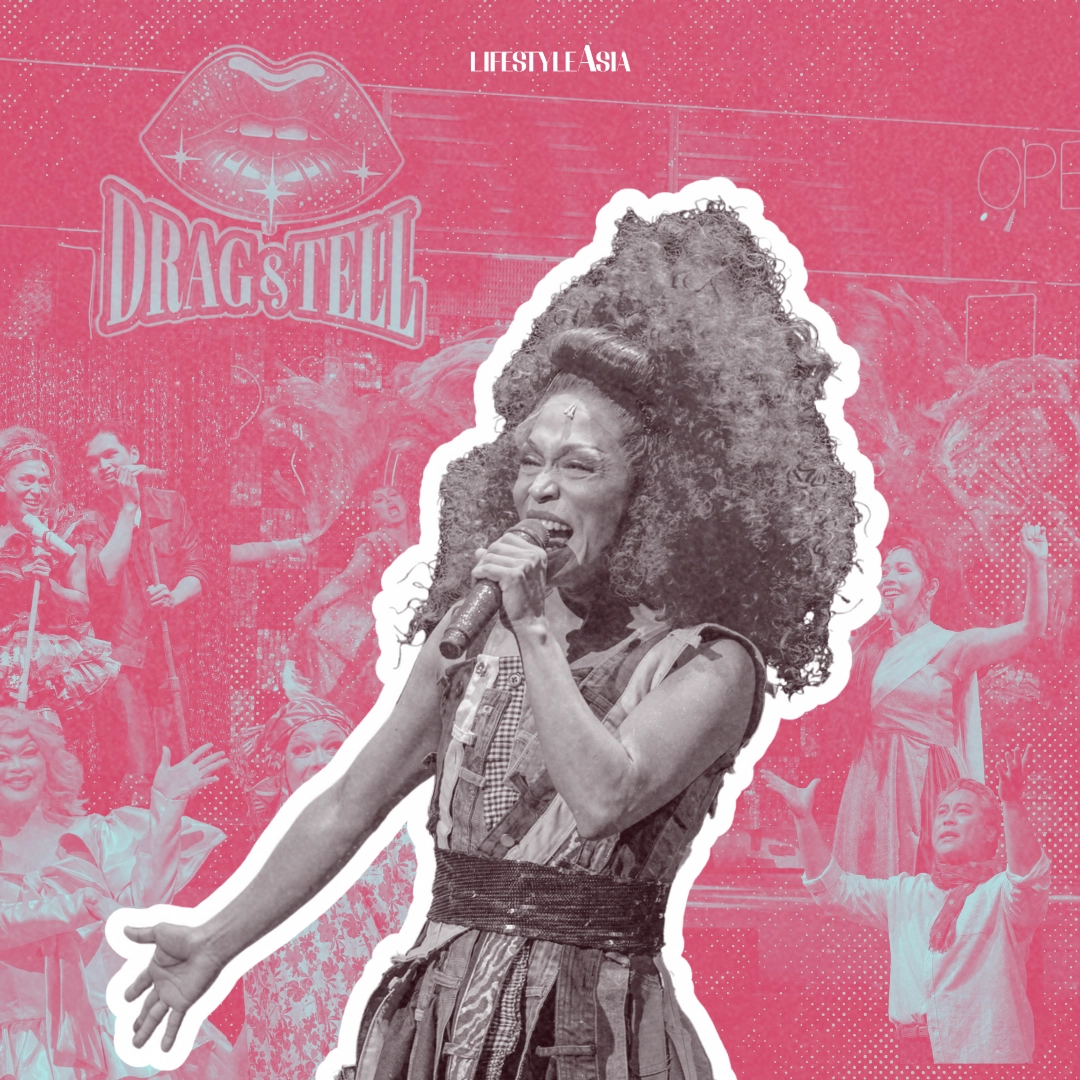
Delia D., like its eponymous protagonist, is many things: part satire on the Philippine entertainment industry, part love letter to drag, and a bittersweet examination of selfhood that embraces camp—and does so with finesse.
What if you wanted to be the world’s—okay fine, let’s settle for country’s—greatest singer? But here’s the catch: you’re not actually very good at singing. This is the unfortunate dilemma that Delia (played to perfection by Phi Palmos), the drag queen protagonist of hybrid musical Delia D., finds herself in. But the thing is, she doesn’t see it as an insurmountable obstacle: simply a hurdle to jump over. It’s an admirable kind of grit, a much-needed optimism in the tough world of showbiz where the odds are so often stacked against you, what more when you’re part of a minority group.
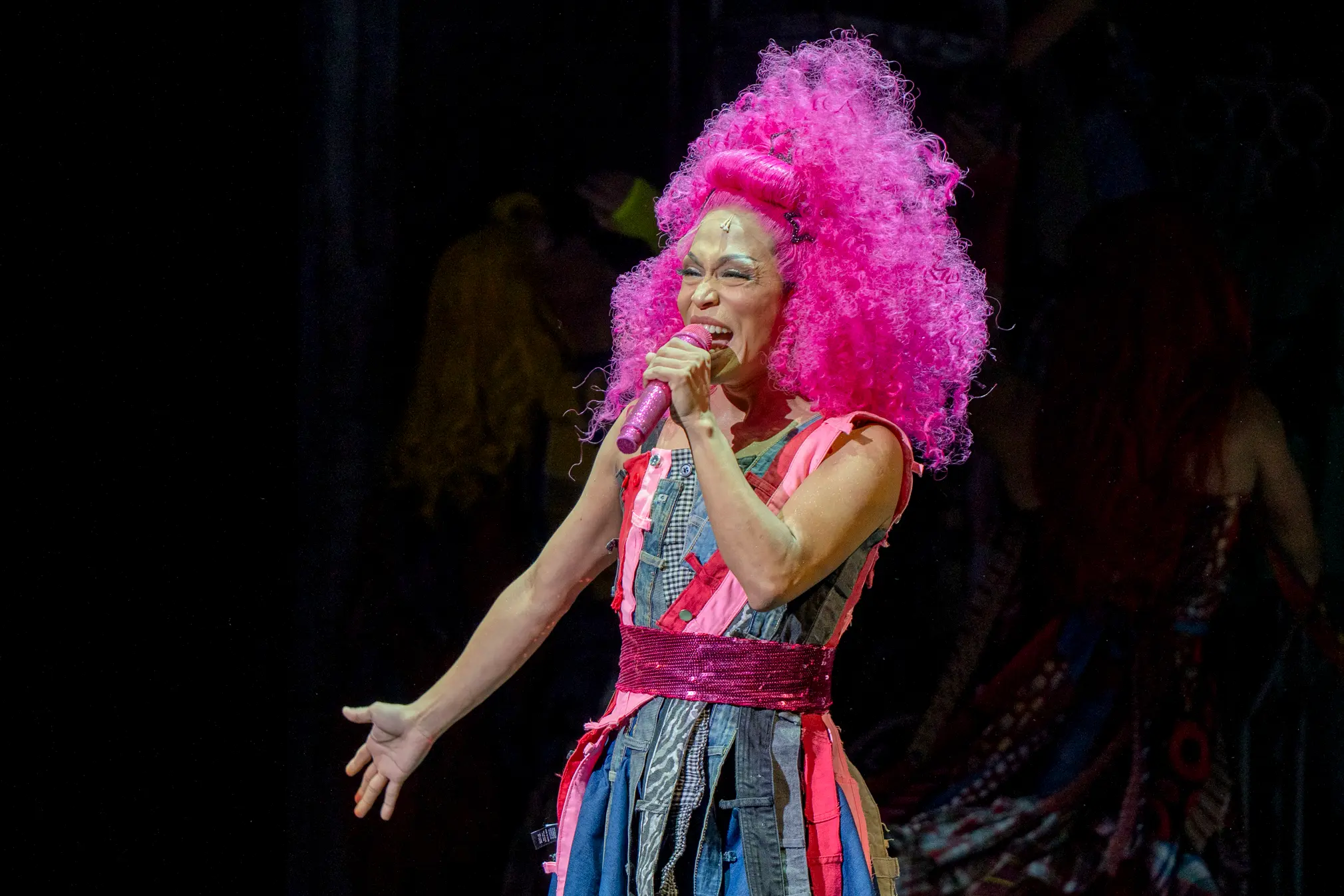
Staged in the Newport Performing Arts Theatre, Delia D. is directed by Dexter M. Santos, based on the script of playwright Dolly Dulu. The show features the music of songwriter Jonathan Manalo, who made a name for himself producing a wide range of songs for ABS-CBN programs. From screen to stage, compositions like Morisette’s “Gusto Ko Nang Bumitaw,” Angeline Quinto’s “Patuloy Ang Pangarap,” BINI’s “Blooming,” and Vice Ganda’s “Boom Panes” have found a new life in the brand new musical—and there’s no denying its talented cast gives it their all with a shimmering spectacle of high-energy numbers and innovative set designs.
READ ALSO: Hello, Dolly de Leon! (A Conversation With An Actress Who Speaks Her Truth)
In Delia D., The Shows Must Go On
If you’re to break down Delia D.’s narrative devices, it’s really a set of little shows within a bigger, overarching plot. Which, hear me out, could be said about most musicals—but these shows have their own little ecosystems and politics. There are still moments when people burst into song, but they feel more like natural, necessary parts of the narrative because of the events that frame them.
These shows can be broken down into two categories: drag shows at the bar “Drag & Tell,” and the singing competition, Idols of the Galaxy (which as anyone can guess, pokes a bit of good humored fun at shows like The Voice and American Idol). Drag is the starting point, the beginning that introduces us to Delia— or to follow her stage name, “Just Delia.”
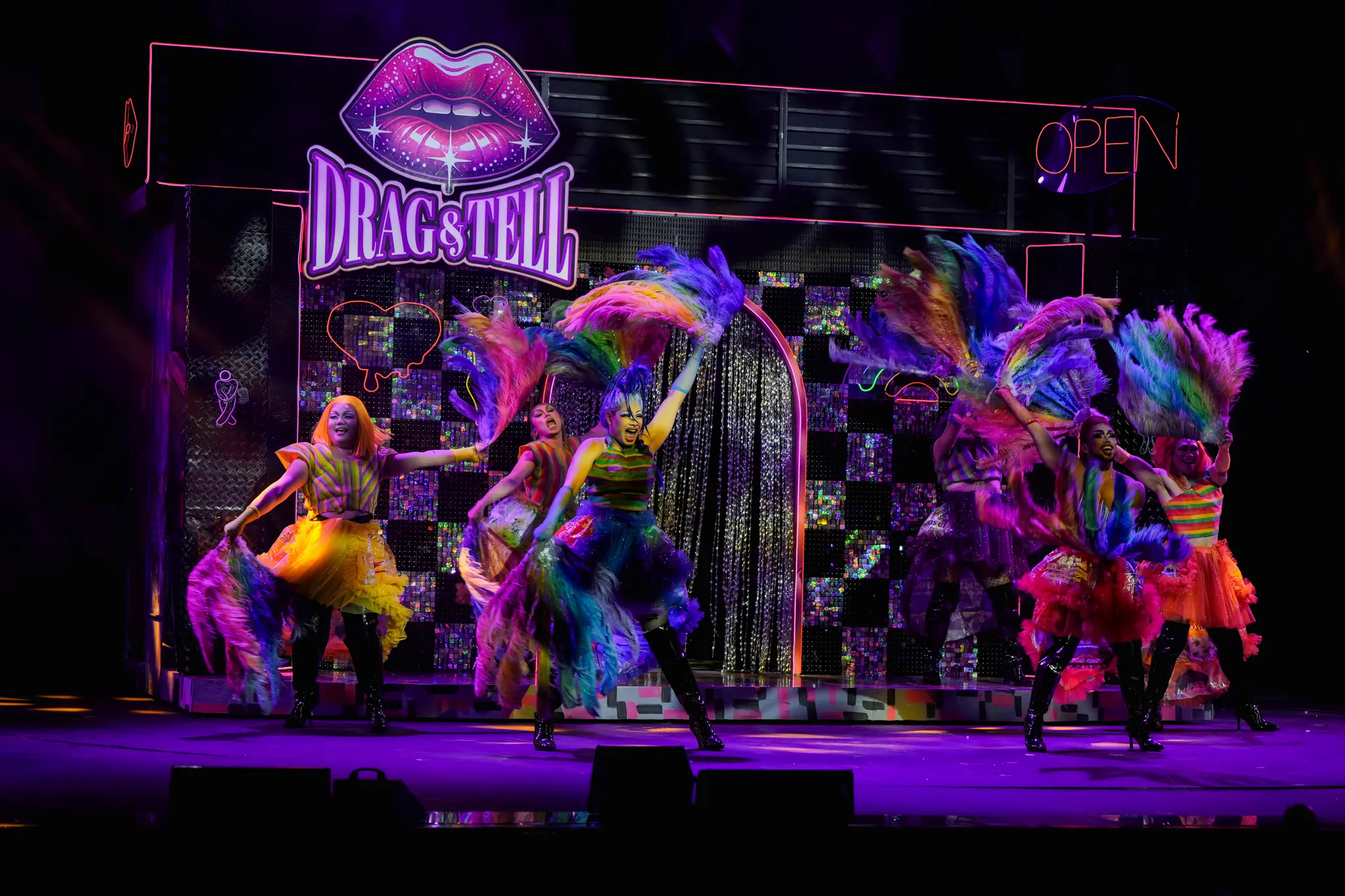
Right from the get-go, the musical hooked audiences with a series of flamboyant, glittering drag performances that felt like entire productions in themselves. Delia’s group of “D’Divalettes” is a dazzling ensemble of queens, played by Bomba Ding, Chesko Rodriguez, Almond Bolante, Franco Ramos, Sebastian Katigbak, and Aira Jay Igarta. The hair and costumes (by Johann Dela Fuente and Mitoy Sta. Ana, respectively) honor the glamor and pomp of drag with decadently creative looks.
Then there’s Idols of the Galaxy, the newest project of entertainment network JBC: an attempt to gain more audience traction amid a lull in viewership. It’s the center of the plot’s conflict: like the embedded narrative it is, it takes us through all the catty fights, blooming romances, growing friendships, and showbiz shenanigans one would see in a singing competition created for clout; and Delia stands in the eye of the storm.
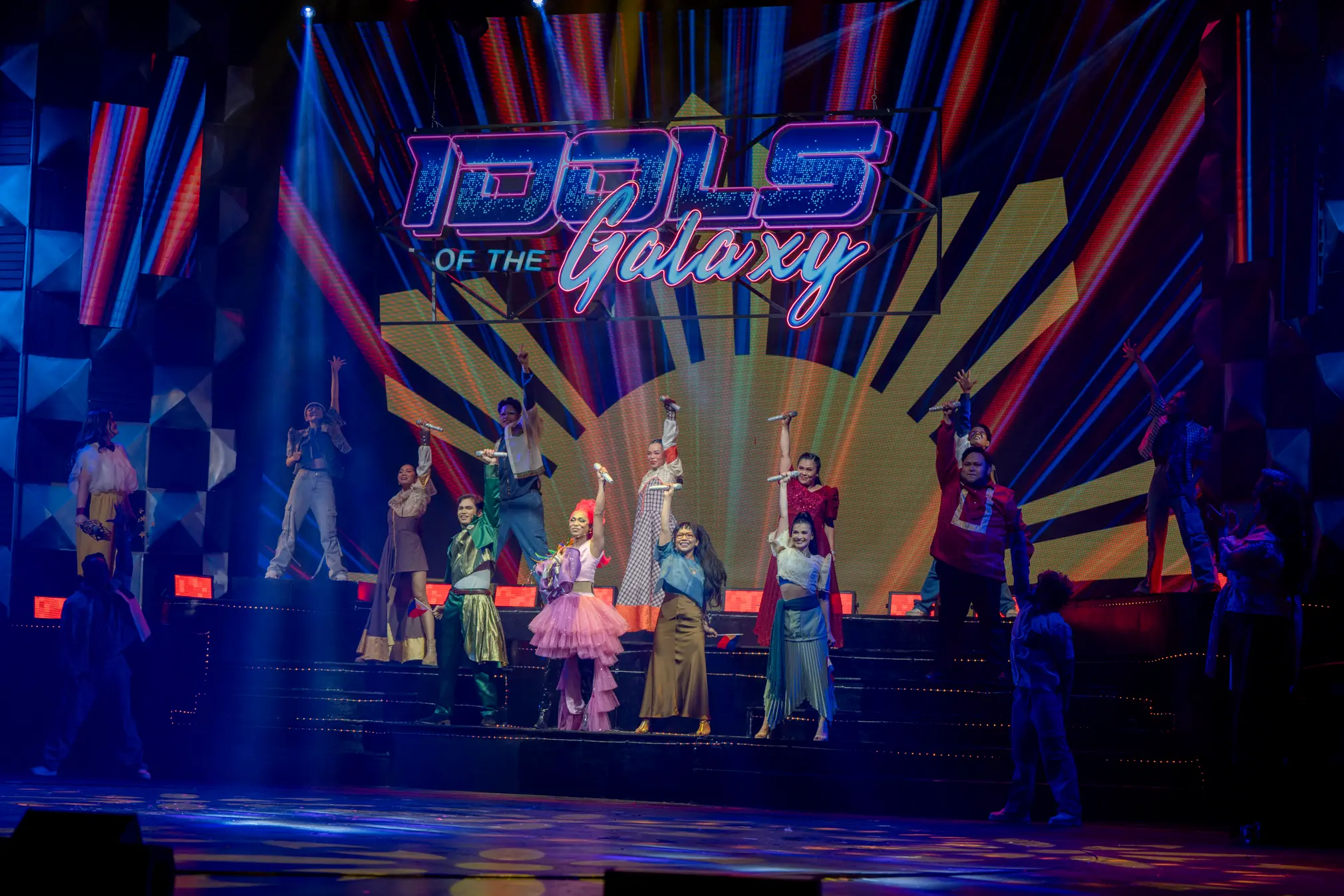
The musical utilizes LED screens to create a multimedia experience showcasing “live” audience reactions, posts, and comments across social media platforms, which meshed well with the story’s competition structure. Live music completed the production, especially the talent show segments.
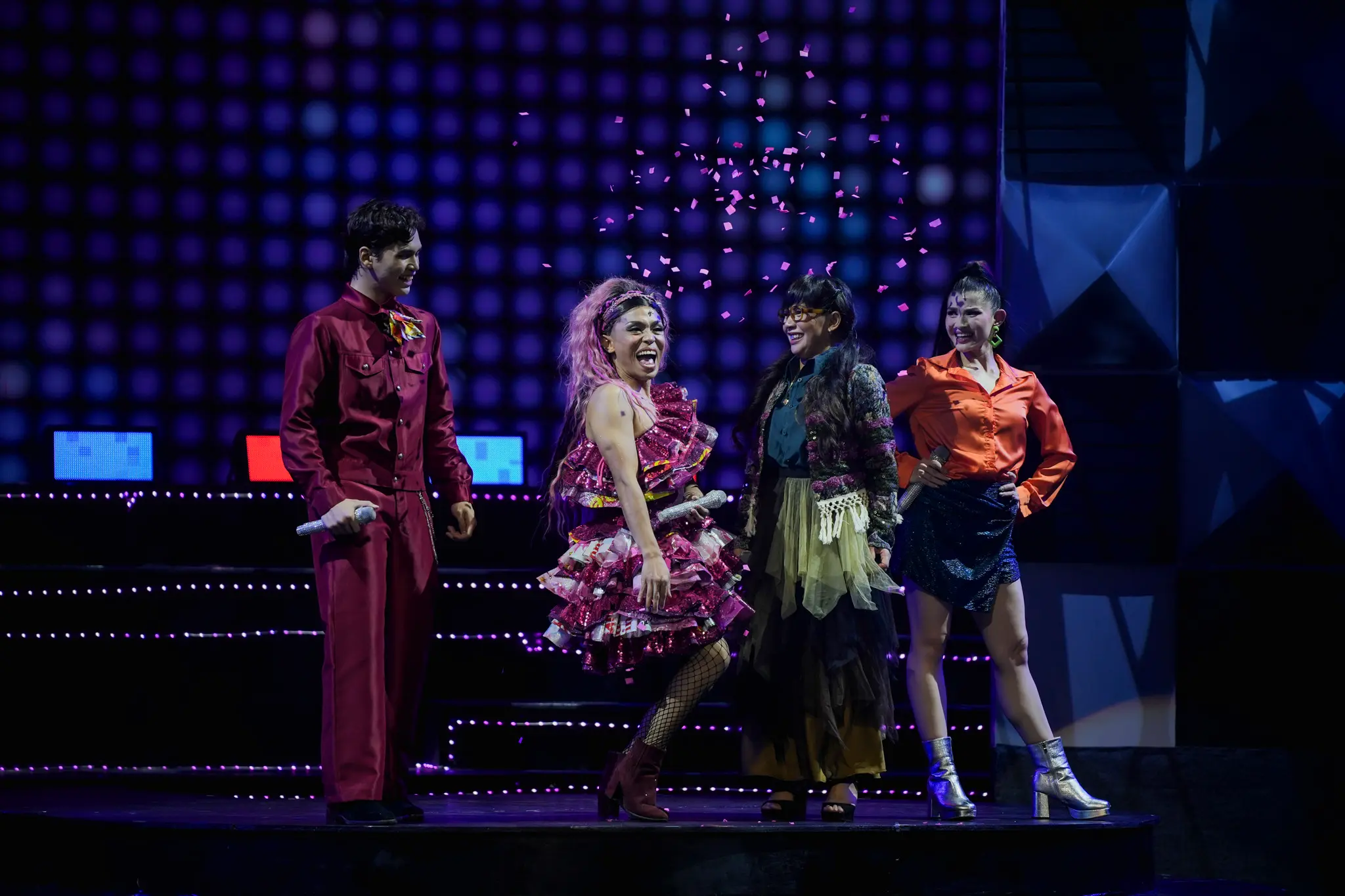
The supporting cast of Idols of the Galaxy contestants deserve an applause as well, helping carry the show with stellar singing and utter dedication to their roles as they mirror the exaggerated stereotypes of entertainment. I’m talking about the resident conyo mean girl Phoebe (Chaye Mogg); the maldita but undeniably talented judge Miss Mamon (Tex Ordoñez-de Leon); heartthrob and love interest Raymond (Omar Uddin); the hilariously clingy lovebirds Billy and Sheryn (Alfritz Blanche and Natasha Cabrera); and the anxious-but-secretly-talented nerd Kiki (Shaira Opsimar), who later becomes Delia’s best friend. Speaking of Kiki, Opsimar kept delivering one spectacular performance after another; for a moment, it seemed like audiences forgot they were watching a musical about a singing competition, claps and hoots echoing across the theater and tailing her impressive belting.
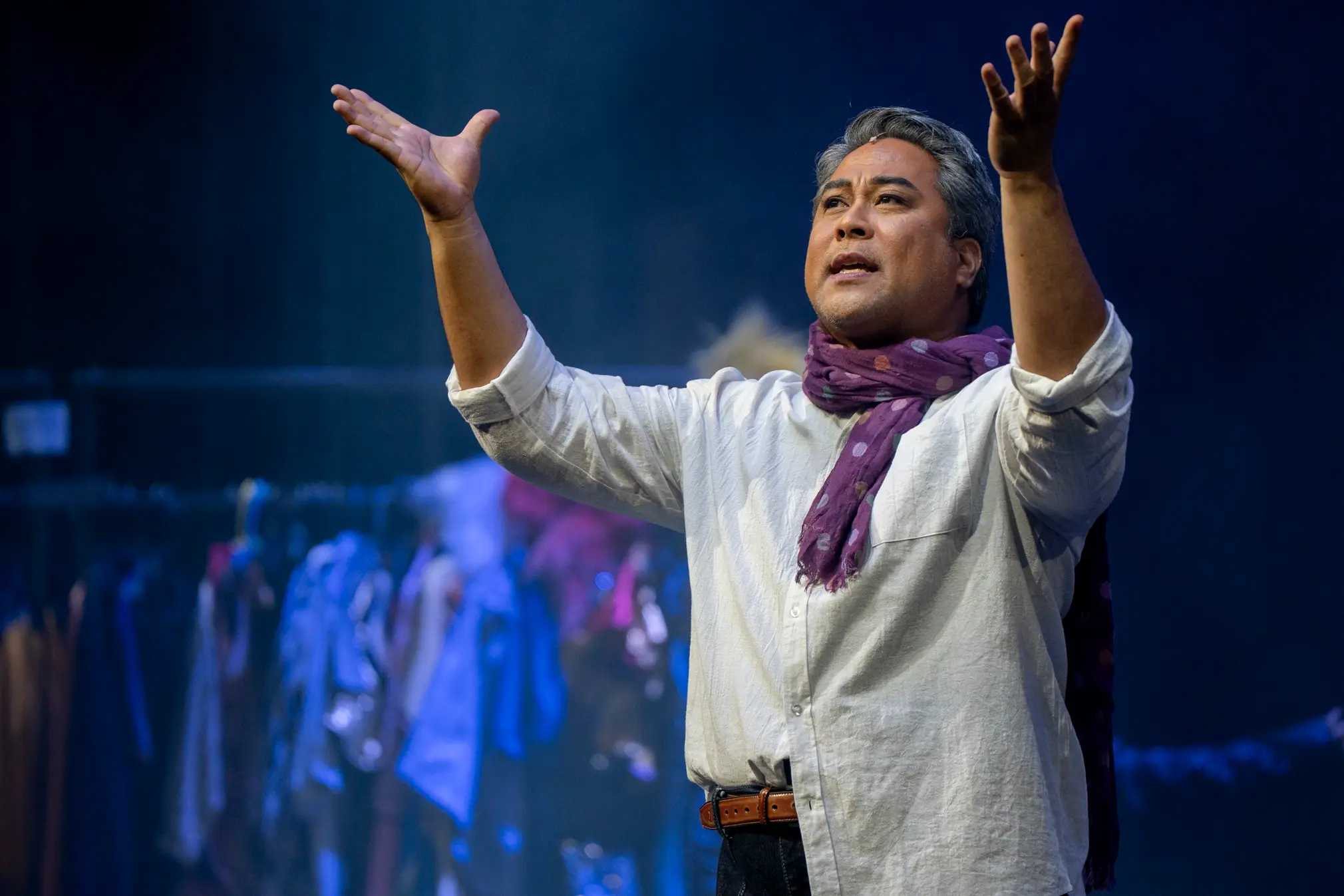

Who’s The Real Delia: An Exploration Of Identity
Initially, Delia’s dreams are simple. She wants to use her actual voice, to put on a show devoid of the lip syncing she’s praised for. Her fellow drag queens—including drag mother Mama Eme (John Lapus)—shake their heads, supportive but cautiously aware that her vocal chops aren’t exactly up to par. But if Delia listened to them, we wouldn’t have much of a story, would we?
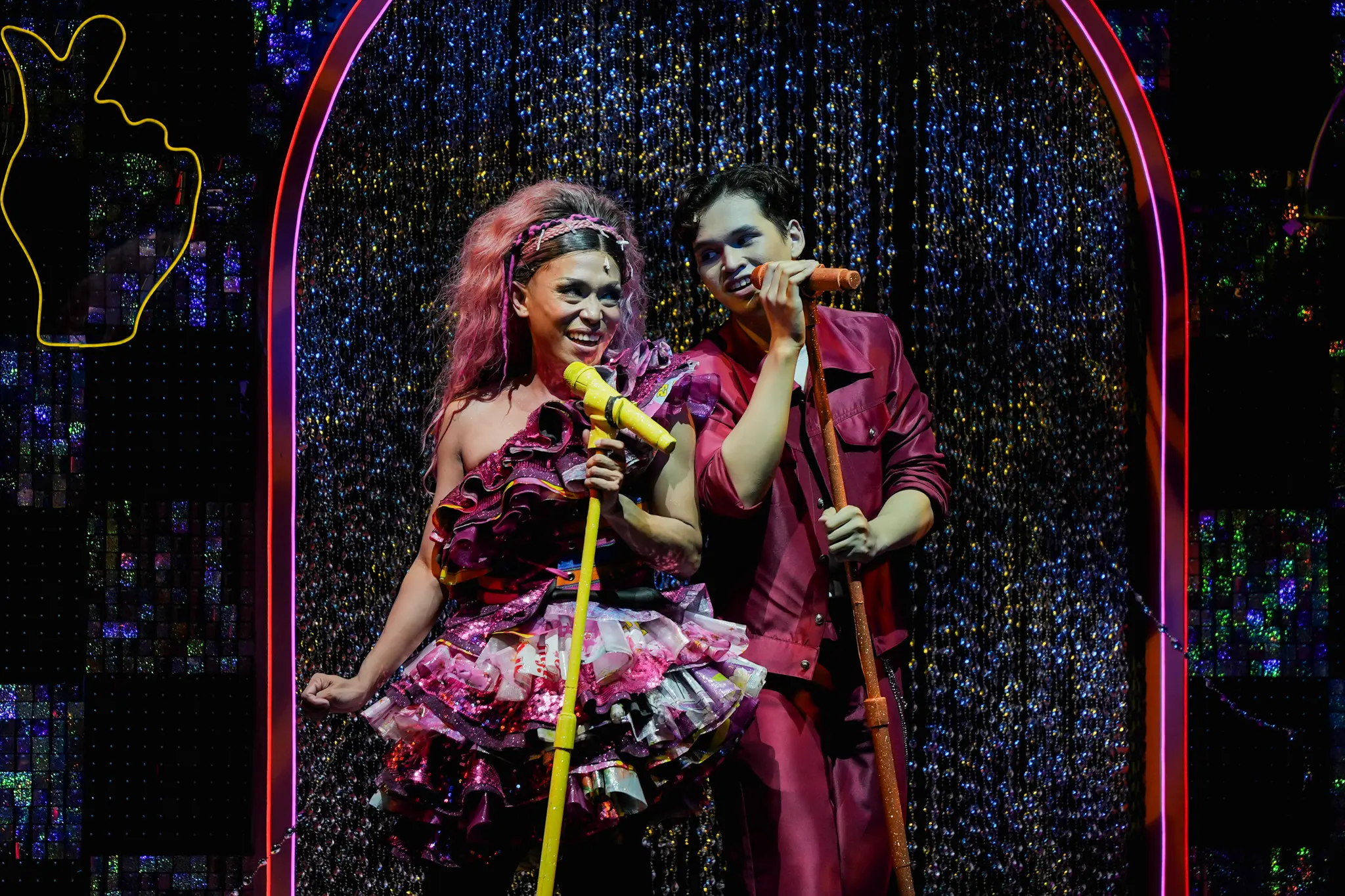
Our protagonist dreams of making it big, not just for herself, but for her mother Anet (Joan Yap Co) and Kuya Jose (Josh Cabiladas)—both endearingly supportive of her aspirations, career, and identity. Conveniently, Idols of the Galaxy gives her that chance; and she makes it much farther than anyone (audiences included) could’ve ever imagined. She goes from being “Just Delia” to “Delia D.”: what the competition’s ambitious producer, Sir T. (played by Floyd Tena), names her in hopes of creating the next “Gary V.” and “Sarah G.”
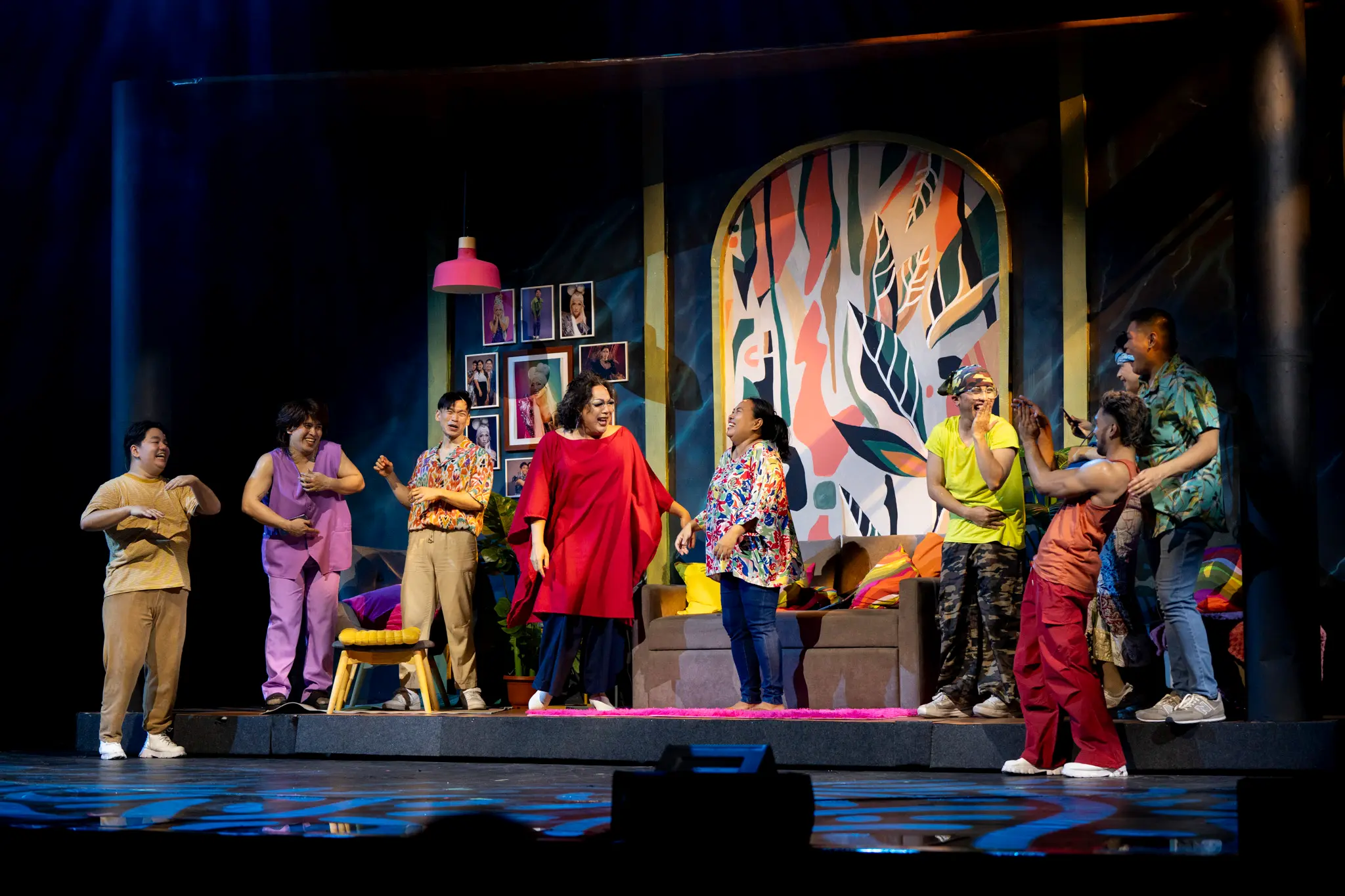
When the curtains close after Act I, it seems like the end, a neat and happy resolution—but things are rarely ever that simple. The road to fame, and the success that comes with it, isn’t all what it seems. As the old saying goes, all the glitter is not gold (and there’s a great song number in the show that essentially conveys that). It’s cliché, but it works with Delia D., which leans into camp in order to deliver a surprisingly bittersweet story of growth, family, and selfhood beneath its bright and colorful layers.
With all its banter and jokes, the musical asks an important (not necessarily original, but still thought-provoking) question about the costs that come with fulfilling a dream, especially one in the entertainment machine. Is success really worthwhile if you begin to lose crucial parts of yourself, both as a creative and person? Seeing someone like Delia—at first so confident, assured, and compassionate—spiral under pressure and succumb to the dirty games of the industry, is in itself a worthwhile (albeit sad) unraveling as a viewer.
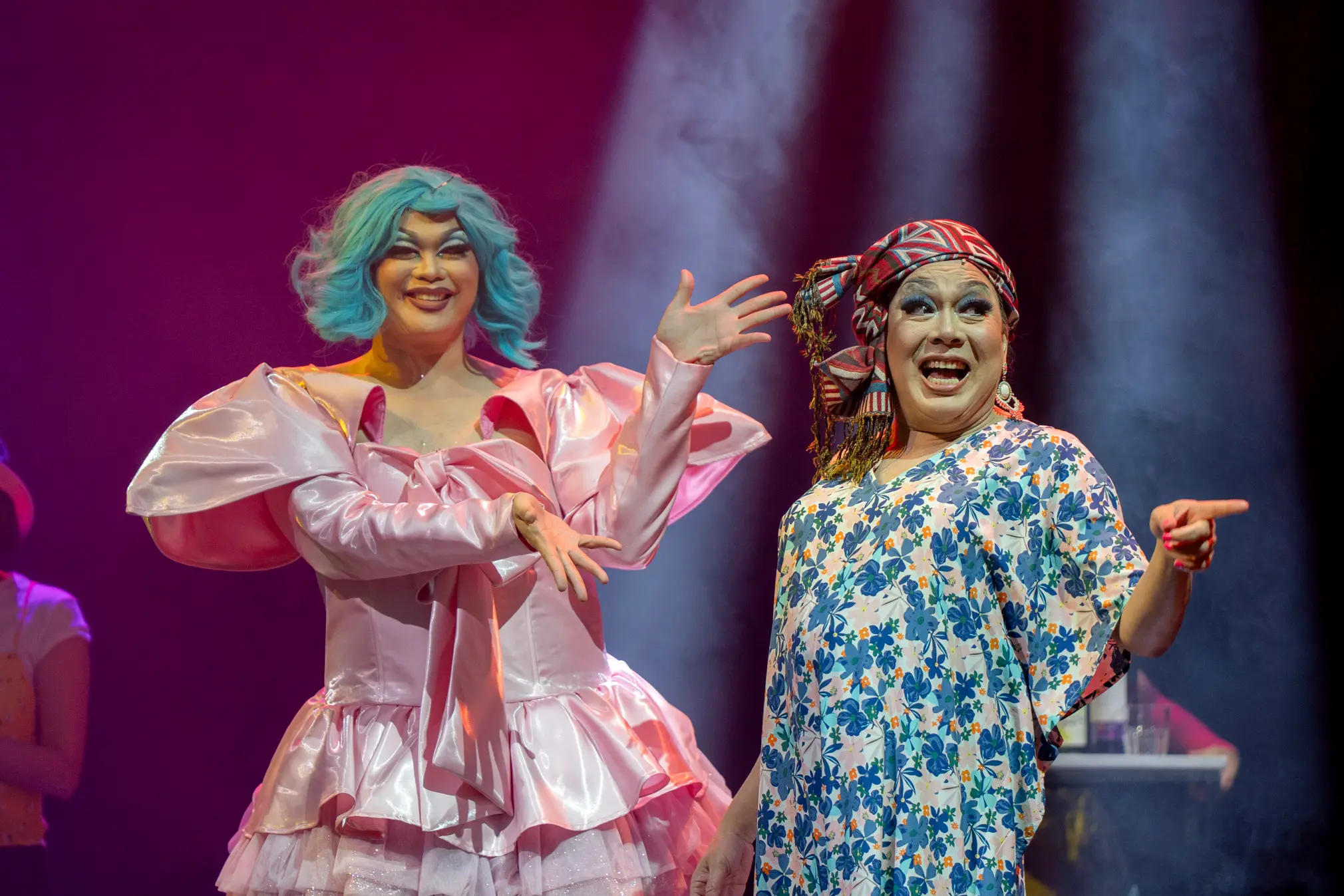
The show is also a love letter to the art of drag, which is exactly that: an art form. A number of times, the idea of drag being a contrived facade is brought up, as certain characters accuse it of covering up a lack of talent (“You were born to be a clown,” says one character to Delia in a heated exchange). But through the camaraderie of its queens and the unapologetic joy of their performances, the musical reminds us that drag is an extension of the self, not a mask to hide shame behind.
Delia D. gives audiences something that feels meaningful. The play doesn’t stray too far from its lighthearted tone and Filipino humor (a masterclass in comedic timing and using swardspeak in dialogue), but that’s what makes its poignant moments more apparent. It’s proof that humor and profundity aren’t mutually exclusive. Like Delia, the show contains plenty of heart, refuses to fit into neat little boxes, and has more than a few surprises up its sleeve.
“Delia D.: A Musical Featuring the Songs of Jonathan Manalo” runs until June 8* at the Newport Performing Arts Theater. Tickets are now available at TicketWorld, HelixPay, and Newport World Resorts Box Office. For inquiries, contact Customer Care at 7908-8888 or 0917-872-8237 or email [email protected].
*New shows have since been added on June 14 (8 PM), June 15 (3 PM), and June 28 (3 PM and 8 PM)
For more information, visit www.newportworldresorts.com and follow @newportworldresorts and @nwr.musicals on Facebook, Instagram, and TikTok.
Photos courtesy of Newport World Resorts.