The Filipino-American playwright’s inventive exploration of colorism and identity opens a window onto the often unseen world of artistic development, tracing a writer’s attempts to shape ideas into a living work.
It’s blissfully difficult to describe what playwright Gaven Trinidad’s Mercury Makes the Skin Glow is, for a number of reasons. It’s a play, yes, but it’s also a teleserye and a beauty pageant. It toys with camp and comedy while anchoring itself in historical facts and a family drama that serves as a microcosm of the politics and pressures that have long plagued the Filipino condition. Slipping between subconsciousness and reality, it exists as both figment and truth. And it’s not quite over yet: not because it lacks an ending, but because it’s still deciding what it wants to be in its final form.
Set in Queens, New York, the work in progress sees former beauty queen Carmelita returning to live with her estranged daughter—the academic Jesca—adamant about staging a circuit of pageants for the community in celebration of the 125th Anniversary of Philippine Independence in 2023. Jesca, meanwhile, abhors the colorism so deeply entrenched in these spectacles, fighting desperately to derail her mother’s plans.
READ ALSO: Snapshots Of A Homecoming With Nacho Tambunting
Behind Mercury Makes The Skin Glow: Process As Art Form
When you think about renowned theatrical pieces, you don’t really take into account the sheer amount of time it takes to chip away at a concept, turn it into something that feels as whole and assured as its current form—usually, it’s decades in the making. Unlike prose, works written for the stage distinguish themselves by the simple fact that they must be lived in: spoken aloud, embodied, set into motion through production.
In major theater cities, one standard step in this journey is the developmental reading. Here, actors read a script in its current state, stripped of frills like lights or props. It’s just the players at work, exploring characters as they go, improvising and diving into the text so playwrights, fellow artists, producers, and theater administrators can better understand how it feels and manifests. It’s a dynamic form of workshop, where creators hold on to what resonates, let go of what doesn’t, and tend to the seeds others help them uncover.
“You’re helping a fellow artist find the truth of the piece,” explains Gaven in conversation with Lifestyle Asia. “It’s not necessarily saying ‘what should be,’ but more like going toward something that feels right.”
Filipinos Love Beauty
Because it’s still in the works, I won’t attempt to describe the specific ways Mercury Makes the Skin Glow unfolds. What we can do, however, is focus on what it’s trying to say, as it stands. First, the triptych statement that sets up the premise: “Filipinos love love. Filipinos love beauty. Filipinos love beauty pageants.”
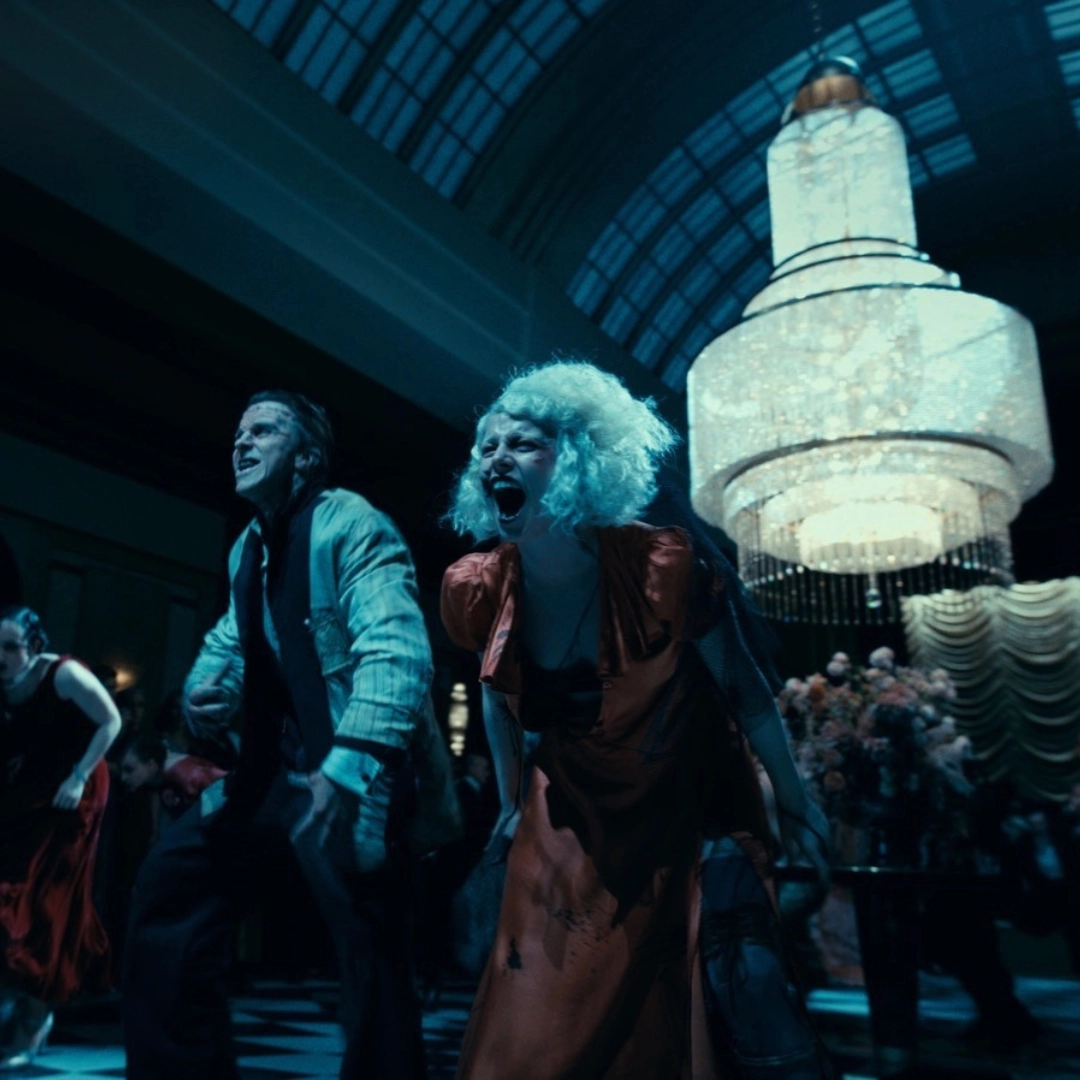
Gaven’s play is one of vignettes and meta-fiction, scenes drifting to a nightmarish pageant haunted by the colonial shadows of religious imagery and Filipino mythology, before returning to reality—the interpersonal conflicts that unfold between Carmelita and her polar opposite daughter, Jesca.
At the center of their tumultuous relationship are differing perceptions of beauty, and the Filipino frameworks that shape them. Vain yet rendered empathetic by the circumstances that taught her to rely on a physicality dictated by foreign beauty standards, Carmelita embodies the pull toward whiteness, the fixation on being anything but the “Other” in order to not just survive, but thrive. Jesca, by contrast, is proudly and fiercely morena, though still deeply wounded by the casual microaggressions directed at her appearance, many of which come from her own mother; unapologetically progressive, she seethes with anger over injustices both past and ongoing.
It’s Jesca’s nightmares we inhabit, manifestations of her personal fears and scars that, on a broader scale, become surreal and fittingly absurd portraits of the Global South’s obsession with skin whitening. There’s a joke in the play in which the term is dutifully corrected to the marketing euphemism “skin brightening,” as if that semantic shift is enough to soft en its more ominous implications. Unregulated glutathione products proliferate, and, whether acknowledged or not, so do the dangers of mercury that lurk within many of these formulations.
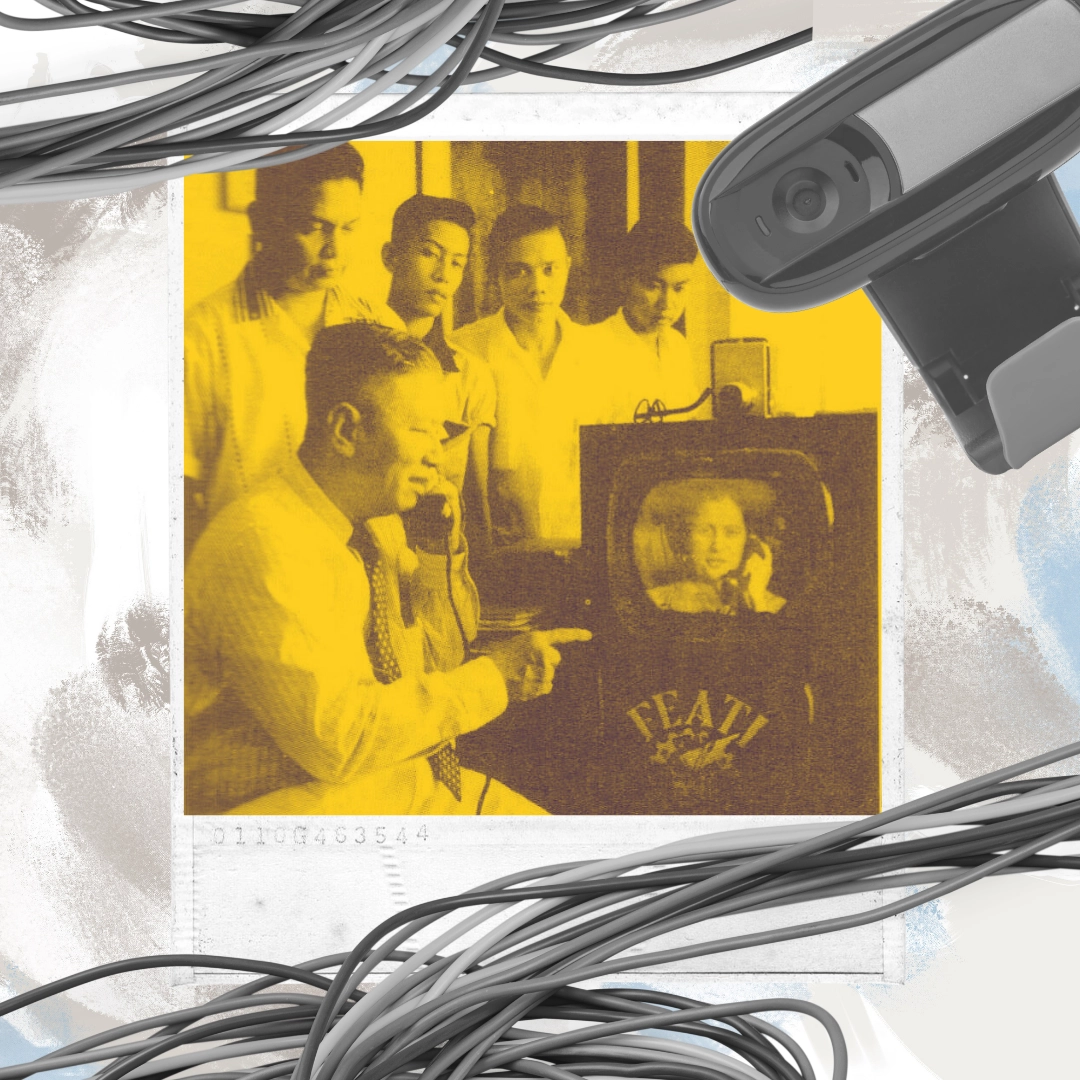
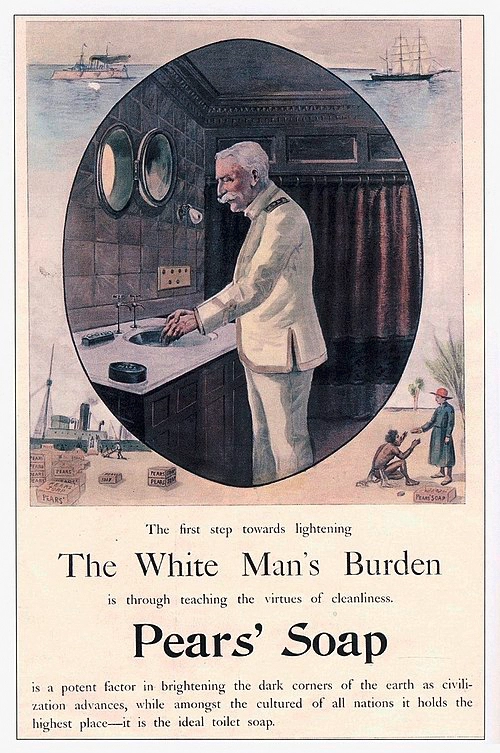
Mixed into the play are multimedia scenes, projections of the past that echo today’s issues on race and identity. The St. Louis World’s Fair in 1904 is one of them: indigenous Filipinos displayed in “human zoos,” their bodies and cultures instrumentalized to legitimize American imperial ambitions and colonial ideologies of “civilization.” Also invoked are images of white “saviors” offering the “gift ” of toiletries, sourced from an 1899 Pears’ Soap advertisement that framed cleanliness and whiteness as moral virtues, suggesting that brownness itself could (and should) be washed away.
It Takes A Village
The developmental reading stage marks the beginning of tricky but ultimately rewarding work. Gaven likens it to the act of parturition: “These plays are, for lack of a better term, my children. They tell me what they want to become; I have to let go and let other artists take over and put on a show.”
Yet Mercury Makes the Skin Glow diverges from the usual closed-door atmosphere of a developmental reading, opting to, instead, let roughly 100 friends and strangers listen to it come alive. Gaven opened the first reading of his play to the public (what he describes as “exciting” and “devastatingly” terrifying in equal measure) one Sunday afternoon in Manila House, an events space nestled in Bonifacio Global City. Joining him was his friend and collaborator, Nacho Tambunting, a Filipino theater professional working between New York and Manila, who also performed in the reading. Gaven credits Nacho as the driving force behind the play’s continued development. “He convinced me that there was a necessity to have this dialogue across the diaspora through my work,” he says. “He’s not only a superb friend and actor, but an extraordinary producer as well.”
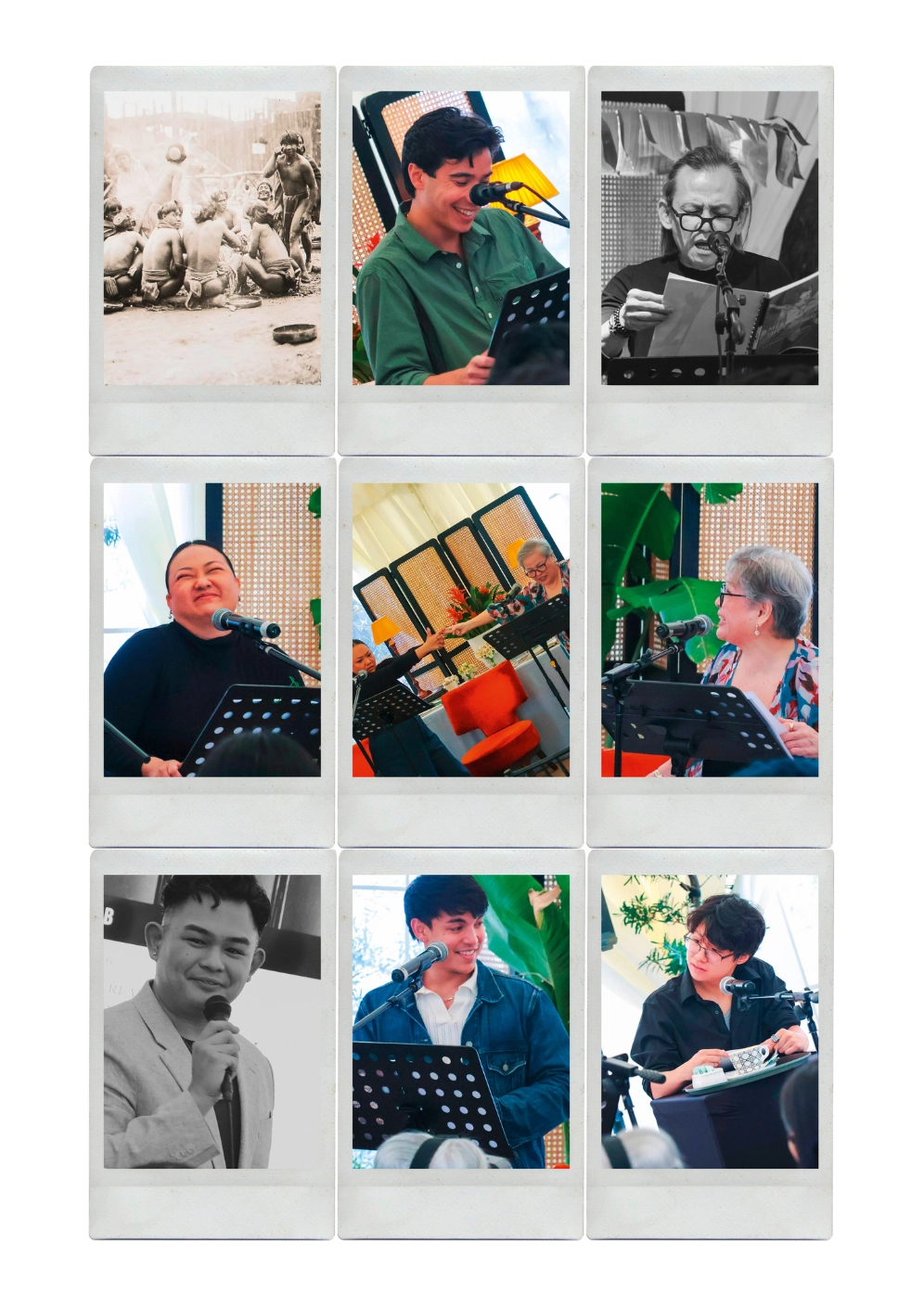
What followed were a few hours of pure experimentation, play, and insightful conversation: an intriguing glimpse of collaboration in motion.One clear example of how a play can shift and transform into stage magic was actor Jon Santos’s turn, infusing the script with ad-libs and vocal inflections that were inimitably and flamboyantly queer, a pitch-perfect performance for a beauty pageant host that had everyone erupting in raucous laughter. Nic Chien, who took on the dual roles of narrator and Jesca’s young son Ernesto, brought a reflective, solemn timbre to the reading, grounding what might’ve otherwise floated away as an out-of-this-world narrative of exaggeration (in typical teleserye fashion).
Sheila Francisco embodied Carmelita’s harsh, melodramatic humor and sense of grandiosity, while Kakki Teodoro injected a tenderness into the steely Jesca, one that might have gone unnoticed on the page alone. Nacho played Jesca’s stepbrother, Diego, with a calm gentleness that underscored his role as mediator between his mother’s and stepsister’s clashing ideologies and personalities. He is, quite literally, an amalgamation of two worlds: born to a Filipina mother and a Caucasian father.
Alex Diaz, meanwhile, transformed the supporting role of Sebastian—an aspiring model and Diego’s lover—into a figure of surprising substance: earnest, amusingly ditzy, and hurting in his own ways.
“It’s just about finding the right creatives. People who are in line with Gaven’s vision, who understand and resonate with the piece, have the same respect for the story that’s being told,” Nacho says during our conversation with Gaven. “Each of the actors that we asked was our first choice, and they all said yes.”
“The characters came in with their own point of view, and that’s what I want to sharpen. Without hearing the actors, there’s only so much I can do by myself,” Gaven shares. “When I heard their voices, brand new ideas came out. I think sometimes my writing is wild because, you know, on paper, I just do it like poetry. I put these cadences, which I hope help in the thought process of the character.”
The Question Of Kapwa
The reading was a revelatory unraveling for the audience as much as it was for Gaven. A talkback session afterward saw people eagerly sharing their feedback and opinions about the piece, discussing the parts they latched onto, the elements that hold potential to become something more, and the concepts that might require some fine-tuning.
“Art requires an exchange of energy, not just between the writer and the actors, or the actors and director, but the audience as well,” Nacho explains. “It adds another element, and that’s what’s so exciting about having a reading.”
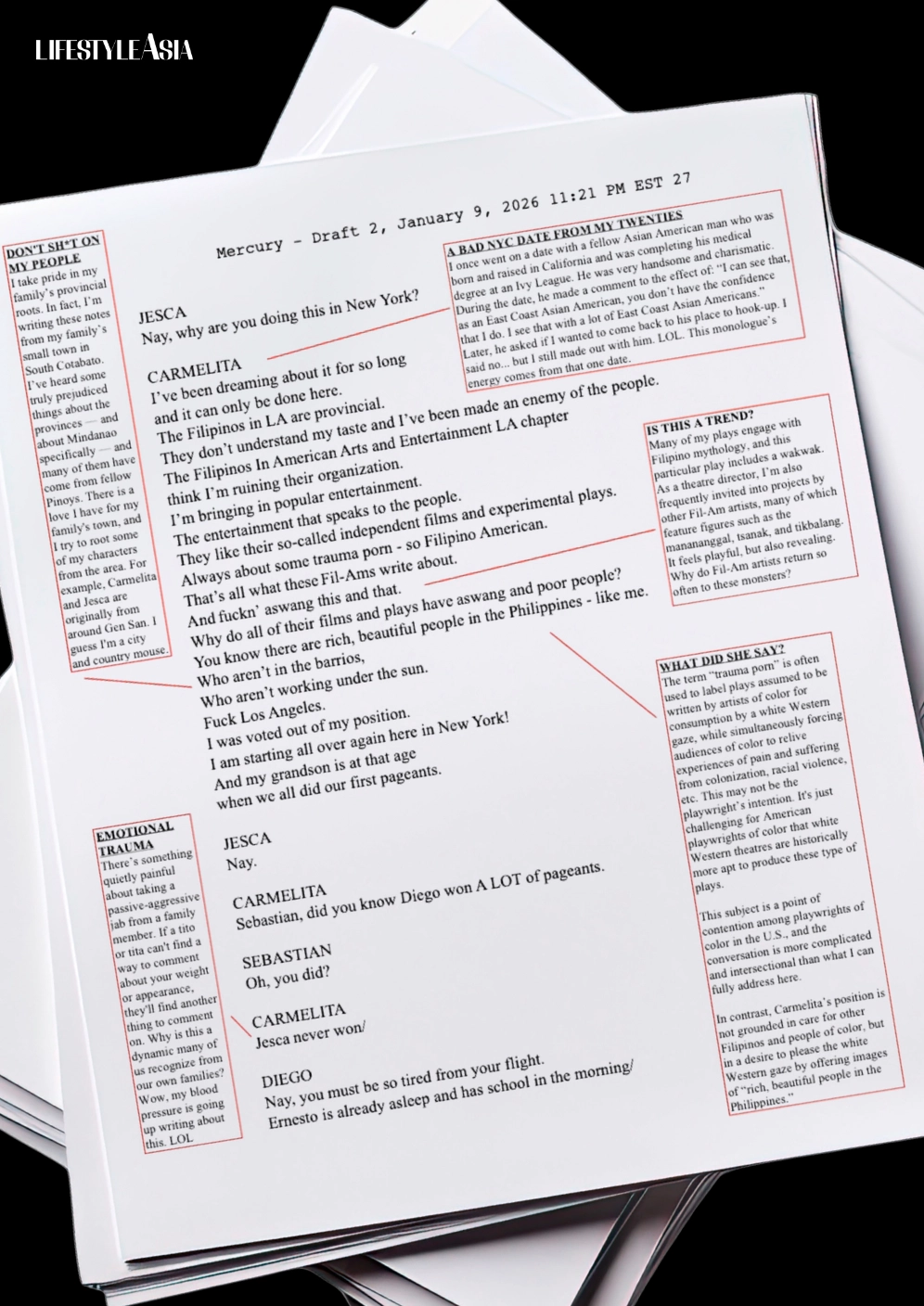
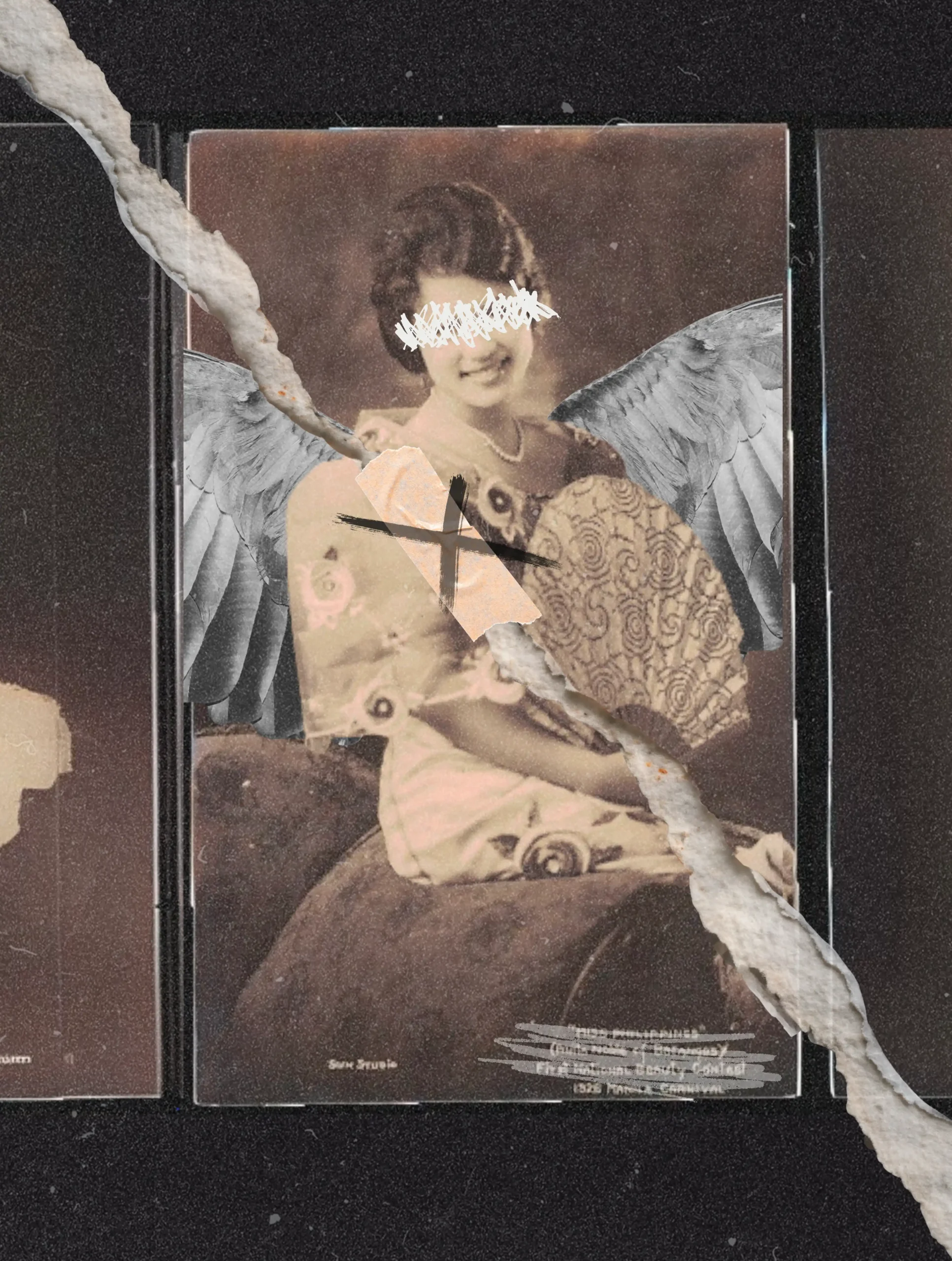
One of the qualities that sets Gaven apart as a playwright is this acute self-awareness of who he is and where his work is situated. Certain diasporic pieces tend to distance themselves from the contexts and urgencies of the home country, elevating specific, often insular concerns into a supposedly universal “Filipino experience,” when they’re anything but. Gaven, however, doesn’t merely acknowledge this tendency; he weaves its clichés into the very fabric of his work, the script page featured earlier in this piece being one such tongue-in-cheek moment. It’s precisely this awareness that makes him especially receptive to, and grateful for, the chance to have his work performed for a Filipino audience in the Philippines.
“What I learned from the reading is that the cultural and political conversation resonates with folks beyond the Fil-Am community, which was my hope and dream,” the playwright shares.
The pulse of the play is an undeniable fact: that while colorism is hardly a new topic, it has long remained the elephant in the room, the invisible thread running through backhanded compliments, regressive remarks, and biased treatment, made not only by foreigners but by Filipinos themselves. Family member to family member, friend to friend, acquaintance to acquaintance. You’re so dark. You should try this lightening lotion. You’d be better looking if your skin was fairer. Handed the tools of their colonizers, the oppressed assume the role of oppressors.
What, then, becomes of kapwa? This notion of shared humanity—of community, togetherness, warmth, and hospitality—comes into question here, not because it’s untrue, but because the playwright recognizes the intersections that complicate it; the truth is far more intricate than any monolithic image of a people.
The Then And Now
Then the question that’s invariably asked: what inspired Mercury Makes the Skin Glow? As it usually goes, it’s more a host of experiences than a singular thing, ones that not only shaped the piece, but the playwright himself. Having grown up in America, tall and tan-skinned, perceived as both “too Filipino” or “not so Filipino,” Gaven has encountered his fair share of being Othered, even within the queer community.
“It sounds superficial, but it goes back to being attractive or wanted in many ways,” he elaborates during the talkback session. “And because I’m in New York, in a lot of gay, white spaces, there was a clear separation—even if ‘You’re not wanted here’ is not specifically said, it still feels that way. It’s also something I found a lot in the Filipino community in New York. So I went into this rabbit hole of just looking at myself in the mirror, and said, ‘I’m going to write a play in two weeks.’”
He did, indeed, write the play’s first draft in a matter of weeks, back in January 2024, injecting it with ideas he learned through his BA in American Studies at Dickinson College and MFA in both Advanced Feminist Studies and Dramaturgy from the University of Massachusetts Amherst.
While Gaven has always been steeped in the theater industry—organizing community events and directing works—writing was a passion that bloomed later on in life, when the now 35-year-old began crafting poems and scripts at 27.
Mercury Makes the Skin Glow would go on to become a finalist at the 2025 Eugene O’Neill Playwrights Conference, as well as the 2025 Bay Area Playwrights Festival. While it isn’t his first play, it’s the only one that took a trip to the home country as part of its development, thanks to a grant from Leviathan Lab, a New York-based creative studio for Asian American theater and film artists. The same studio will be providing funding for a semi-staged workshop of the play around the end of April 2026, where it will take on its next form after the reading process.
As a work develops, a writer often gains a certain emotional distance from it. The piece remains deeply personal, but it’s no longer governed solely by the feelings that spurred its creation; this distance allows the work to evolve into something greater than it began as. “I was really sad, and I had to write this. But once it got out, I had to leave it alone—I didn’t touch it for months,” Gaven says. “It’s funny, because as I read it, I knew I was a different person when I wrote it. It affirms me; I’ve grown since then. I’m happy to say I’m not in that place anymore. Now that I have that distance, I can just play with it freely, however I want.”
He continues: “A good friend of mine, another playwright, once said that you write a play for the person you were five years ago.”
“It’s a love letter to the Philippines, and a love letter to yourself,” Nacho adds, the two of them wearing soft smiles.
We end with a scene that takes place even farther back: a five-year-old Gaven Trinidad is walking in a park with his father. The man he admires points out people getting themselves tanned. “You see,” he tells his son. “They’re trying to be you.”
Like the young boy, we’re not quite sure what Mercury Makes the Skin Glow will look like months or years from now. Yet even in the flux of its current form, it carries Gaven’s love for his roots and the contours of his own story—still unfolding, still learning to hold space for the complexities of becoming.
This article was originally published in our March 2026 issue.
Photos courtesy of Gaven Trinidad and Manila House