How far do we go in posthumously reviving and sharing creative works without their creators’ express permission, and what do these choices reveal about artistic integrity, legacy, and consent?
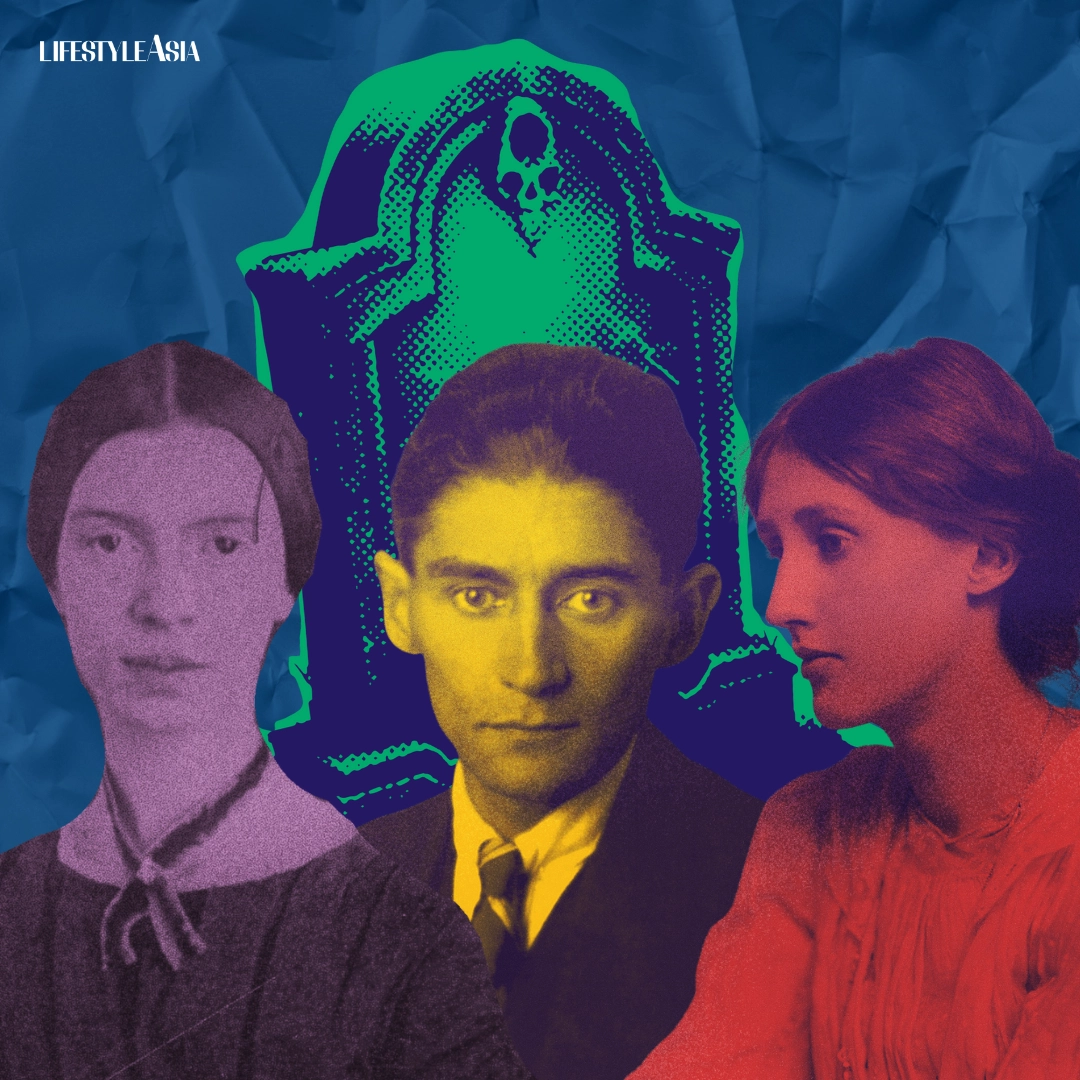
Before his death, author Franz Kafka burned most of his manuscripts and left one explicit request: that anything he failed to destroy himself should be destroyed on his behalf. His close friend Max Brod, however, had other ideas. Decades later, bookstores around the world would be lined with volumes of Kafka’s collected works, and the syllabi of Philosophy and English classes would never be the same. All because one man chose to defy his friend’s final wishes. It’s one of several striking examples that illuminate a persistent and complicated debate: the ethics of reviving “lost” works, and whether we have the right to make these decisions for their dead creators.
Recently, it was announced that three rediscovered, unpublished short stories by Virginia Woolf would soon be released in a new collection. Of course, fans of Woolf (this writer included) are eager to read these pieces—experimental fairytales she wrote nearly a decade before her first novel, The Voyage Out, was published in 1915. Yet the announcement also became a tipping point that had me reconsidering our relationship with the posthumous sharing of creative work; a concern reignited, too, by the release of Joan Didion’s Notes to John, which stirred similar debates within the literary community earlier this year (but more on that later).
I’ll mostly draw from literature, since it’s the terrain I know best when it comes to these questions. But it’s worth remembering that this phenomenon extends across every creative discipline, from the visual arts to film. Take, for instance, the ongoing controversy over the planned AI reconstruction of 43 lost minutes from Orson Welles’s The Magnificent Ambersons—a can of worms this single article won’t be able to fully unpack.
READ ALSO: Is The Internet We Knew Already Dead?
Cultural Development vs. Artistic Integrity
We want to believe that when publishers, distributors, or other institutions put a work out into the world, they’re fueled by the goal of enriching our cultural landscape with the ideas of great minds—ones that would have otherwise been buried with them. That’s partly true, but we also acknowledge that somewhere out there, individuals within these institutions (which are, at the end of the day, businesses) hope it’ll bring them profit.
But for the sake of focusing purely on the cultural merits (and contentions) surrounding this issue, I won’t delve too deeply into that side of the discussion. It’s fairly straightforward: this is an opportunity to squeeze every potential masterwork from those long gone because they’re no longer alive to produce more of it.
Now, we’re mainly left with the battle between cultural development and artistic integrity. Most creatives are exacting in their craft and vision. No writer or artist worth their salt wants to turn in work that’s half-baked or not up to their own self-imposed standards. It’s why we have the image of the ever-unsatisfied creative, harsh on themselves and even harsher on the things they produce.
They edit relentlessly, repaint, re-shoot, redo everything, to ensure what they release into the world is exactly as they intend it to be. Even creatives who believe they have no control over the perception and interpretation of their works still carry artistic intent. The nightmare scenario, then, is for them to discover that, long after their deaths, people are releasing their works in any state that isn’t “ready,” “final,” or their personal definition of “good.”

Kafka, for instance, would be rolling in his grave if he knew the fate of his works. He was, for the most part, largely displeased with most of his writing save for his short story “The Judgment.” Even “The Metamorphosis,” the tale of a working man who transforms into a giant insect, elicited mixed feelings from him, though it’s now a cultural touchstone.
Emily Dickinson was another writer who rose to fame posthumously, and whose wishes for the fate of her works remain obscure. The only reason we know her today is because her sister Lavinia, tasked with burning Dickinson’s correspondences, discovered more than 1,800 of her unpublished poems and decided to turn them over to editors Mabel Loomis Todd and Thomas Wentworth Higginson. Yet Todd and Higginson applied controversially heavy-handed editing to keep the works “publishable” by conventional standards of the time, stripping much of Dickinson’s stylistic soul and erasing the queer undertones of her pieces.
Sylvia Plath went through a similar kind of unconsensual erasure at the hands of her husband, Ted Hughes (though she was already an established writer in life). Upon her death, Hughes released heavily edited collections that bastardized her authorial voice: changing diction, punctuation, entire titles, and removing pieces he deemed too unpleasant. Her letters weren’t spared, their “nasty bits” censored as he saw fit.
In the case of Woolfe’s three short stories, writer Sophia Nguyen of The Washington Post states: “Though there was no indication she intended for the stories to be published, Woolf had them lovingly typed in purple ink and bound in purple leather.” Conjecture is the most we can do when we don’t have assurance from a work’s maker. These are just a few examples of the slippery slope one begins to climb when acting on behalf of the departed, a path all the more treacherous when the creators in question are figures whose memory and legacy will forever be attached to whatever works bear their name. Artistic integrity will remain a problem for as long as the dead cannot speak.
When The Private Is Made Public
Then, of course, closely linked to the publicizing of works are questions on the ethics of privacy. It’s been an issue ever since people made publishing the correspondences of these great thinkers a norm, a way for the world to gain a deeper understanding of the circumstances that shaped them, and by extension, their works.
For Kafka, it was his moving love letters to his paramour Milena Jesenská; for Sylvia, the many volumes of exchanges with loved ones; and while a good deal of Dickinson’s letters were lost or destroyed, a percentage of them survived and were made public against her deathbed wishes.
The late Joan Didion’s newest book, Notes to John (published just this 2025, four years after her passing), is not a cohesive work from the author herself, but rather, a compilation of notes detailing her therapy sessions, meant for the eyes of her husband John. And that’s where things get complicated. As fellow writers have pointed out, if treated like a scholarly work that provides more insights into the life of one of contemporary literature’s finest, then yes, it’s a rich resource—but it’s also a violation of a woman’s control over her own narrative.
This kind of breach is particularly concerning when you consider how private Didion was as a person. Yes, to an extent, she unraveled layers of her private life largely through her non-fiction pieces like memoirs and essays, but as it is with most writers, these came in controlled revelations. Didion was known for her incisive language, every aspect down to syntax a purposeful part of what she chose to share and how she wanted to share it. So to have intimate details of her life disclosed without her consent and signature precision feels like a betrayal to her legacy.
Granted, the argument here is the writer was well aware of the interest academicians, biographers, and fans had about her life, as Didion scholar Evelyn McDonnell writes in an article for Literary Hub. If she didn’t want the notes to be found, she would’ve destroyed them. Still, there’s always that sense of unease with the way her personal documents (including intimate photos and medical records) have been packaged for the public.
“As a scholar of Didion, I am the perfect audience for Notes to John, and I bought it immediately,” McDonnell writes, before offering a self-aware rebuttal. “And yet the commercial exploitation of family trauma left me feeling deeply uncomfortable and even ashamed, like I was caught holding a ticket stub for the rubbernecking line at a train crash.”
Weighing It In
All of these issues bring us back to the debate of what we owe the dead, what they still have to give to us, and whether it’s well within our right to ask for any of it. Should “lost” works remain just as their creators left them? Frustrating as this might sound, there really is no easy answer to this question.
Famous writers understand their precious (or not-so-precious) works will become fair game once they leave this earth. We return to the Didion Dilemma: did she mean for those notes to be private, or did some part of her understand they’d be literary fodder, with or without her say?
Can we imagine a world without the works of Kafka, which have inspired generations of readers and creatives like David Lynch, Haruki Murakami, and David Bowie? Not at all. Neither can we rest easy with the alternate reality of never having Sylvia Plath and Emily Dickinson in our literary canon. Again, I’m referring to words, but the same goes for all manner of art.
Reviving lost works becomes less about whether or not we should do it, and more about how. There’s a compromise we can consider, as writer Adin Dobkin explains in The Paris Review, and that is acknowledging the separation between a “lost” or revived work, and the actual body of work created by a writer within their lifetime. “After all, we don’t mistake the statues in public squares for an exact replica of the person who once lived,” she points out. “But don’t soak the unfinished manuscripts in paraffin, dress them in their Sunday best, and parade them around town as if the synapses were still firing.”
Still, where do we draw the line between preservation and vandalism? A revived work, honest as it may be about its very nature, can still be a blasphemous stain that distorts a person’s image well past the point of respectful appreciation.
These lost works of the dead say less about them and more about us: our insatiable, voyeuristic hunger as consumers, and our inability to let genius rest. Only in acknowledging this can we find the grace and restraint to know which doors to open—and which ones to leave closed, because not every silence needs to be filled.