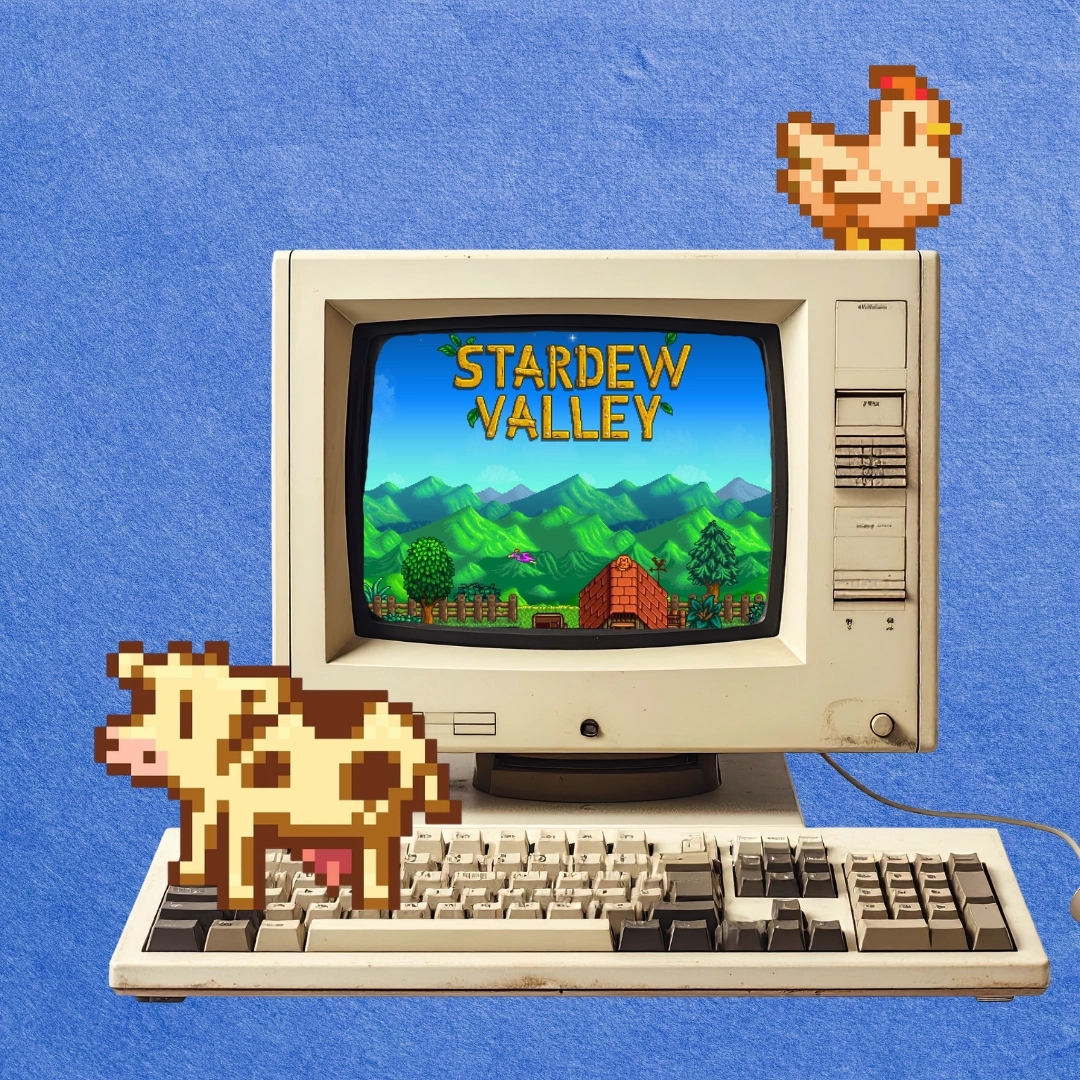
A decade after its release, we look back at how this beloved indie game, created entirely by one person, has grown into a world that hundreds of thousands of players keep returning to, season after season.
Before I dive into the significance of Stardew Valley in honor of its 10-year anniversary, a bit of context for those unfamiliar with the title. A 2D, pixelated farming role-playing game, it was created by one person—yes, one person: Eric Barone, better known by his pseudonym, ConcernedApe. Inspired by the structure of its spiritual predecessor, Harvest Moon (from the famed Japanese game company Nintendo), Barone began developing Stardew Valley straight out of college, despite having zero experience in both art and video game creation.
It was, in every sense of the word, a passion project—one that spanned five years before a 1.0 version was finally released for PC on February 26, 2016. He’d continue to add updates, modifying and enhancing the game into the vibrant, expansive world it is today (though in recent years, he began working with a small team). A decade later, people are still playing and celebrating it.
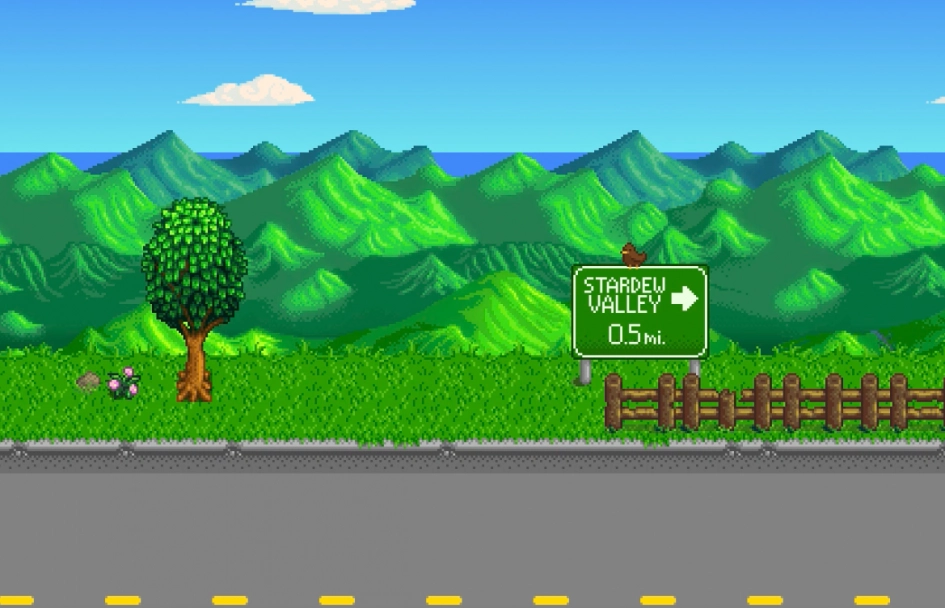
That one man alone created Stardew Valley—a game that has since sold over 50 million units worldwide as of February 2026, marking the exact month of its 2016 release—is already an impressive fact. To put it into perspective, creating a video game is an endeavor meant for a whole team, no different from making a feature film, and no less resource intensive. Yet even more striking is how its success stands as a shining example of what an independent work can achieve by building community and never losing sight of the fun it aims to offer.
Those who play it often end up hooked or quietly charmed, whether they’re hardcore gamers or simply curious. Among its avid celebrity fans are singer-songwriter and author Michelle Zauner, actresses Rachel Zegler and Kat Dennings, as well as comedian Bobby Lee. Beyond this star circle, Stardew Valley draws hundreds of thousands of players on Steam (a popular gaming platform) alone, consistently ranking among its highest-rated titles in a vast sea of games produced by industry-leading developers. The question, then, is how this wondrous game—one that means so much to so many people, in varying ways—became the phenomenon it is today?
READ ALSO: Why “In The Mood For Love” Continues To Grip Us 25 Years Later
Setting The Blueprint For “Cozy Gaming”
In a fast-paced world rife with conflict, the “cozy game” trend emerged as a kind of counterbalance, one that prioritizes a calmer state of mind through creative, immersive gameplay; low-stakes storylines; and little to no violence. Much like turning to a rom-com or comedy on a difficult day, playing a cozy game offers much the same effect.
When COVID-19 ushered in a period of uncertainty and diminished control, games like Animal Crossing: New Horizons—which, like Stardew Valley, allowed players to build worlds of their own through landscaping, farming, fishing, and the like—skyrocketed in popularity, even among non-gamers. It was a form of escape that felt almost therapeutic, and years on, that feeling hasn’t changed much, even as we move forward after the pandemic. Yet long before this all happened, Stardew Valley was already offering that kind of blissful escape.
I’m not the only player (and I wouldn’t even consider myself a hardcore gamer) who has cumulatively spent hundreds of hours in this game. And not just on one save file, but multiple, often replaying it with different farms, characters, and settings.
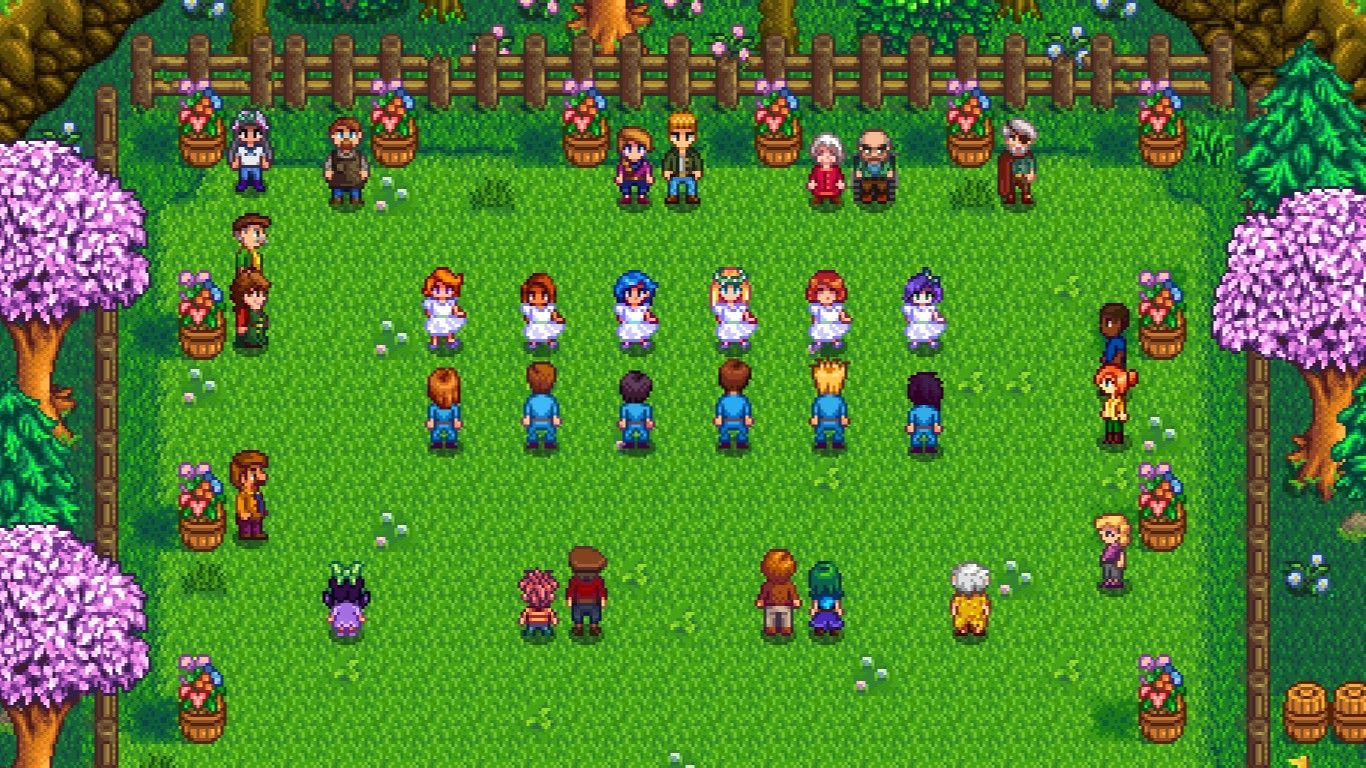
While Stardew Valley is hardly the first game of its kind, it remains a memorable touchstone that inspired later titles; though, to my mind, nothing has quite captured its specific magic. With its cast of fully fleshed-out townies; recognizably gorgeous soundtrack (most of it composed by Barone himself, because yes, he happens to be a musician too); imaginative gameplay; and narrative premise that’s still deeply relevant (and therefore enduring) in our current society, it has all the elements of a game you’d want to keep returning to.
A Fleshed Out World Of Possibility
Stardew Valley doesn’t follow a traditional overarching plot. While there are major story moments that are integral to gameplay, you can approach it however you like aside from these unavoidable beats.
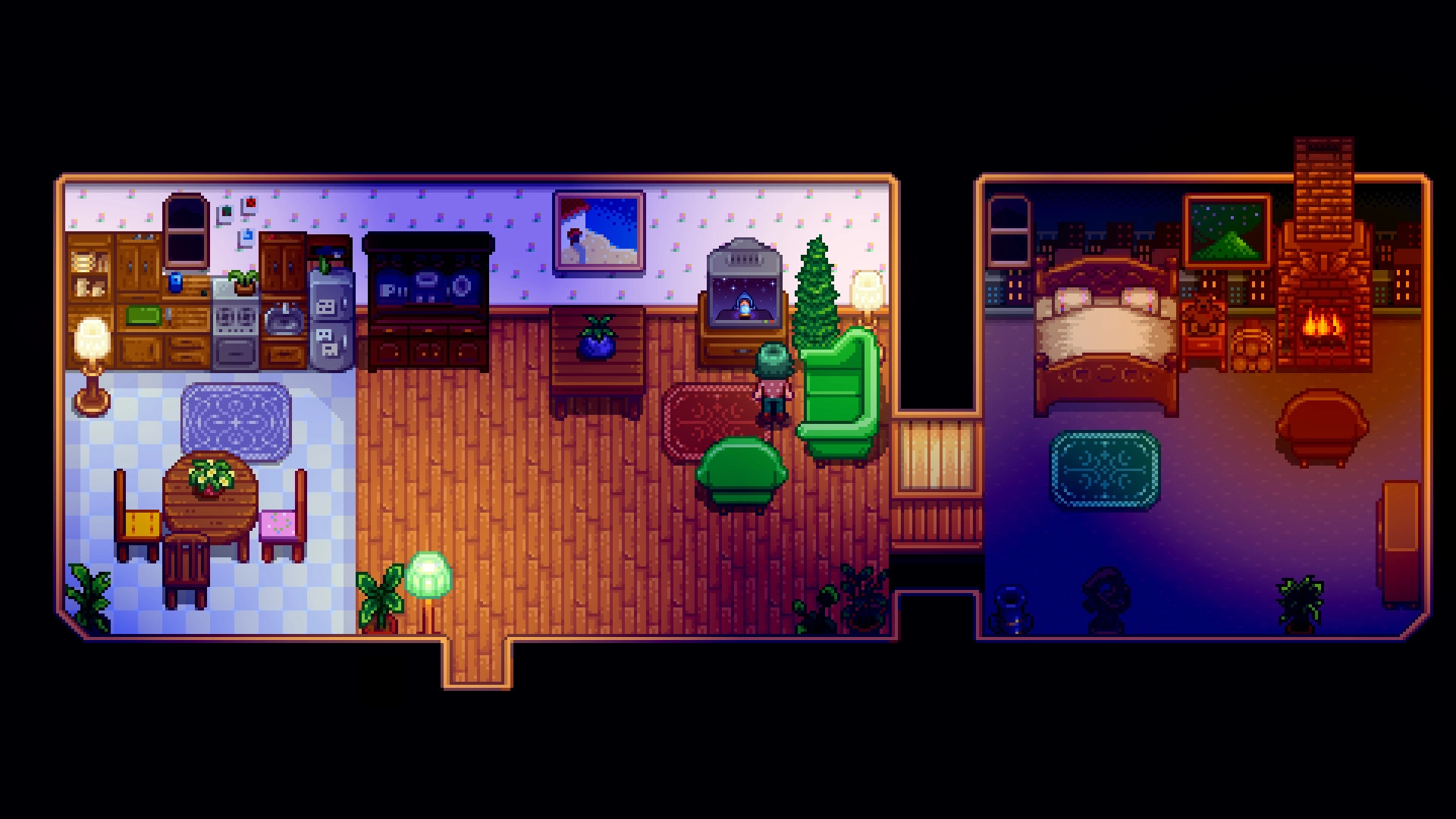
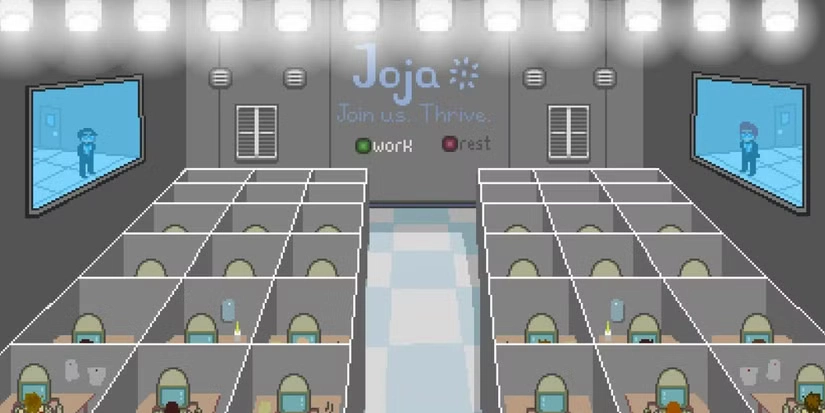
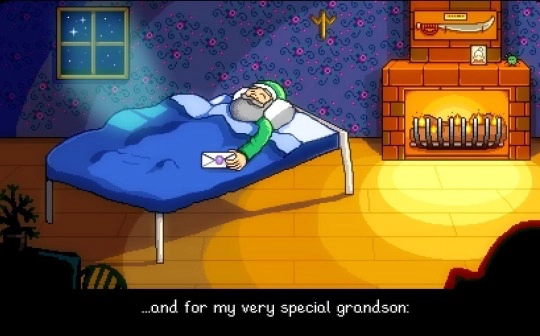
The one thread that remains constant is its all too real premise: burned out and disillusioned with your soul-sucking city job at the mega-conglomerate “Joja Corporation,” you open a letter from your sweet, loving, deceased grandfather. (He’s introduced at the start of the game lying peacefully in what players affectionately call “grandpa’s f*cked up bed,” an inside joke poking fun at the endearingly scrappy, highly uncomfortable-looking bed that gives you a good idea of why people grow so attached to the game’s quirky charm.)
The letter reveals that dear old gramps has bequeathed his large farm in Pelican Town, Stardew Valley’s central town, to you. It’s a darkly humorous beginning, yet also a strangely touching catalyst that sets the tone for the rest of the game.
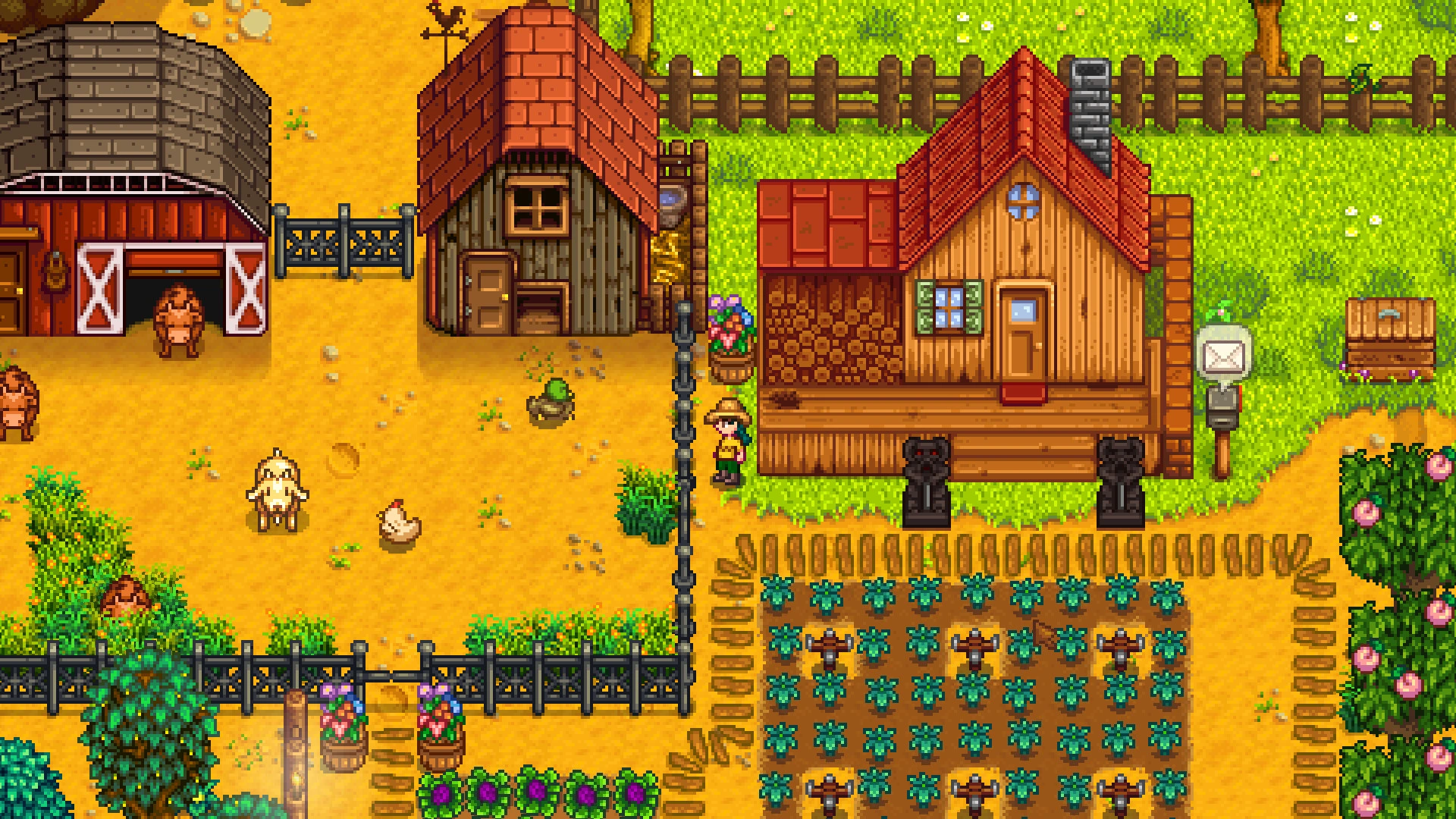
So, you take a bus, arrive at Pelican Town, are tasked with greeting its residents (your soon-to-be neighbors) and spend the rest of your days tidying up a cluttered, fixer-upper farm however you see fit, making money through agriculture, animal husbandry (with adorable ducks, chickens, cows, rabbits, and horses, among other critters), fishing, and more. You also get to adopt a cat or dog—can’t forget that.
It’s the classic, Hallmark-worthy “city slicker learns the simple joys of country living” storyline, except…it kind of isn’t. There’s something strange about Pelican Town, too. It’s a darkness that adds more flavor to the happy, wholesome nature of the town and prevents the world from being tooth-achingly cheesy. It shows us that even the best parts of life require that jagged edge, in moderation. The more you explore, the more you notice that otherworldly things are afoot: monsters, fairies, witches, woodland spirits, and a rich lore running beneath the cozy, small-town routines. It keeps you thoroughly entertained, on top of the liberating gameplay that lets you get creative in ways you probably haven’t since building LEGO homes or playing with dolls as a kid. There’s also layered social commentary sprinkled throughout, showing the subtle yet insidious ways the Joja Corporation encroaches on the town and exploits its residents. (When you learn that filmmakers David Lynch and Hayao Miyazaki are major inspirations for Barone, you start to notice inflections of their artistic ethos woven within the game.)
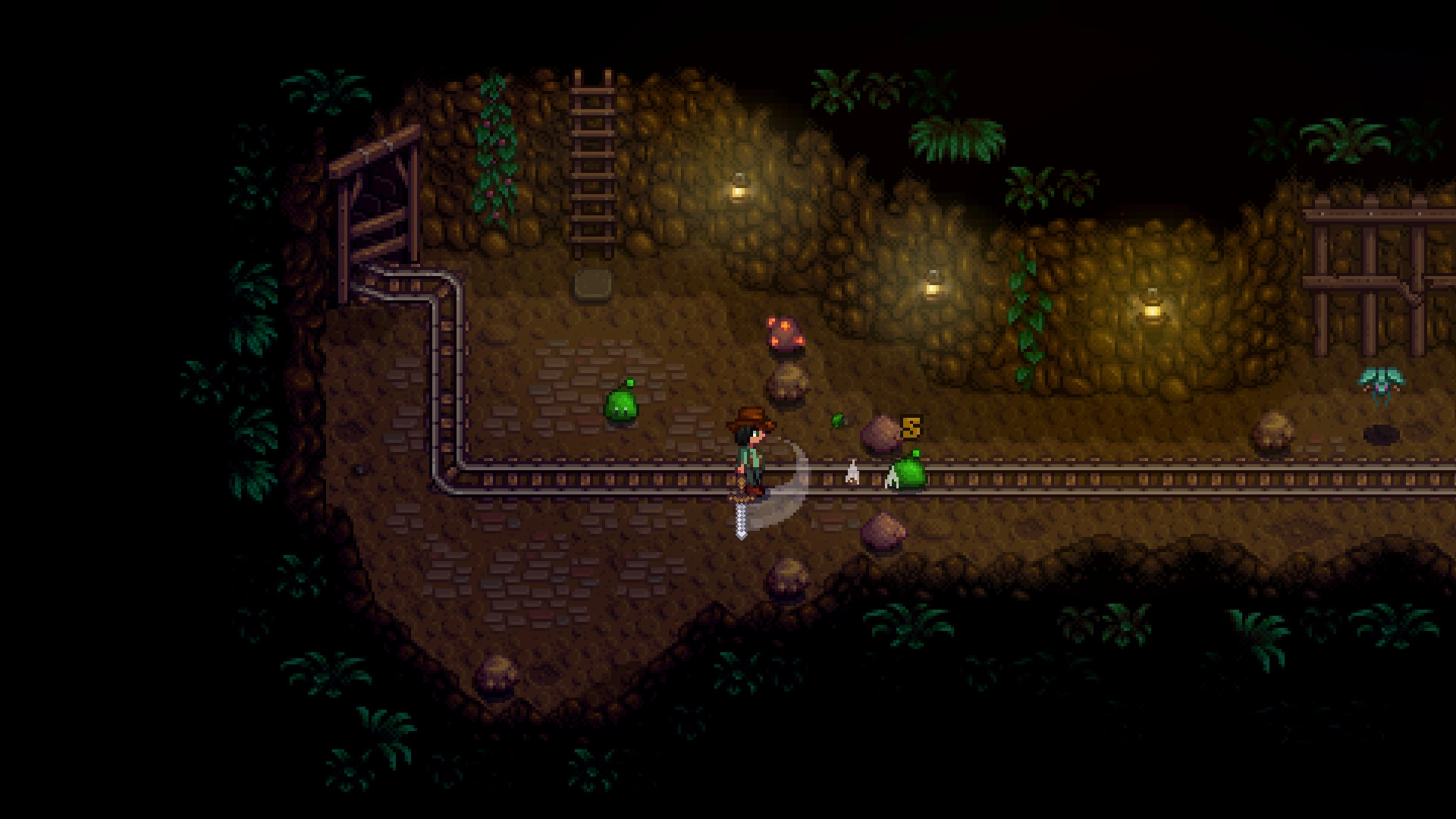
Stardew Valley doesn’t spell itself out. It doesn’t hand you all the answers. Instead, it trusts players to explore and understand its world through small details: conversations, character habits, and tiny environmental cues. You collect these pieces over time, discovering something new with each playthrough. Even a decade later, Barone is still expanding the game, adding features, stories, and characters (the most recent being the 10th anniversary update). With its accessible, one-time purchase price and ongoing free updates, it’s unmistakably a labor of love, one created out of a genuine desire to share this world with players, above all else.
Stardew Valley Is Everyone’s Home
What makes Stardew Valley feel so comforting and lived in is the depth of its characters. Like its world-building, you’re not handed character profiles ala Tinder bio. Instead, you get to know them slowly, through daily conversations, their movements, and the ways they interact with one another—much like real life. Make no mistake, it’s not a children’s game. There’s something deeply human about this ensemble, something that, to me, similar games have tried and failed to replicate, either because they cram in too many characters, or because the ones they include lack true three-dimensionality (sometimes both).
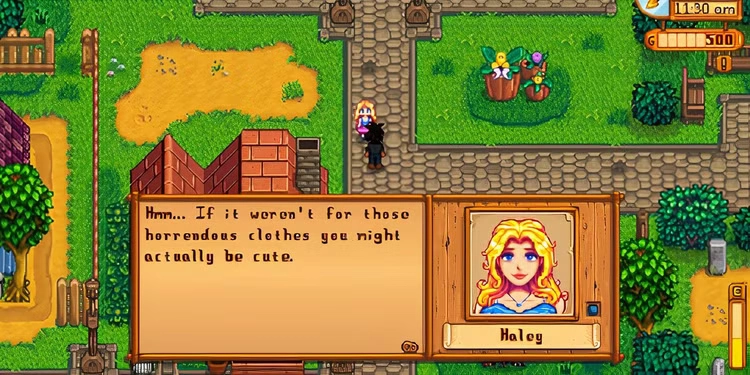
Among the game’s cast of townies, you have the glamorous Mean Girl-esque Haley, who actually goes through a stunning character arc as she meets your farmer and sheds her vain, self-centered ways. There’s Shane, who actually struggles with alcoholism in one of the game’s most compelling and poignant stories. Then you have Penny, the kind schoolteacher with an overdomineering mother who also struggles with substance abuse (as I said, not exactly a “kid’s game”). Even the old folks, like curmudgeonly, wheelchair-bound George, have insanely good backstories and inner lives.
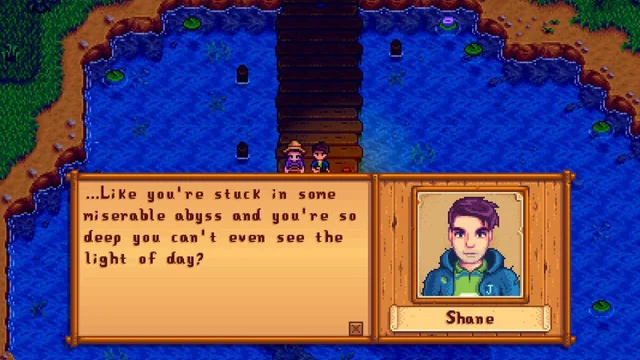
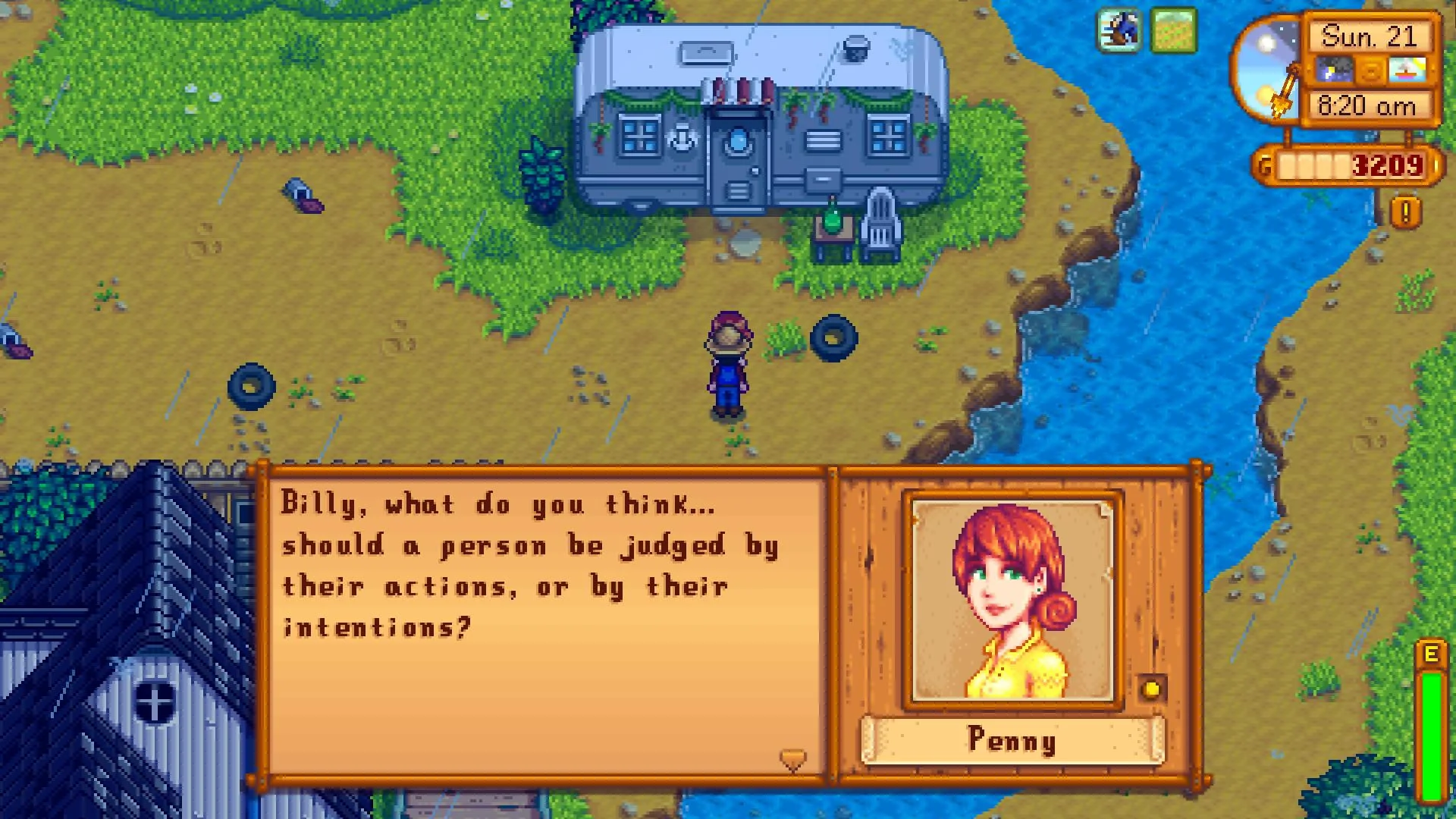
You can choose to befriend these townies, or even date and marry them, each with their own mini-romance arcs that add nuance to their characterization. Yet the beauty is that you don’t have to. You can simply enjoy farming, or take part in the seasonal festivals: watch a school of glowing jellyfish drift to shore, or enter your largest crops in the autumn fair. The strange thing is, no matter how many times I’ve experienced these events, they never grow tiresome. Instead, I’m met with a wave of nostalgia in the predictability—knowing what each season will bring—paired with the joy of being free to make fresh choices in every playthrough, which keeps the experience perpetually exciting.
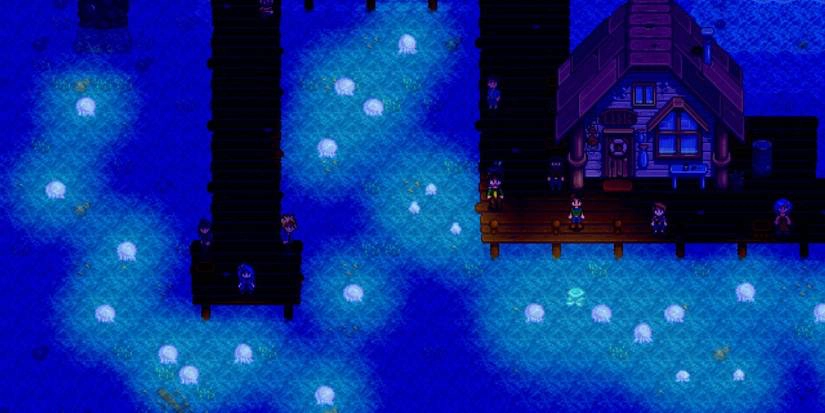
Each time I boot up Stardew Valley, it doesn’t matter how many weeks, months, or years have passed since I last tended my farm. Hearing that calming opening tune, seeing the old-school graphics that have become iconic in their own right, and experiencing the familiar while exploring something novel—it all feels like coming home. I have no doubt that countless other players feel the same. Ultimately, the game’s timelessness lies in how each of us defines and continually reshapes that sense of “home” for ourselves.
I’ll close with something Barone shared with IGN in an interview celebrating the game’s tenth anniversary, which I think captures this idea perfectly: “There’s a certain sense of growth in these games too. It’s about acquiring resources and then developing those resources into something, a life that you want to live. And that’s such a core part of being human that I think it just naturally appeals to people. It’s like something we’re all meant to do in a way.”
Photos courtesy of ConcernedApe and Steam