We get a behind-the-scenes glimpse of the effort, perseverance, and craft of three major choirs in the Philippines as they prepare for the holiday season.
By September 1, Jose Mari Chan begins to thaw, malls are decked in silver and gold, and the first notes of “Christmas in Our Hearts” echo across the country. For most Filipinos, it marks the start of a long-awaited season filled with nostalgia, lights, and cheer. But behind every carol that warms our hearts is a group of choir voices working tirelessly to make it all possible.
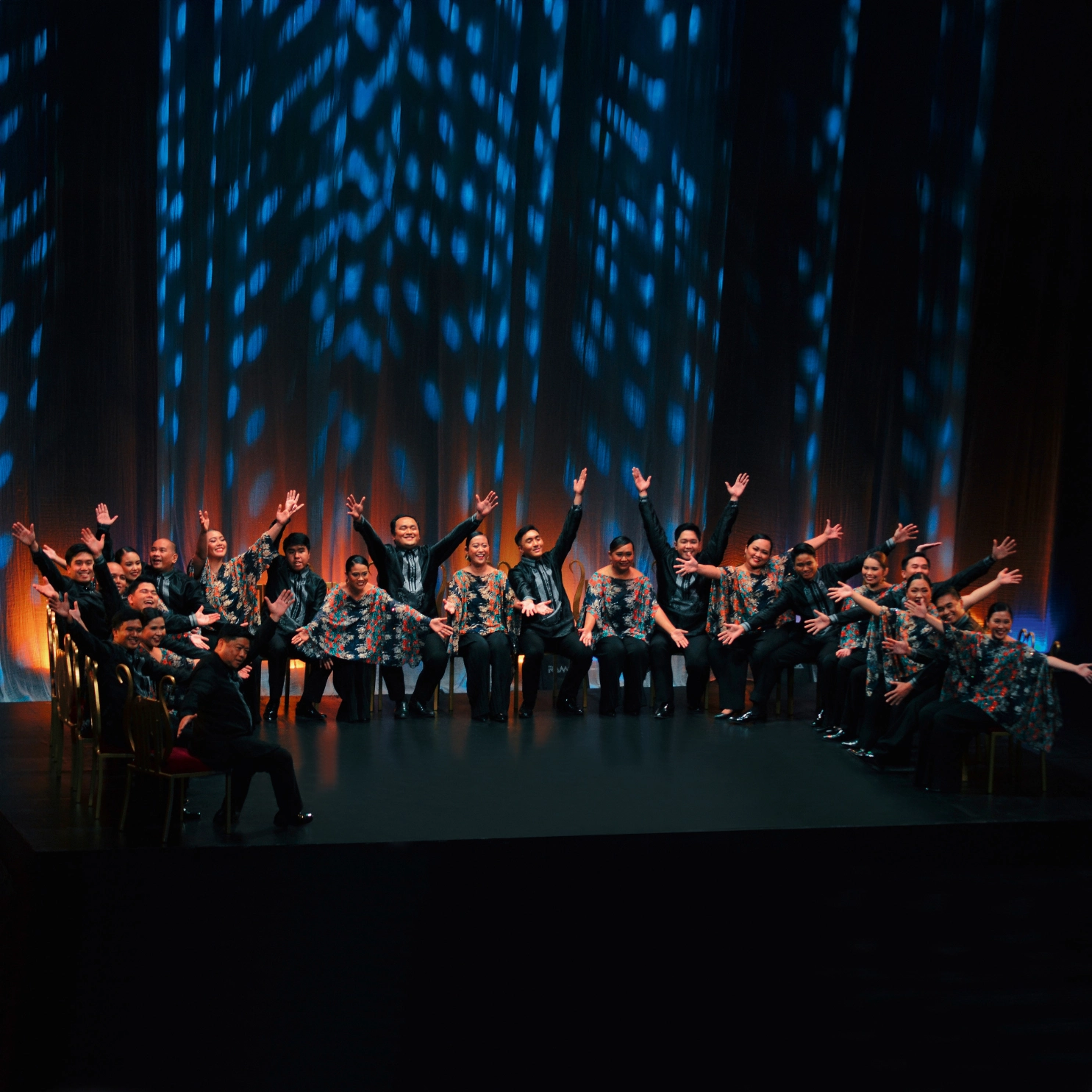
While we hum along in the comfort of malls, churches, and holiday events, choirs across the Philippines are moving into their busiest—yet most magical—time of year. Iconic ensembles like the Philippine Madrigal Singers, the Ateneo Chamber Singers, and the UST Singers are the unsung heroes of the season. Their rehearsals begin months in advance, their calendars packed with performances that bring the country’s Christmas spirit to life.
We often take them for granted, forgetting the dedication and artistry behind every voice. But step behind the curtain, and you’ll find the people whose harmonies remind us each year why Christmas in the Philippines is like no other.
READ ALSO: Resurrecting The Reel: Chronicling Film Preservation In The Philippines
The “-Ber” Months: When Christmas Really Begins
“For most choirs, Christmas really starts the moment the ‘-ber’ months come in,” says Mark Carpio, choirmaster of the Philippine Madrigal Singers. Colloquially known as “The Madz,” their holiday pace actually begins even earlier than that. “Some people ask really early,” he adds. “We’ve already had a few engagements that were scheduled as early as July or August.”
He recalls how their own song, “Apat na Buwan ng Kapaskuhan,” captured this uniquely Filipino phenomenon. “It sings of how we begin to celebrate as early as September. We recorded it after holding a nationwide competition in partnership with the National Commission for Culture and the Arts for new Christmas songs. It was the winning piece, and it really reflects how long our Christmas season lasts.”
For the Ateneo Chamber Singers (ACS), choirmaster Jonathan Velasco is also well aware of how busy the holiday season is for the group: “The ‘-ber’ months are really dedicated to Christmas, and we already program that to be a priority.” Velasco notes that the schedule fills up quickly for ACS—and once it does, that’s it. “As of October, our calendar is closed. We can’t accept any more bookings,” he explains.
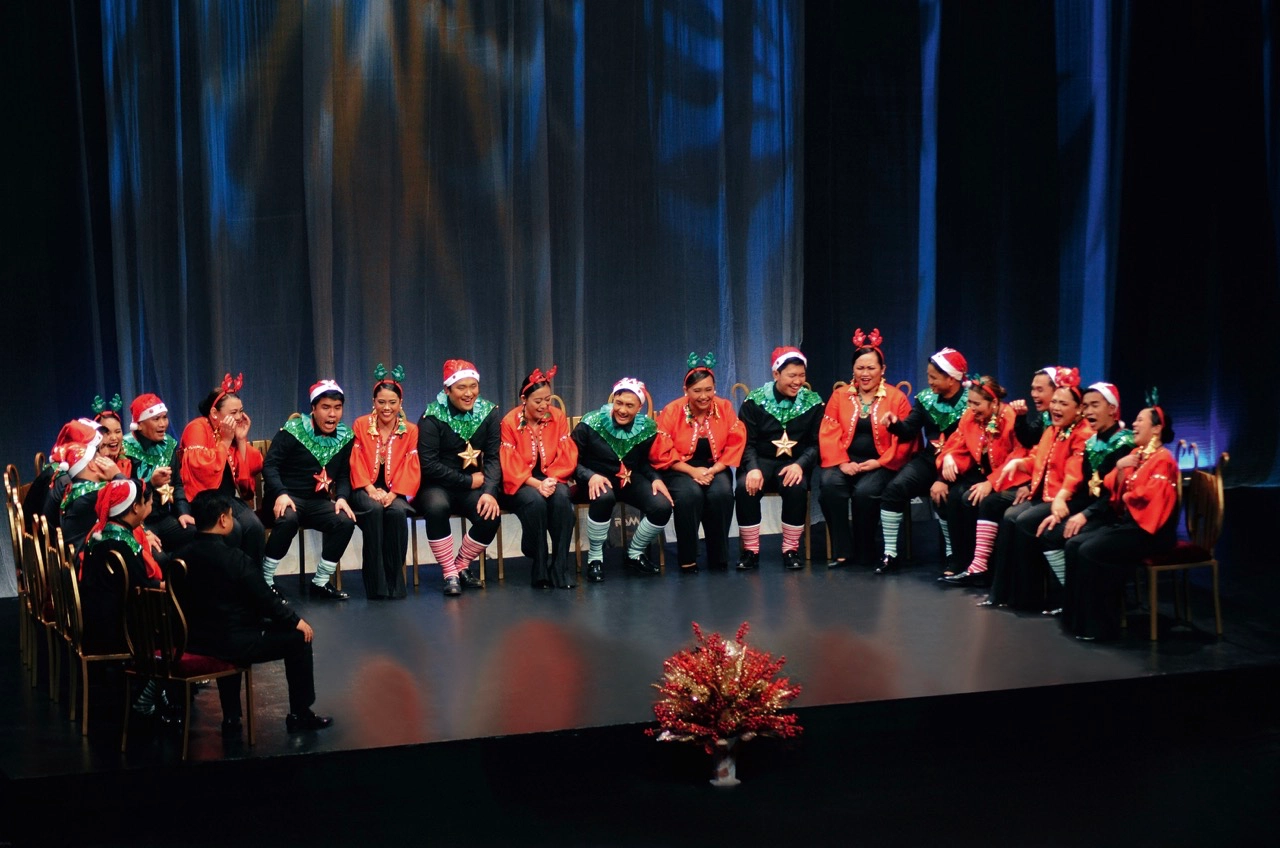
For a choir made up mostly of professionals with day jobs, scheduling matters. Velasco expounds: “We can’t do multiple gigs in one day, [known in Tagalog as] lagari, [an industry term] because it’s too tiring. We’ve done it in the past, but not this year. The artistic output suffers, and I don’t want that.”
Similarly, for the University of Santo Tomas (UST) Singers, founder and choirmaster Fidel Calalang Jr. is also accustomed to the Philippine holiday season routine. “We are so used to this. Once the ‘-ber’ months come in, we already get invitations. Even before September, people are already asking about Christmas activities,” he says. “We have a big white board calendar of events, and normally, for December, it’s all filled. We always get invitations for Christmas tree lighting ceremonies, serenading, mall shows, and private caroling events.”
While the calendar of some choirs ends on Christmas day, for the UST Singers, “it actually doesn’t stop on the 25th, it goes on. I think it totally stops at Three Kings when Christmas trees go down!” shares Calalang. “Preparing for the season is like opening the Christmas box of ornaments you’ve kept in the closet all year; you hang them again as Christmas decorations!”
The Rehearsals And Repertoire
The Christmas repertoire is dispersed throughout the “-ber” month rehearsals for the Madz. “We have to go through it slowly,” Carpio says. “We start reviewing Christmas songs as early as September, because I also have the church choir and children’s choir, who only meet once a week. There are always new members, so we review the songs and they can catch up.”
Sometimes, Carpio finds that singers become fatigued from performing the same songs every year. To encourage them, they would ask their arrangers—or even alumni—to create new arrangements of traditional Christmas pieces. This way, he discovers fresh interpretations of familiar carols, and the singers, in turn, find renewed enthusiasm.
Similarly, ACS makes sure to dedicate ample time to refreshing its repertoire: “I’d insert two or three Christmas songs per rehearsal,” says Velasco. “We only rehearse once a week on Thursdays. We might not have enough rehearsals for a new repertoire.”
There is a tricky balance in selecting their chosen songs for the year. He adds: “Half of the members ask, ‘Don’t we have anything new?’ The other half says, ‘I’d love to sing this again; it only happens once a year.’” He shares that it’s also difficult to find arrangements that perfectly suit ACS due to budget constraints. Fortunately, he has reliable arrangers like Arnel de Pano and Joy Nilo who know how to write suitably without demanding too much from the group’s vocals.
And for Calalang, most of the choral arrangements used by the UST Singers are his own, giving them the flexibility to find ways of keeping traditional carols fresh and exciting. “Sometimes I reinterpret the pieces—change the tempo, add little nuances here and there,” he says.
He’s unafraid to step outside the Christmas canon, selecting beloved works from Disney’s Frozen, Beauty and the Beast, and even pieces by Leroy Anderson. It’s a wide-ranging selection that’s fun, festive, and guaranteed to bring a smile to everyone’s faces. “It’s really about making people happy,” he adds. “I hope that they get the message of what we want to communicate to them; it’s not just listening to Christmas repertoire, but feeling the joy of hearing something that is happy, nice, and lovely.”
The Trials Of December
“We see each other almost every day because we have invitations one after the other,” Carpio says with a grin. “Sometimes we even get multiple invitations in a single day.” So what happens when those bookings overlap? “It doesn’t happen often, but when it does happen, we divide ourselves (into smaller groups) just to accommodate all those invitations,” he explains.
Yet even with packed schedules and long days, the Madz never lose sight of why they do it. “It uplifts your spirit,” Carpio reflects. “Singing together is the most accessible way of making music. There’s a different feeling [from] singing together with other people. It’s the best thing that choirs provide to everybody. That’s why the members of the choir look forward to singing in December.”
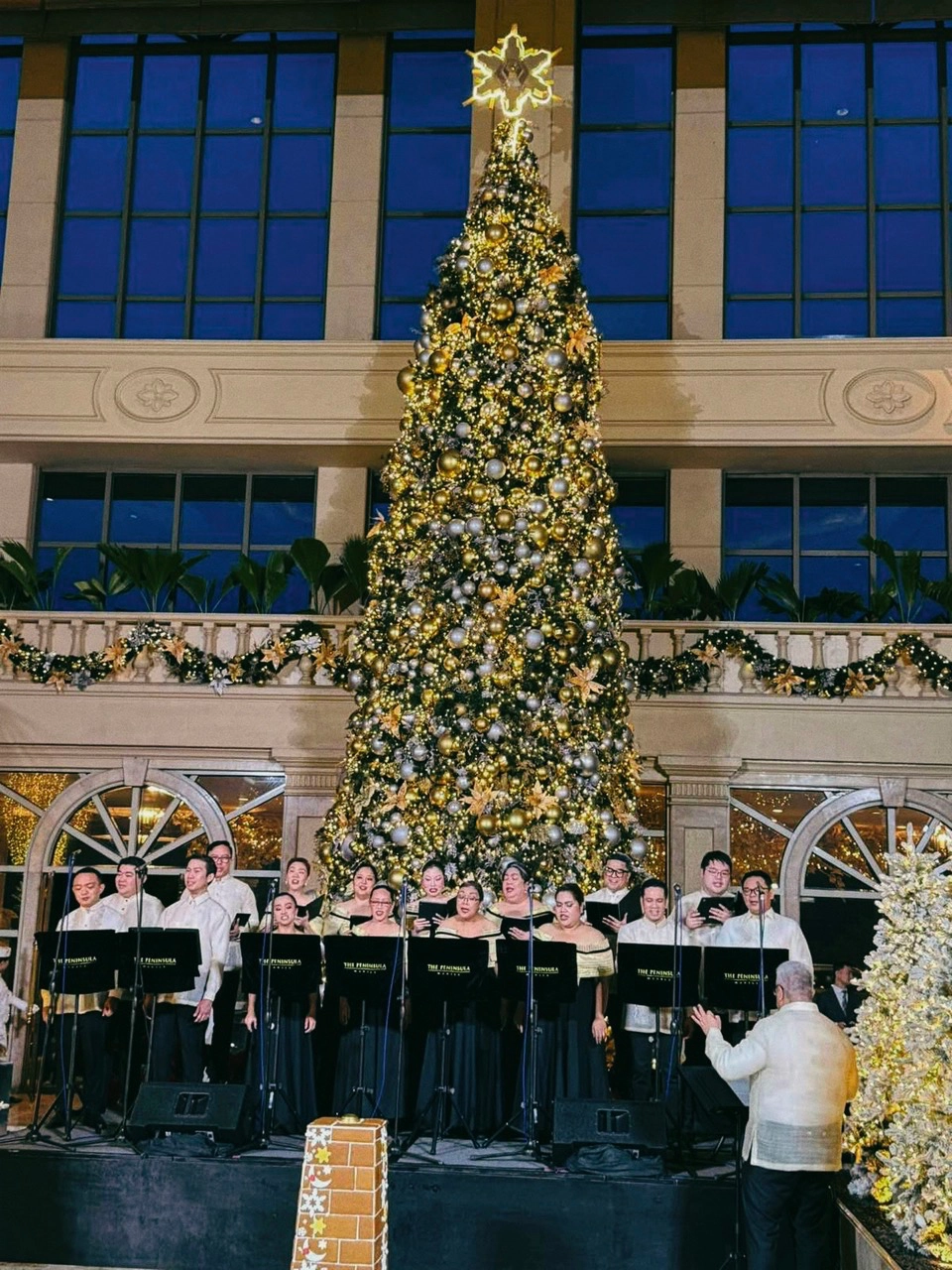
For the ACS, December is just as packed. They can be found at Christmas tree-lighting ceremonies, multiple concerts with orchestras, and singing novena masses at Ateneo and other parishes. One of the more challenging—but necessary—aspects of their work is ensuring that clients approve the choir’s attire.
“There’s a lot of borrowing (of costumes) going around for ladies,” Velasco explains. “For men, it’s either barong or suit.” Fortunately, there’s flexibility when ACS is given color combinations outside of their onstage costumes. However, members must strategize and invest in purchasing solid Christmas-colored pieces out of their own pockets.
Over at the UST Singers, Calalang braces the choir for the whirlwind pace of the season. “Sometimes we have two gigs in a day, rushing here and there. It’s fun but also very stressful. You have to beat the Christmas rush!”
They always anticipate Manila traffic and allot ample time to move from one venue to another. Still, Calalang shares that no matter how hectic it gets, they always look forward to the season. Like the Madz, the UST Singers occasionally split the choir into smaller groups to manage the demand and cover more events; it doesn’t stop on the 25th, either. While Calalang encourages keeping Christmas Day for family, some members are still willing to sing.
Keeping The Spirit (And Voices) Alive
For the Madz, the key to never losing steam during the holiday season is knowing when to pause. “Every singer knows their limits,” says Carpio. “Sometimes I look at the list of singers and see who needs to rest a little or take a break, and I ask others to take their place.”
The Madz release their December schedule early so members can plan and make room for rest. “We all know how busy December gets, so we fix our personal commitments ahead of time,” he explains. After the rush, they look forward to recovering together. “We also take a long break after Christmas—January is much less busy. We usually go out of town, maybe to the beach, just to relax and still be together as a group.”
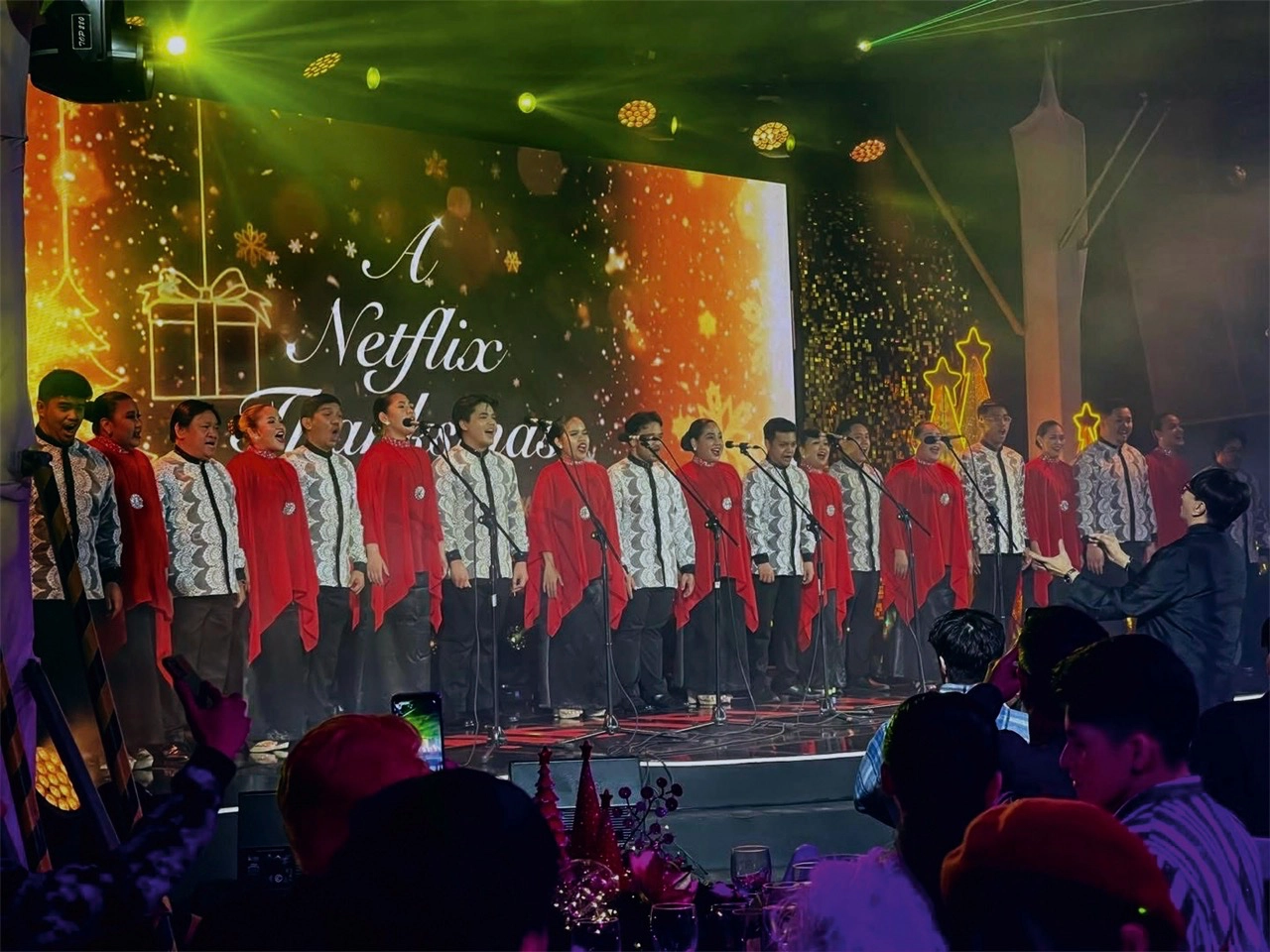
At ACS, Velasco finds that music itself restores the choir’s energy. “Singers come to rehearsals tired from work, but once they start singing, their tiredness disappears,” he says. “The music uplifts their morale.” Their calendar closes after their final Simbang Gabi Mass on December 23, after which they hold their annual Christmas party and make time for personal celebrations. As Velasco puts it, “There has to be time to celebrate! For a group of professionals who juggle day jobs and evening performances, that shared love for music becomes its own kind of rest.”
Meanwhile, Calalang is cautious about vocal health, especially during the packed holiday season. “I always ask my singers how their throats are and how they’re feeling,” he says. “If I can hear a cold or sneezing, I send them home. Vocal health is really important.” Amid all the preparation, the semester still goes on, requiring flexible schedules, a careful balancing of commitments, and—for Calalang—jurying for Christmas competitions. “It’s part of the stress, but is also exciting in a way!”
The Meaning Behind The Music
Christmas is joyful, but for many, it resonates beyond the commercial lights and festivities. For the different choirs and their leaders, the season carries distinct meanings. In the case of Carpio, faith remains at the heart of the music.
“When we hear songs for the season, many of them are about love, getting separated from your loved ones, or wanting to reconnect, and not about the birth of our Lord—the reason behind the celebration,” he says. “We released this album of all-Filipino Christmas songs because we thought it was something we needed a little more of—songs that really sing of the Filipino way of celebrating Christmas.”
Carpio, who grew up Catholic, still finds joy in seeing that devotion come alive. “I always feel content and happy whenever I see a lot of people going to novena masses until Christmas Eve and Christmas Day. It makes me feel good seeing people not forgetting why we celebrate. It’s the time we remember the birth of our Lord.”
For Velasco, Christmas is both personal and deeply traditional. “I am a very Christmassy person,” he professes. “Since I’ve been singing in choirs since I was 16 years old, I really love hearing and listening to Christmas repertoire sung by choirs at this time of the year.”
He loves the fact that Christmas binds both singers and audiences. “It’s a tradition for me to sing this particular arrangement at this time of the year,” he shares. “We open every 23rd of December Mass in Ateneo with ‘Once in Royal David’s City.’ We’ve sung it every year since 2003, and people look forward to it—they even sing with us during the last stanza.”
For Calalang, the mission is simple but profound: to be instruments of joy and faith. “Most people see choirs during the Christmas season like parols or ornaments and say, ‘Oh, it’s Christmas time!’ Sometimes they just pass by, doing their shopping or strolling,” he says. “It would be good for people to appreciate what we are doing, because for us, to see them enjoying the beauty of Christmas is something of great worth.”
Every performance is a form of giving, says Calalang. “You give a part of yourself, what you feel about Christmas, and share it with them.” He pauses, then thoughtfully continues. “We are instruments to send joy as we celebrate the birth of Jesus, this glorious time that only happens once a year. It’s like a mission: Christmas is about giving a part of yourself to another person, and this is our way of imparting that sense of importance.”
Across three choirs and countless performances, one truth endures: behind the season’s soundtrack are voices that carry more than melodies. They carry devotion, resilience, and love—for their craft, their country, and the spirit of giving that defines the Filipino Christmas. When the final chord fades, what remains is something no recording can capture, and that’s the echo of gratitude for singers who make the holidays sound exactly the way they feel.
This article was originally published in our December 2025 Issue.
Photos courtesy of The Philippine Madrigal Singers, The Ateneo Chamber Singers, and the UST Singers