“Shrekking” and “monkey-barring” are making their rounds online, touted as the newest additions to a generation’s dating lexicon…but is that really true? Or are people just making stuff up now?
“My new favorite Gen-Z dating word,” my dad begins, “is ‘shrekking.’”
I pause, staring at him for a few moments, brow raised.
“Shrekking?”
“Yeah,” he says. “It means deliberately lowering your standards and going out with ugly men.”
I laugh—partly because my 56-year-old father apparently knows more about my generation’s dating slang than I do, and partly because… well, I’ve never heard anyone use that term. Ever. I don’t even consider myself particularly plugged in when it comes to trends, but I still found the word’s supposed origins dubious.
So I did a little digging. The only things I found were a handful of TikTok videos (emphasis on handful, which shouldn’t be the case if this were truly a cultural phenomenon), a couple of write-ups from places like Vice and Cosmopolitan, and a segment of older reporters laughing about it on The Today Show. Which begs the question: are these “Gen-Z slang” terms actually real—or are people just making things up and slapping the label on for clicks?
Maybe I’m living in a bubble, or maybe my algorithm just isn’t there yet, but even my friends swear they’ve never heard “shrekking” used in actual conversation. Still, I have to admit, it’s an amusing situation—and there are a few linguistic quirks about these “new” words that I find particularly grating. So let’s dive in.
READ ALSO: Dating Apps Still Not Working? Maybe Online Love Isn’t the Answer
Shrekking (Or, Dating The Ogre And Missing The Point)
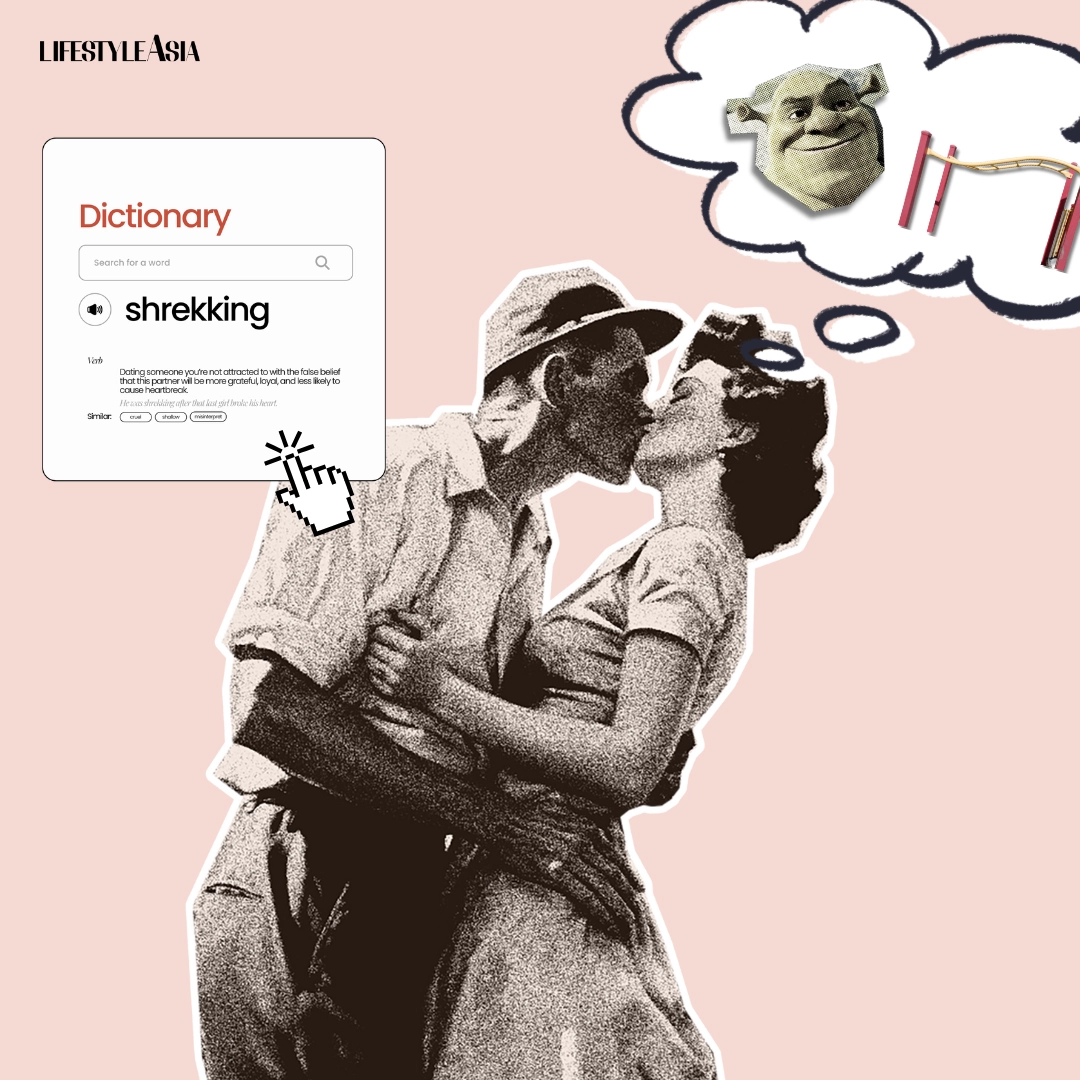
“Shrekking” is a reference to the famous green ogre of DreamWorks’ Shrek franchise, and refers to dating an “ugly” person—or someone you find unattractive—in the hopes they’ll treat you better than someone conventionally desirable. Which, in itself, is a ridiculous sentiment. When did looks have anything to do with the quality of a person? And again, we’re circling back to the overused but resonant adage of beauty being entirely subjective.
As writer Gina Cehrelus points out in an article for The New York Times on the “shrekking” trend (if we’re to even call it that), this cruel strategy is nothing new: it’s just a sharper, meaner way of approaching the idea of “dating down.”

Another thing that bugs me is the very etymology of the term. It’s the complete antithesis to the plot and themes of Shrek (I’m mainly referring to the first movie). Princess Fiona didn’t choose Shrek because she had some misplaced hope that he’d treat her better than the alternative. First off, the alternative wasn’t conventionally attractive to begin with: an egotistical, iron-fisted Lord Farquaad, who’s anything but sexy (a man of short height and shorter temper).
Fiona fell for Shrek because he was kind and genuine. He saw her for who she really was. Her entire arc, after all, was about self-acceptance: she was cursed to transform into an ogre at night, and ultimately had to reconcile that duality. She wasn’t in any position to deem Shrek unlovable; if anything, her journey was about learning to love herself by seeing him as a reflection, a mirror of her own hidden self.
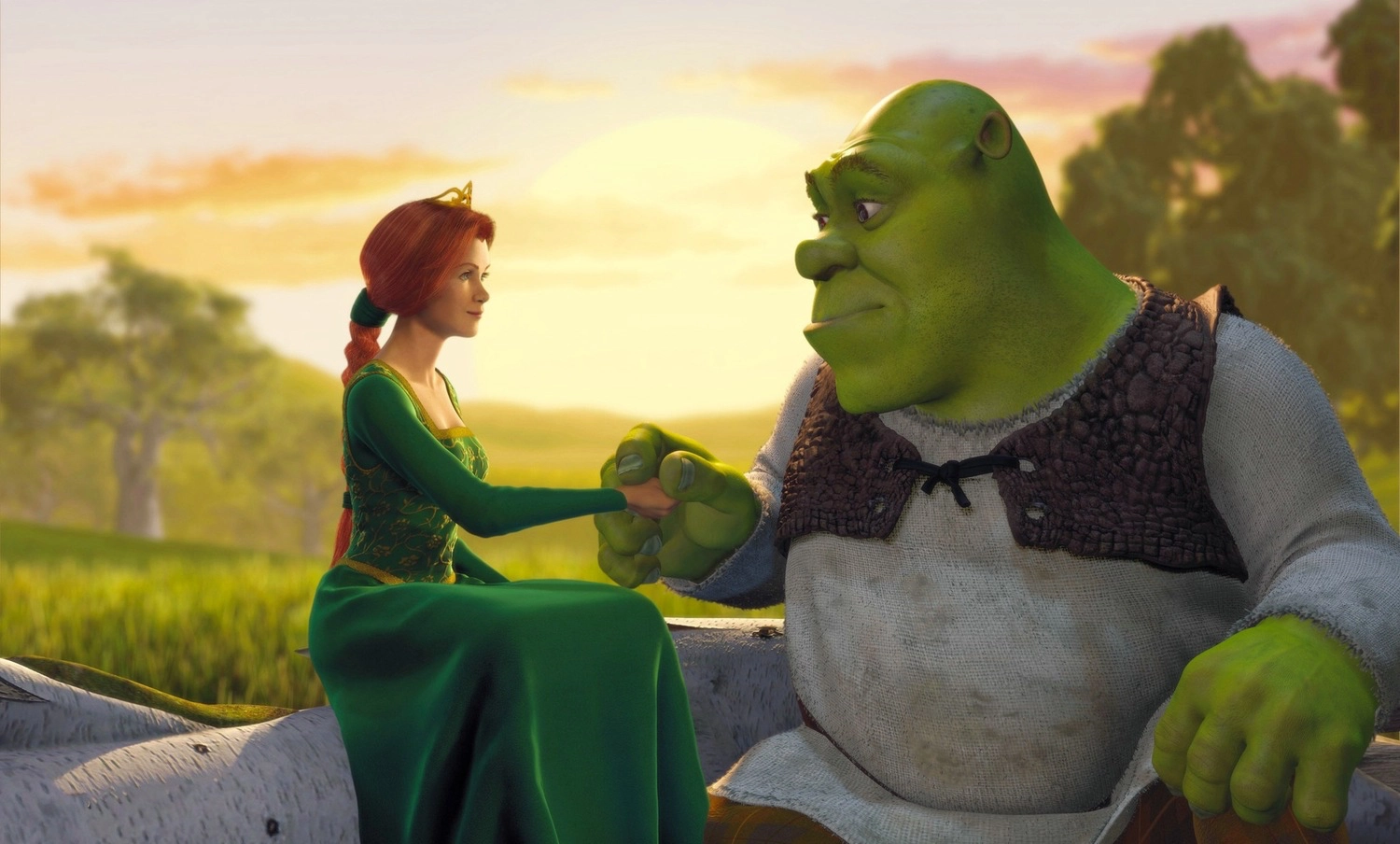
The story was about rejecting shallow beauty standards and discovering that love doesn’t always wear the face we expect. Turning that into a term that equates to dating someone “ugly” out of pity or “pragmatism” feels like a game of cultural telephone. Somewhere along the way, we missed the point entirely.
Monkey-Barring (Another Flavor Of Infidelity)
I probably wouldn’t have written this article if another “Gen-Z term” hadn’t pushed me over the edge: monkey-barring. It describes a certain kind of infidelity—though, as always, people will argue endlessly about what actually counts as cheating. Once again, outlets like VICE and Cosmopolitan are calling it the latest buzzword in dating culture, yet no one I know (or anyone I’ve seen online) seems to be using it. Not in texts, not in tweets, not even in ironic TikToks. Certainly not with the same gusto as a word like “situationship,” which actually earned its place in the Gen-Z lexicon.
As the name suggests, it alludes to the motion of swinging across a monkey bar—holding onto one rung while reaching for the next. In dating terms, it refers to people who refuse to fully let go of one relationship before “securing” another, keeping a hand on both for a sense of emotional safety (or, depending on how you see it, control).
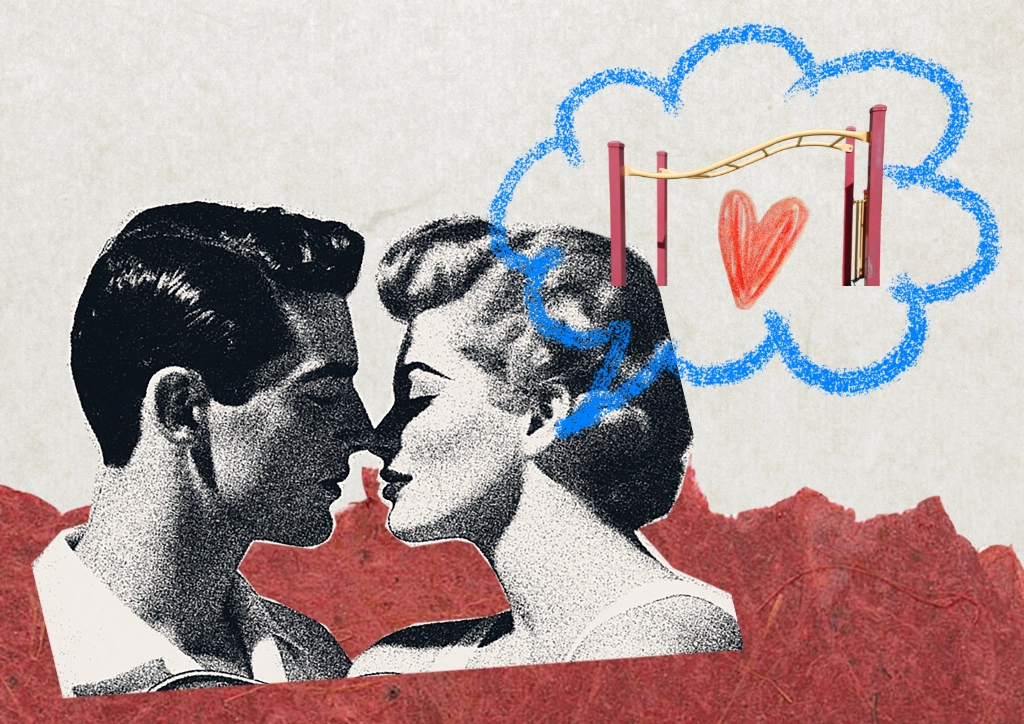
Kayla Kibbe of Cosmopolitan adds some nuance to the discussion, noting that people might resort to monkey-barring out of a fear of being alone—or from a need to keep their options “afloat” in case their current relationship sinks. I won’t get into whether that’s simply cheating in a trench coat; we can all draw our own conclusions there. (Though we can probably agree it’s not the healthiest approach to relationships.)
What’s more interesting to me is how these terms even come to exist, or rather, how they seem to suddenly exist. Every few months, the internet decides we have a new “dating trend” to obsess over. But, at least from my real-world observations and experiences, most of these Gen-Z inventions don’t even seem to come from us.
My theory? They’re likely born in editorial brainstorms, spun into something that sounds like the way young people talk. Or, one person (maybe two people) on the internet used the term a few times, and people just thought everyone did. It’s a strange loop: media outlets amplify a term, then point to each other’s coverage as proof that it’s “trending” (yes, I understand this feature is fanning the flames, but even faux realities need critique). Before long, the word appears in headlines, and suddenly it’s what a whole generation is saying—even though, offline, nothing could be farther from the truth.
What Makes A Term Stick?
Slang will always find its roots in specific groups or subcultures. It’s born from a need to create systems of belonging: these are shared codes that express identity, humor, and collective experience. Over time, these niche terms ripple outward, carried by social media and pop culture until they cement themselves in the broader lexicon.
But that’s the key: a word only reaches that level of ubiquity when people actually use it—consistently, naturally, and en masse. And while it’s true that social media has accelerated the birth rate of new slang, giving linguists more material than ever, it’s also opened the door to forced evolution. There are now just as many failed experiments as genuine linguistic shifts, attempts to manufacture “organic” slang through the very systems that sustain our modern forms of communication.
These so-called Gen-Z dating terms feel hollow. They appear to be reverse-engineered: invented first, then force-fed into culture through headlines and hashtags. They mimic the cadence of real slang but lack the lived-in familiarity that gives language its bite.
Maybe that’s why I find the whole thing so funny. Somewhere out there, a group of people thinks my generation is “shrekking” and “monkey-barring,” when in reality, most of us are just trying to text back without overthinking punctuation or the subtext of an emoji.
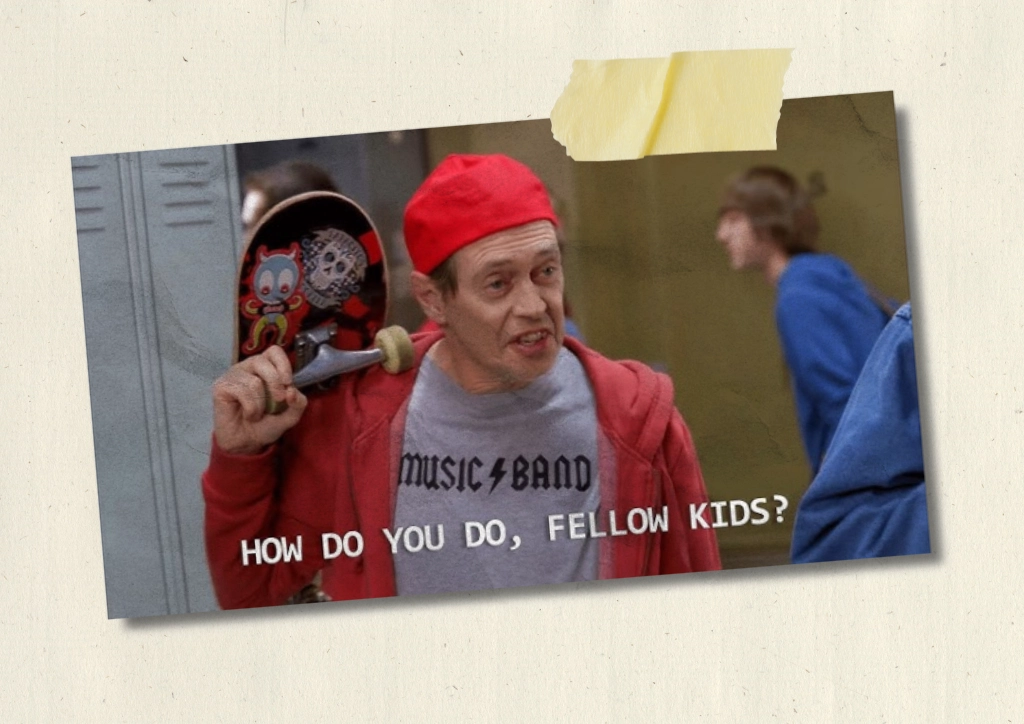
Sure, maybe some Gen-Z’ers are doing those things. But we’re certainly not calling them that—unless we want to start looking like that one Steve Buscemi meme from 30 Rock.