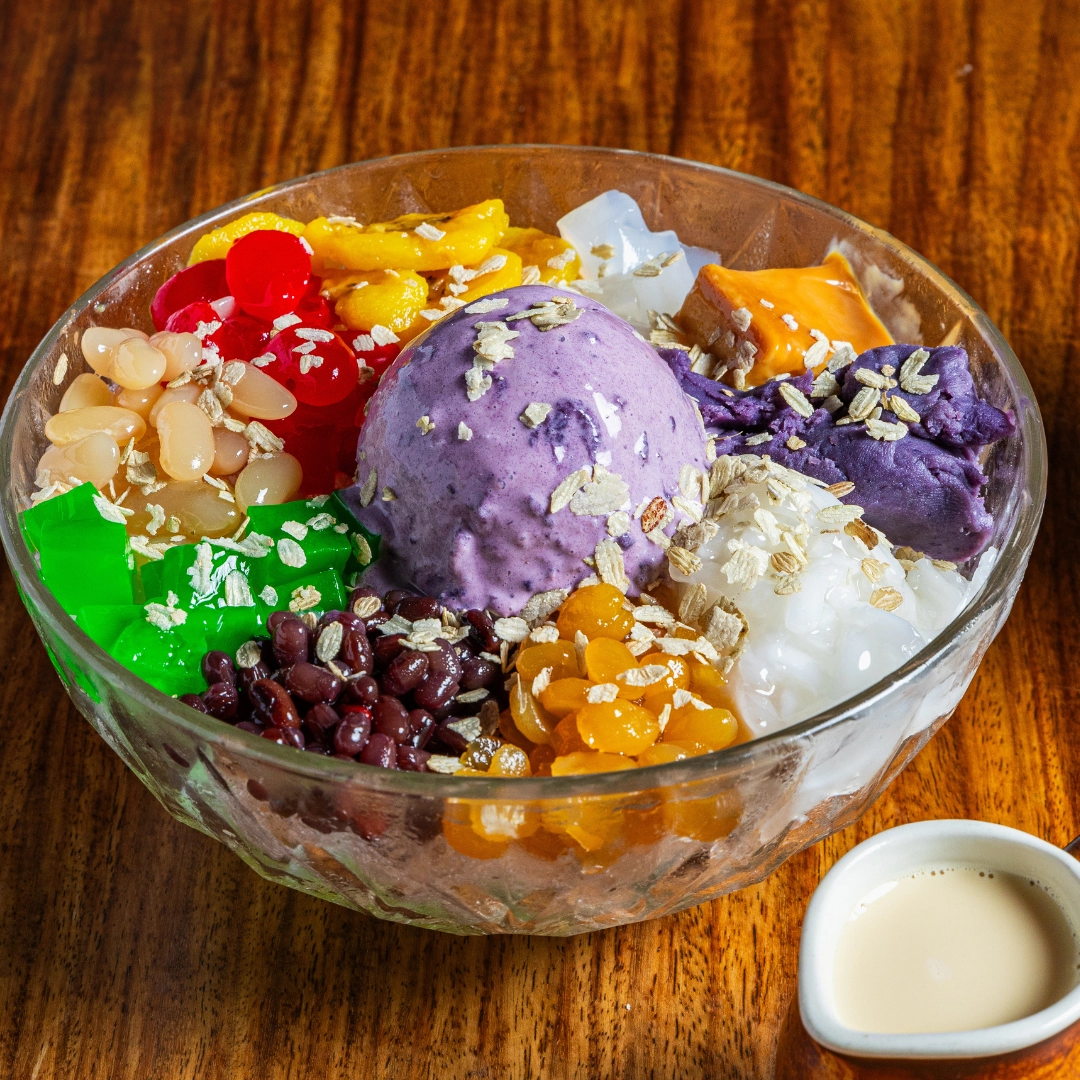
As layered as the favorite summer treat itself, the story of halo-halo is one built on vibrant, dynamic evolution.
Halo-halo: a compound word so distinctly Filipino, you can utter it in almost any local eatery in the country, and they’ll know exactly what you mean—and will likely have it on the menu. Yet, like many dishes in the Philippines, the dessert isn’t static or standardized. True to its name, it’s a mix of elements that can shift from family to family, establishment to establishment, and person to person.
That said, regardless of its contents, size, or presentation, the frozen treat’s sensory experience remains a familiar one across all its iterations, serving as the core of its soul: ice-cold, milky goodness that fills the mouth, refreshes and delights in equal measure, and delivers an intricate orchestration of textures that never grows old. Chewy, crunchy, sweet, earthy, gelatinous, soft, fruity. Its multiplicity is felt through a collapse into singularity, a mix of components that meld into what we can only describe as utter harmony.
The reason behind halo-halo’s enduring appeal lies not only in taste, but in the dynamism of its very DNA. It’s a versatile megastructure of simple building blocks, meant to be mixed and remixed, personalized and enhanced. In this sense, evolution is not merely an inevitability or necessity: it’s a glorious horizon of possibilities, the very condition in which this dessert thrives. So, unsurprisingly, the story of this wonderfully chimerical treat is as layered as its subject.
READ ALSO: The Power Of Style: A Story Of The Barong Filipino’s Evolution
Ice, Ice Baby
Like many dishes that have integrated themselves so deeply into the country’s culture that they’ve become delicious mythologies in themselves, we can’t quite pinpoint the exact inventor of halo-halo. What we can do, however, is trace its beginnings to the introduction of ice in the Philippines.
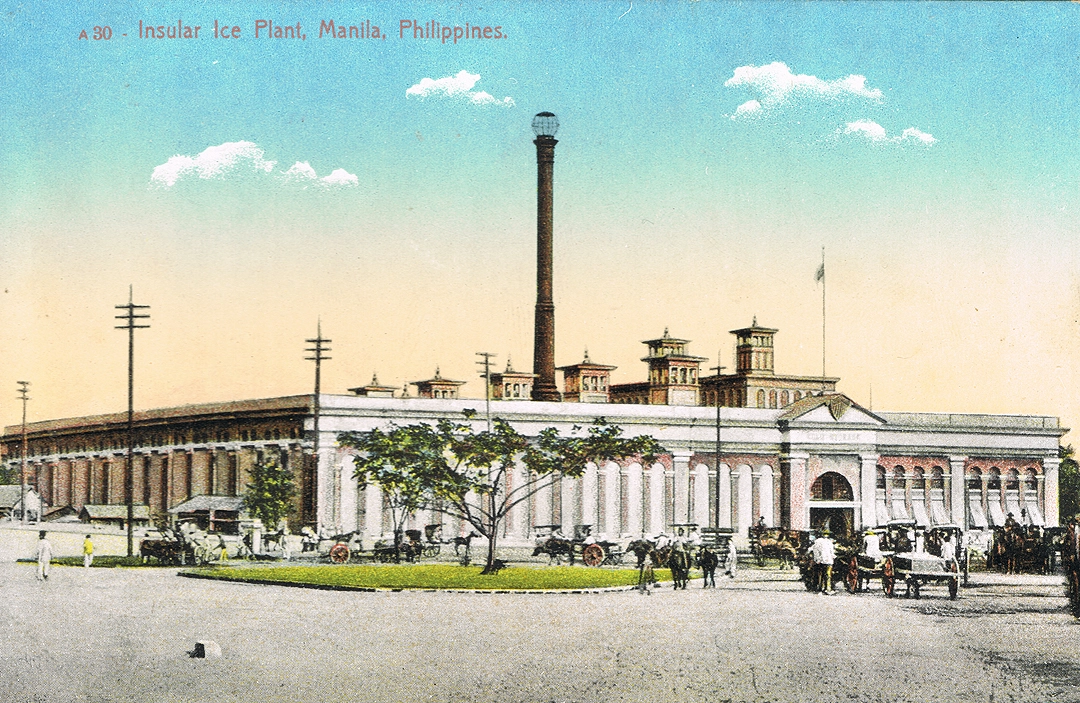
It’s the late 1800s, toward the tail end of Spanish occupation and the war that would lead to US occupation: American traders begin bringing translucent, misty blocks cut from their frozen lakes into the Philippines. But as historian Ambeth Ocampo explains in his article “The Iceman Cometh,” the country didn’t have a constant, widespread supply of ice until the Americans took over, a period that saw the construction of ice plants around Manila. The Insular Ice Plant, in particular, provided a regular supply from its construction in 1902 until its eventual destruction during World War II.
Ice was also, for some time, considered a luxury, with upper-class homes keeping ice chests, or neveras as they were called, within their homes until the 1920s (when refrigerators replaced them), as food historian Felice Prudente Sta. Maria details in her book The Governor-General’s Kitchen: Philippine Culinary Vignettes and Period Recipes, 1521-1935. From here, we can more or less approximate the beginnings of popular frozen treats like sorbetes.
It’s worth noting that Filipinos were already enjoying a simple shaved ice dessert at the time, as writer Luning Bonifacio Ira states in the anthology The Culinary Culture of the Philippines. It was called mono (a nod to its cost of one centavo), topped with a square of karamelo (hardened, caramelized white sugar and egg white); and if you could afford it, another centavo would get you a serving of mono with a bit of evaporated milk—treats that folks called agua helada or “iced water.” The forefather of the halo-halo as we know it would emerge a little later on, inspired by desserts brought in by another foreign country.
From One Country To Another
It’s rather ironic that something as saccharine as halo-halo arose from the shops of Japanese immigrants in the country during the “peace time” period (early 1900s to early 1940s)—many of whom, as Sta. Maria notes, were revealed to be spies or Nippon Army officers after Pearl Harbor.
Yet, as scholar and writer Doreen Fernandez observes in her book Palayok: Philippine Food Through Time, on Site, in the Pot, this is hardly surprising in a country whose rich food traditions are shaped by both the indigenous, meaning food that grew on the land, and the “indigenized,” referring to food adapted from foreign influences and absorbed into the culture. That’s to say, we’ve managed to transform products of colonialism into something entirely our own, despite the threads of darkness sewn into their origins.
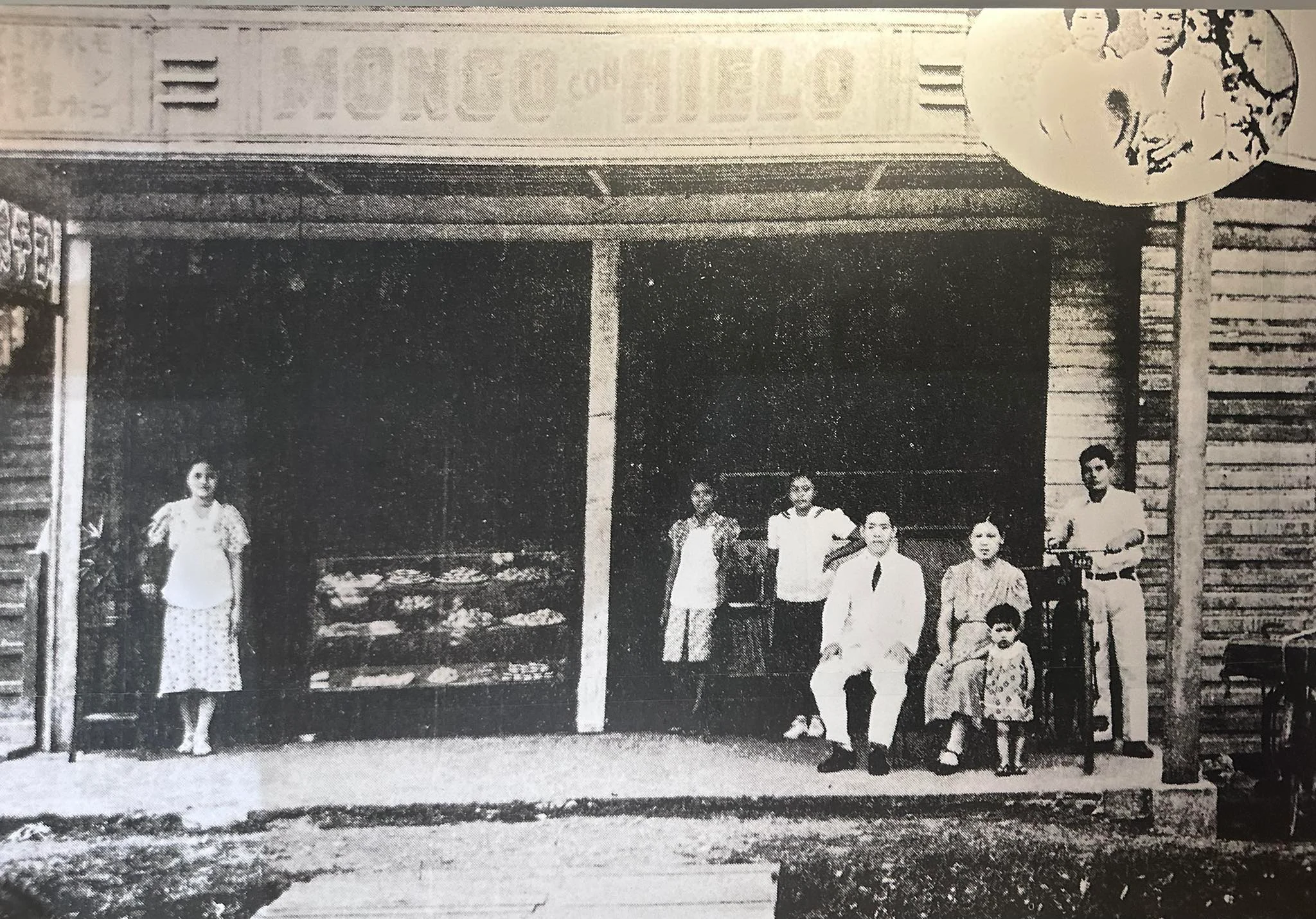
The Japanese settlers took characteristics from their native kakigōri (shaved ice that’s flavored and sprinkled with toppings) and mitsumame (meaning “many beans”), cold desserts of agar jelly cubes, fruits, and, of course, red beans, served together with a sweet syrup or condensed milk, and thus, the mongo con hielo was born. In his book Halo-Halo, Hardware, and Others: The Story of the Japanese of Manila, 1900–1945, scholar Augusto V. de Viana explains that the name became so synonymous with its creators that older Filipinos who lived through this peacetime took to calling the Japanese mongo con hieleros for years afterward, regardless of whether they actually sold the dessert (in other words, a sweet became a stereotype).
These mongo con hielo refreshment parlors were widespread, leading to the popularization of their frigid delights. The dessert was initially made similarly to its Japanese inspirations: shaved ice served in small plates with red beans, sugar, and just a bit of evaporated milk. As Ira notes in The Culinary Culture of the Philippines, however, the crockery of choice shifted from plates to glass cups as ice and milk supplies became more abundant and accessible.
Despite the devastation brought about by World War II, this little dessert survived, adapted, and proliferated into every corner of the country it calls home.
How To Build A Halo-Halo
A halo-halo can’t be easily defined by its ingredients, which will always change depending on who’s making it. Let’s start with the basic building blocks of shaved ice and milk, sometimes evaporated, other times full cream; then, some popular ingredients.
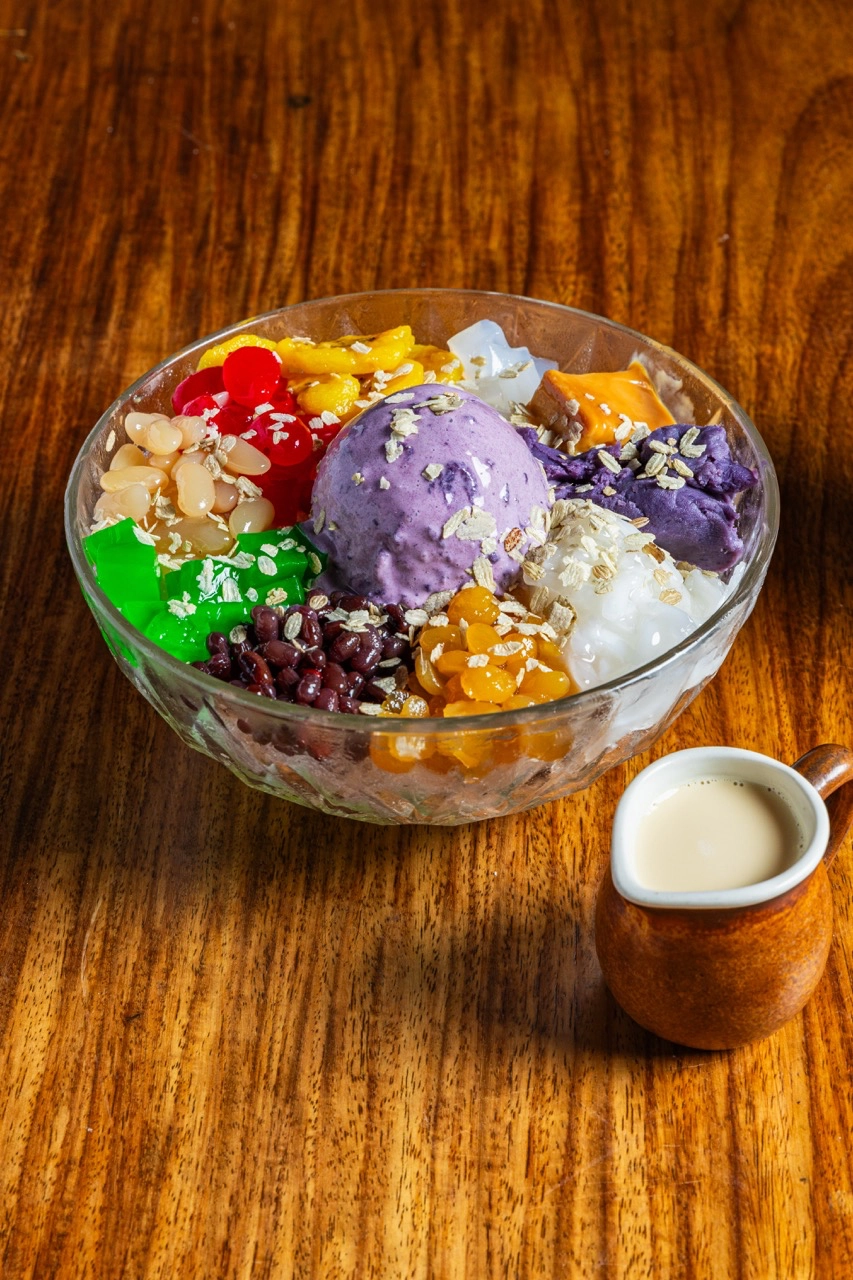
Sago pearls
- Soft , translucent, and small beads of sago flour (derived from palm stems) that are boiled
Gulaman
- A kind of gelatin that uses agar-agar (a substance derived from seaweed) as a binding ingredient
Pinipig
- Rice flakes made with pounded, pan-roasted green rice grains (meaning rice has not reached full maturity)
Kaong
- The pulpy, chewy nut of a sugar palm (Arenga pinnata) Macapuno: the jelly-like meat from a mutant coconut fruit, caused by the abnormal growth of its nut
Nata De Coco
- Coconut gelatin with a bite, also found in other desserts like fruit salad
Langka
- Should be ripe; the heady, sweet, slightly pungent meat of a jackfruit
Monggo
- Boiled red mung beans, one of the “OG” ingredients within a halo-halo
Garbanzos
- Boiled chickpeas
Ube Halaya
- A kind of pudding with a mashed consistency; made from ube, a sweet and native purple yam
Leche flan
- A steamed egg and milk custard topped with caramel syrup
Mixing It Up
Over the years, halo-halo has transformed into many things. Each iteration reflects the country’s seasonal abundance and accessible ingredients, as well as the regional preferences and recipes that accompany them.
Tropical fruits and crops like saba, langka, kamote, kaong, and maiz were joined by new components such as coconut milk and pinipig, yielding cousins of halo-halo like maiz con hielo. Ingredients drawn from other foreign influences like leche flan (Spanish), gulaman (Chinese), and ube ice cream (with ube being Filipino, but the ice cream undeniably American) eventually entered the delectable conversation, creating a more complex version of the dessert and, with it, the need to distinguish between the regular and especial.
There’s a halo-halo for everyone somewhere out there. Various fast-food chains have perfected versions of the dessert that offer a quick fix for anyone craving it. In some provinces, carabao’s milk is used instead of cow’s milk or evaporated milk, while others turn to more peculiar choices, such as chili or salted egg as toppings. Fresh macapuno is another sought-after ingredient, though it remains a delicacy that’s difficult to produce in large quantities, as it’s a mutated coconut with a jelly-like filling that occurs in only about one out of every five specimens.
There’s no “right” or “wrong” halo-halo— only a good one, and even that depends on who you ask. The conversation continues as more businesses find ways to reinvent, or shall we say, remix, a classic.
The Halo-Halo Today
One of the newer ways of serving halo-halo is replacing its mound of ice and evaporated milk with a creamy, shaved milk mixture. Then, what you’d expect: tiers of ingredients, both traditional and innovative, all packed into a tall cup. The result is a dense yet refreshing halo-halo that never gets watered down (a tendency when shaved ice melts), packing plenty of consistent flavor with every bite.
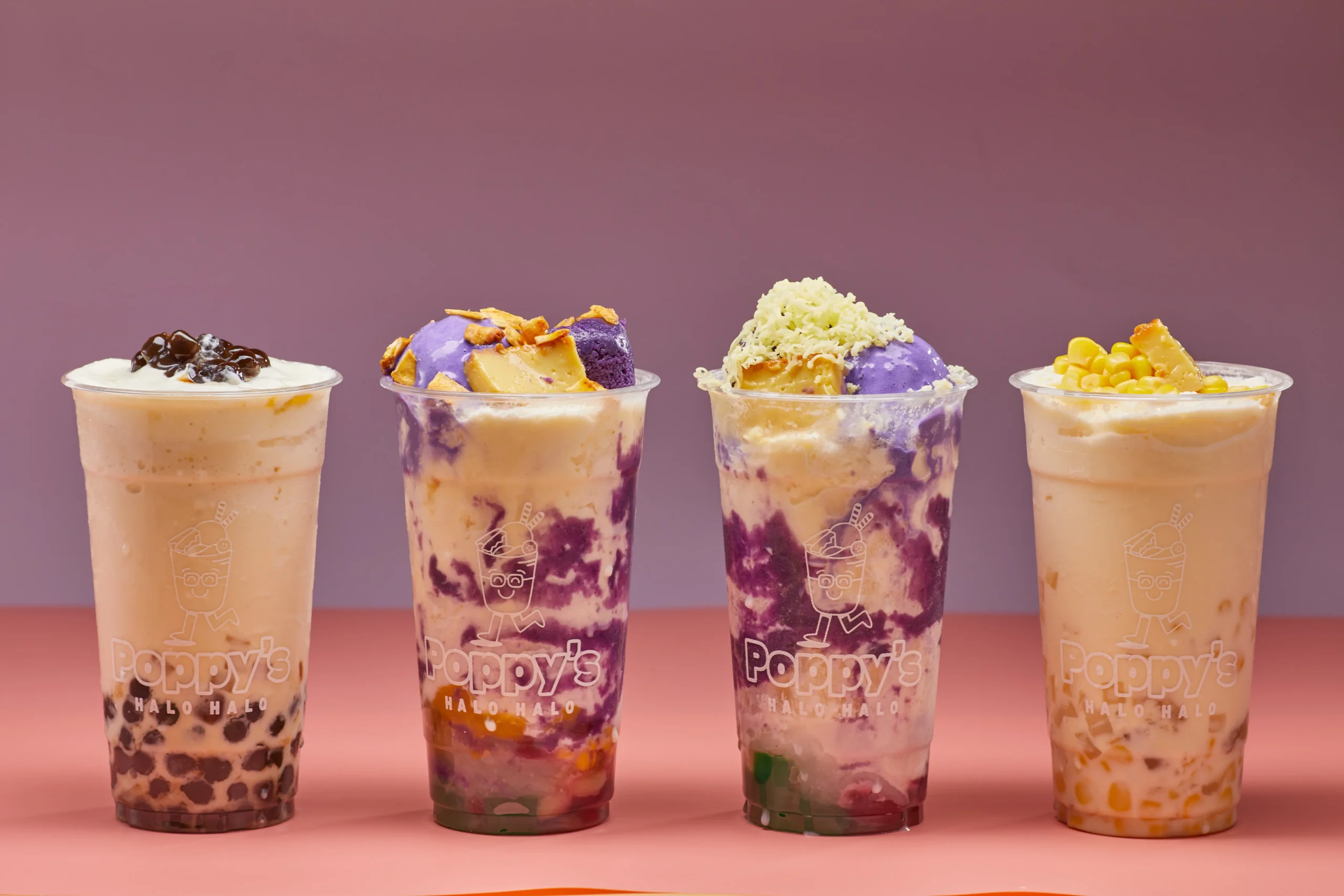
Poppy’s Halo-Halo is a brand doing exactly this through a streamlined menu featuring four variations of the dessert: Poppy’s Classic (a timeless take on halohalo), Ube-Keso (a cheesy twist), Salted Cream Boba (for the milk tea lovers out there), and Mais-Saba con Yelo (that unbeatable combination of sweet corn and banana). Testament to its popularity, the brand has already opened several branches around the Metro, including a new location at SM Fairview and another slated to open at its headquarters in Mandaluyong.
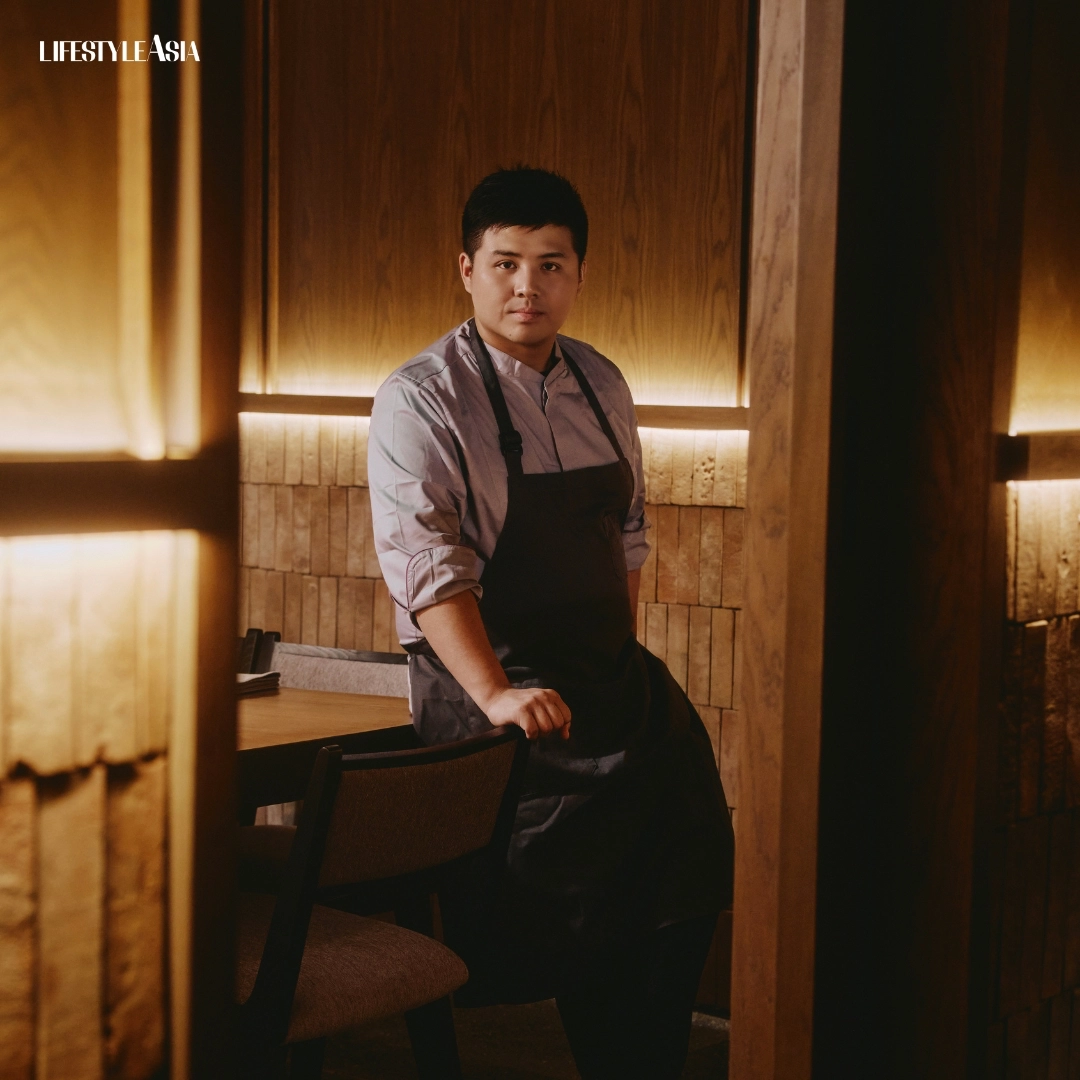
Inspired by his late grandfather’s love for sweets, Miguel Reyes, president of Poppy’s Halo-Halo, set out to create a business that would honor both that legacy and his family’s culinary traditions. The brand incorporates products from his mother’s other food venture, Michelle’s Homemade Filipino Delicacies, adding an extra dimension of comfort and personal touch.
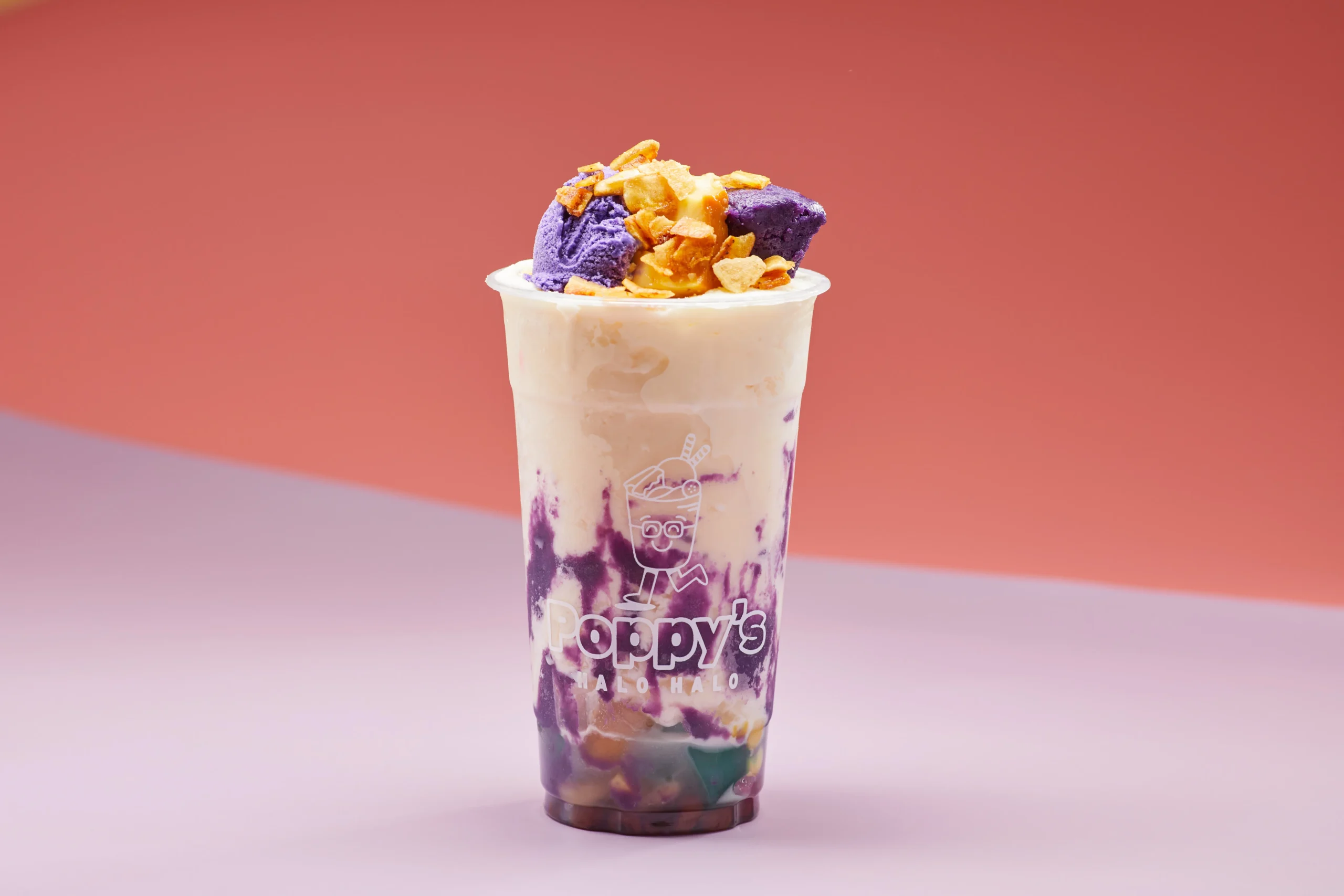
“Halo-halo is known to have all your favorite sweets in one cup, and that’s where our tagline came from: ‘Where every spoonful tells a story,’” he tells Lifestyle Asia. “It’s the classic halo-halo, topped with her [his mother’s] special banana chips and ube puto.”
You can change many things in a halo-halo— mix and match, omit or enhance—but when done right, its heart remains. For Miguel, that pulse is the emotion elicited through the act of savoring the dessert’s detailed layers. “A great halo-halo consists of everything that makes you happy,” he explains. “Each bite is very distinct and unique. From a crunch to a chewy feel, it’s an amazing experience for everyone to try.”
What’s In A Name
Instructions on how to consume halo-halo are all in the name, so clear in their direction that it tells you to mix not once, but twice. You can almost hear the intonation, a combination of playful excitement and gentleness. And what it offers isn’t just a pleasurable way to beat the country’s sweltering heat (though, let’s be honest, we’d eat it under any conditions) but an essential insight: that the beauty of a thing doesn’t lie solely in its individual parts, but in the ingenious whole they create together, the ways in which its past and present coalesce.
You might not always understand, or be able to articulate, why halo-halo works. You may not even think about the specificities of its ingredients as you scoop it into your mouth. Yet somehow, you know it feels right, and really, isn’t that a kind of perfection in itself?
This article was originally published in our March 2026 issue.