Elon Musk and Bernard Arnault’s fortunes are impressive, but experts still believe that the richest person in history is African emperor Mansa Musa—and here’s why.
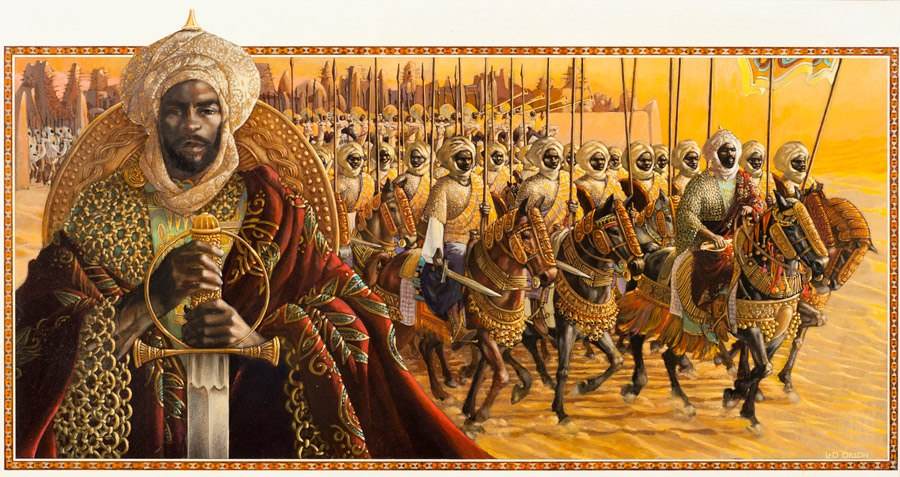
The world has seen its fair share of billionaires throughout the centuries, from CEOs of luxury conglomerates to the modern tech mogul. However, the richest man in history isn’t John Rockefeller, Bill Gates, Bernard Arnault, Elon Musk, or even Jeff Bezos. He lived centuries ago, the 14th century to be exact, and his wealth was so vast that historians claim it can’t be measured or equaled in any way. The man in question is African emperor, Mansa Musa, who ruled the Mali Empire in 1312, as per History.
READ ALSO: Dream Big: The Story of C.J. Walker, America’s First Female Self-Made Millionaire
“Contemporary accounts of Musa’s wealth are so breathless that it’s almost impossible to get a sense of just how wealthy and powerful he truly was,” shared Rudolph Butch Ware, associate professor of history at the University of California, with the BBC.
Building a Powerful Empire
Mansa Musa inherited the throne after his Mansa Abu-Bakr, abdicated it for a maritime expedition to find the edge of the Atlantic Ocean, as per History. The new emperor clearly took his new role seriously, as he managed to expand the empire to a considerable size, annexing 24 cities including Timbuktu. According to the South China Morning Post, Mansa Musa reportedly never lost a battle—and most territories willingly agreed to be a part of the Mali Empire due to the high quality of life it provided to citizens.
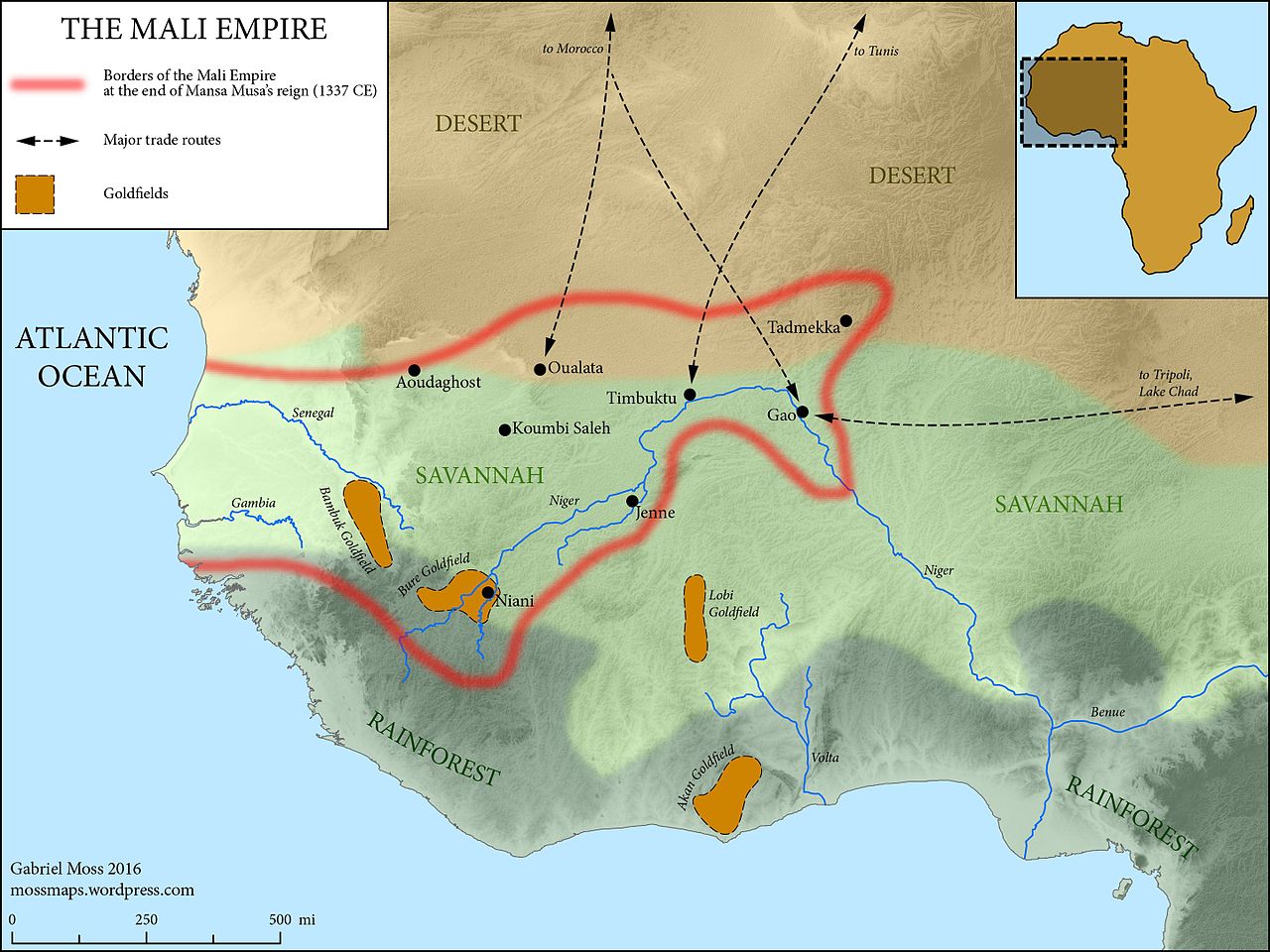
The sizable empire also provided immense natural resources, the most precious being salt and gold. According to the British Museum, the Mali Empire possessed almost half of the Old World’s gold during Mansa Musa’s rule. This was quite impressive considering that, at the time, most European nations were experiencing a lack of resources and civil wars that ravaged their lands, as per History.
“As the ruler, Mansa Musa had almost unlimited access to the most highly valued source of wealth in the medieval world,” explained Kathleen Bickford Berzock, a specialist of African art at the Block Museum of Art, to the BBC.
Though the Mali Empire flourished and its citizens enjoyed elevated economic status, the outside world didn’t know about Mansa Musa’s generosity and impressive wealth until his trip to Egypt 1324.
The Legendary Trip to Egypt
Mansa Musa turned heads during his Hajj pilgrimage to Mecca, as the emperor was a devout Muslim. Traveling in style doesn’t begin to describe the opulence of the ruler’s trip, as he brought an entourage of 60,000 people and a variety of treasures along with him.
In this entourage were his entire royal court, griots (entertainers), merchants, soldiers, 12,000 slaves, and camel drivers—all of them clad in gold brocades and the most exquisite Persian silk, as reported by the BBC. Sheep and goats also accompanied the group as a source of food. A feature from National Geographic added that the dozens of camels Mansa Musa brought had carried approximately 136 kilograms (300 pounds) of gold each.
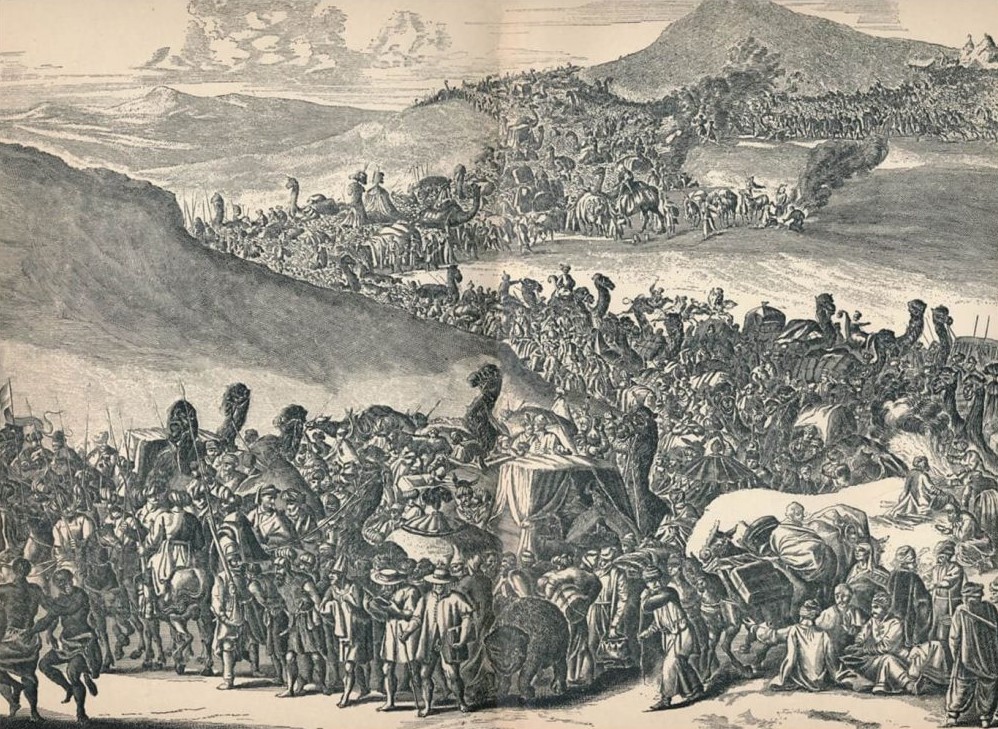
During a three-month stopover in Cairo, Egypt, Masa Musa gifted so much gold to the nation that it threw the economy off balance for 10 years as the price of gold plummeted, as per BBC—perhaps proving that there can be too much of a good thing. However, certain sources wrote that the emperor tried remedying the situation by borrowing back gold to remove it from circulation.
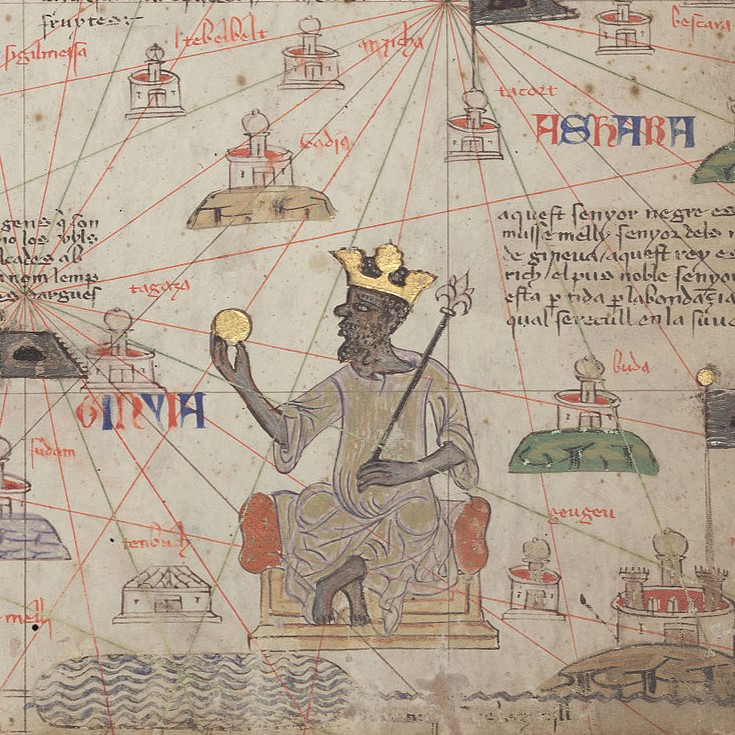
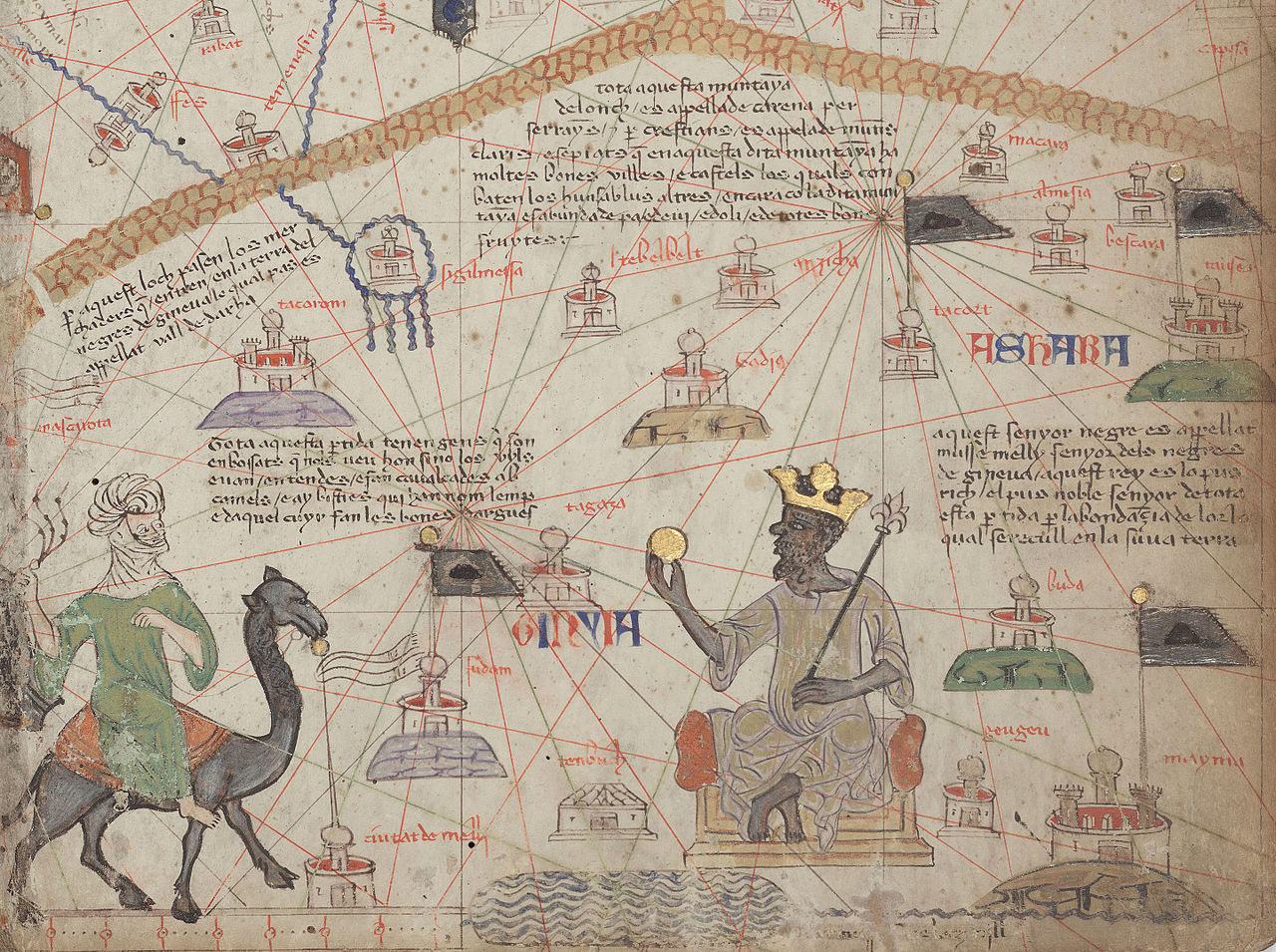
News of the emperor’s benevolence reached even those far beyond Africa. In 1375, a Catalan Atlas map included a portrait of the emperor sitting on a gold throne and holding a gold nugget atop Timbuktu’s location. At the time, the map was considered an invaluable resource to many European navigators, as per History.
Patron of Education and the Arts
When Mansa Musa returned from his Pilgrimage to Mecca, he worked to further enhance the education and art scene within his empire. He brought several Islamic scholars from his trip, including direct descendants of Prophet Muhammad and and Abu Es Haq es Saheli, a renowned Andalusian poet and architect. He reportedly paid the poet 200 kilograms of gold, the equivalent of more than $8.2 million today, as per BBC.
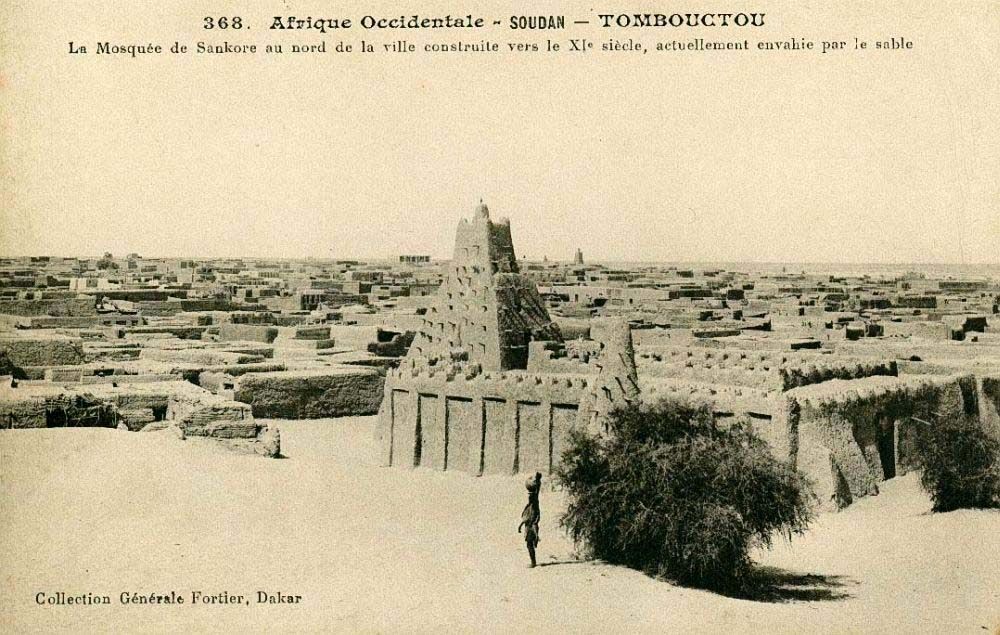
Mansa Musa also provided funds for literary endeavors, as well as mosques, schools, and libraries. Timbuktu became an esteemed center of education, with numerous scholars around the world traveling to study in Sankore University. In fact, historians credit the emperor for establishing the educational system in West Africa.
The ruler’s influence was so strong that, even 500 years later in the 19th century, Timbuktu possessed a “mythical status” among explorers as a lost city of gold (or African El Dorado), according to the BBC.
The End of Mansa Musa’s Empire
All good things come to an end, and sadly, the empire Mansa Musa worked to build eventually crumbled after his death in 1337 at the age of 57, according to a report from The South China Morning Post. His sons were unable to keep the empire united, and it later broke down into smaller states.
That said, his legacy remains as scholars remember him not only as the richest man who ever lived, but an innovator who paved the way for an empire’s rich culture, arts, faith, and education with his vast wealth and power.
Banner photo from the Gallica Digital Library via Wikimedia Commons.