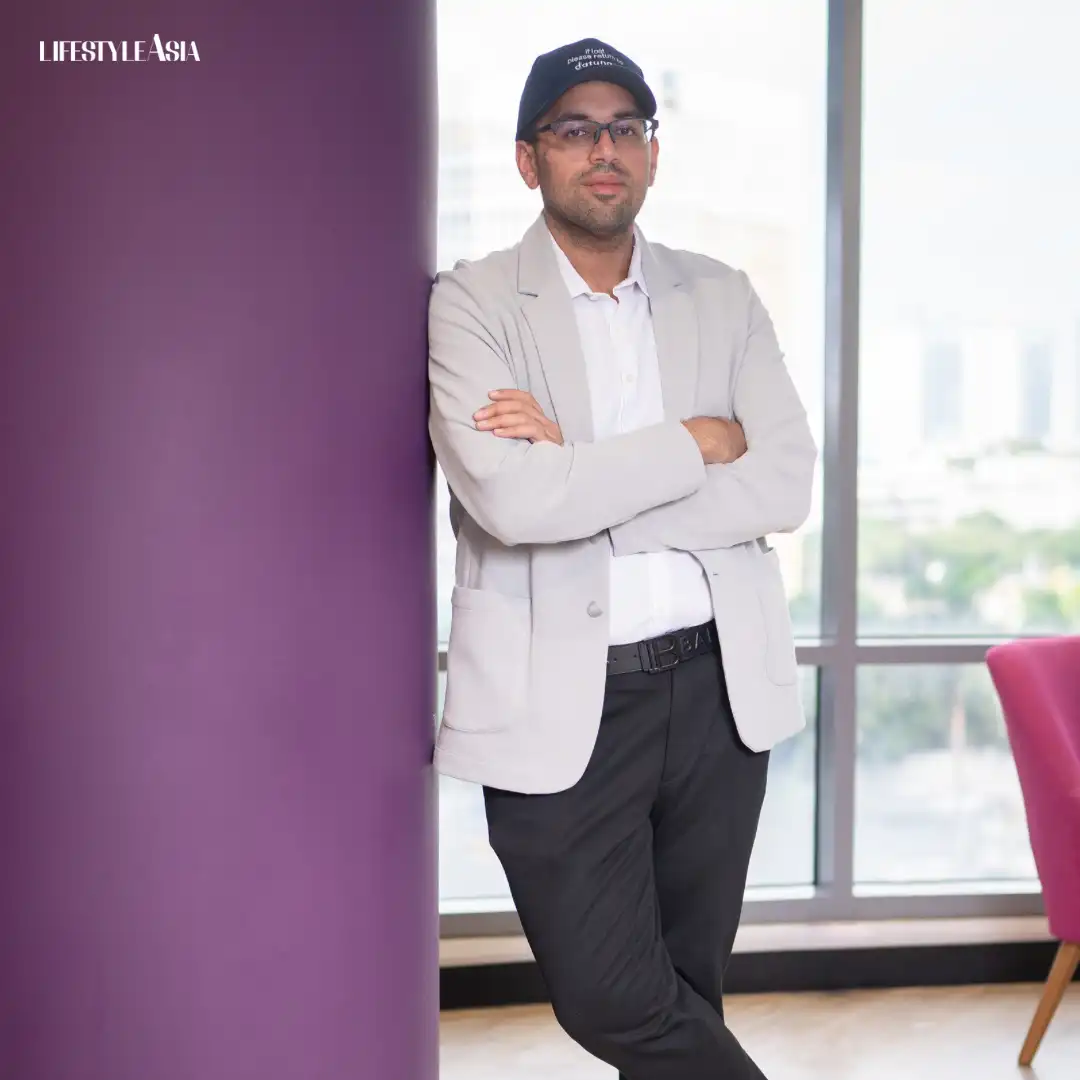
How Charan Uttamchandani’s startup Datung is blending AI, empathy, and community to unlock financial access for everyday Filipinos.
Charan Uttamchandani’s story is one of coming full circle. Born and raised in the Philippines, Charan followed a familiar path: he studied abroad in the UK before returning home to join the family business. However, it wasn’t long before he carved out his own space, scaling a steel manufacturing company from the ground up to a $5 million revenue run rate within its first year. By many measures, it was a success. But for Charan, it wasn’t enough.
“I felt a pull to do something with a different kind of impact,” he began. That search for meaning led him to Singapore and Antler, a global VC accelerator known for its intense, founder-driven model.
It was there—on the very first day of the program—that Charan met his future co-founder, Kasper Abildgaard Svendsen. A serial entrepreneur with experience building financial infrastructure in emerging markets, Kasper shared Charan’s frustration with the status quo: that in a country as hard-working as the Philippines, over 30 million people still lack access to basic financial tools like bank accounts or fair loans. Together, they launched Datung—a microfinance platform on a mission to change that.
READ ALSO: From Duty To Purpose: How Jaime Cojuangco Found His Way Forward

Rethinking Risk
At its core, Datung is a bold reimagination of what microfinance could be in the 21st century: fast, smart, and built on trust. The company offers working capital to small businesses—sari-sari store owners, palengke vendors, carinderia cooks—without the rigid requirements imposed by traditional banks.
“Our magic is in the model,” Charan explains. “We use a tech-enabled ‘Joint Liability Group’ structure, where local entrepreneurs in a community vouch for one another. This social accountability is incredibly powerful.”
Datung then layers on AI-powered underwriting, using alternative data like sales consistency and community reputation to assess risk. This allows them to serve borrowers who are invisible to the traditional financial system—those without formal credit scores or bank statements—while maintaining repayment rates above 90%.
But the real innovation isn’t just technological. It’s human.
“In the early days, we were obsessed with our tech,” Charan admits. “But we quickly realized that technology alone doesn’t build trust. Trust is built face-to-face. We had to learn to listen, to show up, and to design a process that felt accessible, not cold and digital.”
From Invisible To Empowered
For Charan, the problem Datung is trying to solve is deeply personal. It’s not about market segments or total addressable markets—it’s about people.
“The finance gap isn’t an abstract number to me,” he says. “It’s the sari-sari store owner down the street. The tricycle driver who accidentally scratched my car. These people are the engines of our communities.”
Datung’s impact is already being felt. Charan shares the story of Maria, a sari-sari store owner who used her first loan to buy inventory in bulk. Within three months, her profits jumped 40%. She’s now on her seventh loan cycle with Datung, always repaying on time. Another borrower, Joselyn, used her loan to buy a freezer for her food stall. Her revenue has since tripled—and she’s now funding her granddaughter’s college education.
“These aren’t just anecdotes,” Charan says. “They’re proof. When you give hardworking people fair access to capital, you don’t just fund a business. You unlock a family’s future.”
Building For The Philippines, First
Datung is purpose-built for the Philippine market. Charan describes the country as a paradox: one of the most digitally connected in the world, yet one of the least financially included. “People are on TikTok and Facebook, but they can’t get a ₱10,000 loan,” he says. “That’s the opportunity.”
Datung embraces what Charan calls a “glocal” strategy—building with global best practices, but adapting to local realities. In the Philippines, that means designing for the unique dynamics of the sari-sari store, the barangay, the palengke. It means showing up in person, understanding community nuances, and building trust over time.
Even as Datung eyes expansion across Southeast Asia, Charan is adamant that this locally grounded approach will remain central. “The core values of trust and community—that’s what scales,” he says. “Not just the tech.”
READ ALSO: From The Ground Up: The Women Behind Five Story Group
Leading With Purpose
As a founder, Charan brings both operational rigor and emotional intelligence to the table. His early years managing 500 people across manufacturing taught him how to optimize systems. But Datung, he says, taught him how to lead with empathy.
“The hardest lesson I’ve learned is that a business isn’t just a system of processes—it’s a system of people,” he reflects. “You can have the best strategy, but without the right team, the right heart, it means nothing.”
That philosophy extends to Datung’s growth trajectory. Early on, Charan and his team made the tough decision to say no to rapid expansion, choosing instead to prioritize operational discipline and risk controls. “It was painful to walk away from easy growth,” he says. “But it was the right call. We’re now scaling with confidence, not chaos.”
The Future Of Finance
Looking ahead, Charan is bullish on the power of fintech to reshape financial inclusion—not just in the Philippines, but across the region. “Fintech is going to do for finance what mobile phones did for communication,” he says. “It’ll make it instant, personal, and accessible to everyone.”
By 2030, Datung aims to have empowered over one million entrepreneurs, with offerings beyond credit—like savings and insurance—tailored to the needs of small businesses. But Charan is clear: scale alone isn’t the goal.
“We want to prove that community-based, AI-powered finance isn’t just a niche. It’s the most scalable, inclusive, and responsible way to build the future of finance.”
Charan’s journey is proof that meaningful innovation doesn’t just solve problems—it gives people the tools to shape their own future.
Photography by Kim Montes