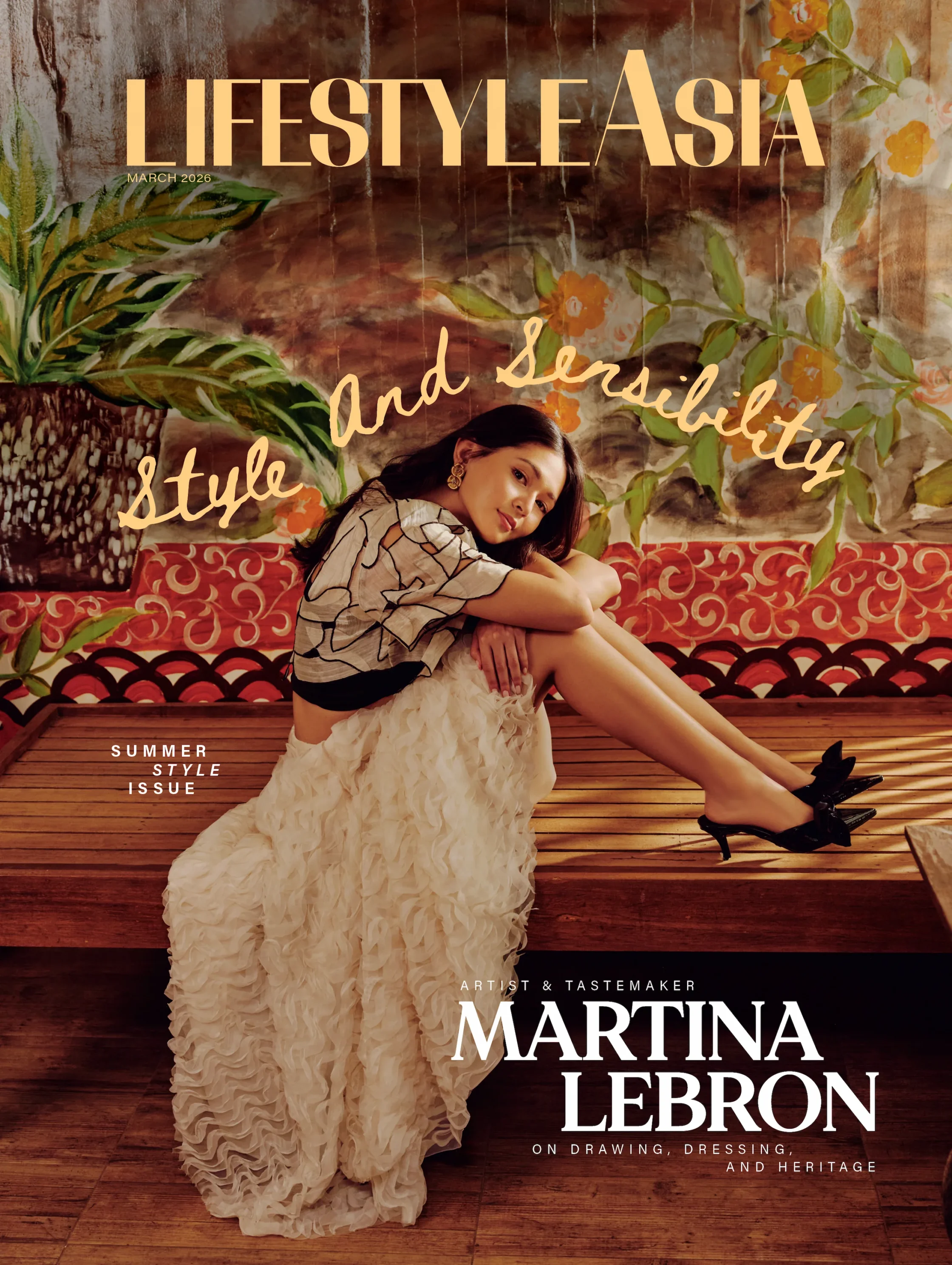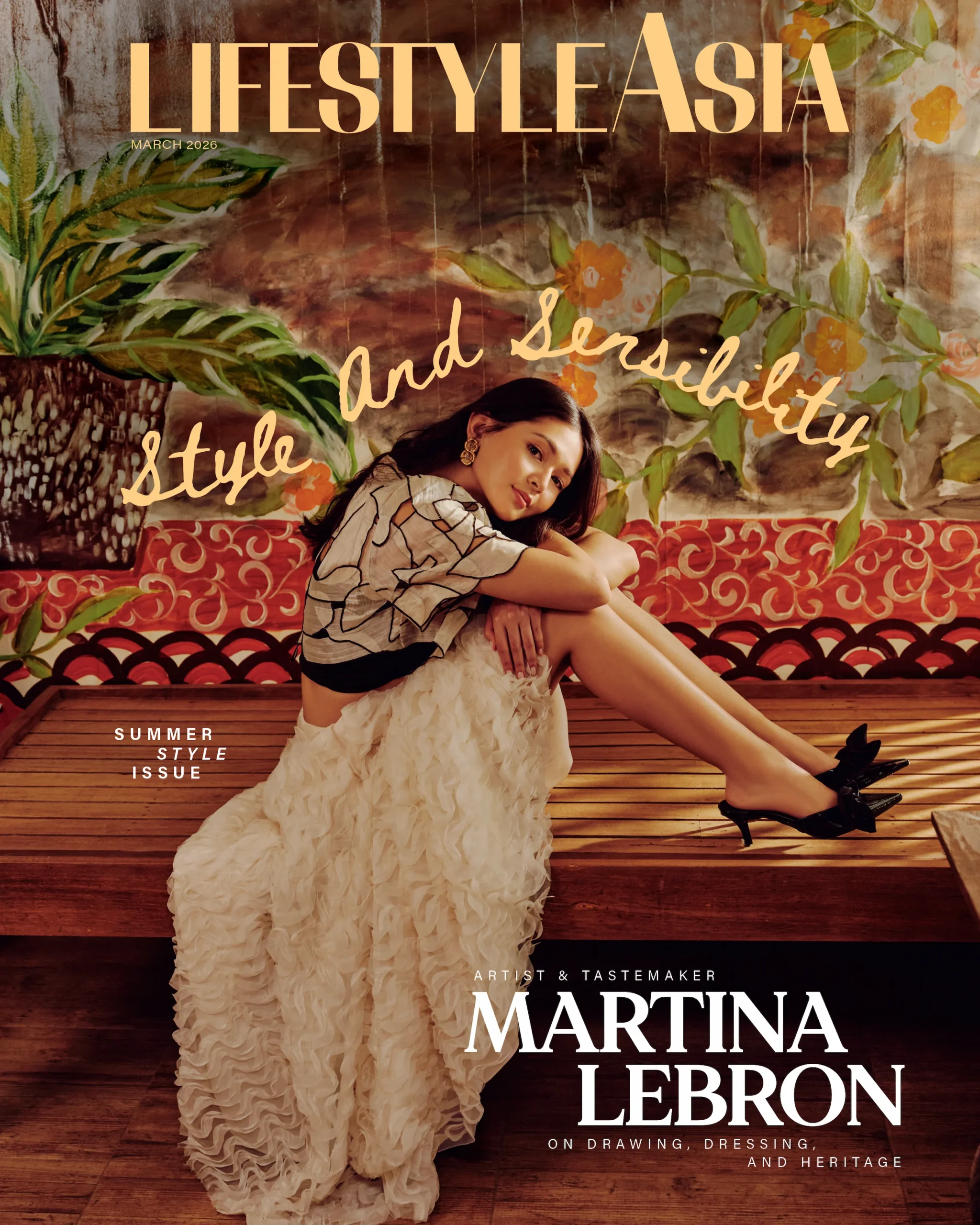
Through illustration and design, Martina Lebron explores how heritage, memory, and personal style can be drawn, worn, and carried across places.
‘I’ve always loved to draw,” says Martina Lebron, designer, illustrator, and founder of her namesake lifestyle brand, By Martina Lebron, which weaves Filipino cultural narratives into wearable art. “As a child, my school notebooks were often filled with illustrations instead of notes. Illustration was always a language for me long before I understood it as a career.”
“Turning my illustrations into wearable pieces felt like a natural way to bring together my love for art, fashion, and Filipino culture in one place,” she adds.
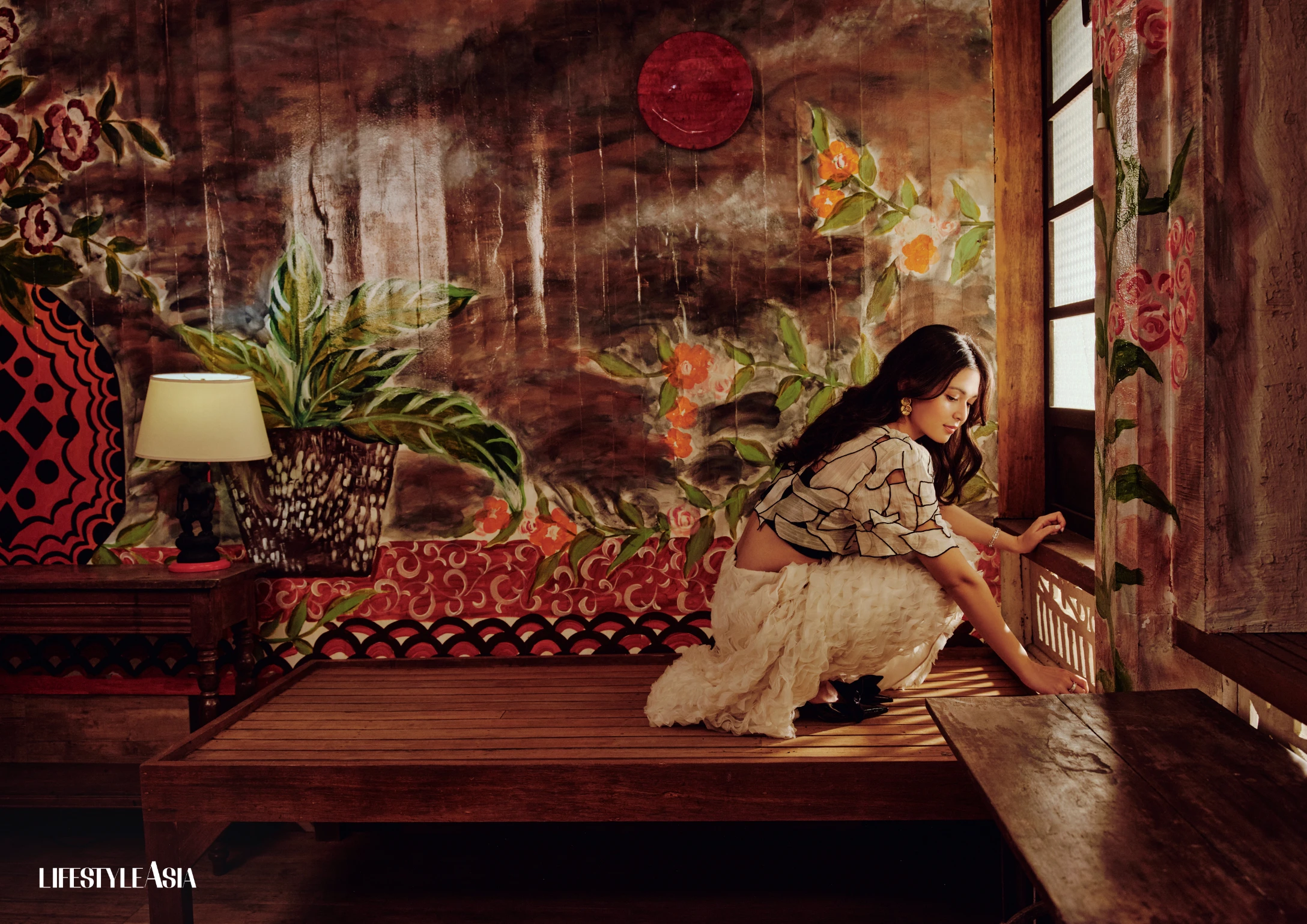
Out of all art forms, drawing, arguably, is the most primitive. That’s to say, it’s our most ancient form of communication with the use of tools, predating written language. Our ancestors’ hands moving across stone caves, pulling images from memory and imagination; for their descendants, young children, drawing is often the first complex language explored. It’s a method of understanding space, emotion, and experience. Before words can capture a feeling, a line can trace its contour.
“To draw” carries a deeper etymology than mere image-making. It means to pull, to drag, to bear. It’s a linguistic remnant of drawing’s fundamental nature as an act of translation. We draw not just images, but connections. We pull experiences closer, we bear the weight of memories, we drag our internal landscapes into visibility.
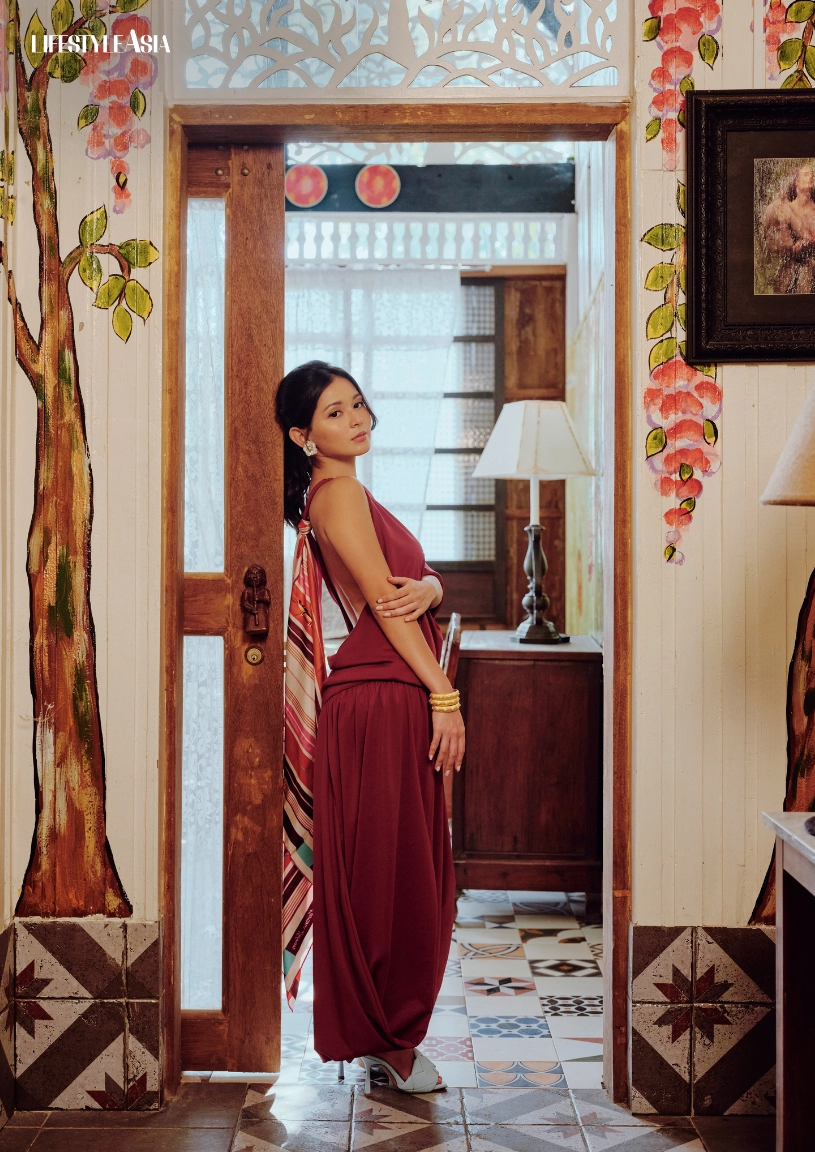
For Martina, the act of drawing becomes a nomadic translation of identity. Her practice and herself, moving from Manila to London and soon to Paris, is itself a form of pulling and bearing cultural narratives across geographies.
“Interestingly, leaving the Philippines often made me present [my cultural heritage] more,” she reflects. “The distance gave me clarity. It pushed me to protect, reinterpret, and elevate elements of my culture through my work.”
READ ALSO: A Canvas Of Her Own: Three Artists On The Walls Of ALT ART 2026
When Drawing Becomes A Discipline
Before formal art training at college, Martina had already found herself gravitating toward ways to experiment and express herself. Growing up creative, for her, meant creating collages on Tumblr, illustrating postcards on family trips, and filling diaries with drawings instead of written entries.
“Visual storytelling came more naturally to me than words, and creating became a constant presence in my everyday life,” she says. “Those early habits shaped how I think visually today, through narrative, composition, and emotion.”
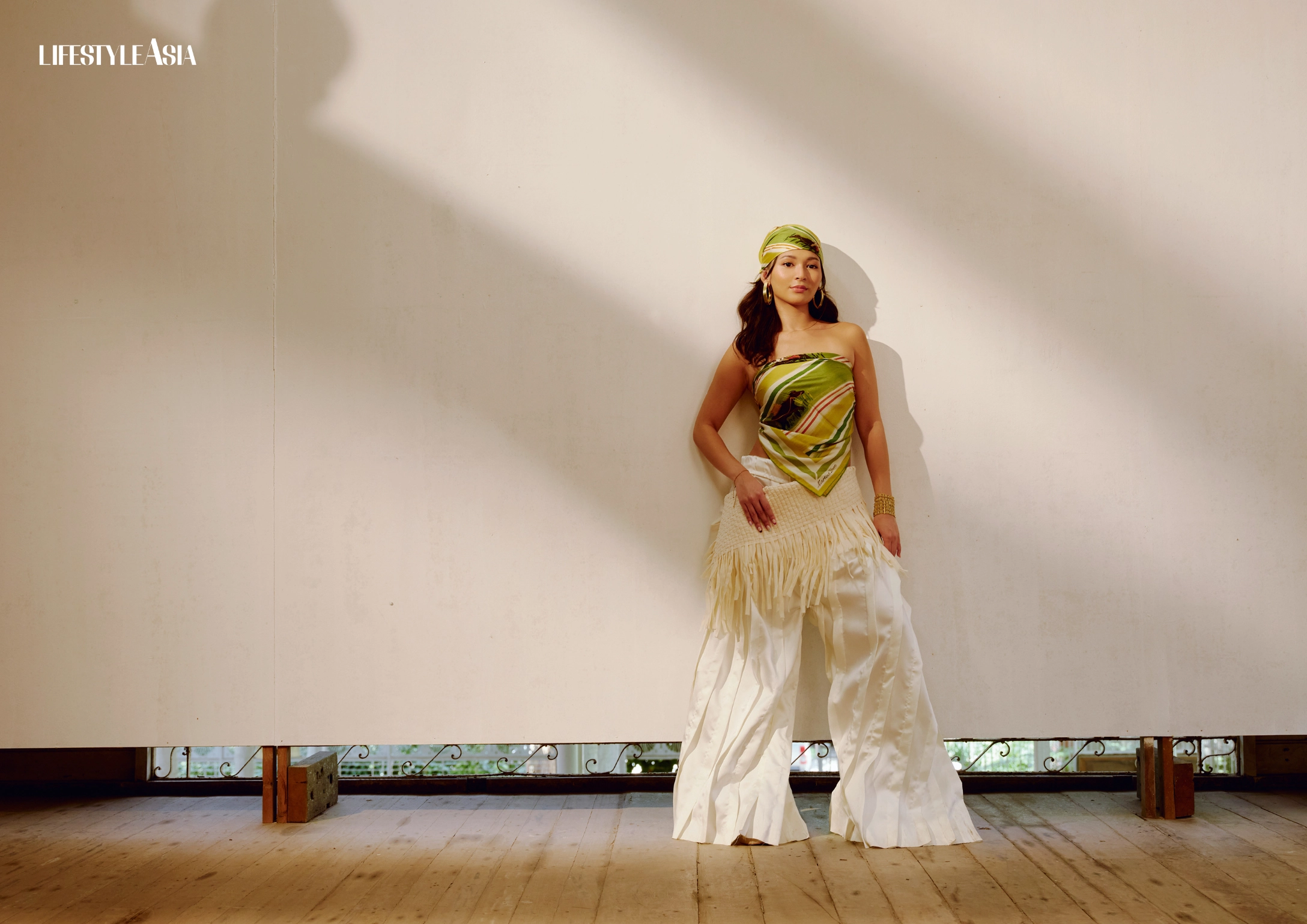
After high school, Martina pursued Fine Arts at the University of the Philippines Diliman, providing formal creative grounding to her practice. After a year, however, she decided to develop her practice from an international perspective.
This led to the difficult decision to withdraw and move abroad. She enrolled at the London College of Fashion, pursuing Fashion Imaging and Illustration. Soon, drawing and illustration evolved from personal language to a professional practice, complemented by internships with design-forward global brands such as JW Anderson and the Brazilian label FARM Rio.
“I began to see illustration not just as image-making, but as something that could exist across disciplines,” she says, “intersecting with fashion, design, and storytelling.”
Distance And Definition
“When I was younger, I didn’t consciously reference my Filipino heritage; it was simply part of who I was,” shares Martina. “Studying and living abroad made me more aware of how central it is to my identity and creative perspective.”
Distance makes the heart grow fonder, and her family’s reminder that “no matter how many times [she] leaves, [her] identity will always be rooted [here] became a creative philosophy. This was realized in her university showcase, a hand-painted collection that served as a manifesto of elevated translation.
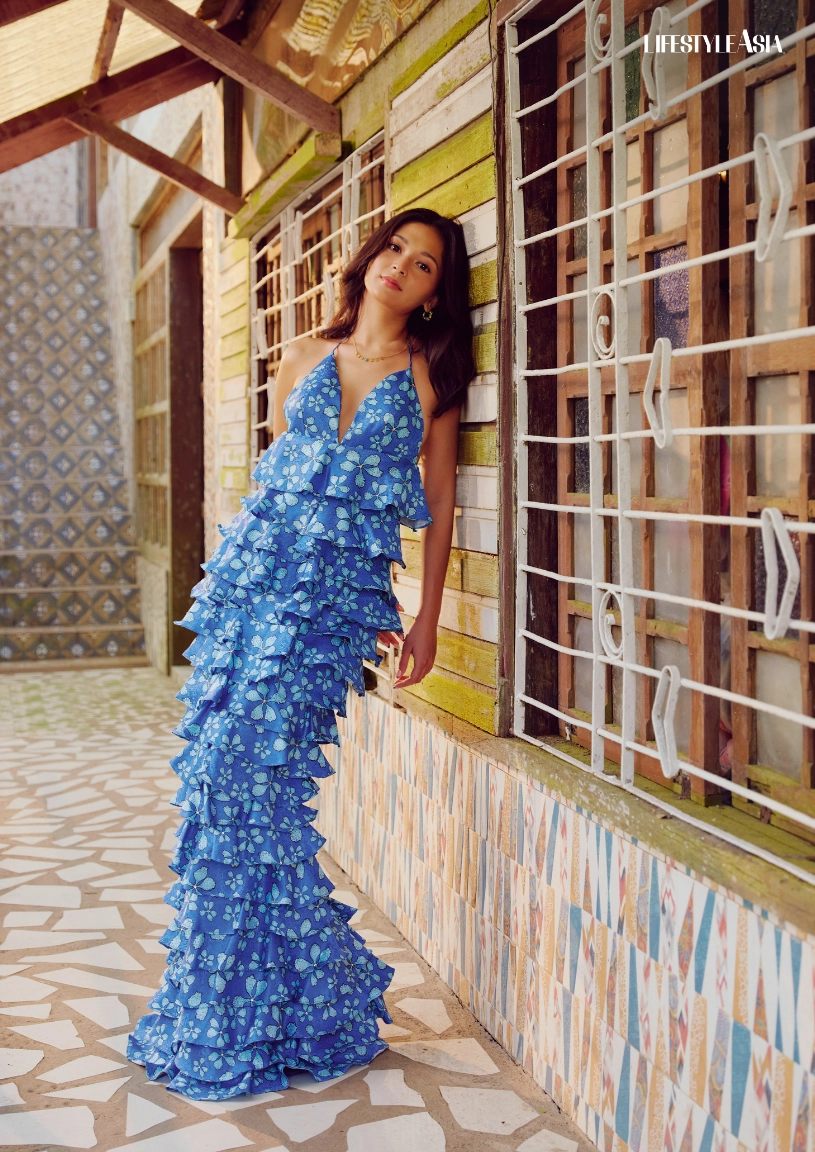
Painted on luxury leather goods, Martina’s illustrations were inspired by the Filipino jeepney, an iconic symbol of cultural remix and resilience, embracing what she calls “the beautiful chaos of Filipino culture.” The Filipino jeepney is an odd canvas where the Virgin Mary, 22-consecutive NBA All-Star Lebron James, and Sanrio’s Hello Kitty can all coexist as a metaphor for influence and identity.
Through her work, Martina moves iconography from the margins to the center, reimagining design as a storytelling medium that’s both deeply personal and globally aspirational.
“I want to bridge heritage and modernity,” she says. “Being Filipino isn’t about fitting one narrative, it’s about proudly owning the mix.”
The Birth Of A Martina Lebron Signature
Back in 2021, Martina already pitched the concept of illustrated silk scarves to a local brand. The collaboration didn’t materialize, but the idea refused to fade from her imagination. After refining her artistic practice and gaining work experience, she decided to launch it herself.
Silk scarves have long been a hallmark of luxury fashion. They serve as canvases where brands like Hermès and Gucci tell their house stories and codes. Martina saw an opportunity to do something similar, but with a distinctively Filipino perspective.
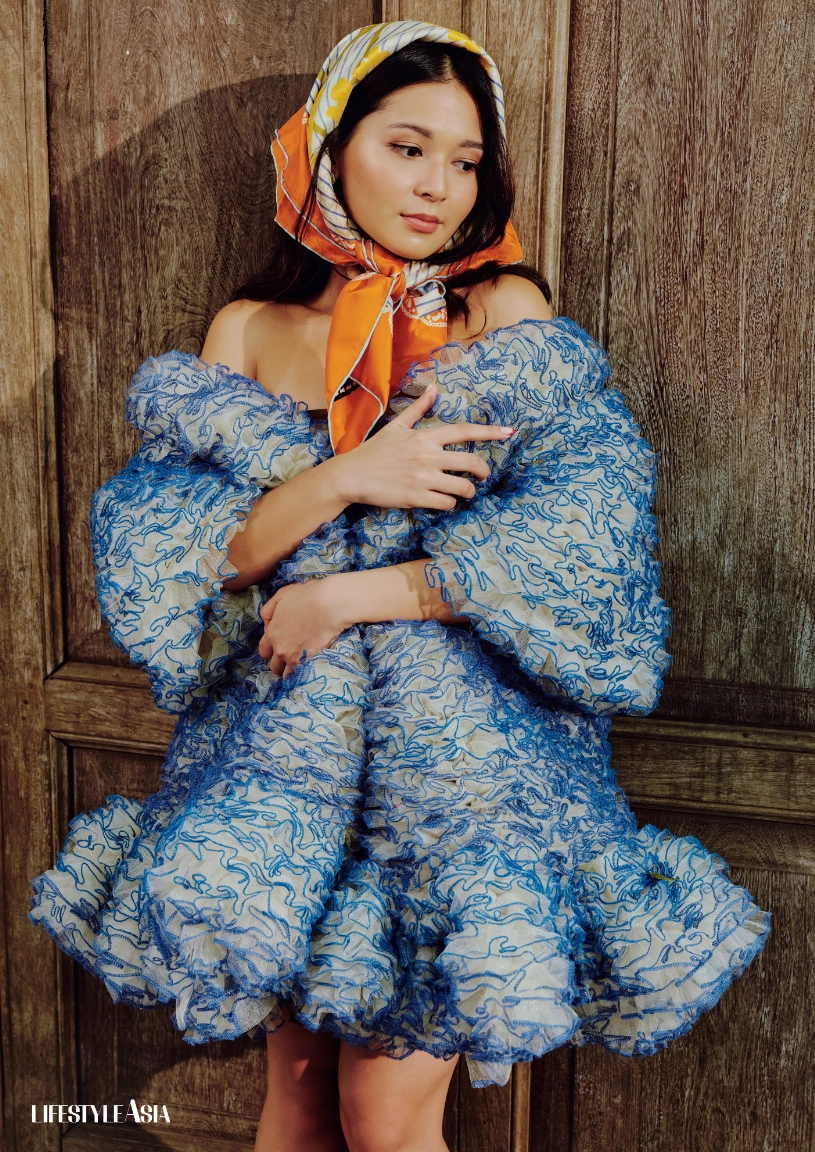
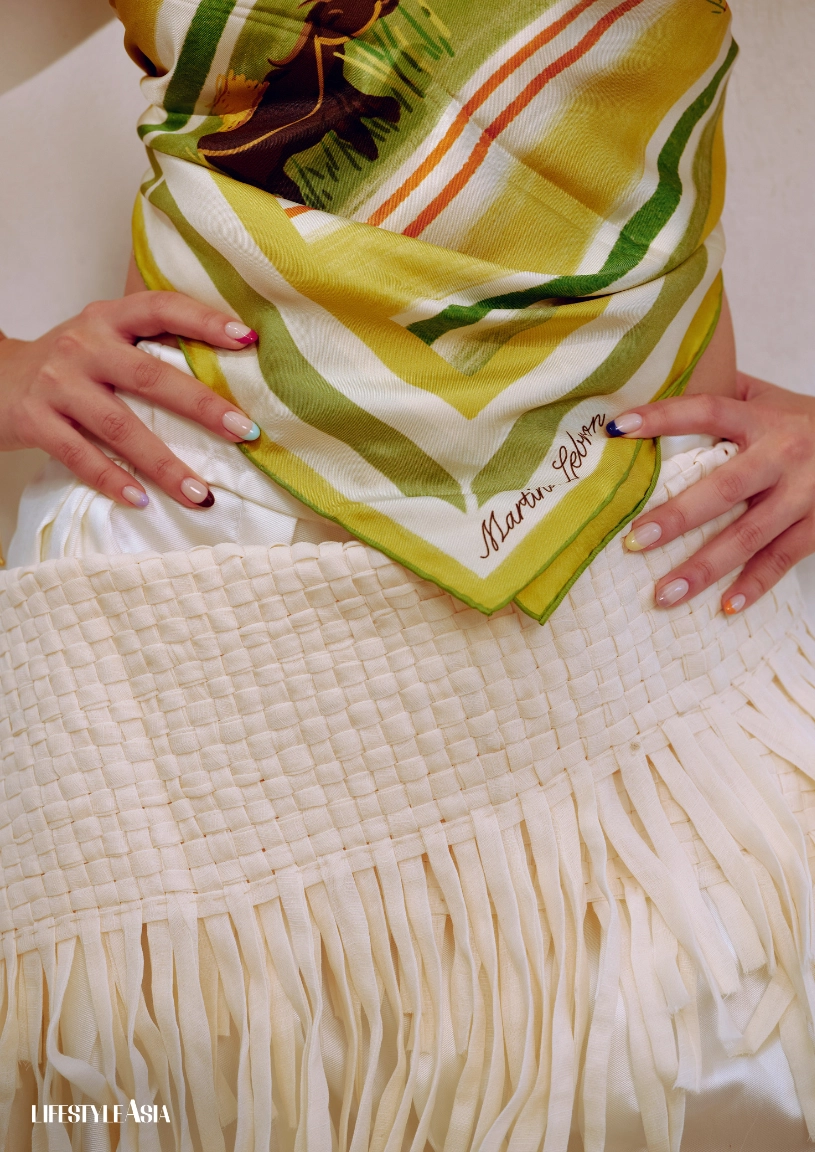
The lifestyle fashion brand By Martina Lebron was launched with a luxury silk scarf line that featured her own illustrations inspired by Filipino motifs. Like her university showcase, she transformed a traditional luxury medium into a platform for storytelling, commanding that same premium space for Filipino stories.
“By Martina Lebron grew from a desire to create something personal and proudly Filipino,” she says. The scarves provided the perfect canvas to express her artistic vision, while still being functional and versatile: it’s a piece that can be with you no matter where you go.
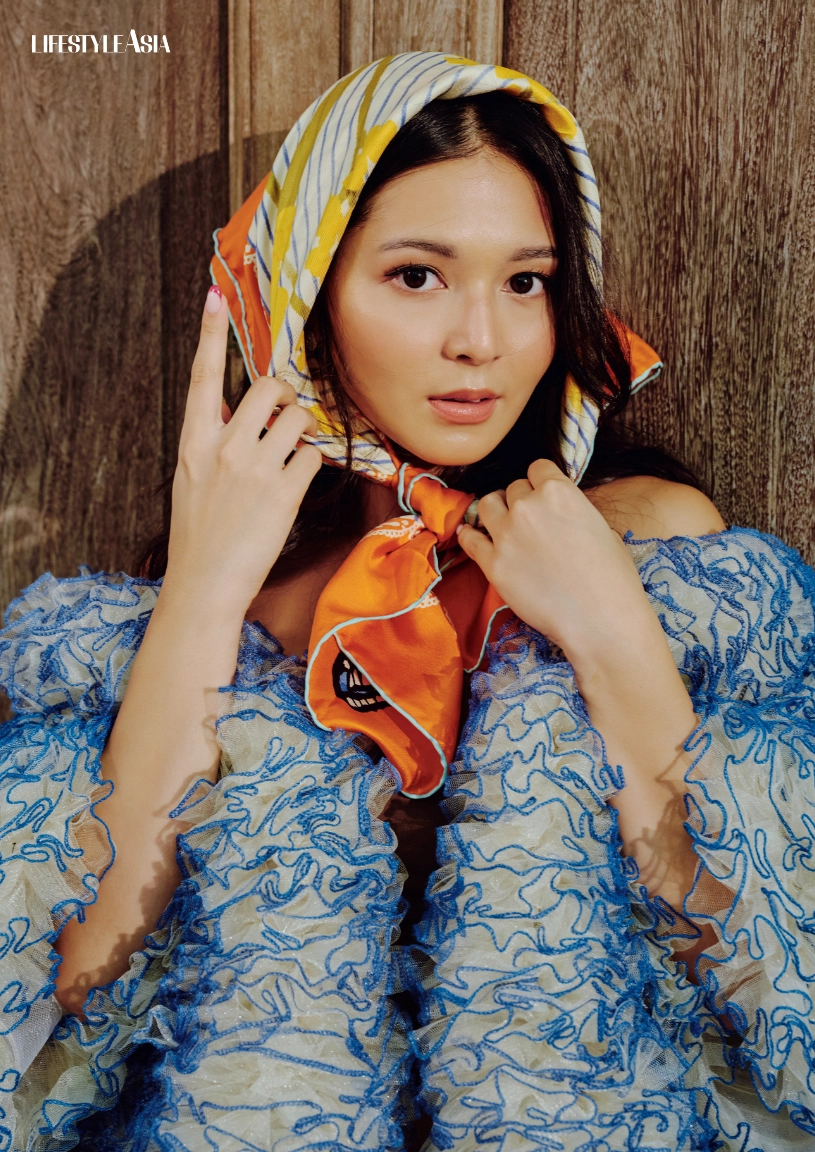
There was also cultural resonance in her choice. “The simple silhouette of a scarf references traditional pieces like the pañuelo or alampay,” she explains, “while still feeling modern and wearable, checking all the boxes [of concepts] I want to communicate.”
Songs, Symbols, Seasons
“Today, my practice reflects an evolution,” Martina explains. “It’s a balance of instinctive creativity, inherited pride, and a commitment to carrying Filipino heritage forward in a way that feels personal, innovative, and globally relevant.”
Her design process is an intimate dialogue with culture, drawing inspiration from subtle and profound sources. There’s the romanticism of the paintings of Fernando Amorsolo, local flora, and dreamy landscapes that become living narratives through her illustrations. Each scarf tells a story, encoded with names that resonate with our Filipino identity.
The “Kundiman” scarf, named after a type of traditional love song, echoes themes of romance through the motif of the Sampaguita, while the striped grid pattern mimics the strings of a guitar, strummed for a serenade. The “Maria Clara” design characterizes Filipina femininity with Bougainvillea and Bigonia floral illustrations. On the more playful end, “Pusoy Dos” draws inspiration from the Filipino card game, paying homage to the hospitality and social connection we’re well known for.
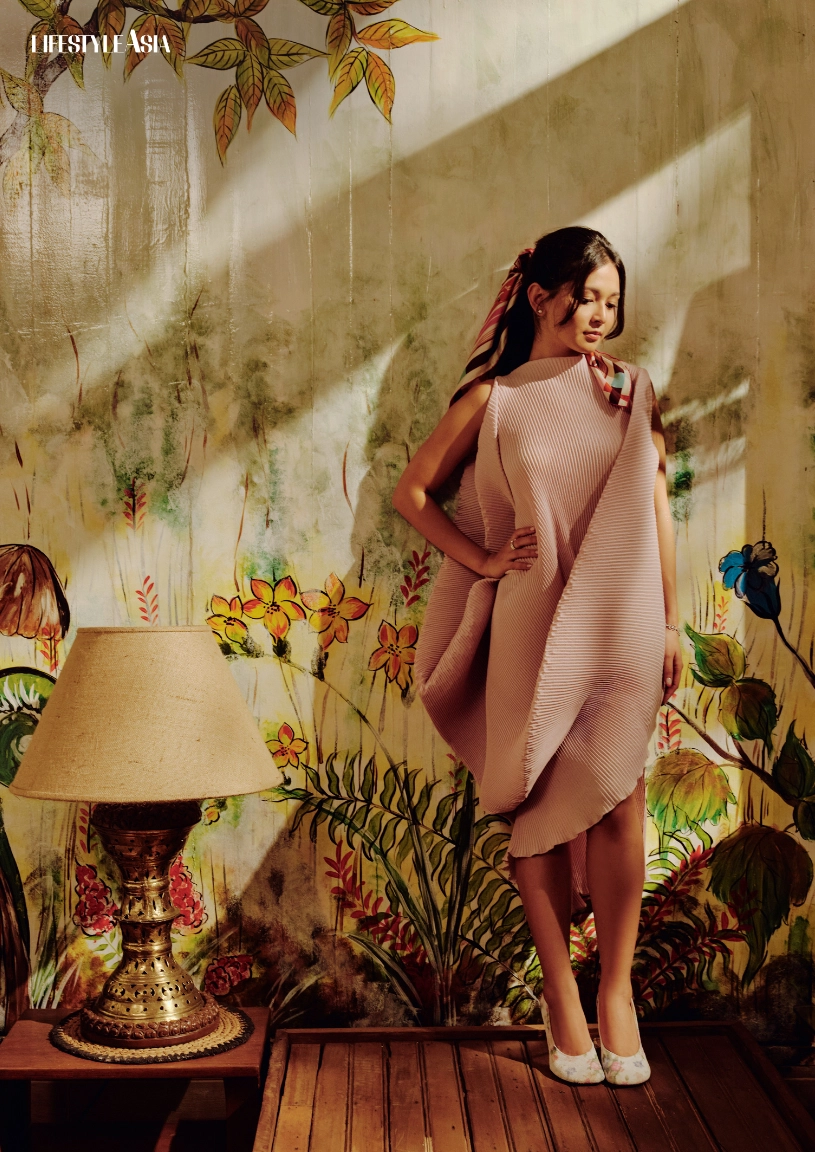
“I feel like a lot of ideas just come naturally to me,” she shares. “I’m very drawn to patterns and color, and I usually start by building themes around those elements rather than overthinking the reference itself.”
Take “Amihan,” which references the northeast wind that signals the beginning of the dry season, using colors and tones reminiscent of a warm summer sunset. This is contrasted with her “Habagat” design, with cool tones reflecting the monsoon rains that hit our shores. There’s also “Gunita,” a word that means memory or remembrance, which captures the ephemeral nature of recollection expressed through a butterfly and floral garden.
“I let Filipino landscapes and motifs naturally weave into the design, often in subtle ways,” Martina explains. “Things like rice fields, weaving patterns, or familiar textures become abstracted through repetition, scale, or color so they feel modern and wearable. I want the designs to feel intuitive and contemporary, while still holding a sense of familiarity and meaning for those who recognize it.”
Read the full story in our March 2026 print issue, and through our e-magazine by subscribing to Lifestyle Asia’s digital access or purchasing your copy at Readly.
Photography by Alexis Dave Co Assisted by Benjie Barruga and John Dwight Sunga
Creative Direction Paolo Torio
Stylist Gee Jocson Assisted by Reese Capistrano
Make-up Cats Del Rosario
Hair Ben Villegas
Associate Producer Mae Talaid
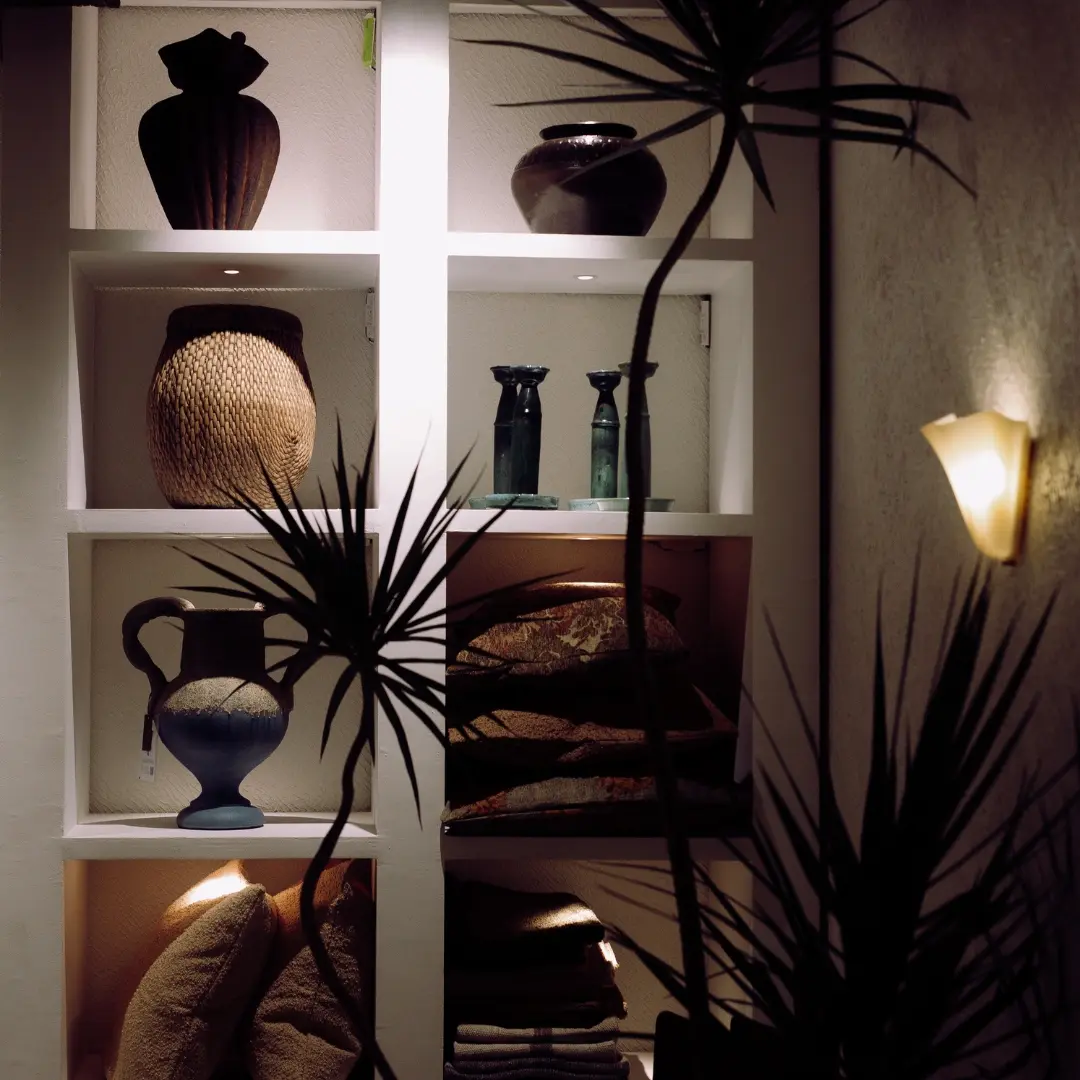
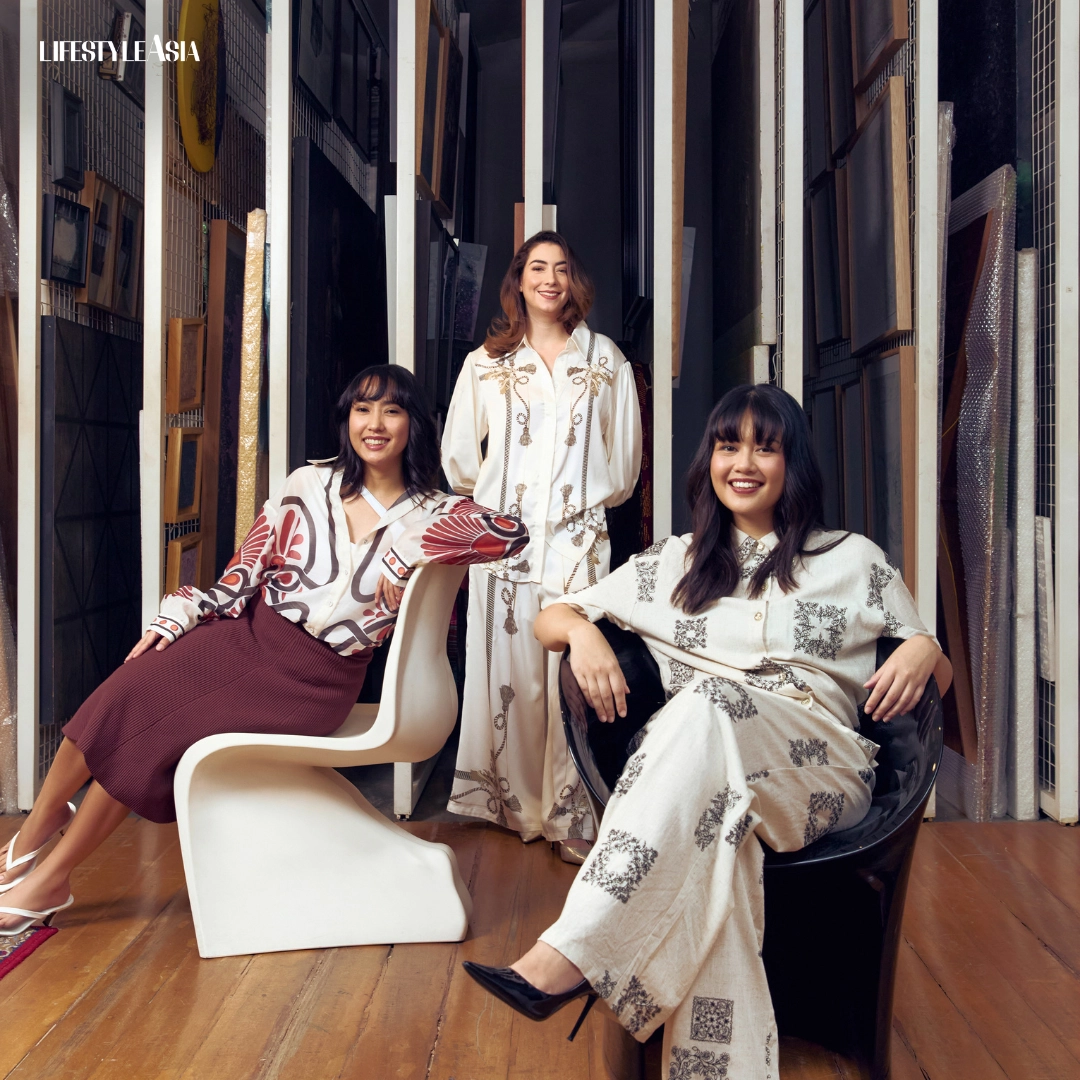
Shot on location at Patis Tesoro Boutique and Atelier, San Pablo, Laguna
Special thanks to Patis Tesoro