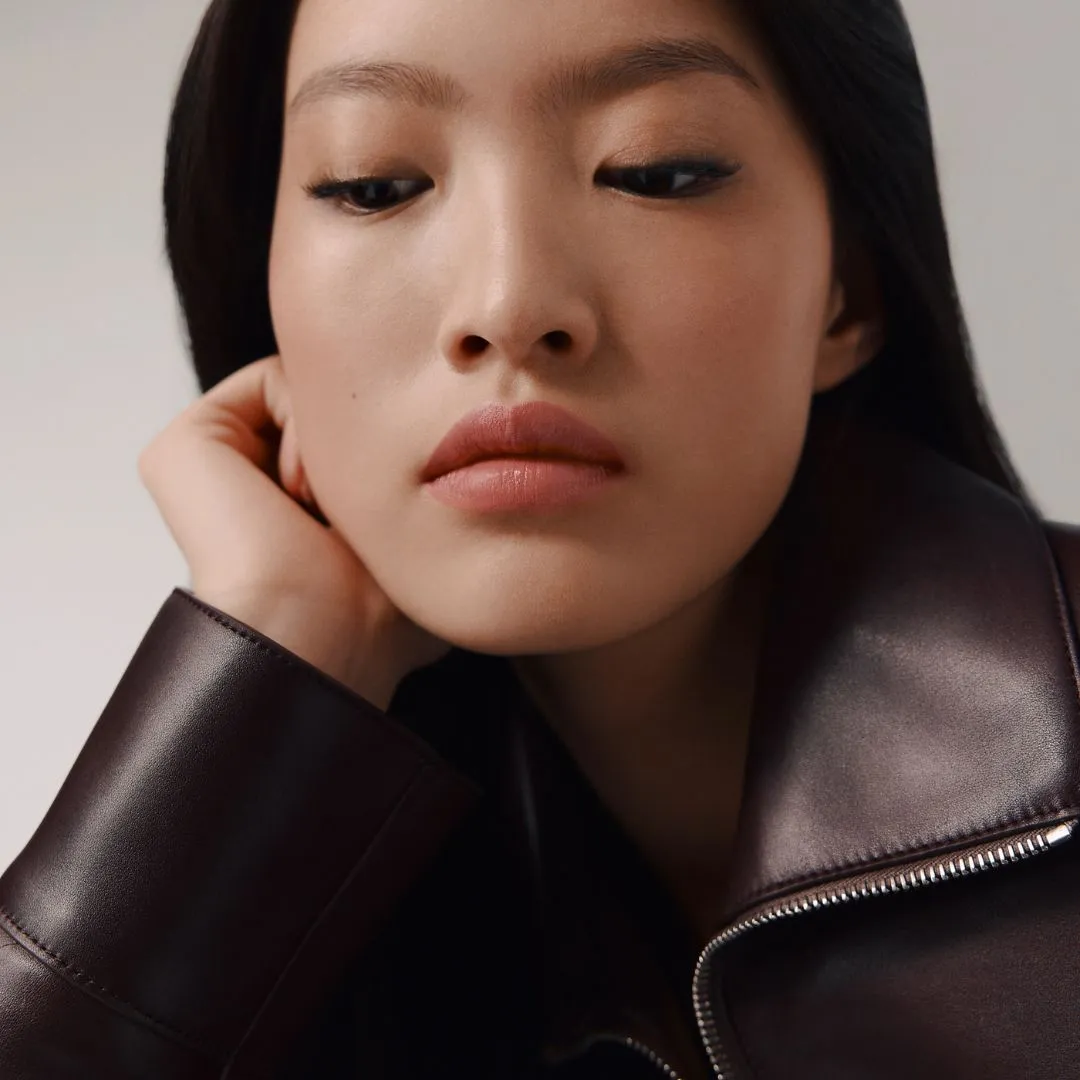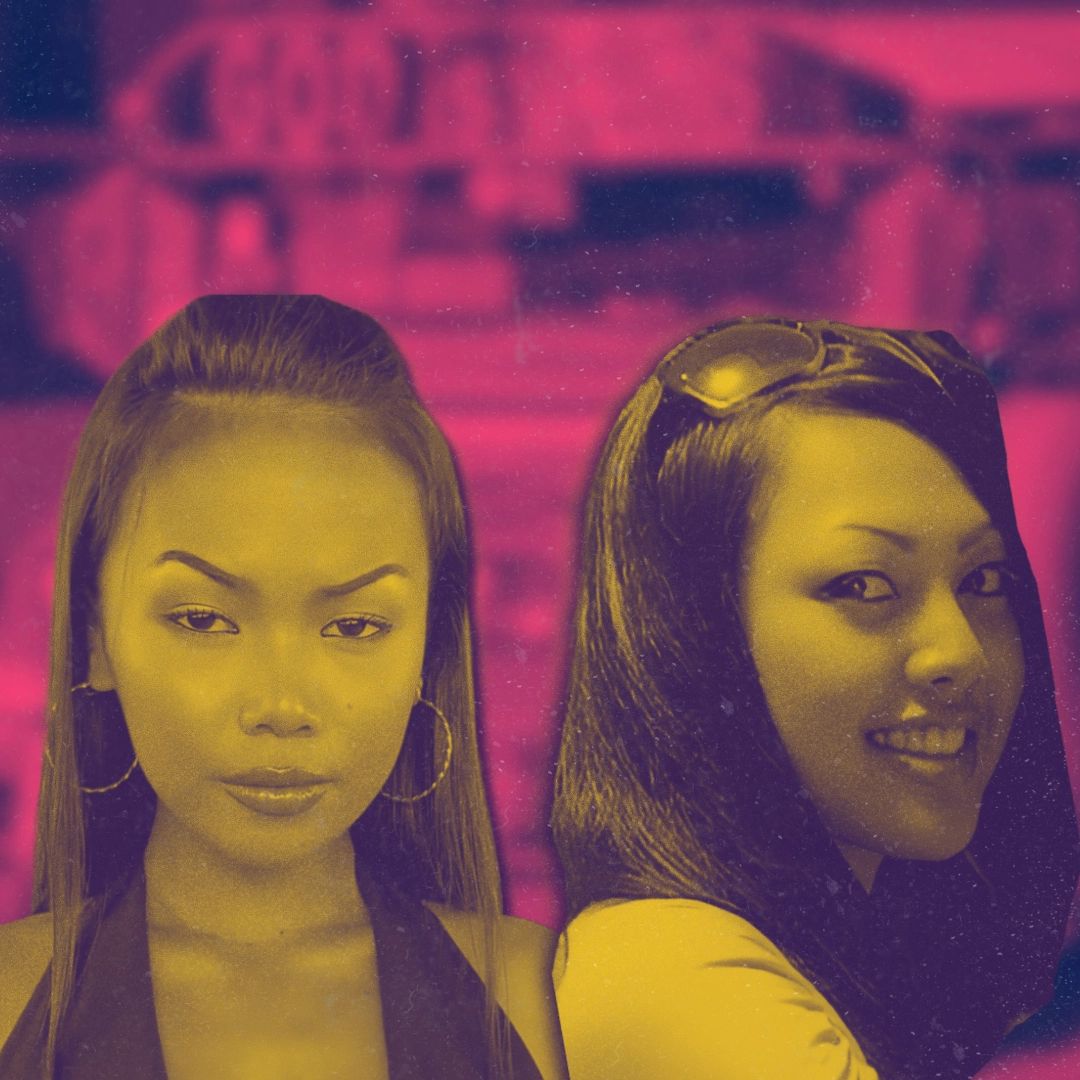
Thin brows, frosty lips, hooped earrings: the two decade-old, quintessentially Filipino bebot aesthetic has resurfaced and found a new international audience, thriving both on and off TikTok.
Thin and arched brows; a wash of subtle, shimmery eyeshadow; perfectly bronzed skin; and a glossy lip—this is the makeup look that’s currently taking over TikTok. At first glance, it might read as just another recycled Y2K aesthetic. But watch that transformation video on your For You page carefully, and you’ll catch a familiar soundtrack: “Bebot” by The Black Eyed Peas. Suddenly, the look clicks, not as a generic throwback, but as part of a resurfacing Filipino cultural moment—one rooted in a very specific era, attitude, and idea of femininity.
Released as a single 20 years ago, the Black Eyed Peas song has found new life on TikTok, where it’s once again everywhere. As the trend continues to gain momentum, so too has the discourse surrounding the quintessential Filipino makeup look. Comment sections are now filled with the same recurring questions: What exactly is a bebot? And what does a “historically accurate” bebot look like? Today, we try to dive into these inquiries and uncover the layers of cultural history beyond our TikTok algorithm.
READ ALSO: Mane Attraction: The Story of Filipino Hair In The Global Wig Market
What Is A Bebot?
Before becoming a viral TikTok soundbite, the song “Bebot” first appeared on The Black Eyed Peas’ album Monkey Business in June 2005. It was later released as a single in the Philippines, across wider Asia, and in Australia on August 4, 2006, where it struck a chord in the local music scene. It offered the familiar Black Eyed Peas sound of the era, yet also possessed a singularly Filipino spirit. In other words, the track felt both global and deeply personal.
In a behind-the-scenes clip from the music video shoot, Apl.de.Ap—the Filipino member of the group—shared how the song came to life. “One day we were just in the studio, and will.i.am was like, ‘Yo, how do you say “hot chick” in Tagalog?’ And I was like, ‘Bebot!’” he recalls. “Then he just kind of chanted it.”
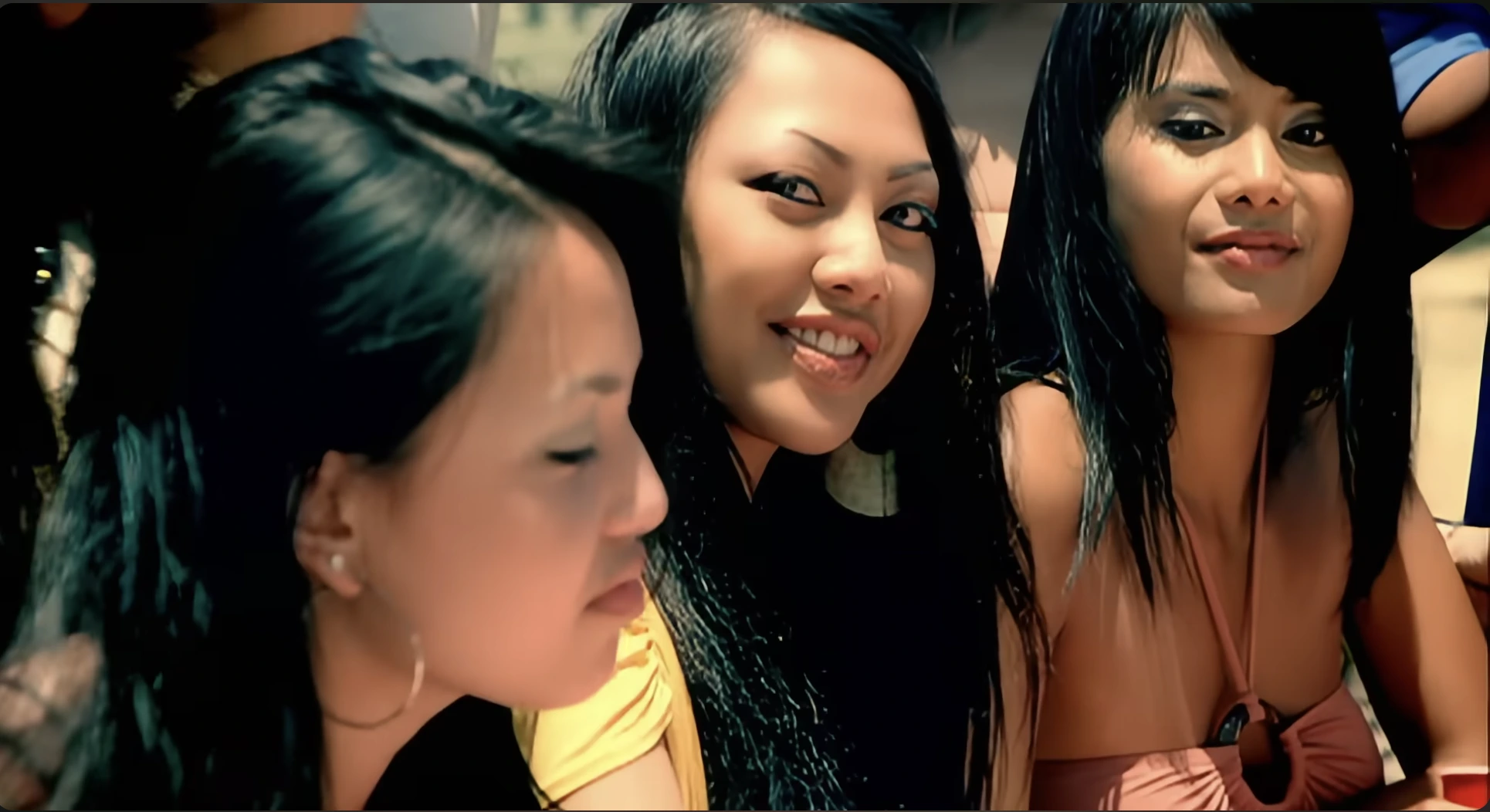
Shot the same year it was released as a single, the “Bebot” music video leaned heavily into Filipino imagery, and, more importantly, Filipina beauty. Women with thin brows, glossy lips, and bronzed morena skin danced in full Y2K fits, unapologetically taking up space. Besides being a visual backdrop, it was a proud declaration of what Filipina beauty looked like at the time.
The song’s popularity reached far beyond Filipino audiences. In an interview, Apl.de.Ap shared that even hip-hop and rap icon Queen Latifah once approached the group to say that “Bebot” was her favorite track. She admitted she didn’t understand the lyrics, but it was the beat and the overall vibe that drew her in.
Extending past the music industry, Bebot became shorthand for being Filipino. In a tweet, a Filipina who moved to Canada shared that the knee-jerk reaction she often gets after telling people she’s Filipino is them breaking into “Bebot” and calling her one. No longer just a song title, the word became a kind of cultural symbol.
Who Is The Original Filipino Baddie?
Now that the song has returned through a TikTok trend, Filipino netizens have taken to comparing its titular term to the modern slang “baddie” when explaining it to foreigners. And so, people have begun to ask: “Who were the first bebots?” There isn’t a single person you can point to as the O.G. “Filipina baddie,” but if you were around when the song dropped, you’ve probably encountered one in real life.
A bebot might be your older cousin in high school, spritzing on Victoria’s Secret Bombshell, rocking super-short denim shorts, and pairing them with a classic ribbed tank or a fitted graphic tee. She could also be your young aunt, just back from spending the summer abroad, and of course, sporting hoop earrings and a glittering Von Dutch tank. She might even be your elementary school teacher, prim and proper during class hours, but living her best life in the evenings, side bangs and oversized sunglasses included.
TikTok comments would usually name-drop late 1990s and early 2000s Filipino celebrities like Assunta and Alessandra De Rosi, Princess Punzalan, and Lyn from Las Vegas Models (now a Filipino internet legend and meme). They’re solid examples; most famous personalities magnify the trends of their times, not just serving as faces on a screen, but the very definition of a moment, a representation of just how influential a style and vibe has become.
The characteristics of a loudly 2000s, glamorous bebot weren’t just for show. In the same ways today’s baddies enter the scene with sharp brows, smoky eyeshadow, and full lips, these were visual cues to signal who owned the room, culminating in a kind of look that transcended social class and delivered a subliminal message: I’m hot and I know it. Don’t mess with me.
How To Achieve The Look
In a beauty tutorial, content creator Belle Rodolfo broke down how to achieve the recognizable, “historically accurate” bebot look. First: thin eyebrows are a must-have, and one of the look’s defining features. For the eyes, she described a “contained smokey eye,” achieved with gray eyeshadow, silver-blue or purple shades, and smudged eyeliner. Back then, people would also highlight their brow bone to further accentuate the thin brows.
For the base: bright powdered foundation was the norm, since shade ranges weren’t really a thing yet (even the under-eye area was brightened). “It would usually take the place of your blush,” Belle explained when discussing contour and bronzer from that era. Blush itself was kept natural, in soft peachy tones.
Finally, the lips completed the look: overlined with a dark liner, filled with a nude base, and finished with shimmer or gloss for that frosty effect.
Of course, no bebot would be complete without the signature hair: long and straight (thanks to the rebonding and relaxing craze), with either a side bang or a puffy middle part.
The Bebot Is More Than A Trend
The revival of bebot is a nostalgic makeup trend, yes, but it also underscores what its melodic source material set out to do in the first place: celebrate Filipina beauty. Some might dismiss the look as simply Y2K or McBling—an early-2000s aesthetic defined by “trashy” glamour, rhinestones, and heavy logomania—but the truth is, these influences branched out into something distinctly and undeniably Filipino.
When you click on the “Bebot” sound on TikTok, you’ll find countless videos of Filipinas recreating the iconic look. They’re veering away from other countries’ popular beauty trends, like China’s douyin or South Korea’s aegyo sal, focusing instead on something purely Filipino. It’s worth noting that the trend also celebrates morena or tanned skin, as it’s part of the everyday Filipina look that made up a bebot: a refreshing reminder of the depth and heritage of a country’s beauty.
The bebot look has crossed borders, with creators from around the world attempting their own recreations and marveling at the style’s uniqueness.
If bebot’s comeback has shown us anything, it’s that its power to transport us back to a specific moment in time is only part of its enduring charm. The other half of its influence—one we don’t give most beauty trends enough credit for—is how effortlessly it captures pieces of a culture by paying homage to the people who shaped it, whether they’re cousins, aunts, or actresses. Put simply, Filipina beauty, in all its forms, is (and has always been) something to be proud of.