Bianca Wen repurposes her mother’s wedding dress for her special day, creating what she considers one of the most meaningful pieces of clothing in her life.
Bianca Wen didn’t approach her wedding dress with a fixed idea in mind. There was no sketch, no long-held reference. “I had actually never grown up with an image of what my wedding dress would look like,” she says. The direction only became clear one afternoon, when she tried on her mother’s old gown out of curiosity more than intention.
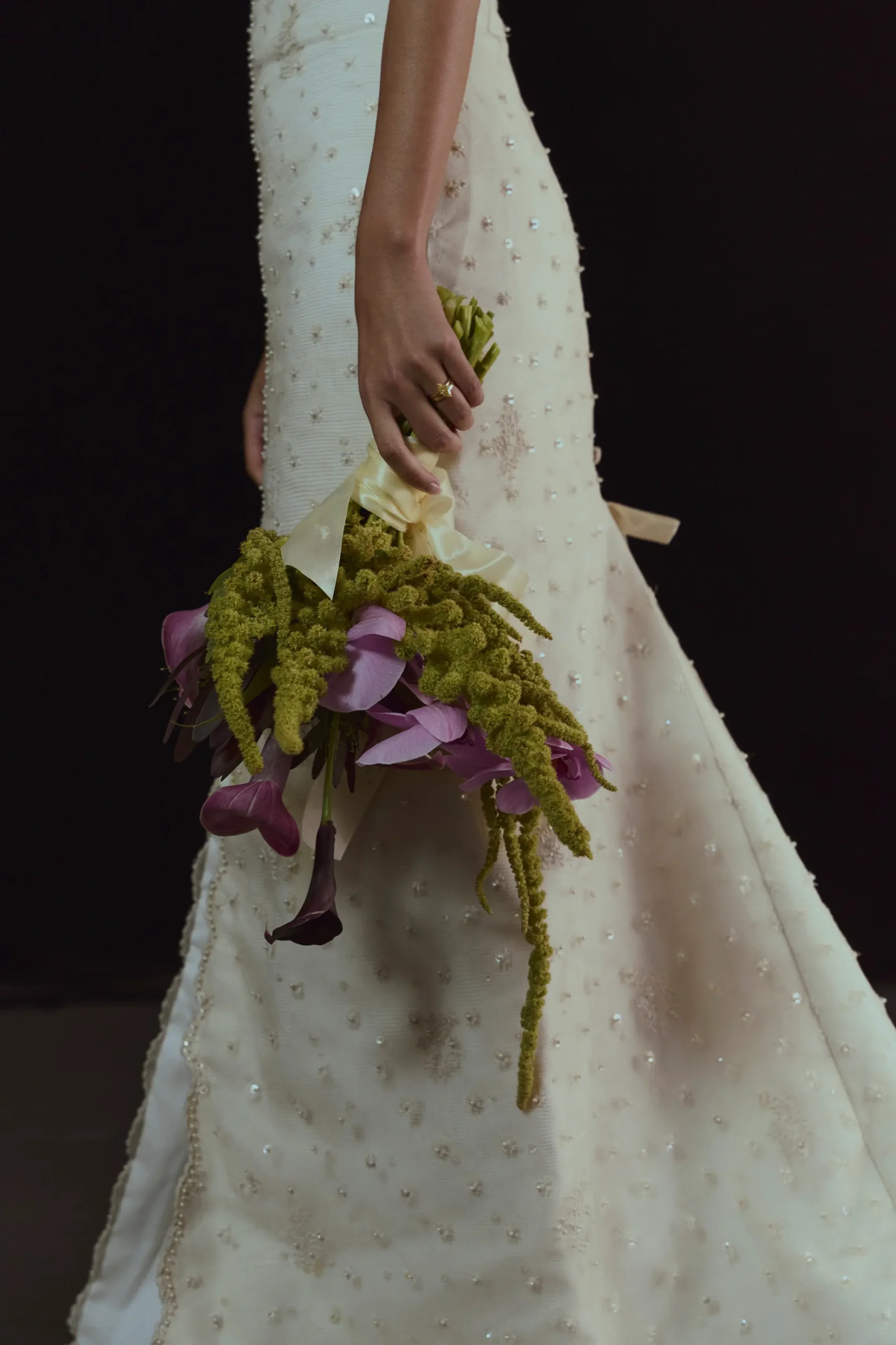
Made from piña and fully calado—and imbued with a mid-century charm—the dress was hand-embroidered and hand-beaded with pearls and sequins, then finished with scalloped edges and small silk bows. It had been designed by Bianca’s grandmother and sewn by the family’s longtime seamstress, affectionately known as Manang Mel, whose work has marked generations of family milestones. She was the same woman who had crafted wedding dresses for Bianca’s aunts, as well as the bride’s own first communion and Confirmation dresses.
“Almost as a joke, I wrapped it around myself,” Bianca recalls. “And it was like this moment where I thought, ‘Wow, this is the dress’.”
READ ALSO: Jungle Disco Party: Connor Wen And Bianca Jimenez’s Pearl Farm Wedding
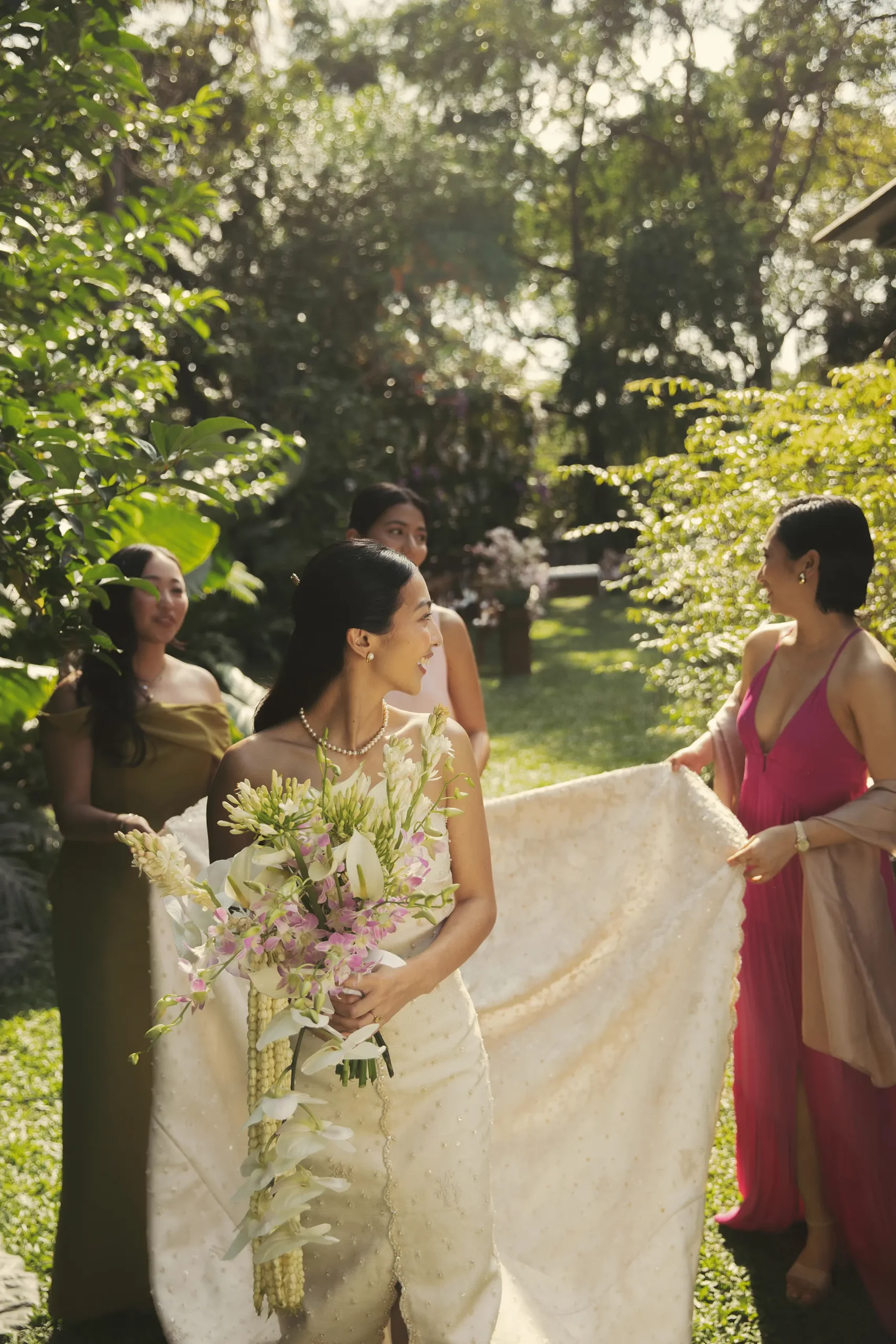
Editing, Not Reinventing
The decision that followed felt less like reinvention and more like editing. The train held everything she needed, so the rest could fall away. Bianca describes herself as a sentimental person, but the approach to the dress was practical and restrained. In fact, her Manila wedding as a whole followed the same logic, with every element chosen deliberately and nothing included without meaning. “Everything from the song I walked down to, to the chairs we sat on, to the flowers on the table was chosen very intentionally,” she says. Her mother was closely involved throughout the process, making the decision to work from the original gown feel natural rather than symbolic. “Being able to use my Mom’s train was just so special. It was a way to honor her and what she means to me.”
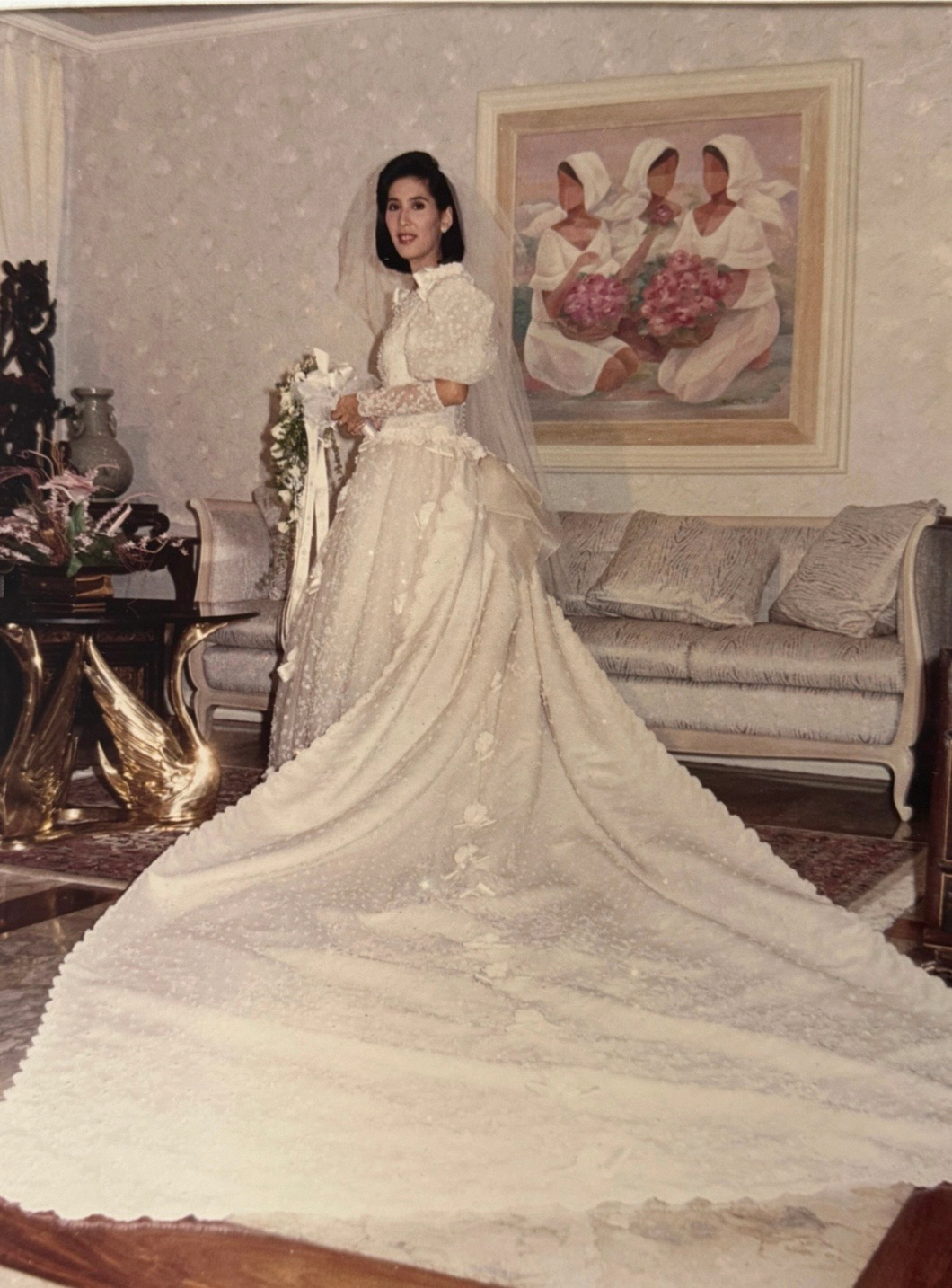
The mother of the bride, Gidget Jimenez, on her own wedding day
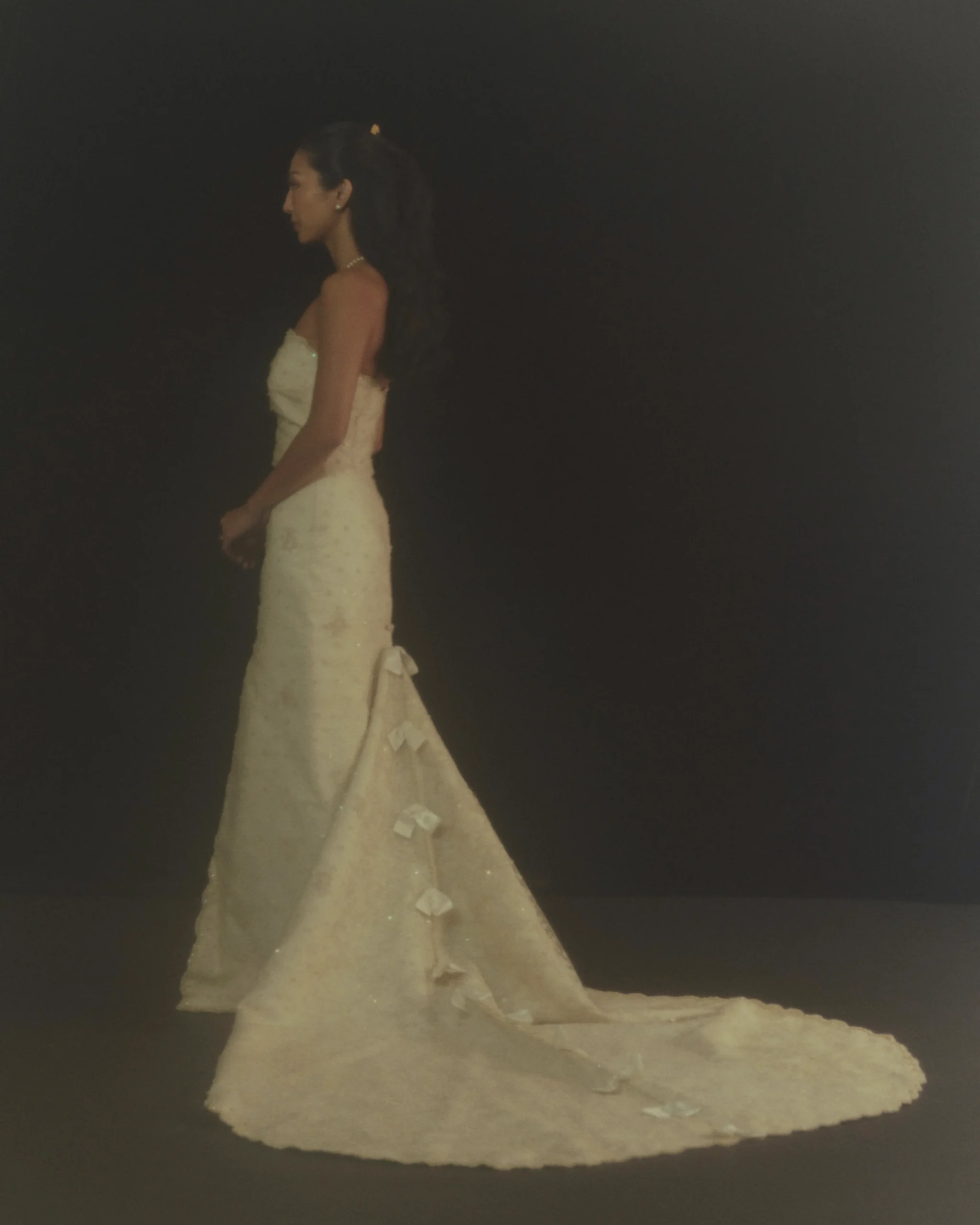
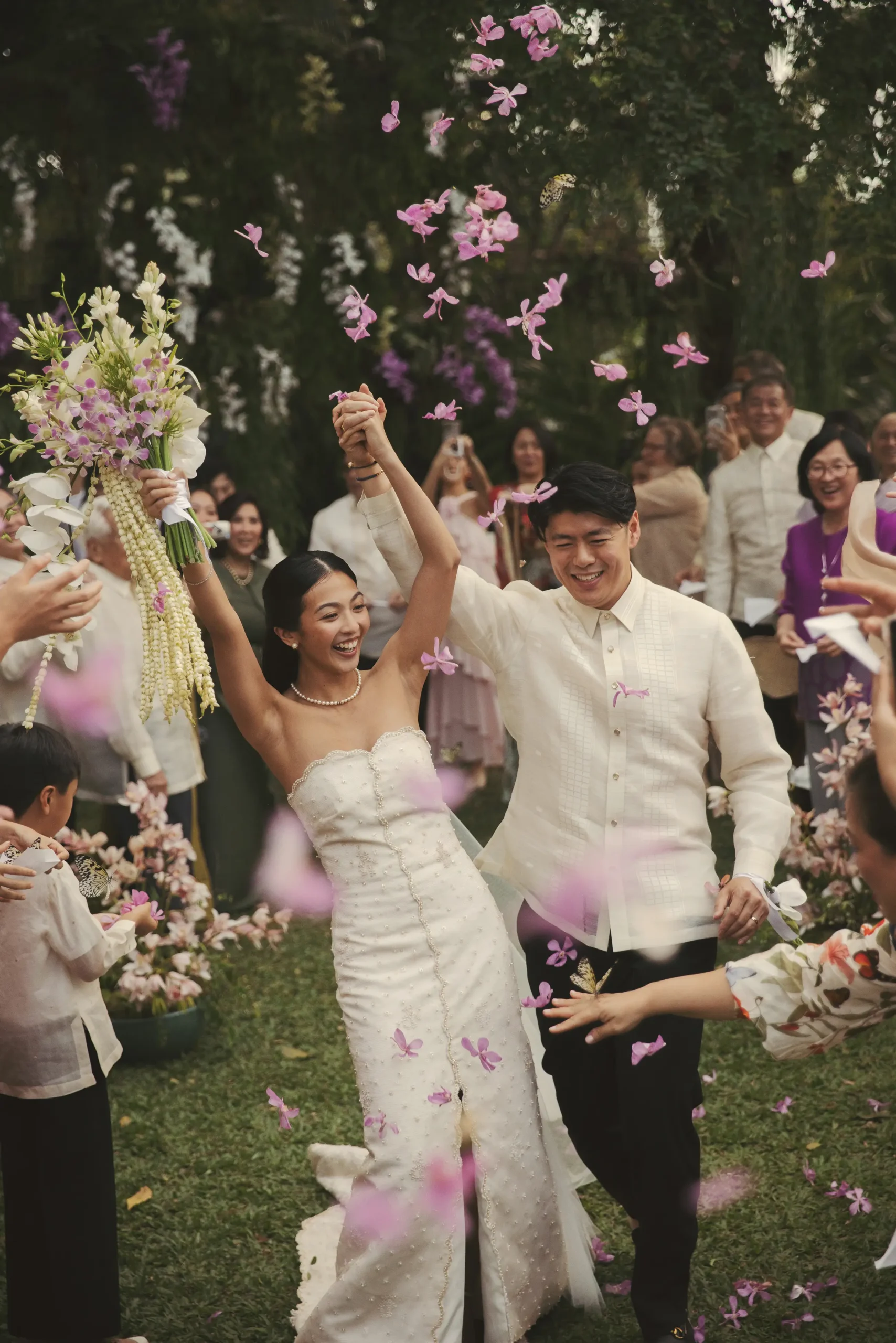
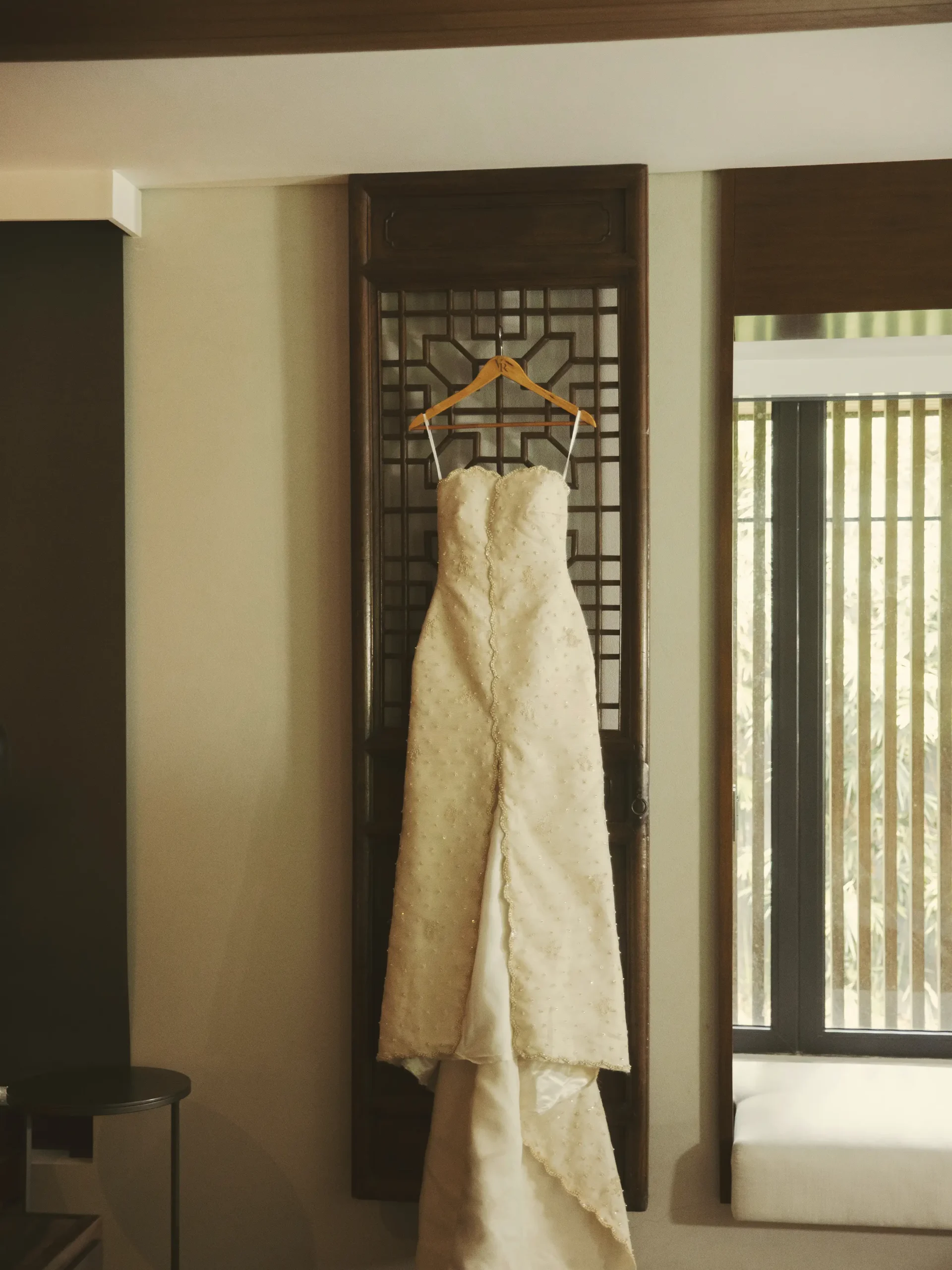
The rules were clear from the beginning. The new dress would be made entirely from the original train with added fabric and no frills beyond what already existed. “I wanted the material itself to shine,” Bianca says. The constraint made the process risky, as there was only one opportunity to cut the fabric correctly. Ultimately, it defined the result. The final silhouette emerged as a sheath-like column, with scalloped edges meeting at the center.
READ ALSO: Decoding The Dress Code: What To Wear To A Wedding
A Natural Collaboration
Collaborating with designer Vania Romoff was an obvious choice. Known for her aesthetic tailored for the modern romantic, Vania’s work is often a recurring motif in many a Filipino wedding. Bianca had worn her pieces for previous milestones and was drawn to her experience working with both piña and vintage garments.
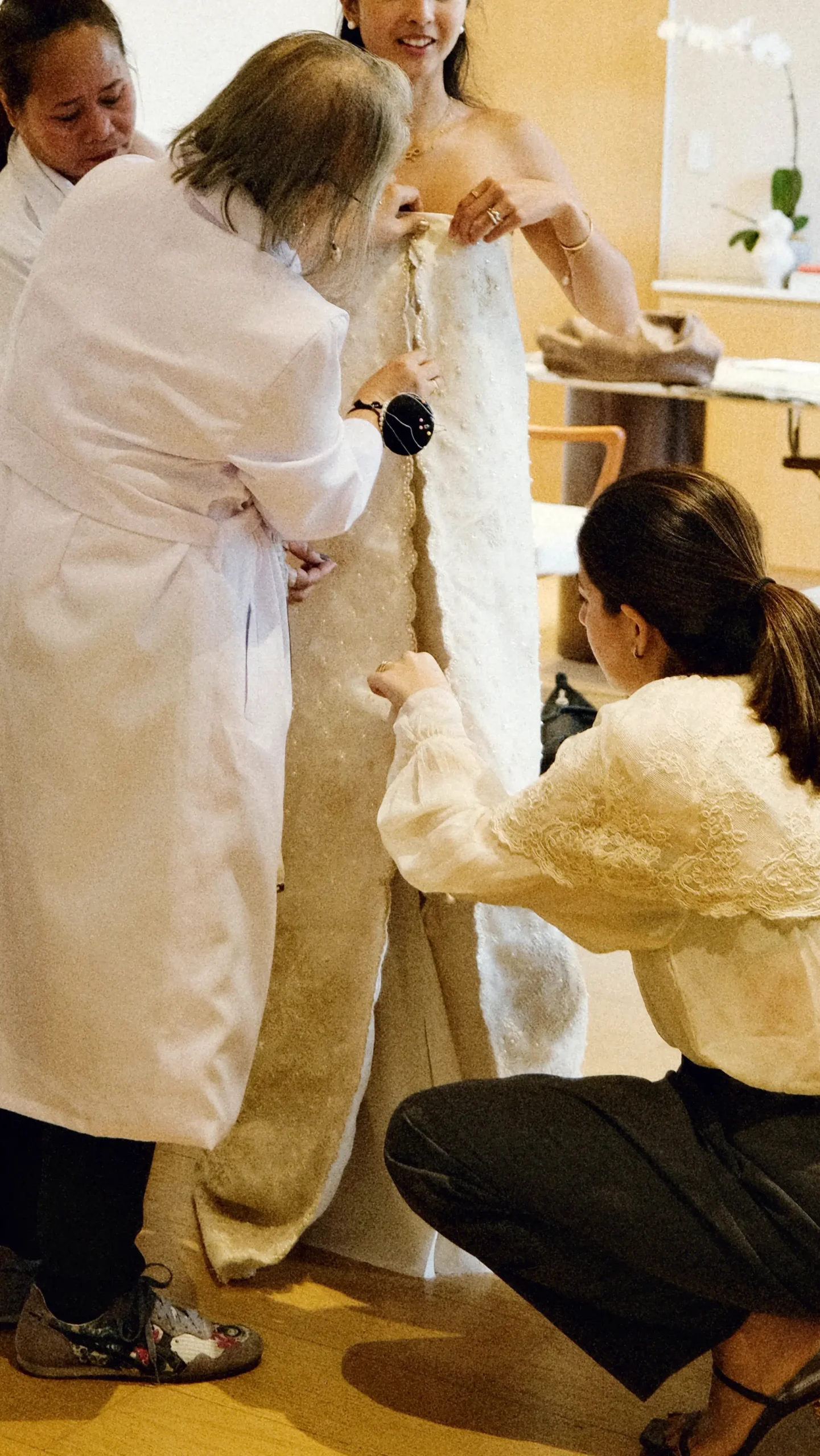
“She understood the vision straight away,” Bianca says. Despite being a designer herself, she chose not to over-direct the process, saying, “I completely let go.” She describes the fittings at Vania’s atelier as a quiet counterpoint to the intensity of wedding planning, or a “calm amidst the storm.”
The Final Reveal
The finished gown included one surprise: a train of its own. Until the final reveal, no one knew whether there would be enough material left to make it possible. The team had only one chance to make the cut. When Bianca and her mother finally saw the dress completed, the reaction was immediate. “There was a real ‘this is really happening’ moment,” she says. “We were so in awe.”
And as any newlywed bride might, Bianca beams, “This piece is definitely my most important piece of clothing in my closet. It carries so much family history and I hope to share it with my own daughter someday.”
This article was originally published in our March 2026 issue.
Photography by Colin Dancel and Joseph Pascual, courtesy of Bianca Wen
Frequently Asked Questions
The core material of Bianca Wen’s wedding dress was repurposed from her mother’s vintage bridal gown. The textile composition features hand-woven Filipino piña fabric detailed with calado (painstaking hand-drawn needlework). The surface architecture was originally hand-embroidered and hand-beaded with premium freshwater pearls, delicate sequins, scalloped edges, and small silk bows.
The conversion from a mid-century family gown into a contemporary masterpiece was completed in collaboration with renowned Filipino designer Vania Romoff. Romoff’s studio was selected due to the designer’s deep experience working with delicate heritage fibers, vintage garments, and her signature modern-romantic tailoring style.
The structural design was executed as a minimalist, sheath-like column silhouette. Rather than adding modern embellishments, the design framework relied entirely on the original components of the bride’s mother’s train. The finished gown showcased the original scalloped lace edges meeting perfectly down the center line of the dress.
The modification process carried high stakes because the new dress had to be constructed entirely from the original bridal train without using supplemental vintage panels. Because there was no replacement yardage available for the rare, decades-old hand-woven fabric, the atelier team had exactly one opportunity to execute the patterns and cuts correctly.
The base textile carries immense familial lineage: it was originally sketched and designed by Bianca Wen’s grandmother and constructed by the family’s trusted, multi-generational seamstress, Manang Mel. Over the decades, this artisan crafted the bridal looks for Bianca’s aunts, alongside the bride’s own first communion and Confirmation dresses, before the train was given new life for the 2026 ceremony.