More than a survey of three decades of Olafur Eliasson’s practice, Your curious journey is an invitation to look more closely—to notice the extraordinary in the everyday, and to carry that curiosity beyond the museum walls.
You step into a narrow corridor, lit entirely in yellow. The light strips the world around you down to shades of yellow and black. Faces, clothes, even your own hands look unfamiliar. It’s “Yellow corridor” (1997), the first work you encounter in Your curious journey by artist Olafur Eliasson, now on view at the Museum of Contemporary Art and Design (MCAD) Manila.
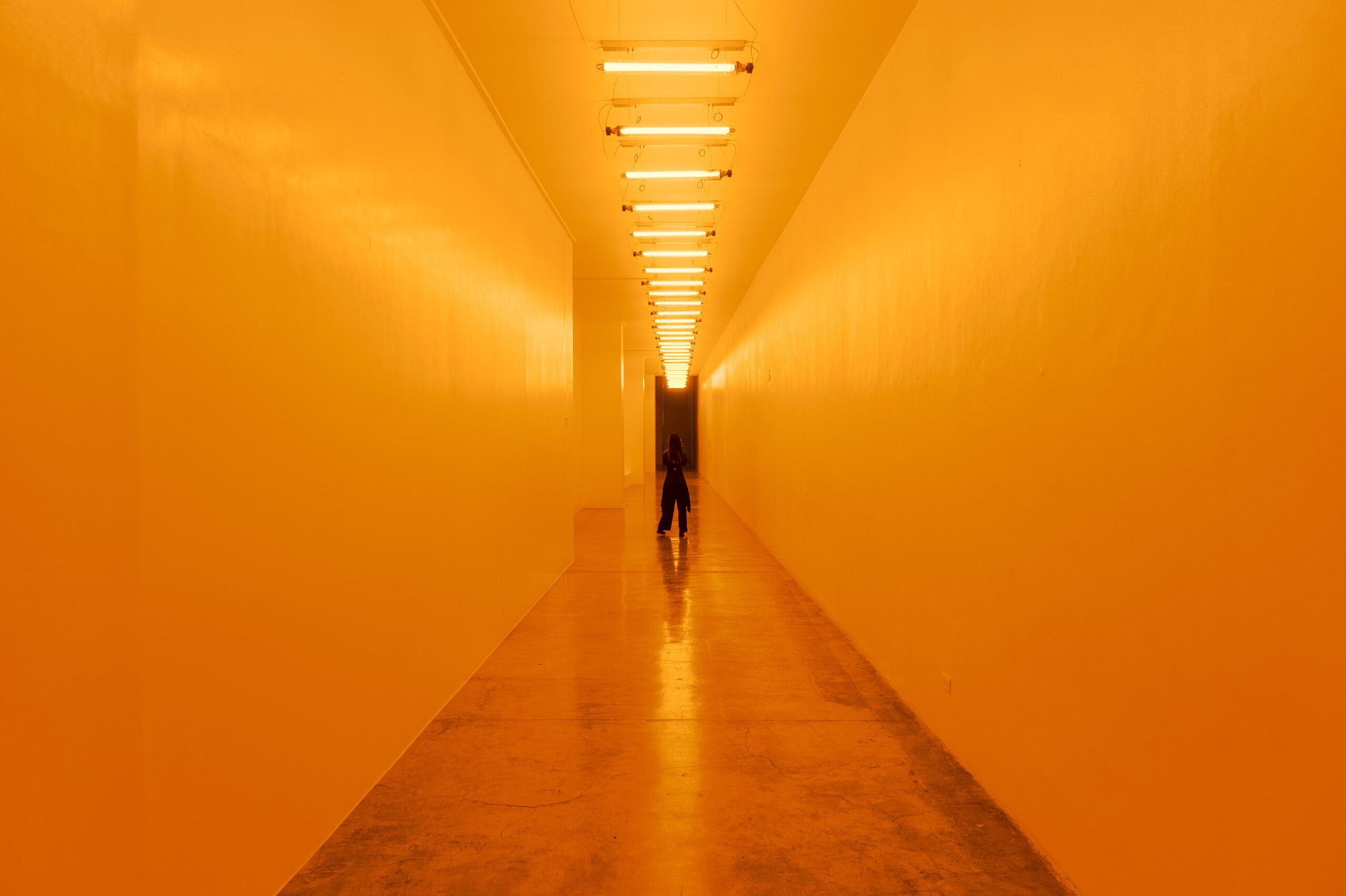
In the exhibition guide, Eliasson writes: “You too will have traveled to get here. It may be a trip from just around the corner or from across the globe. It may be the sum of your experiences or the result of a chance encounter.” Before asking us to pay attention to any work itself, he first acknowledges us, the people encountering it, reminding us that we arrive carrying our own experiences, memories, and associations. It feels apt for an exhibition that has itself been on a journey.
After traveling through Singapore, Auckland, Taipei, and Jakarta, Your curious journey arrives in Manila as its final stop and Eliasson’s first major solo exhibition in Southeast Asia. Spanning more than three decades of the Icelandic-Danish artist’s practice, the exhibition brings together early pieces alongside newer ones created specifically for its travel. Throughout, Eliasson works with ephemeral materials to explore perception while drawing our attention to our relationship with the natural world and the climate crisis.
As I moved through the galleries, I found myself returning less to the individual works than to the question posed by the exhibition’s title: what exactly is this curious journey I had been invited to take?
READ ALSO: Olafur Eliasson’s “Your curious journey” Makes Its Final Stop In Manila
Learning To Look: What TheYour curious journey Exhibition Teaches Us
Unlike much of the art we’re accustomed to encountering, Eliasson’s works rarely ask us simply to admire an object. Instead, they draw our attention to what we encounter every day—such as light, water, air, and mist—making them strange enough to stop and look at again.
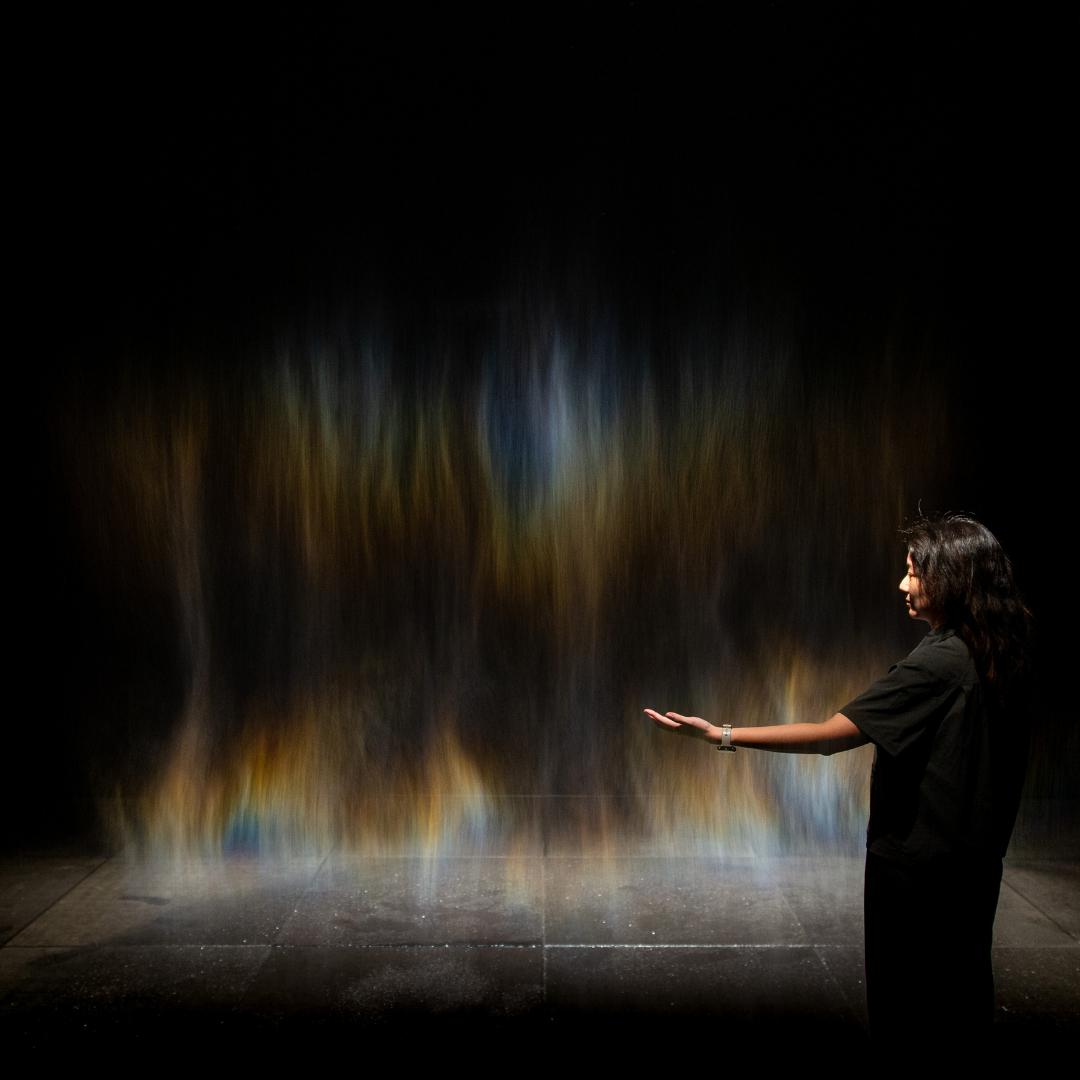
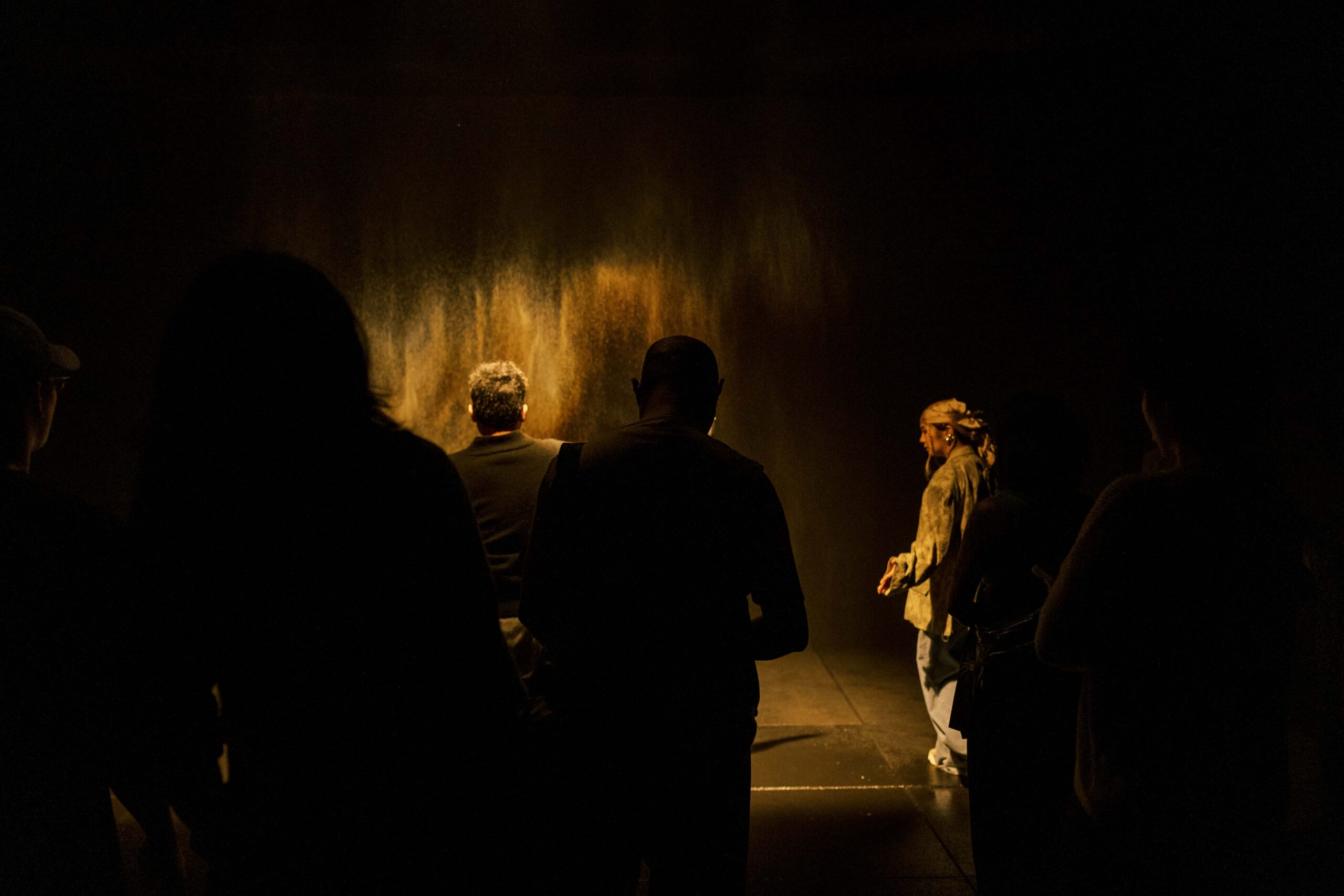
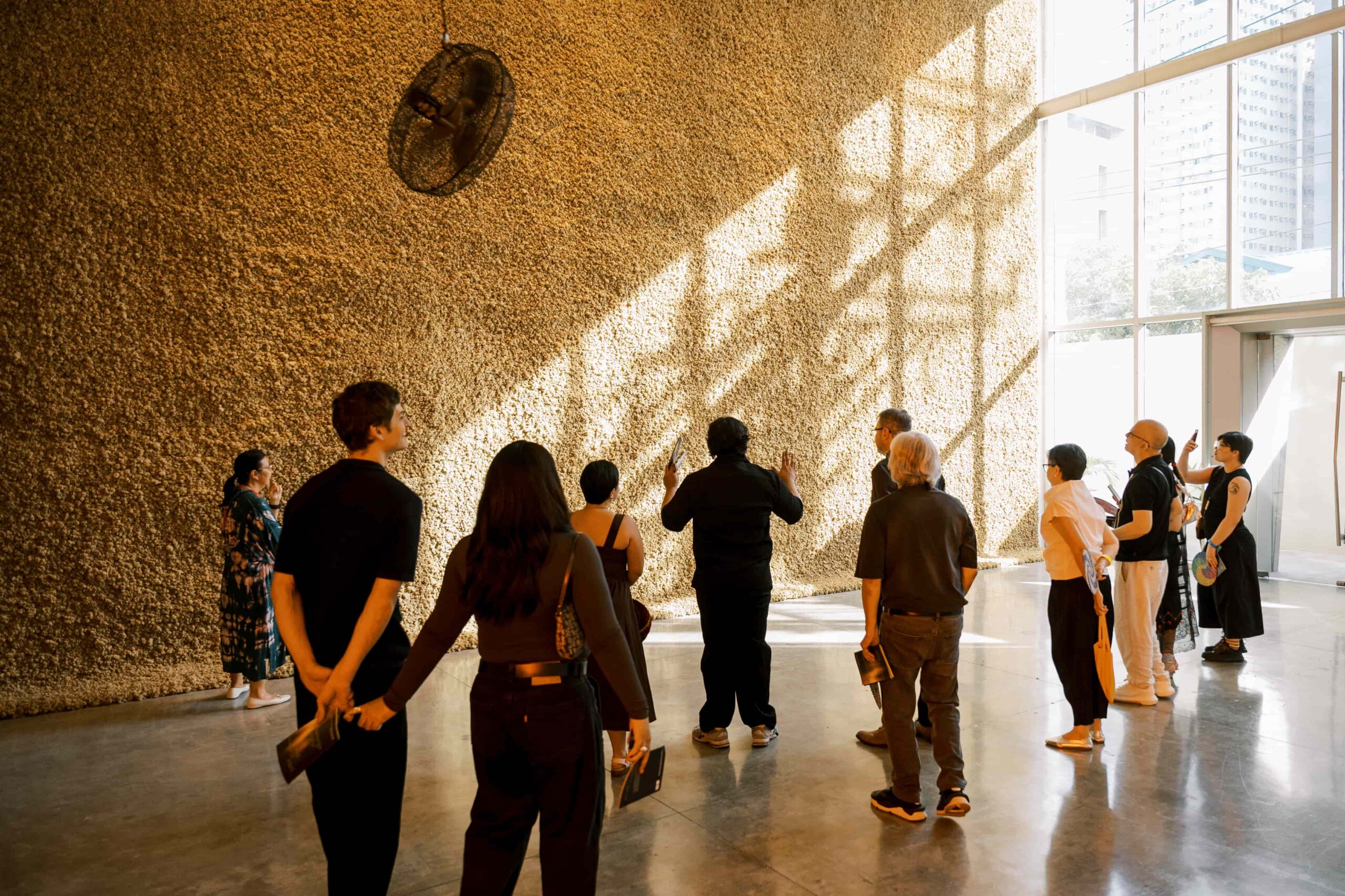
Take the aptly named “Beauty” (1993), one of the earliest works in the exhibition. A fine curtain of mist catches a carefully angled spotlight, producing a rainbow that appears and disappears depending on where the viewer stands. No two viewers see quite the same rainbow. Elsewhere, “Moss wall” (1994), one of the largest iterations of the work, brings living moss into the gallery, where it continues to expand, change color, and release its fragrance over time. Nearby, “Ventilator” (1997), little more than an electric fan suspended from the ceiling, moves with a life of its own, propelled by the very air it displaces.
None of these works represents nature in the traditional sense. Instead, Eliasson recreates the conditions through which we experience it. As he writes in the exhibition guide, artworks “become complete when you, the viewer, engage with them.” Perhaps that is the curious journey after all: not simply moving through the exhibit, but learning to notice what has been there all along.
How Olafur Eliasson Explores Nature And Climate
If learning to notice is where the curious journey begins, the exhibition dares to ask us what to do after. It unfolds through works that remind us that light, water, ice, and weather are not simply abstract ideas or artistic devices, but the very elements that shape the world beyond the museum walls.
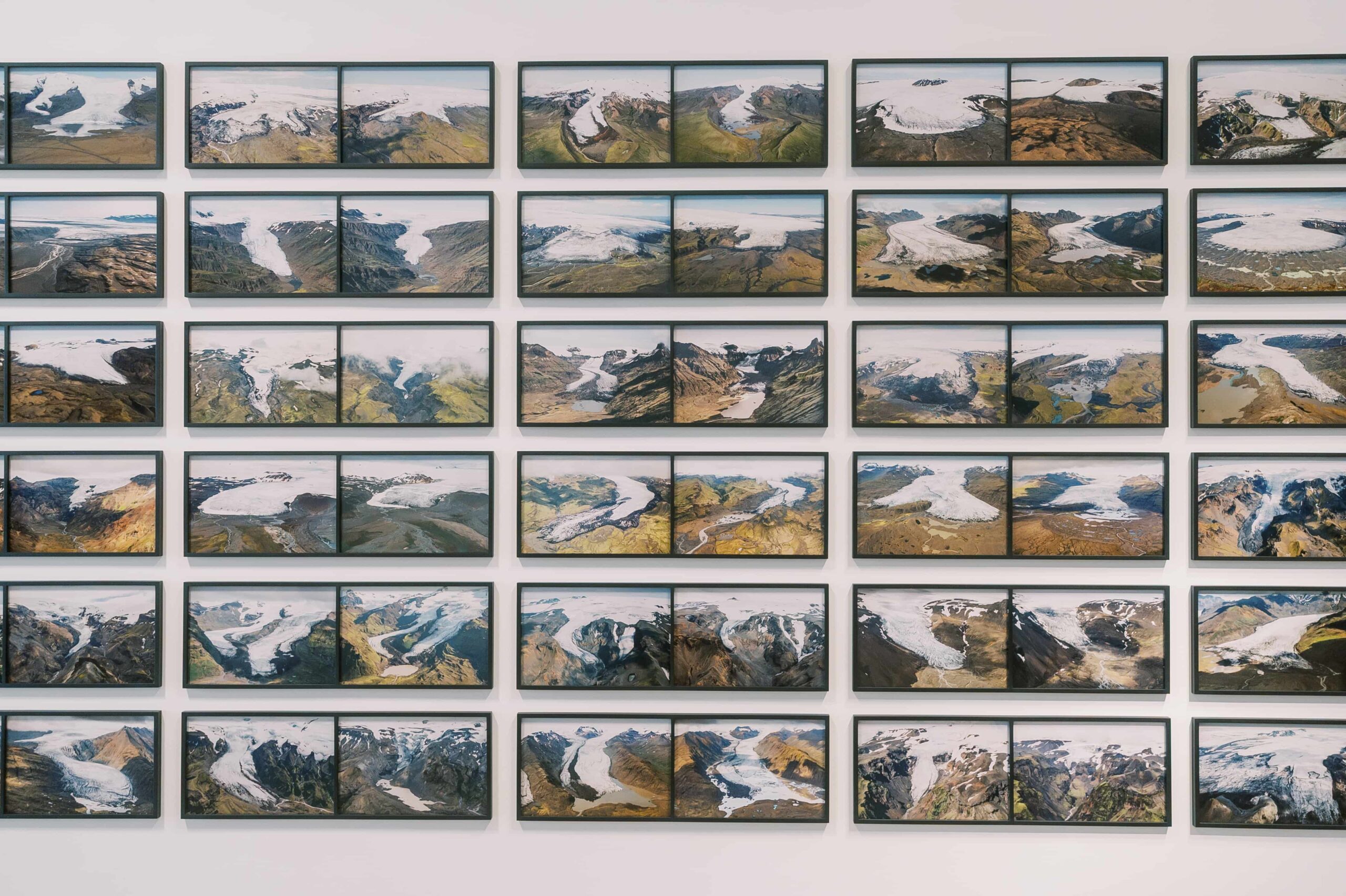
Among the most affecting are The glacier melt series 1999/2019 (2019), in which Eliasson returned to the same Icelandic glaciers two decades after first photographing them, revealing the visible effects of a warming planet. There’s also “The last seven days of glacial ice” (2024), which presents diminishing bronze forms paired with glass spheres, marking what has already been lost.
The exhibition’s own journey reinforces this idea. In “The seismographic testimony of distance” (2024-2026), drawing machines recorded the movements of the vehicles that transported the artworks from Jakarta to Manila, making visible a part of the exhibition-making that usually goes unseen. Conceived as part of Studio Olafur Eliasson’s commitment to reducing the carbon footprint of art production, the works suggest that even the act of moving art across the world carries responsibility.
It’s fitting that Your curious journey concludes its travels in the Philippines, one of the countries most vulnerable to the effects of climate change. After first asking us to notice the natural world, he dares us to ask what it might mean to care for it.
The Viewer And The Artwork
The journey continues upstairs. Suspended above the staircase is “Adrift compass” (2019), a weathered piece of driftwood guided by a magnetic rod that continually aligns itself along the north-south axis. It marks direction while suggesting that our own journey is still unfolding.
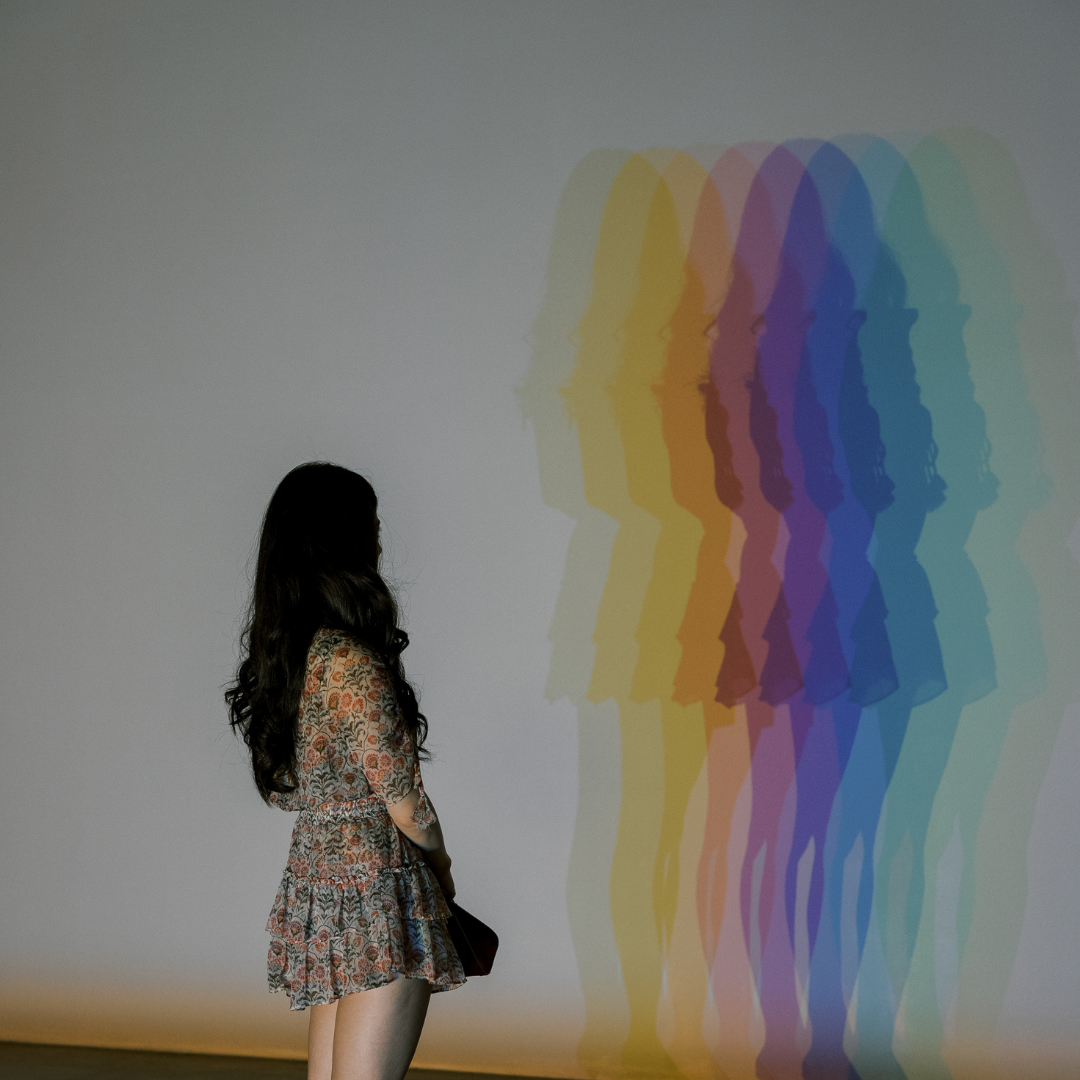
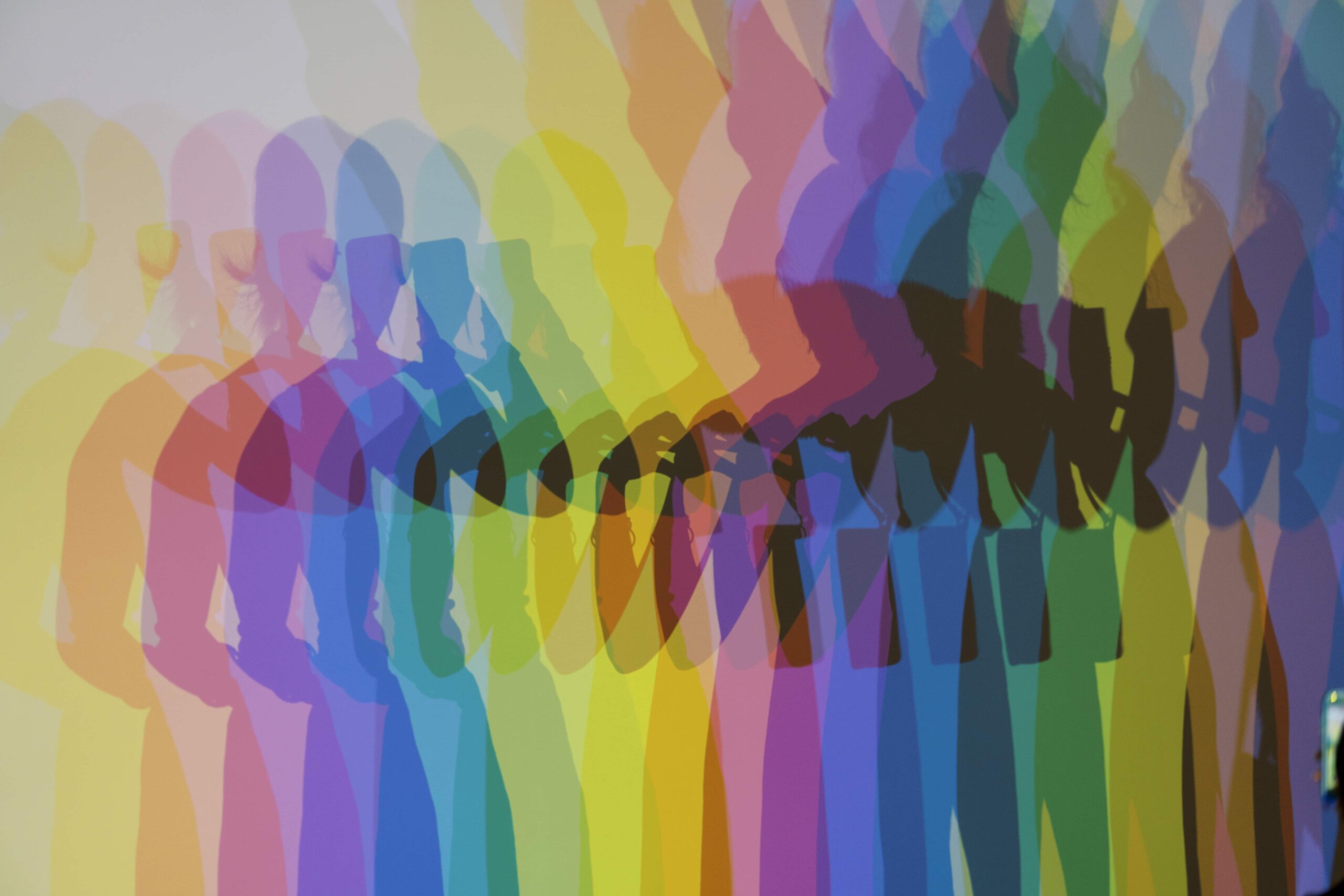
The second floor dissolves the distance between the viewer and the artwork. “Your pluralistic coming together” (2024) transforms an empty white wall into a field of overlapping silhouettes as visitors walk through beams of colored light. Earlier in the exhibition, “Beauty” revealed that no two viewers encounter the same rainbow. Here, the viewer no longer simply witnesses the work: their presence is inseparable from it, becoming the very condition needed to create the rainbow.
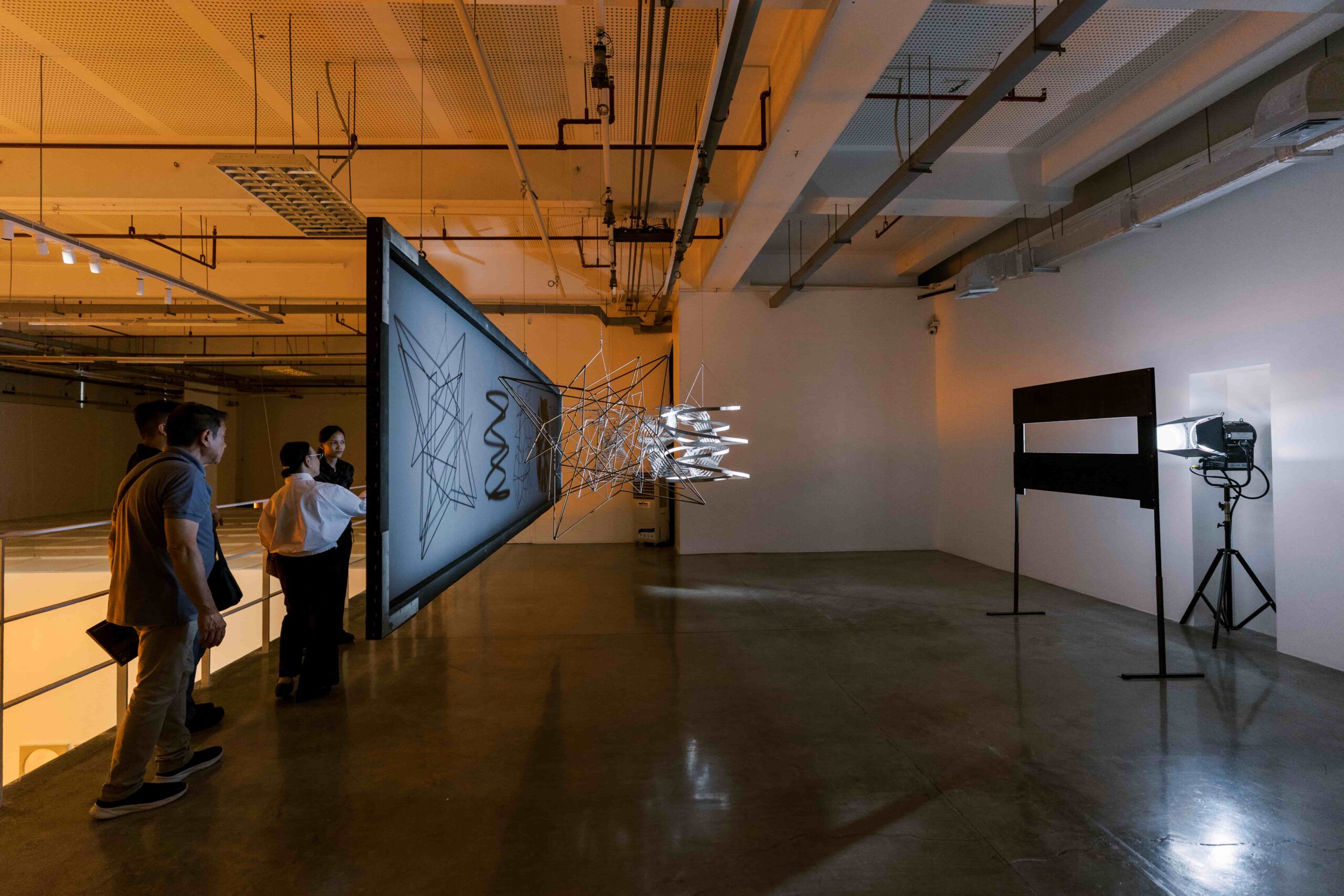
The exhibition concludes with “Life is lived along lines” (2009), where rotating forms hidden behind a screen cast an ever-changing sequence of shadows. Eliasson leaves the motors, spotlights, and mechanics fully exposed. It’s no illusion as he reveals how it is made, a reminder that perception is never passive. What we see is shaped as much by ourselves as by the world before us.
Stepping Inside The Gallery To Look Beyond It
There’s an irony not lost on me in having to step inside a museum to learn how to look outside again. But Eliasson never asks us to mistake art for nature. Rather, he returns us to the natural world with renewed attention. He fills galleries with rainbows, moss, wind, ice, light, and weather precisely because they belong beyond these walls.
Seeing and noticing are not quite the same thing. The exhibition ends, but the journey continues in the world outside. In the sunlight catching a window at the right angle, in a reflection on glass, in the movement of wind through the trees, or in the sky after rain.
The exhibition is supported by the Embassy of Denmark in the Philippines, Mercedes Zobel, and Goethe-Institut Philippinen.
Olafur Eliasson: Your curious journey runs from July 9 to November 15, 2026 at the Museum of Contemporary Art and Design (MCAD) Manila, De La Salle–College of Saint Benilde, Malate. For more information, visit mcadmanila.org.ph.
Photography by Adrian Ardiente, courtesy of MCAD Manila
Frequently Asked Questions
your curious journey is a survey exhibition spanning more than three decades of Olafur Eliasson’s practice. Through installations using light, water, fog, moss, ice, and other ephemeral materials, the exhibition explores perception, participation, and our relationship with the natural world and the climate crisis.
your curious journey is on view at the Museum of Contemporary Art and Design (MCAD) Manila. The exhibition is the final stop of its Asia tour, following presentations in Singapore, Auckland, Taipei, and Jakarta, and marks Eliasson’s first major solo exhibition in Southeast Asia.
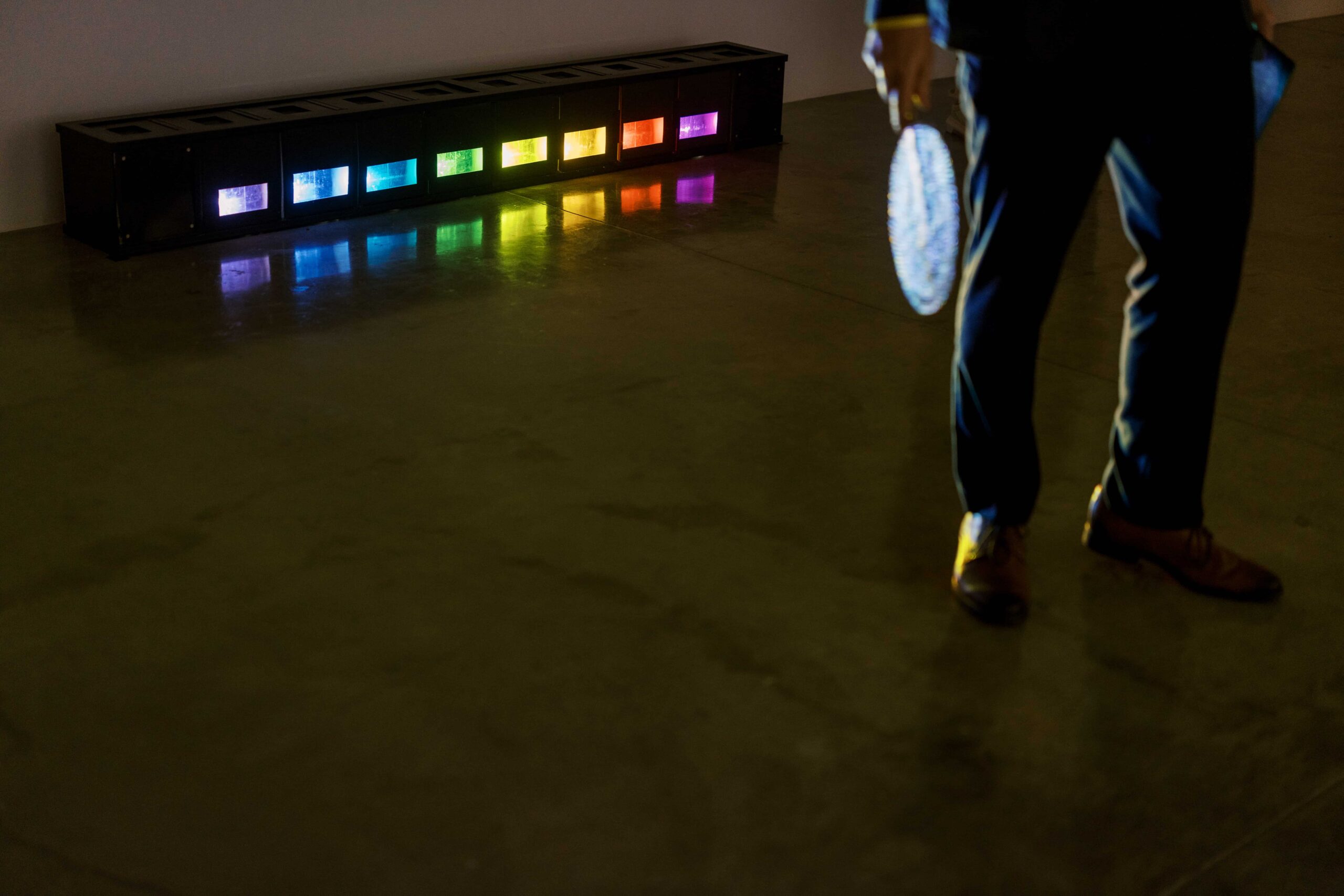
Highlights include “Yellow Corridor” (1997), “Beauty” (1993), “Moss Wall” (1994), “Ventilator” (1997), The Glacier Melt Series (1999/2019), “The Last Seven Days of Glacial Ice” (2024), “Circumstellar Resonator” (2019), “Your Pluralistic Coming Together” (2024), and “Life Is Lived Along Lines” (2009). Together, these works invite viewers to actively engage with light, movement, reflection, and the natural world.
The exhibition encourages visitors to reflect on the climate crisis through works such as “The Glacier Melt Series,” “The Last Seven Days of Glacial Ice,” and “The Seismographic Testimony of Distance.” Rather than presenting climate change as an abstract issue, Eliasson invites viewers to pay closer attention to the natural phenomena that shape everyday life and consider what it means to care for them.
Many of Eliasson’s installations change depending on where viewers stand or how they move through the space. In works such as “Beauty” and “Your Pluralistic Coming Together,” the artwork is completed through the viewer’s presence and participation, reflecting Eliasson’s belief that art “becomes complete when you, the viewer, engage with it.”