Well before Christopher Nolan revisited The Odyssey, fashion had already spent a century reimagining the silhouettes, myths, and architecture of ancient Greece.
Christopher Nolan’s new film adaptation of The Odyssey landed in theaters this month, witnessing Matt Damon’s Odysseus cross a mythic Mediterranean rendered in 70 millimeter IMAX. Homer’s hero returns home to Ithaca, but the myth never really left the fashion world in the first place. Designers have been raiding ancient Greece for a century, chasing the same columns, drapery, and gods that now fill multiplex screens. It’s worth tracing where that obsession actually started, and how many different things “Grecian” has meant along the way.
READ ALSO: Food To Fabric: Tracing The Past And Future Of Piña Textile
The Original Blueprint: A Look At Ancient Greek Fashion
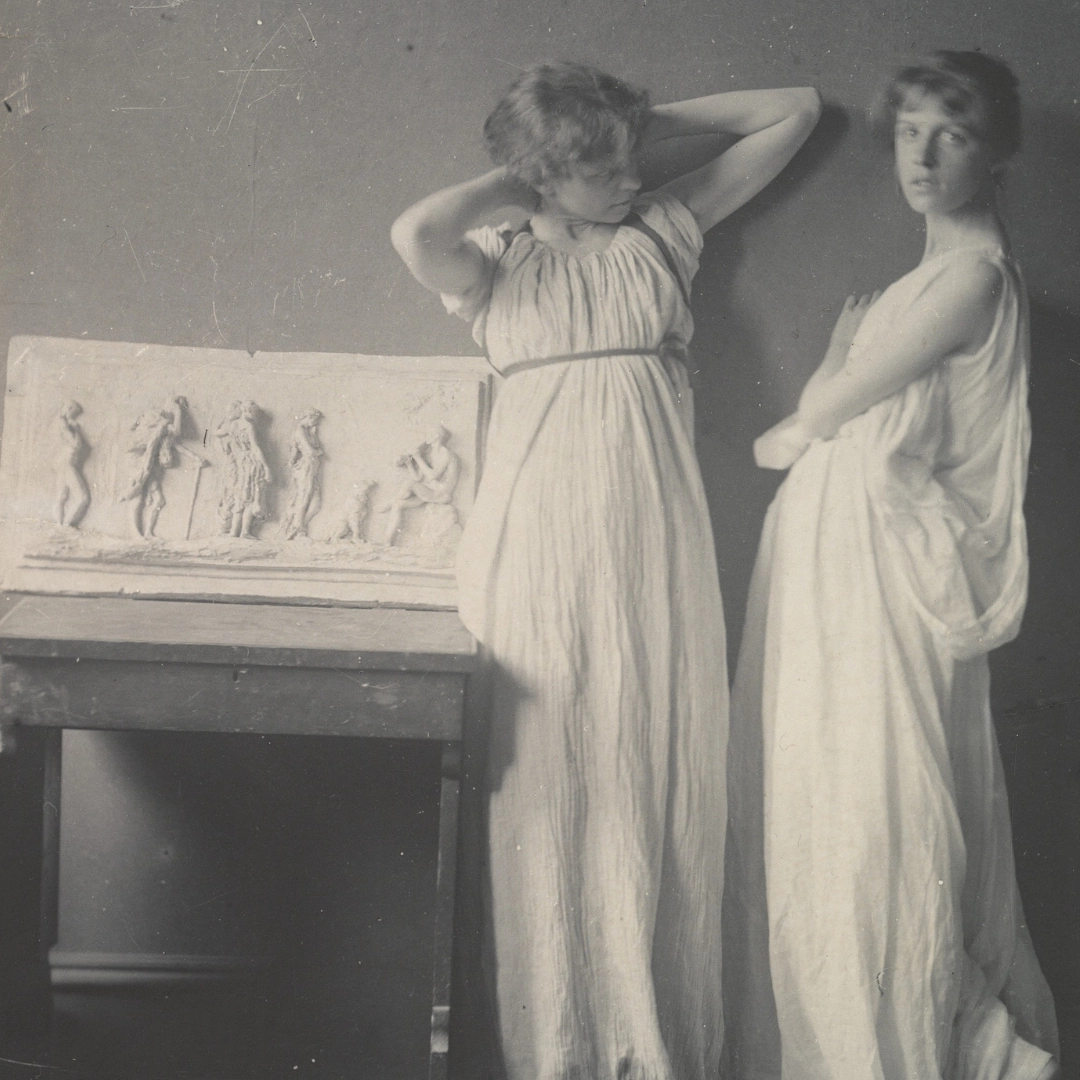
To provide context, ancient Greek dress mostly broke down into three garments: the chiton, a rectangle of fabric pinned at the shoulders, the layer visible on most surviving vase paintings; the peplos, which added a heavier, folded panel that draped across the torso; and the himation, which functioned as an outer wrap, thrown over everything else.
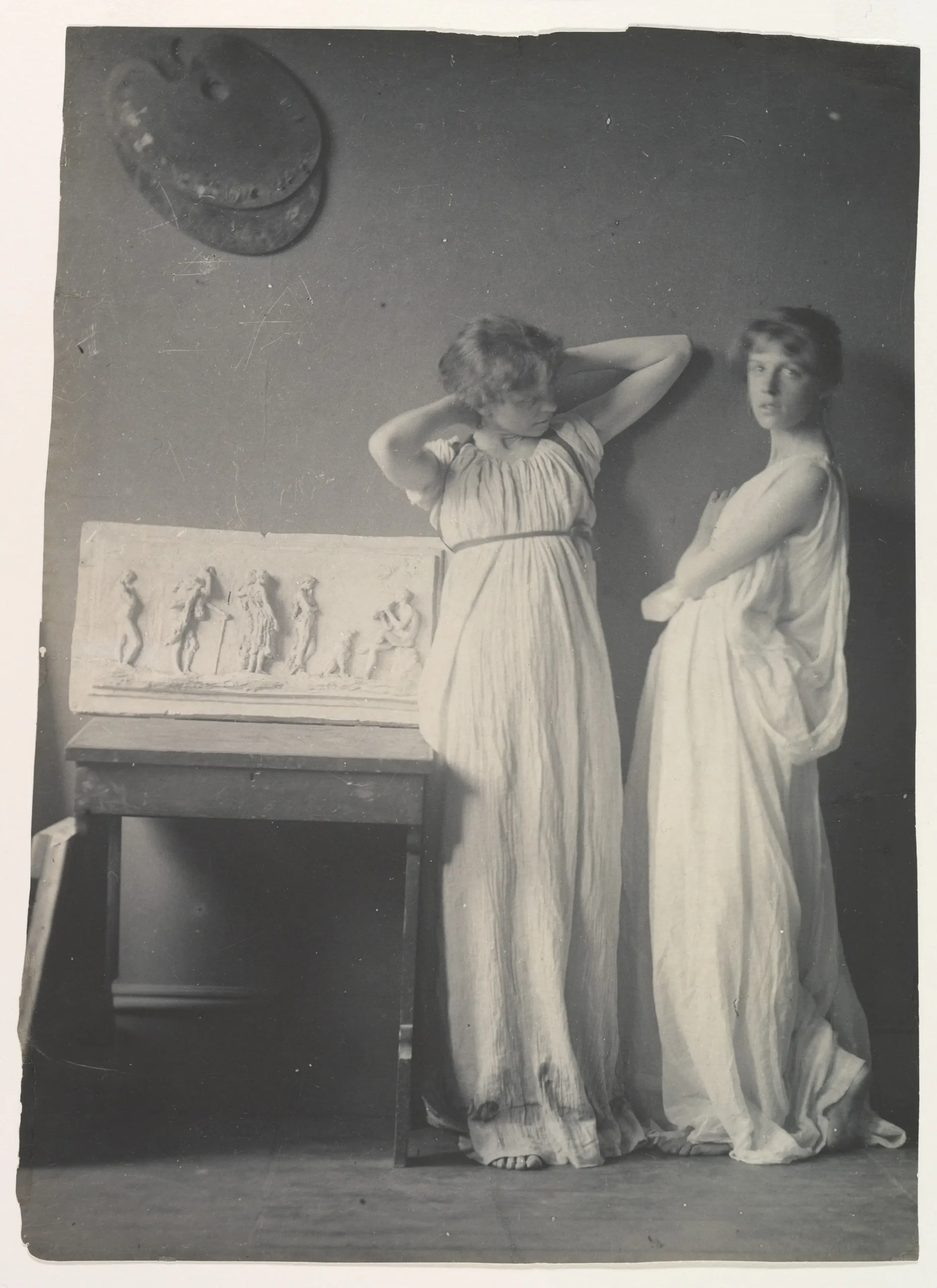
Couture Finds Antiquity
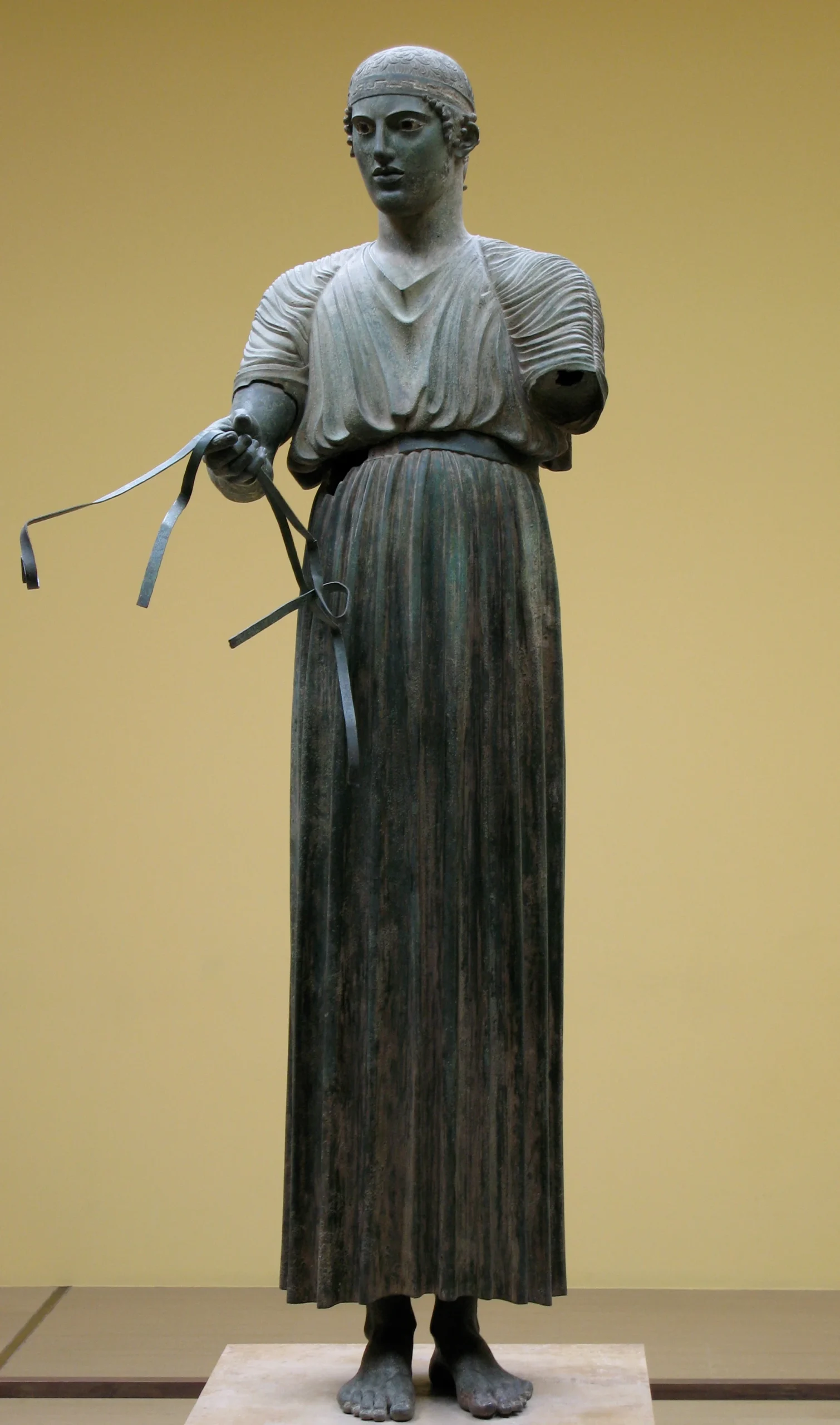
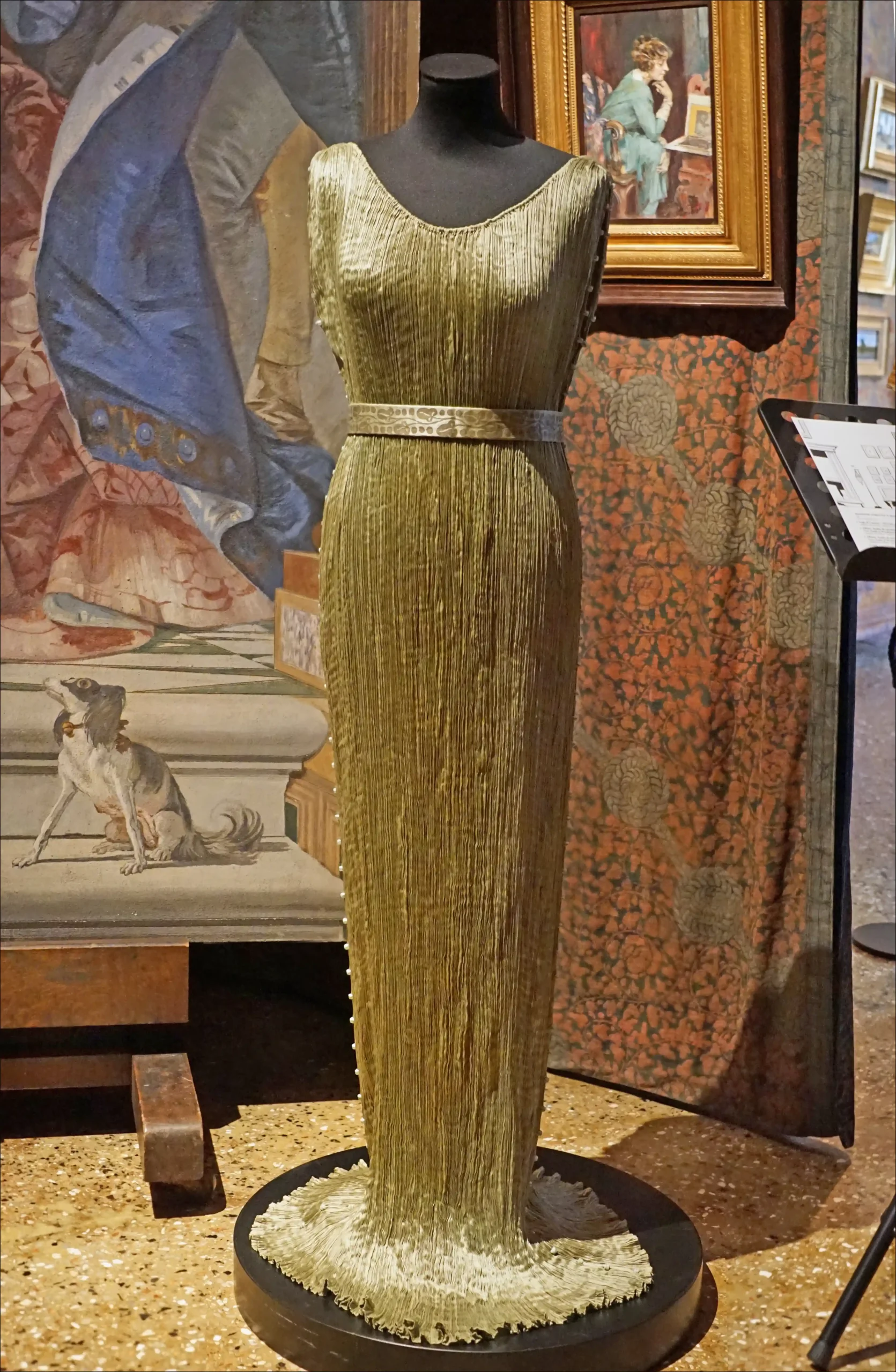
Fast forward to early 20th-century Venice, where Spanish-Italian designer Mariano Fortuny and his wife, Henriette Negrin, built a couture legacy from the chiton. Their signature creation, the Delphos gown, transformed the ancient garment into an evening dress made of delicate pleated silk that clung and flowed with the body. Named after the ancient bronze statue The Charioteer of Delphi, the Delphos is still produced today.
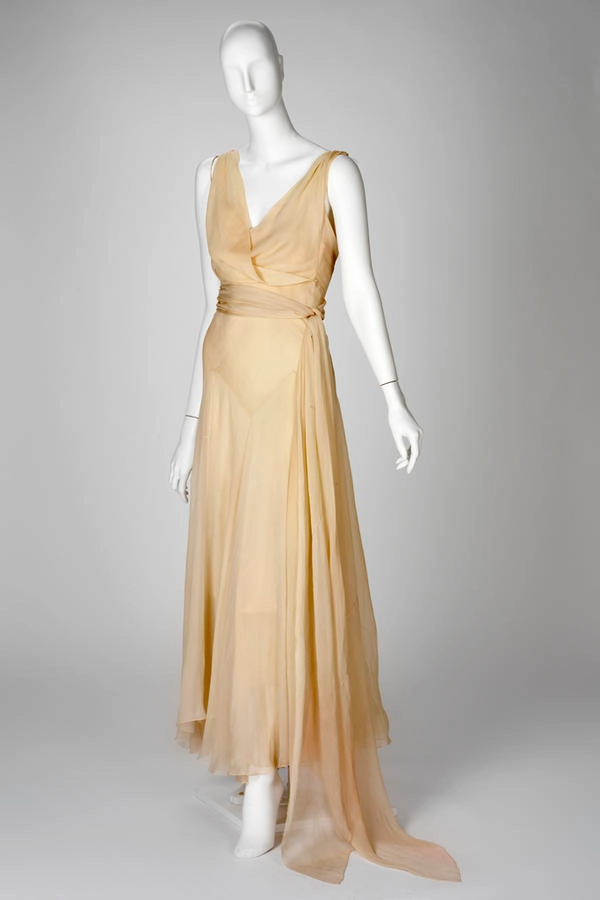
His contemporary, Madeleine Vionnet, deserves equal recognition. She studied ancient sculpture and vase painting at the Louvre, and she said outright that her inspiration came from the clothed women on Greek vases, and from the lines of the vessels themselves. She’s the designer behind the bias cut, in which fabric gets sliced diagonally across its grain so it moves with the body instead of relying on boning to hold its shape. Her label’s logo also pictures a woman in a tunic standing on a column. She and Fortuny arrived at nearly the same idea through different methods: his through pleating, hers through the cut of the cloth.
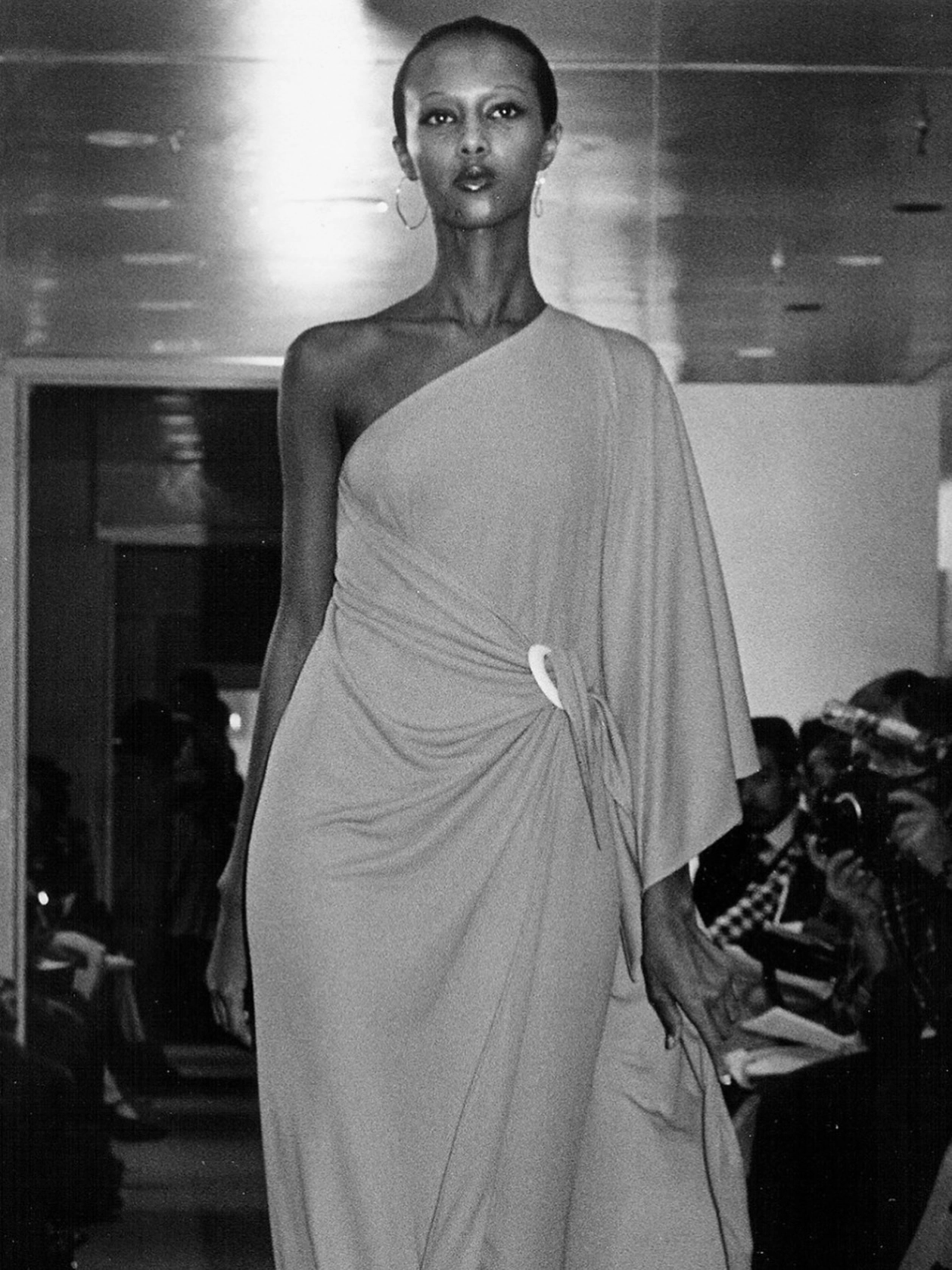
By the 1970s, Halston brought that same draped silhouette into ready-to-wear, using jersey that could be wrapped and tied rather than fitted and structured. His single-shoulder, ruched gowns—worn by fixtures of the Studio 54 clubbing scene among others—made the look accessible among American consumers.
A young Gianni Versace grew up in Reggio Calabria, surrounded by Greco-Roman ruins, and encountered a Medusa mosaic there as a child. When he introduced the Medusa head—framed by a Greek key border—as his house’s logo in 1993, he reportedly wanted the brand to carry the same hypnotic, impossible-to-look-away pull that the myth gives her gaze. That instinct carried through to his work in the 1990s, when his liquid gold and silver chainmail dresses took the runway.
The Classical Thread Continues
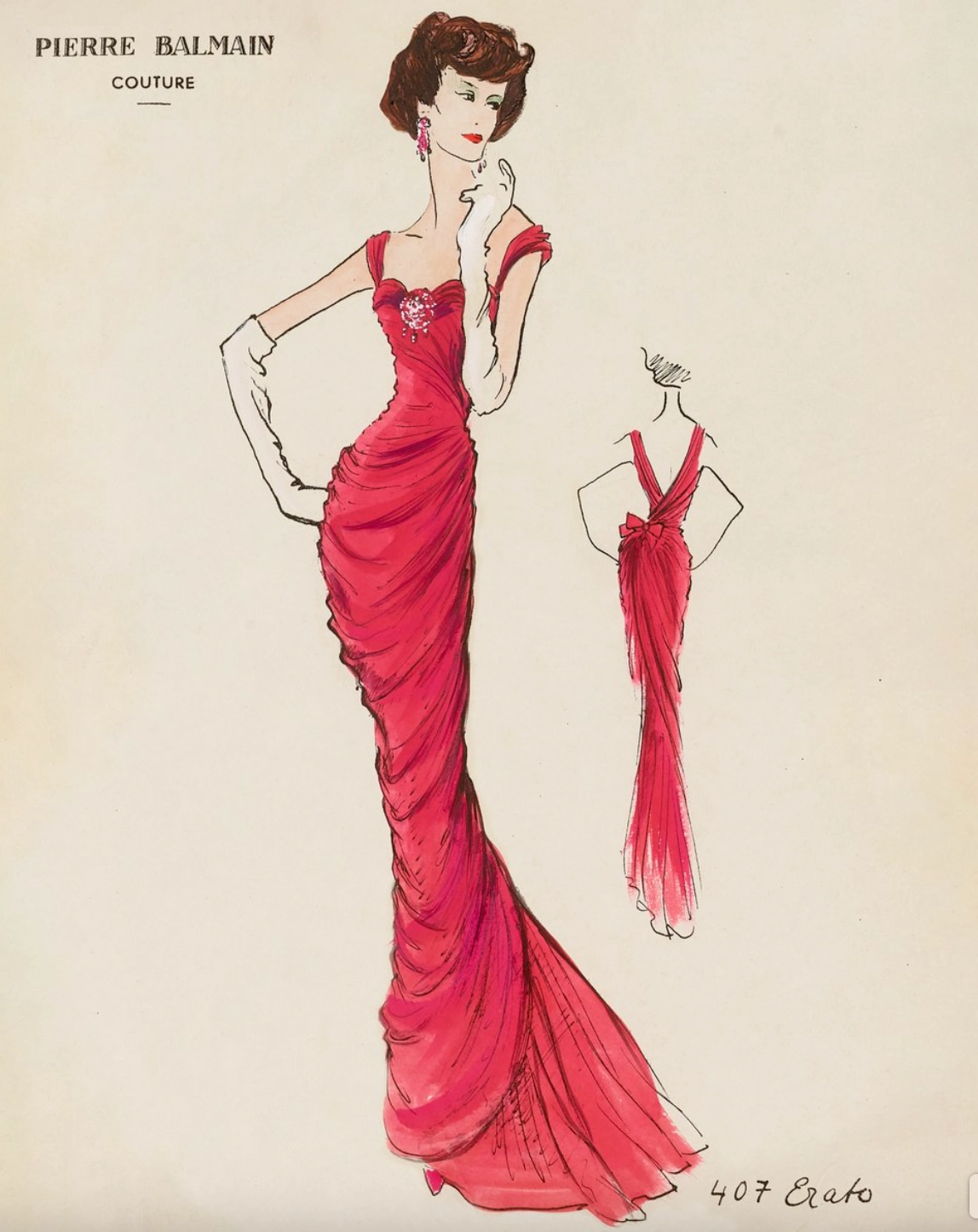
Other names round out the story. Pierre Balmain’s 1957 “Erato” gown, named for the muse of lyric poetry, stands as one of the earliest documented moments when Greek influence hit the runway as a named, dedicated piece.
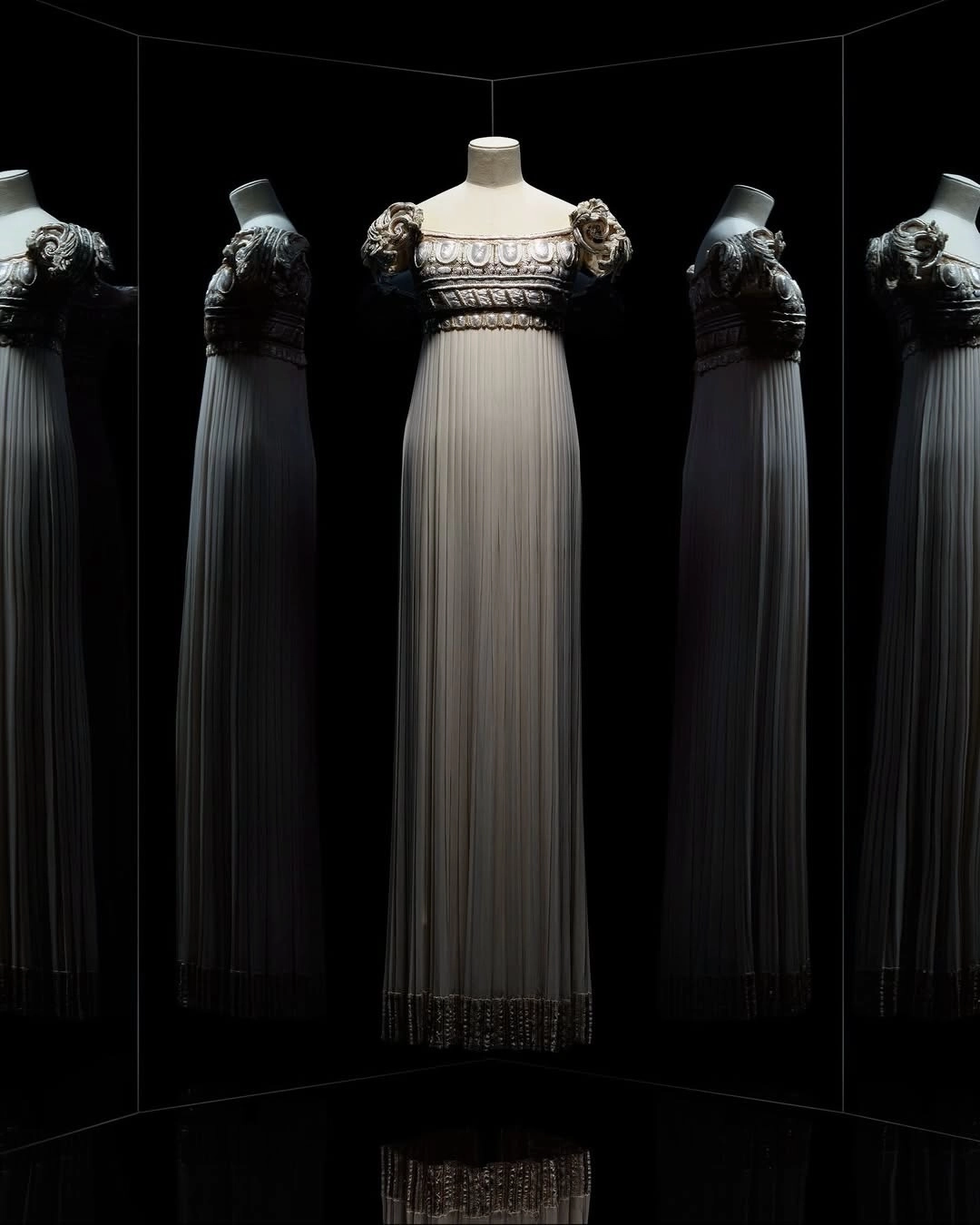
Dior has arguably done more than other labels to keep the thread going. Gianfranco Ferré, whose 1992 “Palladio” gown for the house translated an Ionic column directly into garment, used Greek reference as direct architectural quotation, translating a column into a garment a person could actually wear. Maria Grazia Chiuri took her penchant for Greek aesthetics to its literal source for Dior’s 2022 cruise show—staged at the Panathenaic Stadium in Athens—where she pulled directly from ancient pottery illustrations and, by her own account, went back to studying Greek mythology the way she once had in school.
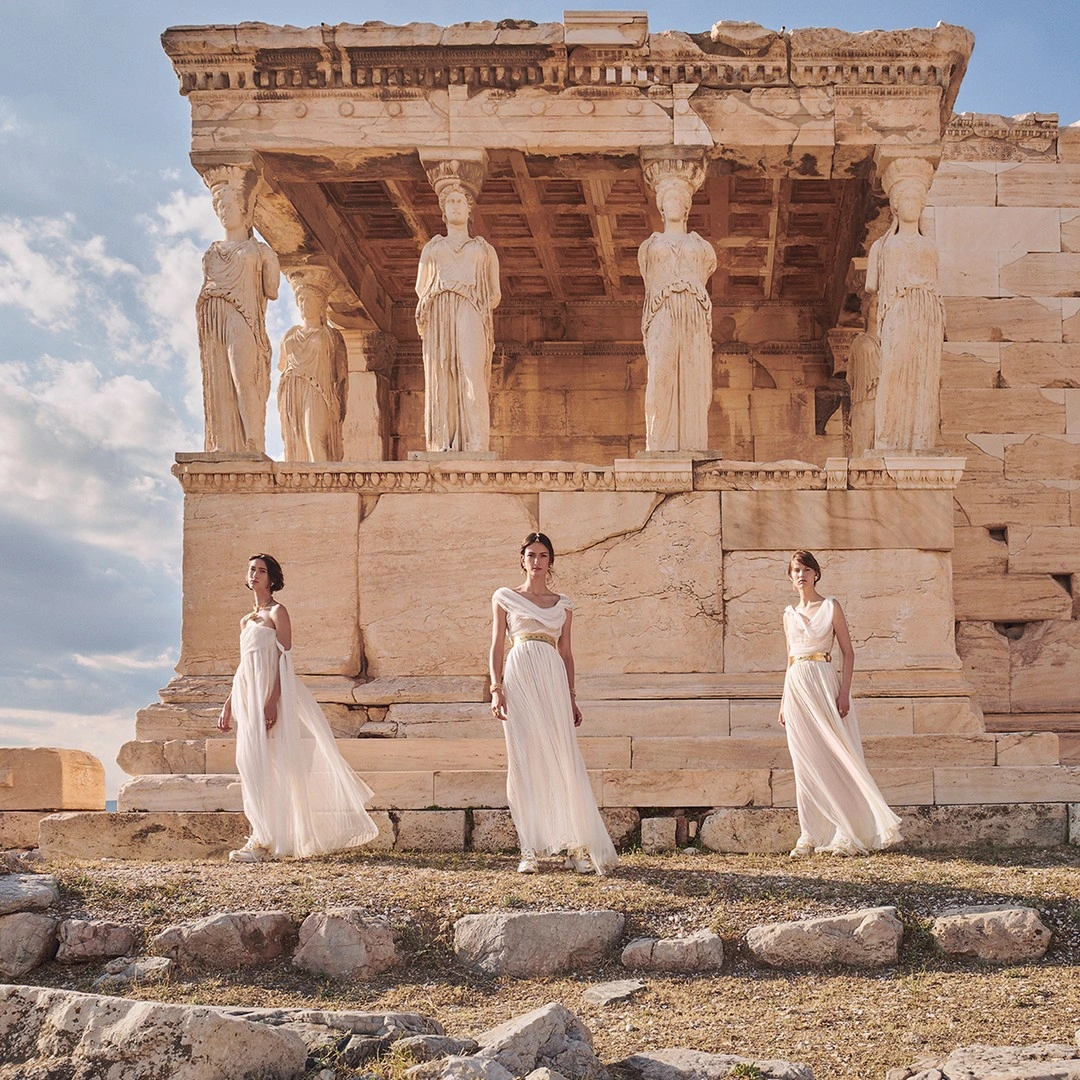
These instincts remain visible on runways now, decades after Fortuny first started pleating silk in his Venice studio. Nolan’s film may have brought Homer back into wide circulation this summer, but fashion never really let him go.
Frequently Asked Questions
Fashion continues to revisit ancient Greece because its draped silhouettes, mythology, and architecture have inspired designers for more than a century.
Designers including Mariano Fortuny, Madeleine Vionnet, Halston, Pierre Balmain, Gianfranco Ferré, and Maria Grazia Chiuri all reinterpreted Greek dress in different ways.
The Delphos gown is Mariano Fortuny’s signature pleated silk evening dress inspired by the ancient Greek chiton and named after The Charioteer of Delphi.
Designers have translated elements such as Ionic columns, classical proportions, and sculptural forms into pleated gowns and flowing silhouettes.
Ancient Greece remains relevant because its approach to draping, movement, mythology, and classical design continues to inspire contemporary collections and runway shows.