The centuries-old piña textile continues to evolve as a living document of Filipino ingenuity, labor, memory, and connection.
At first glance, this is a story about the pineapple. Though really, it’s a story about how a country and its people have transformed a rough-skinned, tropical fruit into a way of life. The old saying goes, “When life gives you lemons, make lemonade,” to describe the act of maximizing one’s resources (even in less than ideal situations), but in the Philippines, the phrase should be: “When life gives you pineapples, make textile.” In an average household, most people will cut and discard a pineapple’s leaves and skin, ready to eat its luscious pulp. But to craftspeople across the archipelago’s geography and history, its less edible parts are fibrous gold: piña cloth, or simply piña.
Translucent, lustrous, and silky, the premium textile has served as the backbone of some of the Philippines’ most important garments, from the barong Filipino to the terno. That legacy lives on, situated between tradition and modernity as brands and artisans are finding new ways to not only create it, but incorporate it into contemporary clothing, accessories, and yes, even footwear like sneakers. This piece is a tribute to these hands, which carry piña into the future while honoring the long road it took to get here.

READ ALSO: Carlene Zervoulakos Believes Every Day Is Worth Dressing For
Ang Kasaysayan Ng Piña-pinas
Pineapple first arrived in the Philippines through the Spanish galleon trade in the late 16th century. Endemic to South America, the fruit was not only valued for its sweet yellow flesh but also for its medicinal, ceremonial, and practical uses, with indigenous communities utilizing its fibers for weaving and other crafts.
When Spanish conquistadors brought the pineapple to the Philippines, it adapted to the country’s tropical climate and soon flourished across the islands. Filipinos quickly learned how to cultivate and process the fruit’s leaves, drawing from a long-held tradition of weaving with natural fibers, like those from abacaAbacaA strong, lustrous natural fiber harvested from a banana relative, with the Philippines a leading producer. Abaca is woven into textiles, fashion, furniture, and home accessories, valued for its durability,Go to Abaca Glossary and coconut.
The process, however, was painstaking. One of the earliest and most common methods of extraction involved scraping the leaves by hand, stripping the fibers using a broken plate or dull blade, but a light hand was required so as not to damage the strands. Within a few decades, these fibers were being transformed into the textile known as “piña” (the Spanish word for pineapple), with communities in Iloilo, Capiz, Antique, and Aklan emerging as some of its leading producers.
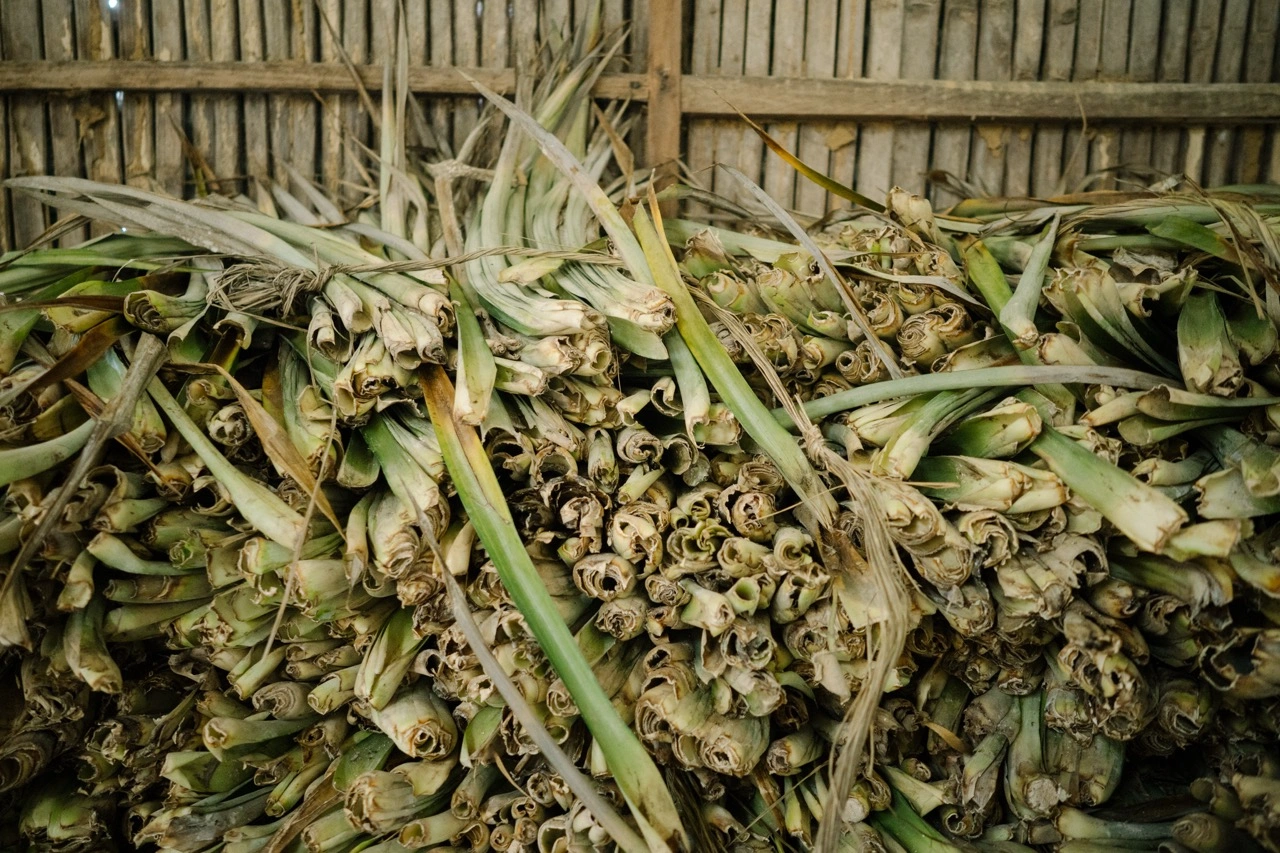
By the 19th century, piña had become a symbol of luxury in the Philippines, worn by members of the local upper class and sought after by Europeans, who often brought the delicate fabric back to their home countries as souvenirs. Today, piña fabric is far more accessible, supported by advancements in processing technology and a growing community of Filipino designers, artisans, and manufacturers who continue to work with and reinterpret the textile. Alongside its visual delicacy, piña has also gained renewed relevance through sustainability, transforming agricultural byproducts into a material that supports both craft and local economies.
“The quality of the fabric is comparable to contemporary textile materials like linen, wool, or silk, considering that we are using agricultural waste as our base material,” shares Chuck Lazaro, Vice President of Asia Textile Mills, Inc., a celebrated textile manufacturer and exporter based in Calamba, Laguna. “Makes me think of these sayings: ‘Luxury made from waste’ or ‘Turning stone into gold!’”
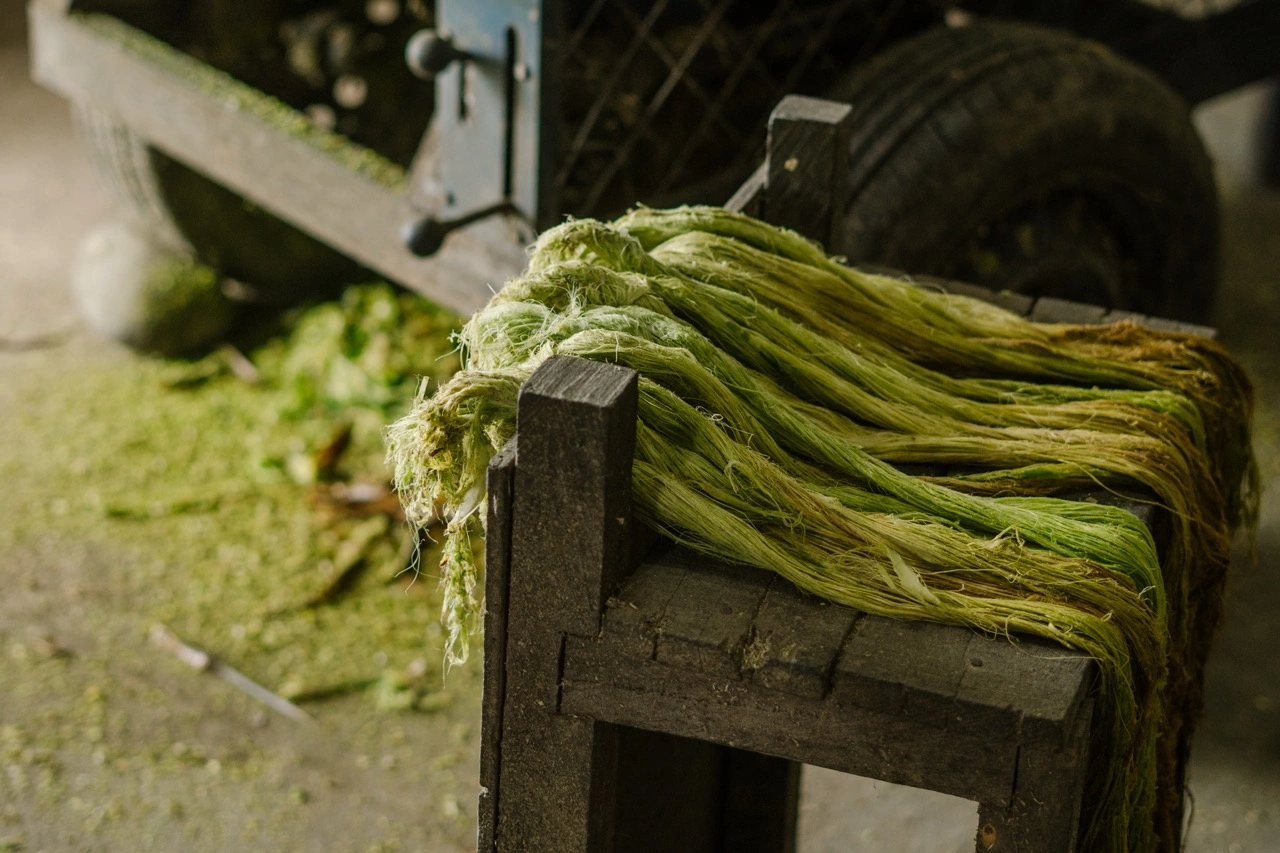
For Chuck, piña is heritage and possibility, simultaneously. Long before it was framed as a sustainability material, it was already part of the country’s textile memory, handwoven into garments that helped define Filipino identity. “This is proof that the pineapple leaf fiber, or PALF, is a strong, lustrous textile raw material,” he says, grounding the material’s relevance not in reinvention, but in continuity.
This continuity is what gives piña its relevance. Once considered agricultural residue, it now exists within a broader system where every part of the plant can hold value. “The main product is the pineapple fruit. It’s a bit ridiculous to plant a pineapple for the fiber,” Chuck adds. “The key is to choose the right leaves to extract the fiber [from] for textile processing. We eliminate dry leaves, and once leaves are harvested, fiber extraction has to be done within five days.” Nothing in the plant is excess—only material whose value depends on how it’s understood.
One Fruit’s Waste Is Another Man’s Treasure
Today, many of Manila’s most notable designers and local brands are working with pineapple in their everyday production processes. One of these is LAKAT Sustainables, a local sneaker company that incorporates pineapple fibers into every part of its shoes. Founder Mike Claparols explains that they use a Hawaiian variety grown locally in the Philippines, chosen for its abundance and adaptability.
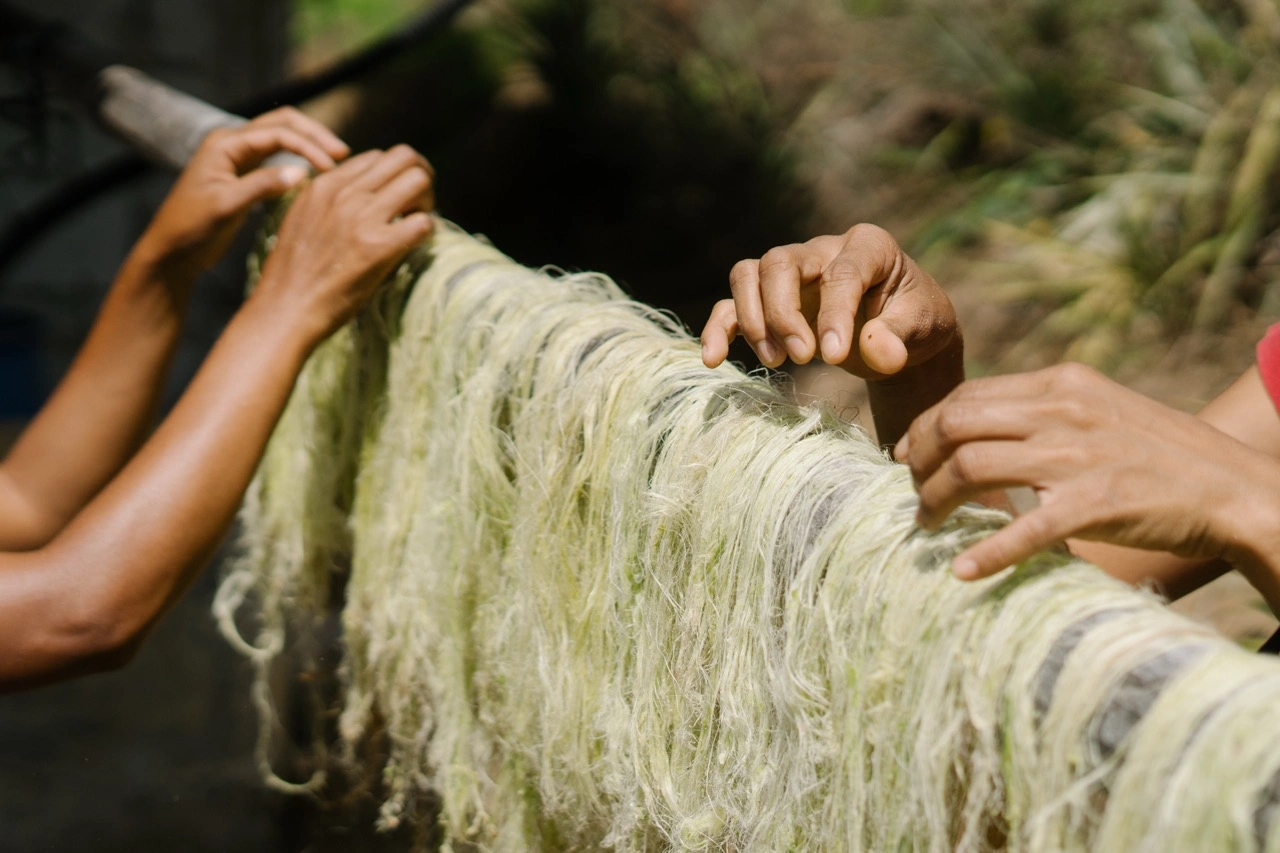
After the fruit is harvested, the leaves at the base are set aside and processed through a solar-powered decortication machine, which strips the fibers and refines them into a higher-value cellulose material: lightweight, strong, and naturally lustrous. The material is then developed into sneakers that have gained a cult following among enthusiasts in Manila and beyond.
Reflecting on the process, Mike describes it as “connection.” He elaborates: “Not just because it’s sustainable, but because it comes from the land. Someone grew it, extracted it, crafted it. It carries culture, labor, and innovation.” Yet more than material transformation, what he wants to emphasize is the significant shift this creates for the people behind the products.
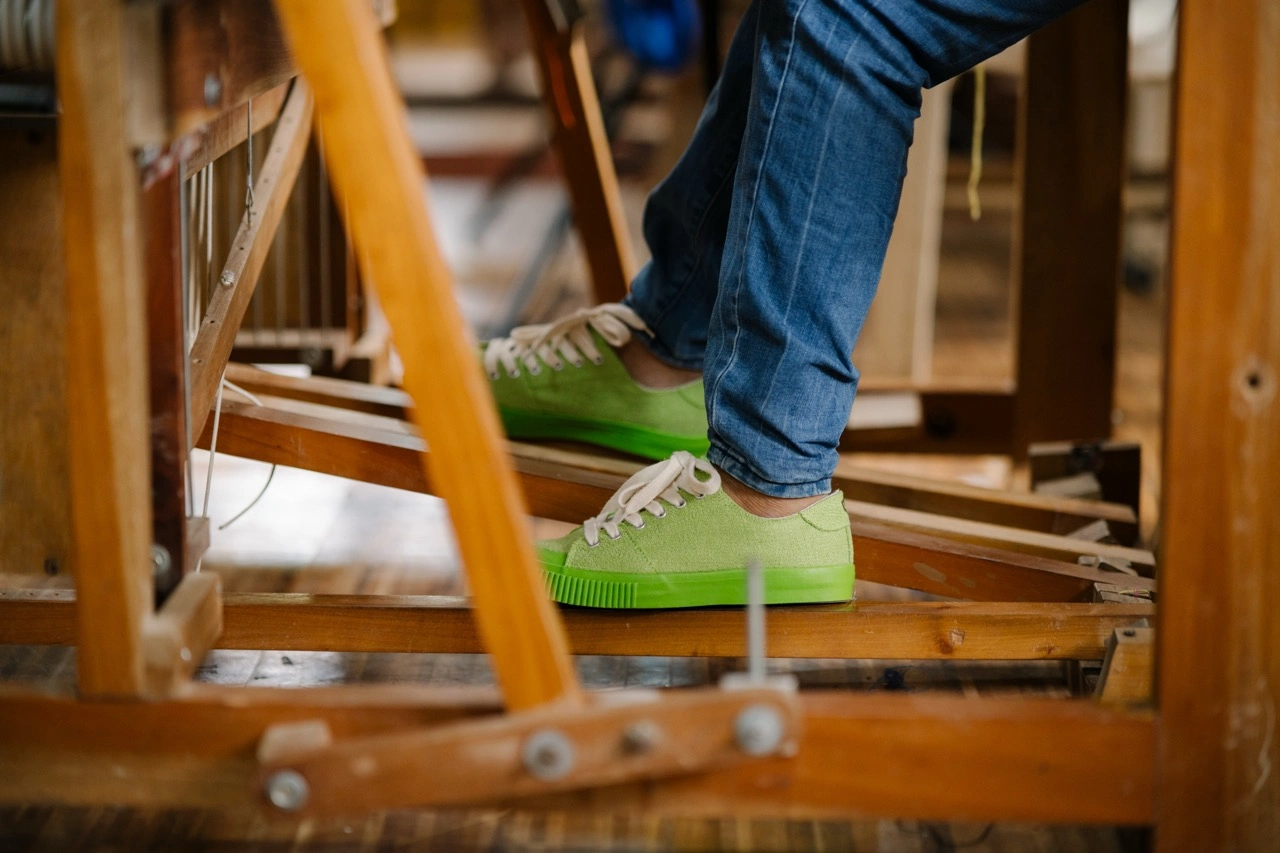
For farmers who grow pineapple, the fiber opens up an additional layer of income beyond harvest season, creating new forms of livelihood within the same land. The plant is no longer defined solely by the fruit it produces, but by the multiple roles it can sustain within a single ecosystem. “It’s upcycling at scale,” Mike shares. “Turning waste into a premium material.”
Finding Purpose In The Everyday
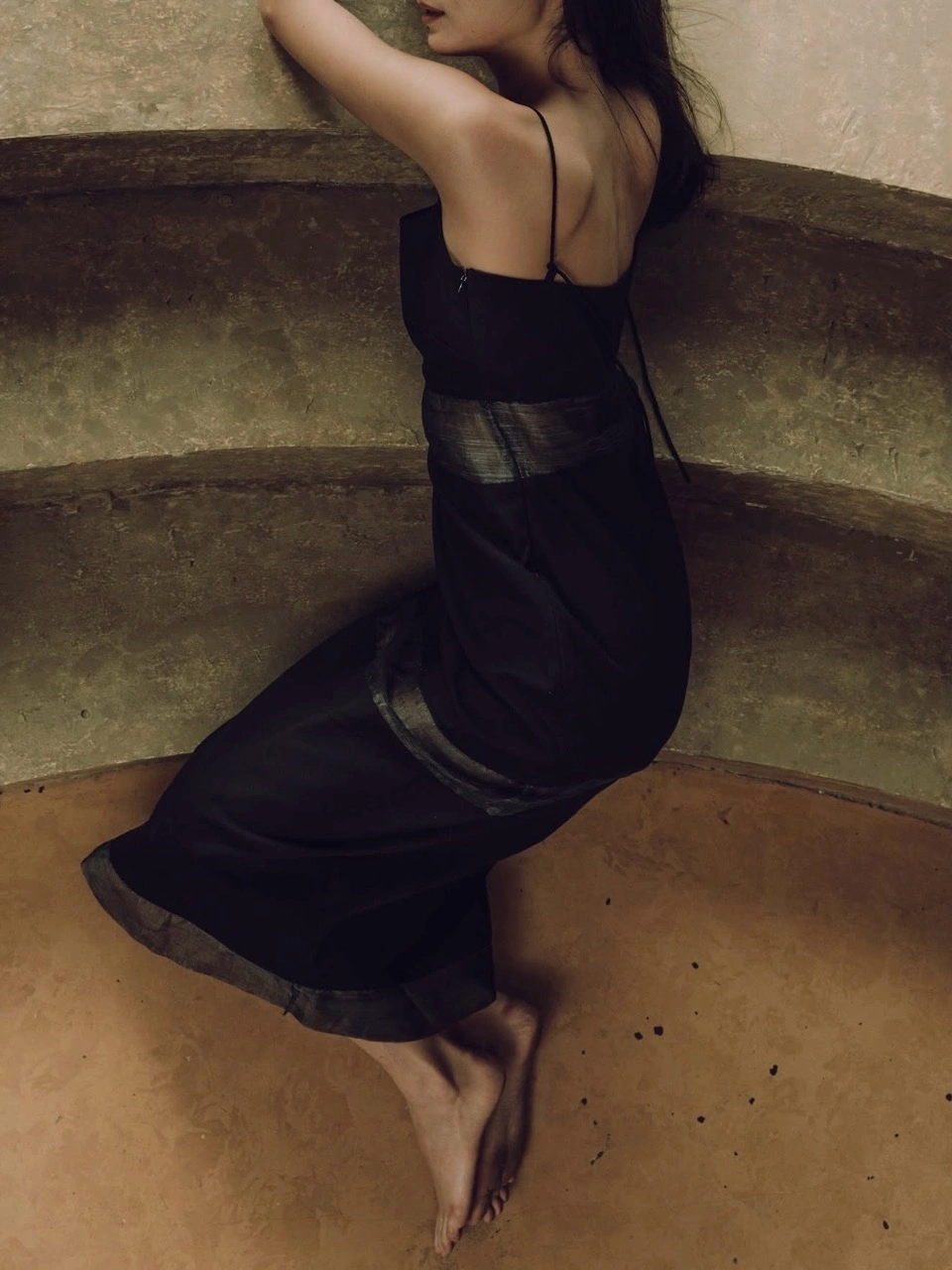
This broader reinterpretation of piña is also present in design as much as it is in production. Araw The Line partners Carla Sison and Erika Ponce, for instance, explore the textile through a vintage-inspired line called The Heirloom Collection, designed for contemporary, everyday wear.
“Traditionally reserved for special occasions, we wanted to bring piña into more wearable silhouettes, pieces that can be dressed up or down,” shares Erika. “We chose forms that hold shape, with sheer elements or nude linings that allow the pineapple fiber and its texture to remain visible. The fabric leads; we follow.”
Rather than redefining piña, the intention is to take it to a more fluid place within everyday life. Once reserved for ceremonial wear and formal occasions, the textile has always been associated with structure, hierarchy, and display. In Araw The Line’s work, that history isn’t erased; rather, it’s integrated into a new form, translated into softer and more lived-in silhouettes that allow the fabric to expand past its initial purpose as occasion wear.
“The origin of piña—its process, its slowness, its connection to land and labor— grounds the design,” Carla explains. “It informs how we approach each piece with care and intention, becoming less about the crop itself and more about honoring what it represents through form and wearability.”

Moving Memory Forward
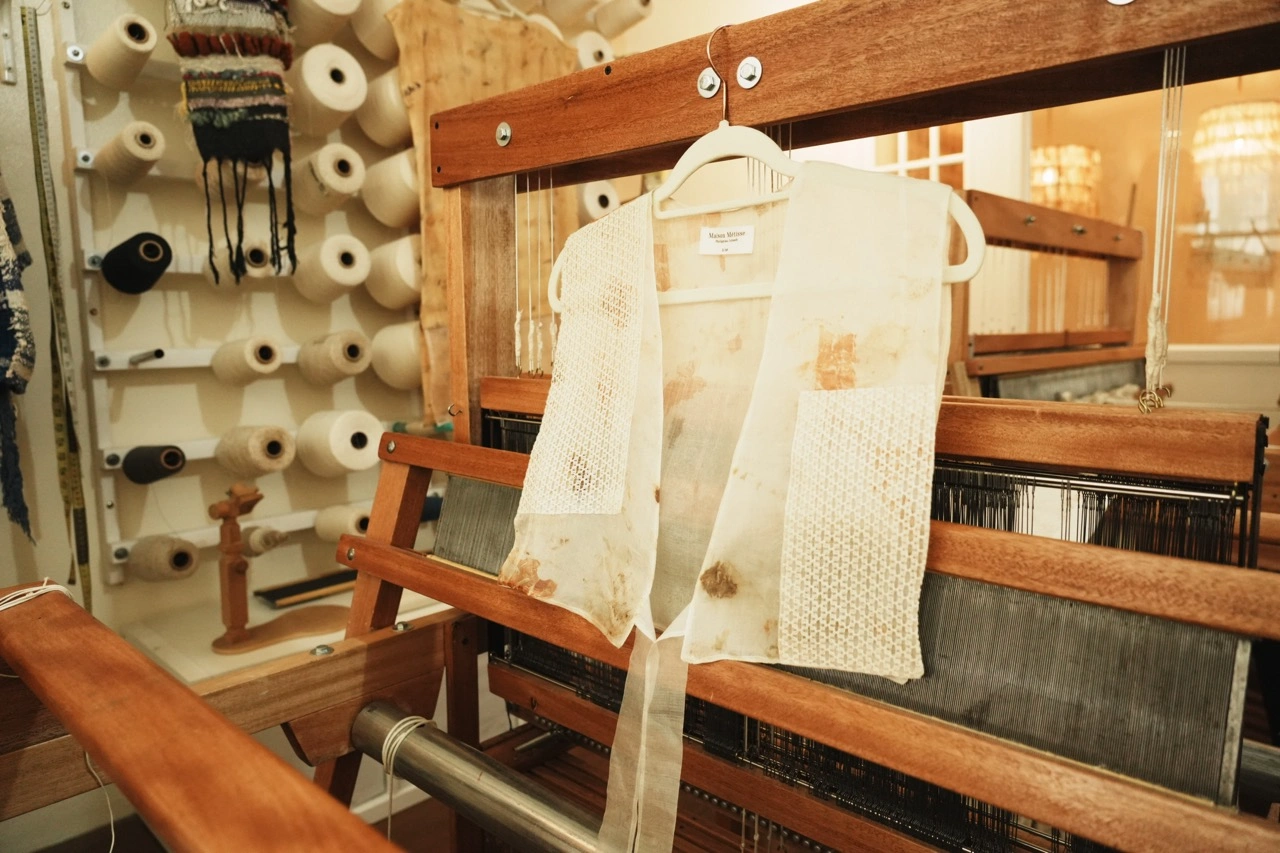
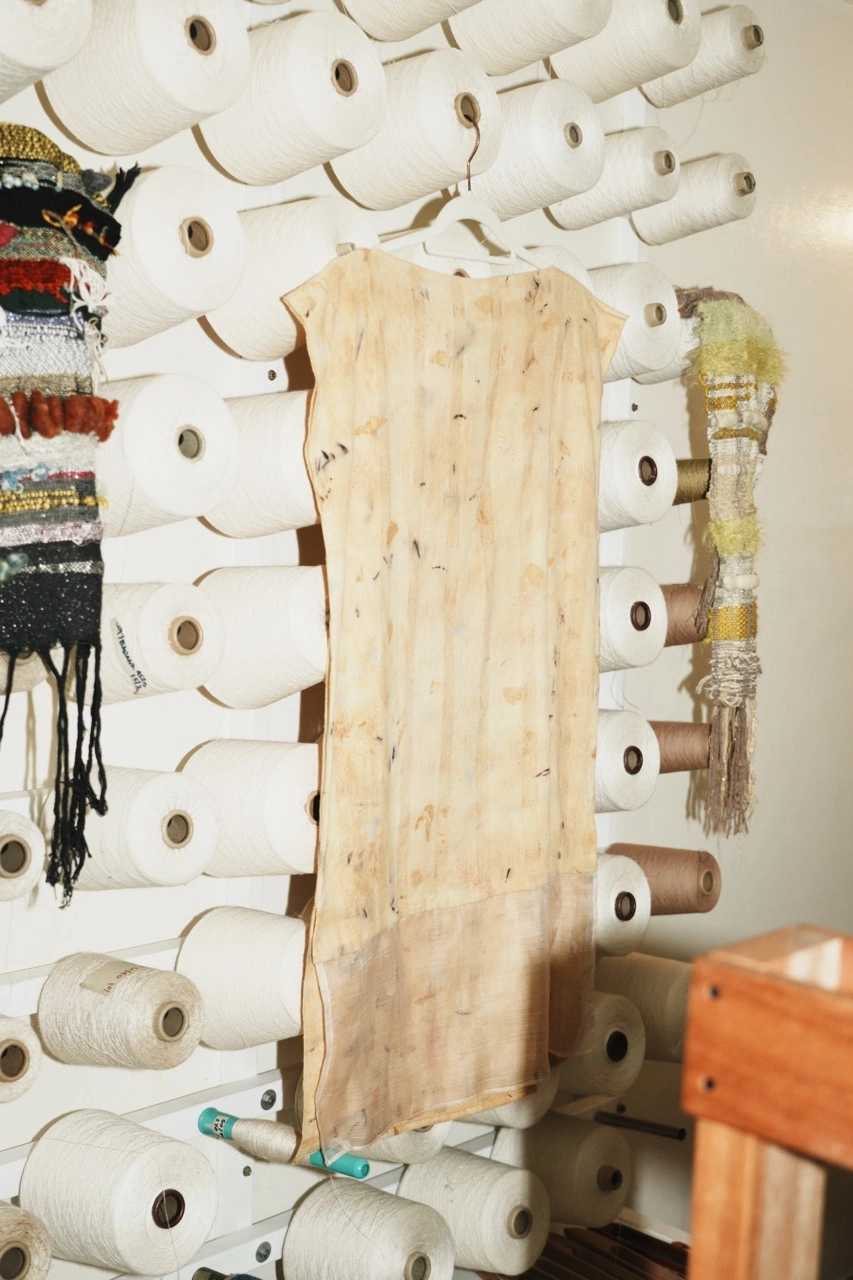
For Adrienne Charuel, founder of artisanal brand Maison Métisse, the passage from plant to fabric is not a break, but a form of recognition. That recognition is what informs her label’s work of honoring Filipino crops and the people who transform them.
“By the time it [piña] reaches us, it is no longer a leaf, but it has not forgotten that it once was,” she says. “It arrives as yarn: already drawn out, already touched by hands that have separated, softened, aligned.” The finished form carries memory forward. “What we receive is never neutral. It is already a place, translated,” she adds.
In wearing piña, that place doesn’t vanish, but accumulates through a presence that’s never singular; it’s an amalgamation of the many hands that have touched a single garment.
“The soil that held the plant. The hands that harvested it under heat and light. The slow, precise gestures that drew it into yarn. The weaver’s rhythm—foot, hand, breath—carried into every line. And then, ours, meeting it again, continuing its path,” Adrienne expounds. “I would want them [the wearer] to feel held within that continuity, as if the material has not traveled alone, but has carried everyone with it. Something intimate. Almost like wearing a memory that does not belong to you, and yet, now, does.”
In an interview with the Louisiana Channel, writer Sally Rooney shares a similar train of thought: “We’re all connected in a network of human relationships all the time which sustain us. People are out in fields picking crops so we can eat; people are making clothing that we have to wear. The idea that you can move through the world as a self-sustaining individual is a fiction; it’s a delusion, really.”
So in the phrase “When life gives you pineapples, make textile,” that “you” should really be “us.” Piña isn’t made or used in a vacuum. It goes back to what Mike Claparols of LAKAT Sustainables mentioned earlier: “connection.”
When life gives us pineapples, make… what? Textile, utility, beauty, livelihood, community, memory, living history? All of the above, actually. Like the fabric itself, the act of sustaining tradition and each other is strongest when we embrace multiplicity, proving just how much can emerge when we make the most of what we’re given, together.
Banner image features collection of Araw the Line, photography by Gab Villareal, courtesy of Araw the Line
Frequently Asked Questions
Piña fabric is made from fibers extracted from the leaves of the pineapple plant (Ananas comosus). Rather than using the fruit itself, artisans process the leaves—often considered agricultural waste—to create fine, translucent threads that are woven into cloth.
Piña is prized for its delicate appearance, natural sheen, lightweight feel, and labor-intensive production process. Historically worn by the Filipino elite and used in garments such as the barong Tagalog and terno, it remains one of the country’s most prestigious traditional textiles.
Piña weaving has long been associated with provinces such as Aklan, Iloilo, Capiz, and Antique, where generations of artisans have preserved and refined the craft.
Yes. Piña fabric is often regarded as a sustainable textile because it utilizes pineapple leaves that would otherwise be discarded after fruit harvest. By transforming agricultural byproducts into valuable materials, piña supports waste reduction, rural livelihoods, and traditional craftsmanship.
While traditionally reserved for formal attire, piña is now being reimagined by contemporary Filipino designers and brands. Today, it can be found in ready-to-wear fashion, accessories, home décor, and even innovative products such as sneakers, allowing the textile to remain relevant for modern lifestyles.