The internet’s recent fixation on one little Japanese macaque actually reveals a lot about our relationship with loneliness, connection, and underdog stories.
Punch the baby Japanese macaque—or “Panchi-kun,” as he’s affectionately known in his native Japan—has taken over the internet. Why write about it? It’s not the first time an adorable animal has dominated headlines (nor will it be the last). In recent years alone, we’ve had Moo Deng, the tenacious, bodacious baby pygmy hippo; and Pesto, the delightfully rotund baby emperor penguin who far exceeded the expected size of others his age and species. Baby animals are the only thing the internet can agree on, and by extension, one of the few things that transcends borders, languages, and political views. Cuteness sells, and we can end it at that.
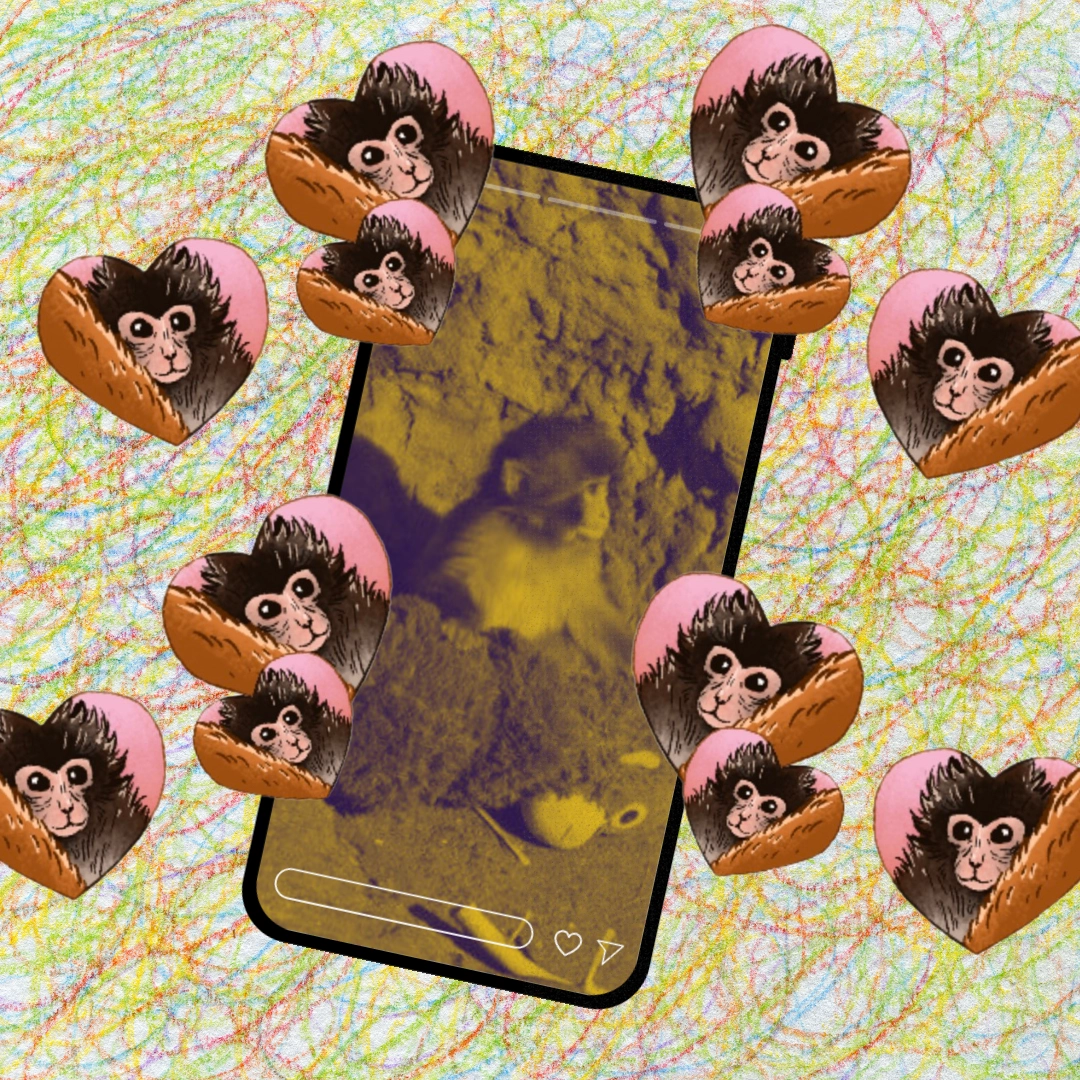
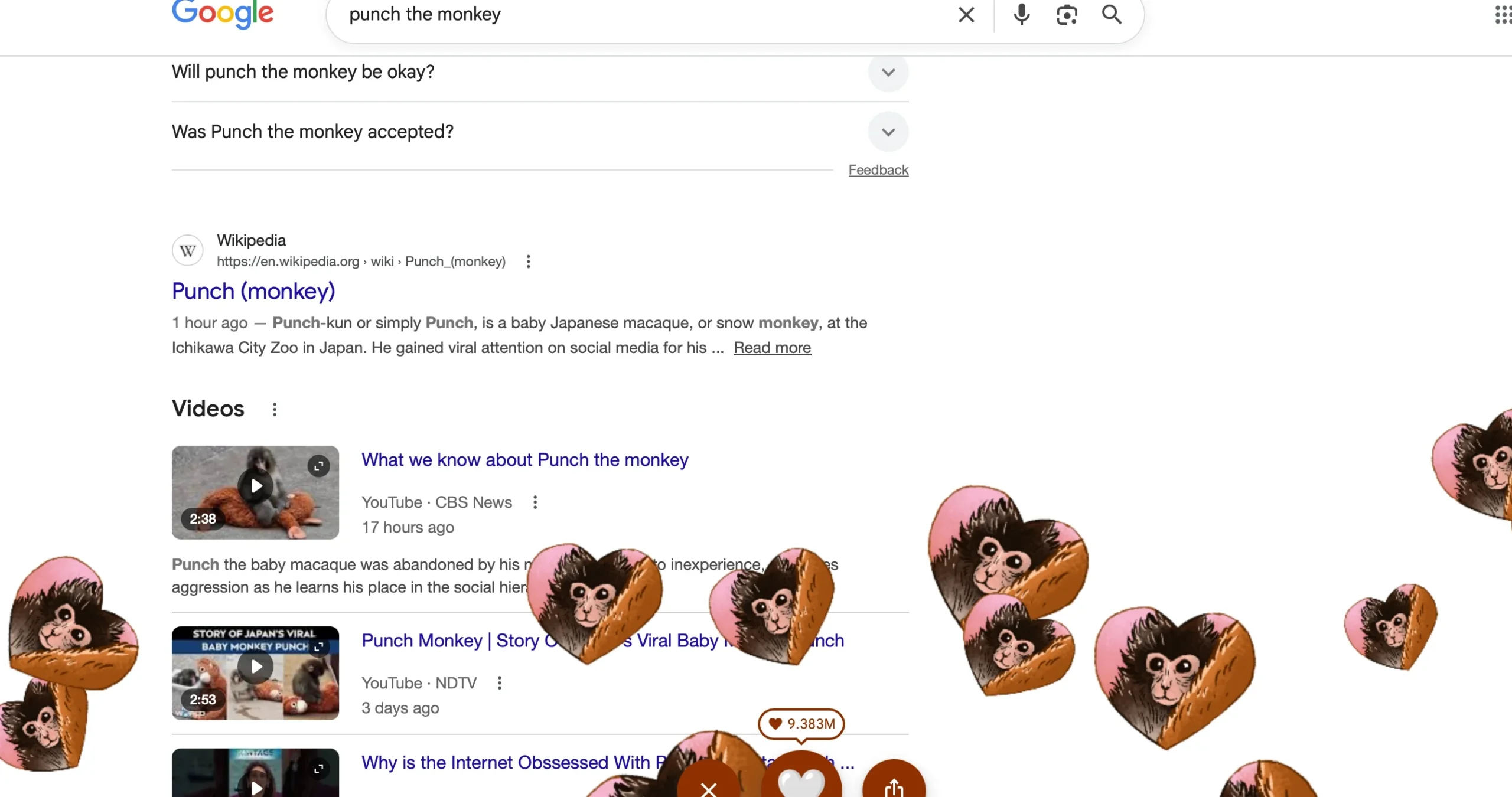
But no, Punch is a phenomenon, and not because the internet and brands are milking his virality for all it’s worth. (At the time of this writing, you need only search his name on Google for cartoon versions of his face to rain down your screen, followed by a rising count of nine million likes indicating the number of times people have searched him up and clicked the interactive heart button on the screen.)
Punch is a wound. Punch is a comfort. Punch is a mirror. Punch is a conduit for the kind of “kiss-your-neighbor-hold-hands-fight-for-world-peace” unity and compassion you only ever see in sporting events, concerts, and sad film screenings. Even those don’t receive this level of fervor. Punch is, simply put, us. Let me explain; but first, some background.
READ ALSO: The Price Of Loving A Pet
In Ichikawa Zoo, One Little Monkey Is Left Behind
You can skip this part if you’re already caught up on the details. Undoubtedly, even those disinterested in the affairs of a small primate are likely familiar with the current wave of Punch madness. But for the sake of those who aren’t, and to get some facts straight, here’s a quick rundown.
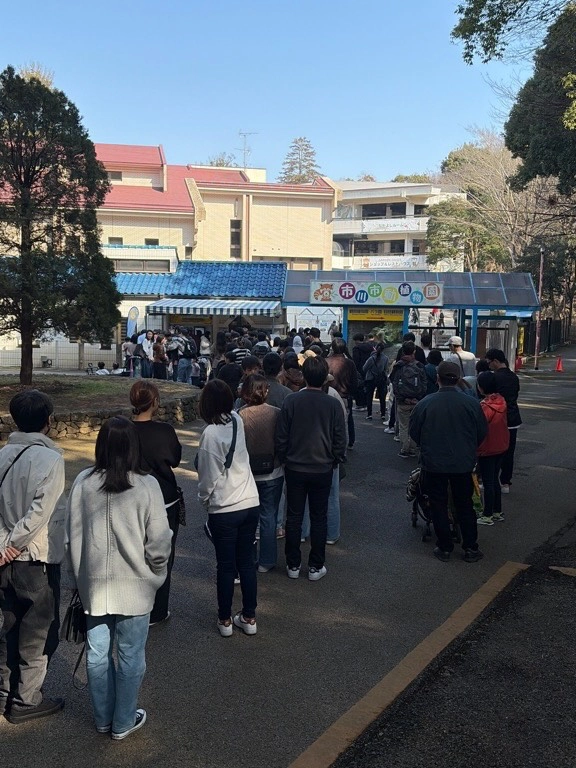
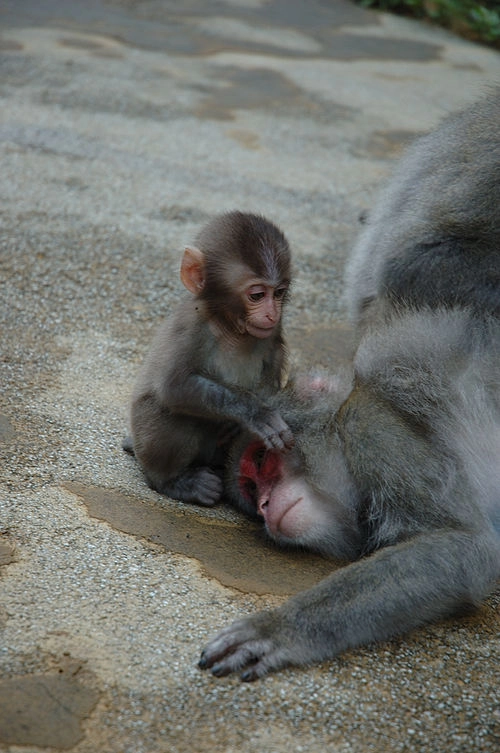
Punch was born in Ichikawa Zoo—located at the northern part of Ichikawa City in Japan’s Chiba prefecture (which runs along the west border of Tokyo)—on July 26, 2025. He weighed a mere 500 grams. His mother, unfortunately, abandoned him soon after, leaving him solely in the care of resident zookeepers Kosuke Shikano and Shumpei Miyakoshi. You can see how attached he is to them (literally and figuratively) in various videos as he clings to their limbs whenever they enter his enclosure.
Now, the internet likes to joke that they want to have a strong word with his mother, and many people are holding personal vendettas against her and what they perceive as deadbeat behavior. But let’s try not to anthropomorphize the situation too much; it’s nature’s way, for better or for worse.
According to his zookeepers, and primatology PhD candidate Brogan Stewart of Concordia University in a CBS News interview, Punch’s situation isn’t the result of some pointed act of cruelty, though it is a rare case. Japanese macaque females generally make fantastic, hands-on mothers (nursing for as long as two years…try to imagine that). However, there have been recorded cases of abandonment, and with Punch’s mother, the reason seems to be inexperience and exhaustion. Monkey see, monkey do: primates learn by example. If a macaque lacks the experience or hasn’t been very exposed to other family members caring for their own infants, then they don’t have much to work with, and that can be overwhelming for first-time mothers like Punch’s.
Punch The Underdog
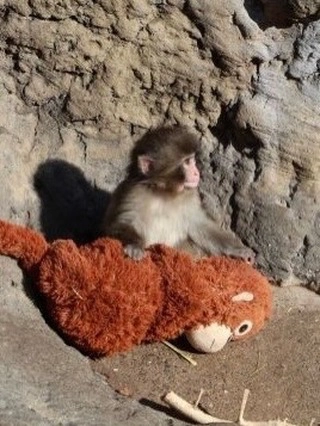
Yet it wasn’t only the loss of a mother that had the internet sobbing over the tiny monkey. In what can only be described as the plot of an emotionally manipulative Pixar piece, other monkeys have been recorded shoving him, chasing him away, screeching at him, and altogether “rejecting” him. But that’s not all. The real kicker here is that darn IKEA orangutan plushie he carries around as emotional support—because it, or she, is all he has in this harsh monkey world.
See, because baby Japanese macaques need a mother to cling to, both as a means for comfort and building muscle, zookeepers decided to give Punch a “substitute.” They cycled through various options, but what he ended up choosing was the smiling, orange primate with noodle arms for hugging and grabbable fur.
When videos showed Punch carrying the toy, snuggling against it, and even using it as a shield after running away from his hostile neighbors, the internet went ham. Comments sections flooded with “We ride at dawn” jokes, crying emojis, offers of adoption, choice words for Punch’s bullies, “I’d die for him” statements, and distressed cries of people claiming they haven’t slept well thinking about his plight. If it all seems like a bit much, yeah, it is, but that’s the internet for you. And, really, anyone with a heart would feel for the guy, but more on that later.
Public concern got so bad that Ichikawa Zoo had to release an official statement with the urgency of a presidential announcement, one that arrived on the heels of a video update showing Punch getting scolded and dragged by an adult monkey after trying to interact with a fellow baby monkey. As it turns out, zookeepers suspect the adult (a female) was a concerned mother who felt that Punch was annoying her offspring.
It’s tempting to want to point fingers and find a “common enemy” in this situation, but the truth is that these animals have their own ways of going about things, hard as it might be to watch. Like how a human mother might chastise a child to prevent bad behaviors in the future, so too must mother monkeys, even if their methods are more unconventional.
“Aggression is very common. It’s in every single Japanese monkey group, and it’s actually how they communicate with each other. If he had big gashes or was bleeding and had multiple injuries, then it would be a concern,” Brogan Stewart shares in the aforementioned CBS interview. “But how it is right now, it’s very common. Japanese monkeys have a very strict social hierarchy, where the highest ranking female gives birth to the second highest ranking female. So it’s quite possible that Punch’s mother was lower ranking. He’s getting more aggression because he’s learning where he fits in the social hierarchy, and he’s learning how to behave.”
Yet even with these explanations, the internet remains stressed, monitoring the macaques’ ups and downs. On some days, he seems to have finally found a family, monkeys grooming him or taking him into their groups. He relaxes, for a while, and so do audiences, until he’s kicked around, pushed, and attacked once more. Repeat the cycle.
If You Only Knew How Much The World Loves You
Now let’s set aside the facts and biology to focus on the global obsession. Punch’s arduous journey of “fitting in” has transformed him into an internet muse. Not meme. Muse. There’s no element of ridicule here. Across every corner of the internet, I’ve seen nothing but support for this monkey. No one has turned him into a joke, and even the comedic videos meant to draw laughs are all about defending the little guy. I can’t remember the last time I’ve seen this many folks stand so thematically united behind a single cause.
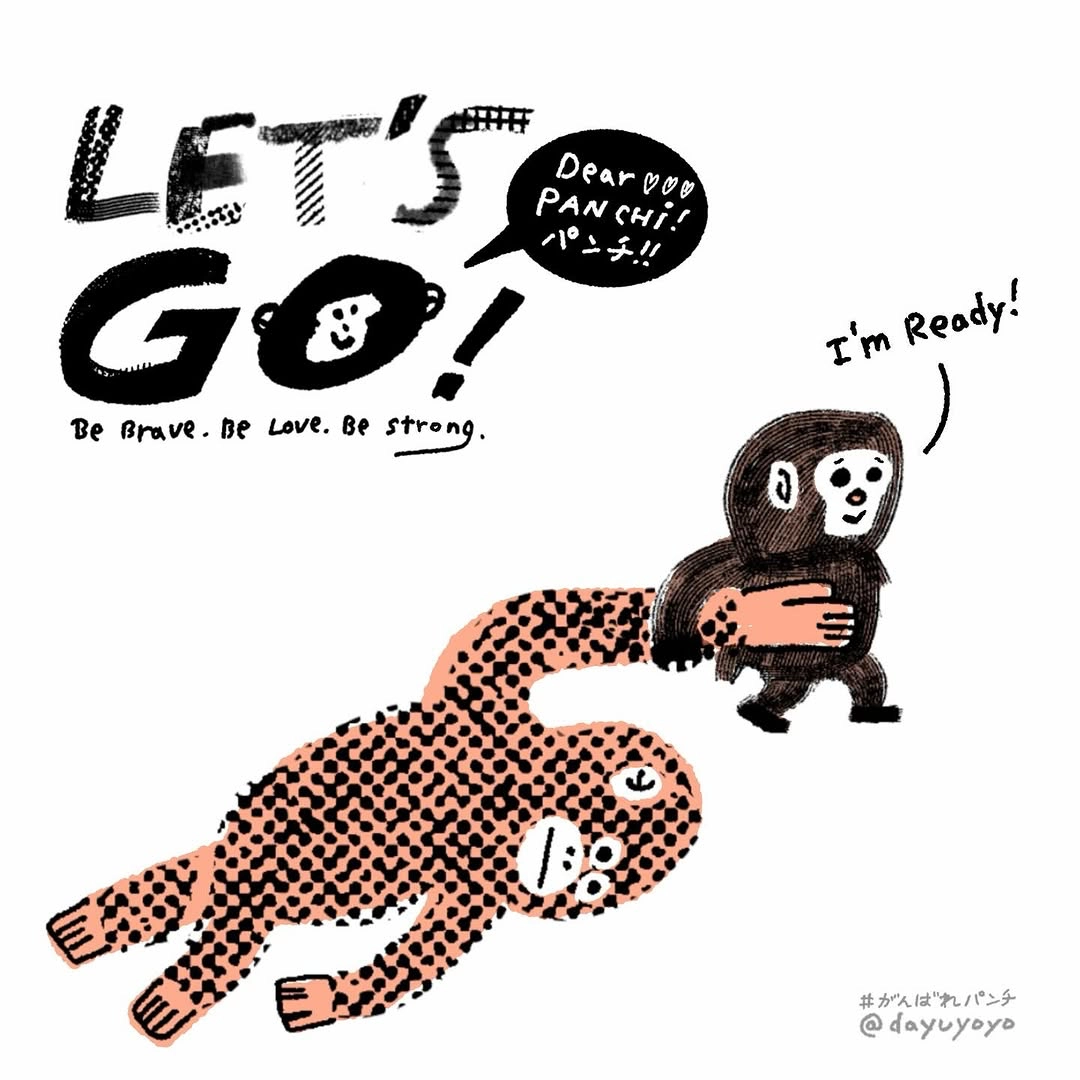
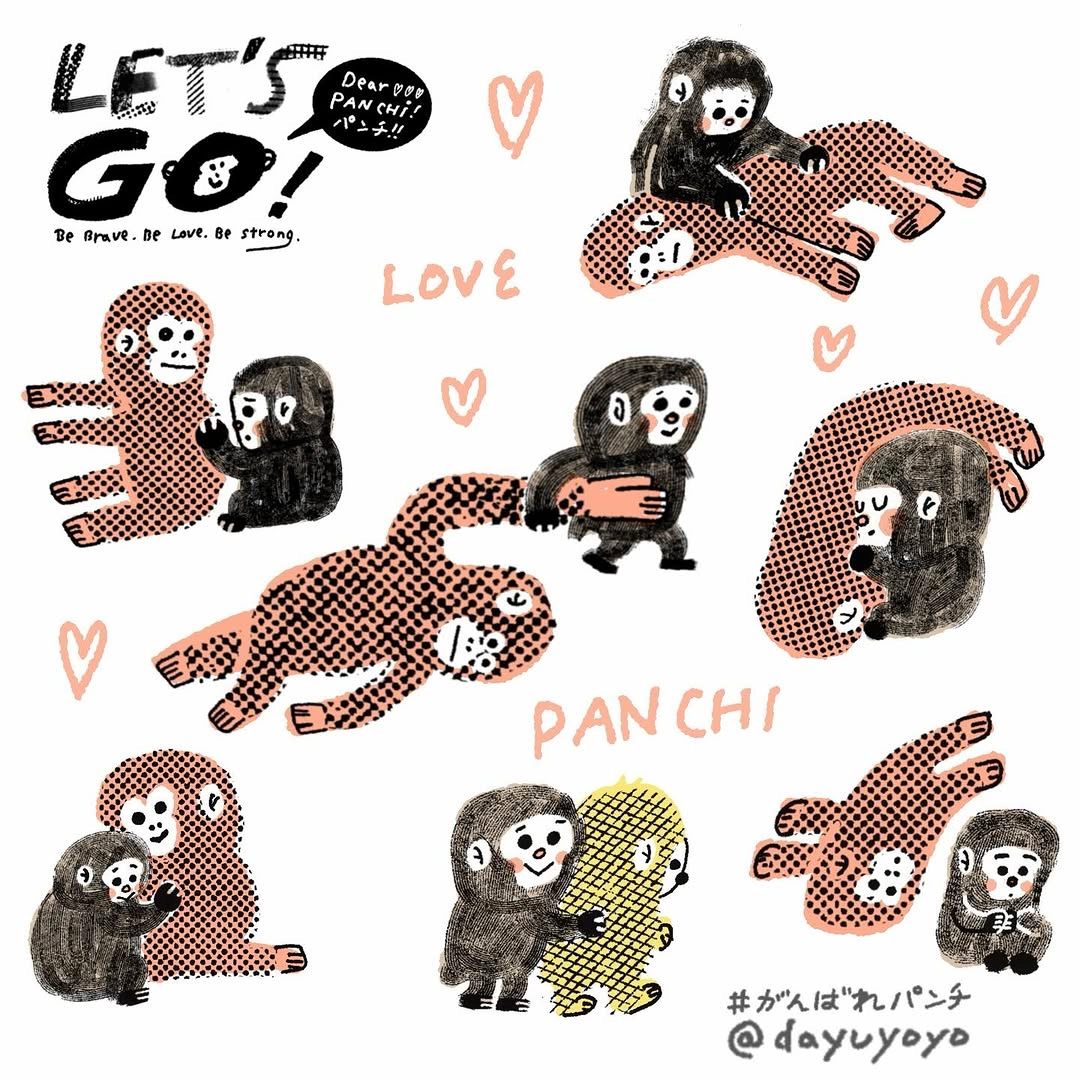
People are composing entire songs about Punch. Not even today’s heartthrobs are receiving the same level of well-crafted video edits, all set to sad-girl anthems, that the monkey inspires. Full blown illustrations abound, depicting the tiny monkey and his now recognizable stuffed toy. Locals and tourists alike are now filling queues in Ichikawa, all hoping to catch a glimpse of Punch. Meanwhile, official news channels are asking staff to cover and update audiences about his situation like someone’s life depends on it (well, countless people will argue their sanity actually does depend on it). IKEA is definitely having the best marketing campaign it’s had in a long time, its orangutan plush toys selling like hotcakes in various locations.
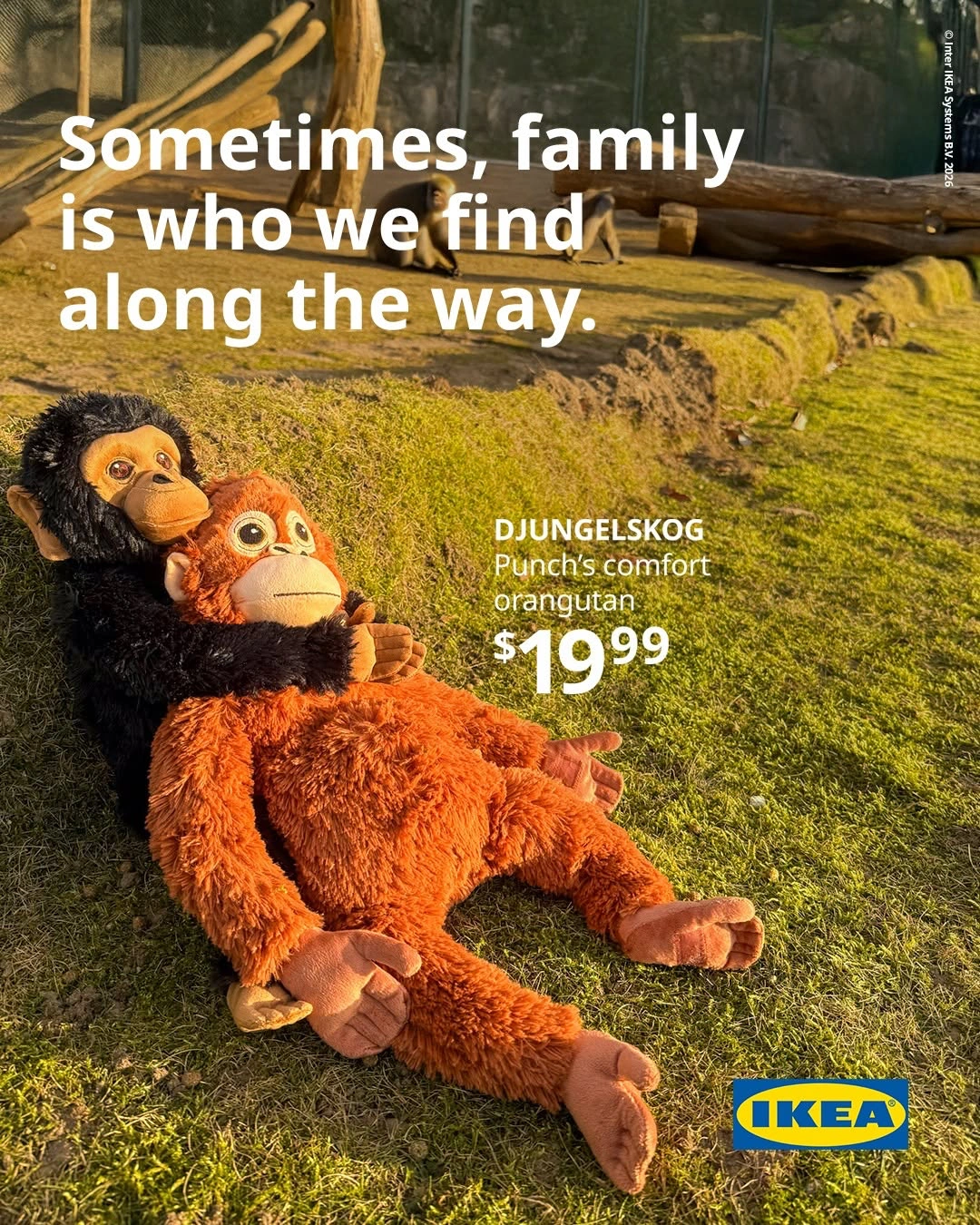
Punch’s rise to fame was random, as most viral things are; the world latches onto one thing and fixates on it for a period of time. Baby animals get abandoned and hurt every day without much fanfare—it just so happens that Punch’s case is well-documented and favored by the algorithm. Yet there may be more to it than that. What makes him a poster child for this level of fame and collective compassion is the fact that we, whether we realize it or admit it, understand him. We can’t help but root for him because he’s a mirror to the most downtrodden parts of ourselves.
Punch The Mirror
We’ve all felt lonely, so we understand how important it is to have a support system. The orangutan plush is a focal point here, a shared motif. Children are given toys to hug as a form of soothing, and Punch was given this one for much the same reason. It’s the only thing in his world he can count on, this fabric mother who’s all stuffing and stitches. He treats her as if she’s real. He holds her, hides behind her, reaches for her when things grow overwhelming.
I think we all had to create or turn to a “plush mom” of our own, at different moments and stages of our lives. Maybe it was, literally, the childhood stuffed toy that stood guard in the dark. Maybe it was an imaginary friend, a grade school teacher, a parent figure—someone who wasn’t formally granted the title of “parent,” but assumed the role all the same, whether our own were present or not. We can’t help but nod in sympathy as we see Punch wholeheartedly embracing this non-living, inanimate thing, because we know how much it means to have something when the world feels cold, even if that something is an approximation.
We don’t want Punch to be alone because we don’t want to be alone. His problems become ours, even if, as I’ve said, he’s a monkey, not a human. This impulse to anthropomorphize, and empathize, is a habit we’ve long relied on to bridge the gap between ourselves and objects or creatures. It’s our way of connecting with Punch, and on a broader scale, maybe even those wounded parts of ourselves that know what the monkey is going through.
Punch is also the embodiment of an interesting paradox between fending for oneself in a harsh world and existing within a much larger web of care, larger than what we can oftentimes comprehend.
The thing is, we can’t really do anything about his situation. We’re, for lack of a better term, helpless. And that’s why everyone’s going (forgive me for the pun) bananas over him: it’s all we can do when they see a cute baby animal getting pushed around. But as zookeepers and primatologists have stated, Punch will get back up, dust himself off, and continue learning how to integrate himself into monkeyhood. He’s been making progress, with other monkeys seen grooming him (a social bonding act) and welcoming him into the pack. They don’t always get along, but that’s nature, that’s life. (People are joking that Punch’s new fame has garnered “fake friends,” a hilarious thought, but guys, remember…they’re not humans.)
What we can take solace in is the fact that there are always people who care, even if we can’t see them. Look at Punch: the whole world is watching him, rooting for him to succeed, to find happiness and acceptance. Surely, the same applies to all living things. It’s all rough and tumble out there, but someone’s always going to be in your corner. In certain cases, it’s the entire internet. Punch doesn’t know how much he’s loved outside the borders of his zoo, but that’s okay—he’ll keep going anyway. That’s the beauty and arc of your classic underdog story, and that’s why so many of us are drawn to it.
Rather than seeing Punch as a victim, perhaps the better thing to do is to recognize the fortitude it takes to be his lovely self. As Ichikawa Zoo writes in a statement: “While Punch is scolded, he shows resilience and mental strength. […] We would like you to support Punch’s effort, rather than feel sorry for him.” So, as the Japanese say when they want to say “best of luck” or “hang in there”: gambatte, Panchi-kun!