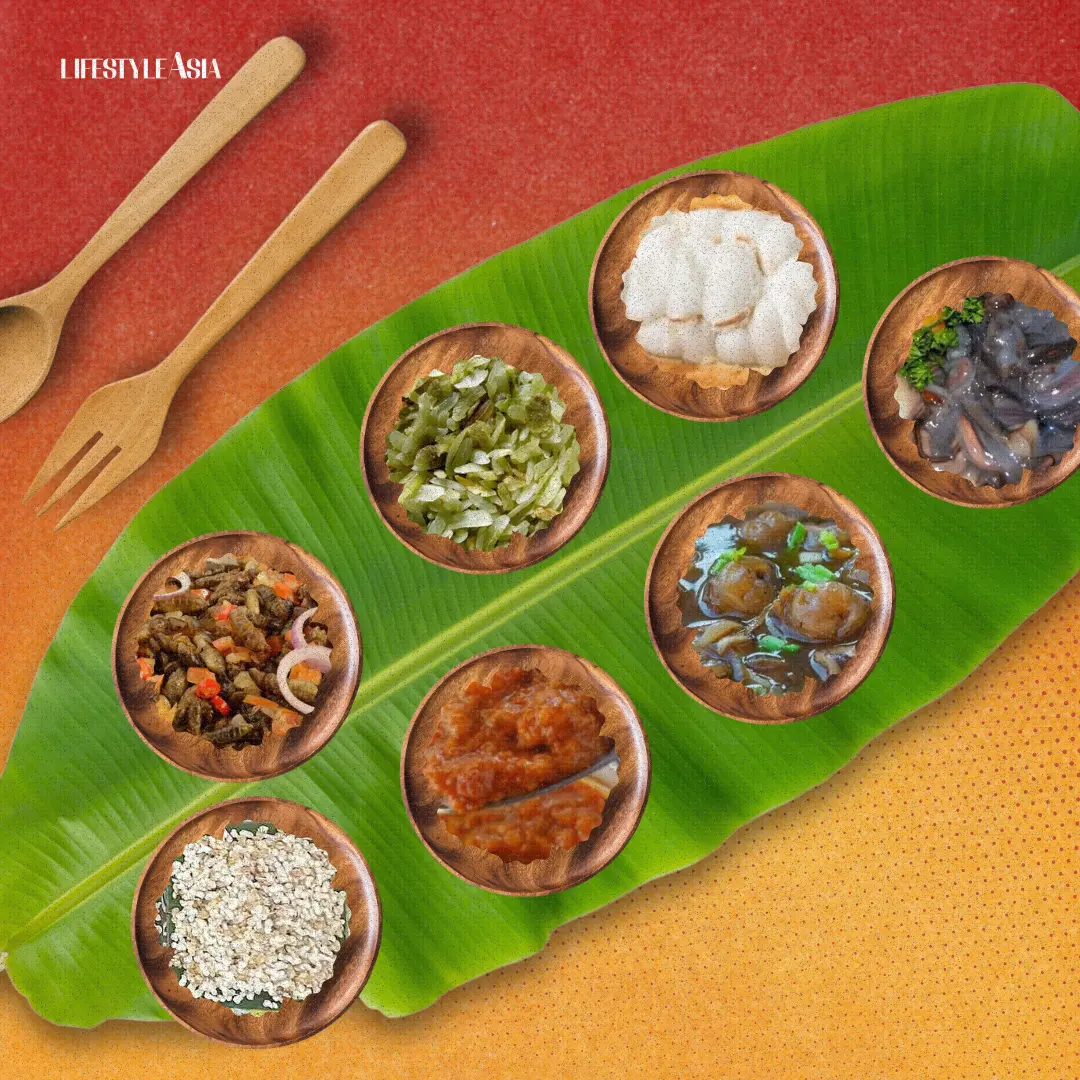
From stir-fried mole crickets to soup made with bull’s genitals, these eight dishes and ingredients are shining examples of the richness (and peculiarities) of Filipino cuisine.
The Philippines being composed of 7,641 islands and 18 regions, all of which boast their own histories and traditions, it’s no wonder the country’s cuisine is as rich as it is. There’s depth to what we call “Filipino food,” a broad term that encompasses everything from comfort staples like sinigang to rarer, more peculiar dishes and ingredients that showcase Filipino ingenuity and creativity.
These eight culinary treasures in particular are examples of the breadth of local cuisine; some very strange, most difficult to acquire, and all of them truly singular.
READ ALSO: Surprising Origins: Some Of Today’s Luxury Delicacies Weren’t Always For The Wealthy
Duman Rice
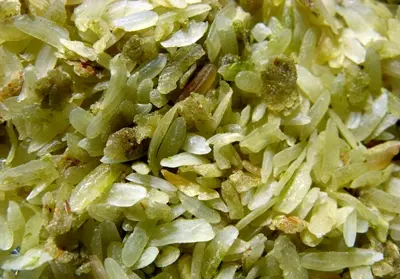
Duman is a seasonal heirloom rice from the province of Pampanga, most prominent in the municipality of Santa Rita. “Seasonal” doesn’t begin to describe the rarity of this varietal, and the laborious nature of harvesting and processing it. Also known as lacatan malutu in Kapampangan, this fragrant rice possesses a unique, green-gold color that distinguishes it from other varieties. This is because the grain is harvested before full maturity, the green color coming from the younger kernels that are still attached to its husks.
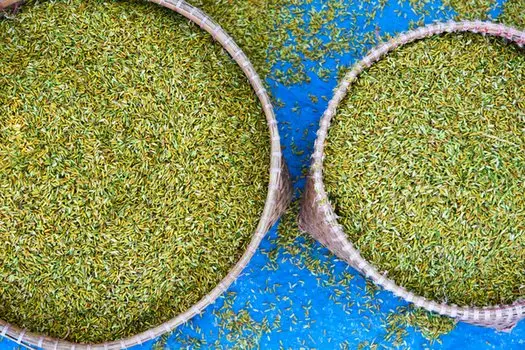
Duman can only be acquired once a year, namely during the colder months, as harvesting season usually takes place in November. Due to its intensive production process, high costs, and seasonality, very few farms produce it—in a 2024 documentary by FEATR, it was revealed that only one family from what was once five clans continues the longheld tradition, led by Renell “Mang Galang” Bucud.
The word “duman” was first recorded by Fray Diego Bergaño in the 1732 book Bocabulario de Pampango en Romance y Diccionario de Romance en Pampango (Vocabulary of the Kapampangan Language in Spanish). Father Venancio Q. Samson eventually translated a later edition of the entry in 2007, released by the Center for Kapampangan Studies. The word even has an associated verb, pamagduman, which refers to the process of gathering, pounding, and processing grains for duman.
Grains must be harvested very quickly in the early dawn, as any exposure to sunlight will age them. Husks are then beaten on a hard surface to release the young kernels, which are mixed into water, cooked for around 35 minutes, then pounded in wood barrels for hours. The nutty and sweet rice can be used to create rice cakes, or mixed with other dishes and beverages like hot chocolate (tsokolate).
Arubong Kamaru
Yet another rare delicacy from the cuisine of Pampanga, Arubong Kamaru Adobong Kamaru in Tagalog) refers to a dish made of mole crickets, cooked adobo-style (in a marinade usually composed of vinegar, garlic, soy sauce, bay leaves, and peppercorns). Of course, the insect’s head and wings are usually removed prior to cooking, leaving only the meatier body.
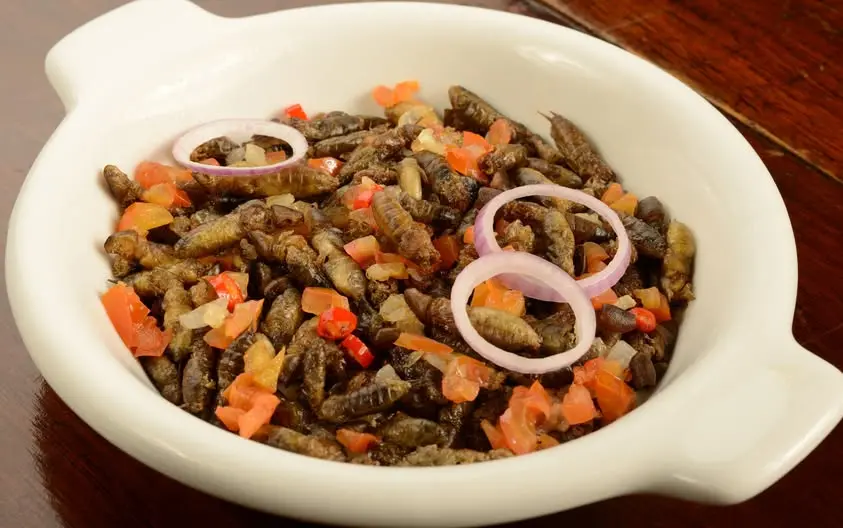
The dish is oftentimes a seasonal one: the mole crickets are found predominantly in rice fields, feeding on grains and leaves, but they spend most of their lives burrowing underground (hence the name). They’re most prevalent during the harvest season, and those who seek them as delicacies often get them near field borders—where they usually congregate after tilling.
The insects can be cooked in different ways, the most common being either stewed, or sautéed then stir-fried to a crisp (the latter a preferable option for people who want to try the bugs without feeling like they’re eating bugs). Kamaru has a unique flavor profile, somewhere between bacon and shrimp, making for tasty albeit exotic Happy Hour cuisine.
Taba ng Talangka
The last food item in this Pampanga trifecta is taba ng talangka (crab roe and fat), a specialty that’s both an ingredient and viand. While it doesn’t sound as strange or rare as the other things on this list, it’s the product of a rigorous preparation process, which makes it a prized staple in Filipino cuisine.
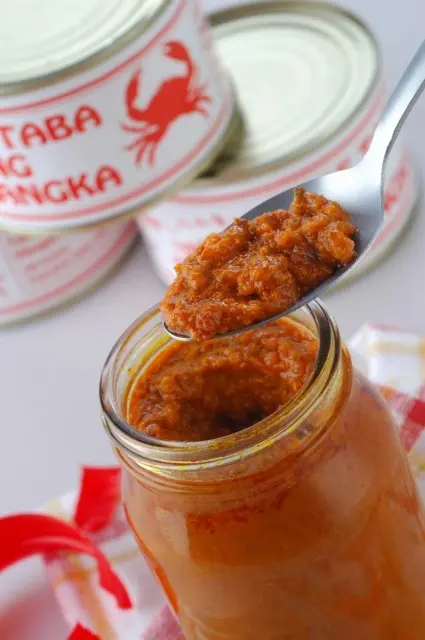
To make one small to medium jar of taba ng talangka, you would need roughly a bucket or two of small, female river-swimming crabs, which can be found in estuaries and even ponds. Then there’s the process of segregating and quality-checking these crabs one by one, which entails smelling them to ensure none are dead, since any form of rot can ruin an entire batch of taba ng talangka.
Crabs are then salted and pickled for a few hours before they’re squeezed for their coveted roe and orange tomalley. Squeezing these small crustaceans, as one can imagine, is a painstaking process—all for maybe a full jar of the delicacy. Makers usually use an acidic agent like vinegar, calamansi, or dayap (lime) to take out the fishy taste of the crab roe and fat, then sauté it over low heat with oil and garlic until it possesses a thick texture, before bottling it up.
The result is a rich, umami-packed paste that can be used to cook all kinds of dishes, from pastas to appetizers. Though for the initiated, nothing beats the simplicity of spoonfuls of taba ng talangka on hot, white rice, which is a comfort meal in itself.
Abuos
Ants aren’t most people’s idea of a delicious dish, much less their eggs. But in Ilocos region cuisine, the eggs of weaver ants (referred to as hantik) is considered a delicacy—ant caviar, if you will. Known locally as abuos, these cream-colored eggs are usually sautéed with other ingredients like onions and tomatoes, or added to dishes like soups (more mature or hatched eggs can have a sour flavor, which is why they’re sometimes used as souring agents). Texture-wise, they’re similar to roe, possessing a soft texture that pops in the mouth.
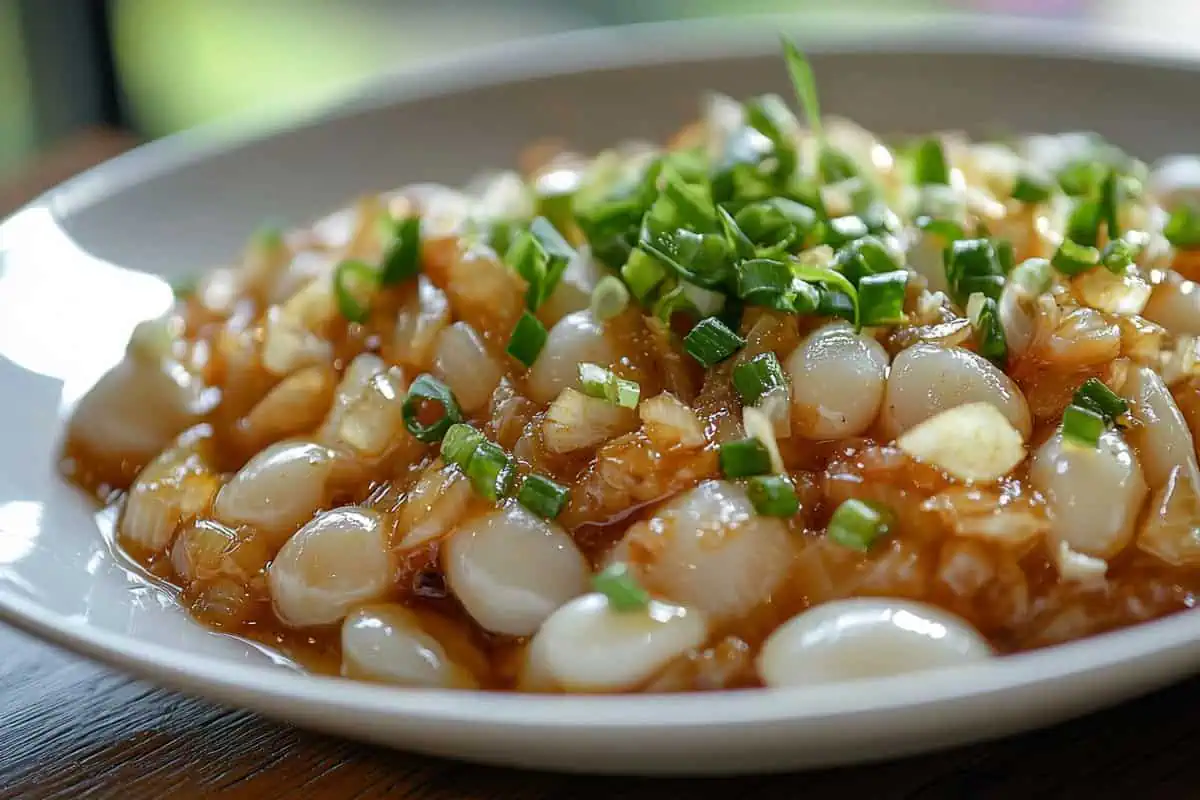
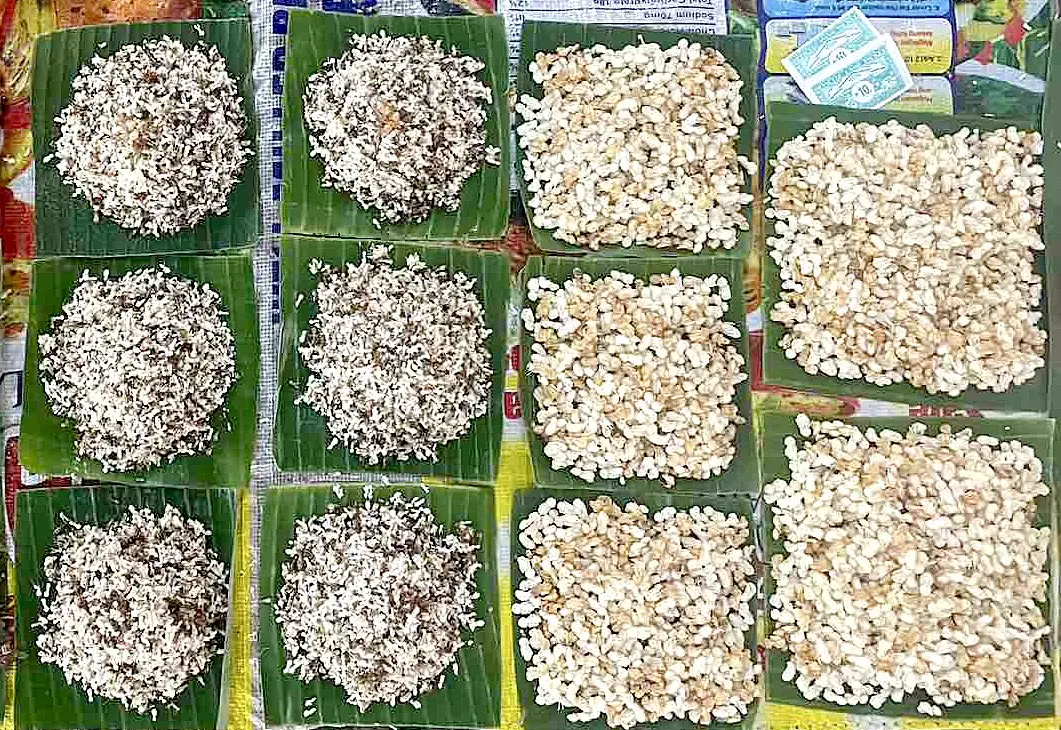
It goes without saying that abuos isn’t a mainstream delicacy, and the process of getting these eggs is harrowing for those who fear the stinging bites of the large, infamous red ants that guard them in nests. Those who hunt for these eggs need to prepare themselves for possible bites, and can spend hours trying to gather them during the hot and dry summer months. Eggs must also be cooked immediately after they’re acquired, as they can easily get spoiled. Is it worth it? As an alternative food source packed with protein, it probably is to those adventurous enough to try it.
Tamilok
Would you eat a woodworm? In parts of the country, especially those with an abundance of mangrove forests like Palawan, the answer is a resounding yes. The shipworm, referred to locally as tamilok, is another odd-looking treat—it’s usually eaten raw, after being washed and dipped in coconut vinegar (sukang tuba), though it’s also cooked in various dishes. The tamilok, despite its appearance, is actually a species of mollusk, which means it’s more closely related to your average oyster than earthworm. And the creature actually does taste like an oyster, according to most people who’ve tried it.
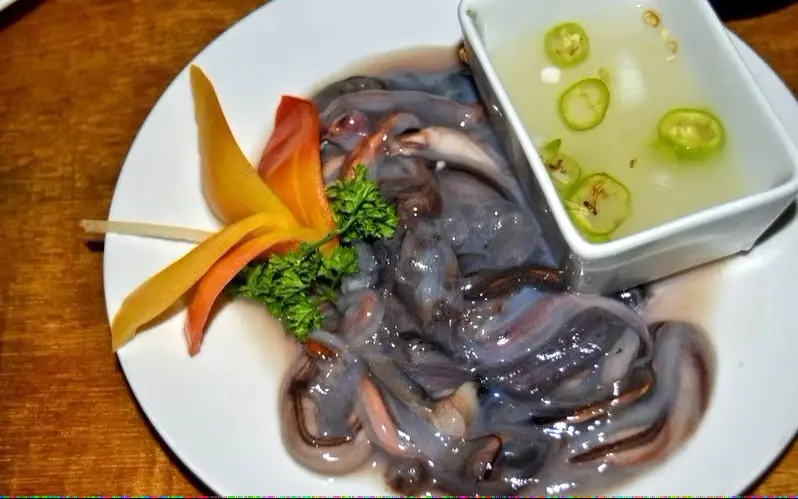
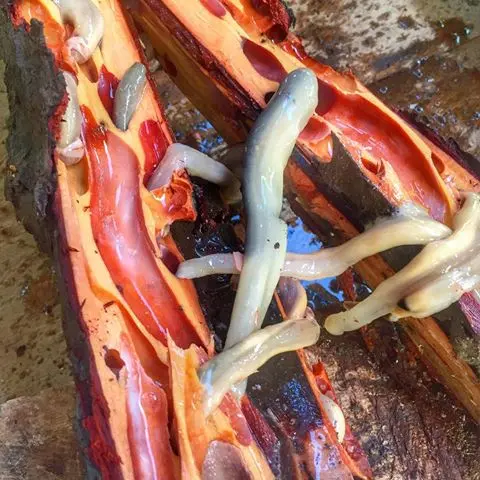
Tamilok are usually found within rotting or dead mangrove trees, which are chopped up, then split in the middle to reveal the mollusks burrowed in crevices of their own making. It’s not an easy-to-find dish, since searching for these rotting chunks of wood requires having to tread carefully through slippery, muddy areas. Though it doesn’t look very appetizing, the worm has become a delicious treat in Palawan cuisine, for both locals and tourists; so much so that Slow Food Foundation for Biodiversity warns against overharvesting the mollusk to prevent the disruption of the mangrove’s ecosystems.
Soup No. 5
The ingredients in certain dishes should be kept…well, let’s say private, for a diner’s peace of mind. “Soup No. 5” (known as “lansiao” or “lanciao” in Cebu, a nod to its roots in Chinese immigrant cuisine) is another delicacy found only in certain eateries in the country. Its enigmatic name alludes to an equally mysterious history. Some say that it refers to the soup being a bonus “fifth option,” placed beneath seafood, beef, pork, and chicken soups in the menu of restaurants. Why all the secrecy? Well, people might be less willing to try it knowing its primary ingredients: bull genitals.
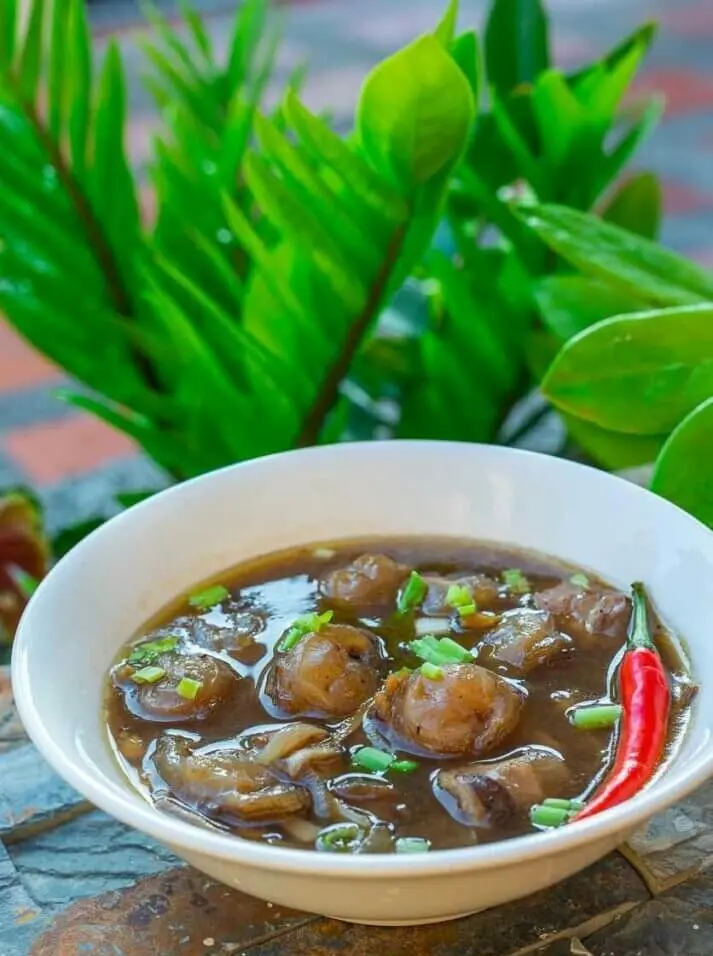
Yes, you read that right. The soup’s broth is mixed with chunks of bull’s penis and testicles. Yum? But for the most part, herbs and spices added to the soup are what give it its flavor, the rest mostly being strange, textural accessories to the mix. The soup is said to be an aphrodisiac (which makes sense), and outside of that, makes a decent hangover cure to those willing to give it a shot.
Asin Tibuok
Salt is a must-have ingredient in nearly every kind of cuisine. In the Philippines, the traditional ways of salt-making are considered rare artforms, ones that’ve been gaining widespread popularity thanks to more media exposure. One of the rarest salts in the world, asin tibuok, caught the world and country’s attention after being featured in a Business Insider documentary. Also known as the “dinosaur egg” salt due to its physical appearance, the process of making it is rigorous and time-consuming, tracing its origins to pre-colonial practices.
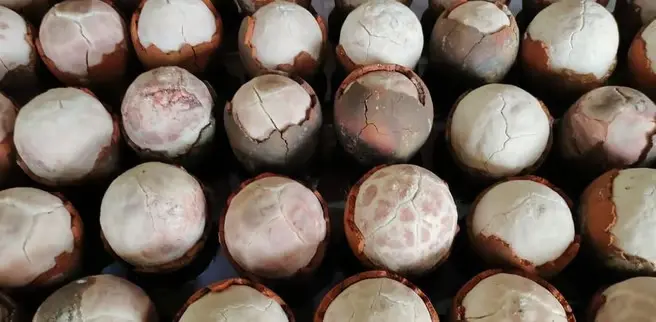
Not many asin tubuok makers are actively making the salt, Tan Inong Manufacturing Corporation being one of the few (and the only FDA-approved artisanal salt in Bohol), with their base in Albuquerque, Bohol. Hundreds of coconut husks are soaked for three months in saltwater pools near a mangrove. Afterwards, they’re harvested, cut up into small pieces, sun-dried, then burned in a heap that’s regularly doused in saltwater to create salty ashes. The ashes are then placed in filters, seawater poured into them to create a concentrated brine.
Finally, specially-made clay pots are placed over a mahogany wood fire, with the brine poured into them using seashell ladles for roughly eight hours until it has evaporated, leaving salt sediments to harden into the round, egg-like form you see in the final product. The result is a salt with that distinctly smoky and even earthy taste profile that makes it a coveted ingredient for all kinds of dishes, from soups to desserts.
Unfortunately, a slew of restrictive local laws, including the Salt Iodization Law (Republic Act 8172) —which mandates the fortification of all salt with iodine for human and animal consumption in the Philippines—have prevented artisans from selling their salts in the country. This means the average Filipino must rely on imported products, despite having one of the longest coastlines in the world and richest salt-making practices.
Criollo Cacao
More than 400 years ago, when Spanish friars arrived in the Philippines bringing cacao beans for their private consumption (to be turned into a chocolate drink), the archipelago became the first recipient of cacao outside the Americas, or Mexico specifically, according to the Slow Food Negros Community.
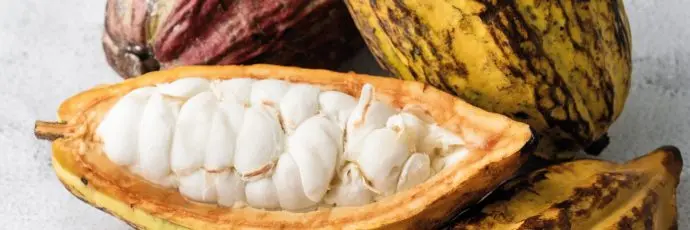
The gold standard cacao in question is the criollo cacao—one of the more ancient varieties that the Mayans and Aztecs of Mexico once used for ceremonial purposes. Today, the cultivar still grows wild in parts of the country, mainly Negros Occidental and Davao. Its beans are quite small, so they’re usually made in small batches that aren’t suited for widespread, commercial consumption. Initially, it was families who mainly grew the cacao near their homes, making it a cherished food shared among tight-knit communities.
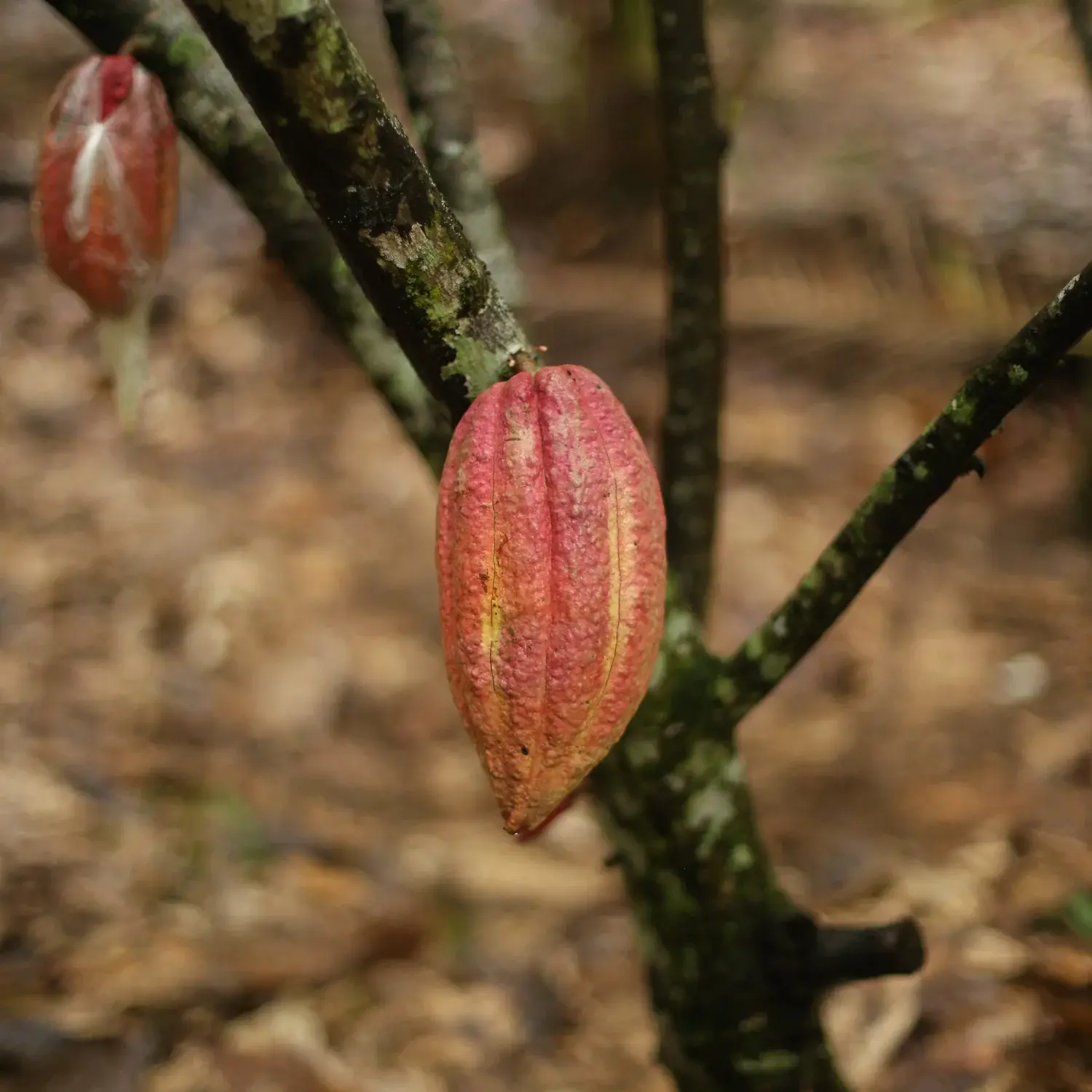
The existence of bigger hybrids and the criollo cacao’s susceptibility to diseases and pests are why few farmers continue to plant the cultivar, with criollo cacao producer Christpher Fadriga being one of them. Today, you can find some local brands whose chocolates contain criollo cacao, and if you manage to get your hands on these treats, consider yourself lucky. The cacao boasts complex, aromatic flavor notes and significantly less bitterness thanks to its white beans, making it one of the rarest and most expensive cacao varieties in the world.
This list has only scratched the surface of the culinary traditions of our country, from heirloom recipes to more obscure cuisine that just haven’t been brought to public attention. Yet it does give us a better understanding of how incredible the Philippines’s natural resources are, and how important it is that we preserve them through actions and words.
Additional Reference
Polistico, Edgie. Philippine Food, Cooking, & Dining Dictionary. Anvil Publishing, Inc., 2017.