More F&B establishments are swapping out the iconic, narrow glass for alternatives—here’s why the change is bubbling up.
What incited this article was a simple anecdote from Lifestyle Asia Chief of Editorial Content (and resident champagne fan) Kerry Tinga. She noticed something peculiar at a recent event: there were no champagne flutes in sight when the caterer was serving bubbly. Then she began seeing the pattern more frequently, with other F&B establishments forgoing the glass too.
So what’s really going on here? Why is such a famous vessel—its iconography so potent that we immediately think of champagne when we see it—being erased from the picture? We turned to Jaime Jalandoni, Director and Chief Operating Officer of Premium Wine Exchange (PWX), to seek insights on the intriguing phenomenon.
READ ALSO: Demystifying The Bottle: Your Guide To The World Of Wine
Where Did The Champagne Flutes Go? A Q&A With Jaime Jalandoni
Have you noticed certain F&B establishments refraining from using champagne flutes? Why do you think this trend is happening?
Jaime: Yes, I’ve noticed a shift in preferences, which is most prominent amongst producers of champagne. Whenever our team conducts tastings with growers or representatives from the Champagne region, there are no flutes in sight. The practice of using a white wine glass or champagne tulip has trickled down to establishments in the trade that carry and serve high-quality, terroir-driven champagne.
The primary reason for the decline in flute usage is that it can limit the overall tasting experience and enjoyment of a wine. The narrow design lacks an olfactory chamber to trap and disperse aromatics, also making it harder to swirl or agitate a wine to introduce oxygen.
Do you think it’s a particularly significant decision that changes the way diners experience champagne?
Jaime: The flute has served a key purpose and will hold an essential place in the history of appreciating this intrinsic and culturally prominent trait of champagne: [its] bubbles. If that’s what you’re looking for as a consumer, a flute will still suffice.
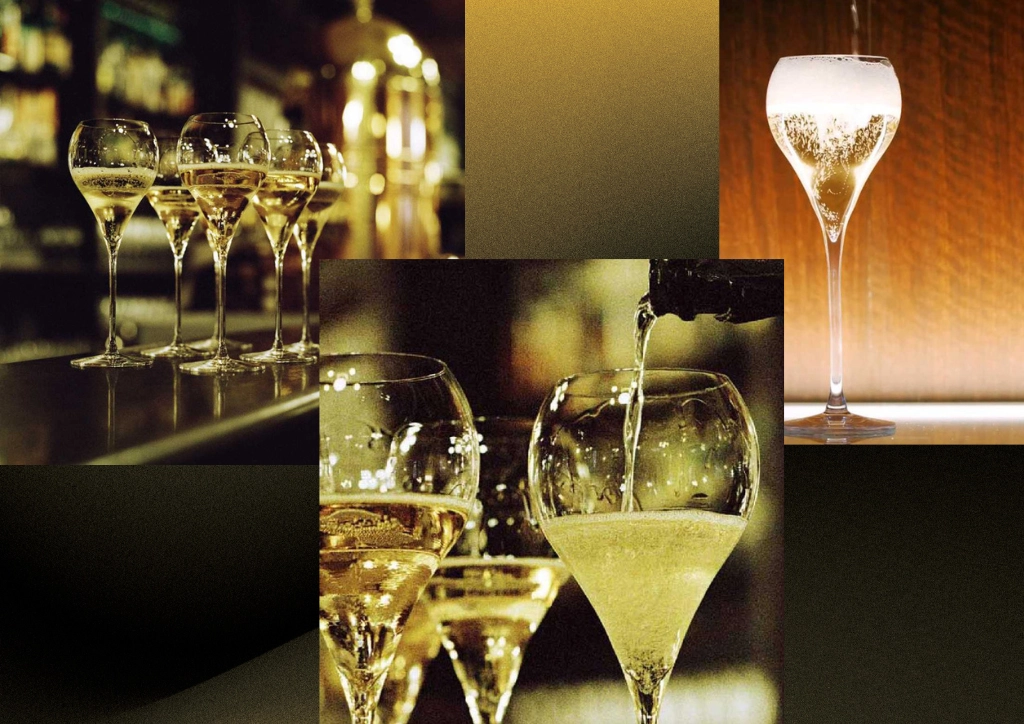
[But] suppose you’re curious about discovering the whole character and nuance this region has to offer. In that case, it’s necessary to use a glass that is wide enough to allow for the proper development and release of typical aromas, which Champagne is known for, such as pastry, toasted, confectionery, savory, and nutty descriptors.
Is there a benefit to serving champagne in a different vessel?
Jaime: Glassware has come a long way since the creation of the flute, which was adopted to serve a key role that’s rooted in tradition and the classic aesthetic of luxury associated with Champagne. The design aims to highlight the strand of bubbles that rise from the bottom to the top of the glass. This phenomenon is known as “perlage,” a term derived from the French word for a gathering of pearls.
Making a great champagne always begins with the goal of producing an exceptional still wine, complete with balance and complexity that contribute to its versatility. Appreciating the nuance and diversity that occurs through the many different styles and villages represented across Champagne is part of the enjoyment, a result of this region being a favorite among many wine enthusiasts.
For individuals seeking both style and substance, glasses developed in partnership with the Champagne producer, Bereche, are available on the market. These glasses offer improved ergonomics for aromatics and tasting, thanks to a broader, tulip-shaped base and mouth-blown glass. The glass is also able to maintain perlage through a sandblasted base, which results in the diffusion of a bead of champagne bubbles.
To Use The Flute, Or Not To Use The Flute? That Is The Question.
And it’s ultimately one that boils down to preference. People in the F&B business are shedding the old ways in favor of providing experiences that stay as true to the quality of what they’re serving as possible; in other words, no smoke and mirrors. That doesn’t necessarily mean you need to quit using the flutes if you find yourself smitten with the extra fizzy optics.
Armed with this new knowledge, you won’t be too caught off guard the next time you’re served champagne in a different vessel. Why not give it a try? It may just yield a new and exciting tasting experience—and isn’t that what we look forward to when we make a toast?