We don’t need an algorithm to chart a path to romance—and it seems like many people are starting to realize that.
I dislike dating apps. There, I said it. Before you peg me as a curmudgeonly woman who hates romance, I need to clarify: I love love. I just don’t believe it should be reduced to a game of swipes and algorithms. You’ve probably heard this opinion before, but it’s worth revisiting: the swipe-and-algorithm ecosystem has created a bleak landscape that—exceptions aside—rarely nurtures meaningful, long-term connection (assuming that’s what you’re after).
The thing is, I don’t think I’m alone in these sentiments. A 2024 Forbes Health Survey painted a pretty clear picture. 80% of its millennial respondents and 79% of its Gen Z respondents claim they’re experiencing “dating app burnout,” which other sources have taken to calling “dating app fatigue.” You can even hear the echoes of their modern-day frustrations when pop singer Chappell Roan sings the lyrics to her song “Femininomenon”: “He disappeared from the second that you said/’Let’s get coffee, let’s meet up’/I’m so sick of online love.”
Dating apps have presented us with a smorgasbord of potential matches, as easy to “order” as your favorite meal delivery—and while real relationships are complicated enough, this rapid-fire, tech-driven approach can make connection feel overwhelming and transactional.
So are dating apps dying? Not quite: but major players in the game like Bumble, Hinge, and Tinder have experienced a decline in downloads or users, as well as huge losses in market value. Younger generations are starting to realize they might not need them as much as they think they do. Let’s break it down.
READ ALSO: LA Asks An Expert: Sex, Your 20s, FWB Relationships, And How To Navigate Them
Dating Apps And Decision Paralysis
When it comes to dating apps, there’s just too much going on: each user is faced with a seemingly endless amount of options. It’s the perfect catalyst for what scholars call “decision paralysis”: an inability to make any choice, either from fear of making the wrong one or from the exhaustion that comes with having too many options.
I recall a conversation with someone I’d only just met at an event. Happily married, he discussed how he and his wife first met through a dating app; perhaps an example of those rare success stories in today’s online world of romance.
Being a math whiz, the man walked me through the statistics of dating apps. I can’t recall the specifics (being the opposite of a math whiz), but I remember him saying he would “optimize” his chances by always swiping right, sifting through hundreds of profiles in between busy meetings without a second thought, then later narrowing down his options—game-ifying the already game-ified system, if you will.
I’m glad it worked out for him, but for the average person, this race through a gargantuan stack of profiles might be a bit of a problem. There are only so many hours in a day, one little you, and no guarantee that pulling your finger muscles and risking eye strain is going to lead you to the love you’re searching for.
“It becomes tedious, and just feels like you’re doing admin, like you’re not connecting with anyone and you’re just trying to get through people,” explains Natasha McKeever, a lecturer in applied ethics and co-director at the University of Leeds’ Centre for Love, Sex, and Relationships, in an article for The Guardian. “You see it less like talking to real, individual people and you start seeing it like they’re all just cards in a deck.”
The Oversimplication Of The Self
Then there’s the way dating apps require us to, for lack of a better word, “package” ourselves into flattened, briefly articulated profiles—exposed to the judgement of others, unable to express ourselves fully before someone decides to either reject or accept these oversimplifications. Go through the process enough times, and you start to understand why people are tired of it.
This person’s chubby, swipe left. Too skinny? Pass. Oh, someone likes that TV show I hate? No thanks. This person looks annoying, swipe left. But how much can a screen really say about the contrasting complexities that reside in each and every one of us? It’s a surface-level world that feeds off static first impressions, rather than deeper connection.
As writer Jia Tolentino expresses in her recent piece for The New Yorker, “Are Young People Having Enough Sex?”: “What passes for liberation is often just liberalization—the freedom of the market, in other words, which not only differs from existential freedom but sometimes negates it. […] We are not and never will be free from the hypersexuality of an online world that is built around images and videos and that relentlessly turns individuals into commodities […].” While Tolentino is talking about the commodification of individuals within the context of seeking sex, this act of creating the “desirable” public persona extends well beyond carnality.
But love was never meant to be simplified, let alone sold. In its best form, it’s something gently nurtured between contradictions: fondness and annoyance, attraction and irritation, the easy and the difficult, the gross and the beautiful. A video from Great Big Story, which interviewed couples from around the world who’ve been together for more than 30 years, gives us a glimpse into this facet of love.
“I know that he would do anything in this world to make me happy,” says one woman. “But sometimes I look at him and say, ugh.” She laughs, and her husband does, too.
Can you find someone immensely attractive even if they have bad flatulence? Are you still willing to kiss a person with morning breath? Can you be with someone who hates your favorite book or film, but would gladly listen to you ramble about it for half an hour? What does it mean to hold a person’s hair up or rub their back as they puke into the toilet while still thinking you want to spend the rest of your life with them? Dating apps can’t show you any of these contradictions because they were never built to process their intricate co-existence—only our inexplicable, equally paradoxical hearts can do that.
The Dating Apps Counterculture
There’s always a counterculture for every norm. In-person meetups (what the word “dating” used to mean before everything got complicated) are making a comeback in the wake of dating app fatigue and in a post-pandemic world. People are starving—and striving—for offline, organic connections.
How do they find them? Through a shared sense of community, it seems. Take the popular run clubs, which have become go-to meetups for fitness-minded singles. Bookstores and libraries abroad have also begun hosting speed dating events or relaxed gatherings for literature lovers. Singles nights are making a return as well, even in the Philippines.
“You’ve got to put yourself out there,” explains Melissa Divaris Thompson, a marriage and family therapist in New York City, in The New York Times article “A New Way to Date: The Old-Fashioned Way.” “It’s less about meeting your ‘person,’ and more about, let me expose myself to more people, let me have different conversations, let me have different experiences.”
I guess the best analogy I can make is comparing this situation to the revival of all things analog. People want some kind of physicality to their interactions: to unplug, or as we say, “touch grass.” There’s always going to be a niche for the digital—I acknowledge that the dating app buffet is sometimes the only option for those who don’t have the time or resources to go out and meet new people, which requires a certain degree of effort.
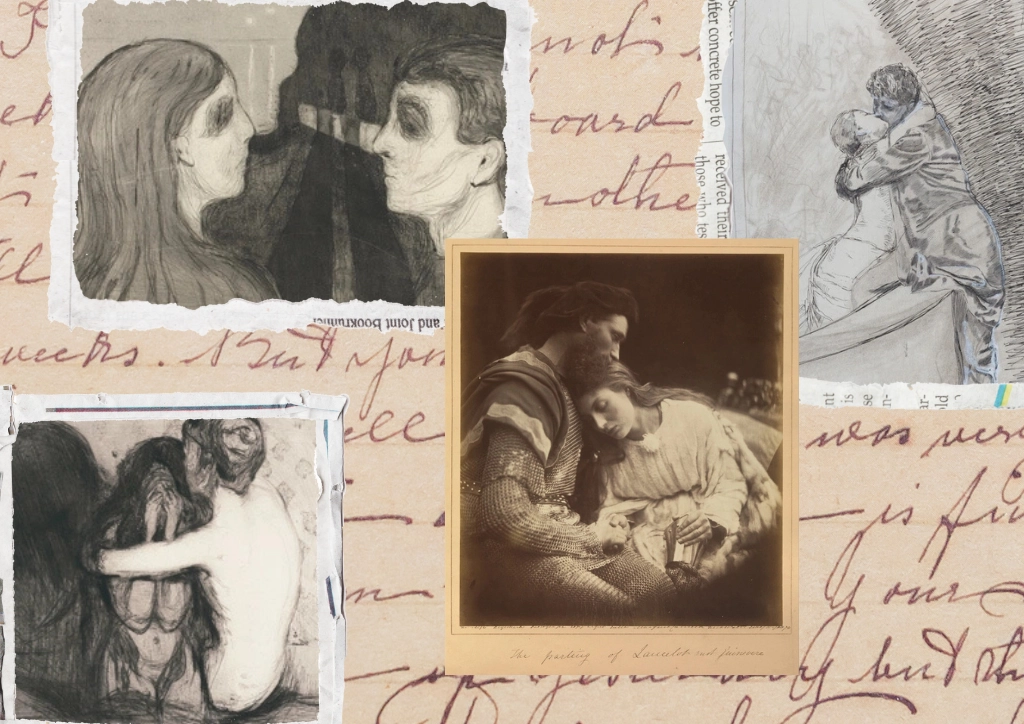
Yet as the saying goes: no pain, no gain. Love is effort. It’s equal parts glittering and gritty, joyous and uncomfortable. It demands a level of vulnerability you can’t translate through a screen. No amount of time on dating apps can show you the tangible chemistry you might have with someone, playing out in real time: how different it feels to be in close proximity with them, to know the angles of their complicated existence and still choose to keep them in your life.
Why listen to vinyl when you have Spotify? Why use film when you have a phone? Why write longhand when you can type? The old ways are fallible and oftentimes more laborious, but in that imperfection lies the innately human charm so many of us crave.
To me, the return to a slower, more intentional way of meeting new people is a hopeful good omen. While the landscape that surrounds human connection has gone through vast changes—which invariably influence our behaviors and perspectives—it’s clear that the more primal aspects of love still remain ingrained in us.
Editor Daniel Jones wrote that love was “less about definitions than examples” in his introduction to The New York Times’s Modern Love anthology. I think, now more than ever, it’s time we uninstall dating apps, go out, let life happen to us, and experience these examples ourselves.
If you’re doing exactly this, and it feels far scarier than swiping a screen, getting ghosted, or overanalyzing a one-liner reply? Then you’re probably on the right track.