It’s easy to call out someone else’s red flag. But sometimes, a little self-reflection reveals that we might be waving a few flags of our own.
While people-watching, my friends and I suddenly started playing a game: “Is he a red flag or a green flag?” We’d judge the men who happened to pass through our line of sight and decide whether they gave off relationship red- or green-flag energy. Our criteria? Honestly, just vibes and looks. He looks like he’d be emotionally unavailable because of that haircut. He has kind eyes, so probably a green flag. You know how it goes.
Of course, real-life red and green flags aren’t quite that simple. Calling someone a red flag in a relationship is more nuanced than judging a stranger by his outfit, facial expression, or general aura. It’s usually about patterns of behavior, how someone treats others, and how they show up in a relationship over time. And, perhaps more importantly, sometimes the red flag isn’t the person we’re dating—it might be us, and we just haven’t noticed it yet.
READ ALSO: What The New Rendition Of NIKI’s “The Apartment We Won’t Share” Taught Me About Moving On
When Are You Considered A Red Flag?
Sometimes, the red flag isn’t as obvious as it seems. From how you handle conflict to the way you communicate, these are some behaviors worth reflecting on—and, in my view, potential signs that you might be waving a few red flags of your own. This isn’t about judging yourself; it’s simply an invitation to take a closer look at the habits and behaviors that show up in your relationships.
“I’m Sorry You Felt That Way” Is Your Main Apology
If your apologies always seem to circle back to how the other person reacted instead of what you actually did, you might be dodging accountability. There’s a big difference between “I’m sorry you felt that way” and “I messed up, I understand why it hurt you, and I’ll do better.” One acknowledges the situation; the other actually takes responsibility.
Every Ex, Former Friend, Or Ex-Coworker Was “Crazy”
If everyone from your past was toxic, dramatic, or somehow the problem, it might be time to look at the common denominator: you. Sure, sometimes we really do meet difficult people, but if you can’t acknowledge your own part in any failed relationship, friendship, or falling-out, that lack of self-awareness might be worth reflecting on.
You Keep A Mental Spreadsheet Of Favors
Do you remember every favor you’ve done for someone? Every time you’ve compromised? Every coffee you paid for? If you’re keeping an invisible tally of everything you’ve given, only to bring it up when you need something in return, kindness starts to feel more like a transaction. Relationships aren’t supposed to come with an invoice.
You Weaponize “Brutal Honesty”
“I’m just being honest” is not a free pass to say whatever you want. There’s a difference between being honest and being unnecessarily harsh, especially when you know your words will hurt someone. If your honesty has no empathy, tact, or consideration, maybe it isn’t brutal honesty—maybe you’re just being brutal.
Rule of thumb: Honesty without compassion is brutality; compassion without honesty is hypocrisy.
You Turn Every Conflict Into A Guilt Trip
Someone brings up something that hurt them, and suddenly you’re saying, “Well, I guess I’m just the worst person alive then!” Sound familiar? Instead of addressing the actual issue, you made the conversation about yourself. It’s an easy way to derail conflict, but it also means the person who was hurt ends up comforting you instead.
You Use The Silent Treatment As Punishment
There’s nothing wrong with needing a minute to cool down during an argument. In fact, taking a breather can be a healthy way to avoid saying something you’ll regret. But deliberately ignoring someone for days, withholding affection, or giving them the cold shoulder until they give in is a different story. That’s not taking space; that’s using silence as punishment.
You “Test” People Instead Of Communicating
If you’ve ever intentionally acted upset to see if someone will notice, withheld information to see if they’ll ask, or set up a little emotional test to find out whether someone really cares, please just say what you need. People can’t pass rules they didn’t know they were playing by. A relationship isn’t an escape room.
You Love Bomb, Then Pull Away
Coming on strong isn’t necessarily a bad thing. Sometimes you really do meet someone and get swept up in the excitement. But if you’re showering someone with constant attention, grand declarations, and intense affection one minute, only to become distant or completely lose interest once things start feeling real, that’s a pattern worth looking at.
You Treat Boundaries Like Personal Insults
When someone says, “I need a quiet night to myself,” or “I’m not comfortable sharing that,” how do you respond? If your first instinct is to take it personally, push back, or convince them to change their mind, you might want to rethink your relationship with boundaries. Someone setting a limit isn’t necessarily rejecting you. Sometimes, they’re simply telling you what they need.
You Conversationally Hijack
Are you actually listening, or are you just waiting for your turn to talk? If you’re constantly steering the topic back to your own experiences, or you have to one-up someone’s bad day with an even worse one, you might be treating conversations like a stage instead of a two-way street. A relationship needs a conversation, not an audience.
If you see yourself in more than five of these situations, hate to break it to you, but you might be the red flag in your relationship. The good news? Recognizing it is already a step toward doing better.
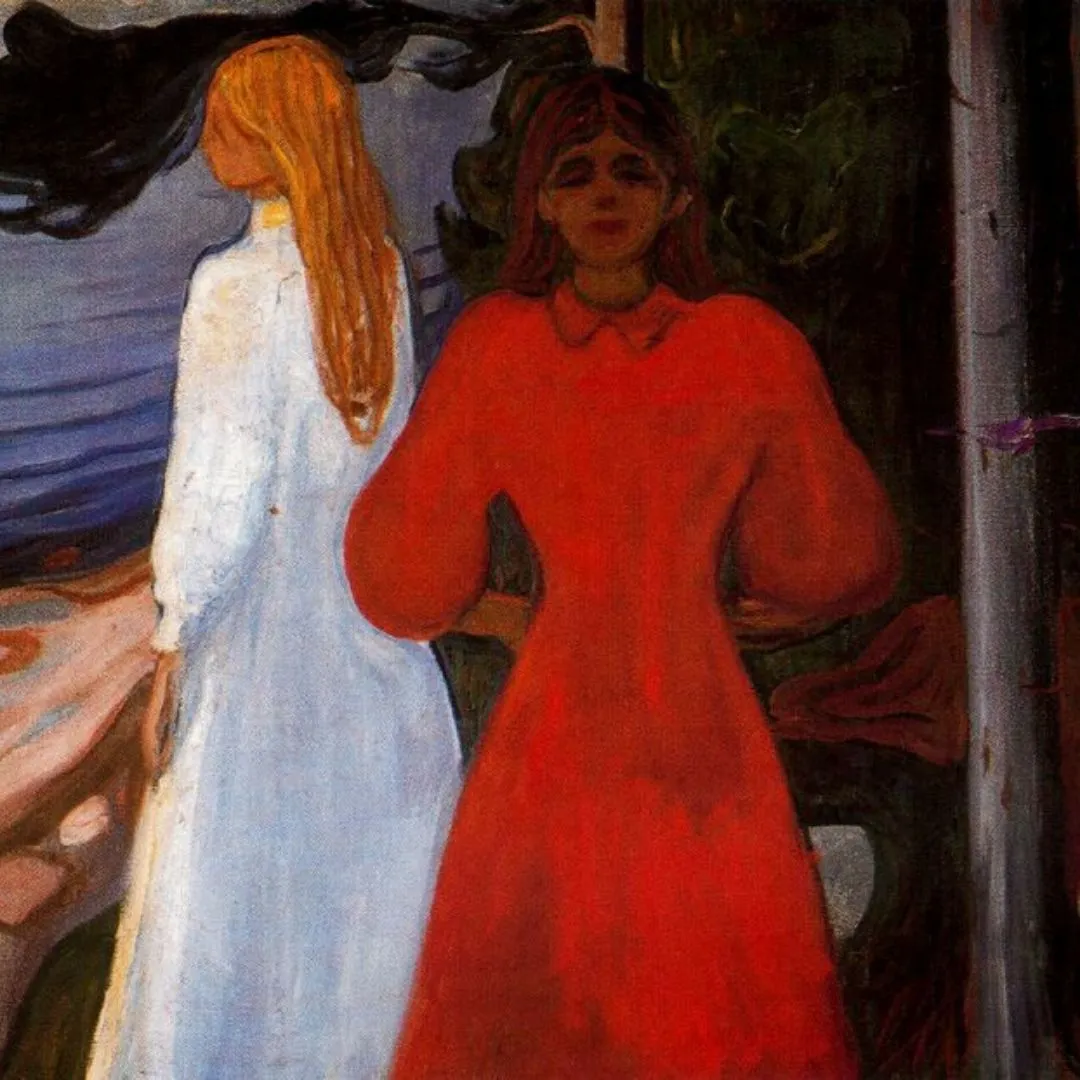
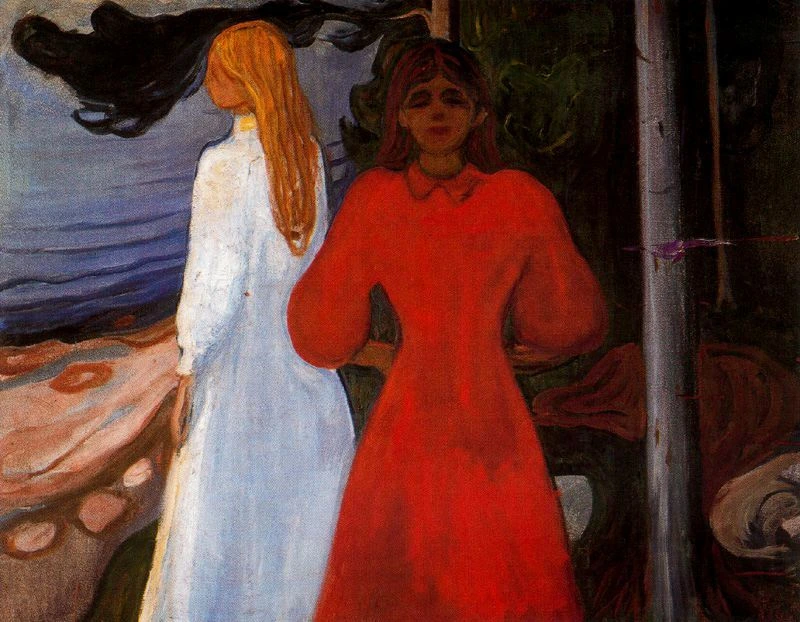
Banner image features “Red and White” (1899-1900) by Edvard Munch, courtesy of Wikimedia Commons
Frequently Asked Questions
Being a red flag in a relationship means displaying patterns of behavior that can negatively affect communication, trust, accountability, or emotional connection. These can include avoiding responsibility, using the silent treatment as punishment, ignoring boundaries, or turning conflicts into guilt trips.
Some signs include constantly blaming other people for failed relationships, keeping score of favors, using “brutal honesty” to justify hurtful comments, testing people instead of communicating directly, and struggling to respect other people’s boundaries.
It can be if it’s your main form of apology and consistently shifts attention away from your own actions. A more accountable apology acknowledges what you did, recognizes how it affected the other person, and takes responsibility for doing better.
Taking time to cool down during an argument can be healthy. Deliberately ignoring someone for days, withholding affection, or using silence to make someone give in, however, can be emotionally manipulative.
Start by looking at your patterns rather than one-off mistakes. If you recognize yourself in several of these behaviors—such as guilt-tripping during conflict, testing people instead of communicating, love bombing and then withdrawing, or treating boundaries as personal insults—it may be time for some self-reflection. Recognizing the behavior is a first step toward changing it.