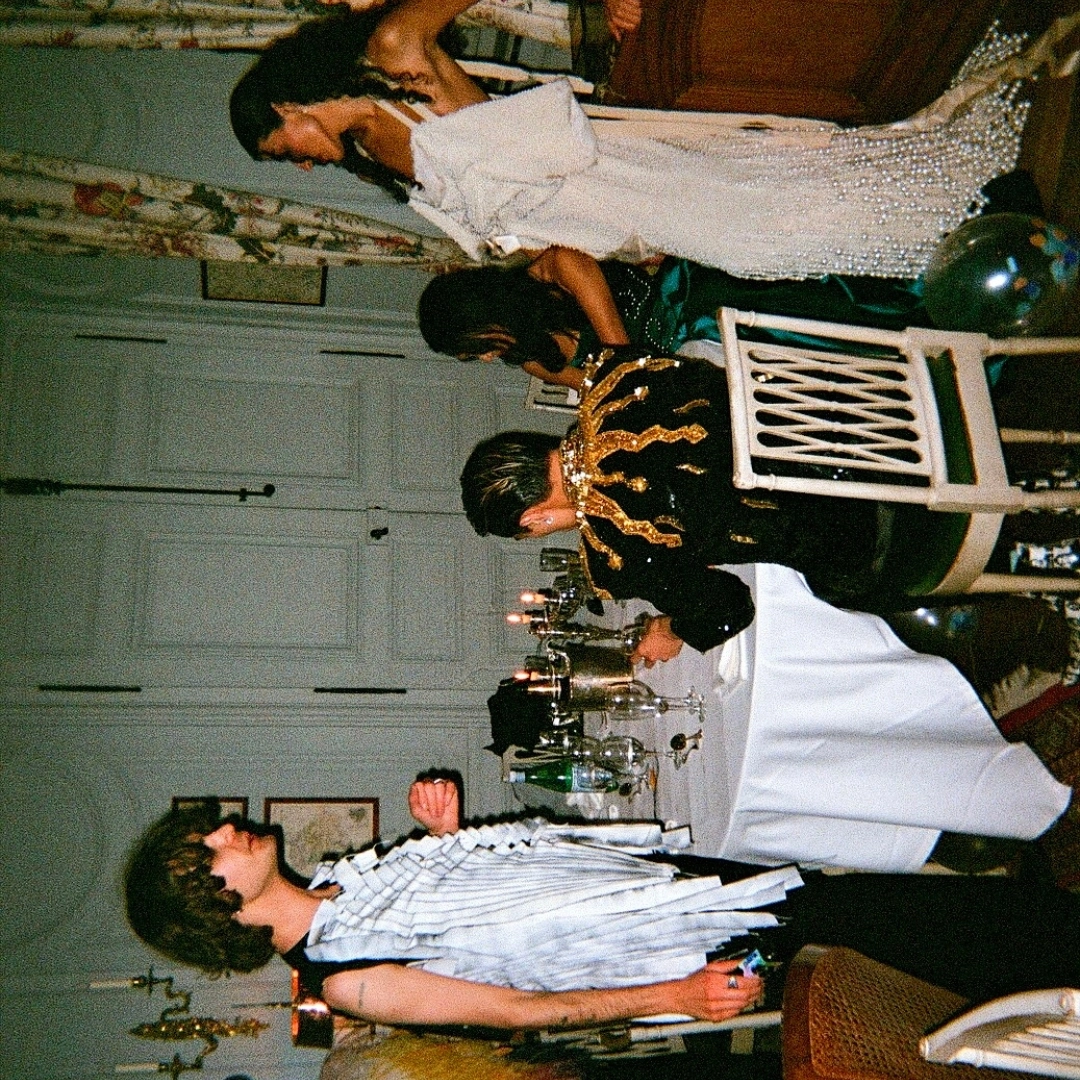
From London’s Lost Generation to Gen Z, the enduring legacy of the first thoroughly modern cultural youth movement lives on in designer Jude Macasinag’s Bright Young Bling campaign.
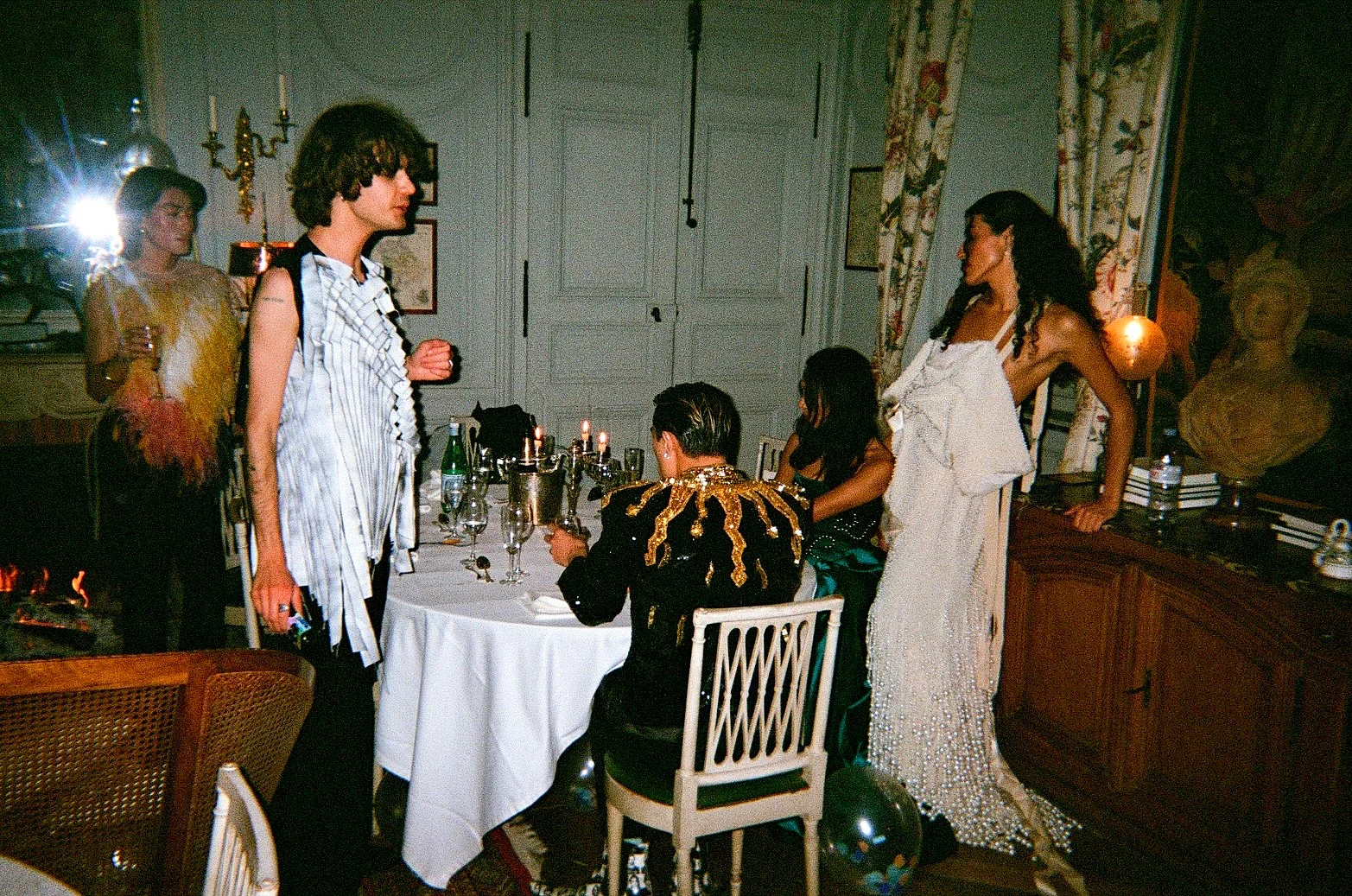
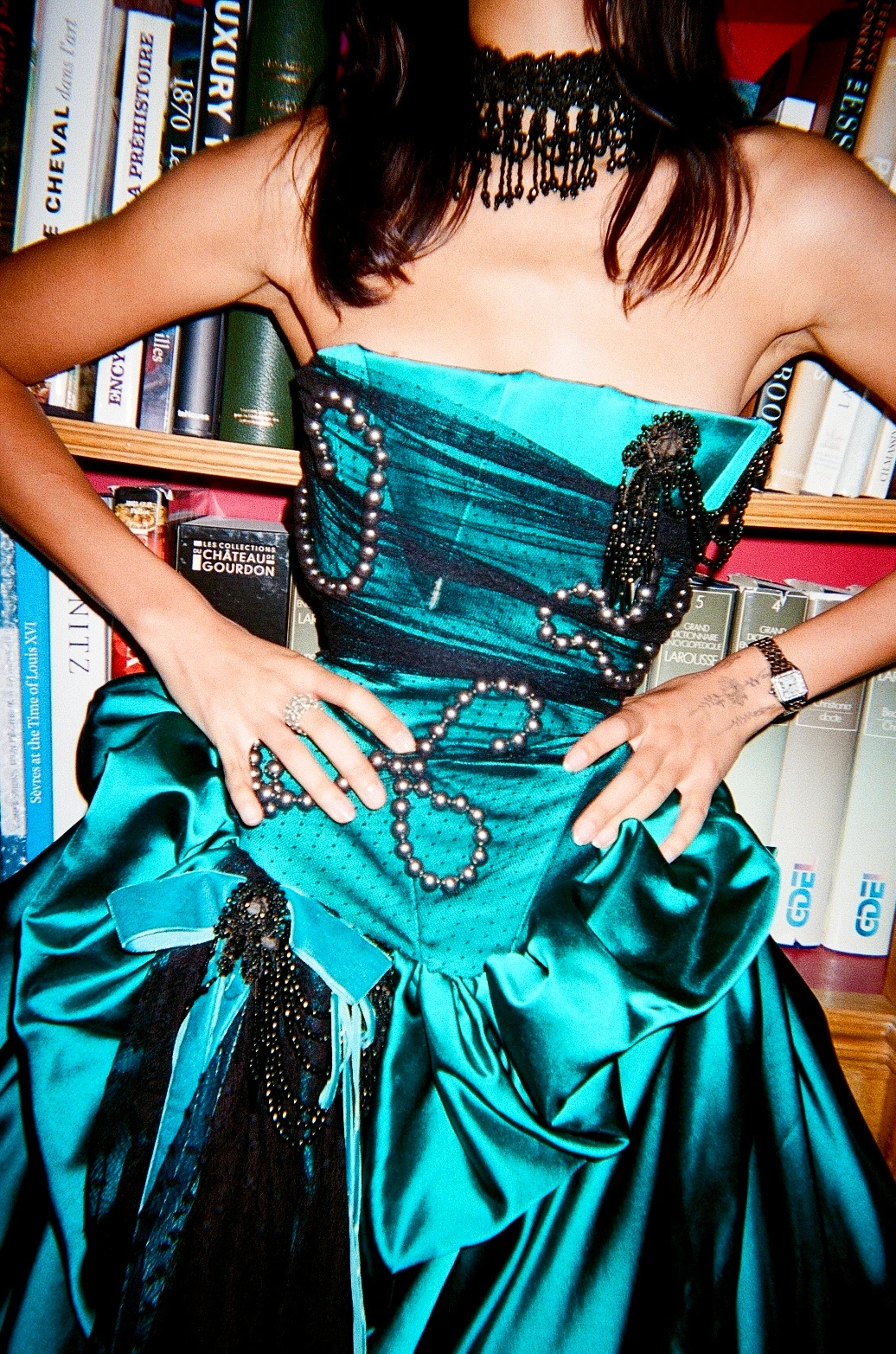
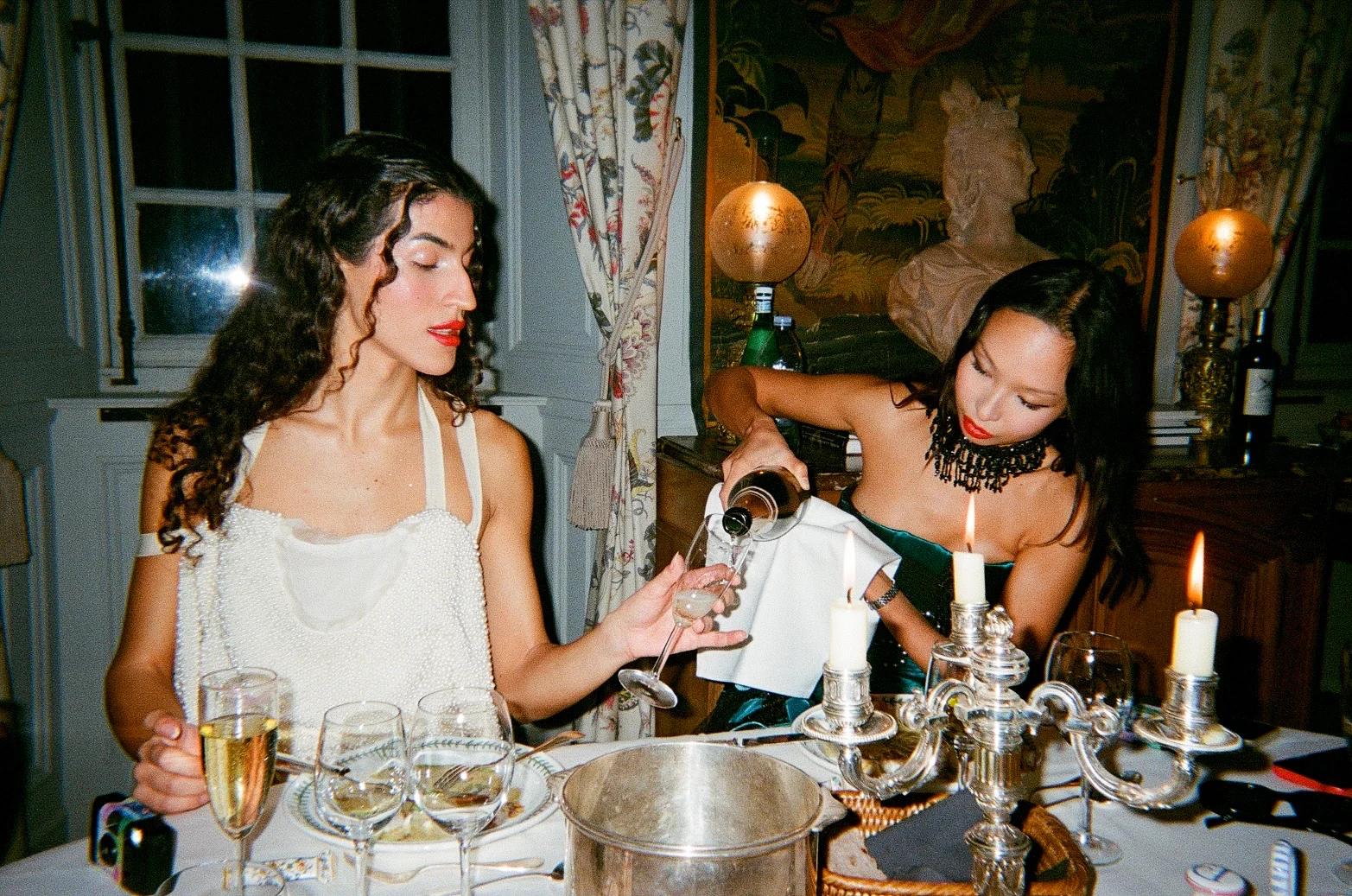
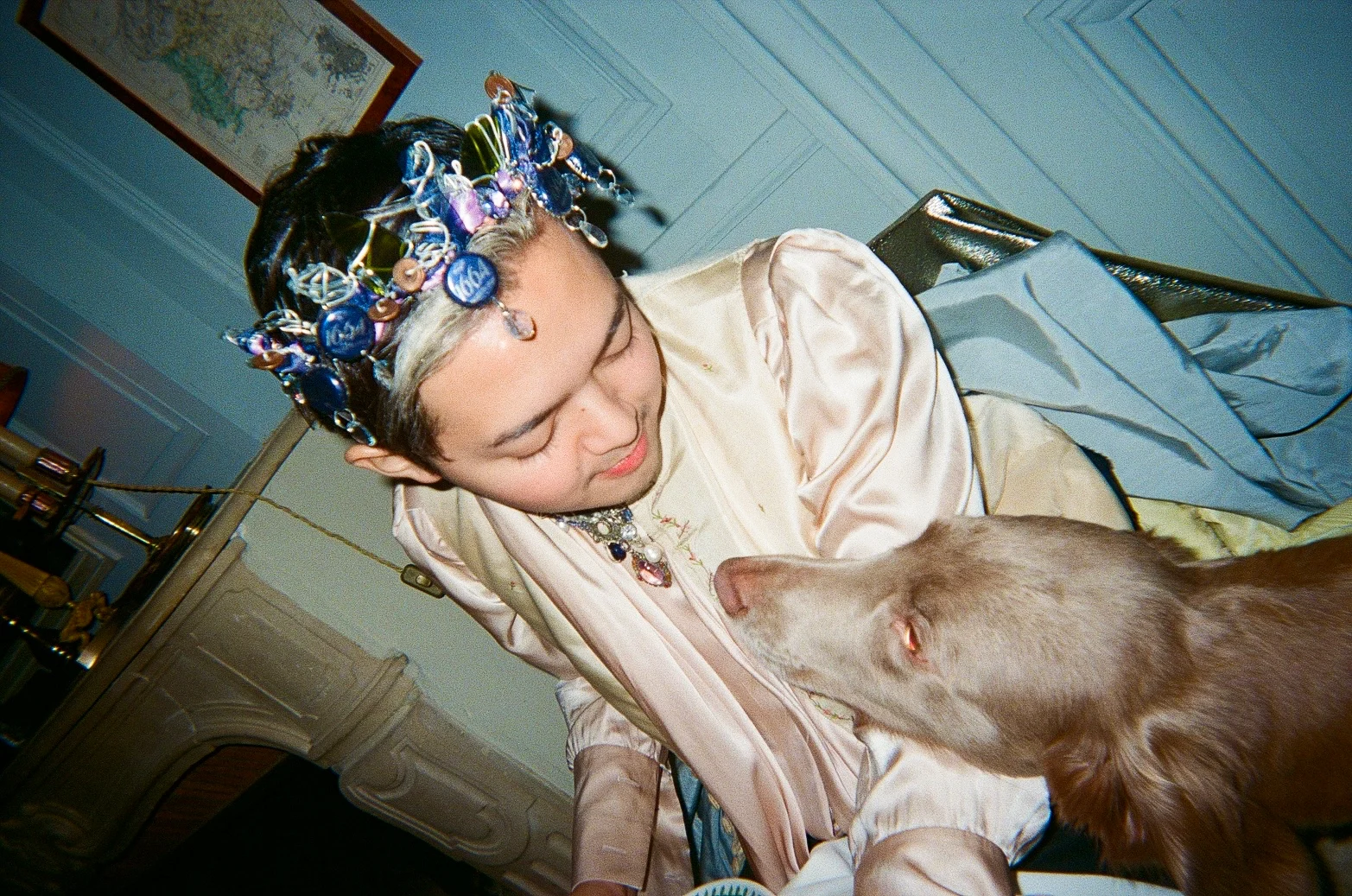
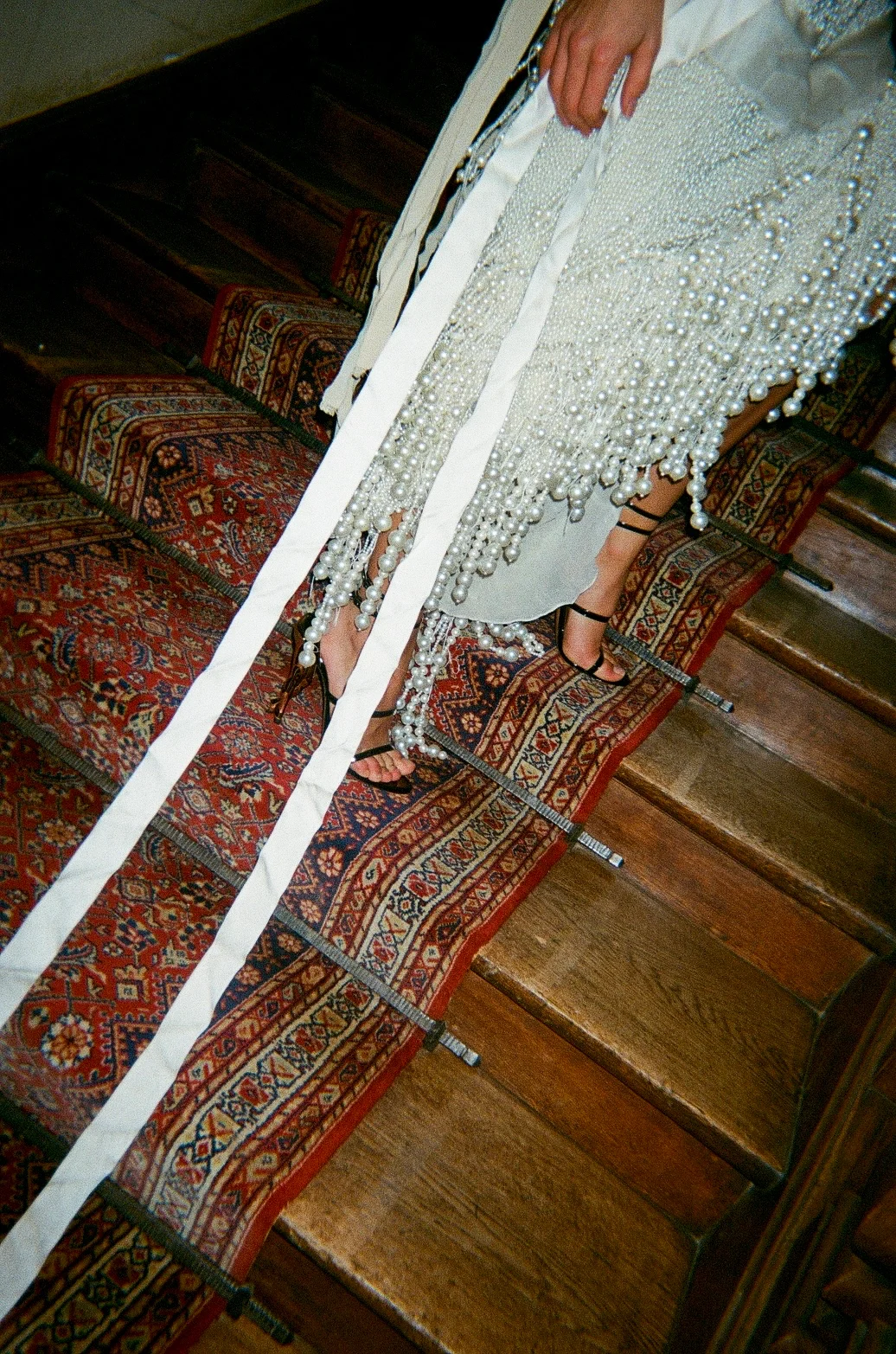
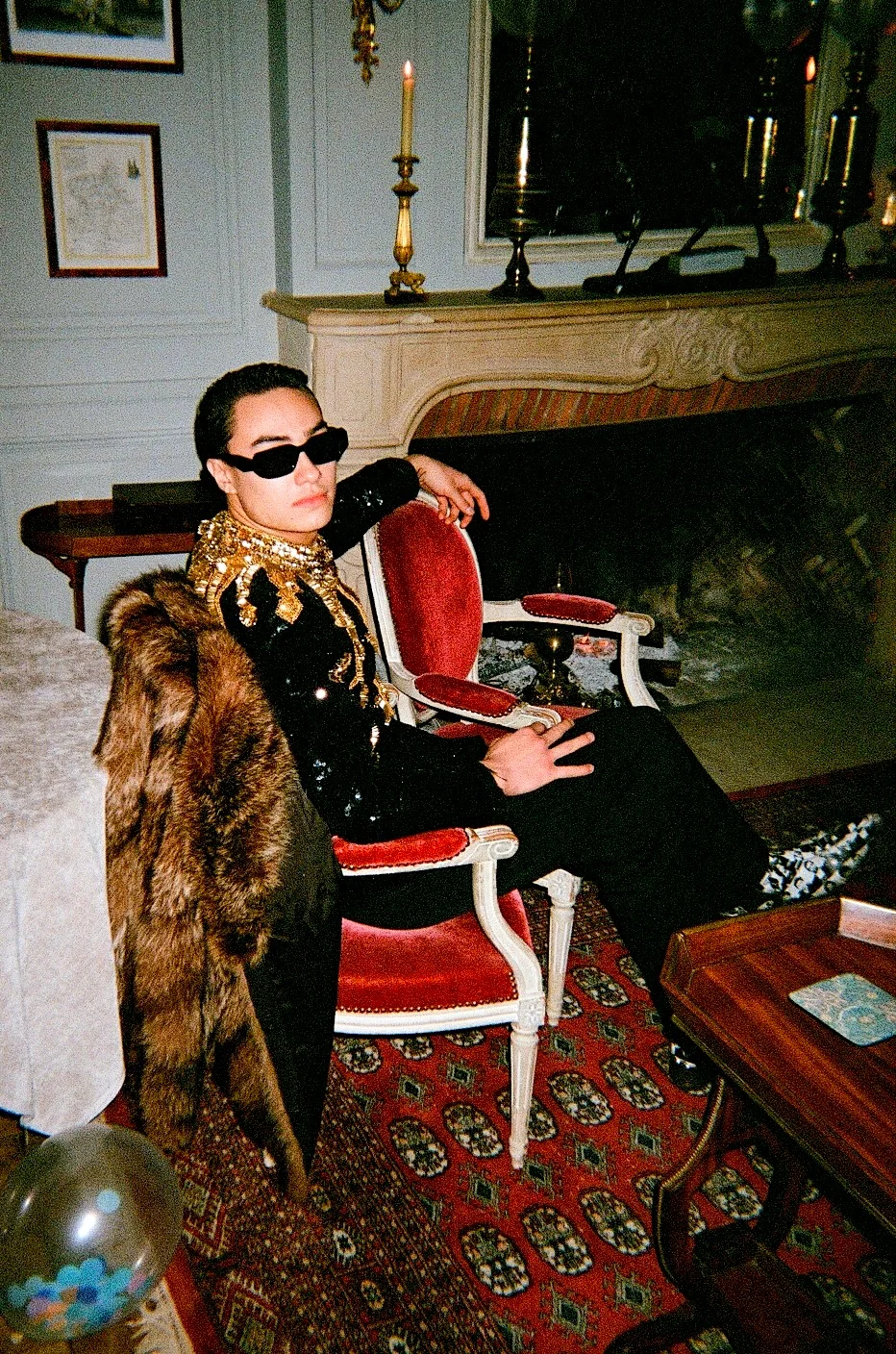
In an old house just outside Paris, trailing with vines, there lived an extravagant party overflowing with wines. Crystal champagne coupes catch the light while guests, draped in vintage silk, feathered tops, and deconstructed coats, dance to the music of time. The scene unfolds like a fever dream of 1920s excess through the lenses of disposable cameras and iPhone screens. A century separates these digital chroniclers from Cecil Beaton’s carefully posed photographs, yet the impulse remains the same. This particular soirée serves as the backdrop for designer Jude Macasinag’s photo campaign, Bright Young Bling, an homage to the pioneers of modern youth culture, the Bright Young Things.
“The campaign was birthed from indulgence,” Jude confesses. “It was a birthday dinner that I’ve always fantasized about, and I just wanted to be able to document it.”
The instinct to document, to celebrate, and to create spectacle as a young designer is fitting. The original Bright Young Things pioneered a new language of cultural influence that would define the next century of youth movements, a fusion of lifestyle with mass media documentation. As the youth of today navigate the digital attention economy, these social patterns remain relevant.
READ ALSO: Louis Vuitton Celebrates 130 Years Of Monogram Mastery
The Birth Of Spectacular Youth
The Bright Young Things, also called the Bright Young People, or “vile bodies” if you’re nasty, as Evelyn Waugh was while satirizing the set in his 1930 novel of the same name. The book was later adapted into the 2003 film Bright Young Things, directed by Stephen Fry, bringing us full circle.
The group emerged in 1920s England, a generation of aristocrats and socialites too young to have fought in the Great War but old enough to inherit its aftermath. In a paradoxical world of limitless horizons brought by victory, mixed with the looming memory of unprecedented death and changing social and class structure, they responded with acts of epicurean excess.
The tabloids first coined the label in 1924 when the Daily Mail reported on an elaborate midnight, traffic-stopping treasure hunt hosted by the “Society of Bright Young People,” featuring Edward, Prince of Wales. What followed was a half- decade of increasingly spectacular stunts. They staged elaborate hoaxes. The mock wedding of aristocrat Elizabeth Ponsonby. The lauded exhibit of the modernist painter Bruno Hat, who never existed (the catalog was written by Waugh, the show hosted by a Guinness heir, with Tom Mitford, son of a baron, playing the artist in a fake mustache and even faker German accent). They threw themed parties. Circus parties, Mozart parties, Wild West parties.
Their decline was as sudden as their rise. The 1931 Red and White Party, hosted by art dealer Arthur Jeffress, just another event on the calendar, became known as the party that went too far. As Europe descended into economic depression and political extremism, the press turned hostile. The lavish party, with color-coordinated costumes, decor, and food, was lambasted as an emblem of wasteful excess. The world had changed, and there was no longer room for their particular brand of spectacular frivolity.
Media Makers, Not Just Society Stars
“I know very few young people,” Waugh wrote in Vile Bodies, “but it seems to me that they are possessed with an almost fatal hunger for permanence.”
This observation captures the inherent paradox of youth movements that keep them young. Their very transience as “youth” is mixed with this need for permanence, making them the perfect subjects of study on social change. The Bright Young Things’ rise and fall tracked the shifting moods of interwar Britain, from the heady optimism of the post-war boom to economic collapse and growing political tensions.
Throughout history, youth movements have emerged at moments of profound social transformation. They are uniquely positioned to feel and amplify the tremors of societal shifts precisely because they haven’t yet become invested in maintaining the status quo. But something fundamentally shifted with the Bright Young Things. They emerged at a unique historical inflection point when breakthrough technologies (mass-circulation newspapers, popular photography) collided with social upheavals (post-war trauma, changing class structures) to create the conditions for a fundamentally modern kind of youth expression.
As individuals, some found success in traditional forms of media, writers including Waugh (Brideshead Revisited), Nancy Mitford (The Pursuit of Love), Anthony Powell (A Dance to the Music of Time), and poet John Betjeman, or the photographer-turned-costume and set designer Beaton (My Fair Lady). As a generational youth movement, however, their arguably defining innovation was a new form of cultural expression, deliberately blurring the line between documenting culture and creating it. This formed a modern language of youth culture that went beyond (and arguably beneath) traditional art, literature, and poetry of youth movements past.
Their manipulation of mass media created the template that set the tone for cultural youth movements of the next century. As the historian D.J. Taylor observed, “In the end, the Bright Young People’s legacy is not a shelf of books or even an album of photographs, but an atmosphere, a way of communicating, an outlook, a gesture, an essence.”
This essence, an understanding that youth culture could be expressed in the very way life was performed and documented in media, would reverberate through subsequent generations, see Warhol’s Factory scene, the rise of reality television, or, most relevant to us, social media of today.
READ ALSO: The Fashion Tourist’s Guide To Tokyo Cool
From Tabloids To TikTok: On Legacy
In a world of digital influence and personal branding, it’s tempting to view social media as an entirely unprecedented phenomenon. And, to an extent, it is. But scroll through any influencer’s Instagram, or even your friend’s private account, with its carefully curated moments and strategic documentation of spontaneous fun, and you’ll find echoes of the spectacles that once dominated the society pages of 1920s London. The Bright Young Things pioneered the template of modern youth culture, and what they established in their relationship with mass media has simply evolved as more pervasive and participatory through social media.
Consider Jude Macasinag’s Bright Young Bling campaign, first appearing on Instagram rather than the magazine in your hand. Or any other party that was posted on social media for their followers’ and stalkers’ consumption.
“It is easy to reduce the Bright Young Things as a group of people who were solely creating for the sake of aesthetics,” says Jude, “but it is also crucial to remember that seeking beauty is important for the human experience.”
Like all youth movements that came before and would follow, the Bright Young Things were criticized during their time, then treated as has-beens, and then romanticized once enough time had passed. This cycle reveals something crucial about how youth movements function. They emerge at moments of social transformation, process those changes through new forms of expression, and leave behind templates that shape future generations to navigate their moments of change. The Bright Young Things were dismissed as frivolous pleasure-seekers, yet they were pioneering how media would transform how culture was not only reported but actively created.
Today, the fundamental elements remain, particularly the fusion of lifestyle with media documentation. But while mass media was able to usher in this new youth culture language, it was still in the province of a privileged few. Social media has democratized youth culture further, and in the youth’s pursuit of permanence in a world of stress and strain, we are all armed with the tools to participate and drive a cultural movement.
This article was originally published in our March 2026 issue.
Photography courtesy of Jude Macasinag
Featuring Aya Abdumutar, Gael Calderon-Merat, Nicolas Phan, Theo Sensane, and Hugo Sogny
Shot on location at Chateau de la Rivière, Pontgouin, France