The 14-seater fine dining spot invites guests to experience the Philippines across time and space through an inaugural menu that honors the country’s culinary past, celebrates its present, and imagines its future.
One of the questions many people ask Chef Francis Lacson is: “Why Marikina?” To which he replies, “Why not Marikina?” It’s an inquiry that accompanies the launch of his first fine dining concept, Digámo, which is currently on soft opening to the public. Touché. The city does indeed carry a cozy, unpretentious charm that suits a Filipino dining experience, and with Marikina steadily emerging as a hub for homegrown culinary concepts in the north of Manila, there’s really no reason not to put down roots there.
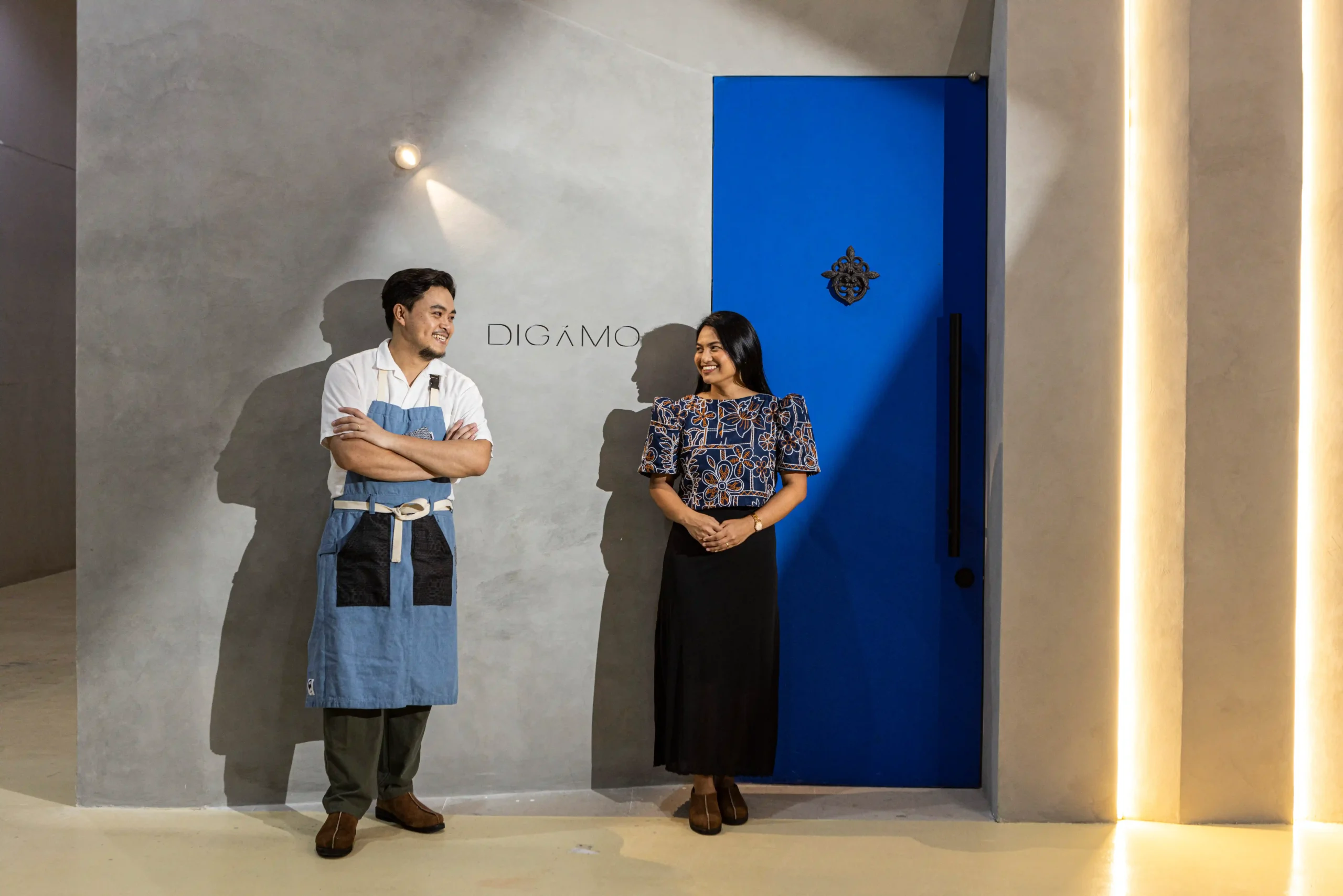
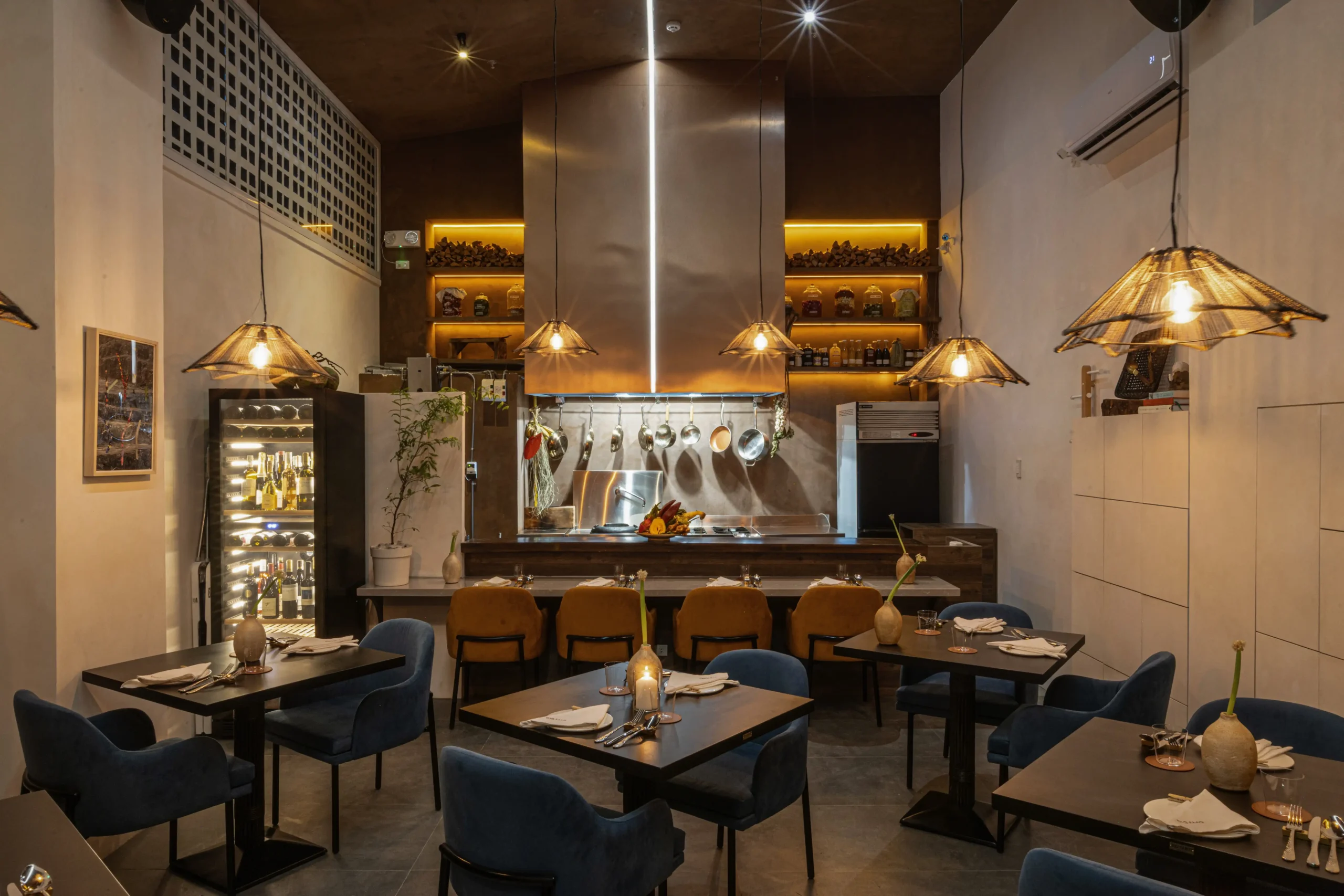
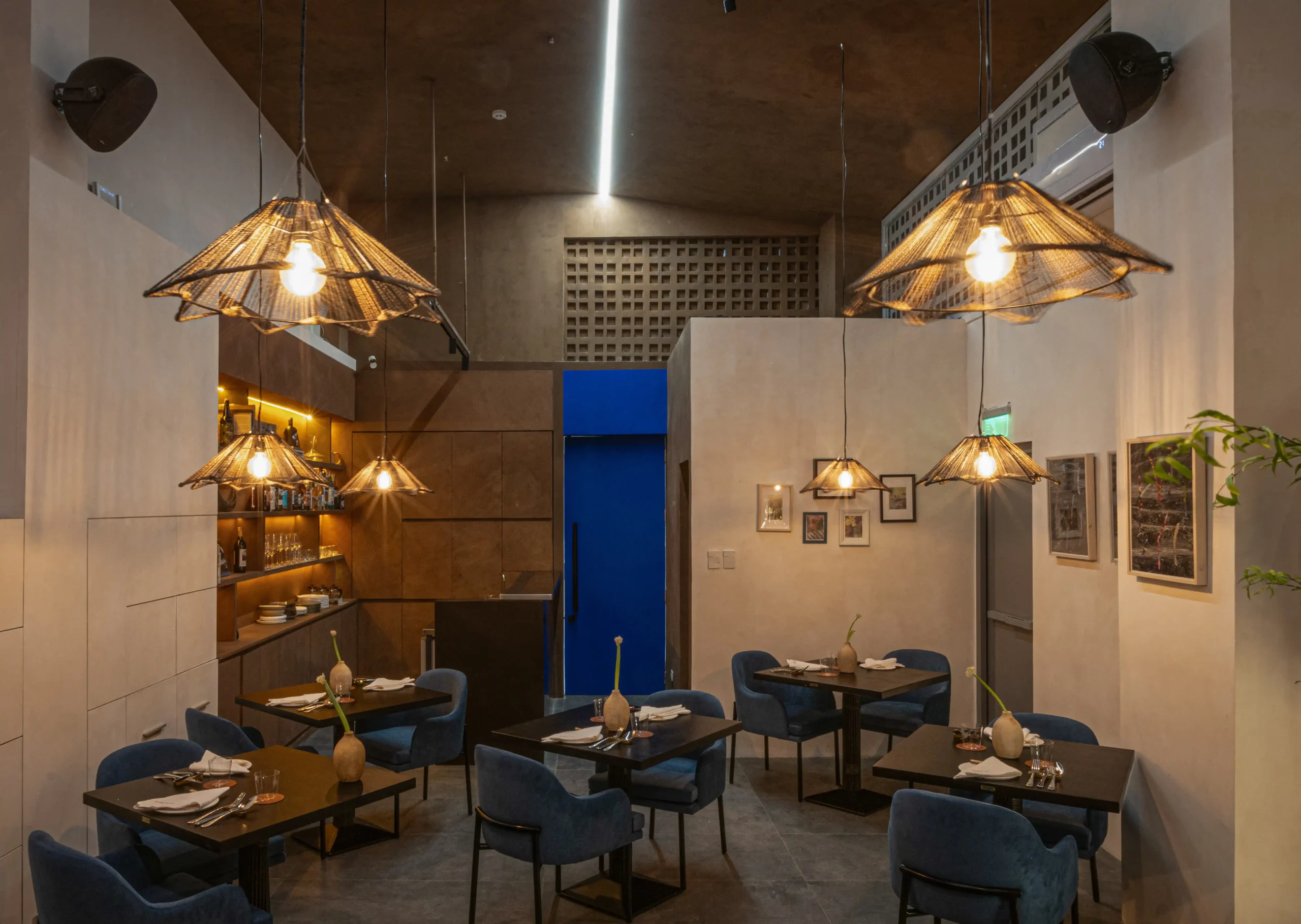
Digámo is tucked within the first floor of the unassuming GCN Building in Marikina Heights’ Narra Street. Admittedly, it can be a little perplexing encountering the restaurant for the first time, its sleek entrance and blue door—complete with a square wall design reminiscent of our local solihiya weave patterns—feeling like an odd man out in the commercial building. But experience a meal in the intimate 14-seater restaurant, and you’ll soon find out why it’s very much worth going out of your way for.
READ ALSO: Savor The Word, Swallow The World
Digámo Shares A Vision Of Neo-Filipino Cuisine
The concept takes its name from the Hiligaynon word digámo, which not only encompasses the act of cooking but also the set up of a shared table, its intimate space offering both an invitation and a distinct perspective.
Like any restaurant worth its salt, the country’s culinary history is where Digámo establishes its foundation, its “neo-Filipino” cuisine marking the “after” of significant chapters: pre-colonial techniques; Chinese trade; and Spanish, American, and Japanese colonial histories. What appears on your plate is a playful, contemporary distillation of these influences, treating them not as “Other,” but as inextricable aspects of our cuisine.
This might seem antithetical to the “de-colonization” ethos Chef Francis strongly advocates for, but it actually reinforces it. Only by acknowledging the indigenization of these foreign contributions can we give full agency and credit to the Filipino cook, who found ways to transform them into something entirely their own.
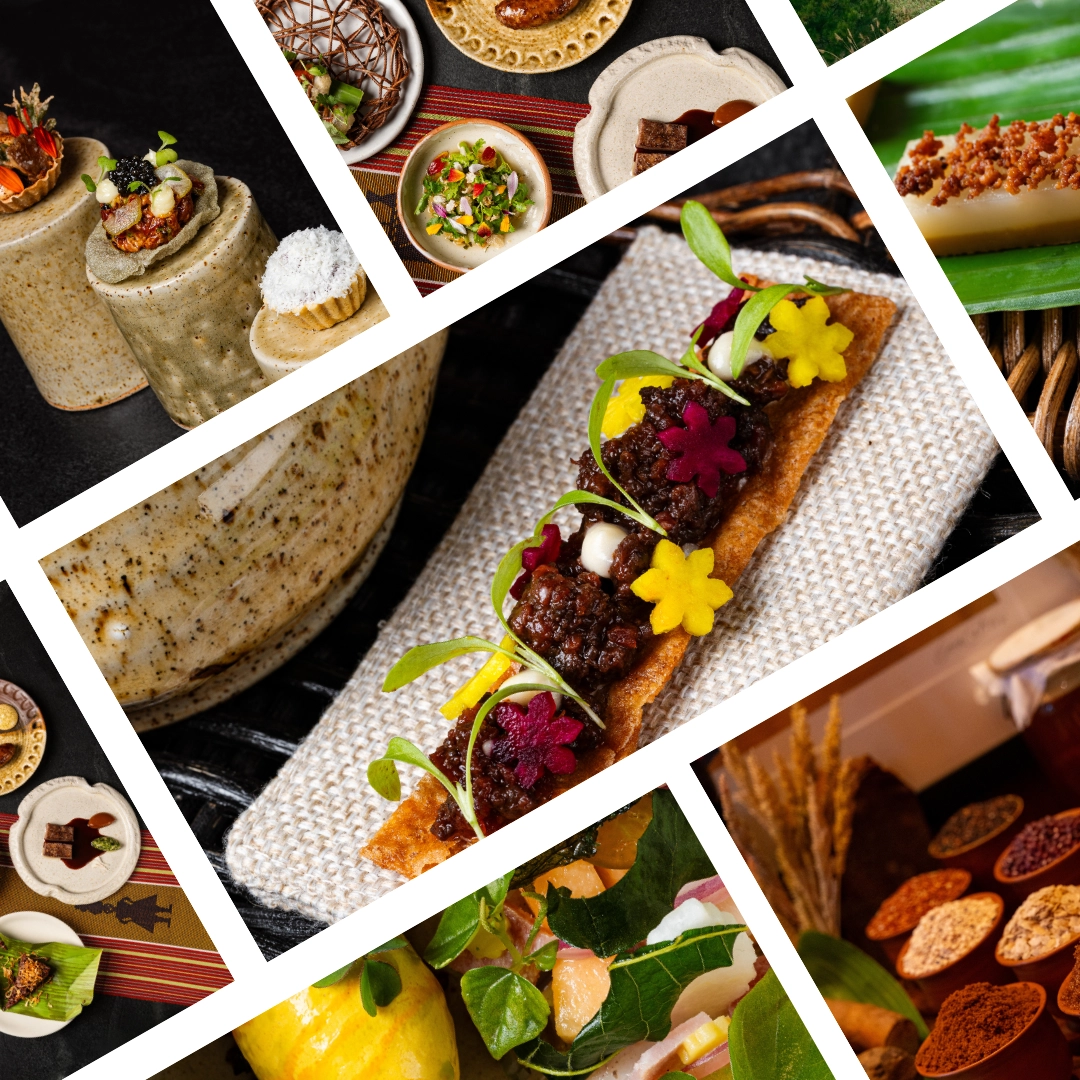
Fittingly, the inaugural Playful Evolution menu of Digámo explores this evolution through the lens of play, making clear that the heart of Filipino cuisine is its dynamism and refusal to sit within a fixed canon. The 10-course menu is one that knows what it wants to be, and how to exist within this diverse web, paying homage to the histories, geography, movement, and of course, personal memories that have made the country’s cuisine what it is today.
Francis Lacson: The Chef Behind The Concept
The chef behind the concept, Francis Lacson, is a man of many hats, and it’s precisely that varied experience that informs his cooking. Having grown up in Mambusao, Capiz—where he helped a family of community cooks prepare generous spreads for large gatherings—he’s no stranger to the rich flavors central to the Filipino palate. His later years working as a seafarer exposed him to a wide range of cuisines that broadened his understanding of food and culture.
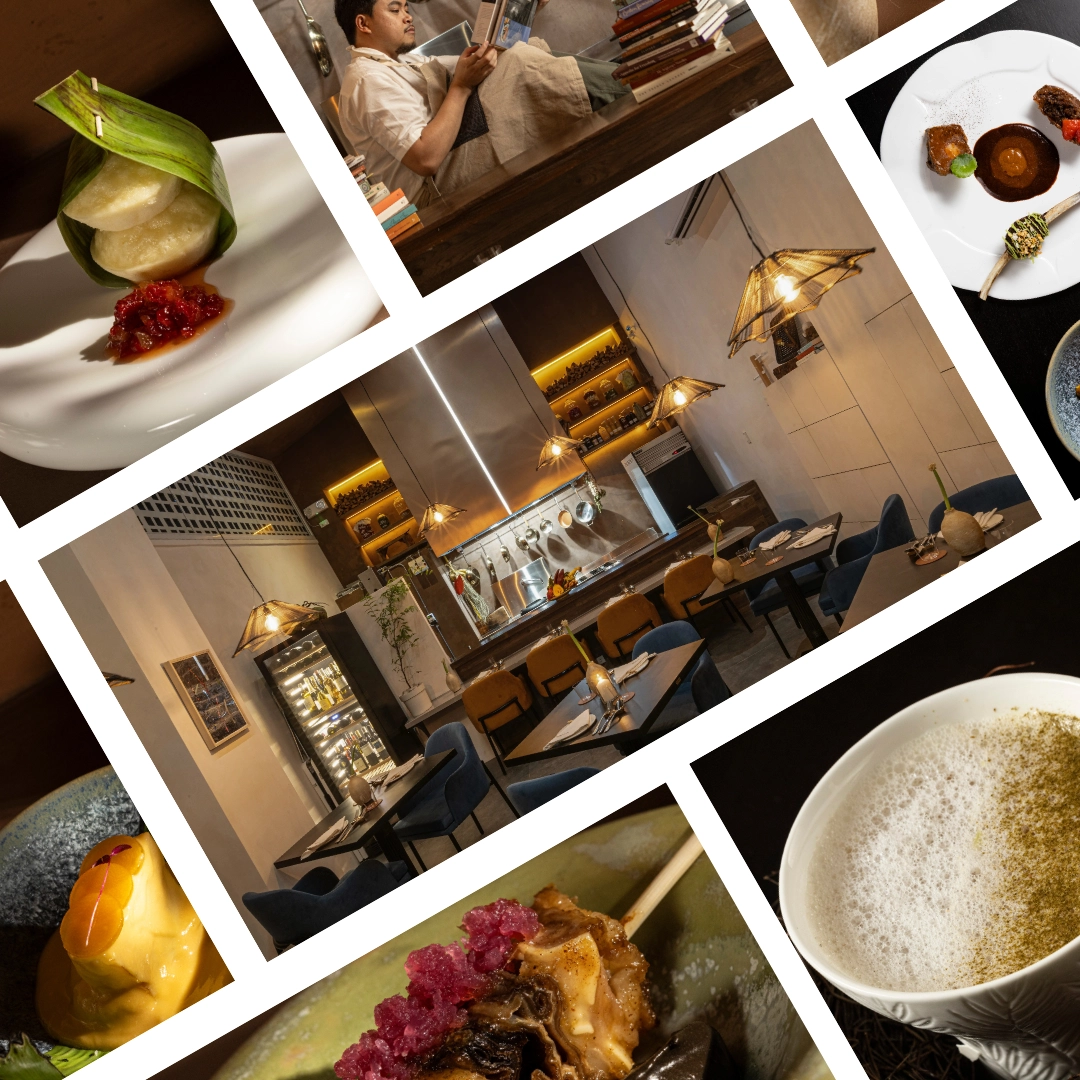
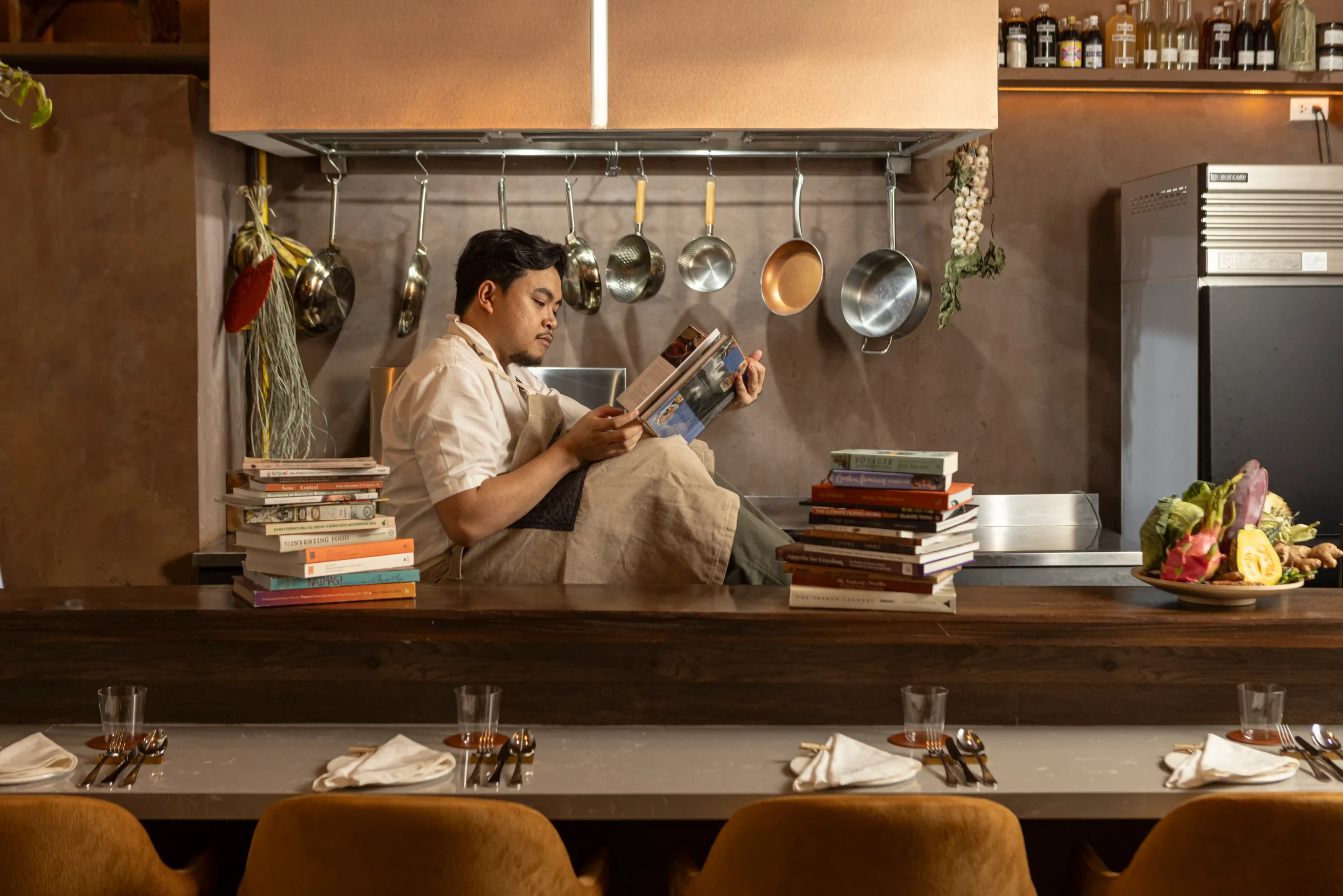
A former journalism student, research and writing have long served as touchstones in his practice. You can feel this throughout Digámo, where shelves lined with cookbooks, history texts, and academic food writing proudly display the thinkers and storytellers who influenced Lacson’s craft, among them Doreen Fernandez, Claude Tayag, and Felice Prudente Sta. Maria. Their books sit well-used, carrying the marks of constant study.
Today, Chef Francis is a three-time recipient of the prestigious Doreen Gamboa Fernandez Food Writing Award and has also earned recognition for his work in food storytelling through video and culinary competitions. Still, cooking remains the truest expression of his passions, and the primary reason Digámo exists at all.
A Closer Look At The Playful Evolution Menu
It’s difficult to choose a single favorite from the Playful Evolution menu; each dish feels like a well-wrought, essential part of a whole. It takes us on a journey through both time and space, sectioning courses based on different periods in history, as well as parts of the archipelago—though Ilongo cuisine remains a strong fixture in the overall picture, introducing us to the place Chef Francis calls home.
Word play, pre-colonial techniques, foreign influences, as well as contrasting yet harmonious flavors and textures, all play a role in the selection.
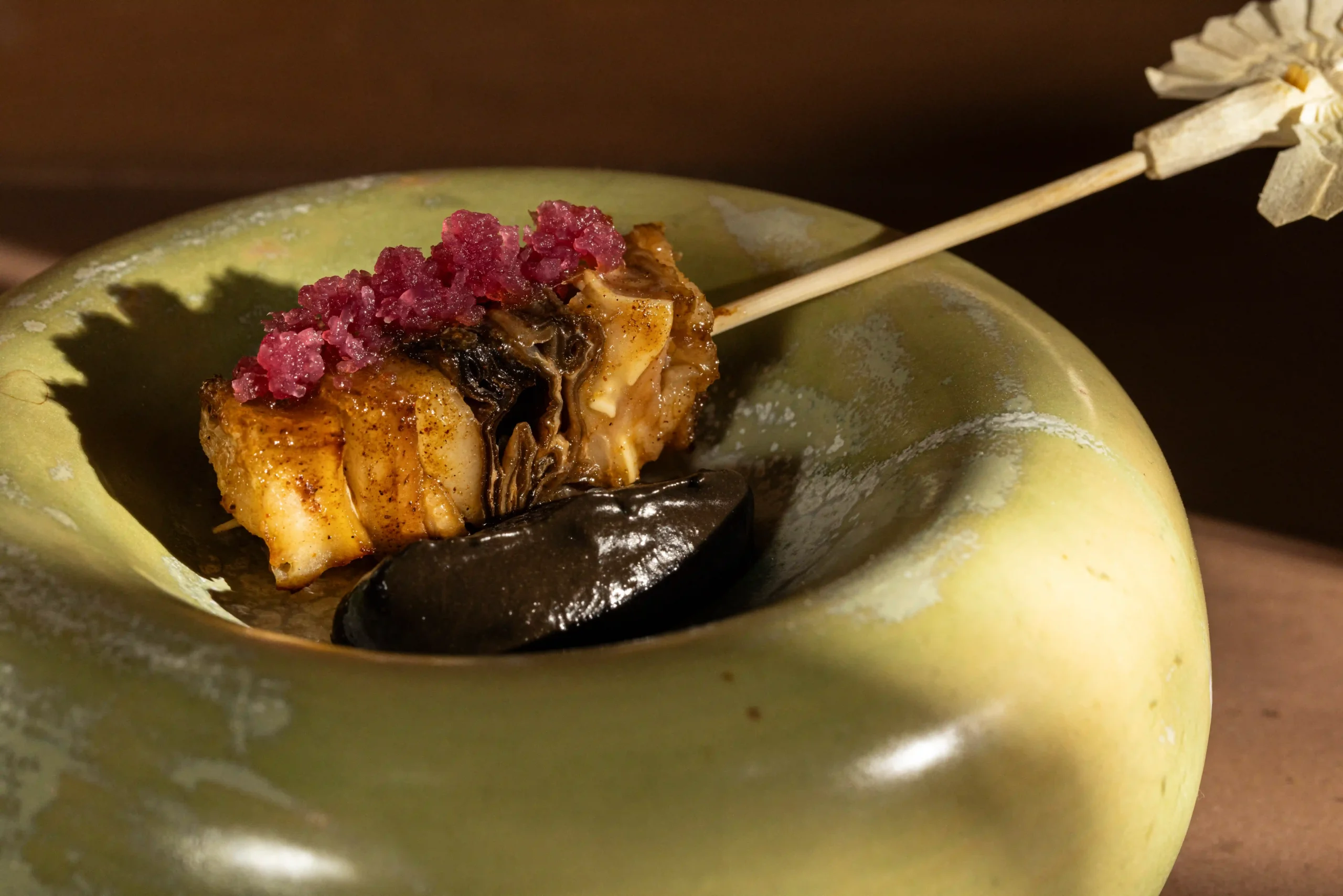
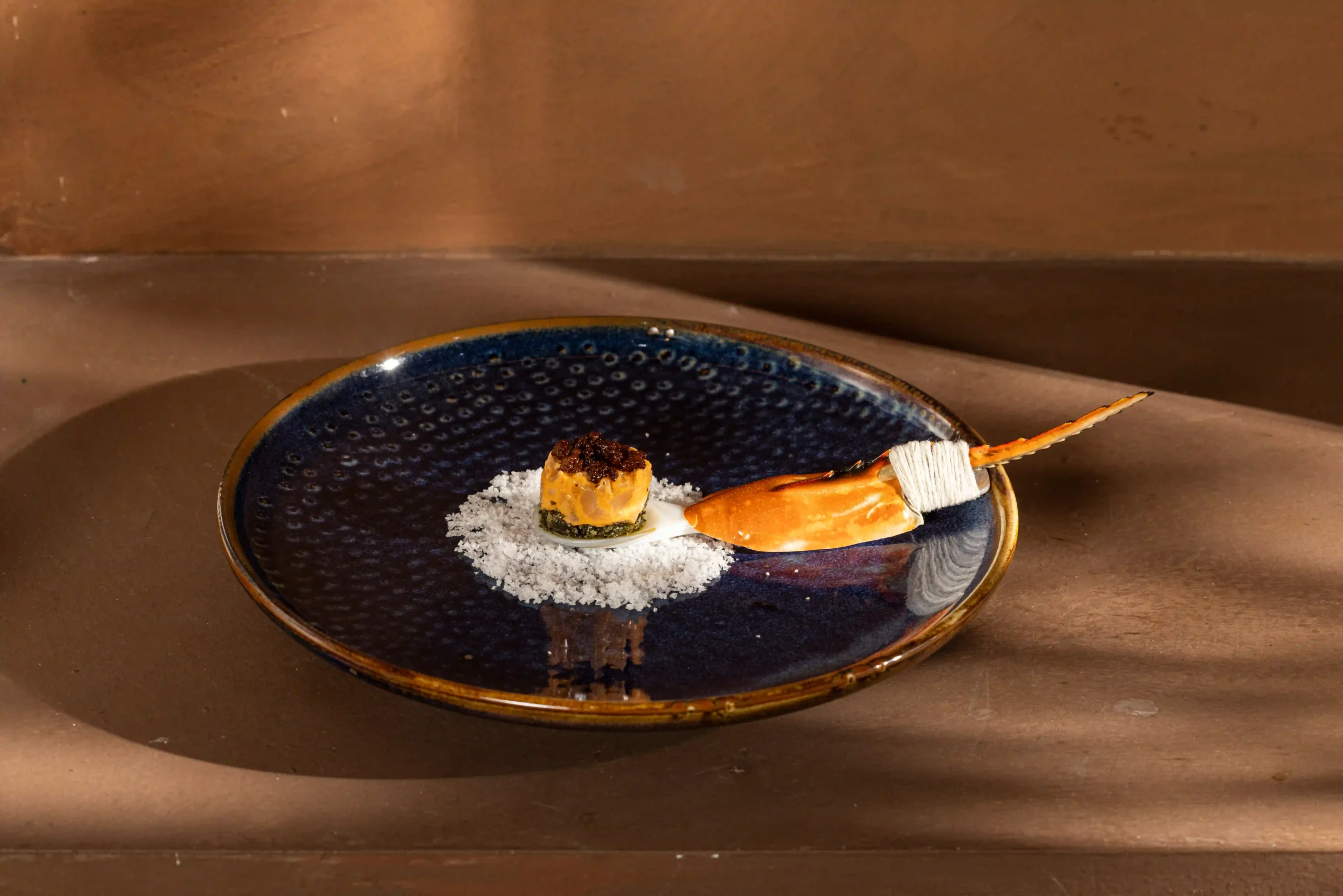
The starter Tenga at Tenga at Tenga explores the many forms of “ears” in cuisine: tenga ng daga (mouse ear mushroom), tenga ng baboy (pig’s ears), and abalone, considered the tenga or ear of the sea, combined into a single delicious skewer that’s meant to be enjoyed in three separate, satisfying bites.
There’s the Kinilaw, which by now has become a staple across many Filipino fine dining restaurants, but Digámo’s version still deserves mention. Thick, fresh cuts of the catch of the day—tanigue, or Spanish mackerel, when Lifestyle Asia visited—rest on a bed of ubod ng niyog and pili, while a vibrant citrus vinegar sauce cuts through with brightness. It’s a reminder of the power behind what Doreen Fernandez once described as our “liquid fire,” the acid curing the fish in a rush of clean, zesty intensity.
The Linagpang soup is another personal favorite, a deceptively simple dish layered with deep umami flavors. It pays tribute to the Iloilo delicacy linagpang na dumaraga, traditionally made with shredded meat from dumaraga (free-range female) chicken, ginger, and shrimp paste or sinâlay. Digámo’s iteration presents the dish in a more compact, refined form, but its comforting essence remains intact. The spiced broth, touched by the tartness of libas or hog plum, is meant to be sipped first before digging into the gelatinous layer of chicken resting underneath.
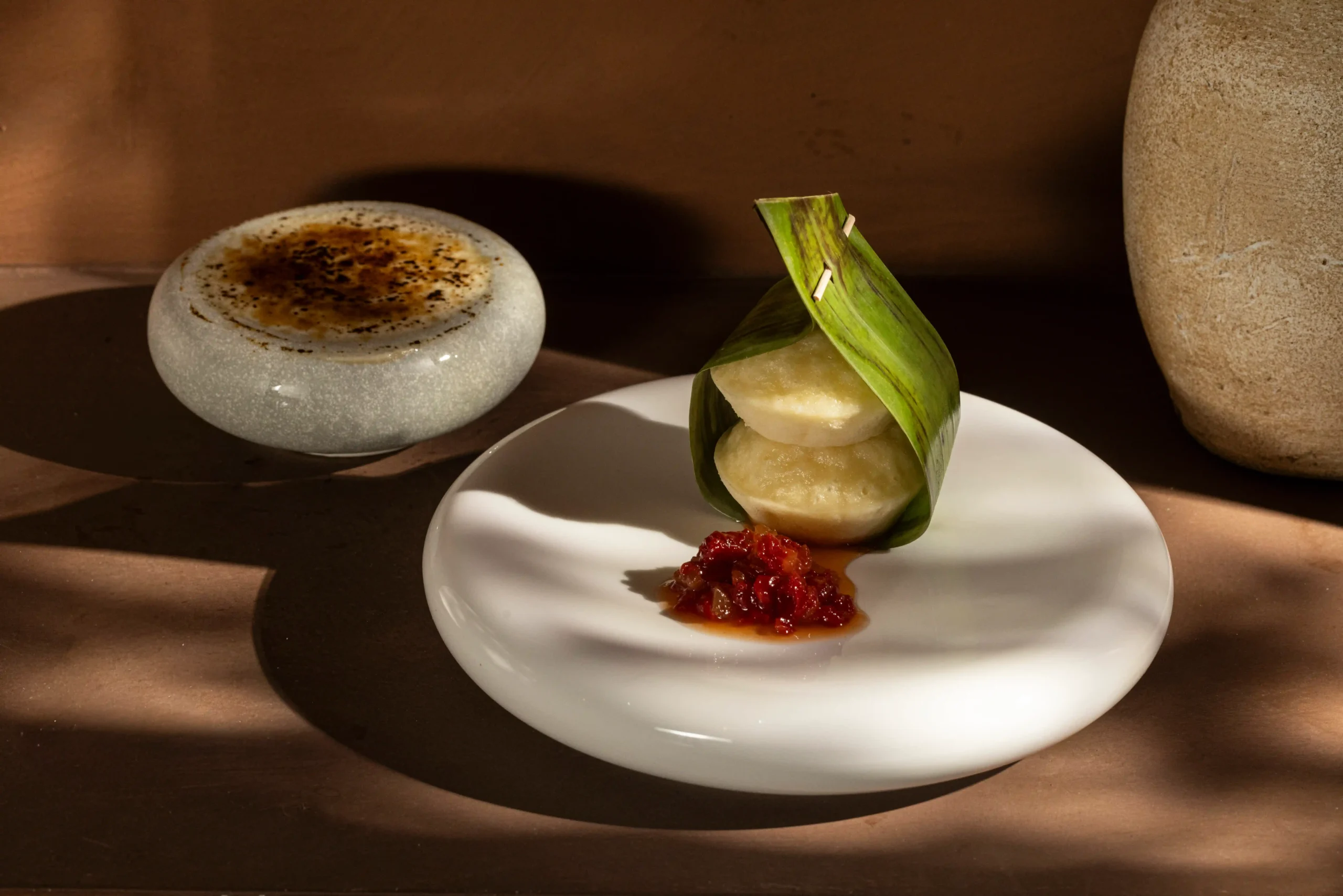
The Kulawo is also a delicious discovery, puto served with the namesake dip of freshly grated coconut and eggplant smoked to taste like meat, and complemented by a sweet watermelon jam.
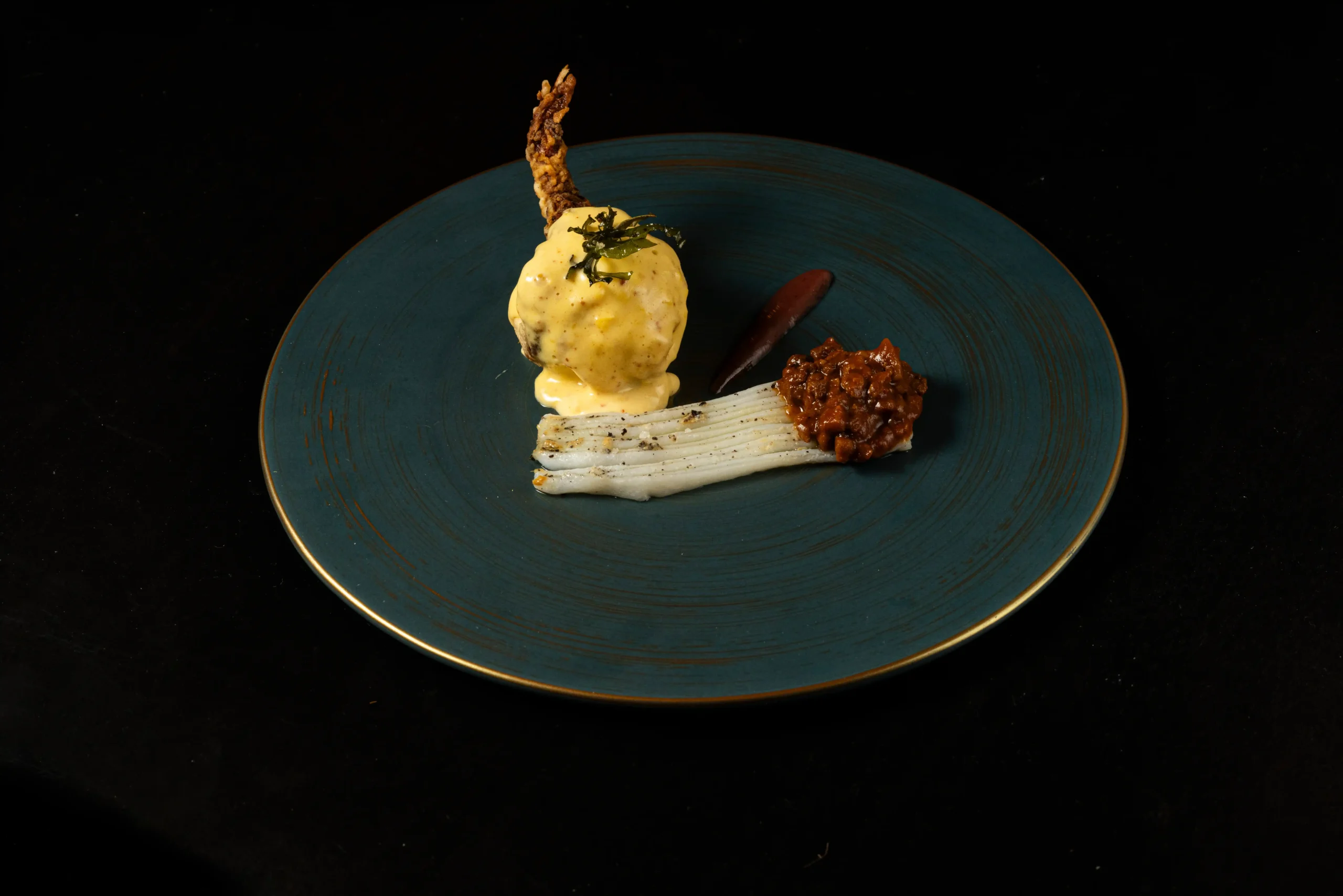
The Chinese influence is translated through the Pansit Batil Patung: miki noodles made from leeks served with carabao beef, a poached egg, and Toyo Malabon on the side as a dipping sauce—a special patis or fish sauce that packs a savory flavor without overly salting the dish. America’s culinary contributions are seen through the dish C3, a reference to the code of a popular fast food franchise’s spaghetti and fried chicken combo, though with inventive seafood twists: soft shell crab fried crisp outside and juicy inside, served with squid cut up like spaghetti and topped with a seafood bolognese sauce.
Sarsa Confusion is a cheeky presentation of three Spanish-influenced stew dishes that are often confused for one another and used interchangeably: menudo, kaldareta, and mechado, all of which are transformed into bite sized viands served with arroz valenciana (an Iloilo-Spanish dish). It invites you to taste the difference, but won’t mind you staying pleasantly confused, either.
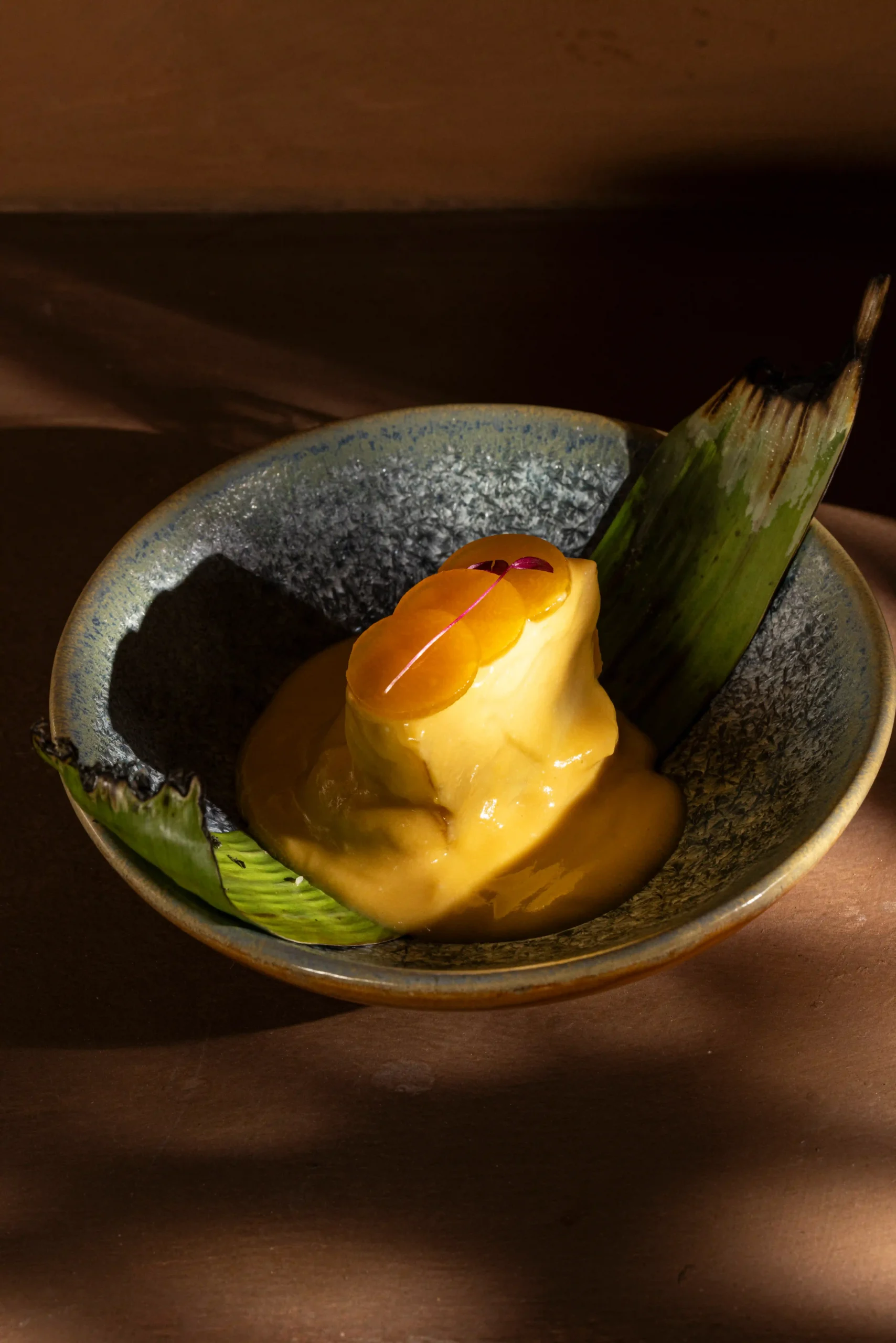
The dessert is something to eagerly anticipate as well. The Iskrambol channels the nostalgic street treat through layers of guyabano, asin sa buy-o (a salt from Zambales wrapped in nipa leaves) and slices of caramelized Bukidnon pineapple. Meanwhile, Five Stages of Coconut celebrates the “Tree of Life” by using every stage of the coconut’s maturation, pairing the fruit with grilled binatog and tapioca pearls for a multi-layered interplay of texture and balanced sweetness.
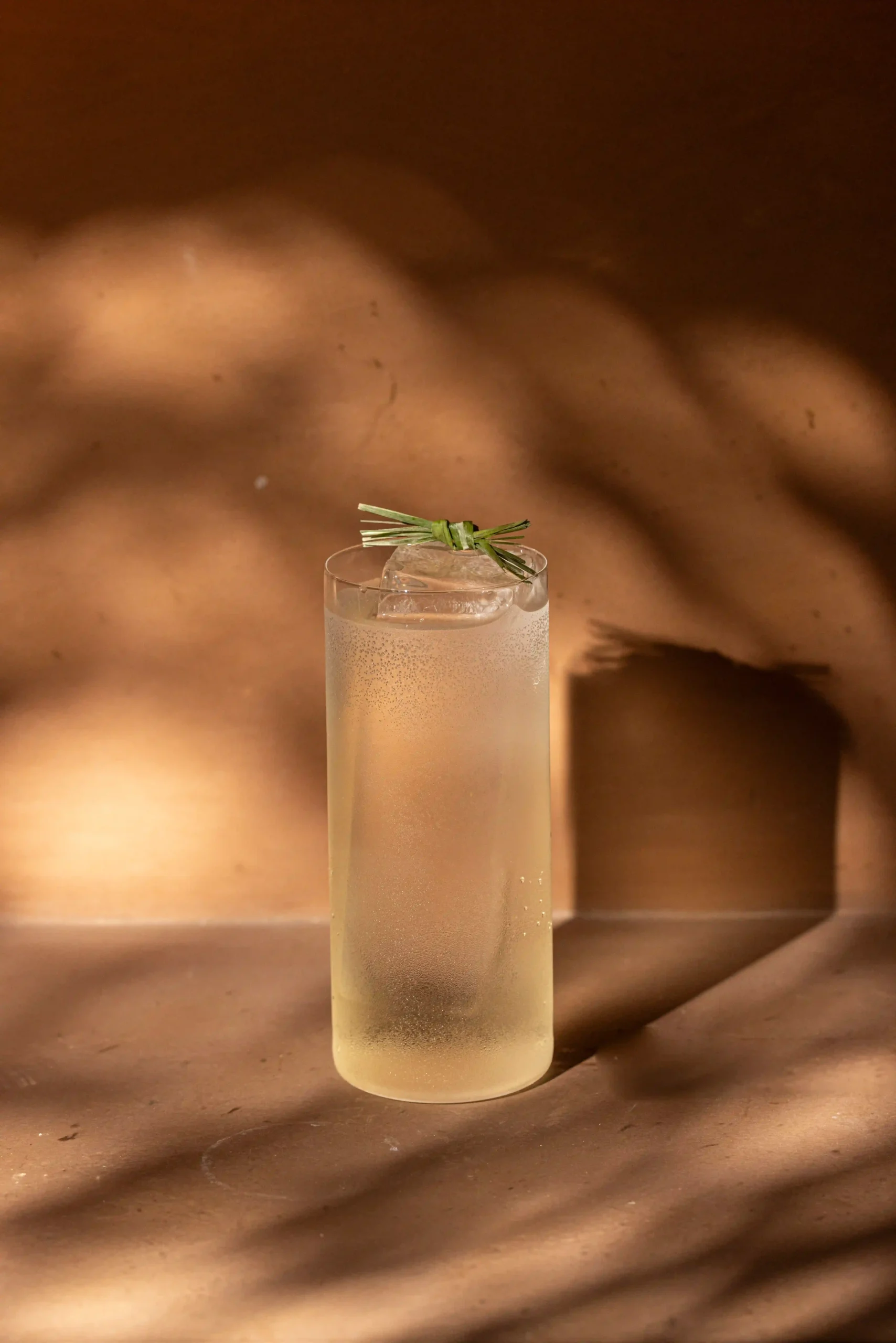
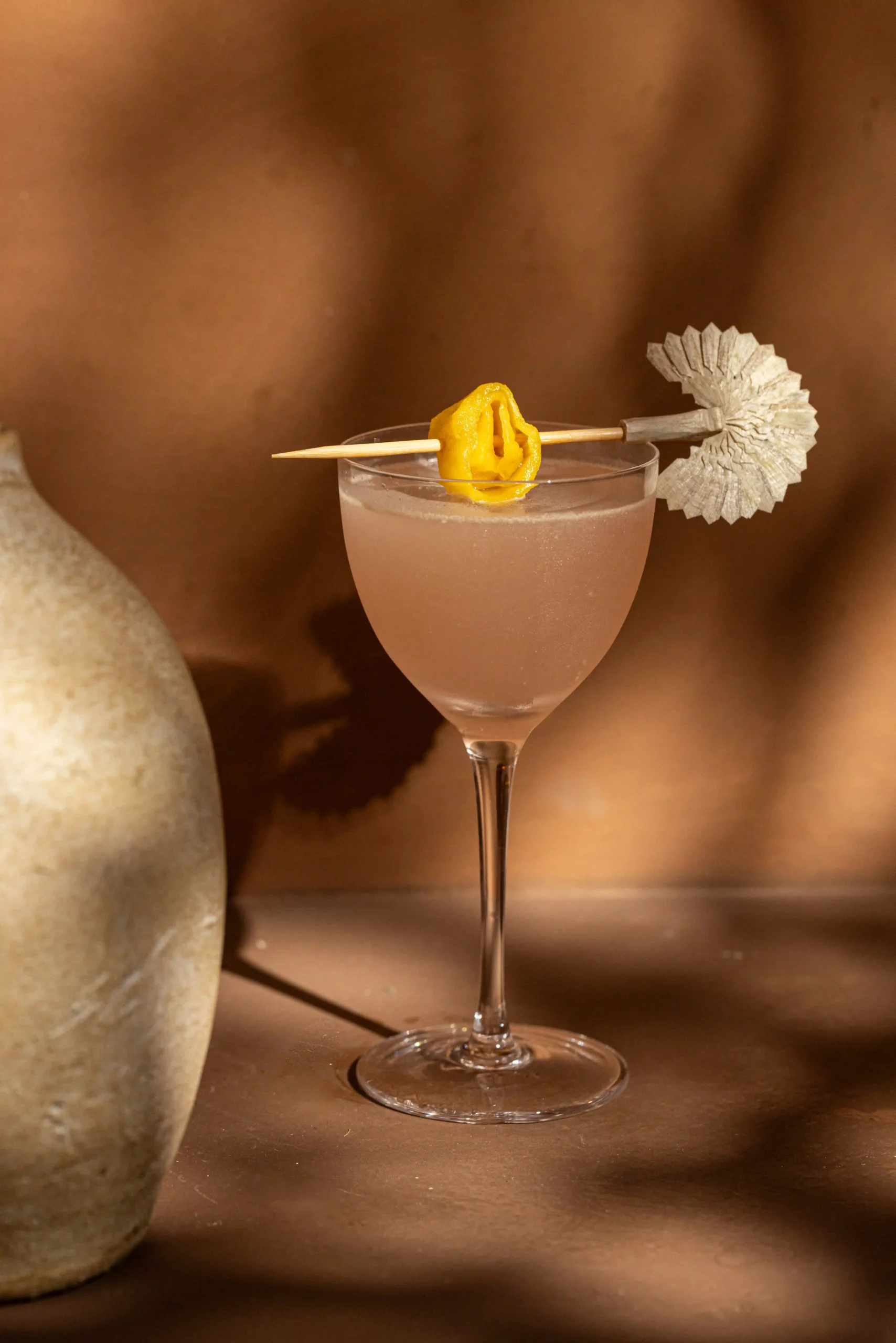
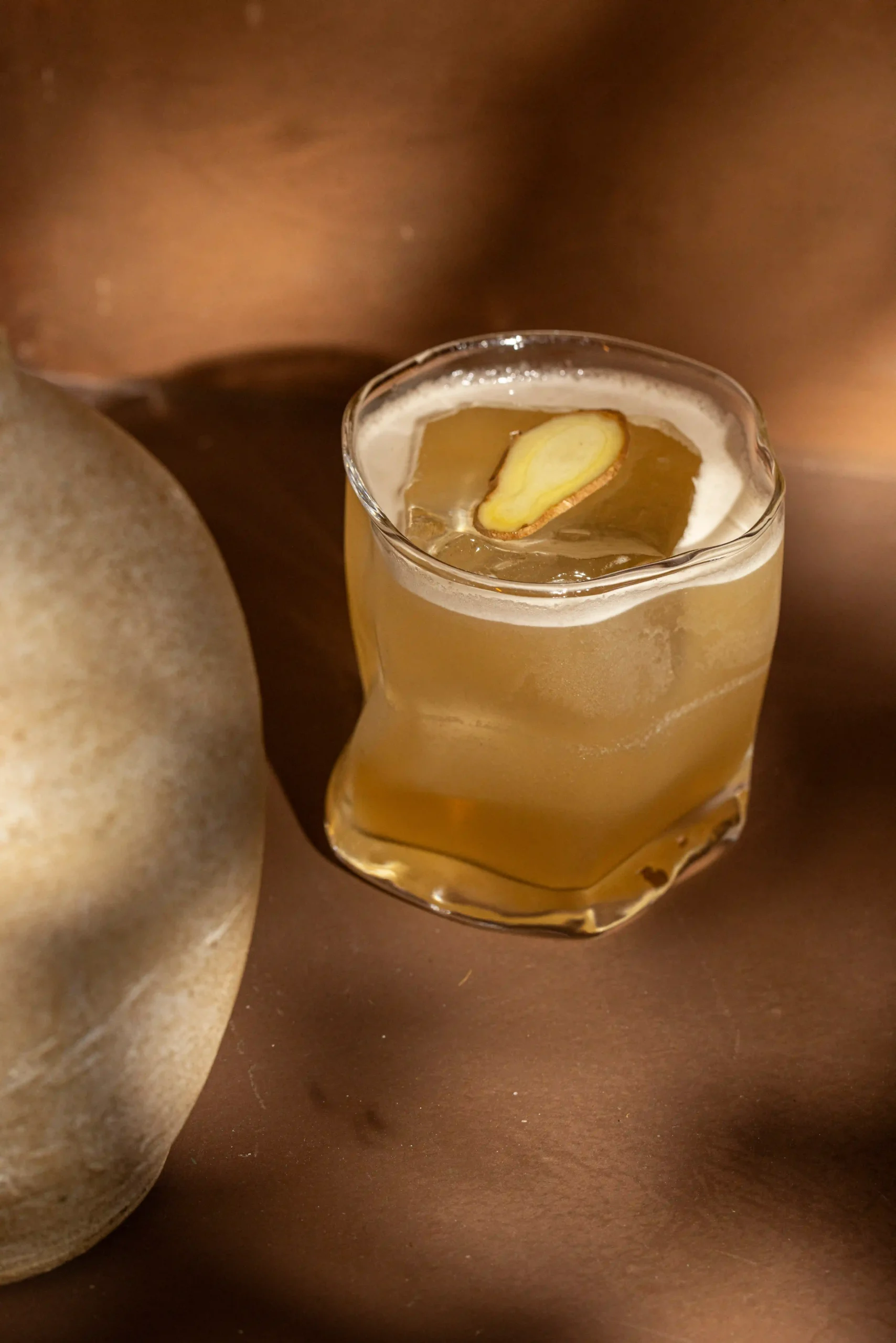
The cocktails are standouts as well, with the beverage menu divided into sections inspired by the Spanish, Chinese, and American periods, categorized according to the origins of their ingredients and techniques. The Nipa Highball is a must-try, presenting a pleasantly rounded sweetness elevated by an addictive touch of Pinakurat vinegar that pairs wonderfully with the menu’s heartier courses. Also not to be missed is the Langka Trade Cooler, which incorporates Vino Kulafu Herbal Wine—a drink whose roots trace back to Chinese immigrants in the Philippines—while langka provides a punchy contrast.
Deepening The Conversation On Filipino Food
These are just a few of the dishes that make Digámo’s overall project as a concept evident from the get-go: that to eat is to learn. Intellectual and literal nourishment go hand in hand, and it begins with an understanding and appreciation of what we’ve chosen to build from our mosaic-like history.
A line of light leading to what Chef Francis fondly calls the “dirty kitchen” (his chef’s table) cements this philosophy, proving that there’s no discipline without generosity, and no interest in what we call our own without the approachability to encourage dialogue.
“Digámo is a longer table,” Chef Francis explains. “It’s a place for better and deeper conversations about Filipino food. It comes from the desire to honor where we come from while allowing our cuisine to move, question, and grow.”
True enough, leaving Digámo, you can’t help but learn from the past, savor the present, and look forward to what the future has in store—which is pretty much all you can ask for from a meal that places curiosity and pleasure at the forefront.

The “Playful Evolution” 10-course Tasting Menu is available at ₱3,500+ in the main dining area, and ₱3,950+ in the dirty kitchen/chef’s table. Digámo is located on the first floor of the GCN Building, 240 Narra Street, Marikina Heights, Marikina City. For reservations and wine pairing options, visit www.digamo.ph, and follow @digamo.mnl on Instagram for updates.
Photos courtesy of Digámo
Frequently Asked Questions
Digámo is a 14-seater fine dining restaurant in Marikina Heights, created by Chef Francis Lacson. It offers a neo-Filipino tasting menu that explores the Philippines across time and space—honoring its culinary past, celebrating its present, and imagining its future. The experience is designed as both intellectual and sensory nourishment, rooted in Filipino food history and storytelling.
Digámo is located on the first floor of the GCN Building on Narra Street in Marikina Heights. Chef Francis Lacson chose Marikina for its cozy, unpretentious charm and its growing reputation as a hub for homegrown culinary concepts. The restaurant itself is tucked into an unassuming building, with a sleek entrance inspired by local solihiya patterns.
The 10-course Playful Evolution menu features neo-Filipino dishes inspired by pre-colonial traditions and Chinese, Spanish, American, and Japanese influences. Highlights include Kinilaw, Linagpang soup, Kulawo, Pansit Batil Patung, C3, Sarsa Confusion, and Filipino-inspired desserts like Iskrambol and Five Stages of Coconut. The cocktail program is similarly themed, with drinks divided into Spanish, Chinese, and American influences such as the Nipa Highball and Langka Trade Cooler.
Digámo is a 14-seater fine dining restaurant in Marikina Heights created by Chef Francis Lacson, offering a neo-Filipino tasting menu that explores Philippine culinary history from the precolonial period through to the present.
Digámo is on the first floor of the GCN Building on Narra Street in Marikina Heights. Chef Francis Lacson chose the city for its cozy, unpretentious charm and its growing reputation as a hub for homegrown culinary concepts.