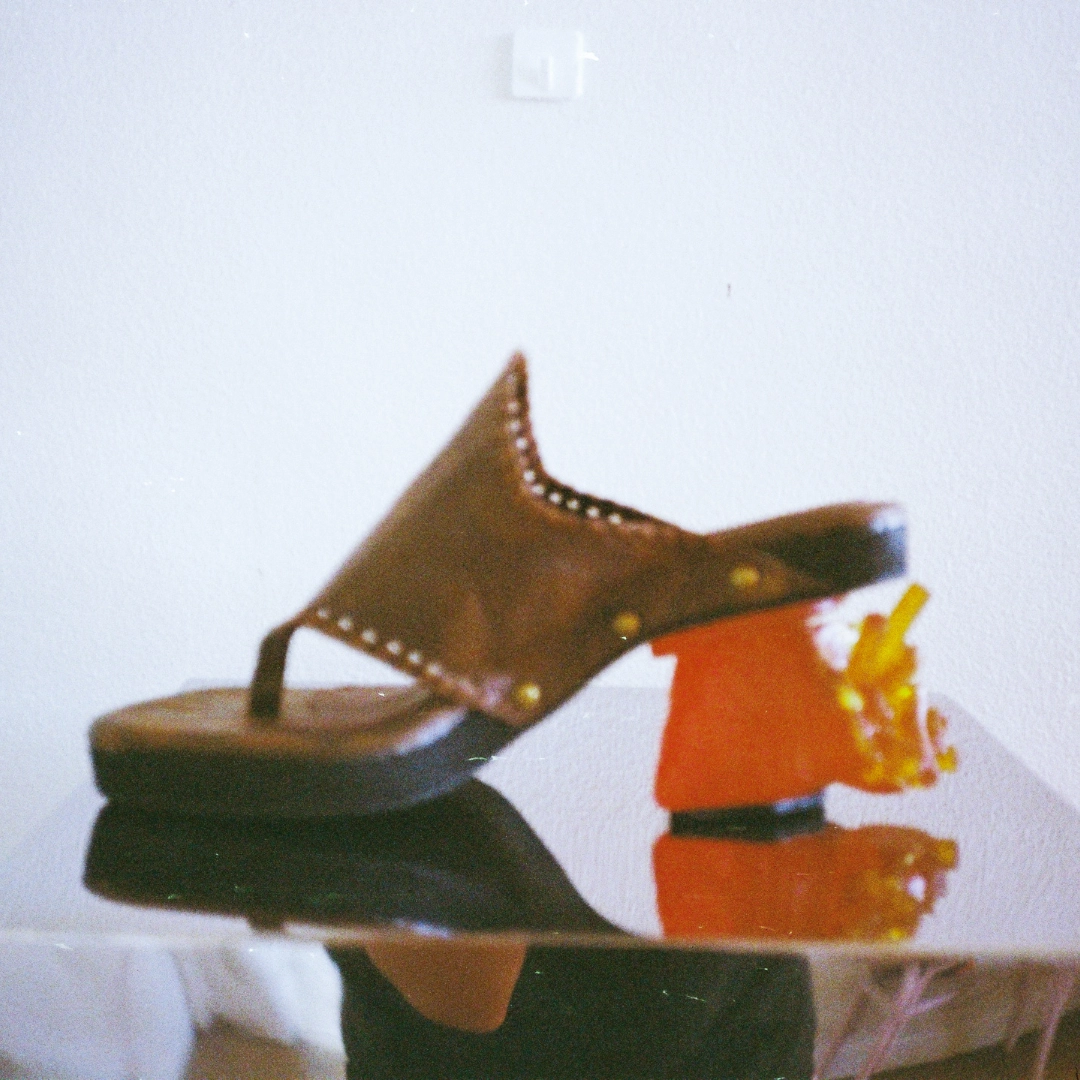
The exhibition transforms the bakya—brought to life by fashion label JOS mundo, as well as creatives Nash Cruz and Serena San Jose—into a site of cultural memory and material experimentation.
Local fashion label JOS mundo continues to expand its visual language beyond clothing and footwear with the launch of the exhibition Parang Parang. Running until May 31 in the brand’s Poblacion showroom, this project examines Filipino identity through material experimentation. JOS mundo is widely known for its tropical-inspired womenswear and Marikina-designed shoes, and has collaborated with creatives Nash Cruz and Serena San Jose in a project that exists as fashion, installation, and cultural study.
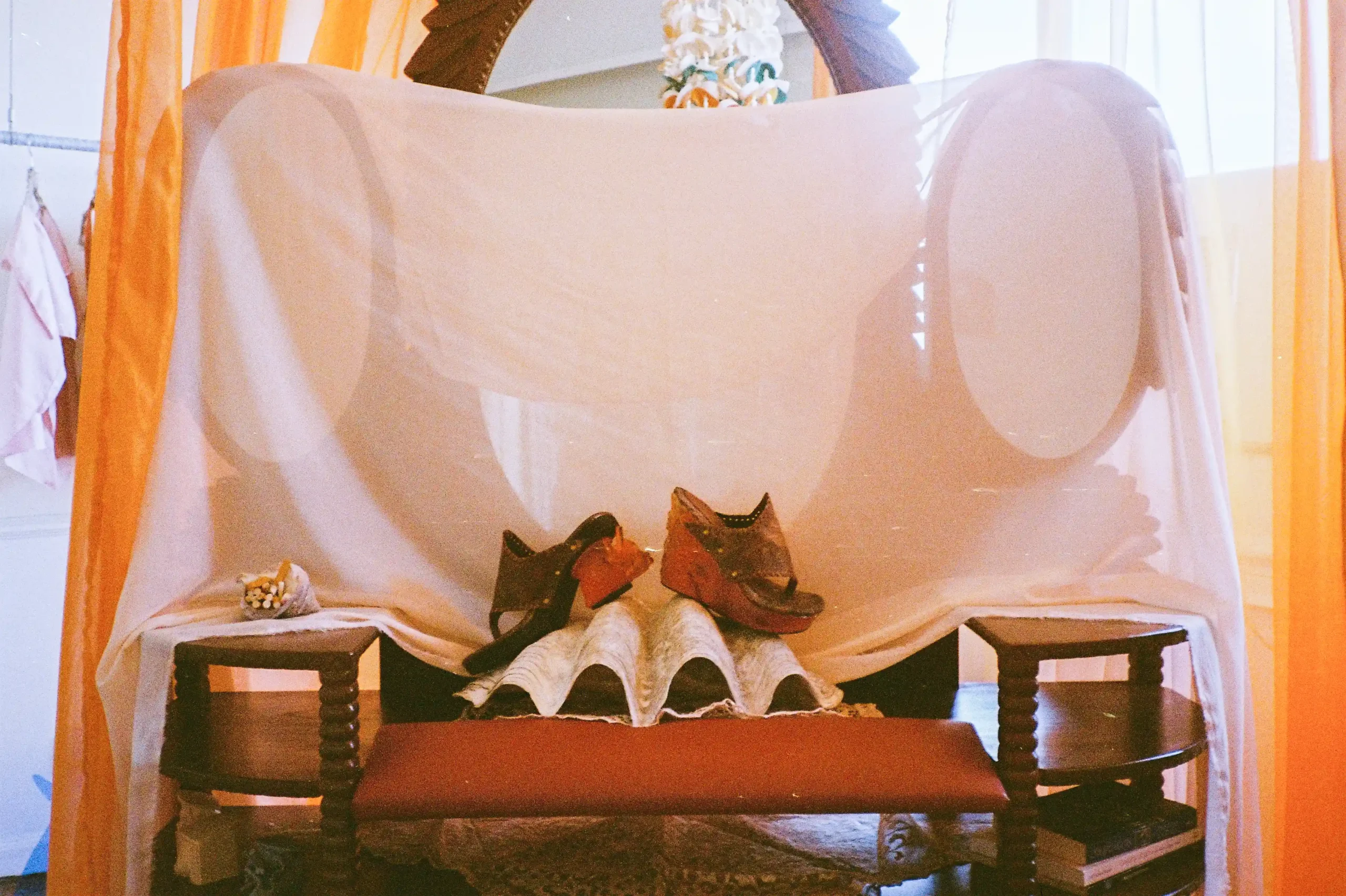
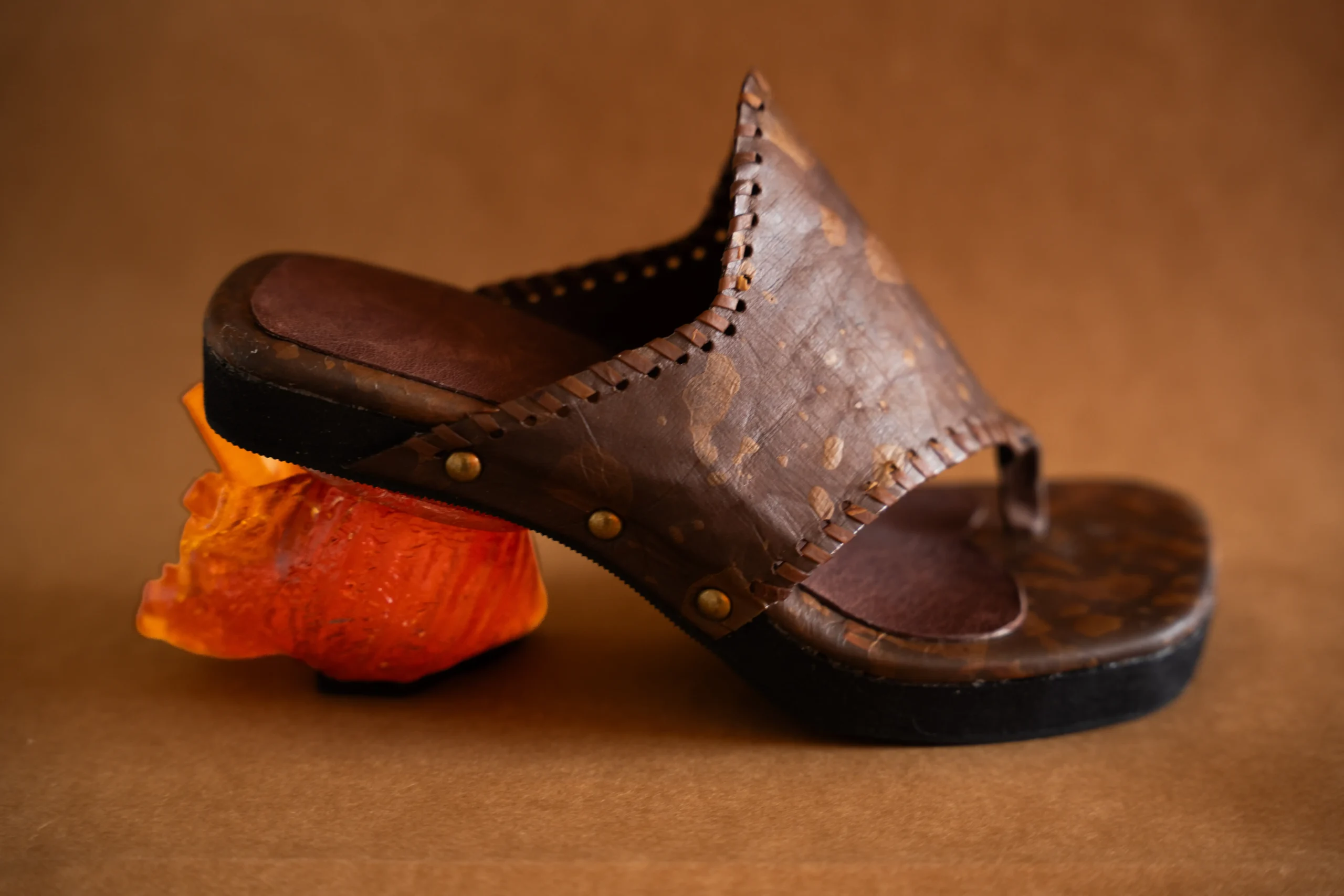
A reworking of the brand’s cult-favorite “Parang Bakya” shoe is the focal point of the exhibition. Through a combination of digital processes such as 3D scanning, modeling, and printing—alongside analog techniques including resin casting, and leather and fabric manipulation—Parang Parang explores how cultural symbols can be transformed without losing their historical weight. The project treats the traditional bakya not solely as footwear, but as a living object shaped through reinterpretation and repetition.
READ ALSO: Adrienne Charuel On Invisible Labor And Her New Collection “Lagda”
How Parang Parang Reworks The Bakya
Nash Cruz approaches the bakya as both a cultural signifier and a material open to remixing. His broader project titled Island Souvenir mirrors this fascination, the work reflecting on Filipino cultural memory. “Island Souvenir is the broader ongoing study that came out of this,” he shares in a statement. “A personal obsession with Filipino cultural memory and the way mythologies get packaged into objects and images, caught between fantasy systems and the counter-systems that resist them.”
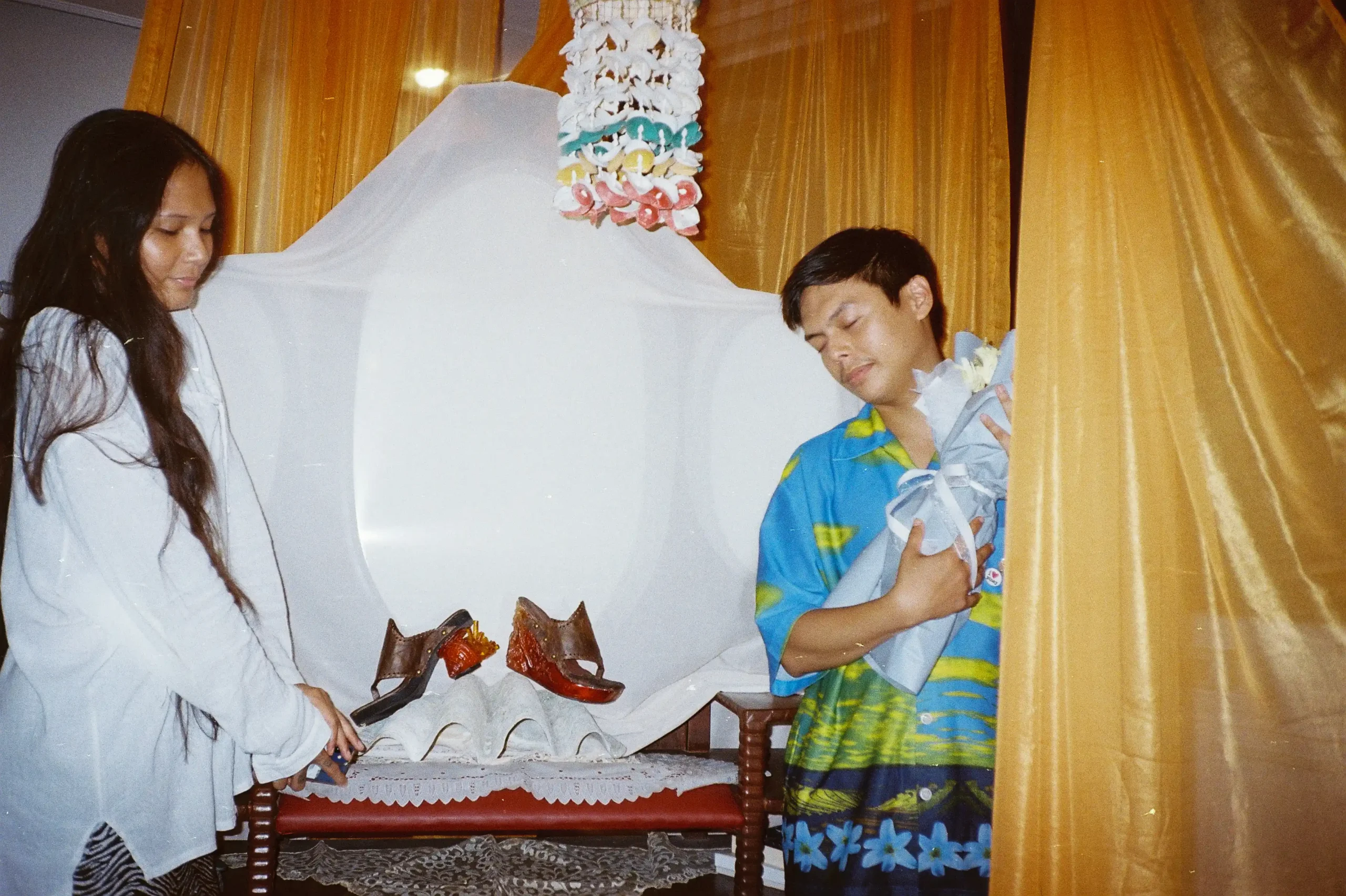
The exhibition also interrogates the instability of authenticity, asking what happens when traditional forms are replicated and altered through contemporary technologies. “The new object is now placed as a derivative of its original cultural object, or what [Jean] Baudrillard calls a simulacrum: where the copy no longer refers back to a real original,” Nash explains. “It stretches the ontology of the bakya: what it is, how it’s made, and what counts as ‘real.'”
The title Parang Parang itself gestures toward this uncertainty. In Tagalog, repetition often intensifies meaning, yet here the phrase suggests hesitation and ambiguity. The doubled word becomes a meditation on imitation and approximation, reflecting the exhibition’s interest in objects that exist between original and copy, tradition and simulation. “It loops,” Nash adds. “It’s a failure of precision, or a gesture toward something unnameable—as if stuttering from comprehending.”
Memory And Process
A major component of the installation is JOS mundo designer Serena San Jose’s experimentation with SCOBY leather. Discarded kombucha cultures are transformed into the alternative material through layering and drying techniques that expound on the exhibition’s fascination with process, mutation, and memory.
“The shape is also affected by the necessary stirring of the kombucha brew, so the pellicles tend to take on irregular shapes,” Serena explains. “The SCOBYs here are patchworked on top of each other so they can all meld together in drying. At the same time, this layering allows customization of the textile’s thickness and other characteristics (stretch, translucency, etc.)”
Parang Parang is further supported by a book featuring supplementary text by Sofia Guanzon. The publication includes found images; archival photographs from the artists; and documentation of the production process behind the wedge, heel, and SCOBY leather upper.
Expanding The Dialogue
Parang Parang also incorporates works by artists Cian Dayrit and Vee Lazo. On how the collaboration with Vee came to be, Nash shares: “I met her properly at a friend’s house for a dinner. That was the time I showed her my Island Souvenir series, and the intention to see the works in print, in a different iteration (which is through analog and digital fabrication).”
“It was through that convo that I got introduced to JC Reyes, who came on to collaborate on the 3D modeling and printing, alongside Matt Monteverde,” he continues. “Her [Vee’s] practice isn’t just a reference here, it’s part of how this project actually came together.”
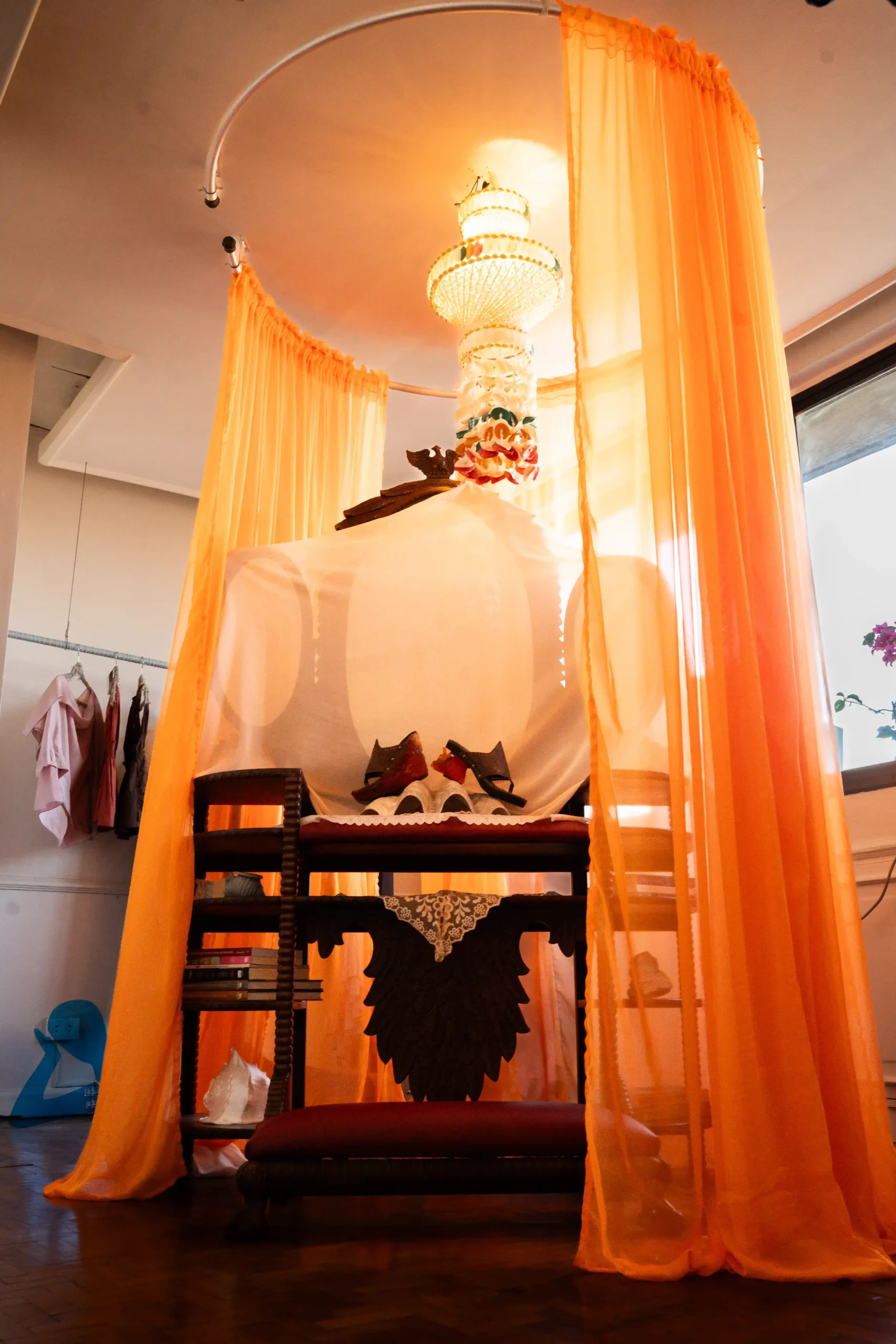
Meanwhile, Cian’s “Tiis Ganda, Kutis Amerikana,” a mahogany vanity retrofitted into a kneeling altar, supplements the show’s dialogue through the “subversion of Western aesthetics and forms,” as Nash puts it. Namely, the distinctly Filipino tendency to repurpose objects in ways that are different from their original intended use, which reflects the “pursuit of an alternative way of thinking.”
By combining fashion, sculpture, digital fabrication, and archival material, Parang Parang presents itself as an evolving study of Filipino identity through objects that are continuously remade, reinterpreted, and placed into new cultural contexts.
Photos courtesy of JOS mundo
Frequently Asked Questions
Parang Parang is an exhibition by creatives Nash Cruz and Serena San Jose that explores Filipino identity through a reimagining of the JOS mundo “Parang Bakya,” melding fashion, digital fabrication, sculpture, and material experimentation.
Parang Parang is being held until May 31, 2026 at JOS mundo’s showroom in Poblacion, Makati.
Parang Parang features works that involve 3D scanning, 3D printing, resin casting, leather manipulation, fabric treatment, and SCOBY leather fabrication.
Sofia Guanzon wrote the supplementary text included in the exhibition’s companion book.
Works by Nash Cruz and Serena San Jose are displayed in Parang Parang. The exhibition also includes works by Cian Dayrit and Vee Lazo.