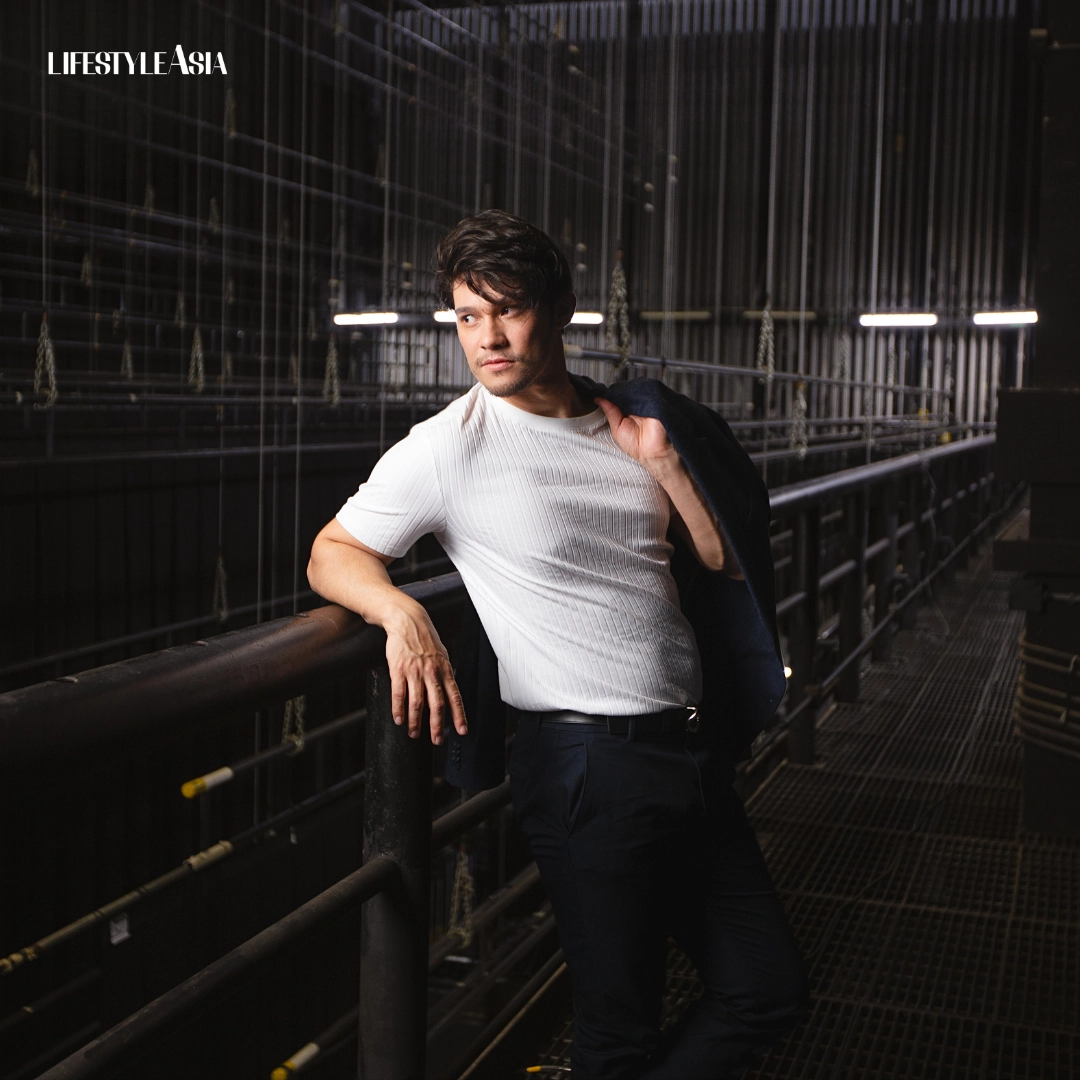
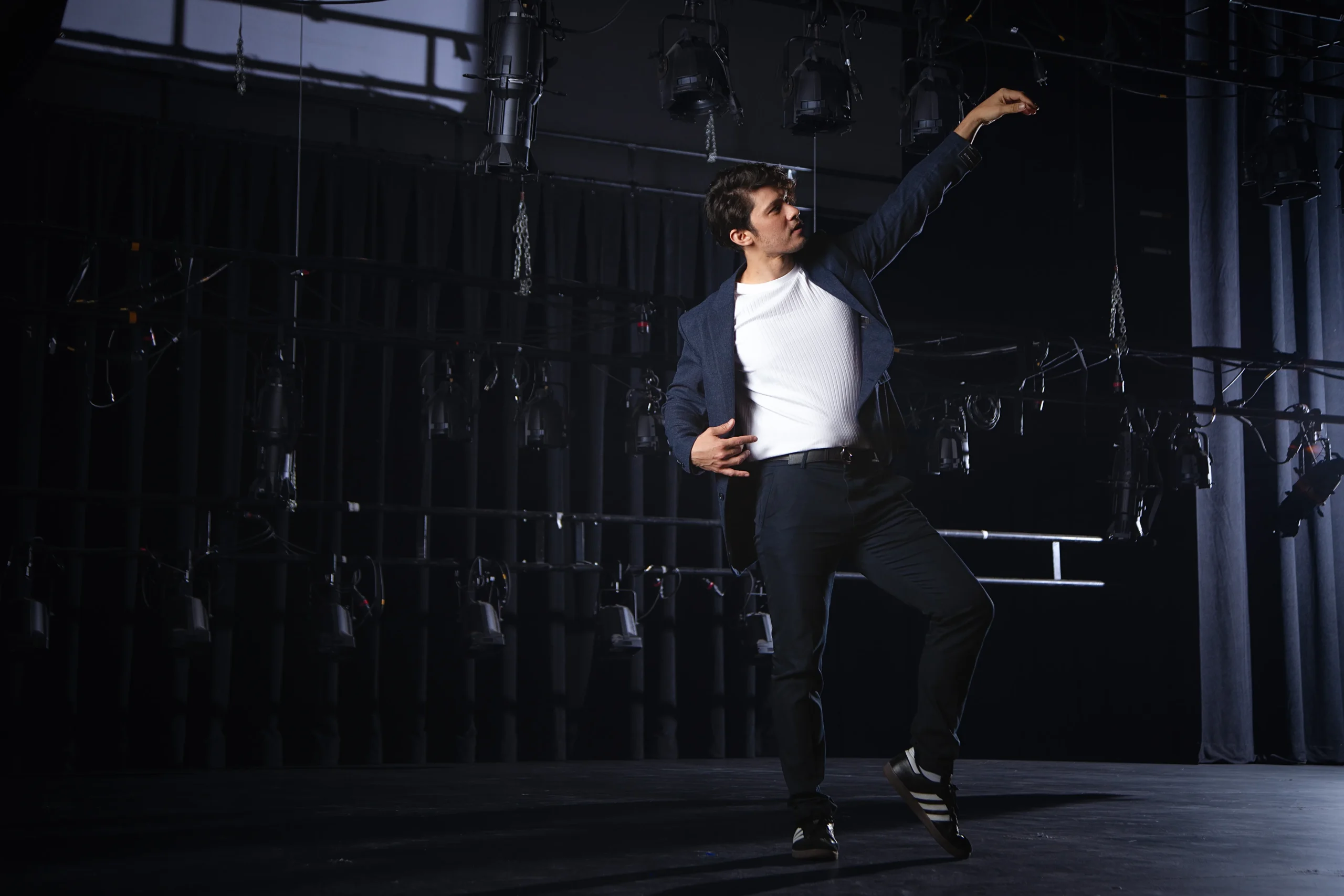
Whether onstage or off, love is an act of constant and conscious building that informs the way performer Laurence Mossman moves through the world. We sit down with the Filipino-Kiwi actor ahead of his leading role as Middle Noah in Theatre Group Asia’s The Notebook, The Musical.
We’ve been attempting to understand the experience of love for as long as we’ve had the sounds and words to express even a fraction of its immensity. Time and again, we fail to settle on a single, unified definition. Editor Daniel Jones, in the introduction to Modern Love—an anthology of essays from the beloved The New York Times column of the same name—once wrote that “…love, for me, is less about definitions than examples.” So, let’s begin with an example. A man named Noah Calhoun never forgets the love of his life; he writes her countless letters despite their star-crossed circumstances; he builds an entire house in the hope that she’ll one day return; he chooses her again and again. He’s a character generations have come to associate with unwavering love, and one that Filipino-Kiwi actor Laurence Mossman now portrays during his middle years in Theatre Group Asia’s (TGA) production of The Notebook, The Musical.
Ask anyone what love means to them, what forms it takes, and you’re likely to receive a different answer each time. Laurence Mossman has a few of his own. Ahead of the September 2026 run of The Notebook, The Musical, the actor sits down with Lifestyle Asia to discuss what it means to love, both on and off the stage.
READ ALSO: Conrad Ricamora On The Truths Of Being A Performer
The Road To Becoming Noah In The Notebook, The Musical
Currently based in London, Laurence steps into The Notebook, The Musical with a career that spans stage and screen across multiple countries. Audiences may recognize him from his acclaimed turn as Thuy in the international and Australian tour of Miss Saigon, a performance praised for its vocal power and emotional nuance, or from earlier leading roles like Charlie Price in Kinky Boots, Young Ebenezer in A Christmas Carol, Sky in Mamma Mia!, and multiple roles in Fun Home opposite Lea Salonga. Beyond theater, he has also appeared in the television series Dolce Amore (2016) and the widely-praised Filipino film Die Beautiful (2016).
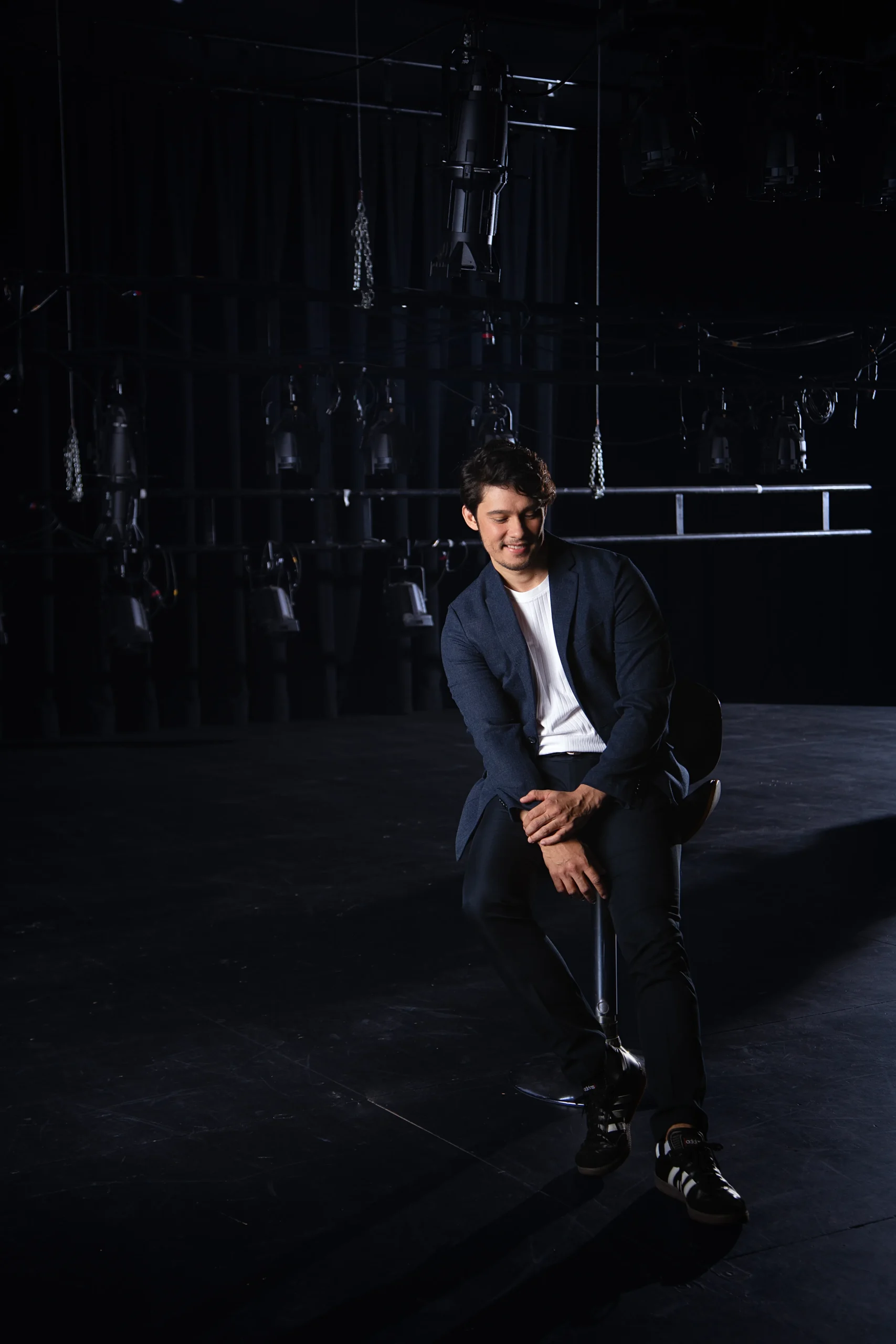
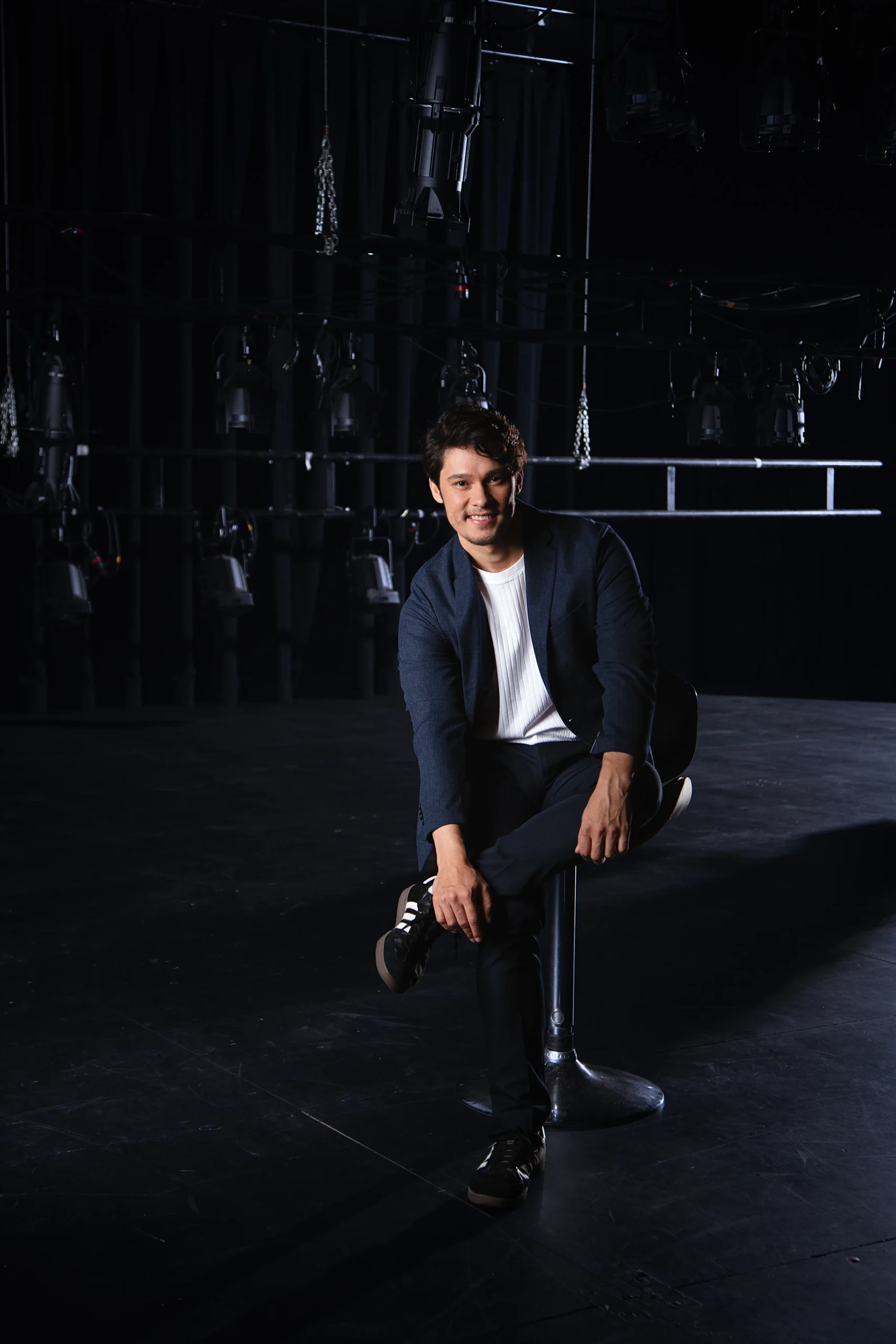
I ask Laurence where Noah fits in this growing list of roles and his evolution as a performer. “I’ve played a romantic lead in Kinky Boots [as Charlie Price], and that helps inform my process going into this,” he begins. “With Thuy [from Miss Saigon], he was a very conflicted character with a lot of beliefs and core values—he wanted to fight for what he believed in. It’s that combination of Charlie’s romantic youth and the pressures he faces, and Thuy’s strong beliefs, that informs Middle Noah.”
What Noah offers to the performer is a journey driven by a rare kind of love, the one that doesn’t come your way too often. That once-in-a-lifetime quality compels the character to fight for his relationship with Allie Hamilton, even in the face of her parents’ disapproval. “I think Noah represents that ultimate experience of being lucky enough in life to find someone or something you’re just deeply passionate and drawn to,” Laurence elaborates. “If you find a person who makes you feel that way, of course you want to hold on to that feeling.”
The Many Visions Of Love On Stage
There’s a reason why The Notebook has captivated people across multiple art forms. Nicholas Sparks turned a sweeping love story—loosely based on his then-wife Cathy’s grandparents, who had spent 60 years of their lives together—into a best-selling novel in 1996. In 2004, director Nick Cassavettes turned that tale into a hit film, with Ryan Gosling and Rachel McAdams breathing life into these characters so impeccably, it cemented them into pop culture. In 2024, the story was reimagined as a musical featuring the songs of famous American songwriter Ingrid Michaelson and a book by Bekah Brunstette.
This September 2026, TGA brings that story and its soulful score to Philippine audiences. Laurence, for one, understands why it’s likely to strike a chord here, considering how deeply romance is woven into Filipino culture.
“Filipinos are really going to enjoy this. We love drama, we love love,” he shares. “You have three different versions of Noah, and everybody in the audience will relate to Noah and Ali at different points in their lives. We might relate to the first love that we had ever had, or our first heartbreak. We all want to find love, we all want to find things that you’re passionate about. I don’t know what the end product is going to look like yet, but I know it’s going to be something deeply personal, and people are going to see glimpses of themselves.”
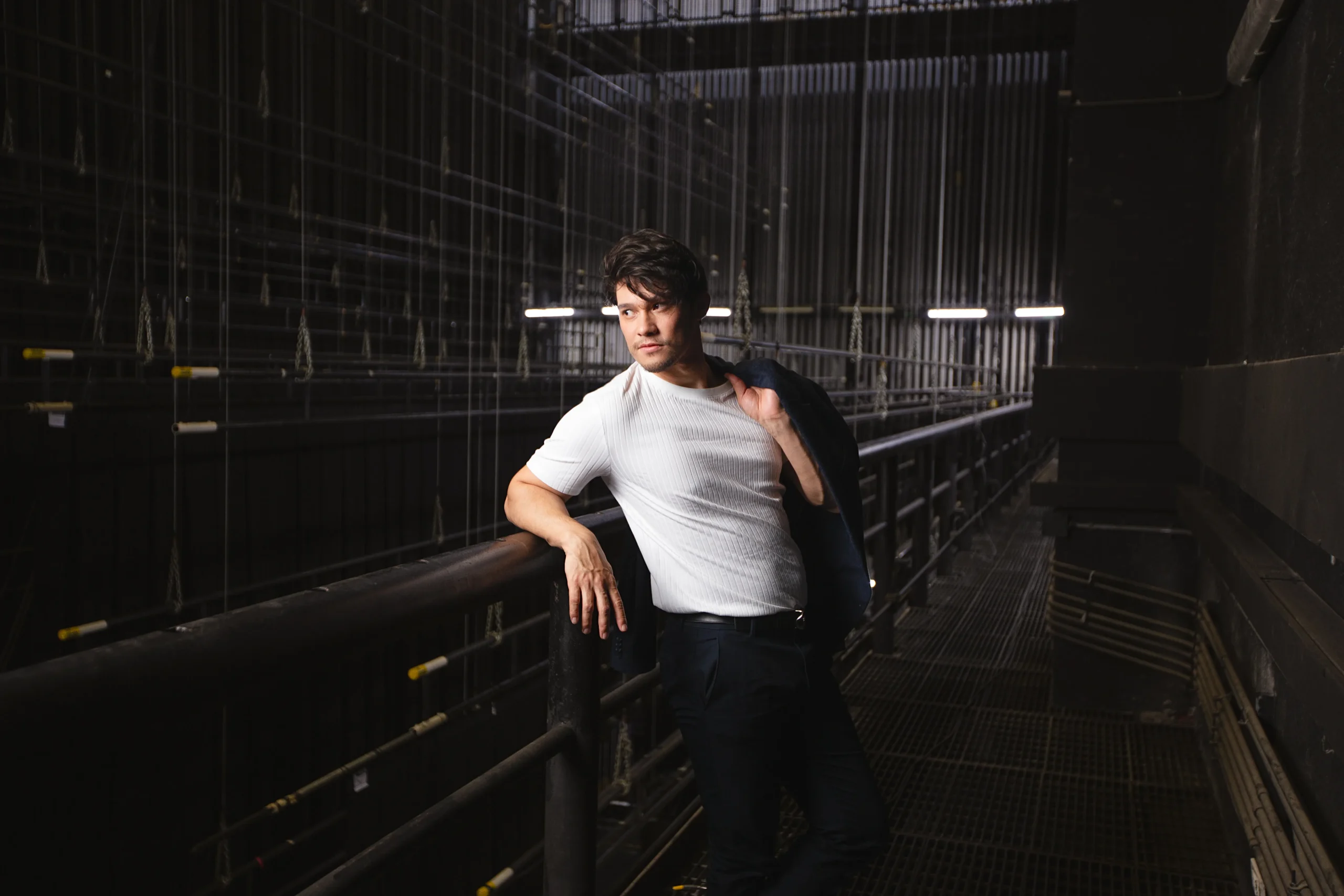
While rehearsals have yet to begin, Laurence is looking forward to working with his cast of seasoned veterans and young professionals. “To be surrounded by artists of such immense experience, and seeing how amazingly talented the younger ones already are, is just exciting,” he explains. One of the more intriguing aspects of this process is working with actors of different generations, each playing a different version of Noah. “It’s going to be interesting to navigate: trying to make it look like it’s all one character across three time periods in his life.”
On what his version of Noah brings to the table, Laurence notes, “He’s no longer a teenager who’s just completely optimistic. He’s been through a lot; he’s going to be a fun character to play, because of that internal struggle. He knows what he wants, he’s found something in life that he really wants—he just can’t get it at that point.”
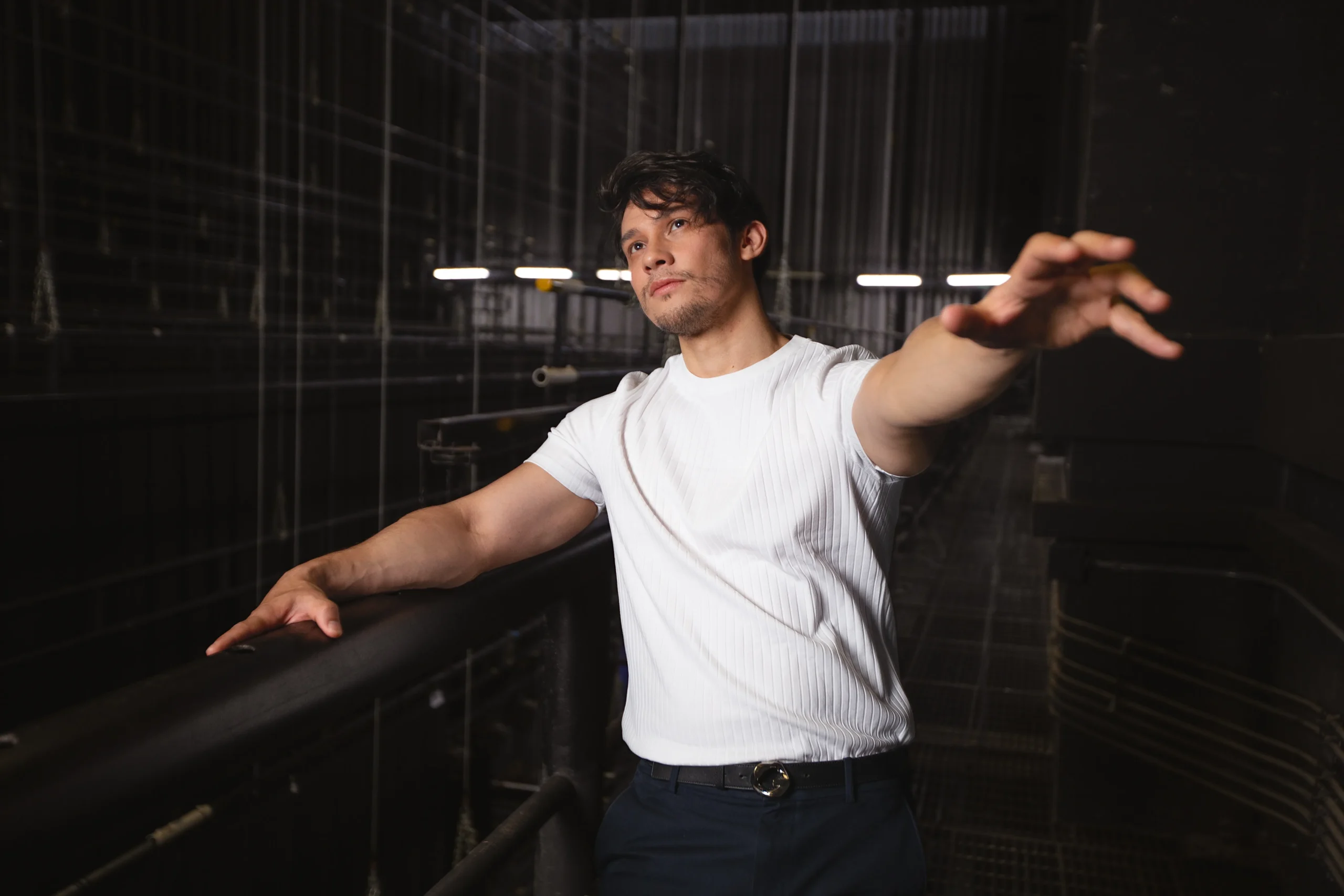
The love that fuels Laurence’s character isn’t solely the romantic kind. On a more meta level, it exists offstage too, within the actor himself: a devotion to the craft and ardent care for the people who bring it to life. When I ask what keeps theater exciting after all these years, he doesn’t hesitate: “It’s being able to create stories and experiences and memories with others—your fellow castmates, all the production team, and the crew. There’s a lot of people behind the scenes who work very, very hard to make these things happen.”
Theater, to the performer, is also a love letter to the self, penned in song. “I’ve tried a lot of different things in my life, and nothing else makes me happier than singing,” Laurence expresses. “That’s when I’m at my happiest. That’s when I’m at my most true self. The irony of that is that I’m playing other characters, pretending to be other people, yet I feel most myself doing it.”
Come As You Are: Laurence Mossman On Being A Part Of Two Cultures
If Noah has taught Laurence anything, it’s that coming as you are is the first step to being seen—and, by extension, the first step toward finding sincere love. Like his character, who pushes against the boundaries imposed by class and expectation in pursuit of the woman he loves, the performer has experienced his own share of feeling like a fish out of water. Growing up biracial in New Zealand, Laurence often found himself on the outside looking in, caught between two identities and uncertain of where he truly belonged.
“There was a time in my life where I didn’t even acknowledge that I was Asian,” he admits. “I would say, ‘I’m Kiwi-Spanish.’” It felt easier to embrace that side of himself, the one that could simply pass as Kiwi. Yet as time passed, and after living in the Philippines as a young adult, he came to realize that belonging to two worlds wasn’t a complication in the grand scheme of his life, but a gift that offered a richer perspective on what it means to belong and find fulfillment.
“As I grew up, I felt that this is something I need to completely own; I learned to love it, that it’s what makes me me. When you look at Noah, he never felt like he had to belong—he was very much himself. The way he lived his life, it was very much ‘I’ll do whatever I want to do, if I want to,’” Laurence adds. “Being different is a kind of a superpower. And standing out works in my singing and theater life, because nobody wants carbon copies of other people. We’re drawn to those who are authentically themselves. It shouldn’t be something that you’re ashamed of.”
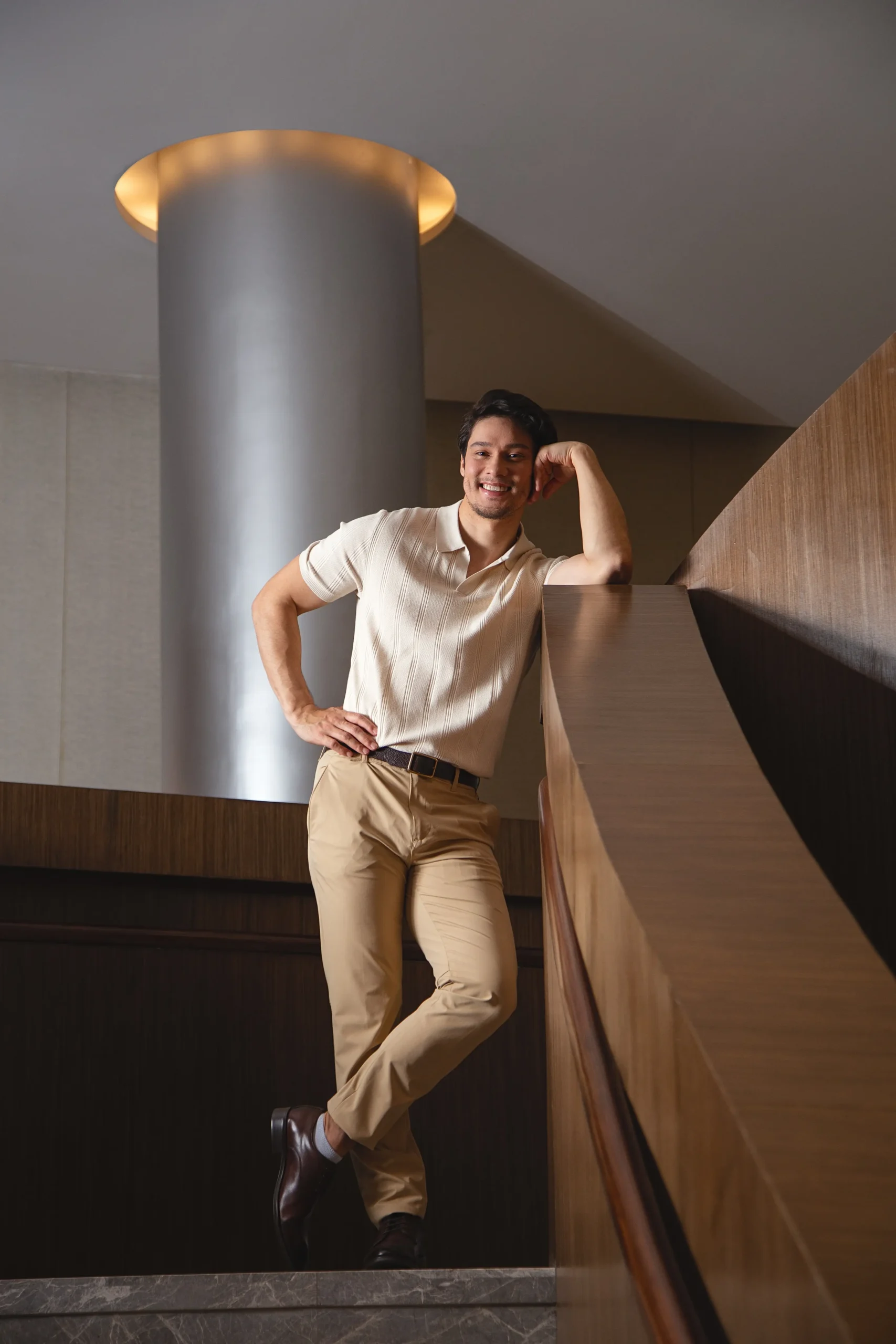
The Grandness Of Small, Constant Acts
In the beginning of this feature, I state that we can never settle on a definition of love—but we can see it through example. Piece by piece, Laurence’s reflections begin to outline what love looks like to him: not one sweeping declaration, but a practice of attention, constancy, and care. Writer Ursula Le Guin describes it perfectly in her 1971 novel The Lathe of Heaven: “Love doesn’t just sit there, like a stone, it has to be made, like bread; remade all the time, made new.” It’s an act of conscious, meaningful repetition.
“The older you get, the more you realize that love and relationships do take a lot of work. You have to show up and choose love every day,” Laurence explains. “It’s a series of ups and downs, a series of experiences. You don’t know what’s going to happen in the future, but you choose to work at it, you choose to solve the problems when they come up, you choose to do the little things consistently, like remembering a person’s coffee order, favorite food, favorite restaurant.”

So who’s Laurence Mossman outside the roles he plays? The answer lies in a value he has carried with him since childhood: kindness. It’s not, strictly speaking, love, but it’s both its seed and symptom, its catalyst and one of its most essential expressions. “I was fortunate to grow up in New Zealand with a mother who really, really cared for her kids. Where I was raised, and the kind of schools that I went to, it’s all about being a kind person and being a useful person for society, and I sort of bring that into my life.”
He pauses, his expression contemplative before he offers another vulnerable musing. “Life’s hard; you only have to switch on the TV and see what’s happening in the world,” he states. “Moving to the Philippines when I was 24 years old was a big eye opener, because it was the first time I lived in a country other than New Zealand. I learned a lot, it was a big culture shock. I realized that life isn’t as easy as, you know, showing up and saying, ‘Hey, I’m talented.’ No, you really have to work for it and fight for it. I’m still doing that to this day. Similar to Noah, I’m fighting for my dreams and the things that I love to do, every single day,” Laurence says.
At one point in The Notebook, Noah builds the home he and Allie dreamed of as teenagers, restoring the Windsor Plantation of their youth into the refuge they once imagined together. He doesn’t know whether she’ll return. He does the honest, messy work regardless. “It’s not going to be easy, but you’re just going to continue to build that house every single day in the hope that you get what you want,” Laurence says.
There are no certainties in reaching for the things or the people we care for. That’s something performance and love have in common. Both ask us to embrace, as Daniel Jones writes in Modern Love, “the possibility of loss, but also—crucially!—the possibility of connection.” More often than not, choosing love means continuing to build the house, even when there’s zero guarantee of who—or what—will walk through the front door, simply because you believe it’s worth building anyway.
Photography by Aldwin Aspillera, courtesy of Theatre Group Asia
Hair and Make-up by Don de Jesus
Shoot Direction by Ernest III
Wardrobe from Perry Ellis, courtesy of Anthem Group
Shot on Location at the Samsung Performing Arts Theater
Special thanks to Theatre Group Asia (TGA) and Christopher Mohnani, Executive Director of the Samsung Performing Arts Center
Frequently Asked Questions
Laurence Mossman is a Filipino-Kiwi actor currently based in London whose career spans theatre and screen across multiple countries. His credits include Miss Saigon, Kinky Boots, Fun Home, Mamma Mia!, A Christmas Carol, the television series Dolce Amore, and the acclaimed Filipino film Die Beautiful.
Laurence Mossman plays Middle Noah, portraying the character during the years when Noah is no longer an idealistic teenager but a man shaped by experience, internal struggle, and an unwavering commitment to his love for Allie Hamilton.
Laurence drew from previous roles such as Charlie Price in Kinky Boots and Thuy in Miss Saigon. He explains that Charlie’s romantic optimism and Thuy’s deeply held convictions together helped inform his interpretation of Middle Noah’s emotional complexity.
Laurence believes Filipino audiences will connect with the musical because of the country’s deep appreciation for romance, drama, and stories about first love, heartbreak, and enduring relationships. He also notes that audiences can see themselves reflected in the different stages of Noah and Allie’s lives.
For Laurence, love is not defined by grand gestures alone but by consistently choosing one another through everyday acts of care. He describes love as something that requires work, attention, and the willingness to “show up and choose love every day.”