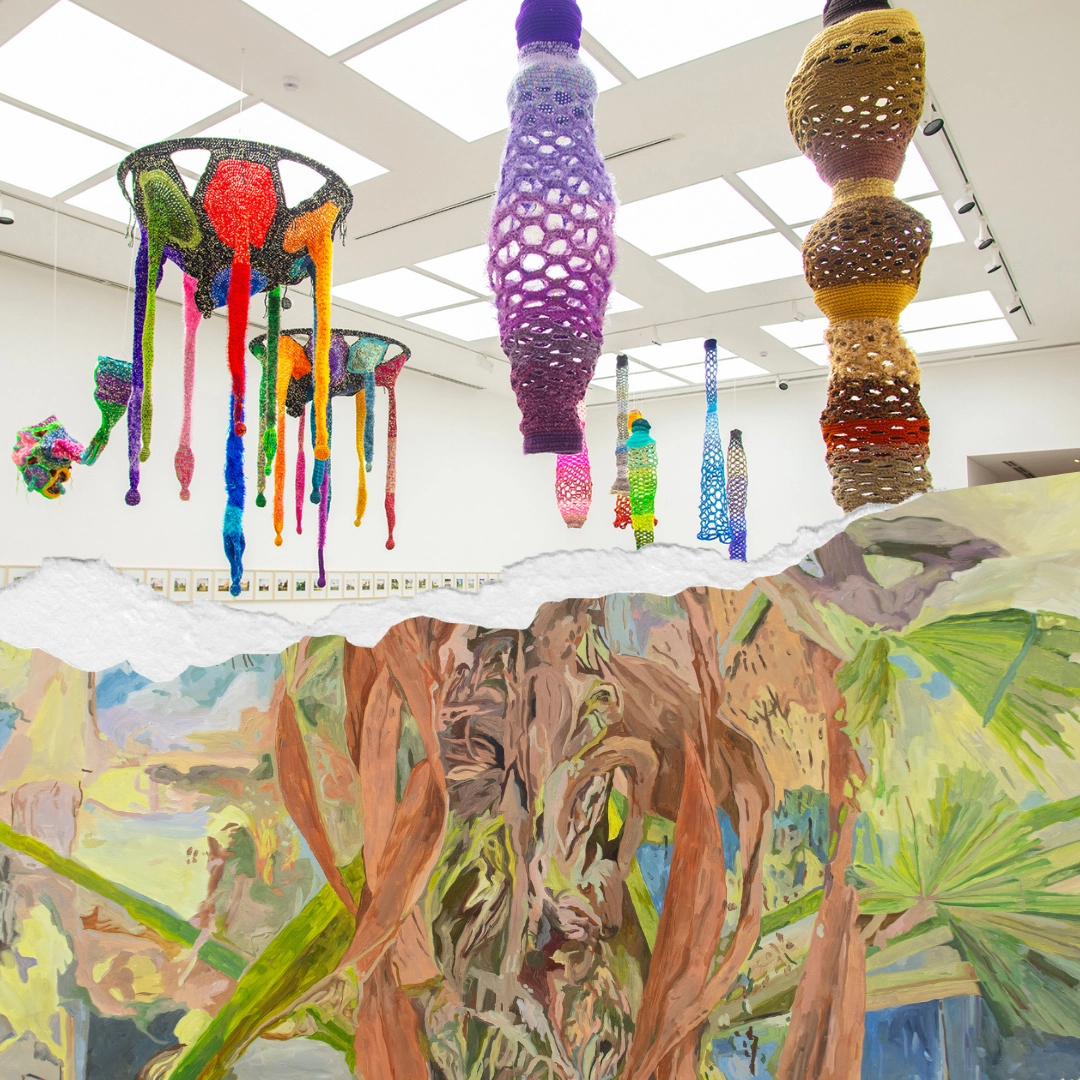
The gallery’s two shows explore the spaces we see, inhabit, and interact with, featuring works by artists Is Jumalon, Jenifer K Wofford, Jake Verzosa, and Aze Ong.
Silverlens Manila explores the concepts of place and spatiality with the launch of two shows this April 2026: the solo exhibition Topographies of Seeing by Is Jumalon; and the group exhibition PLAY, featuring the works of artists Jenifer K Wofford, Jake Verzosa, and Aze Ong. Here’s what to know about them.
READ ALSO: First Light Returns Home: A Cross-Cultural Film Finds Its Way To Philippine Cinemas
Topographies Of Seeing By Is Jumalon
Is Jumalon is a visual artist whose drawing and painting explore the shifting relationship between the self and the observed world. Her work turns toward overlooked peripheries and quiet provocations, utilizing nuanced metaphors that challenge perception and invite reconsideration. Working across acrylic, oil, charcoal, and pastel, she moves between mediums, manipulating subtle shifts in form and meaning to create images that feel precise and open-ended.
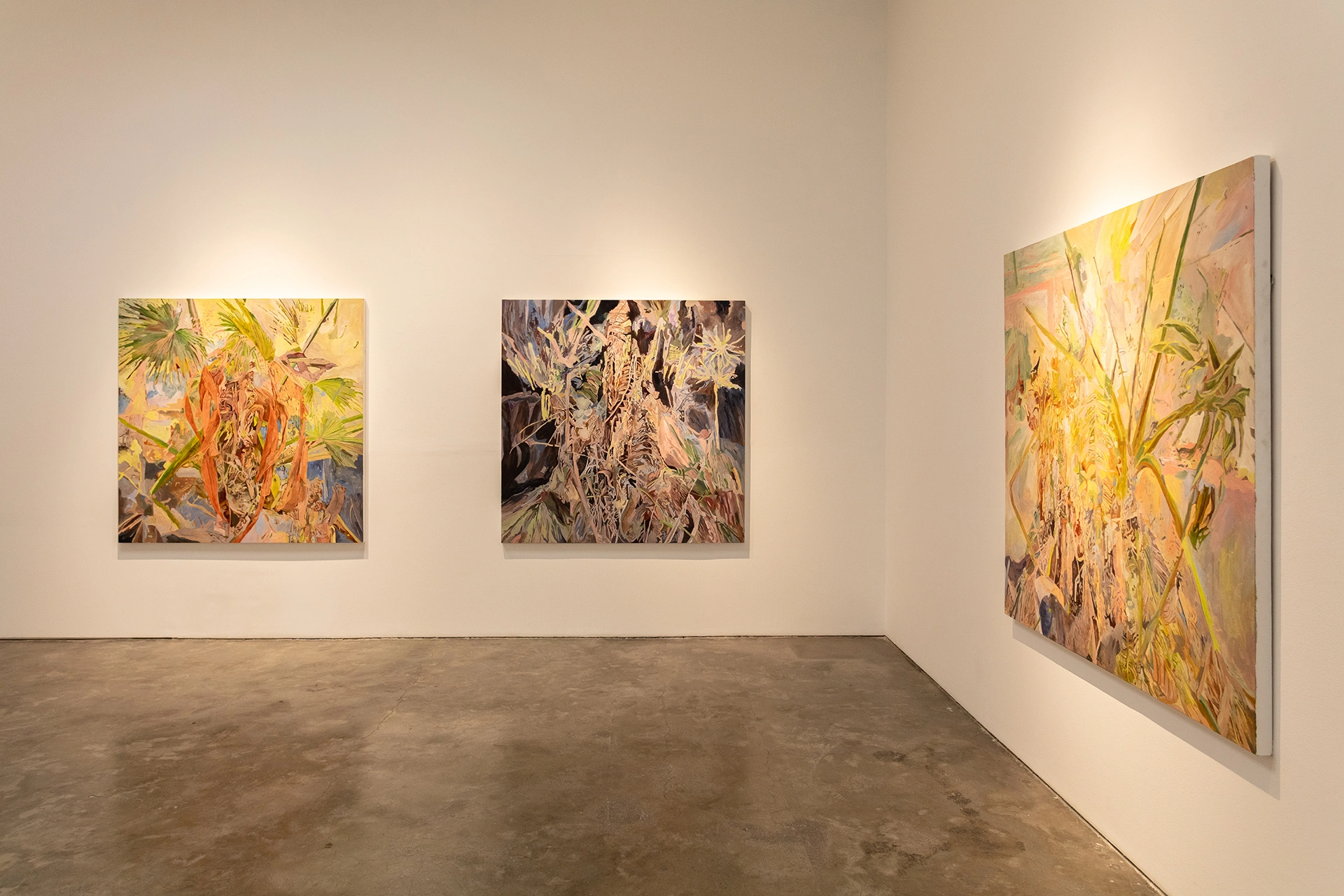
Through warped formations, tendrils, branches, and roots, Jumalon builds a new vocabulary for landscape as a genre. In Topographies of Seeing, terrain is no longer a bucolic ideal, but a mutable and dynamic thing where, as Sean Carballo writes in an exhibition note, “natural forms mutate to the beat of a freakish interior rhythm.” Rather than a quiet retreat from the noise of daily life, the landscape opens itself to reveal all its hazards and oddities: crags, fluctuations, and textures that shift and find themselves resistant to fixity.
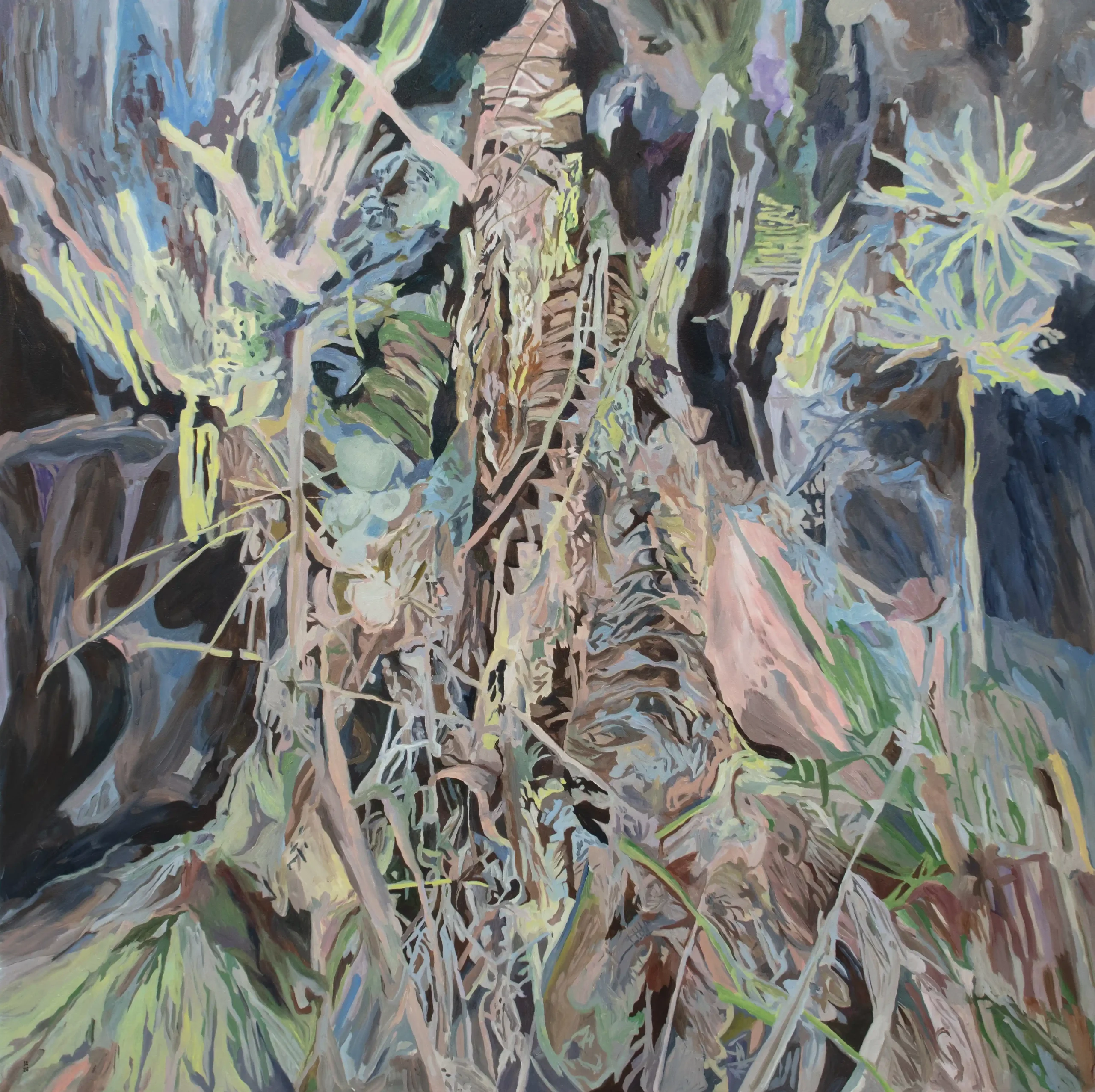
The works presented in the exhibition draw from the artist’s memories of rock formations from the Mount Pulong Bato monoliths in Zamboanga, where she grew up. Each piece in Topographies of Seeing is imbued with the sense of mystery and danger that pervaded stories passed down from her parents: of rice fields, mounds of soil, and blades of grass, these images coming together in vivid hues and collage-like assemblages.
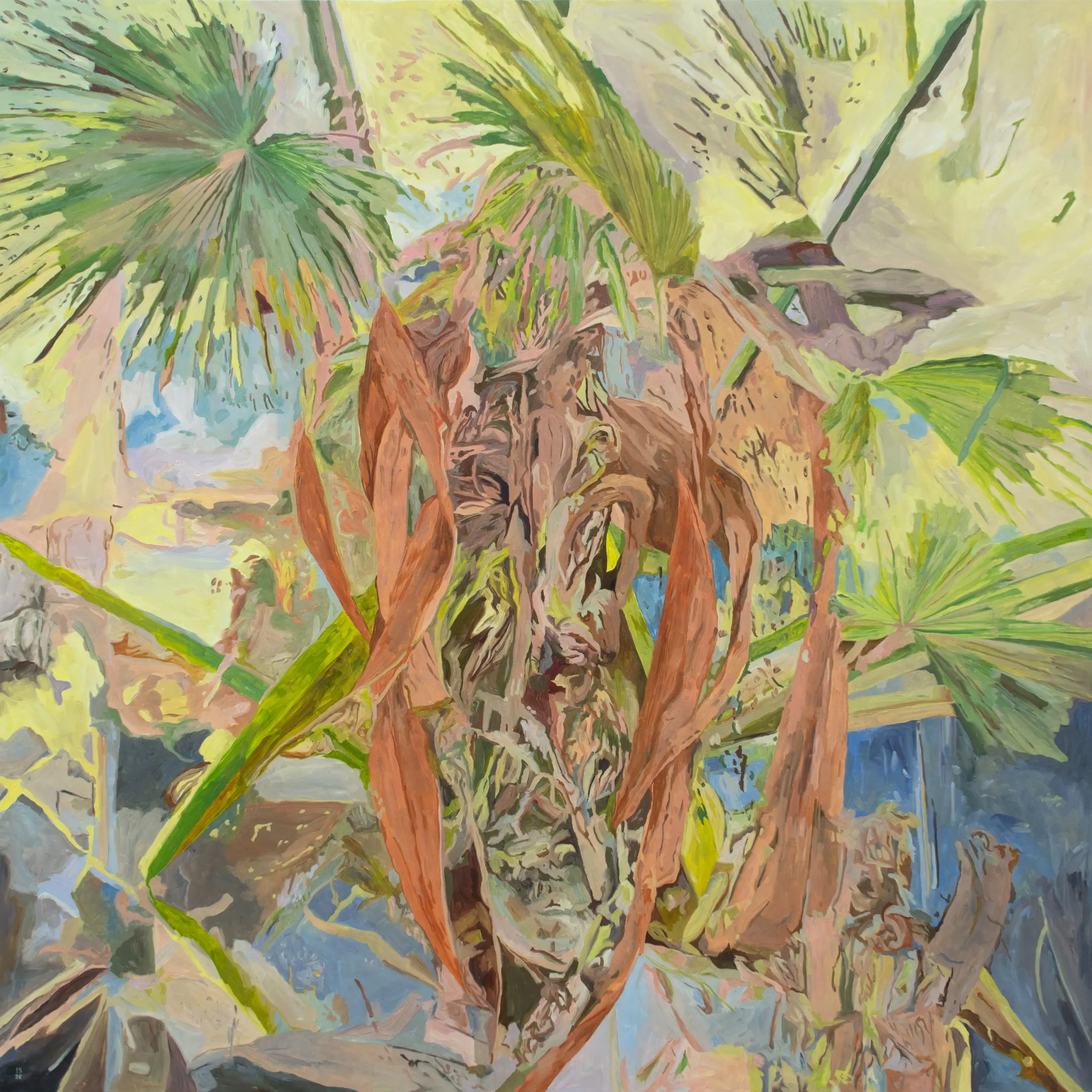
Duality is central to the exhibition, namely the acknowledgement of beauty and wonder co-existing alongside the ever-present threat of destruction and violence. Jumalon navigates these polarities with ease, creating compositions that feel paradoxically alive and unalive.
“My recent works, where I try to invent imagined landscapes or build habitats, feel like my way of negotiating with nature rather than escaping it. I think I like arranging disorder,” she explains in a statement. “I’m interested in creating a situation where meaning is constructed through the experience of looking rather than through fixed answers.”
PLAY By Jenifer K Wofford, Jake Verzosa, and Aze Ong
In the group exhibition PLAY, place-making as a postcolonial spatial reality takes center stage, enacted through the imagination. Three artists explore how “nowhere” turns into “somewhere,” as Pie Tiausas writes in an exhibition note, made real through memory and movement—the show’s title PLAY suggesting that place isn’t static space, but a site of constant and dynamic construction informed by flows of people, histories, and ideas that are made and re-made.
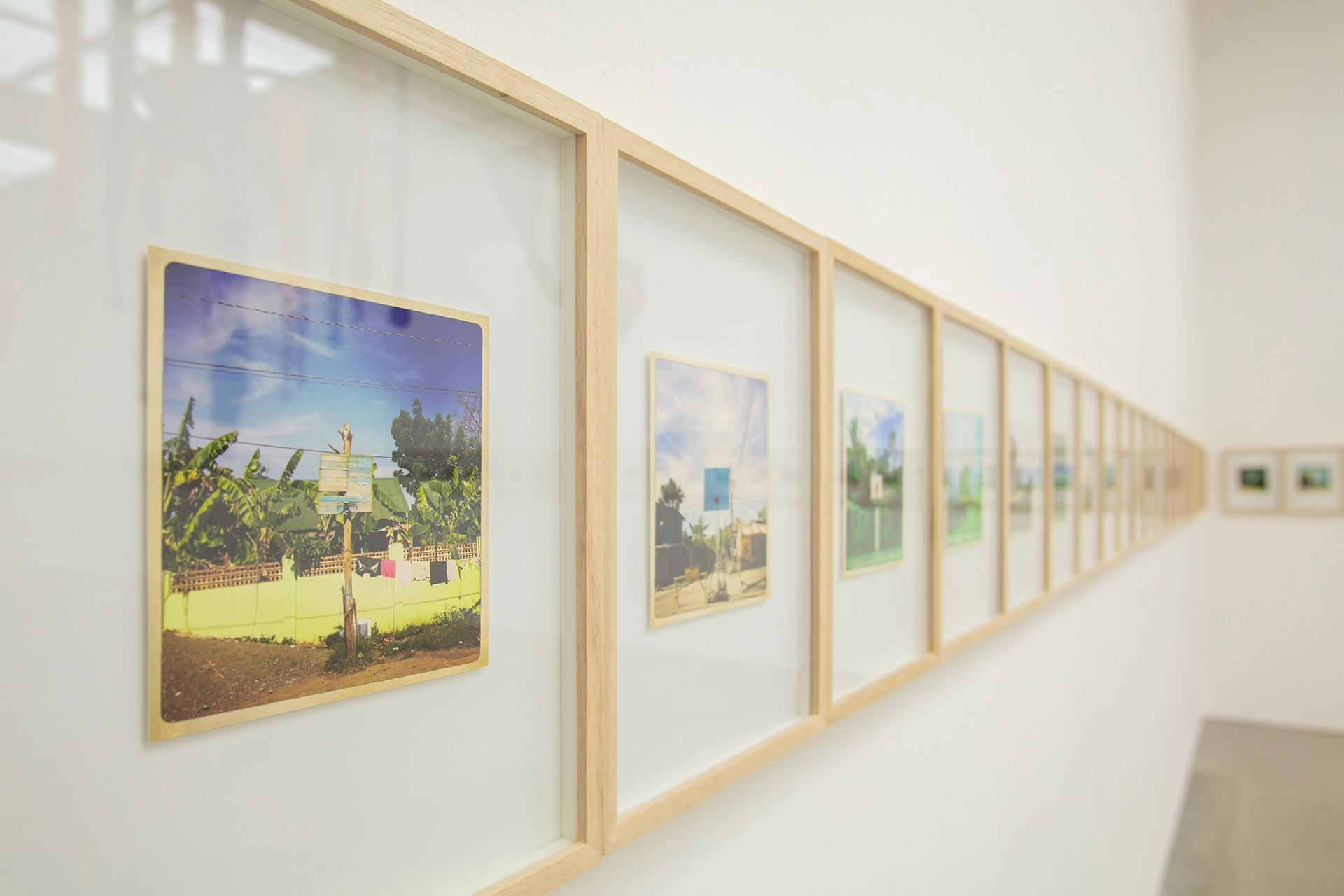
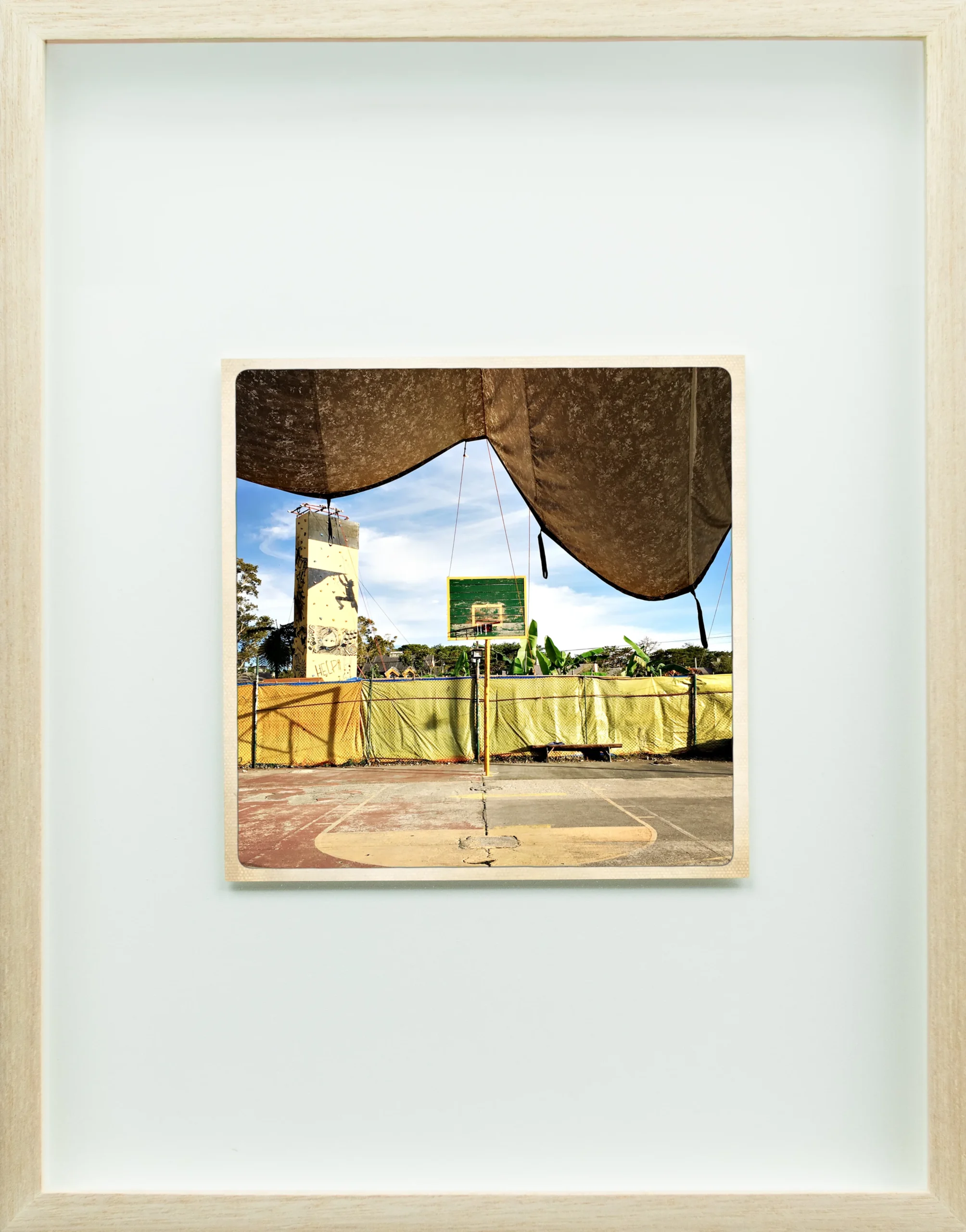
Across the works, the basketball court becomes a recurring motif. In Jake Verzosa’s photographs, courts around the Philippine archipelago are documented as both subject and archive, made from “collective sentiments, sensibilities, and the everyday life of a people.” Though often absent of the people themselves, these spaces feel unmistakably lived in. Makeshift, improvised, and shaped by their environments, they reveal how place gathers through acts of adaptation, necessity, and play.
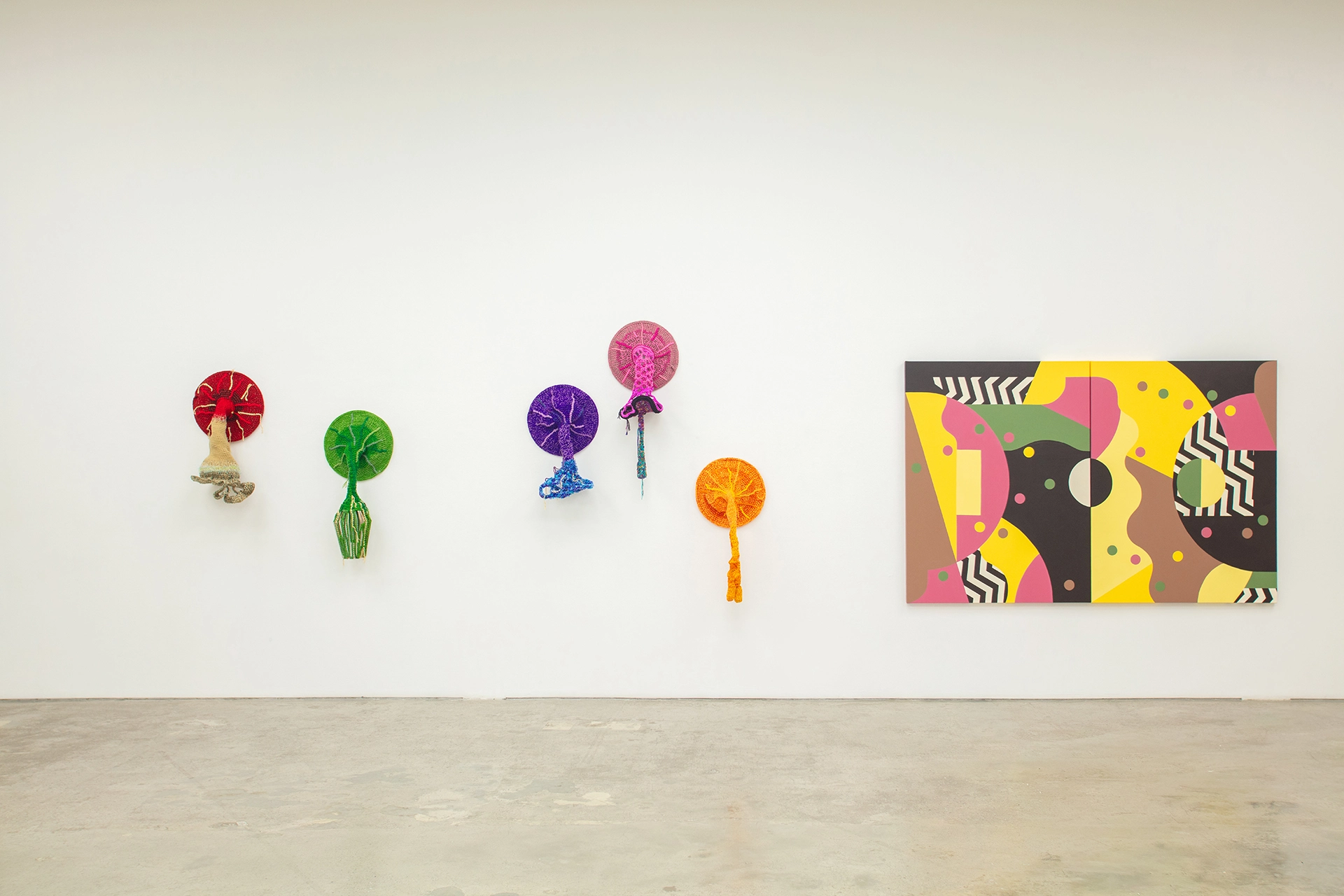
This thread extends into Jenifer K Wofford’s paintings, where the basketball court is depicted as a place that sits between “here and elsewhere.” Her landscapes—particularly those referencing Morro Bay, a historical spot tied to the first Filipino landing in America through the Manila galleon—continue the conversation on the court’s colonial history. In her more abstract works like “Battlefields,” Wofford dissects and reassembles these courts, turning them into geometric fields of color that connect imagination with historical and transnational flows.
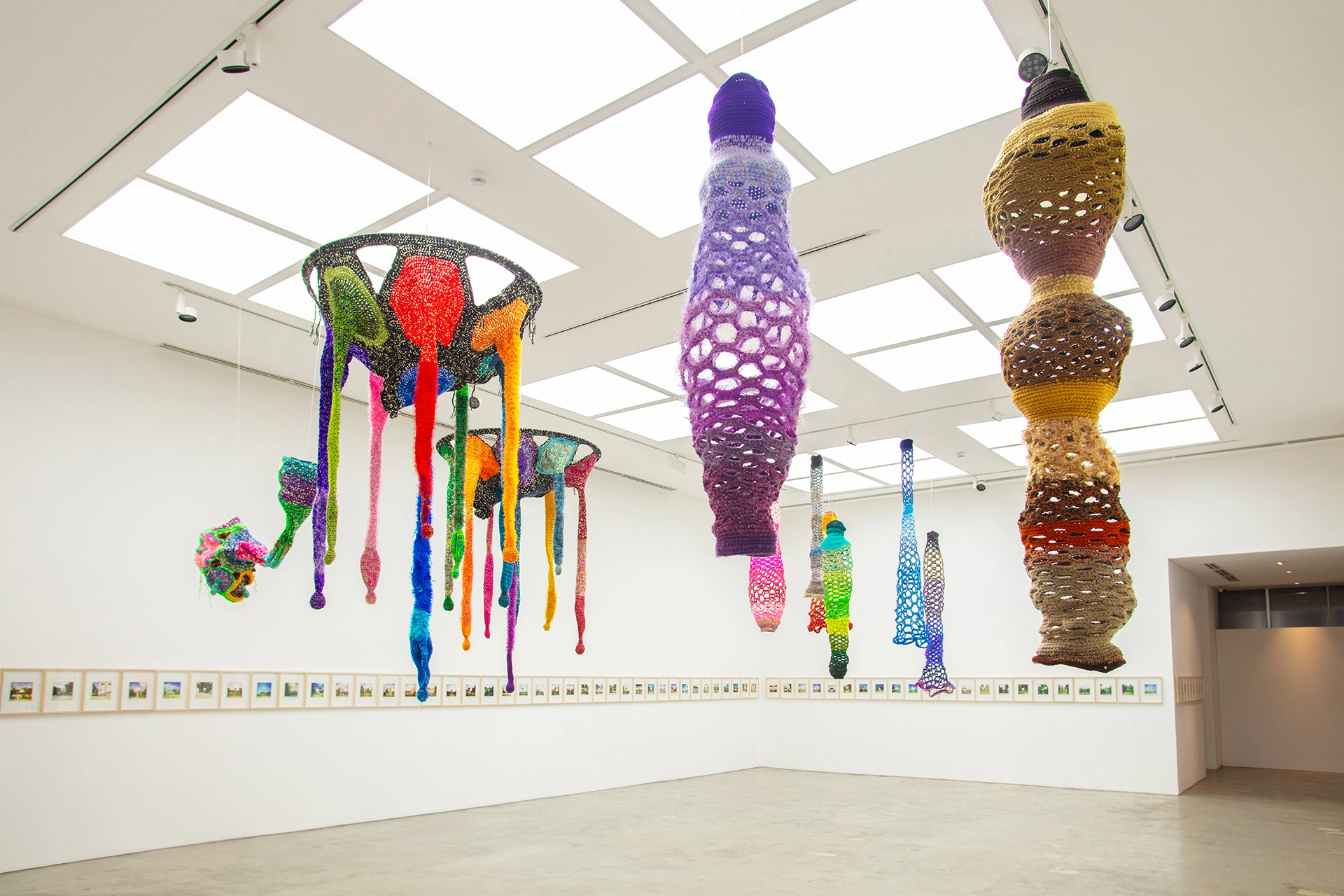
Grounding these ideas in material form, Aze Ong’s fiber sculptures translate spatial concerns into something tactile. Threads become medium and metaphor, speaking to how the basketball court is deeply threaded into the ways Filipinos dwell and gather. Like Verzosa’s works, these pieces capture a familiar spatial reality; and like Wofford’s paintings, they abstract the place into fragments of “material, meaning, and memory.” In Ong’s hands, the court transforms into a tangible playground for dreaming and imagining futures.
Photos courtesy of Silverlens Manila
Frequently Asked Questions
Silverlens presents two exhibitions this April 2026: Topographies of Seeing, a solo show by Is Jumalon; and PLAY, a group exhibition featuring Jenifer K Wofford, Jake Verzosa, and Aze Ong. Both shows explore ideas of space, place, and spatiality.
Topographies of Seeing reimagines the landscape as something dynamic and unstable rather than a fixed, pastoral ideal. Through warped forms and layered compositions, Jumalon draws from her memories of the Mount Pulong Bato monoliths in Zamboanga, creating works that hold both beauty and danger. The exhibition centers on duality, where life and destruction coexist, and invites viewers to construct meaning through the act of looking.
PLAY examines place-making as a postcolonial spatial reality shaped by imagination, memory, and movement. It proposes that place is not static, but continuously formed through “flows” of people, histories, and ideas that turn “nowhere” into “somewhere” through lived experience and collective meaning.
The exhibition uses the basketball court as a recurring motif. Verzosa documents courts across the Philippines as lived-in, improvised spaces shaped by everyday life. Wofford explores their colonial history and transforms them into both landscapes and abstract compositions tied to transnational narratives. Ong, meanwhile, translates these ideas into tactile fiber sculptures, using threads as both material and metaphor to reflect how these spaces are woven into how Filipinos gather, dwell, and imagine.
Both shows open at Silverlens Manila in April 2026, with “Topographies of Seeing” presented as a solo exhibition and “PLAY” as a concurrent group show in the gallery’s other space.