Another Toy Story movie? Yep. Yet more than 30 years on, the franchise remains compelling because it continues to grow alongside its audience, using toys to explore surprisingly profound ontological questions.
Content Warning: This article discusses key themes from the Toy Story franchise, but contains no spoilers for Toy Story 5.
The first Toy Story film began with a fairly simple premise: what if toys were sentient, all this time? We’ll skip over its technical achievements at the time and move straight to its indelible imprint on popular cultureCultureshared traditions, beliefs, values, customs, arts, and social practices that define the identity and way of life of a community, society, or nation.Go to Culture Glossary. The idea of talking toys wasn’t entirely new, but Toy Story distinguished itself through a colorful cast of lovable characters, aided by an ensemble of award-winning voice actors.
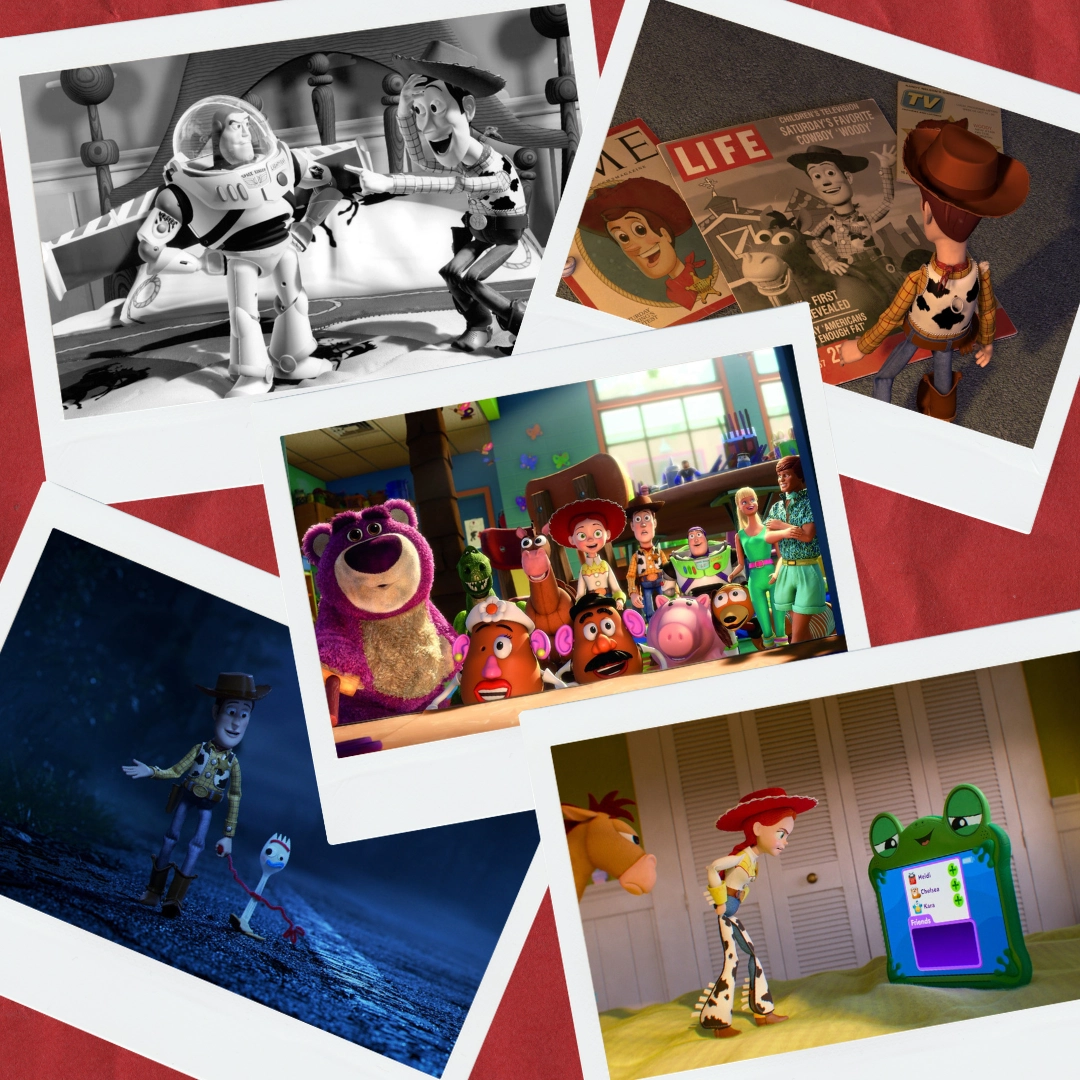
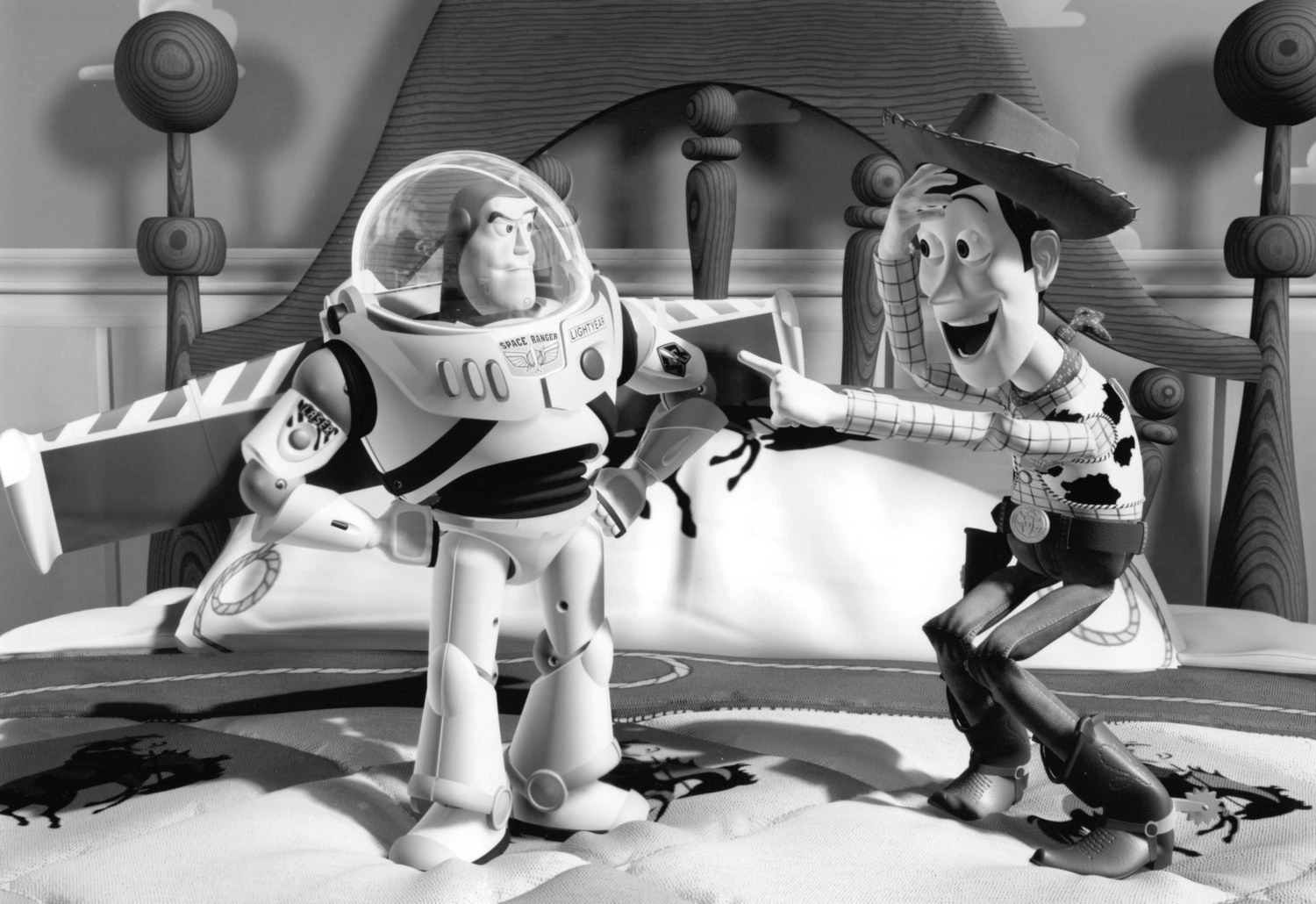
At its center were two toys competing for the affection of their owner, Andy: the dependable cowboy Woody and the shiny new space ranger Buzz Lightyear. After a series of misadventures and reluctant team-ups, the film arrives at a conclusion that isn’t particularly complex, but would become foundational to the franchise that followed: that different things can coexist, even in the face of change.
As it turns out, this formula works for a number of reasons, but primarily because it can absorb almost any social or cultural shift, then seamlessly integrate it into its framework. The result is a series of sequels that only become more complex, evolving alongside the zeitgeist that produced them. With Toy Story 5 hitting cinemas across the Philippines today (June 17, 2026), we thought it might be a good time to explore why this franchise has—in a cesspool of pretty bad sequels—actually managed to stay afloat and remain relevant in a society that’s constantly in flux.
READ ALSO: What’s Steven Spielberg Trying To Say With “Disclosure Day”?
The Anatomy Of An Iconic Franchise
In writing this feature, I actually sat down to map the narrative structures of the Toy Story films, and did, in fact, find a common pattern. Each film begins with, as I mentioned earlier, the introduction of something new and unfamiliar. It can come in the form of a conflict or circumstance, or as with the first and later films, an actual character or object. Either way, this foreign element is the crux of a Toy Story film’s central theme—and that theme is almost always ontological in nature, dealing with matters of existence, identity, and purpose. I know these matters might seem loaded for a “children’s film,” but let’s be honest, aren’t they the primary concerns of any bildungsroman? Growing up, no matter what era this takes place in, has always been a matter of grappling with the aforementioned ideas, coming into your own in a changing world.
It’s just convenient that toys are the perfect vehicle for exploring these big ideas: they change (physically and through trends) and their relevance continues to be questioned, yet they remain, for the most part, inextricably tied with our earliest experiences of learning about ourselves and the world around us through play. That’s an immaculate blend of both endurance and versatility, if I’ve ever seen one.
What Happens To Broken Toys?
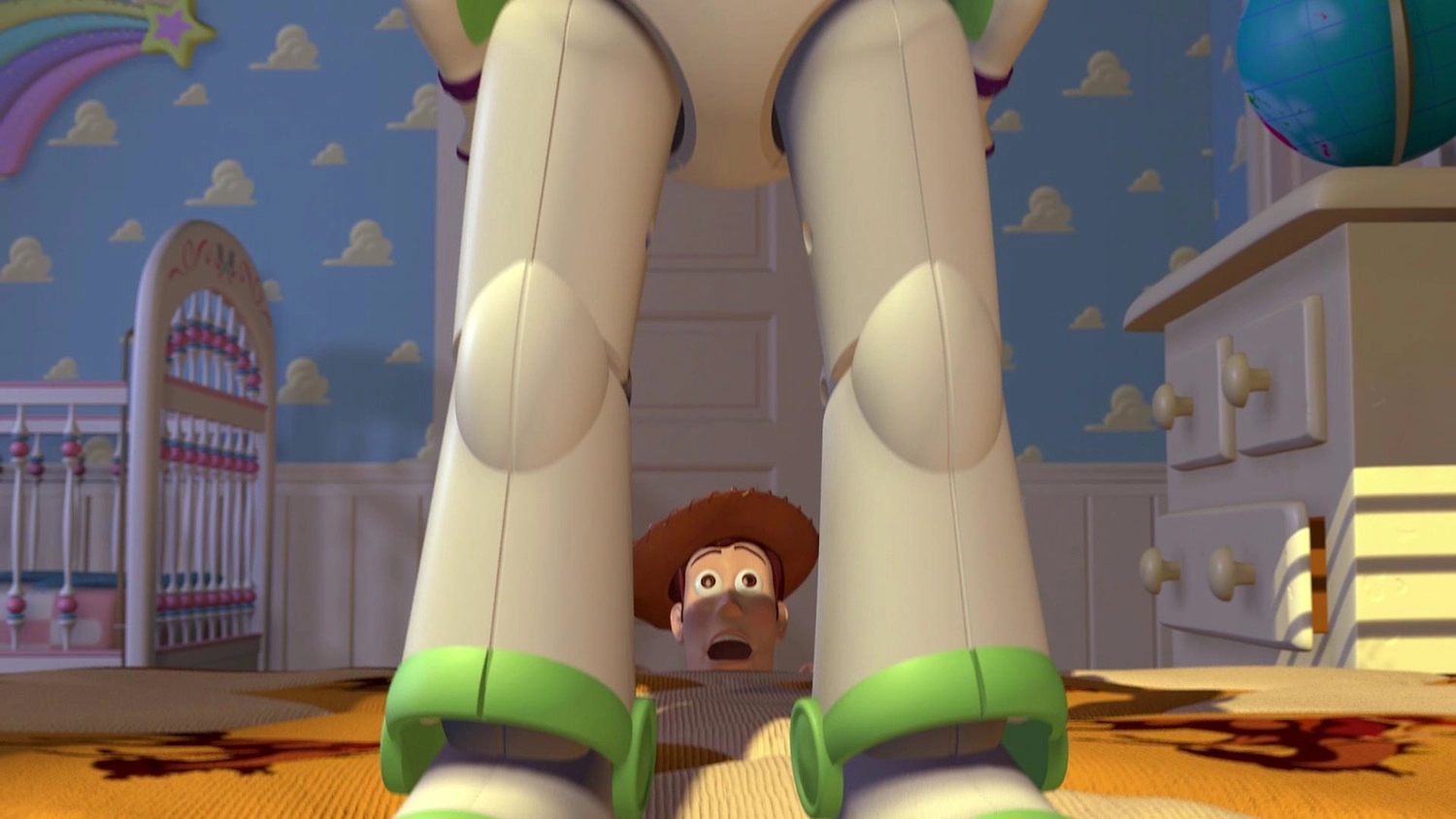
Let’s put this structure to the test. The first Toy Story’s coverage was much smaller, focusing mainly on the tensions within Andy’s group of toys, and introducing the “new” through Buzz Lightyear.
Toy Story 2, however, begins to introduce a world much larger than Andy’s room, using the business of collectibles to explore ideas of obsolescence, deterioration, and the inevitability of children outgrowing their toys. When Woody tears his arm, he’s confronted with a frightening possibility he’d never considered before: that being broken may one day make him disposable. After a series of mishaps, he ends up in the hands of a greedy toy collector who repairs him with the intention of selling him as part of a prized collection to a museum.
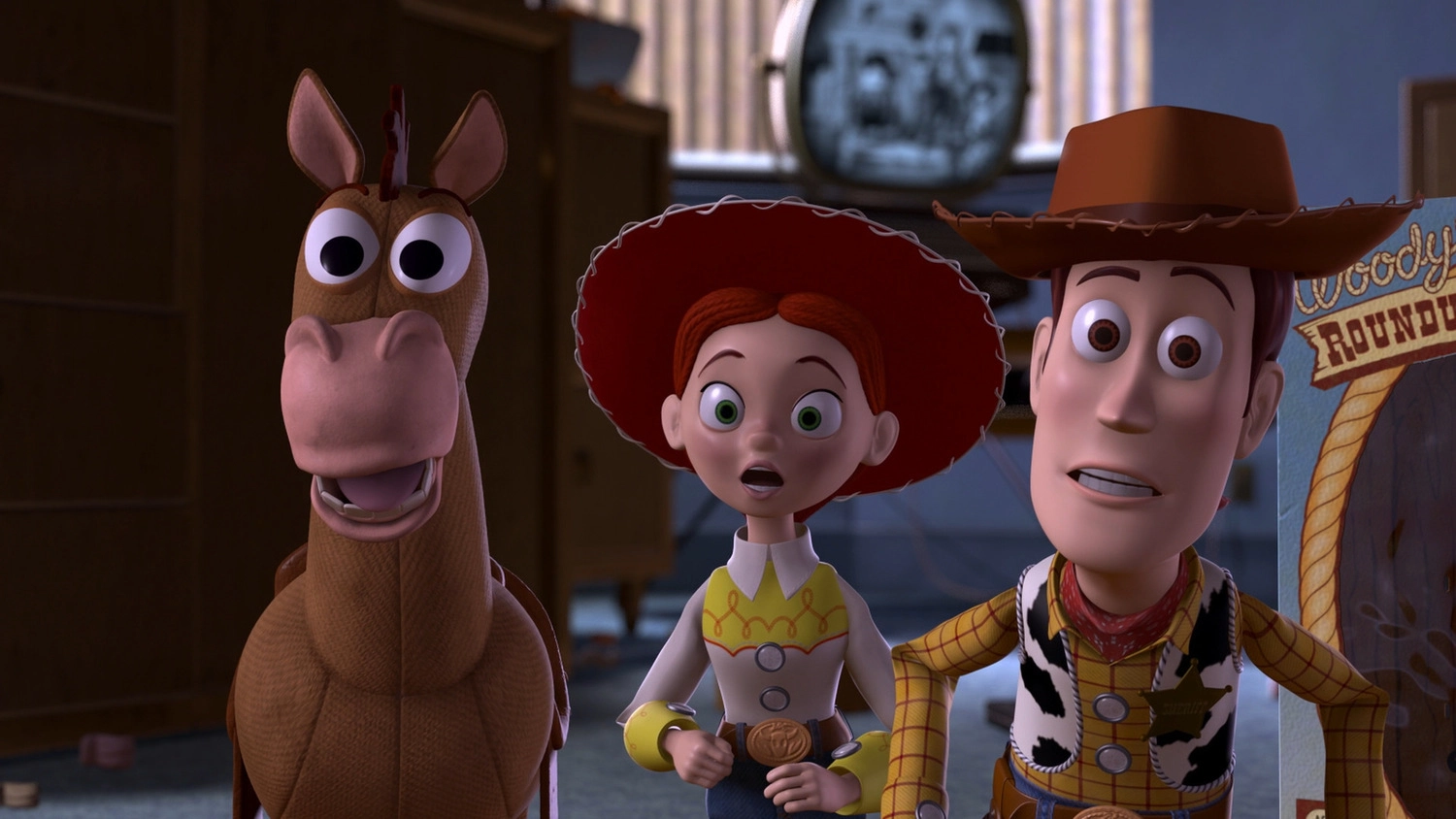
There, Woody meets Jessie, his cowgirl counterpart who was abandoned by her original owner, and Stinky Pete, the prospector of their franchise, who sees life in a museum as a form of immortality: a way to avoid the heartbreak of being forgotten or discarded altogether. Of course, it all works out in the end, and Woody finds that Andy won’t abandon him, and he’ll always have his found family of toys to count on, including his rival-turned-best-friend Buzz.
When A Kid Grows Up, Where Do You Go?
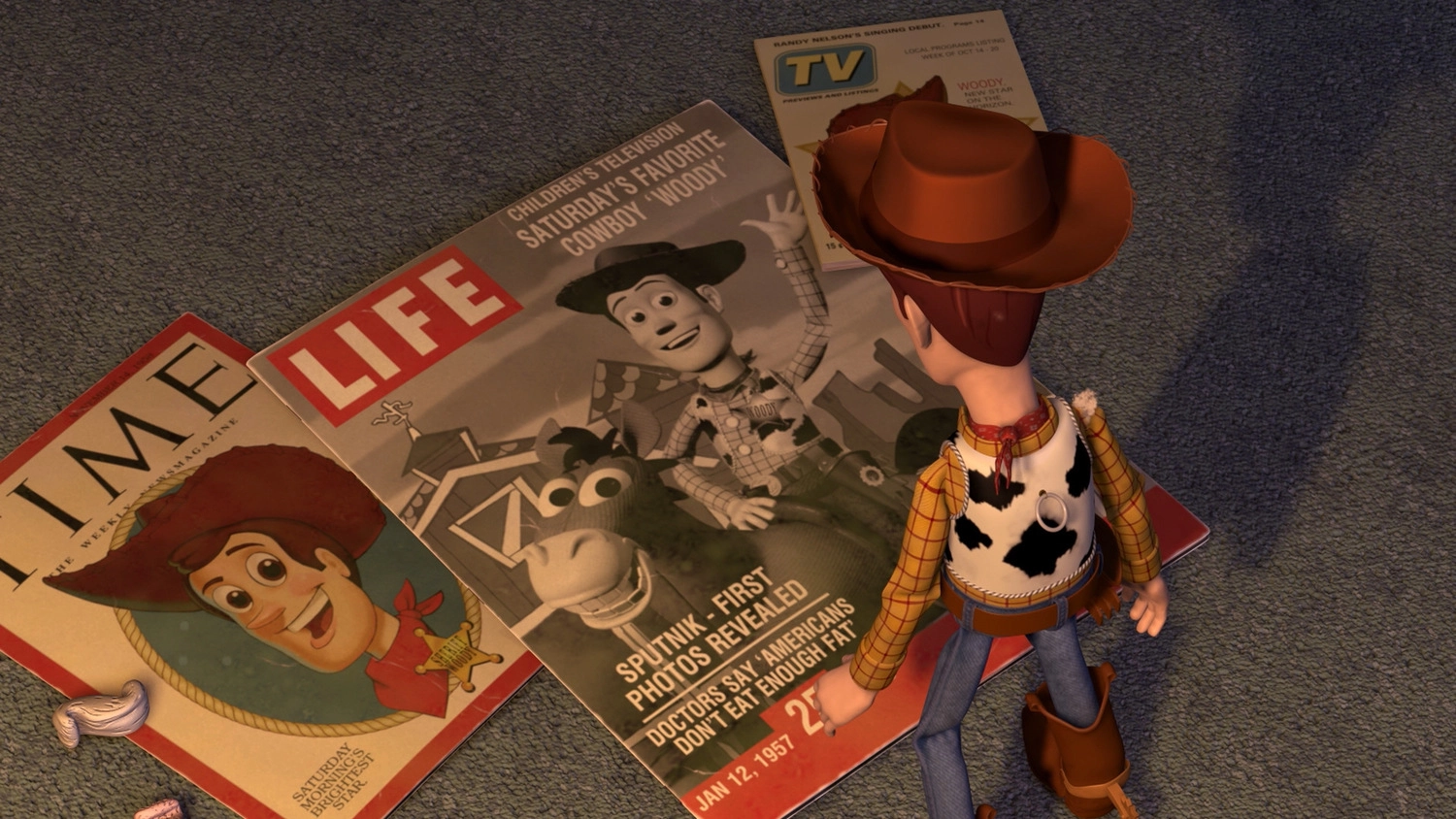
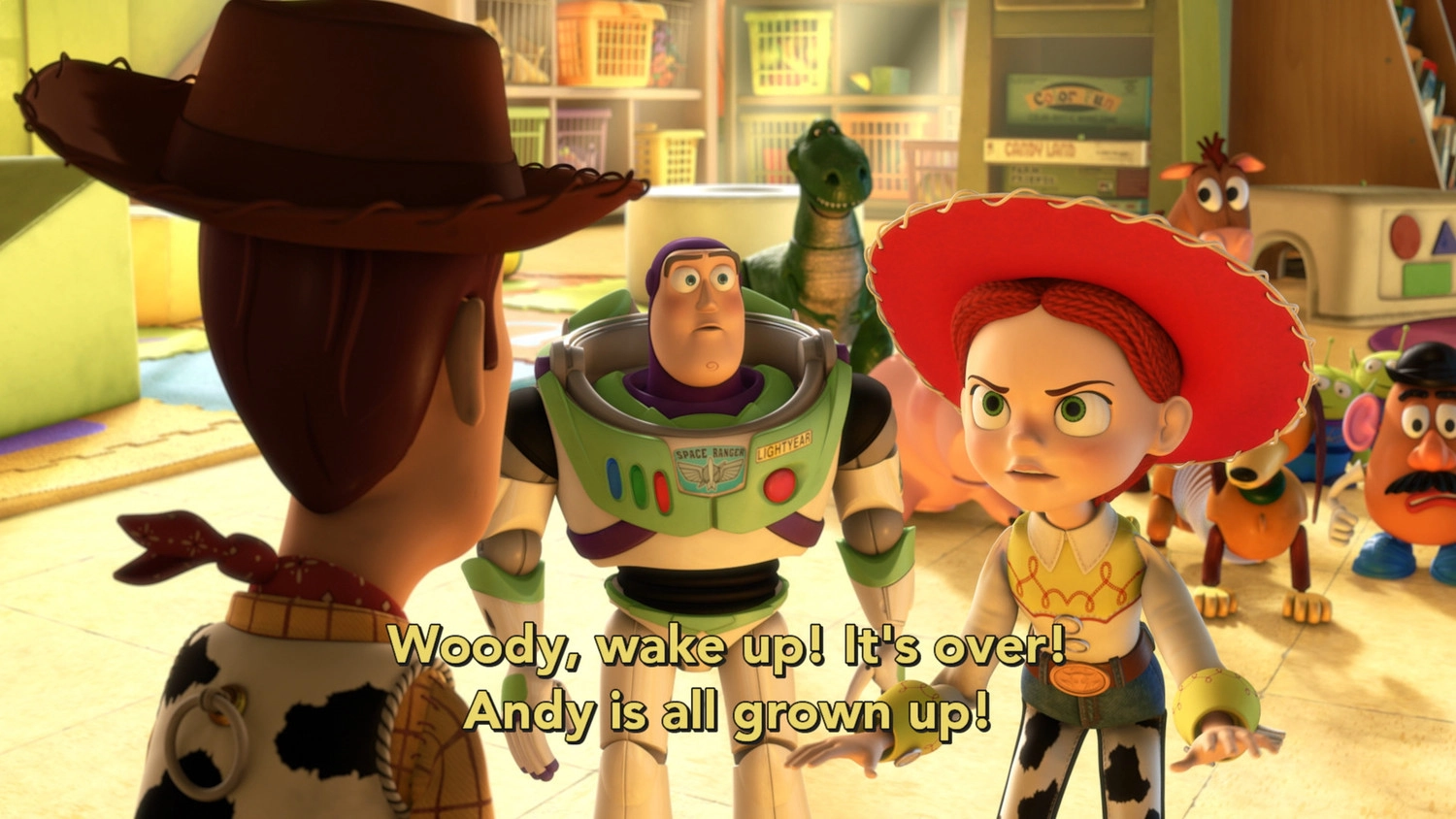
Toy Story 3 marked the franchise’s most drastic jump, presenting us with a big time skip that sees the once young Andy now preparing to go to college and contemplating what to do with his toys—as it turns out, he hasn’t played with them in years. He intends to take Woody with him, but keeps the rest of the gang in a bag that, mistakenly, almost ends up bound for the garbage. The rest of the toys escape and decide to head to a daycare where they can be enjoyed by kids forever, thus continuing the thread of questioning a toy’s relevance.
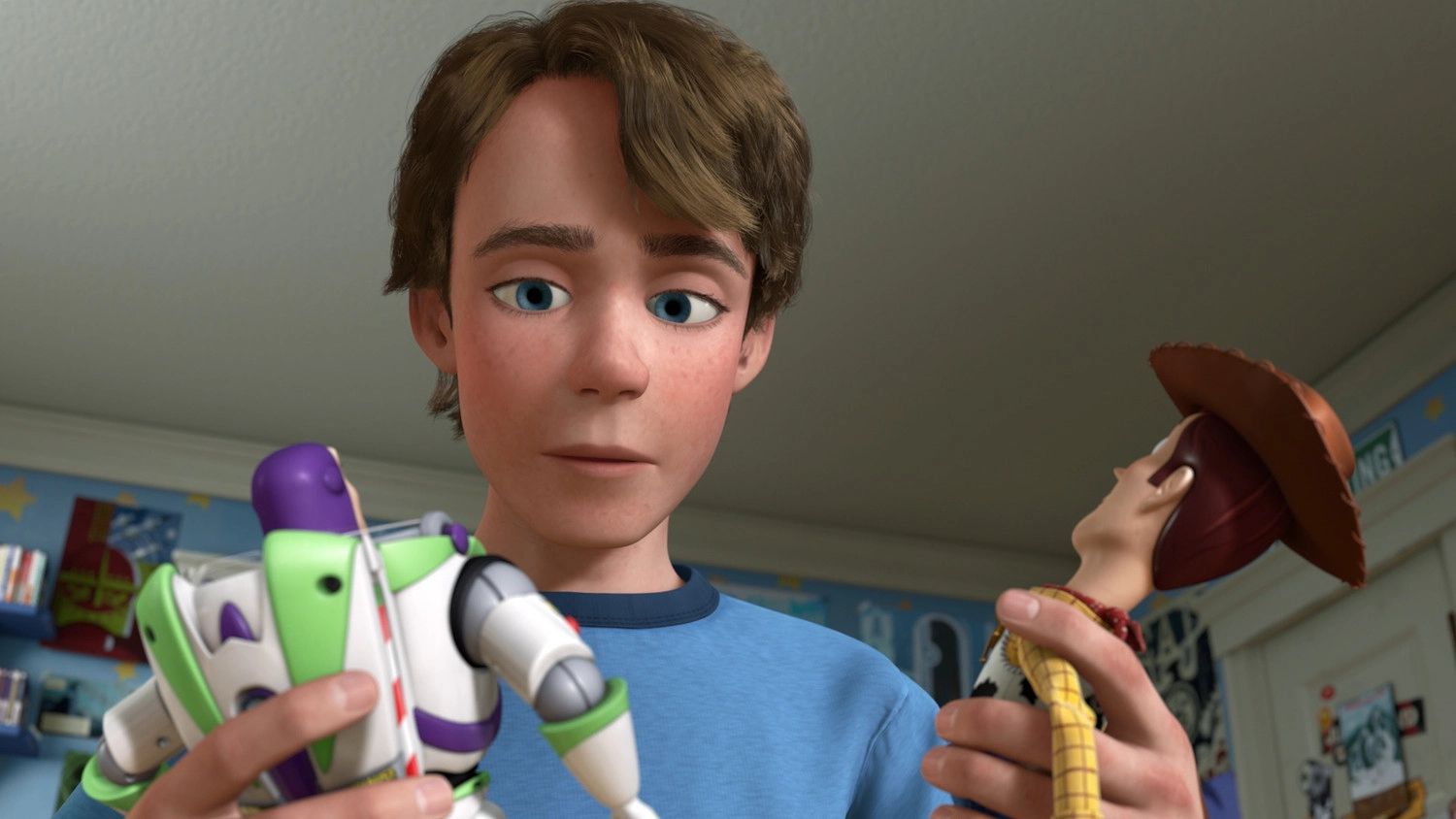
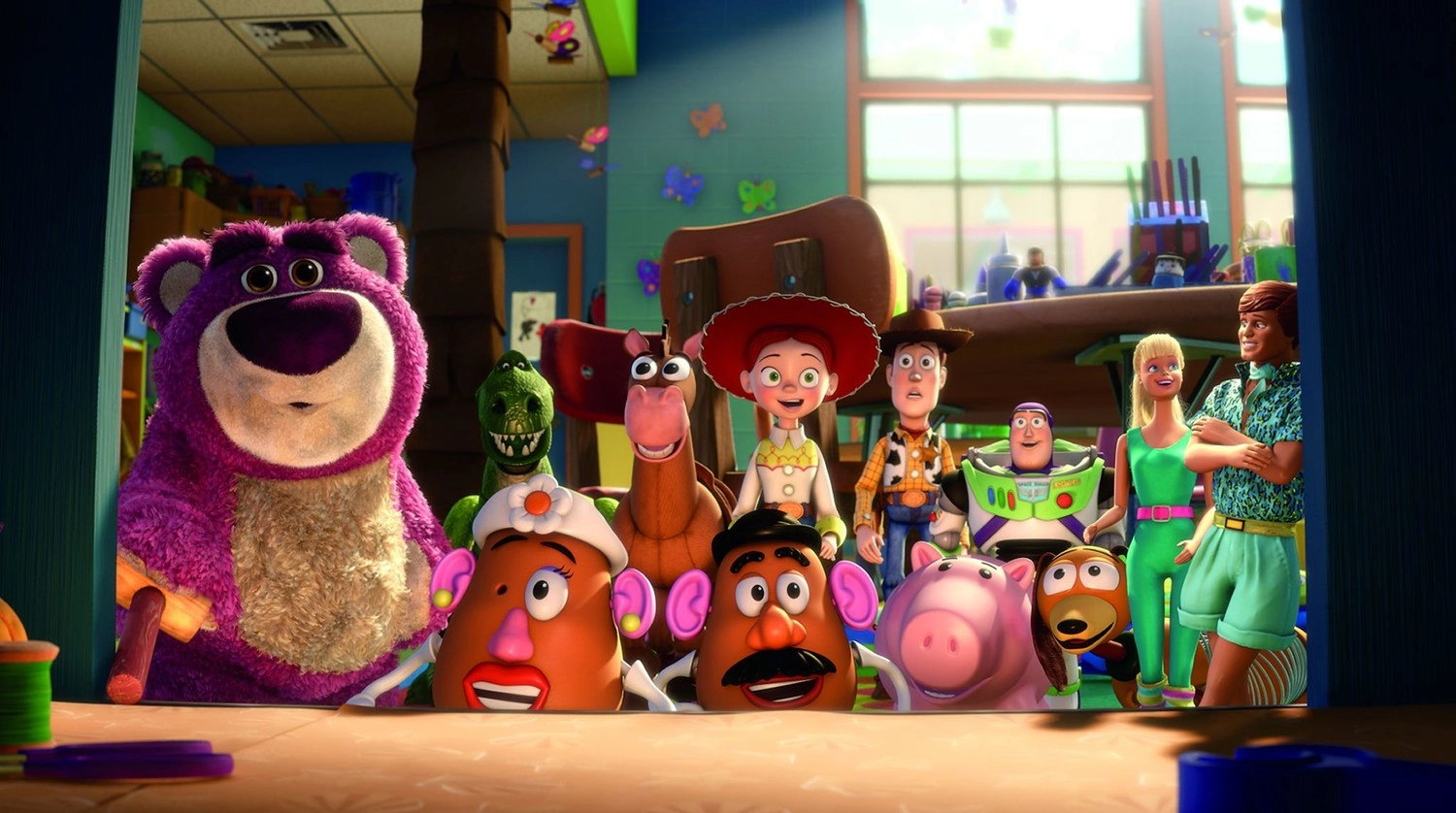
In a hilariously dark twist, the daycare’s toy operations turns out to be headed by Lot-o’-Huggin Bear, a fascist dictator with abandonment issues whose schemes lead the toys to having to face the prospect of being destroyed (an idea they come to peace with in a sobering denouement). Yet the film, in typical fashion, introduces us to the “new” once more, in the form of Bonnie: a young girl who Andy ends up giving his toys to in an ending that makes grown adults cry. She’s not only the new protagonist who’ll carry the franchise forward, but also an introduction to the moving idea of legacy and inheritance. While things might change and people grow up, there will always be a child somewhere who needs a friend, and that’s how toys stay alive.
What Makes A Toy A…Well, Toy?
Personally, I find Toy Story 4 to be the least memorable in the franchise. That said, it does posit another profound question on existence and purpose through the comedy of tritagonist “Forky”: a spork that Bonnie turns into a makeshift toy with pipe cleaners and googly eyes. Naturally, thrust into the situation of becoming something entirely different from his intended use, Forky enters an existential crisis (relatably wanting to throw himself into the trash during his crash outs) that has Woody (who now finds himself in the sidelines of Bonnie’s affection) having to guide him through the “ways” of being a toy. This begs the question: what really makes a toy a toy?
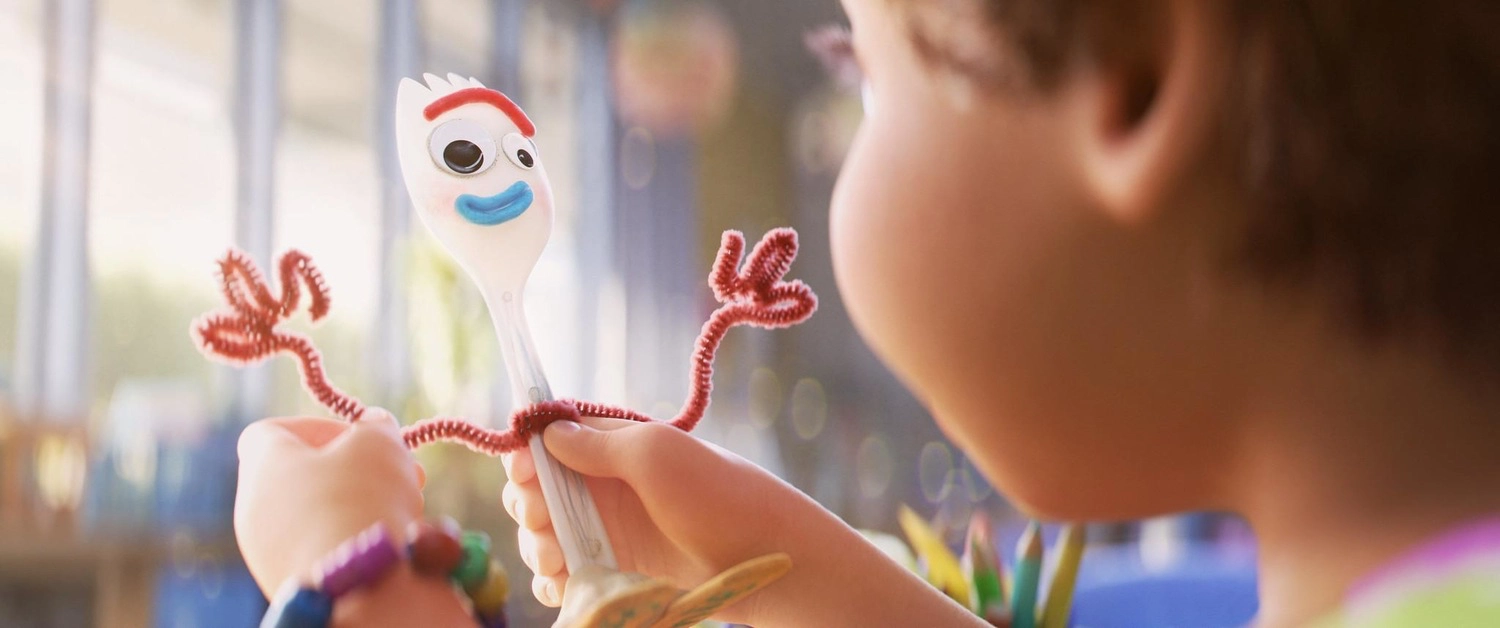
The answer to this is a cumulation of the many themes and ideas touched upon by Toy Story 4’s predecessors: that a child’s imagination, their willingness to play with you, name you, and love you, is what makes something a “toy,” at least in the world of the franchise.
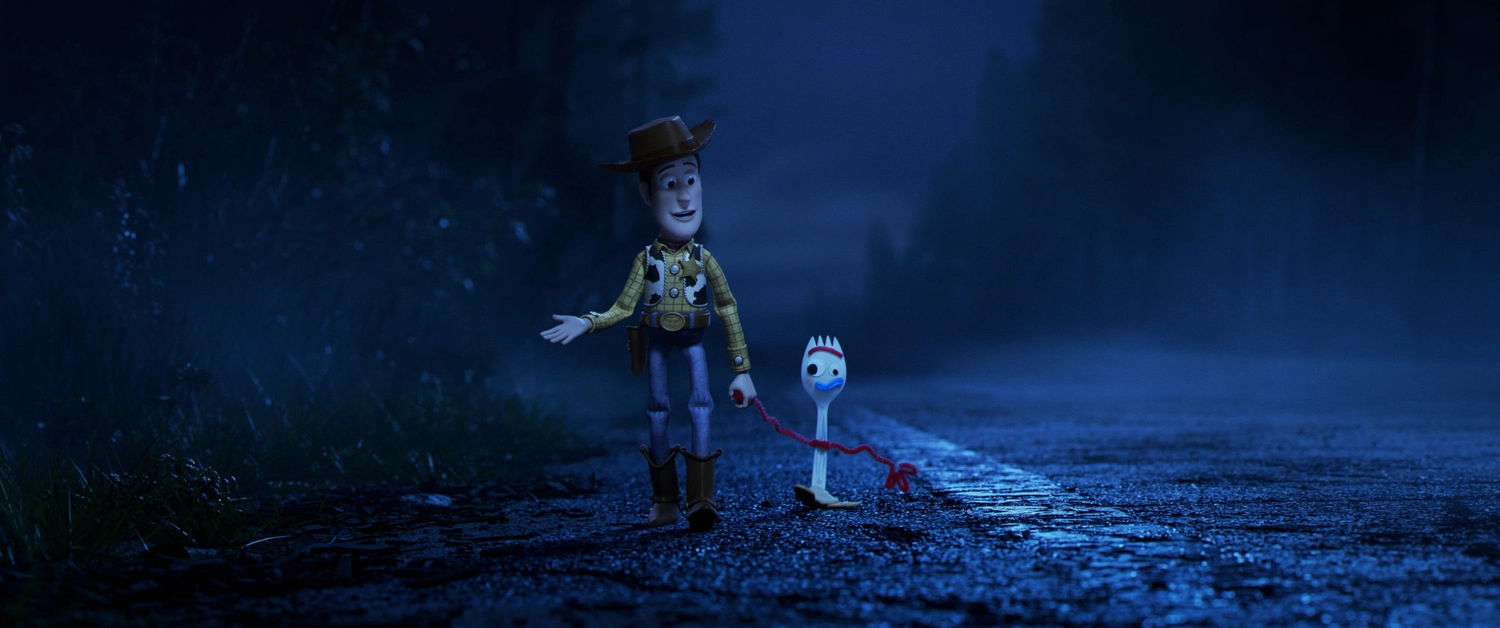
Forky’s journey becomes a meditative one for Woody, who, after weathering countless upheavals, once again finds himself searching for purpose in the face of semi-abandonment. This time, however, the answer lies outside a child’s bedroom. Reunited with Bo Peep, Woody chooses a different path, joining her mission to help lost and abandoned toys find new homes. In doing so, he discovers meaning not through being owned, but through helping others find the connection that once gave his own existence purpose.
If any of this sounds like a quarter- to mid-life crisis at its finest, then you can see the reason why Toy Story has its following of very-grown-up moviegoers.
So, What’s New For The Old Gang Of Toys?
The new Toy Story 5 takes us to the next logical step in the franchise: toys vs. technology. It’s a conversation that was already percolating even during the release of Toy Story 4 (toy stores have already been facing existential threats for years), but with the saturation of AI and what’s undoubtedly an era where gadgets are more accessible than ever to children and adolescents. While I haven’t watched the film yet, the trailer dives straight into its premise: the “new” cause of upheaval within the current system is Lilypad, a not-so-subtle nod to Apple’s iPad that’s meant to “help” Bonnie as she starts entering a more online world. She’s got all the bells and whistles, and as expected, the trailer showcases Bonnie’s disinterest in toys as the shiny screen takes over her life (offering more possibilities than playtime imagination ever could).
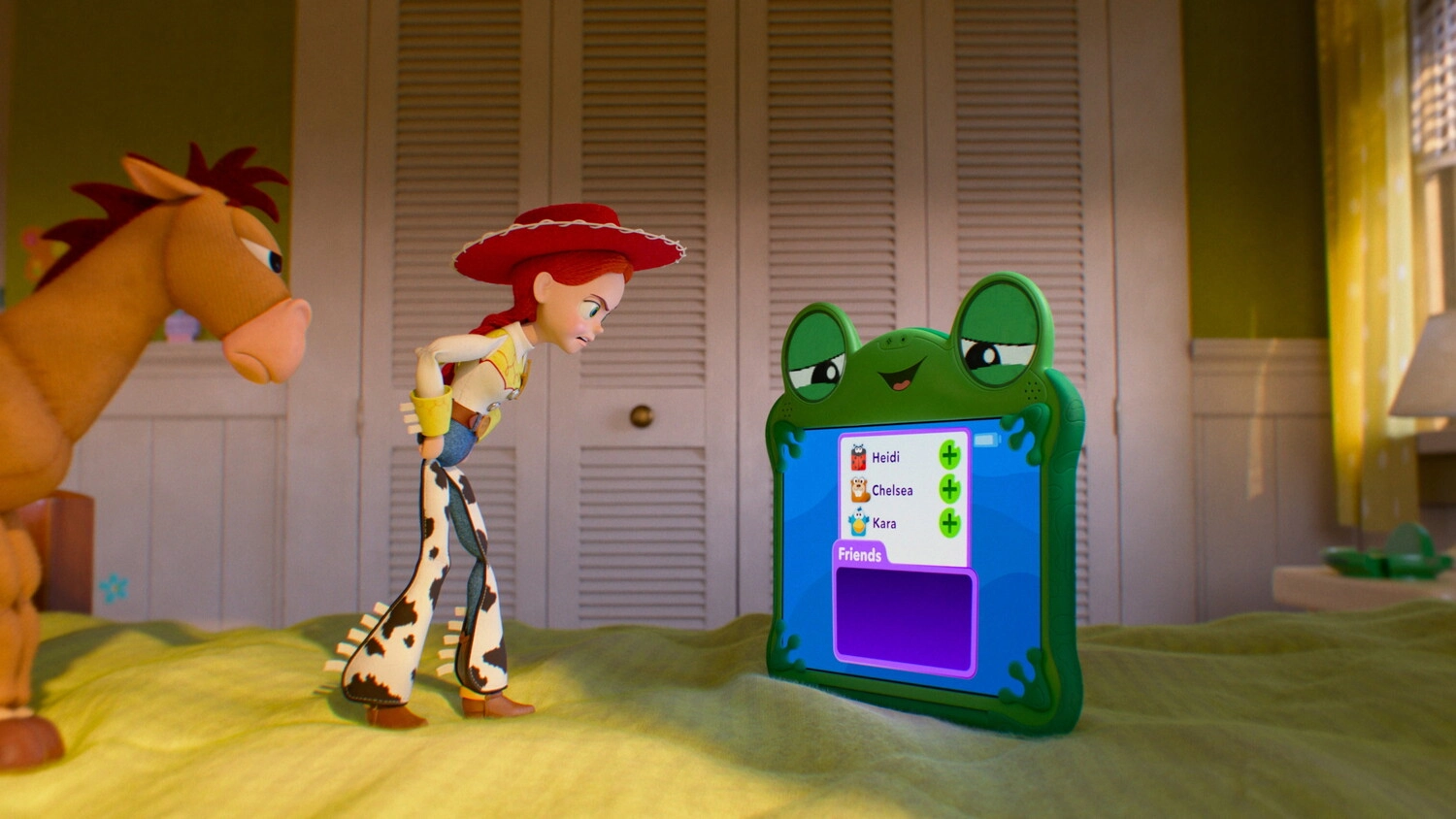
Whether Toy Story 5 will offer a nuanced perspective on the traditional versus the new—especially given the tangled realities of technology today—remains to be seen. But the framework itself presents plenty of potential. The effects of early and excessive exposure to technology are already a big concern, with studies linking it to outcomes ranging from heightened drug-like dependency and emotional dysregulation to more troubling impacts on attention spans and cognitive development.
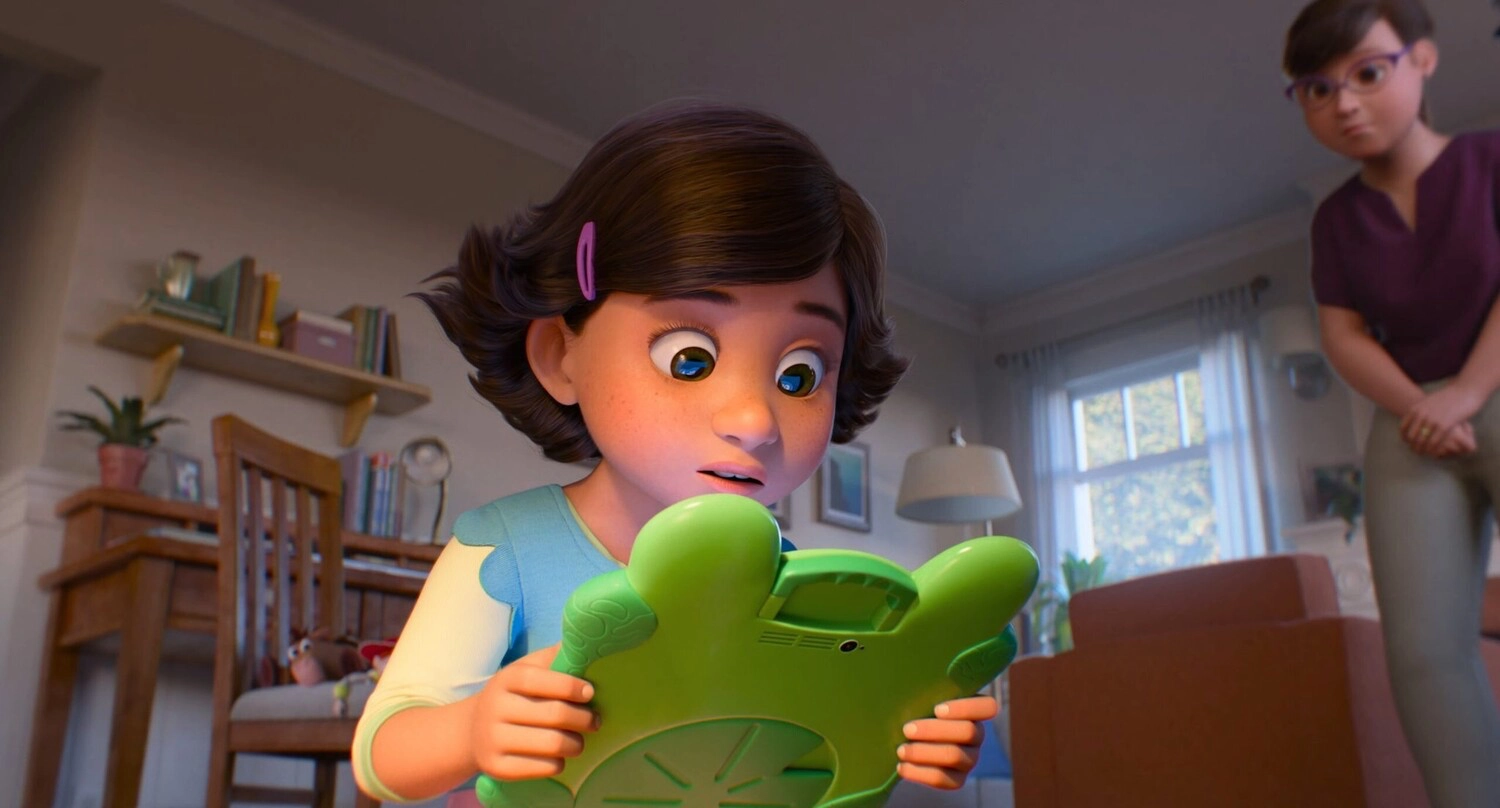
What the exact emotional hook of this installment in the Toy Story franchise is, I can’t say for certain; early reviews suggest that Jessie (now leading Bonnie’s group of toys following Woody’s departure in Toy Story 4) receives a more substantial arc of her own. What I can say is, if the film sticks the landing, it cements the idea that has hovered over this entire franchise: that toys, despite the constant threat of obsolescence and the many changes imposed upon them, are forever.
The question has never really been whether they’ll survive, but how. When you think about it, isn’t that what so many of us ask ourselves, too, in every phase of our life and through every point in history we’ve lived through: what are we going to become in order to find a sense of fulfillment and meaning this world?
Photos courtesy of Kinorium
Frequently Asked Questions
More than 30 years after the first film, the Toy Story franchise remains compelling because it continues to grow alongside its audience. While it began with a simple premise (what if toys were sentient all this time?) the series has evolved into an exploration of existence, identity, purpose, change, and belonging through the experiences of its toys.
Toy Story has stayed relevant because its core formula can absorb social and cultural shifts and seamlessly integrate them into its framework. Each sequel introduces something new and unfamiliar, using that element to explore questions about identity, purpose, and relevance in a changing world.
Every Toy Story film begins with the introduction of something new, whether a character, object, conflict, or circumstance. This new element becomes the foundation for the film’s central theme, which is often ontological in nature and deals with matters of existence, identity, and purpose.
Toys are uniquely suited to exploring themes of identity and purpose because they change over time, fall in and out of trends, and often have their relevance questioned. At the same time, they remain closely tied to childhood experiences and the ways people learn about themselves and the world through play.
Across its films, Toy Story explores themes of change, coexistence, obsolescence, deterioration, abandonment, legacy, inheritance, imagination, identity, purpose, and the search for meaning. The franchise repeatedly asks how individuals can remain relevant and meaningful as the world around them changes.
Toy Story 2 expands the world beyond Andy’s room and uses the business of collectibles to explore obsolescence, deterioration, and the inevitability of children outgrowing their toys. Woody’s damaged arm forces him to confront the possibility that being broken could make him disposable, while characters like Jessie and Stinky Pete represent different responses to abandonment and being forgotten.
Through Jessie, Stinky Pete, and Woody, Toy Story 2 examines the fear of abandonment and disposal. The film contrasts the idea of immortality in a museum with the risks and rewards of continuing to belong to a child, emphasizing friendship, found family, and emotional connection.
Toy Story 3 asks what happens when a child grows up. As Andy prepares to leave for college, the toys must confront their diminishing role in his life and consider whether they still have a purpose.
The film explores growing up, relevance, destruction, legacy, and inheritance. Through Bonnie’s introduction, Toy Story 3 suggests that while children may outgrow their toys, there will always be another child who needs a friend, allowing toys to remain meaningful across generations.
Toy Story 4 examines what makes a toy a toy through the character of Forky, a spork transformed into a toy by Bonnie. His existential crisis leads the film to explore the relationship between imagination, love, and purpose.
According to the film’s themes, a toy becomes a toy through a child’s imagination and willingness to play with, name, and love it. This idea builds upon many of the questions explored throughout the franchise’s earlier films.
After finding himself on the sidelines of Bonnie’s affection, Woody searches for a new purpose. Reunited with Bo Peep, he chooses to help lost and abandoned toys find new homes, discovering meaning not through being owned, but through helping others find connection.
Toy Story 5 introduces the franchise’s next major conflict: toys versus technology. The story centers on Bonnie’s growing interest in Lilypad, a device designed to help her navigate a more online world, and the challenges toys face as screens compete for children’s attention.
The franchise suggests that toys, despite constant threats of obsolescence and the many changes imposed upon them, endure through connection, imagination, and purpose. Ultimately, Toy Story asks a question that extends beyond toys: what are we going to become in order to remain a meaningful part of this world?