Filipino contemporary artist Lindslee’s larger-than-life works of everyday comfort dishes and pantry staples offer viewers plenty of food for thought
One of the things artist Lindsey James Lee—better known by his moniker “Lindslee”—admits during our interview is that he’s not a particularly gifted chef, nor is he especially fond of cooking (though he does, like many of us, enjoy eating). It’s a funny little irony, considering we’re talking about the works people have come to associate with him: sculptural pieces of enlarged food, from birthday cakes to rectangular cuts of crackers.
What heightens the irony is that the process behind these works feels like a kind of kitchen alchemy, perhaps not the edible sort, but one that still demands an understanding of how components mingle and chemically transform. Much like the food we eat, these forms take on meaning depending on who’s “consuming” them, opening themselves up to the subjectivities of memory and the familiarity of quintessentially Filipino experiences.
READ ALSO: Food Of The Gods: The Story Of Philippine Chocolate
Acrylic, Spice, And Everything Nice: The Artistic Process Of Lindslee
It starts with acrylic paint, but that’s where the similarities to traditional painting end. Here, paint takes on a tactile, three-dimensional quality as material itself, shaped into images of food in Lindslee’s mind.
“Acrylic paint has a lot of chemicals that react to each other. Just mix them, and they create a different finish,” he explains to Lifestyle Asia during our exclusive interview. In every stage of his process, the artist thinks about these finishes, how various ratios, consistencies, and techniques will yield different effects: glossy, transparent, dry, flexible, stiff.
We return to the cooking parallels: like their real-life counterparts, Lindslee’s sculptures play with textures and colors, enlarged to become focal points. His skill in magnifying these elements traces back to his early works, created fresh out of the University of Santo Tomas with a Bachelor’s of Fine Arts degree in painting, where he explored abstractionism. As his practice evolved, so did his mediums, the artist discovering new ways to express ideas beyond flat surfaces.
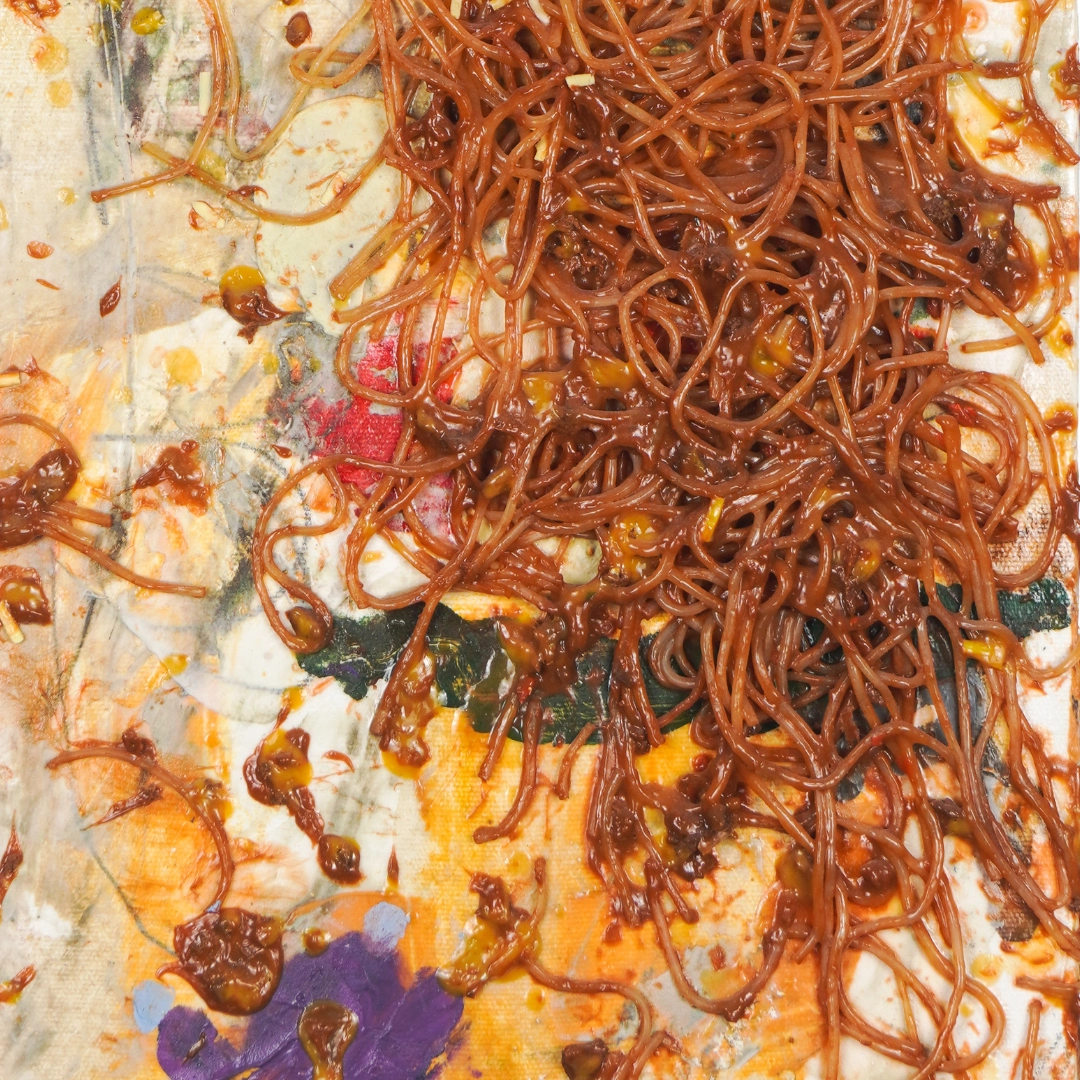
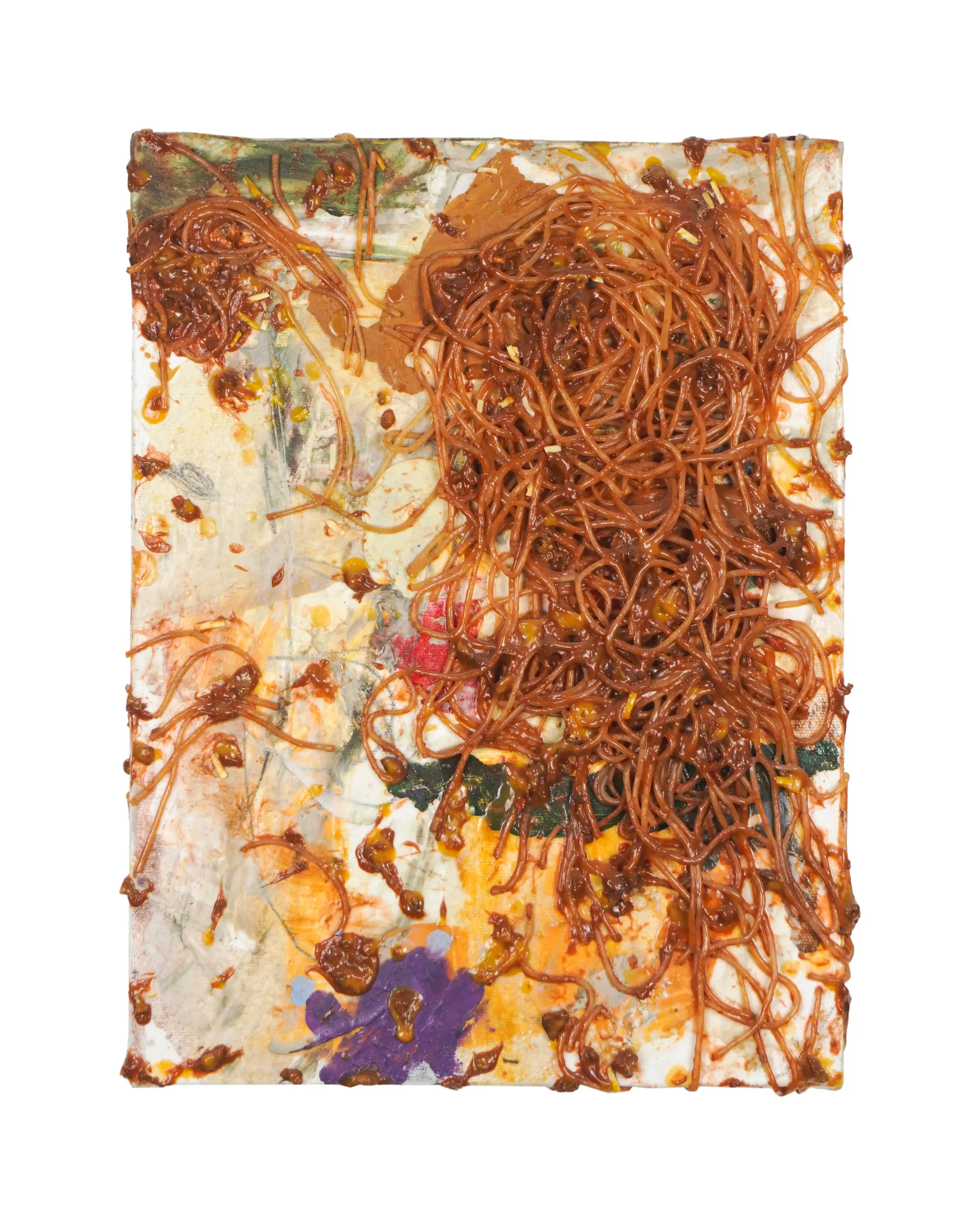
For instance, there are the pieces resembling the bright red spaghetti so often seen at Filipino gatherings, the mere sight of them enough to evoke the sweet-savory flavors we’ve come to expect.In making the pasta, he pipes acrylic through a cake nozzle to form the strands, then mixes paints to build the red sauce, cheese, and meat, listing components and steps much like a cookbook. Because while conceptual art like Lindslee’s may appear deceptively simple, it still requires structure to take shape. There’s also something primal in the artist’s process, a kind of rawness in his approach to materiality. The paint speaks for itself, but it’s also the product of deliberate effort, a nod to the more hands-on approaches of artists centuries ago, when the Old Masters mixed pigments with egg yolk to create tempera or with linseed oil for oil paint.
“In the history of art, even before you paint, ikaw ang gagawa ng paints mo [You’re the one who makes your own paints],” he shares. “You ground the pigments, mix them with a binder. Sa panahon ngayon, nawawala na yung ganon klaseng practice. Naging madali nalang, nabibili na lang ang paint. [In this day and age, that kind of practice is being lost. It’s become easy, you just buy paint.]”
This is where the act of “doing” becomes a source of joy, something that draws Lindslee back to the studio; a deeper engagement with the roots of the work keeps the process dynamic and interesting.
Conceptualizing Consumption
We can’t look at food without the idea of consumption looming in the background. In the case of Lindslee’s works, it sits at the core of every motif or object: what we consume, when we consume it, and why we do so in the first place. As this article’s title, a familiar adage, suggests: we are what we eat—food and the acts surrounding it, be it eating or cooking, reveal a great deal about us and the cultureCultureshared traditions, beliefs, values, customs, arts, and social practices that define the identity and way of life of a community, society, or nation.Go to Culture Glossary we inhabit.
“Consumption of not only food, but knowledge and beliefs,” the artist explains. “Food is the easiest way to express this idea to people.”
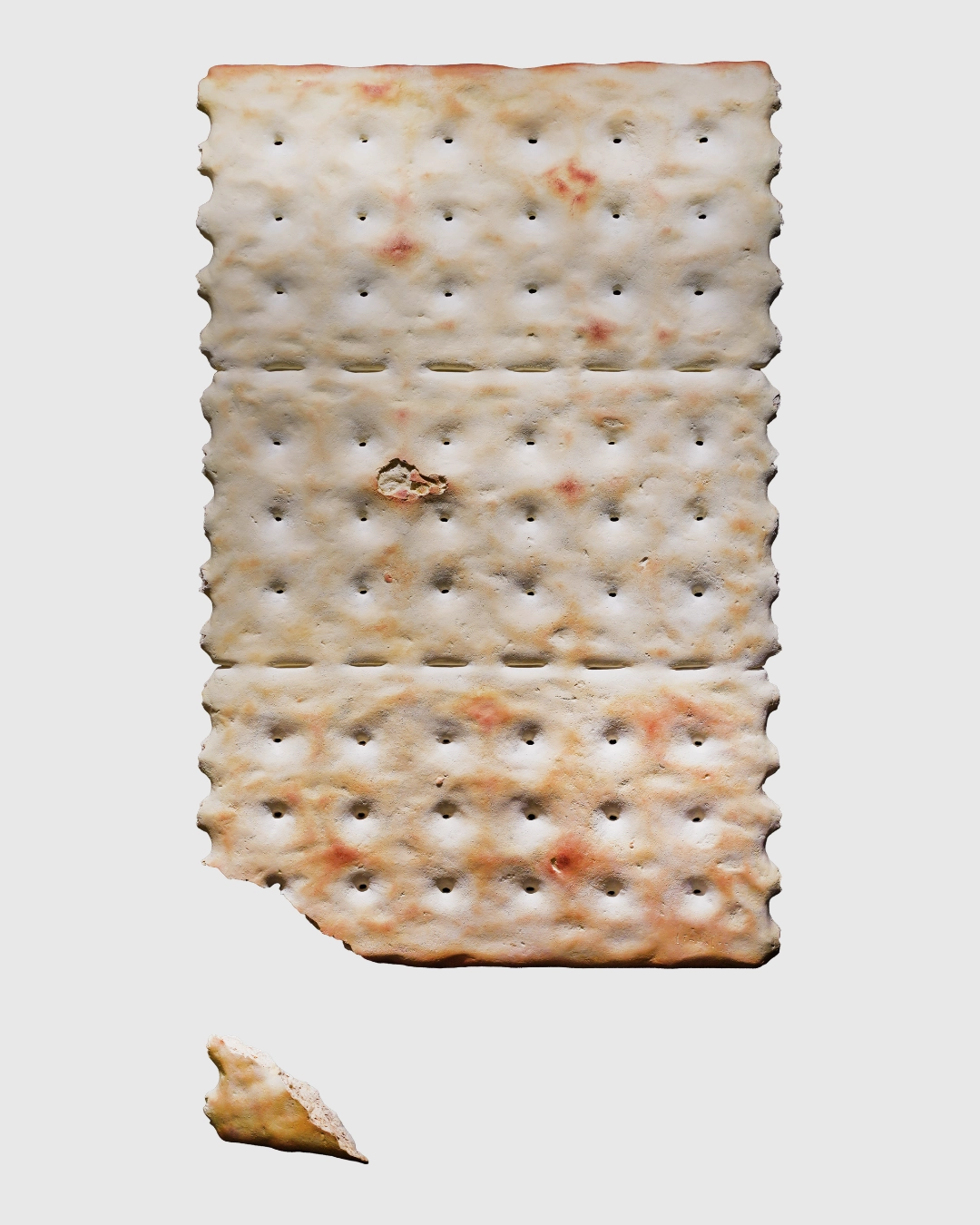
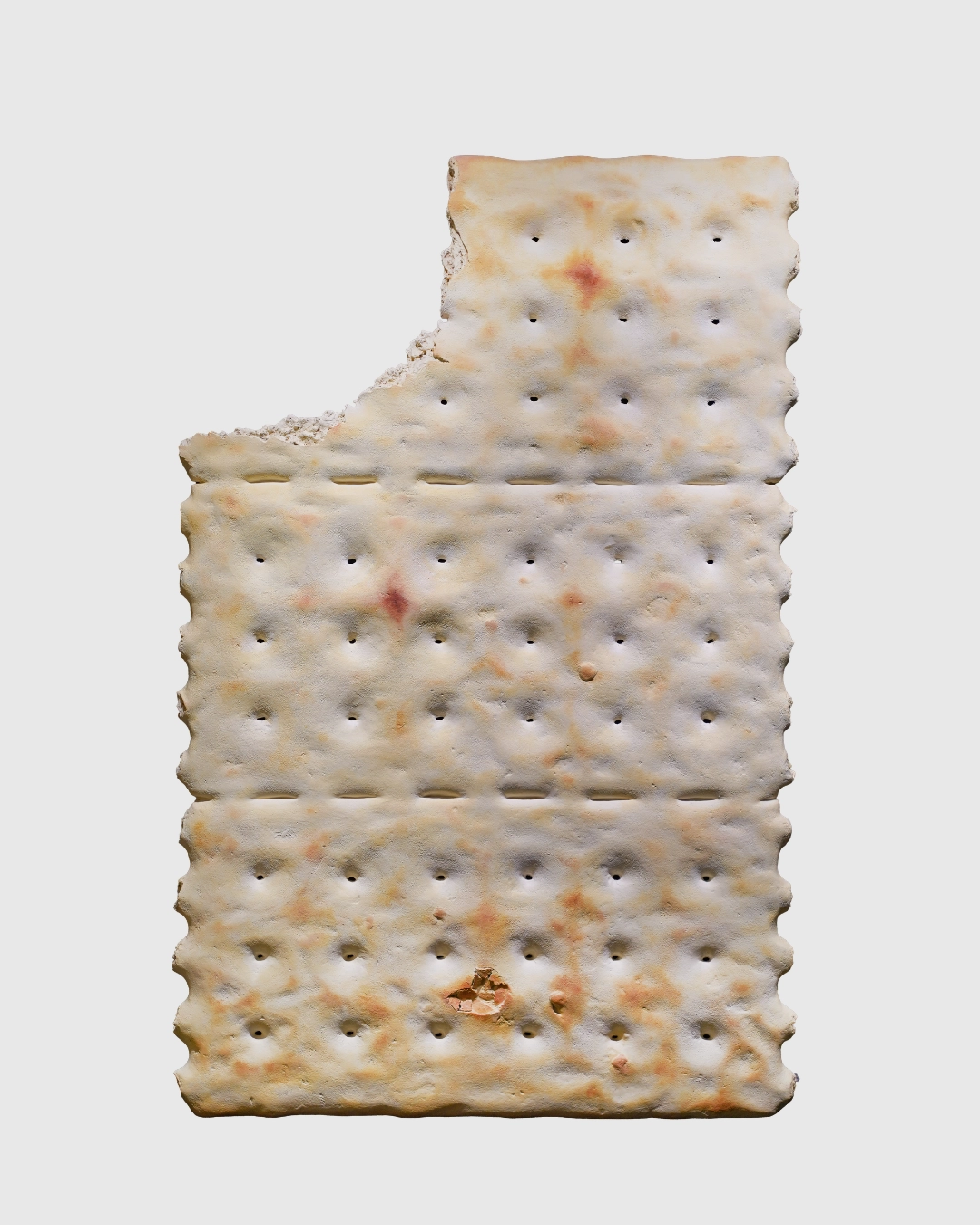
Take the humble pack of crackers, laid bare in Art for the Sick. The title hints at the crackers’ role in our rituals of eating, most prominent in the diets of those grappling with diabetes or hangovers. It also points to the Filipino concept of pantawid-gutom: a simple snack that’s just enough to whet the appetite and temporarily “bridge hunger” until the next full meal.
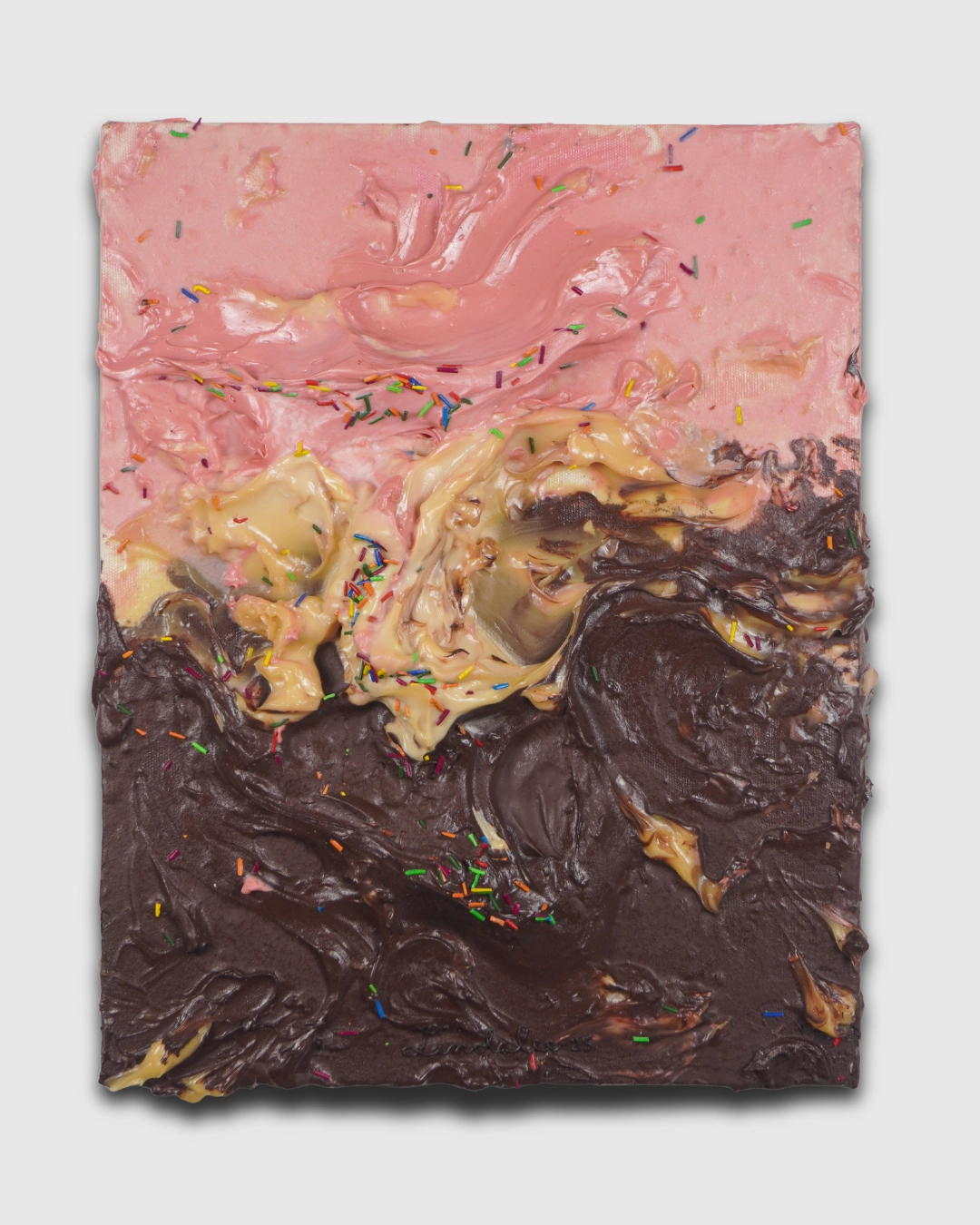
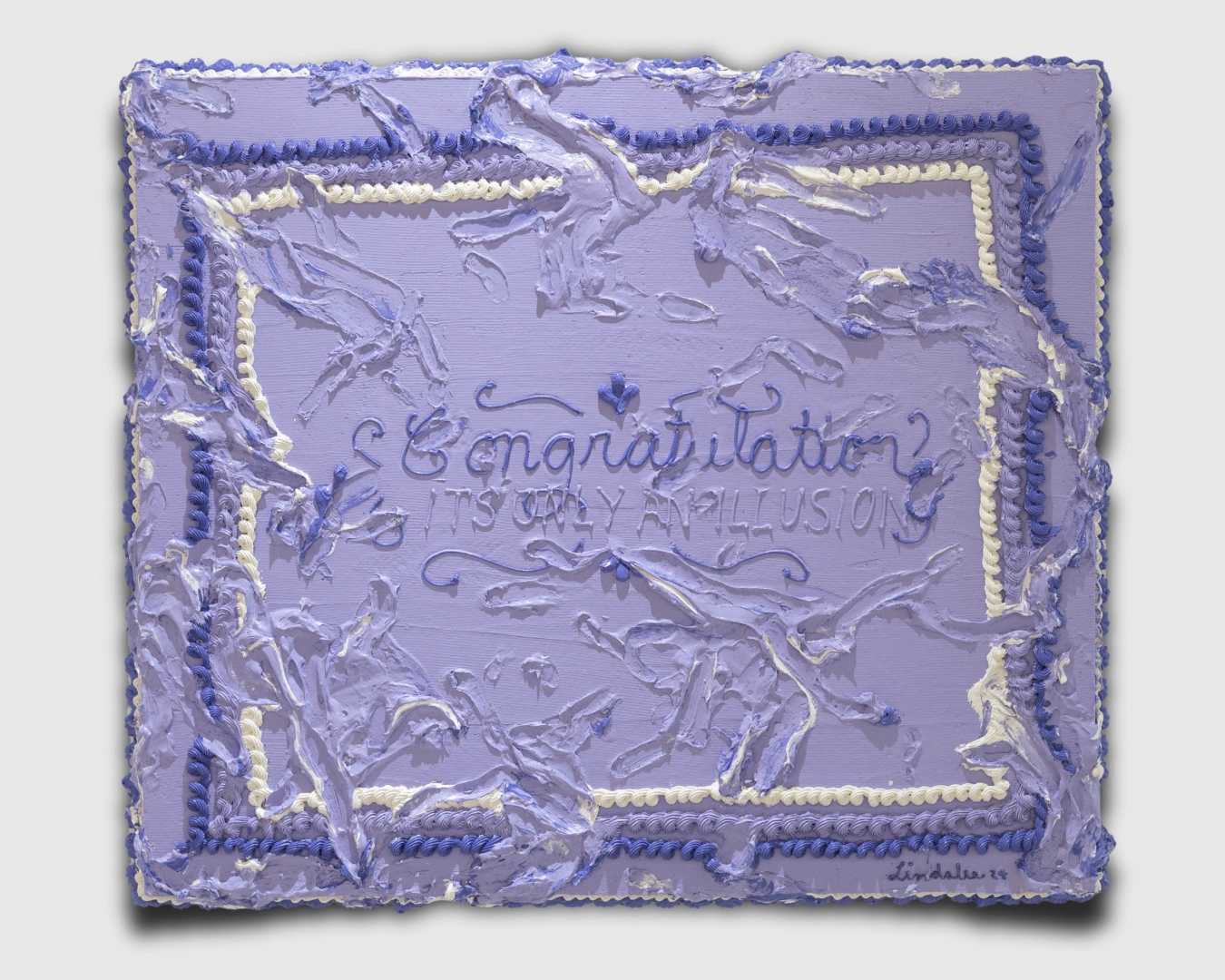
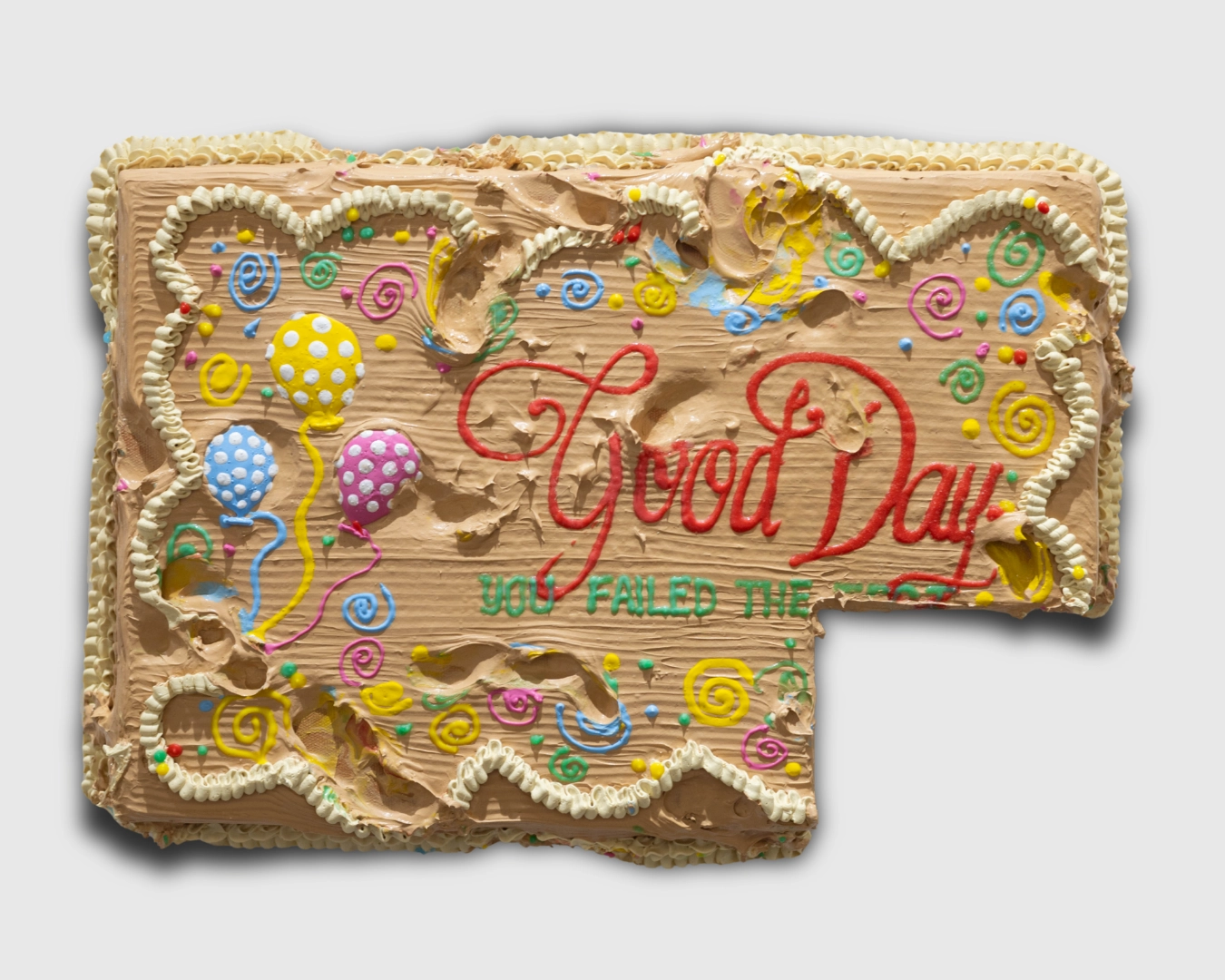
The birthday cake, prevalent in his series of works depicting the sweet treat, becomes a synecdoche for celebrations as well as a natural canvas for a darker sense of humor. Some pieces speak for themselves through their visual elements, while others blatantly deviate from his usual imagery through words. “Congratulations, It’s Only An Illusion,” one cake reads, another saying “Good Day, You Failed The Test” (the word “test” redacted with a square slice cut out). Sardonic, tongue-in-cheek phrases through piped messages are a cutting contrast to the optimistic vibrancy and well-wishes so often linked to these special confections, creating a playful cognitive dissonance.
Lindslee’s works are conceptual in that they use representations of actual objects to articulate ideas. Yet fragments of abstraction remain, echoing his earlier practice through sensorial details: peaks of paint that mimic the surface of food, uneven splotches of color on scrambled icing, and streaks of sauce spread across crockery or canvas. When you look at these forms, the question is no longer just what they mean, but what they make you feel as you’re guided by these subjective readings.
While the artist injects his works with layers of personal history, nostalgic feelings, and cultural references, he prefers to let his viewers draw from their own experiences when they observe his pieces. “You can give it many meanings,” he says, smiling.
The Edible Everyday: What The Food Art Conveys To Viewers
One of the core reasons why Lindslee’s sculptures speak to viewers is how they invite interpretation through familiar mundanities. “Kapag food, ang bilis siya makarelate [When it’s food, it’s easy to quickly relate to it],” he notes. “‘Yun ang lagi natin naiisip, kahit saan kami pumunta [That’s what we always think about, no matter where we go]; it’s an essential of life.”
His The Art of Spaghettification series calls to mind the dregs of sweet party spaghetti left behind on paper plates. Smothered and unfinished, their red stains and wandering bits of meat become both product and symbol—of a hope for long life, of an unusual national taste (not many foreigners understand the idea of sweet spaghetti), and of a shared pool of memory among Filipinos.
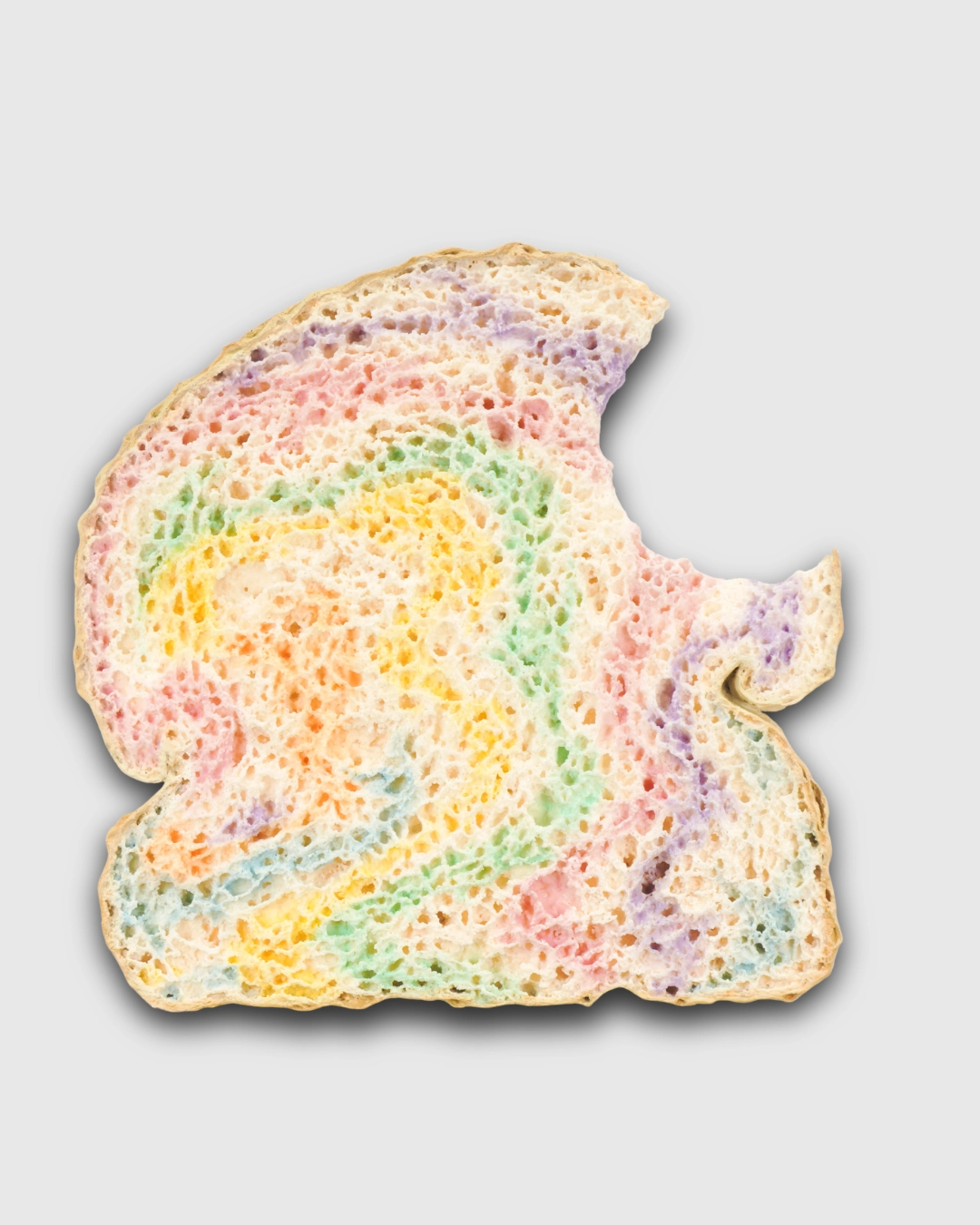
Cake and the country’s distinct “rainbow bread” also hold personal significance to the artist, touching on a sense of nostalgia. “Lumaki ako sa isang maliit na town [I grew up in a small town],” Lindslee explains. “It was just me and my mom. Siya nagba-bake ng cake sa bahay, tumutulong ako sa kanya mag spread at pipe ng icing. [She was the one who would bake cake at home, and I’d help spread and pipe the icing.] There was a happy, festive feeling. I think a lot of people can relate to that, growing up with these desserts.”
Then there’s the rainbow bread, a unicorn-like creation that epitomizes the fun of Filipino childhood, infusing it into something incredibly ordinary. “Pag may occasion, pero hindi gaanong kadami hinahanda, parang nagiging decoration ang bread [When there’s an occasion, but we don’t have a lot prepared, the bread kind of becomes a decoration],” Lindslee expounds.
“In many ways, your process is a lot like cooking, but this time with paint,” I say as we reach the end of our conversation, finally pointing out the obvious parallel despite Lindslee’s self-proclaimed lack of kitchen skills. He chuckles, pausing for a moment before saying, “Oo nga, parang ganon [Oh yeah, it’s like that].”
With that simple exchange, the parallel comes full circle. Lindslee’s art is far from edible (and a touch too large for the average plate), but it reveals the artistry in cooking, and the kind of culinary flair inherent in art-making as well. Whether you consume with your eyes or your mouth, you might encounter something different each time: surprise in the unconventional, comfort in the familiar, joy in the playful, and pleasure in the beautiful. Either way, it’s a feast for the senses, finding its significance in both action and imagination.
See more of Lindslee’s works below.
This article was originally published in our June 2026 print issue.
Banner image features “The Art of Spaghettification” by Linds Lee, courtesy of Artinformal
Frequently Asked Questions
Lindslee is the artistic moniker of Filipino artist Lindsey James Lee. A graduate of the University of Santo Tomas with a Bachelor of Fine Arts degree in Painting, he is known for creating sculptural works that transform familiar food items into large-scale conceptual artworks.
Lindslee primarily works with acrylic paint, but uses it as a sculptural material rather than a traditional painting medium. By experimenting with different chemical reactions, ratios, and techniques, he creates varied textures and finishes that mimic the appearance of food.
According to the artist, food is one of the easiest ways for people to relate to an idea. His works explore themes of consumption, not only of food, but also of knowledge, beliefs, memories, and cultural experiences.
His works often reference familiar Filipino food items and experiences, including sweet-style spaghetti served at celebrations, birthday cakes, crackers, and the colorful “rainbow bread” associated with childhood gatherings and special occasions.
Lindslee’s artworks draw from familiar foods, celebrations, and everyday experiences that many people recognize. By combining personal memories, cultural references, and open-ended symbolism, the works invite viewers to form their own interpretations and emotional connections.
The birthday cake functions as a symbol of celebration, nostalgia, and shared experiences. Through playful and sometimes sardonic messages piped onto his sculpted cakes, Lindslee creates a contrast between festive imagery and unexpected ideas or emotions.
Works such as Art for the Sick reference the role crackers play in everyday Filipino life, particularly as food associated with illness, recovery, hangovers, and the concept of pantawid-gutom—a simple snack meant to temporarily satisfy hunger until the next meal.