Discover why supper clubs are becoming a popular dining trend through their intimate meals, meaningful conversations, and sense of community.
There are days when you crave more than just a good meal. You want something that fills both your stomach and your soul. Some people turn to nostalgic childhood dishes for comfort, while others seek out spaces where they can slow down and connect with people. Manila diners looking for both have found their way to supper clubs. After weeks of scrolling through Instagram, one thing became impossible to ignore: they’re everywhere.
Supper clubs have become a popular movement offering intimate meals that are just as much about conversation and community as they are about what’s on the plate. While discussing the trend with my editor, we found ourselves wondering how and why this came to be. We had our theories, but to get a better understanding, we spoke with Jan Maceda and Justine Chua, founders of the up-and-coming Monday Supper Club, about why gathering around the table feels more meaningful than ever.
READ ALSO: Saan Masarap?: We Ask Top Chefs Where They Eat Filipino Food
What Are Supper Clubs?
At first glance, a supper club sounds deceptively simple: a group of people gathering over dinner. In reality, it’s much more intentional than that, functioning like a curated dining experience where guests—many of whom have never met before—share a communal meal built around a single menu, often hosted in a private home or intimate venue.
Unlike a restaurant, where diners come and go at their own pace, everyone arrives together, eats together, and leaves having shared the same experience. As such, the menu isn’t the only thing that’s carefully considered. The music, tablescaping, dinnerware, and even the mood of the evening, all work together to tell a story.
For Monday Supper Club founders Jan and Justine, that shared experience has always been the point. “I think the biggest thing is the sense of community,” Justine says. “It honestly started with me just cooking for my friends. Then it became friends of friends, and eventually people we had never met before.”
One of her favorite moments happens long after the first course is served. “Seeing people who came as strangers leave talking to each other,” she explains. “Everyone’s sharing the same meal at the same table, so it naturally creates conversation in a way that doesn’t really happen at a restaurant.”
Jan echoes the sentiment from a different perspective. As someone who always seeks out memorable dining experiences, she finds herself drawn to places where every detail feels deliberate. “It doesn’t need to be fancy or fine diningFine DiningA formal restaurant experience defined by refined cuisine, elegant presentation, attentive service, and a polished setting. Fine dining often features tasting menus, wine pairings, and highly trained staff, and itGo to Fine Dining Glossary,” Jan says. “Just really well thought out.” That’s exactly the kind of evening Monday Supper Club hopes to create.
How Does A Supper Club Work?
No two supper clubs look exactly alike, but most follow the same philosophy: every dinner is a one-night-only experience.
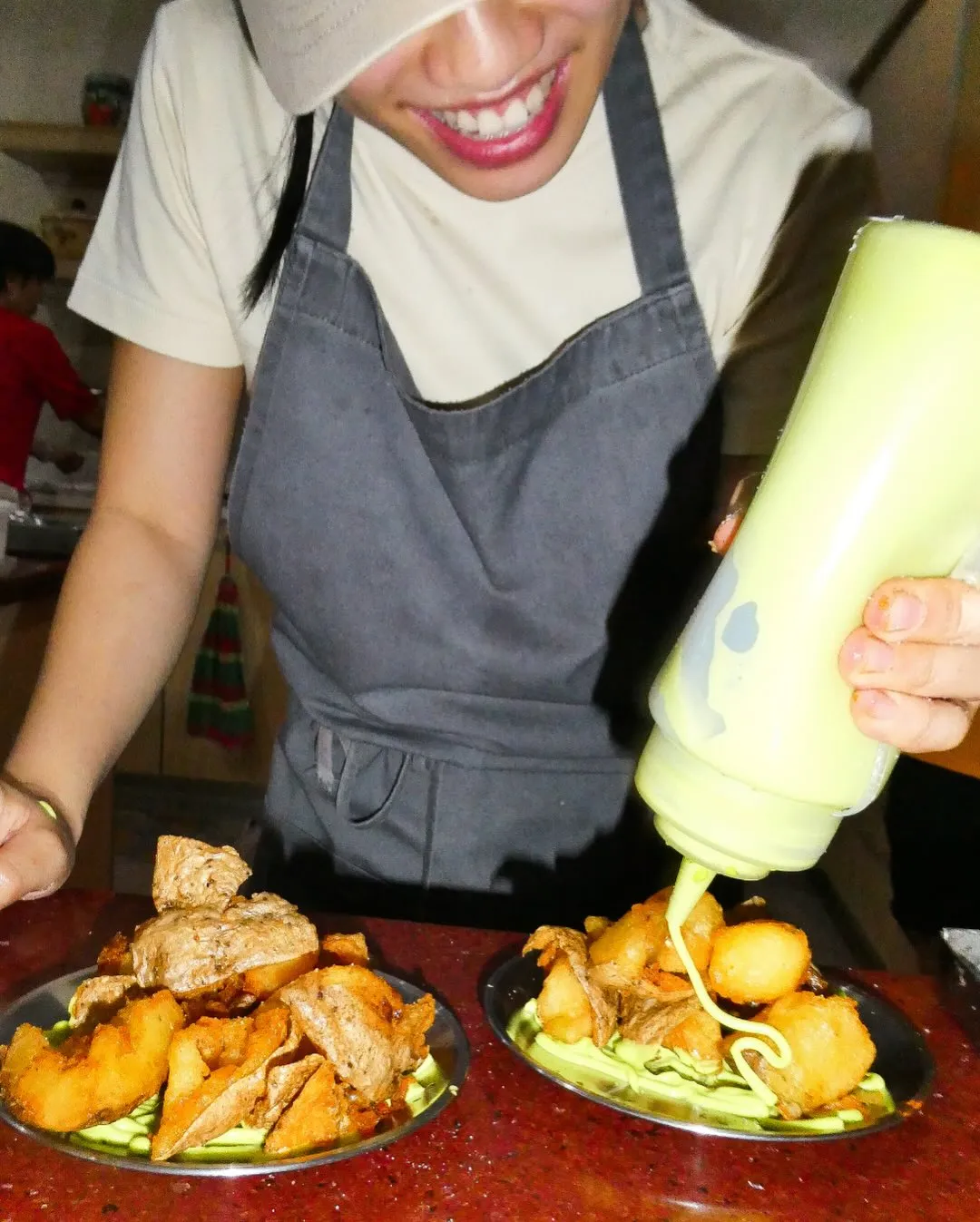
For Monday Supper Club, everything begins with a theme. From there, Justine develops an entirely new menu while Jan translates the concept into a visual experience through styling and tablescaping. The playlist, glassware, décor, and even the smallest finishing touches are chosen to match the atmosphere they’re trying to create.
“The menu changes every single event,” Justine explains. “Since every Monday Supper Club has a different theme, I’m always creating something new instead of serving the same dishes over and over. It gives me a lot more room to experiment and keeps it exciting for us and for people who come back.”
Behind that effortless evening is weeks of planning. Recipes are tested, ingredients are sourced, prep schedules are mapped out, and service is choreographed—all from Justine’s home kitchen.
“It’s honestly a little crazy sometimes,” she laughs. “We’re working with home equipment, we’re always short on counter space, we somehow never have enough plates or wine glasses.” Yet that is part of the charm. “It’s not perfect, and I don’t think it has to be. People can feel that it’s personal, and I think that’s what makes the experience memorable.”
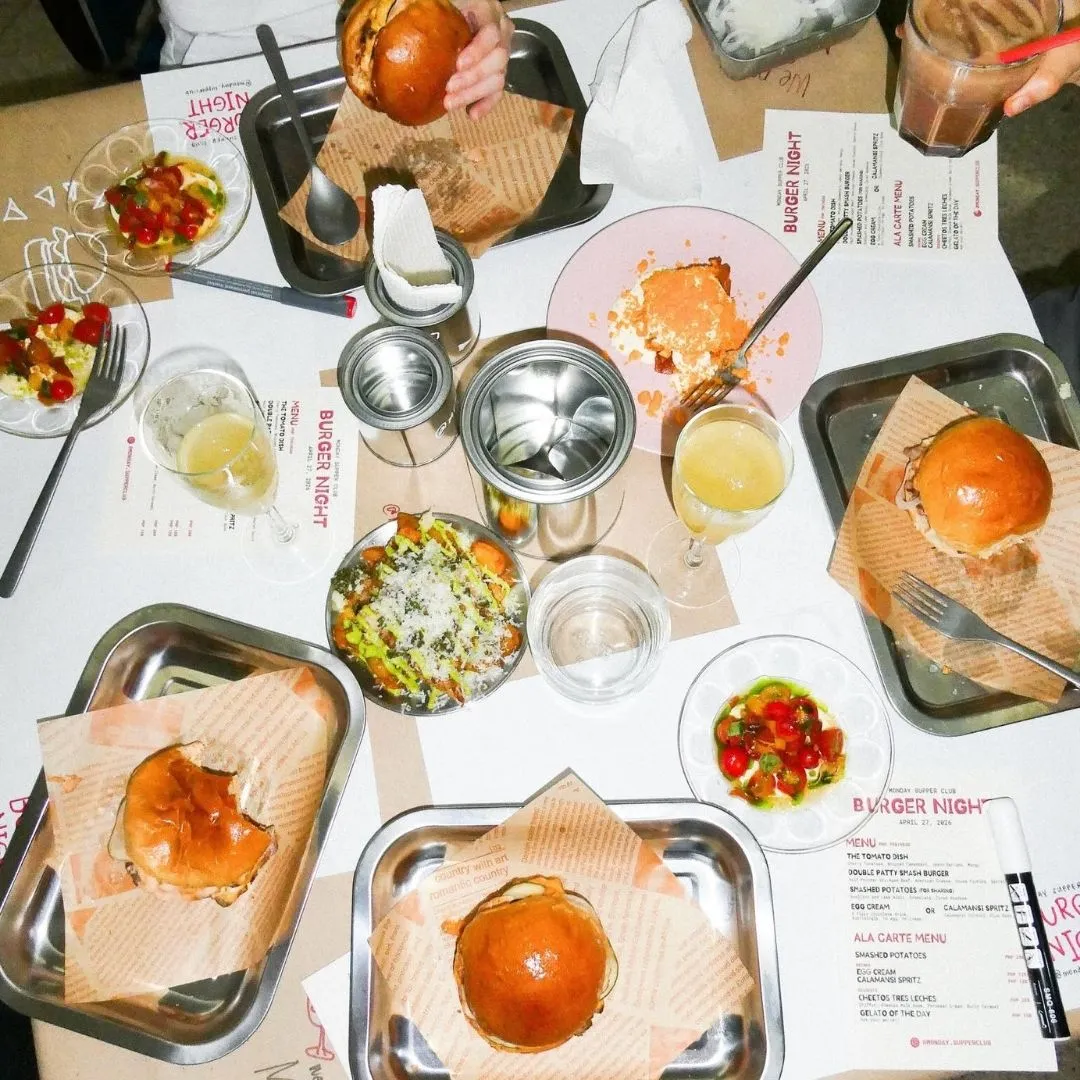
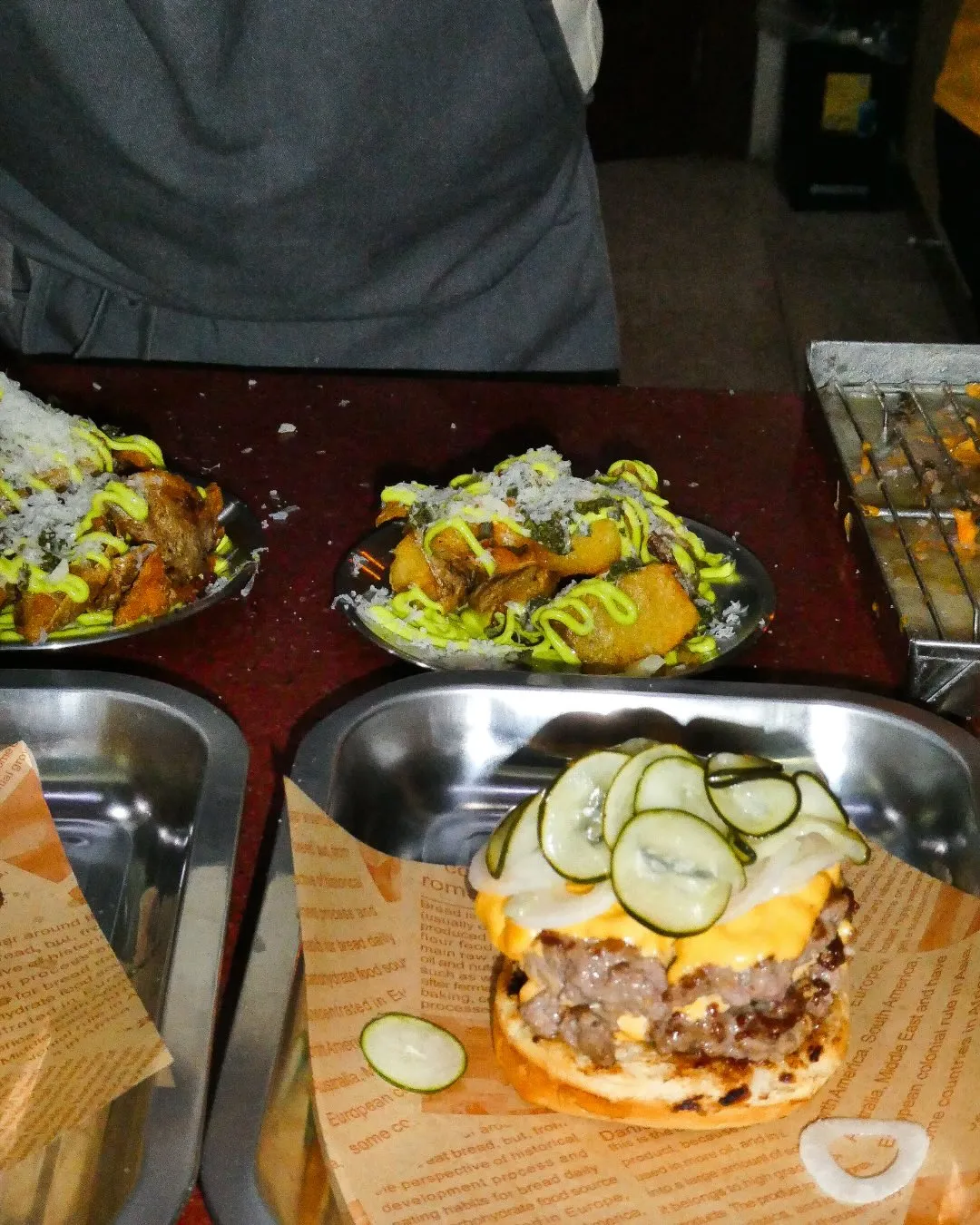
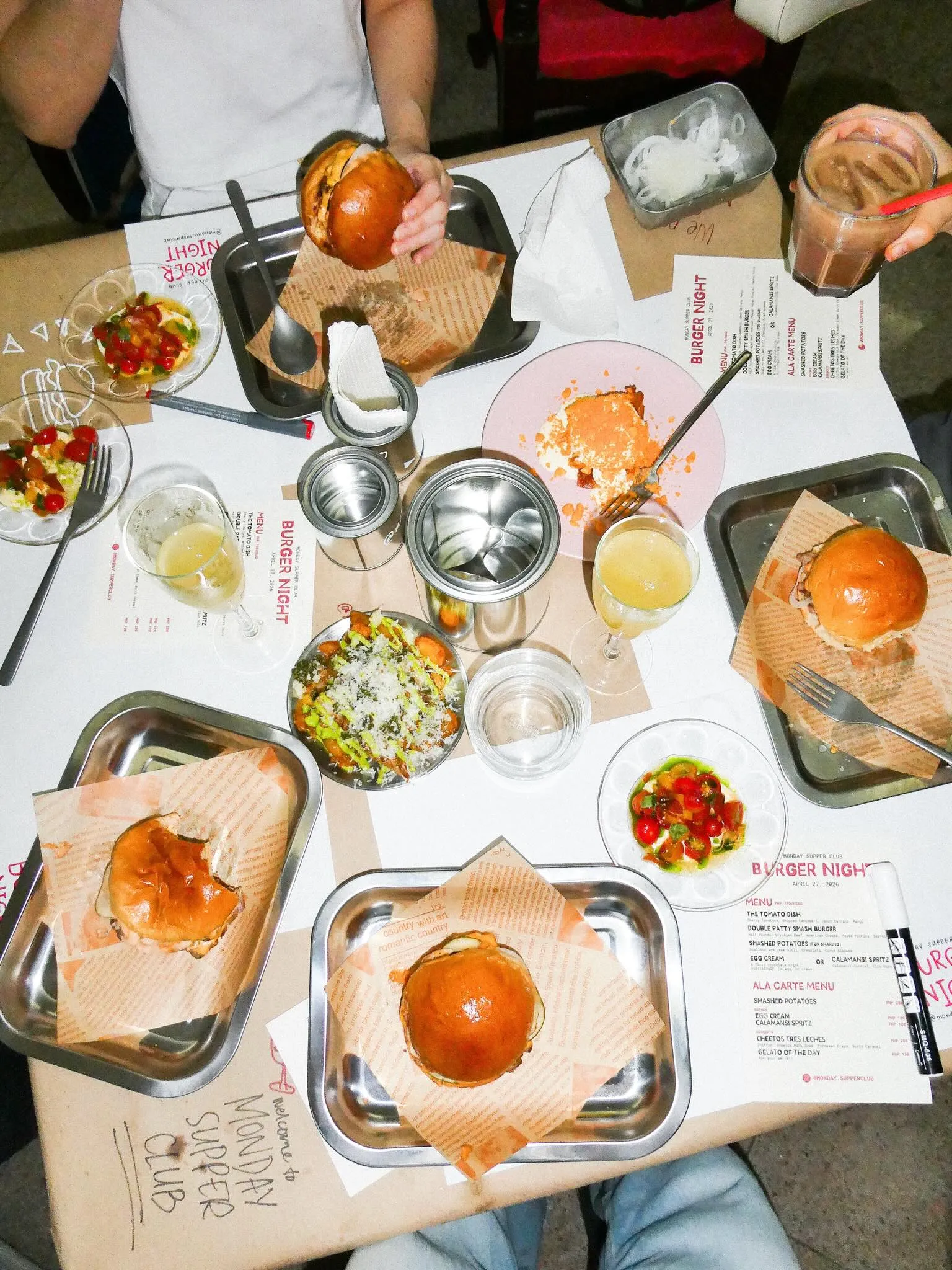
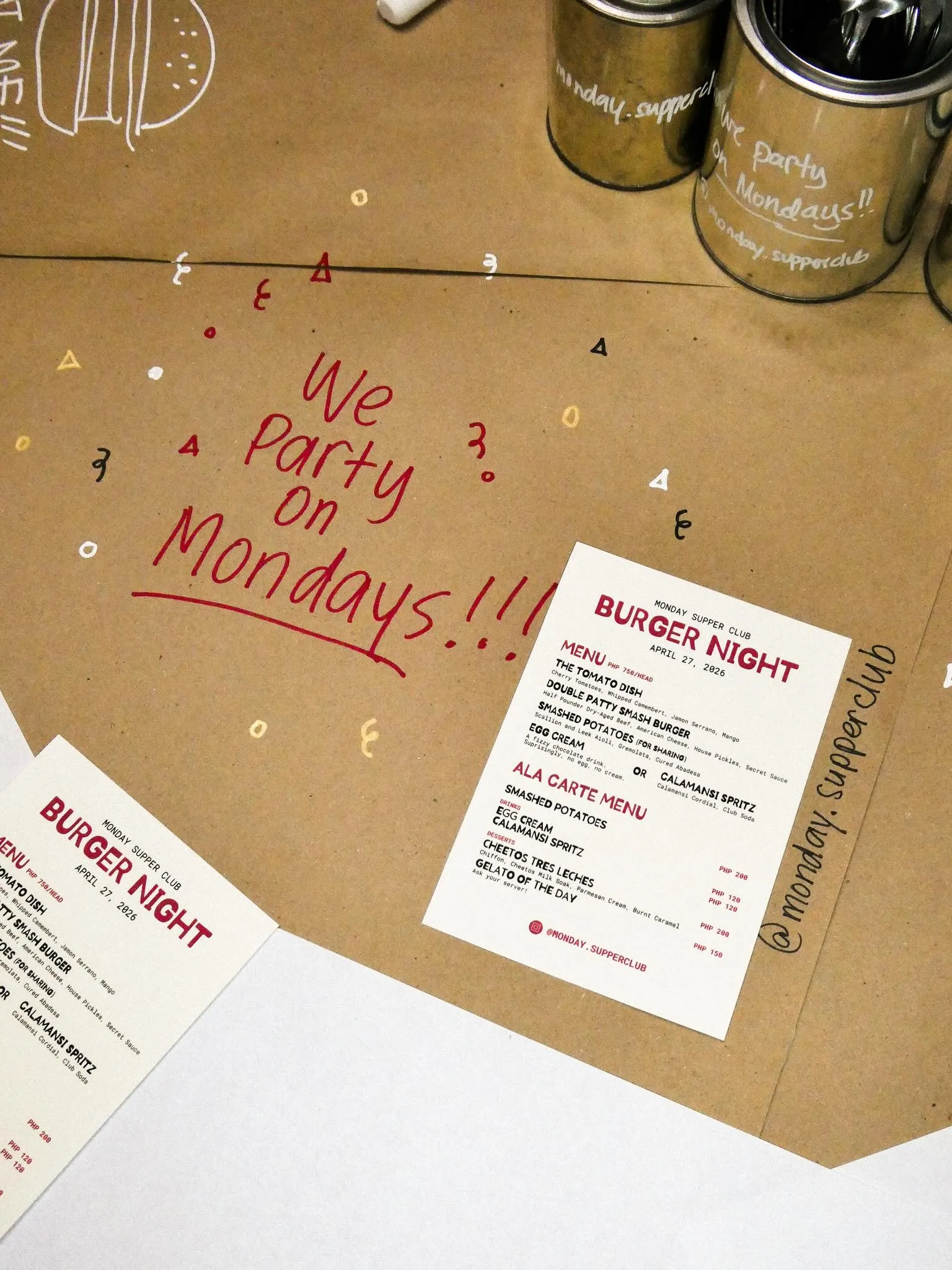
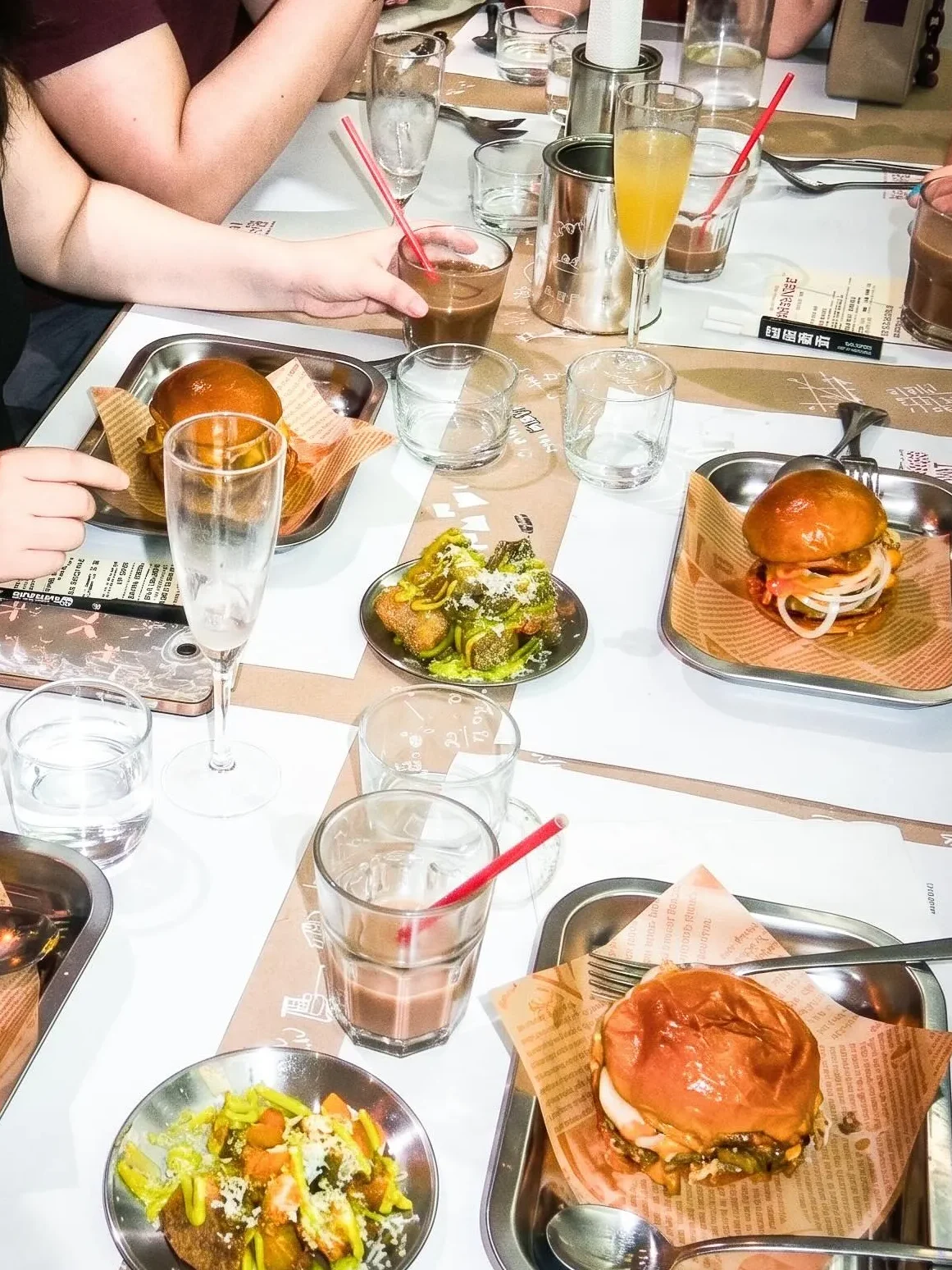
That personality extends well beyond the food. For one burger-themed dinner, Jan went for a retro diner aesthetic with metal serving pieces, kraft paper, and food-safe chalk markers that encouraged guests to doodle messages directly onto the table. Rather than creating a polished, restaurant-like environment, every dinner is designed to feel lived in, welcoming, and personal.
Why Are Supper Clubs Having A Moment?
The resurgence of supper clubs comes at a time when dining has become increasingly convenient. Meals arrive at our doorstep with a few taps, restaurant reservations can be booked in seconds, and viral food recommendations flood our feeds every day. Yet for all the choices available, the experience of sharing a meal with strangers around one table has become something of a luxury. This may explain why supper clubs have struck a chord with modern diners. They offer an evening that can’t be replicated through an app or squeezed into a quick dinner reservation. The food matters, of course, but so does the conversation that happens between courses, the stories behind each dish, and the feeling of being welcomed into someone’s home.
For Justine, that desire for something truly intimate or connective is exactly what’s driving the movement. “I think people today are looking for experiences that feel more personal and intentional,” she says. “It’s not just about the food. It’s about slowing down, sharing a table, meeting new people, and being fully present.”
The rise of supper clubs also mirrors a broader cultural shift. Across cities, communities are forming around shared interests, whether through run clubs, pottery workshops, book clubs, or journaling circles. “People are looking for communities where they can meet new friends while doing something they enjoy,” Jan says. “Supper clubs are the perfect avenue for anyone to come, sit down, chat with their tablemates, and have a good meal.”
The Role Of Supper Clubs In The F&B Space
The popularity of supper clubs is a symptom of our need for connection. There are no separate reservations or isolated tables. Everyone shares the same menu, the same timeline. “It’s about slowing down, sharing a table, meeting new people, and being fully present,” Justine says. Food has simply become another way for people to find one another.
The intimacy of the format naturally creates a sense of exclusivity, but Justine insists that has never been the goal. Limited seats are simply part of hosting dinners at home. What matters more is what happens around the table. “We’ve even seen friendships form through the supper club, which is probably the most rewarding part,” she elaborates.
That might be the biggest reason supper clubs continue to resonate. They’re not trying to replace restaurants, but instead, offering a door to spontaneous connection and tight-knitted-ness that the busy, vast F&B scene can’t always accommodate. The format is refreshing in a time when casual dining often revolves around speed and efficiency. In a supper club, you’re in no particular rush; in fact, you’re invited to stay just a little longer than the average meal. You arrive for dinner and leave with stories to tell, acquainted with new faces that become familiar ones the next time around.

All photos courtesy of Monday Supper Club
Frequently Asked Questions
A supper club is an intimate dining experience where guests gather around a shared table to enjoy a curated set menu. Often hosted in private homes or small venues, supper clubs place as much importance on conversation and community as they do on the food.
Most supper clubs revolve around a fixed menu created for a single event. Guests usually purchase tickets in advance, dine together at a communal table, and enjoy an experience shaped by a specific theme, menu, and atmosphere.
Supper clubs offer something many diners are craving: slower, more personal dining experiences. Beyond the meal itself, they create opportunities to meet new people, hear the stories behind each dish, and enjoy meaningful conversations.
Unlike traditional restaurants, supper clubs typically have limited seating, a set menu, and communal dining. Every guest shares the same meal and experience, making each event feel more intimate and interactive.
People attend supper clubs for more than just good food. They come for the curated experience, the chance to meet like-minded people, and the sense of connection that comes from sharing a table with others.