For Jaime Jalandoni of Premium Wine Exchange (PWX), the annual pilgrimage to Burgundy and Champagne is part procurement run, part marathon, and entirely serious work. We caught up with him before the flight.
“You need endurance,” says Jaime Jalandoni, with the measured calm of someone who has learned this the hard way. “And you have to know how to spit.” This is his advice for navigating a wine trip in Burgundy and Champagne. Not that he’s warning you off. It’s more like he wants you to understand what it actually takes. For Jaime and his partners in Premium Wine Exchange (PWX), the annual trip to France’s most storied wine regions is part pilgrimage, part procurement run, part marathon. In a single day, he and his team may visit up to seven producers, committed to pursuing only the most exciting winemakers to bring into the Philippines.
Over two weeks, they’ll taste upwards of 200 wines and meet as many as 40 vignerons. First, Paris. Then, the train south to Burgundy, then Champagne, winding between quaint villages and vineyards in a rented car. On paper, it sounds like the world’s most enviable work trip. In practice, it’s exactly that, and also genuinely difficult. “We joke about it,” Jaime says, with a laugh, “because it’s what a lot of people would love to do on holiday. But it’s hard work. Regardless of the wine’s value or how much you enjoy it, there’s a big difference between tasting and drinking.”
READ ALSO: Food Of The Gods: The Story Of Philippine Chocolate
When The Vines Are In Bloom: Meet The Vignerons Of Burgundy And Champagne
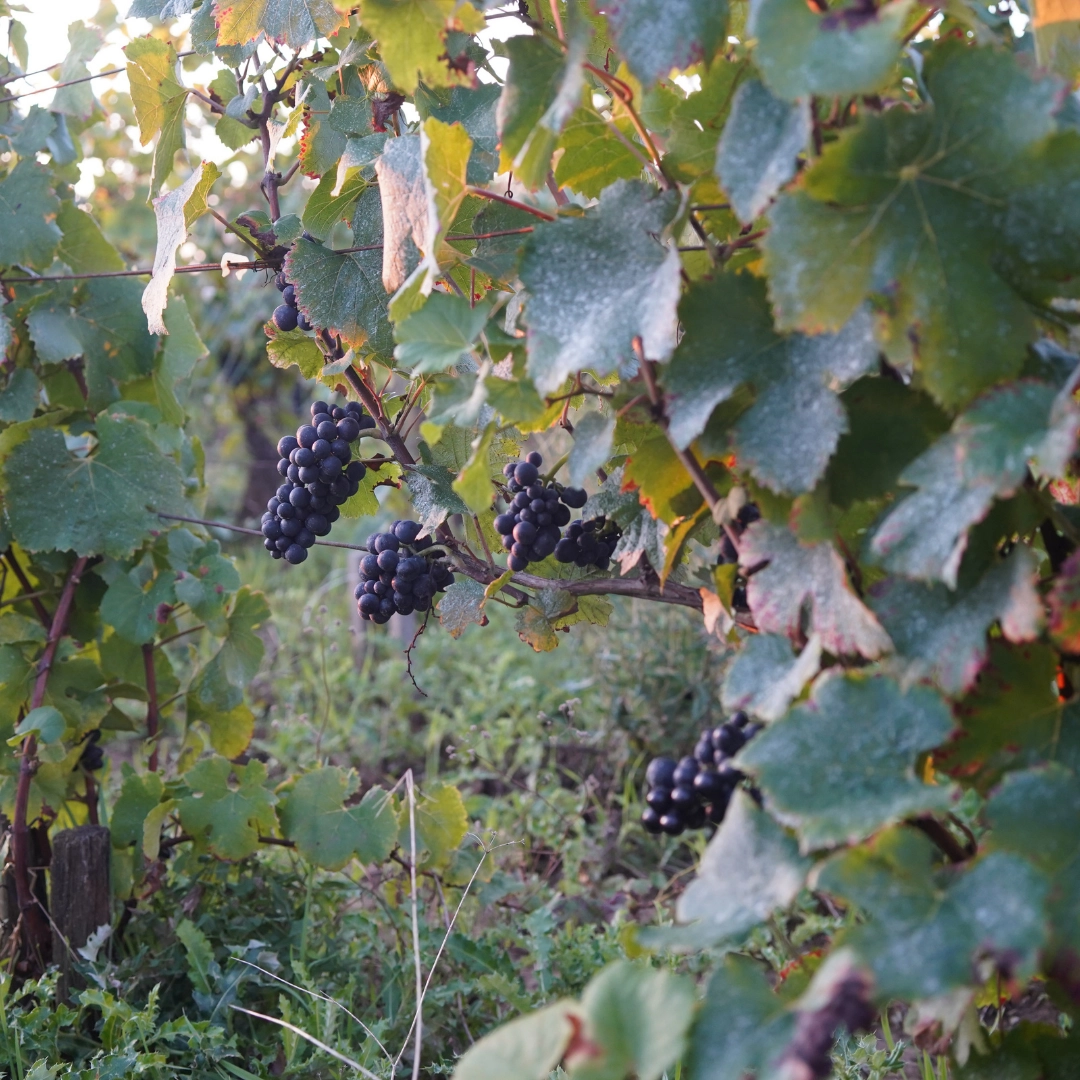
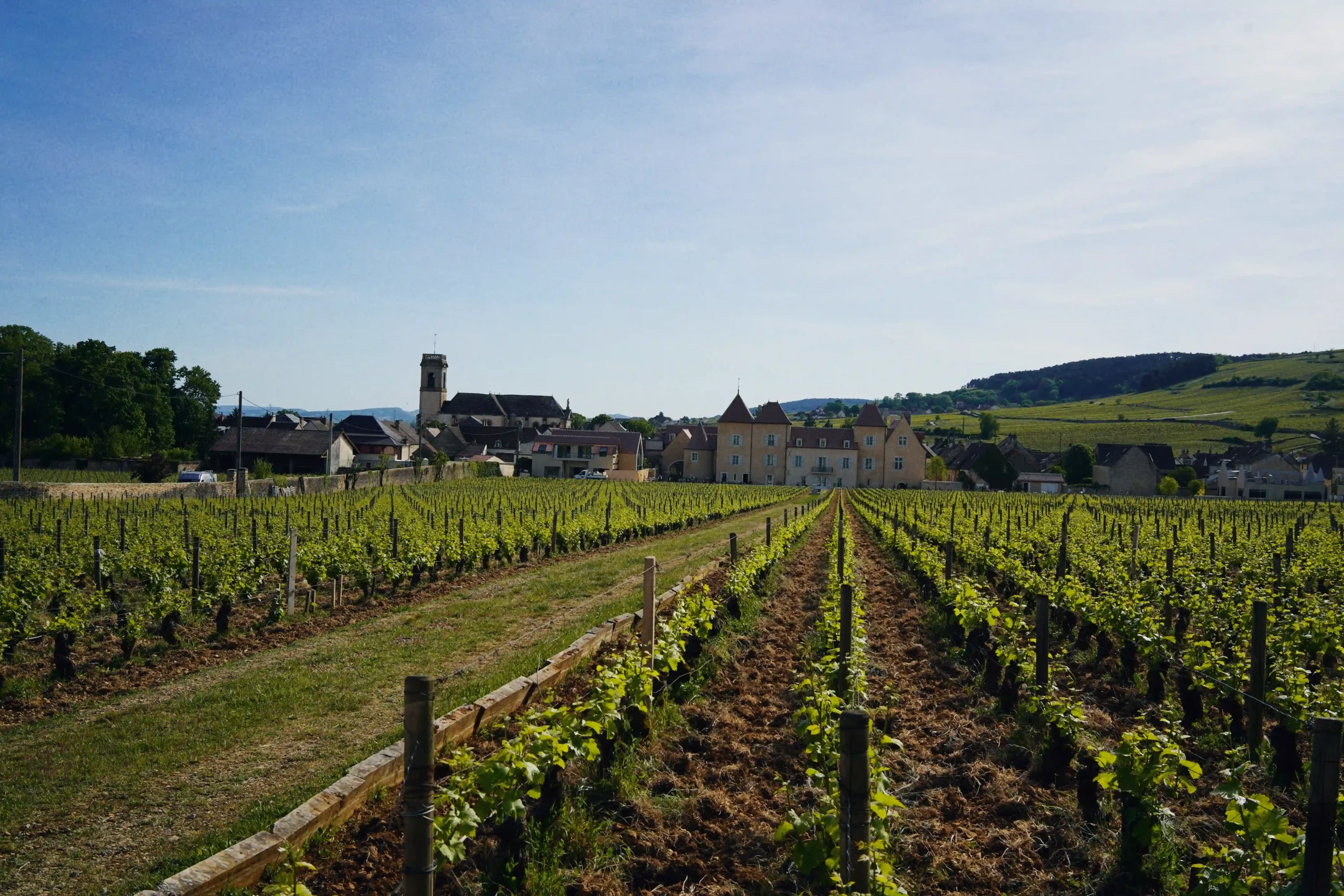
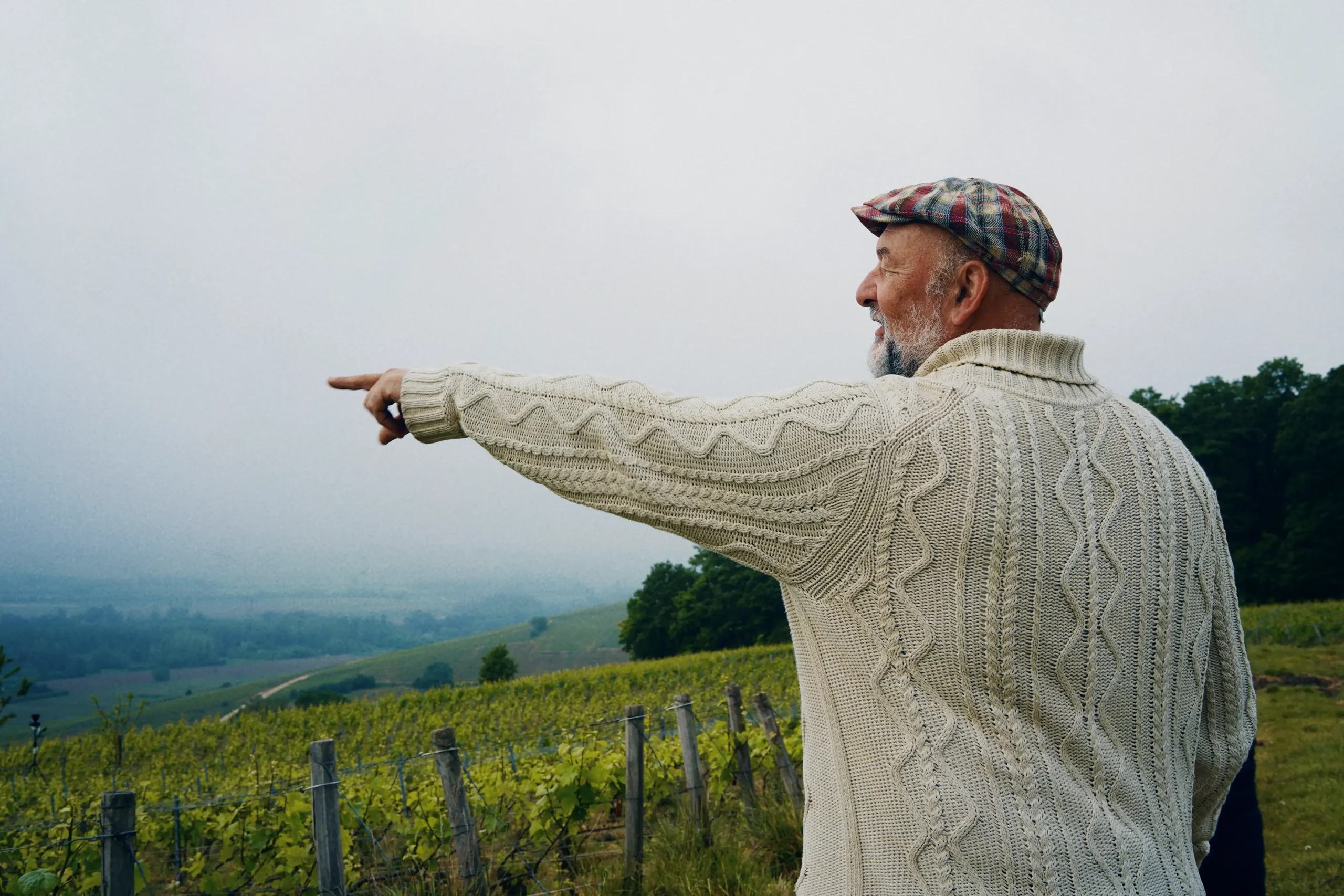
It’s flowering season in Burgundy. The vines are just coming into bloom. It’s a brief, unhurried moment in the calendar before the growing season accelerates. Soon, producers will be back in their plots full-time, pruning and treating, doing everything themselves the way small domaines have always done it. This window, between the end of harvest and the start of summer, is when they have the time and headspace to sit with someone and open a bottle.
For Jaime, the itinerary is a mix of the familiar and new. A portion of the producers are people the team has known for years. “Some of them are already familiar with us, and we’ve established a connection, which is extremely important not just in terms of securing allocations of their top wines but building a meaningful representation where one day they can visit us in the Philippines to see the work our team is doing,” Jaime says. “Those relationships have become more engaged and fruitful each time we return for a visit as we’ve already built a rapport.”
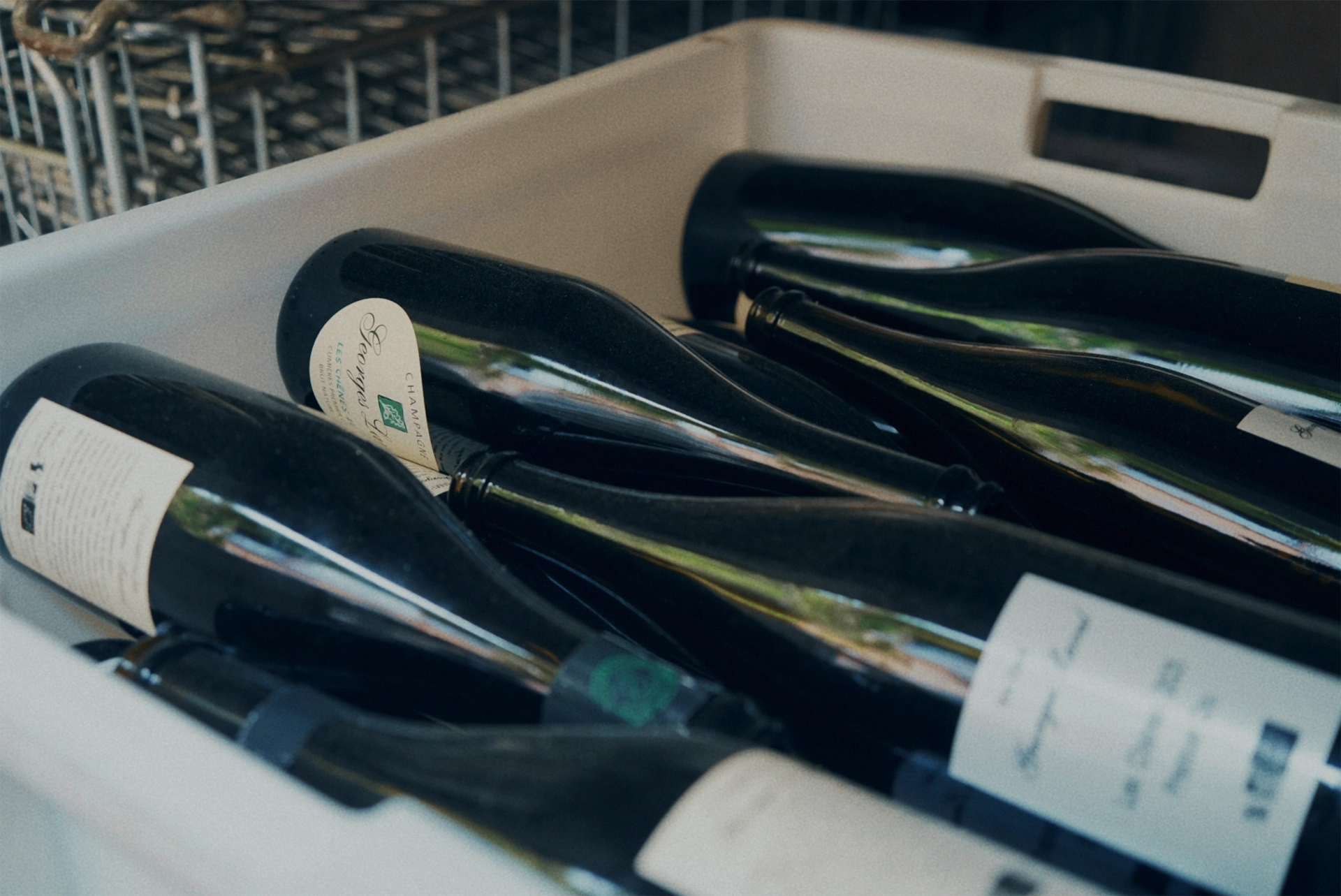
Other producers are those PWX is approaching for the first time. Some whose products they’ve tasted at trade events, some whose vignerons are generating buzz in the community, or whose wines he admires that aren’t yet represented in Manila. Getting in front of them for the first time is a different kind of meeting. One of the names in this list is Vincent Laval of Champagne Georges Laval, regarded as one of the most sought-after Grower Champagne producers in the region. Jaime hopes to bring their wines to the Philippines toward the end of 2026 after recently receiving word that the producer is ready to open the market locally, making this year’s trip feel all the more significant.
There’s also Champagne Cose, a producer that exists outside the norm of Champagne. The project was founded by two figures not traditionally associated with the region: Gil Conjo, a Mexico-born wine consultant and enologist; and Victor Allier, a restaurateur behind Sacré Burger—a concept known for pairing revered cuvées with smash burgers and approachable comfort food. Together, they work closely with growers to release an eclectic range of Champagnes that are changed each year depending on which villages and expressions of the region they want to highlight at a particular moment.
Among those Jaime is most looking forward to working with are two producers who feel like kindred spirits. Pierre-Vincent Giradin and Théo Dancer are part of a new generation reshaping Burgundy. They’re young, hands-on, and deeply serious about their craft. At the end of 2025, both visited Manila for the first time, hosted by PWX for a series of wine pairings that brought their Burgundy to the table. It was a hit with the emerging wine scene of Manila, and it makes it all the more important for Jaime to return the visit as a colleague and friend.
Production in Burgundy is a fraction of what comes out of Bordeaux or Napa. The most sought-after domaines make wines in small quantities, so importers around the world are competing for the same allocations. That means being known, being present, and being the kind of partner a vigneron feels good about are paramount.
“Convincing them and getting them to trust us is a big part of the process,” Jaime says. “Seeing a face is what they really appreciate—knowing where and who end up opening bottles of wine they’ve worked hard to produce; it’s their business card and they’re curious to find out how their wines are doing in a market that’s so different from theirs.”
The New Burgundy: Pierre-Vincent Giradin And Théo Dancer
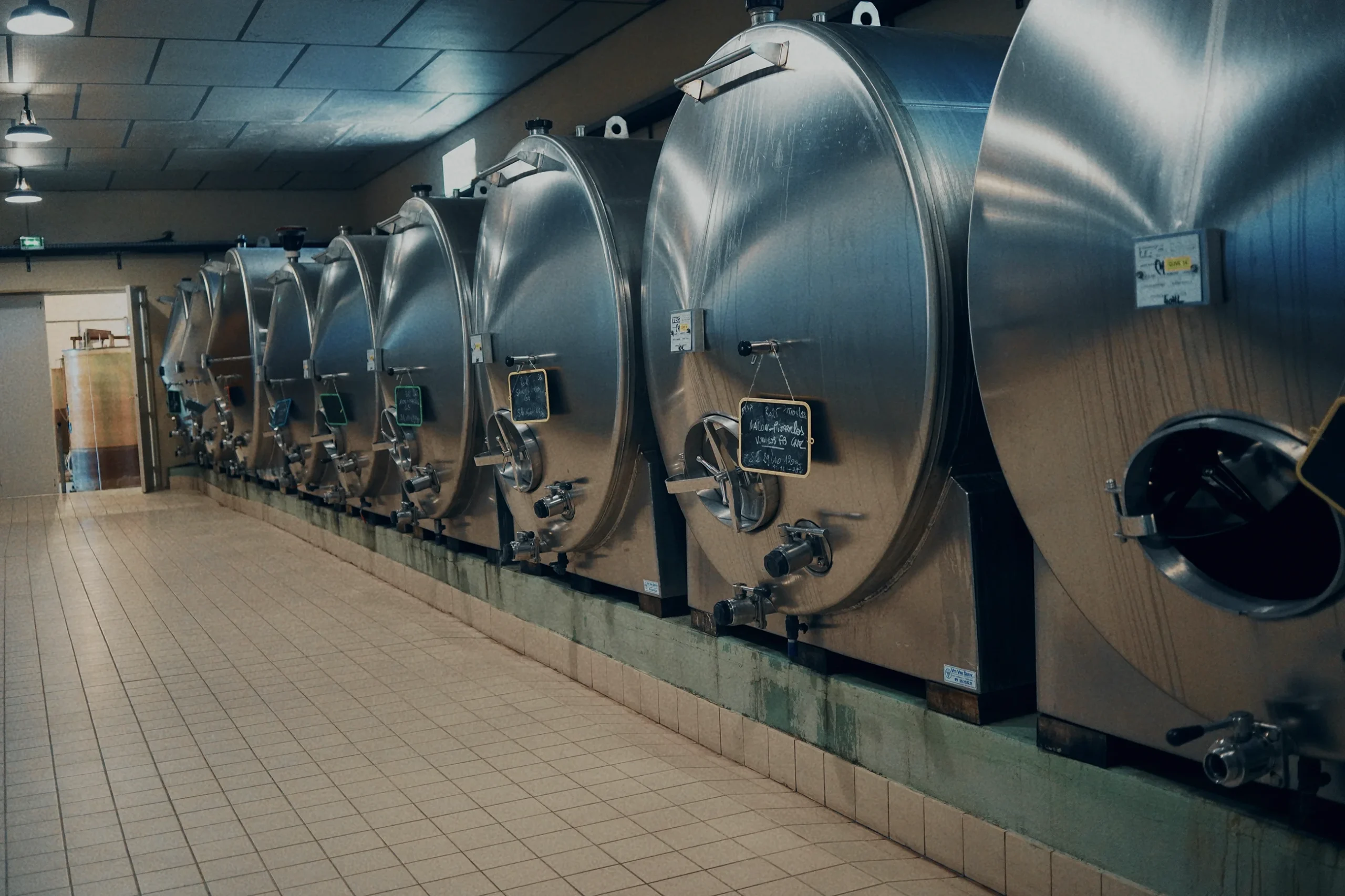
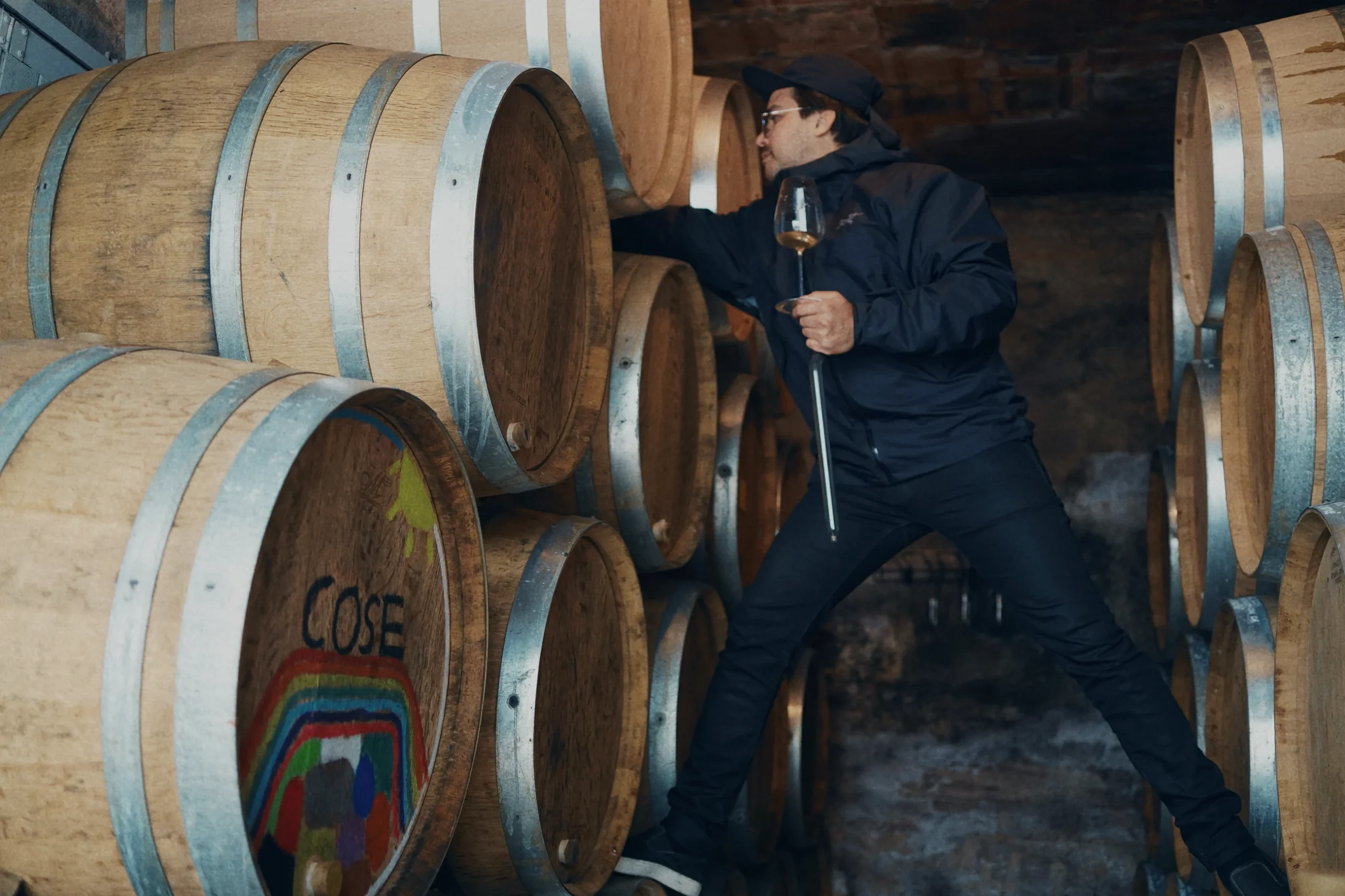
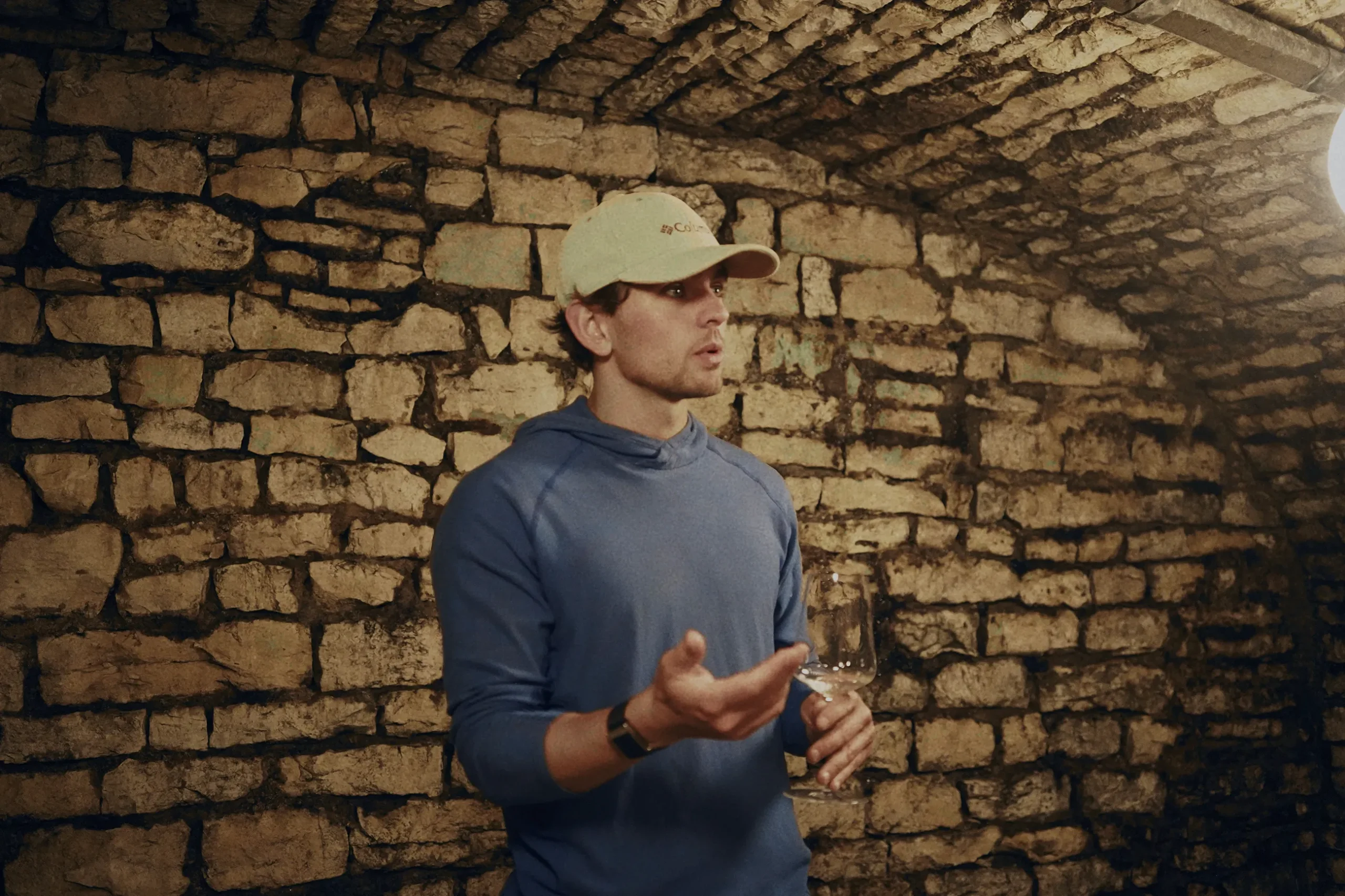
The first stop in any producer’s cellar follows the same ritual. You go down into the cellar. It’s cold, and quiet, and the wines are still in barrel, not yet bottled and nowhere near the finished product. When Pierre-Vincent Giradin pours from the barrel, what’s in the glass is not just a wine but a proposition. The job of Jaime is to read what it will become and whether it’s worth bringing across the world. “You have to taste the wine even if it’s still young and decipher the quality level early on,” Jaime says. “That can be quite difficult.”
Pierre knows this kind of pressure. His father, Vincent Girardin, the son of winegrowers with roots in Burgundy stretching back to the 17th century, built one of the most recognised estates in the region. While his father sold most of his vineyards, a number of prime plots were retained and passed on to Pierre, who took them and built something entirely his own in Meursault. In 2017, at the age of 21, he made his first vintage and was recognized as a rising star of Burgundy.
His terroir-focused winemaking and meticulous process yield wines of precision. To get there, Pierre picks earlier than most of his neighbors to preserve acidity and uses larger-format barrels to minimize oak’s influence.
“There are different styles in Burgundy, not everything tastes the same,” Jaime explains. “You can have different expressions depending on the producer. One will be neighbors with another and may make their wine in a way that’s rounder, while their neighbor may make it in a way that has more tension, more acidic.” Knowing which style belongs to which producer, and which will resonate with which client back home, is the work behind the work.
A short drive from Meursault, in Chassagne-Montrachet, Théo Dancer is carving out his own path while also representing the rising Burgundy scene. The son of Vincent Dancer, who built his own revered Domaine rooted in minimal intervention as a terroir-faith estate, Théo took over fully in 2021. Like Pierre, he inherited something with real weight behind it; like Pierre, his response was to push it further beyond simply preserving. He has extended his reach beyond the family estate with Roc Breïa: a 10-hectare project in the Mâconnais that he has been bringing back to life from the ground up. There, he produces wines with the same light hand that defines everything under the Dancer name.
What Pierre and Théo share, beyond friendship and generation, is a belief that wine is made in the vineyard first. The cellar is where you try not to undo it. It’s also what has drawn Jaime to them, as producers, people, and friends.
An Open Invitation
You don’t have to be a wine professional to make the trip worthwhile. Burgundy, Jaime says, is more welcoming than its reputation suggests. The experience of visiting a producer, standing in a cellar, and tasting something straight from the barrel is one that doesn’t require credentials—just genuine curiosity.
His advice is simple. Come in the quiet season, when the vines are in flower, or the harvest has just ended; the vignerons are left with ample time to talk. When you’re there, ask questions, even the ones that feel too basic. “With wine it can be really daunting, and you may think you’re wrong,” Jaime says. “But asking the simplest questions can help lead to a conversation, and that’s what wine should be about.” The people who make these wines work hard precisely because they want you to have an opinion about them.
Wine, at its best, is an invitation, and few places make that clearer than a small cellar in Burgundy, in the quiet of the flowering season, with something still young in your glass and the person who made it standing across from you.
Jaime’s last tip? Learn to spit. Seriously.
This article was originally published in our June 2026 print issue.
All photos courtesy of Jaime Jalandoni
Frequently Asked Questions
For Jaime Jalandoni and the team behind Premium Wine Exchange (PWX), the annual trip to Burgundy and Champagne is part pilgrimage, part procurement run, and part relationship-building exercise. Over two weeks, the team visits producers, tastes hundreds of wines, and meets with vignerons to discover, evaluate, and secure wines for the Philippine market.
A typical PWX trip involves visits to as many as seven producers in a single day. Across two weeks, Jaime and his team may taste more than 200 wines and meet up to 40 vignerons throughout Burgundy and Champagne.
Many of Burgundy and Champagne’s most sought-after producers work on a small scale, making allocations highly competitive. Building trust through regular visits allows PWX to strengthen relationships, secure access to limited wines, and create meaningful partnerships with producers over time.
Among the producers Jaime highlights are Champagne Georges Laval, Champagne Cose, Pierre-Vincent Girardin, and Théo Dancer. He describes Girardin and Dancer as part of a new generation reshaping Burgundy through hands-on, terroir-focused winemaking, while Champagne Georges Laval remains one of the region’s most sought-after grower producers.
According to Jaime, Burgundy is defined by its small-scale production, strong sense of terroir, and diverse winemaking styles. Even neighboring producers can create dramatically different wines depending on their approach, resulting in expressions that range from round and generous to precise, tense, and highly mineral.
Absolutely. Jaime believes Burgundy is more welcoming than many people assume. Visiting a cellar, tasting wine from the barrel, and speaking directly with a vigneron does not require professional credentials—only curiosity and a willingness to ask questions. As he puts it, wine is ultimately about conversation, discovery, and forming your own opinion.