Gothic bridal fashion replaces pristine perfection with romance shaped by history, heartbreak, and beautiful decay.
The new it-bride is a goth girl. The Wilis from Giselle are probably her bridesmaids. Her in-laws are the Addams Family. And she has never looked more in love. She didn’t get the memo about ivory silk and garden-party optimism. Her veil is torn and frayed, but tastefully so. Her bouquet might be dead roses, or black ones, or poisonous ones. She has devoured every bit of vampire media in the last three decades, and she isn’t interested in pretending that love is a clean, safe, fully resolved emotion—she just happens to be the first bride in a long time willing to dress as she knows it.
READ ALSO: Sassa Jimenez Rewrites The Rules Of Bridal With “The New Ceremony”
The Goth Bridal Movement: A Young Miss Havisham With A Cake In Her Fist
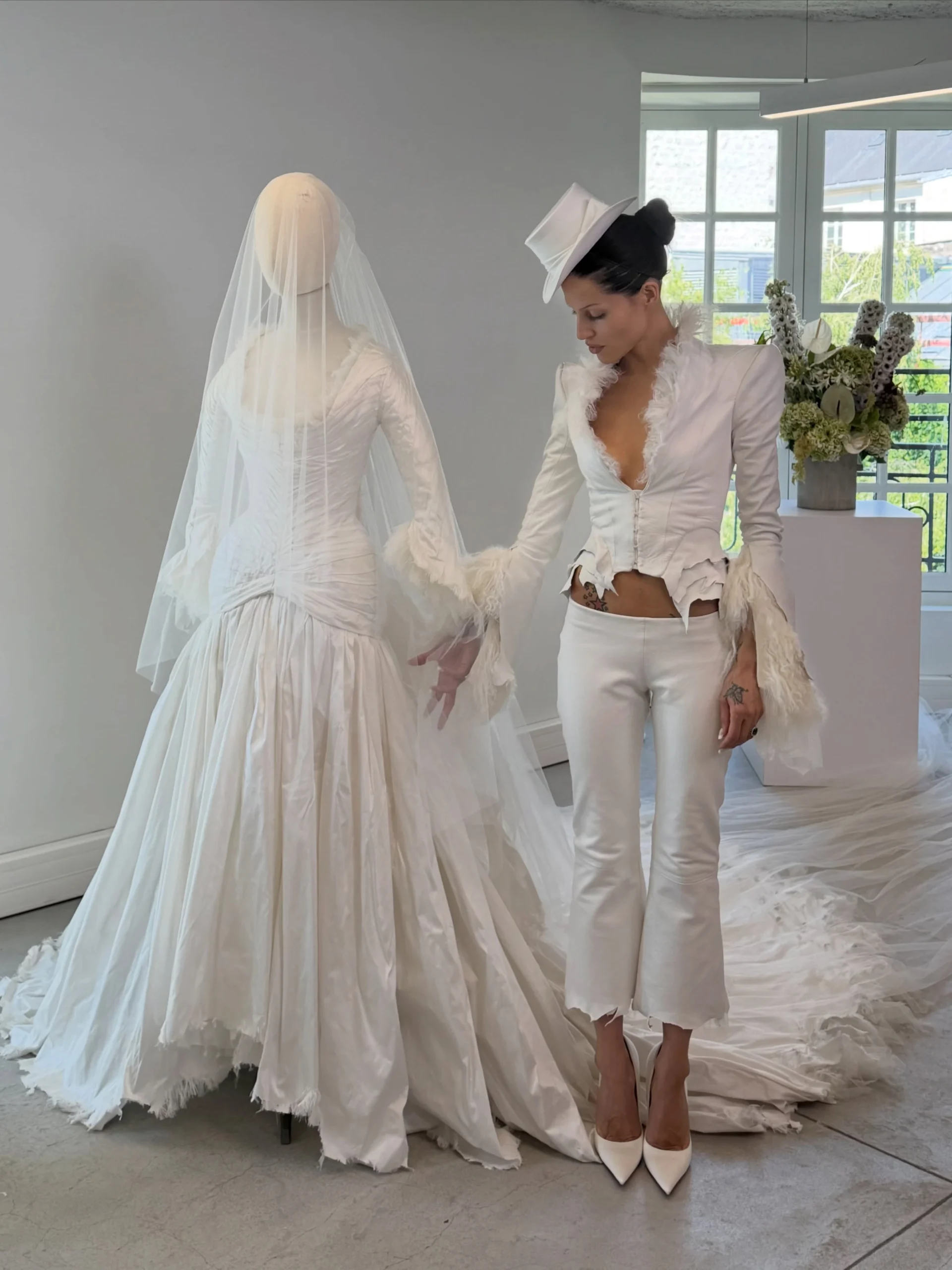
When Gabbriette married Matty Healy of The 1975 in Los Angeles, she did it in three custom looks by Matières Fécales, the Paris label whose name translates literally to “Fecal Matter.” There’s no getting more alternative than a bridal debut from a house called that, and Gabbriette—the model and musician whose entire persona has been built on a ’90s goth disposition—couldn’t have picked a more fitting collaborator for her wedding day.
The ceremony gown, called “Gabriella,” was a micropleated and deliberately distressed take on a Victorian silhouette, its edges worn as though the dress had lived a whole life before the bride ever put it on. The rehearsal look, “Leigh,” was a reworked archival Margiela black dress, her “something old.” And for the after-party, “Healy,” a white tailored suit designed, in the house’s own words, with “a bold shoulder line, raw skin hems, and playful aged tulle chiffon puffs at the back to add movement on the dance floor.”
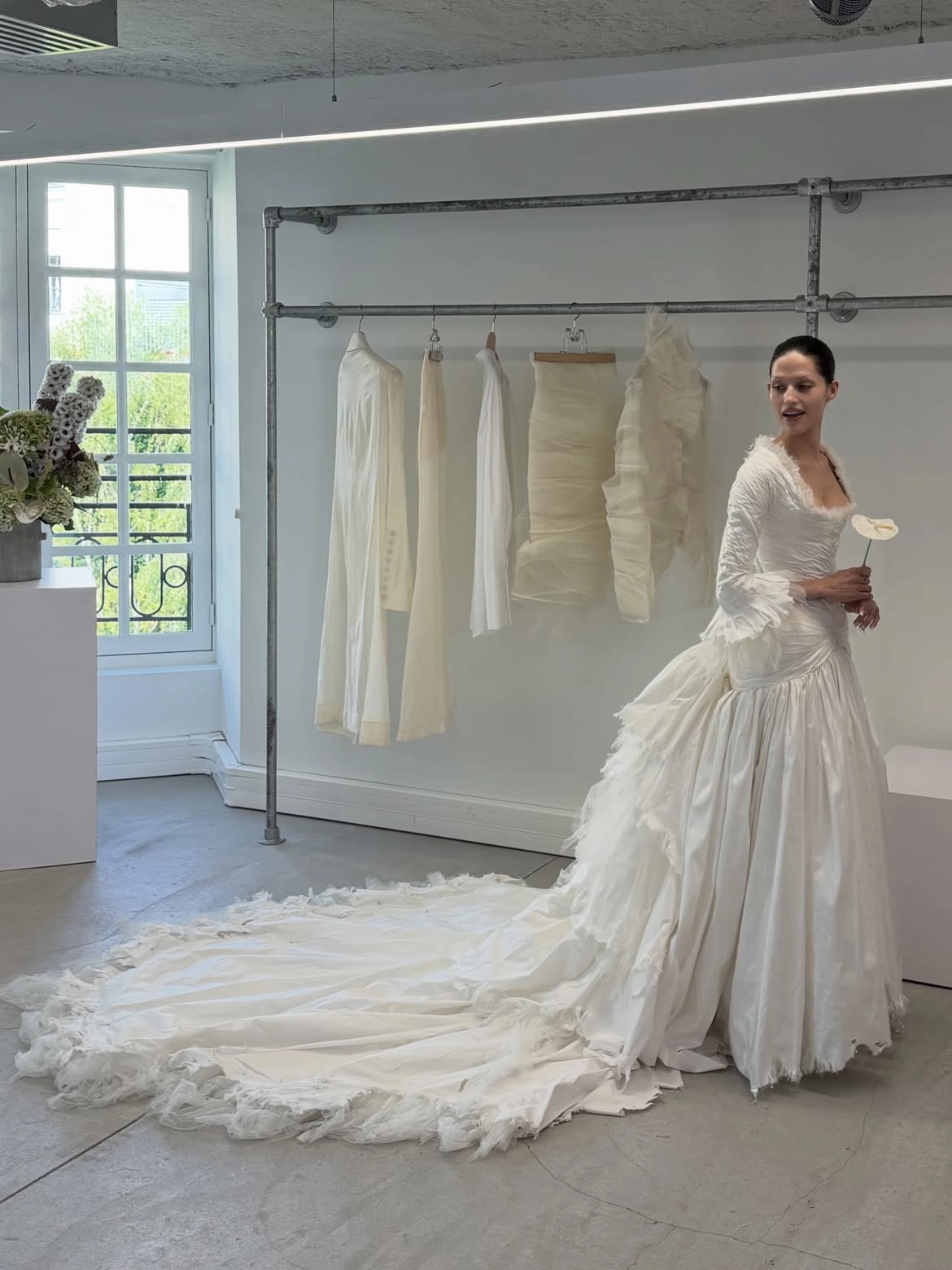
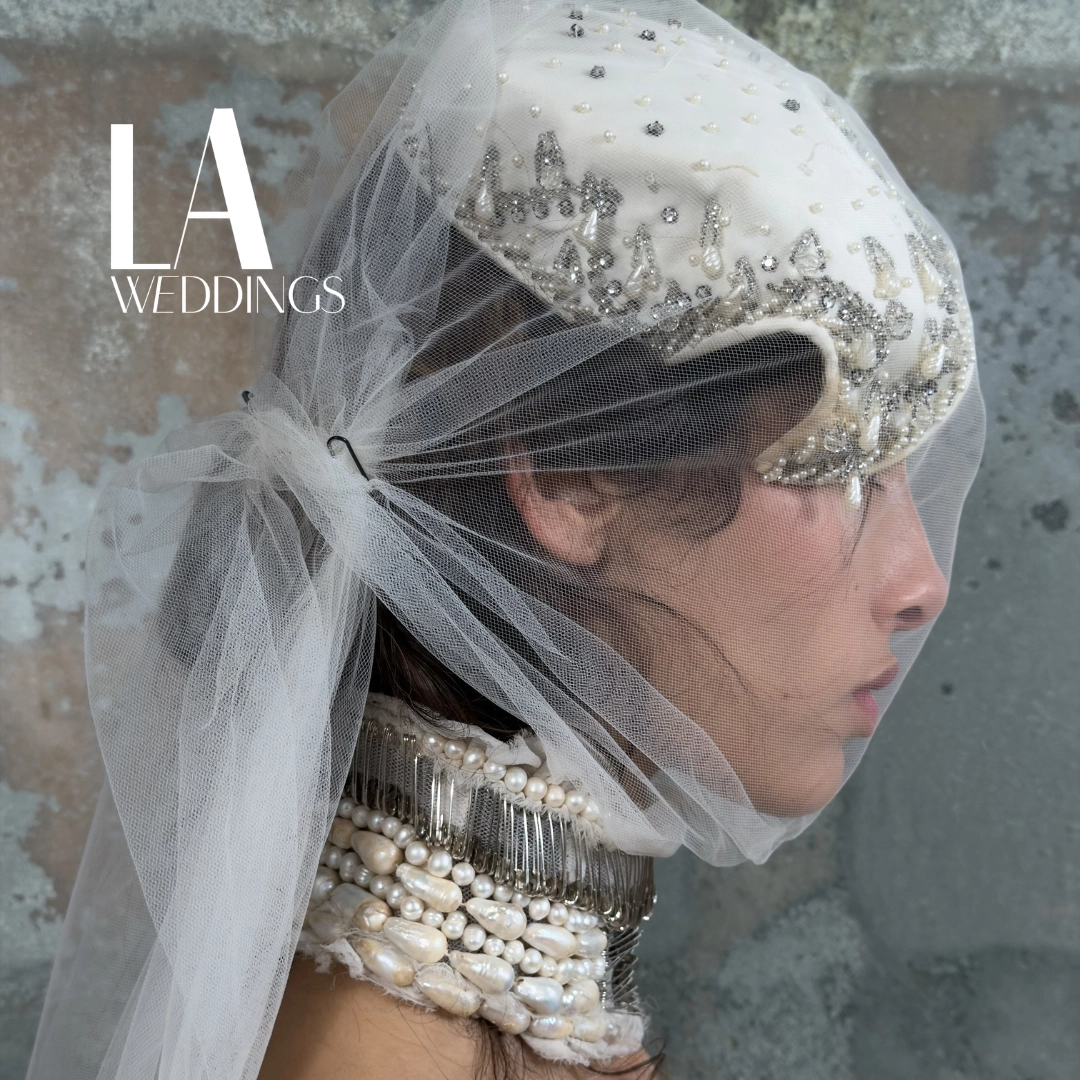
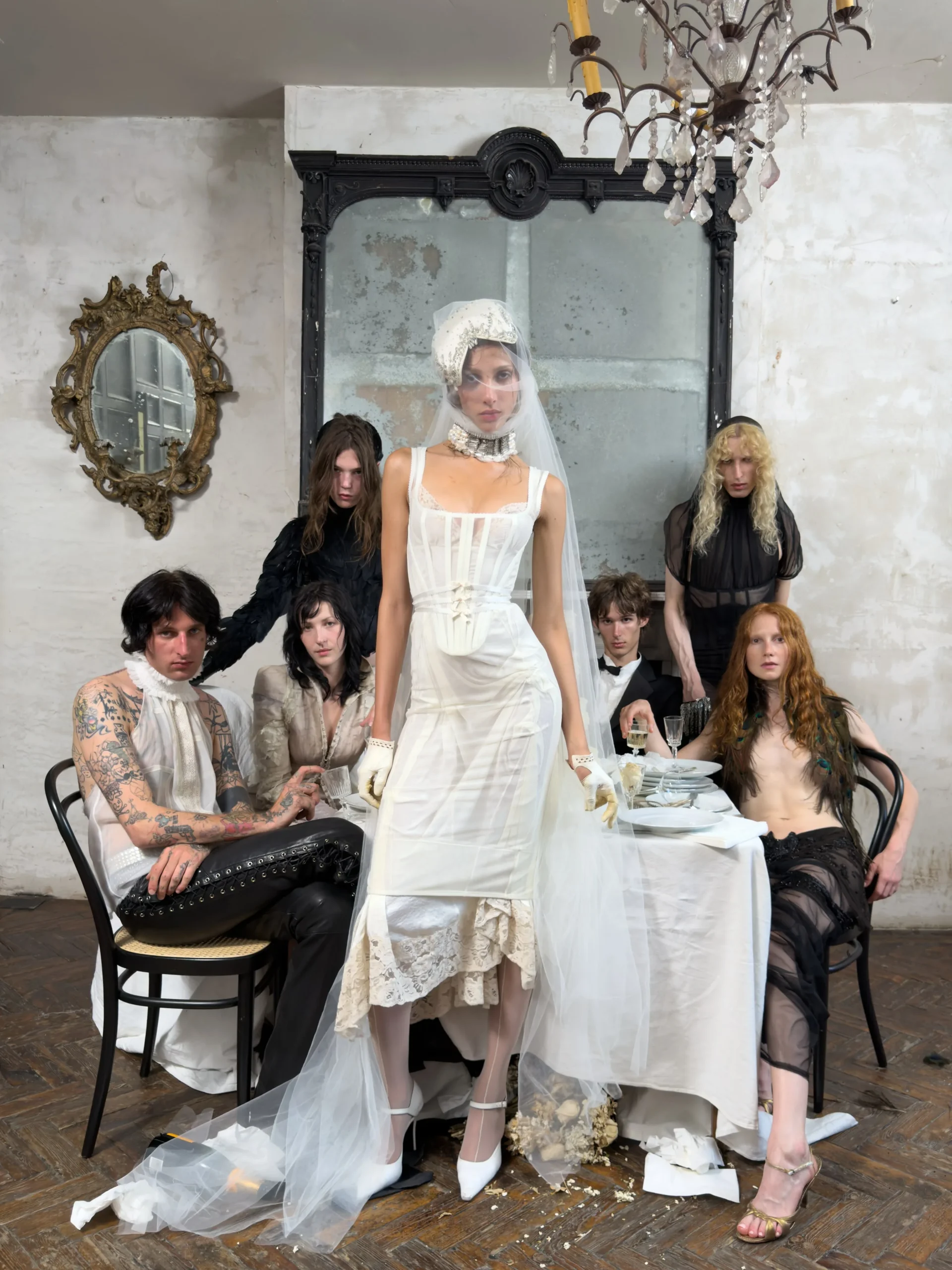
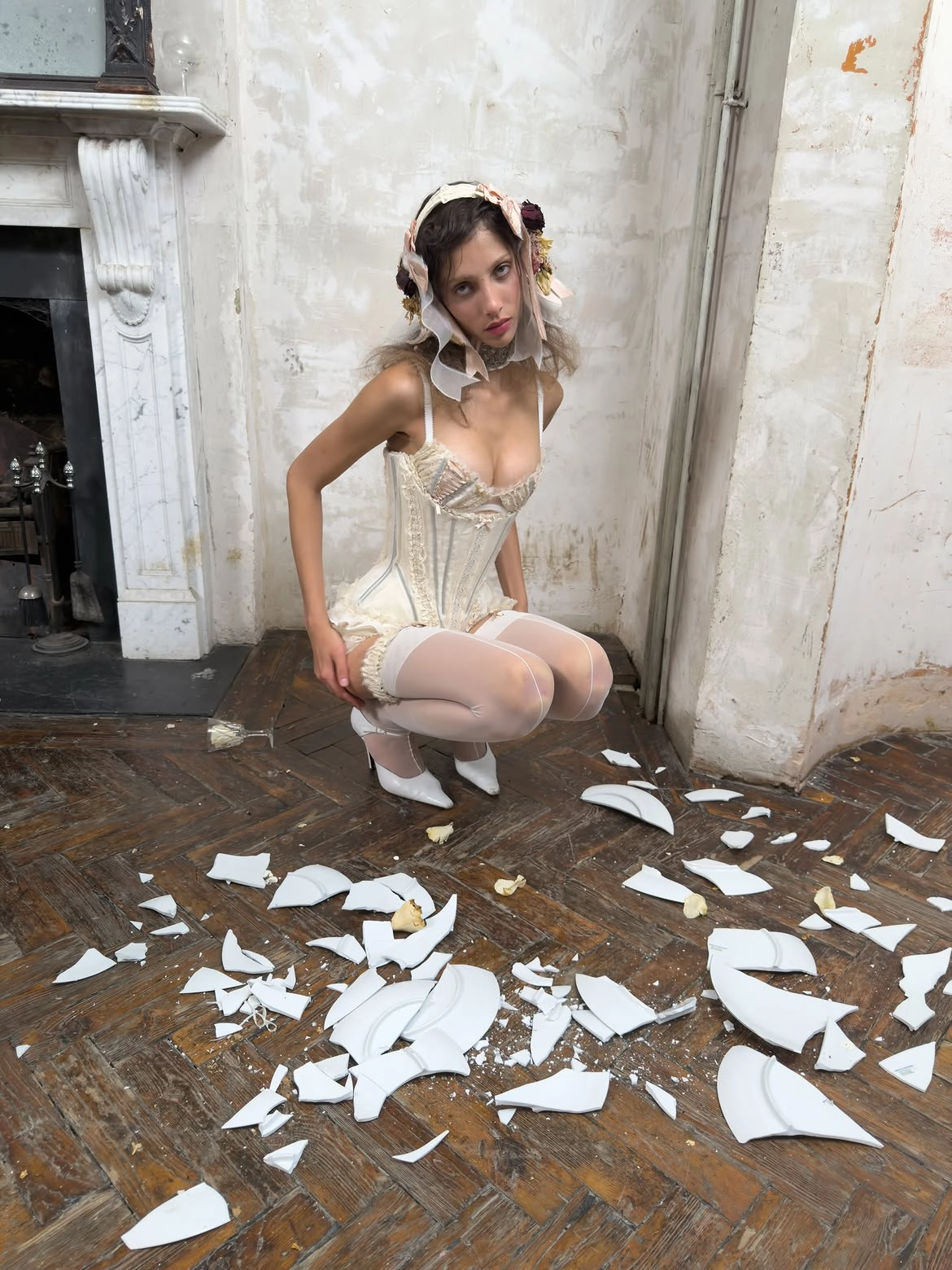
A few days ago, Turkish-British designer Dilara Findikoglu released her first dedicated bridal collection. The campaign features the apparent bride, “played by” model Yasmin Wijnaldum, decked out in an intricate veil and corsetry, smashing plates and demolishing her own wedding cake by the handful while her deadpan bridal party looks on. The backdrop is styled in a state of decay, a sight straight out of a younger Miss Havisham’s boudoir.
The overall effect is somewhere between an undead pinup and a woman who has decided that grief and glamour are not mutually exclusive. In short, it’s the Bride of Frankenstein’s answer to the question nobody asked her: what if the wedding dress was the horror, and also the point?
Romance And Gothic Sensibilities: The Long History Of A Dangerous Kind Of Love
None of this arrived from nowhere. Gothic romance has been fusing love and mortality since the genre invented itself, and it happened almost by accident.
In the summer of 1816, Lord Byron rented a villaVillaA luxurious private residence, set in a scenic location, rented for holidays or used as a second home. Luxury villas offer space, privacy, pools, and staff such as chefs andGo to Villa Glossary on Lake Geneva during a stretch of weather so dark it became known as the “Year Without a Summer,” the sky dimmed by a volcanic eruption on the other side of the world. Trapped indoors with Byron were Percy Shelley, a teenage Mary Shelley, and Byron’s physician, John Polidori. Byron proposed a competition: everyone would write a ghost story. Mary Shelley wrote Frankenstein and Polidori wrote The Vampyre, the first major vampire story in the English language, and he modeled its seductive, doomed aristocrat directly on Byron, a man already famous for being, in the words of one of his own lovers, “mad, bad, and dangerous to know.”
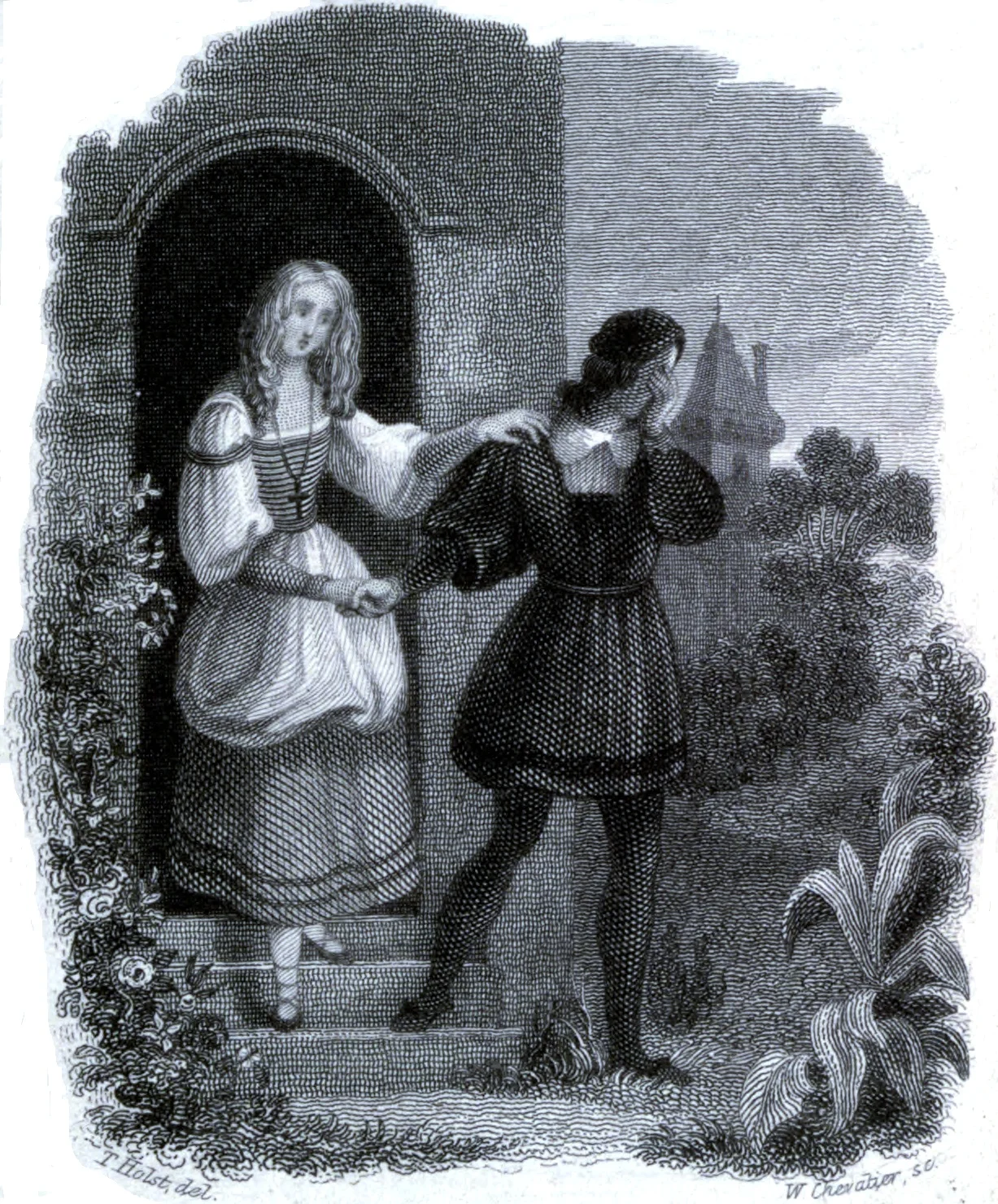
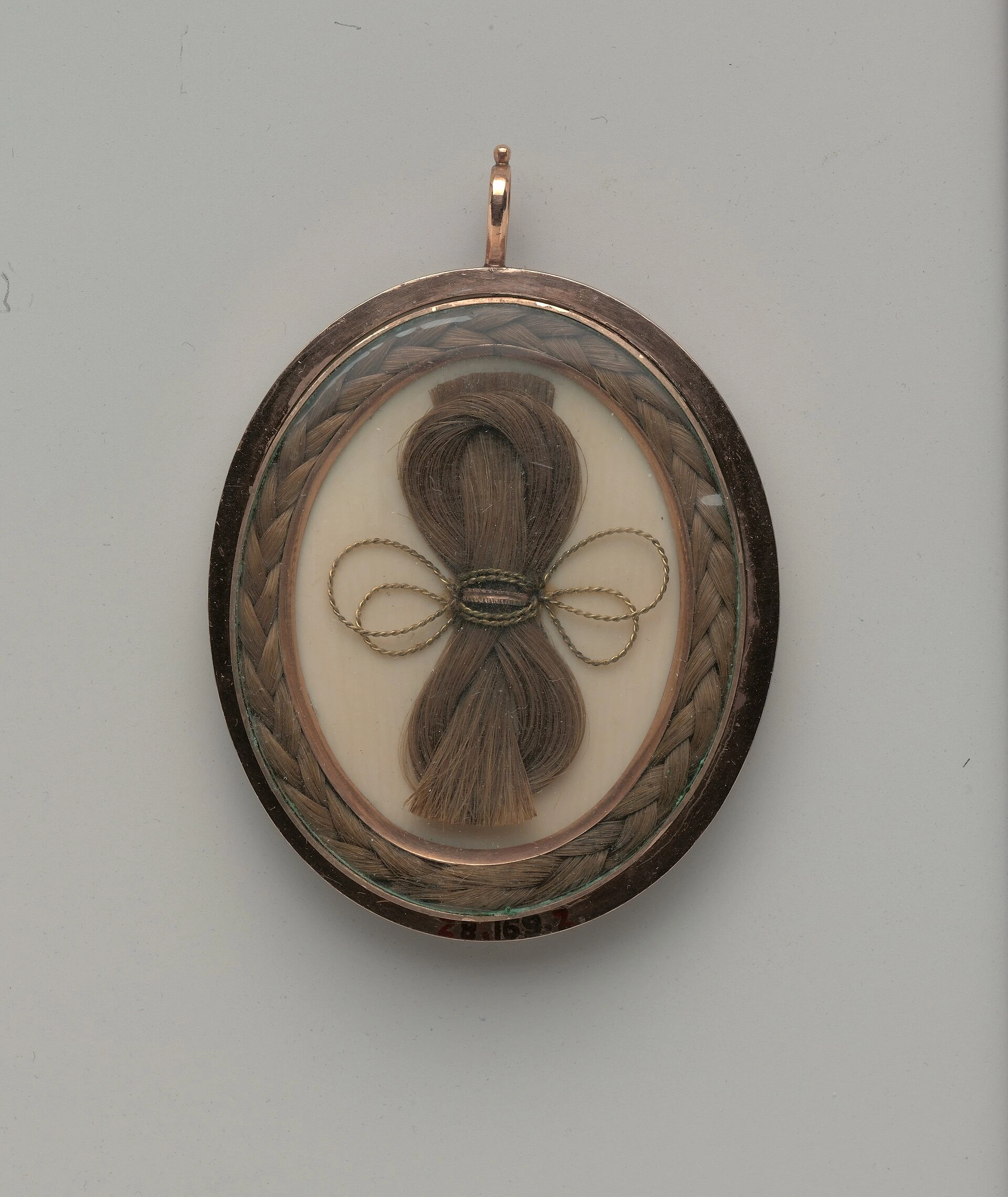
Off the page, Victorian mourning customs were building their own language of love expressed through loss. When Prince Albert died in 1861, Queen Victoria wore black for the remaining 40 years of her life, and an entire visual cultureCultureshared traditions, beliefs, values, customs, arts, and social practices that define the identity and way of life of a community, society, or nation.Go to Culture Glossary of mourning followed her lead: black crepe, jet jewelry, and the genuinely striking Victorian practice of weaving a dead loved one’s hair into brooches and lockets worn against the skin. Grief, in that era, was not hidden, but worn visibly for years, as an assertion that love outlasts the person.
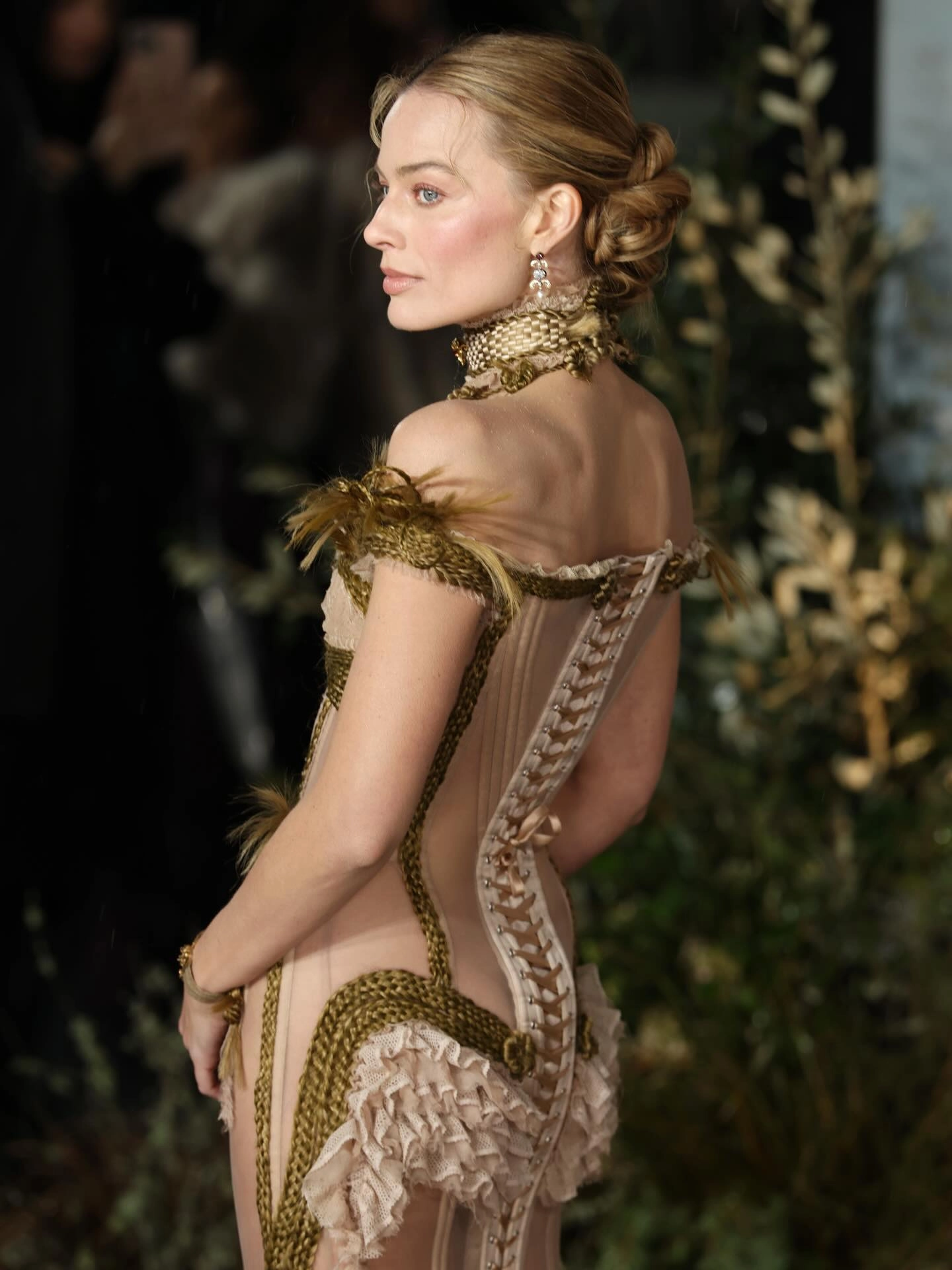
Dilara has made that custom her own signature. When Margot Robbie stepped onto the red carpet at the London premiere of Wuthering Heights this February, she wore a Dilara Findikoglu gown that incorporated synthetic braided hair, styled as a direct nod to a Victorian mourning bracelet made from the hair of the Brontë sisters. In fact, the designer’s entire body of work pulls from romantic, Victorian-coded motifs, so it’s no coincidence that her first bridal collection speaks in an identical language.
Heart On A Sleeve, Hope In A Chest
What designers like Matières Fécales and Dilara seem to be offering brides now is the same deal a grieving Victorian widow made with hope pinned on the chest: that romance can be torn at the hem, aged at the edges, and styled as if it has already lived through something, yet it can still be the most romantic dress in the room. The corset isn’t a cage, nor is the décollage damage. It’s–in the truest gothic tradition–proof of survival, worn on the happiest day of your life.
Frequently Asked Questions
Goth bridal fashion is a style of wedding dressing inspired by gothic aesthetics. It often features dark romantic elements such as distressed fabrics, Victorian silhouettes, corsets, black accents, dramatic veils, and symbolism drawn from gothic literature and history.
A goth wedding dress may include aged or distressed fabrics, lace, corsetry, dramatic sleeves, darker color palettes, vintage-inspired silhouettes, or details influenced by Victorian fashion and gothic romance.
Gothic literature often explores themes of love, loss, mystery, and mortality. These ideas inspire bridal collections through romantic silhouettes, dramatic styling, and references to classic stories such as Frankenstein and early vampire fiction.
Designers such as Dilara Findikoglu and Matières Fécales have introduced bridal designs featuring distressed finishes, corsetry, Victorian references, and unconventional silhouettes associated with goth fashion.
Models, musicians, and fashion personalities such as Gabbriette have embraced goth-inspired bridal fashion by wearing unconventional wedding looks created by avant-garde designers.