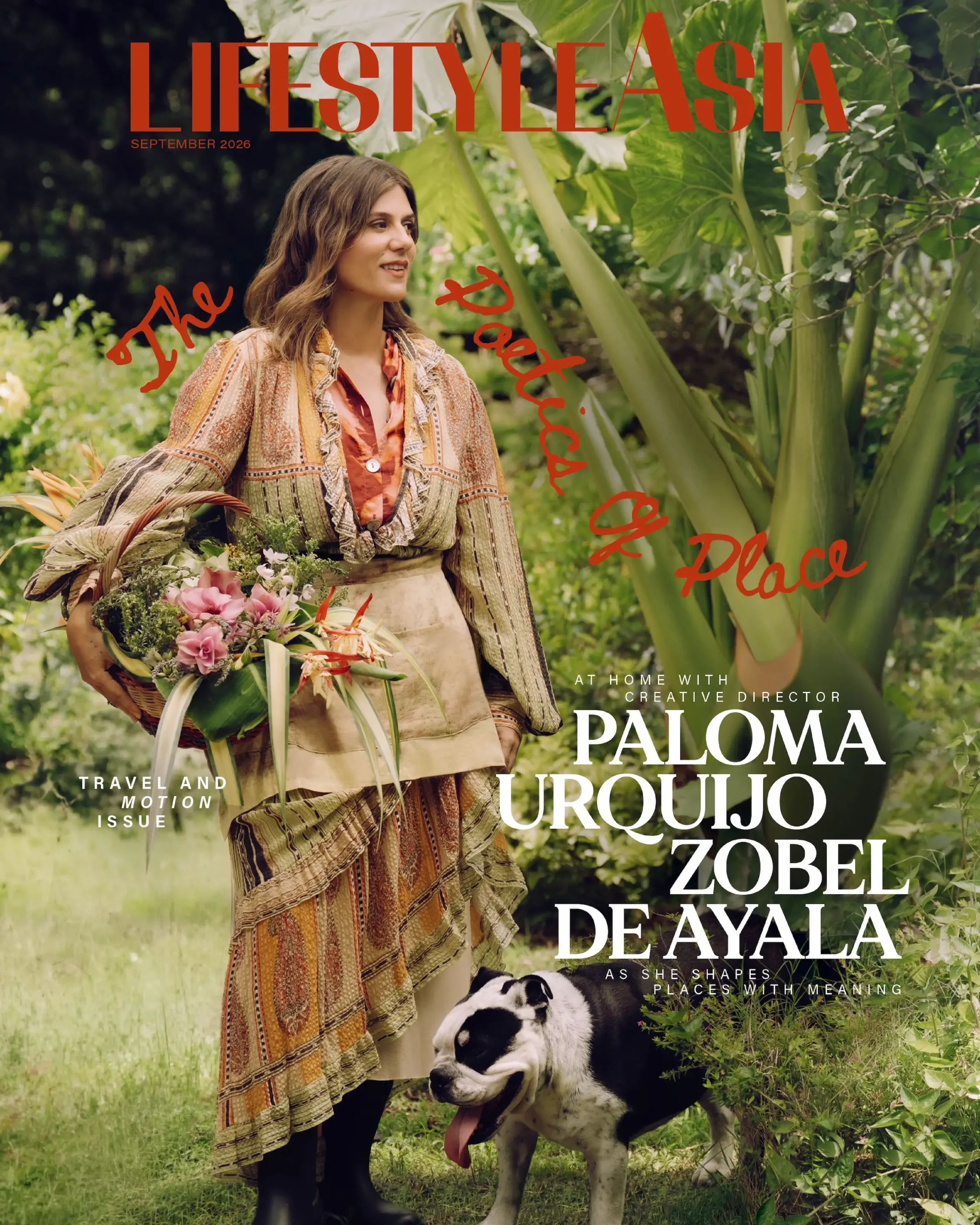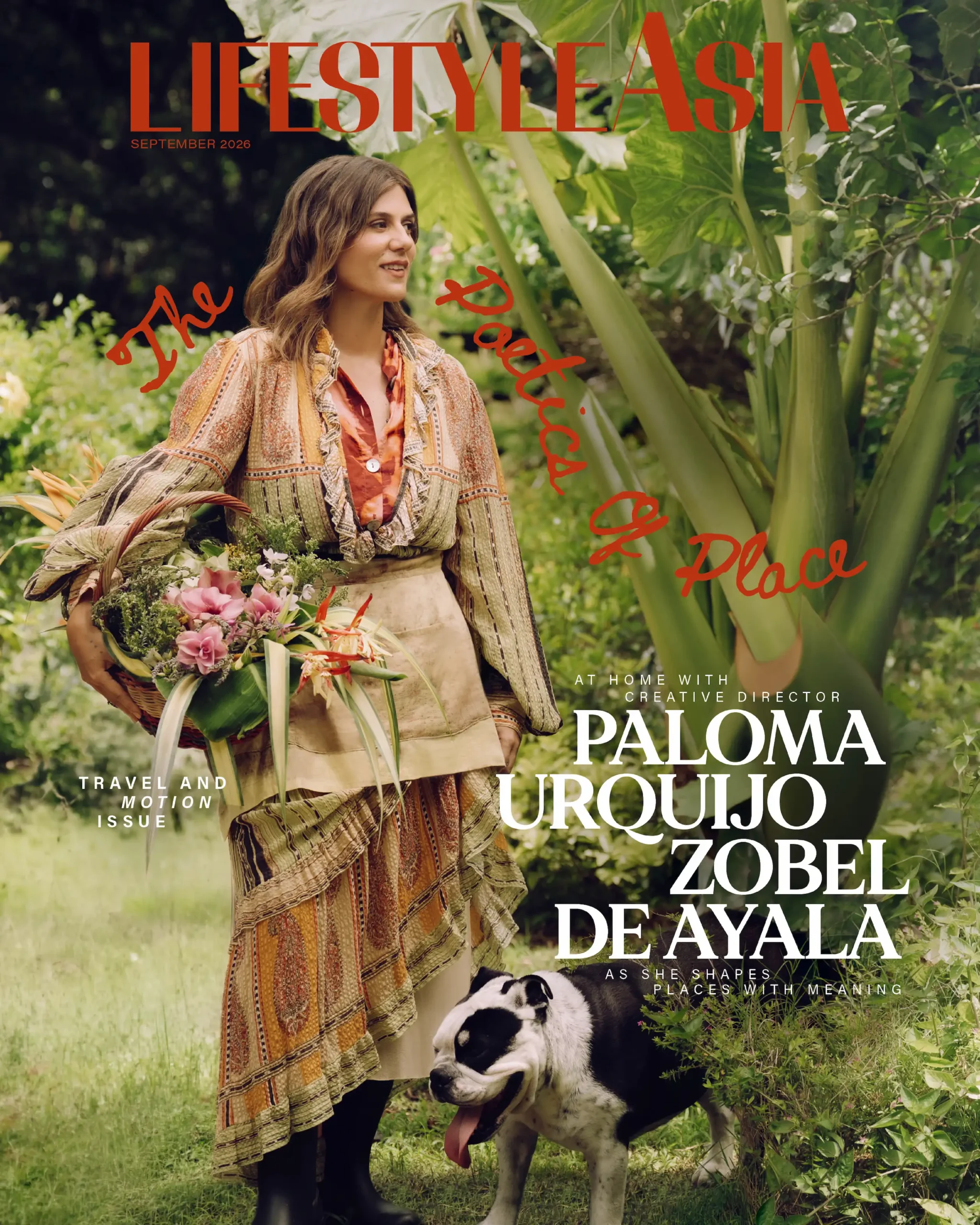
From Calatagan to Makati, Ayala Land Creative Director Paloma Urquijo Zobel de Ayala reflects on heritage, hospitality, and how places become part of our lives.
The first time I met Paloma Urquijo Zobel de Ayala this year, she was standing above Ayala Triangle Gardens talking about the return of Mandarin Oriental to Makati’s skyline.
Beyond the windows stretches one of the country’s most recognizable cityscapes. Office workers weave through the park below. Cars stream along Ayala Avenue. Towers from different decades stand beside one another, marking chapters in the city’s evolution. Later this year, Mandarin Oriental Makati, Manila, will reopen as part of Ayala Land Hospitality’s (ALH) portfolio, returning to a neighborhood whose story has long been intertwined with the company’s own.
Over the next few months, our paths continue to cross. From Makati, we go to El Nido, Palawan, first stopping in Lio before making our way to the reimagined Lagen Resort of ALH. It’s a fitting detour; years before her current role, Paloma returned to the Philippines to help build Lio’s creative and cultural identity.
Today, as Creative Director of Ayala Land, the parent company of ALH, her work stretches across a company with a land bank spanning more than 11,000 hectares across the country. Within that are hotels and resorts, shopping centers, offices and residences, and master-planned communities.
READ ALSO: Cover Story: Amado And Carmela Forés On Building A Life And Legacy Through Food
Every project begins with the same resource: land. Finite by nature, each hectare becomes part of someone’s daily life, and eventually, part of a community’s memory. That makes the role of a creative director more difficult to define than it first appears.
“Whether it’s a home, a hotel, or an entire neighborhood, I still believe the same two things matter most: storytelling and meaningful human interaction,” Paloma says. “Urban planning often focuses on the physical framework of a place. My role is to think about the emotional framework. How do people meet? Where do stories unfold? What creates a sense of belonging?”
Later, our conversation turns to urban planner Charles Landry, whose work she often returns to. He says that heritage is a non-renewable resource, while creativity is a renewable one. Heritage, or history, shouldn’t lead to yearnings of the past, at least not to the degree that renders a place nostalgic to the point of burden; instead, it’s something to expand. This feels like a useful way of understanding Paloma’s work. Places inherit stories before they inherit buildings.
The creative challenge is allowing those stories to continue, while leaving room for new ones to grow. So when it comes time to photograph Paloma, I expect we’ll meet in Makati, perhaps, where Ayala Land’s story is most visible. Or El Nido, where her own began to take shape. But instead, she asks if we’re willing to drive three hours south to her family home in Calatagan, Batangas.
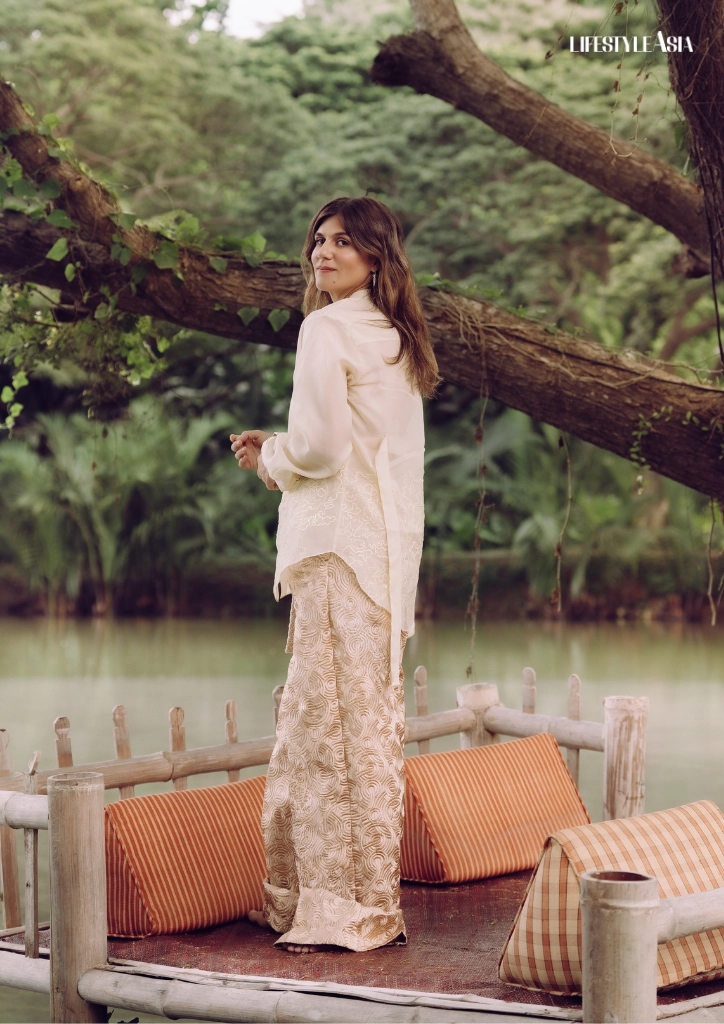
A Place Is A Feeling: Inside The Calatagan Home Of Paloma Urquijo Zobel de Ayala
“The story begins at Bahay Bukal because so much of what I value today was shaped there,” Paloma shares, “not just by the place itself, but by the women who came before me.”
Bahay Bukal sits beside the Calatagan home of her grandmother, Bea Zobel de Ayala, where Paloma spent much of her childhood. In the early 2000s, her mother, Bea Zobel de Ayala Jr., began developing the neighboring property that would become Bahay Bukal, the very same place we spend the day in with Paloma.
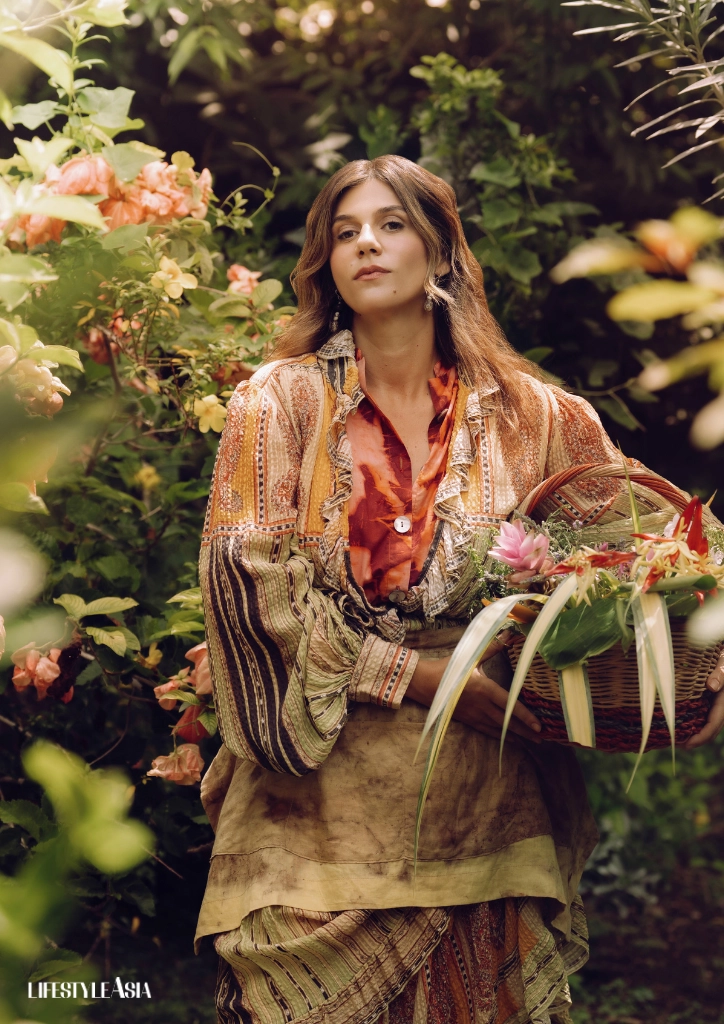
The name tells part of the story. Bukal means “spring,” a reference to the natural water source that runs beneath the land. But in Filipino, bukal sa loob also speaks to something sincere, something offered wholeheartedly. Both meanings seem to exist here; one belongs to the land, the other to the people who’ve turned it into a home.
Although Paloma left for boarding school at a young age before studying at Parsons School of Design in New York—beginning a career in the city, and later completing a master’s degree at Imperial College London—Calatagan remained the place she returned to whenever she came home. Today, whenever work allows, she returns again.
“Living abroad gave me an appreciation for great cities, different cultures, and new ways of thinking,” she says. “But Calatagan has always been the place that grounds me. It’s where I return to myself, where my nervous system finally slows down.”
“My mother and grandmother have always been extraordinary patrons of the arts, gracious hosts, and deeply empathetic people,” she continues. “I learned by watching them.”
She remembers her grandmother hosting her grandfather’s most important business dinners with remarkable ease, only to spend the next day volunteering in medical missions or working alongside Mangyan communities. Her mother moved through the world with the same instinct.
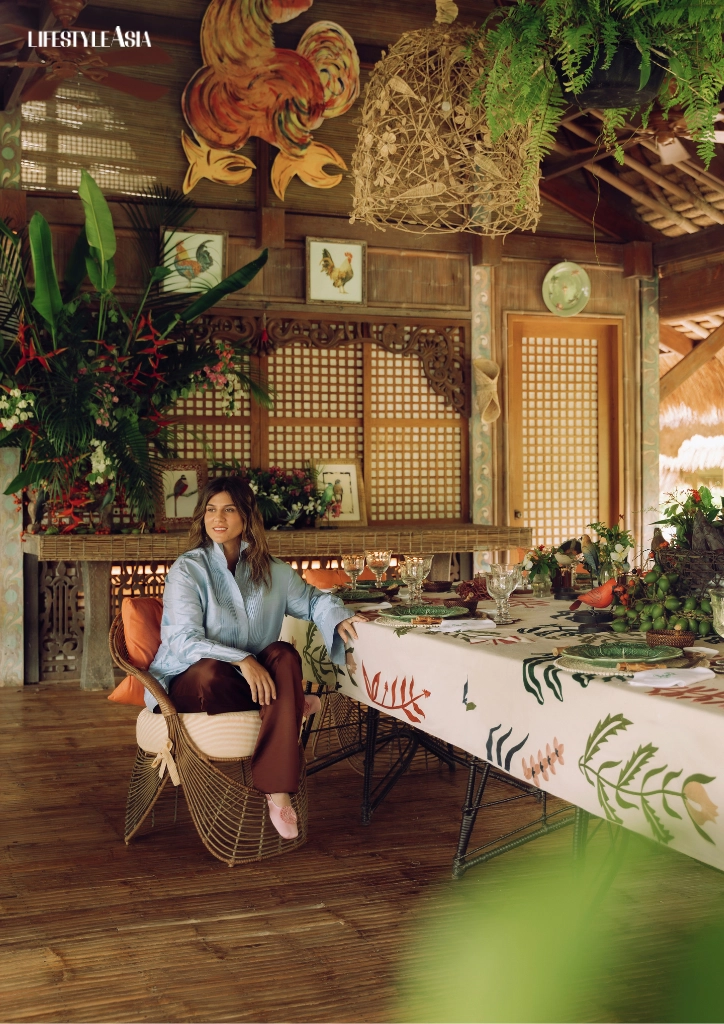
“It’s where I learned that true hospitality isn’t about perfection or extravagance; it’s about making people feel they belong,” she says. “The most memorable experiences rarely came from the table setting or the menu, although those were always beautiful. They came from how they made people feel.”
The idea still informs the way she thinks about place today.
“Spending time on the land teaches you patience, humility, and observation. Hosting teaches you generosity and empathy. Both require you to pay attention,” she says. “That’s why Calatagan continues to shape the way I think about home and a sense of place. It reminds me that the places we love most are the ones that allow us to be completely ourselves.”
Busy Hands, Steady Work
The drive down to Calatagan is spent watching the rain. It comes down steadily enough that we begin talking about contingency plans before we’ve even arrived. We think we may need to execute a majority of the shoot indoors; it’s not what we initially envisioned, but we must make do.
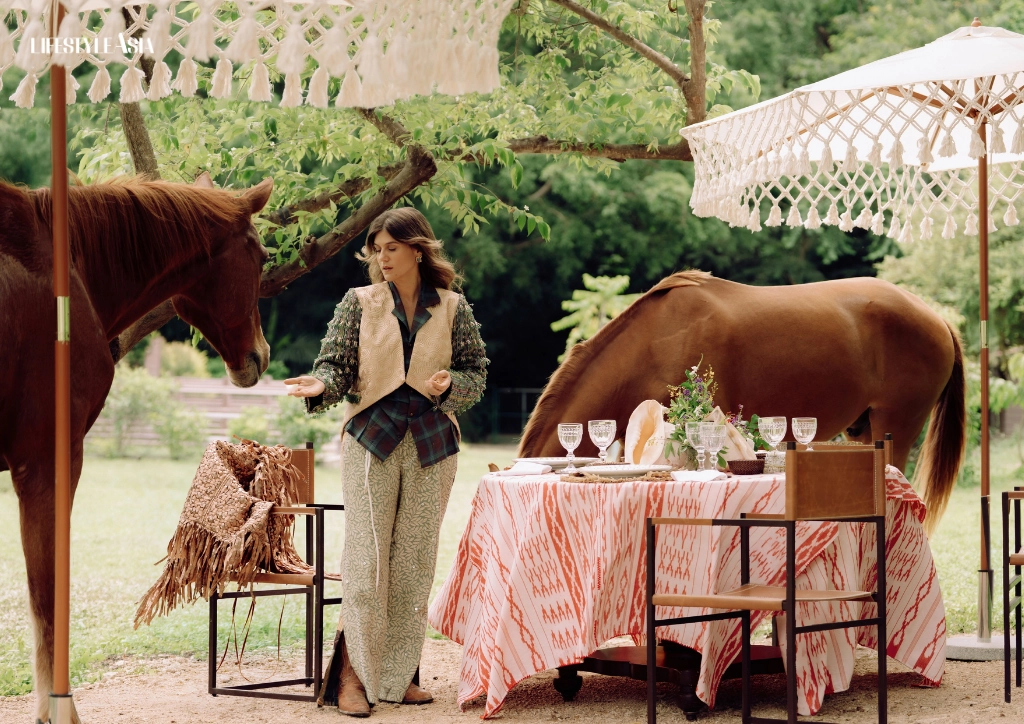
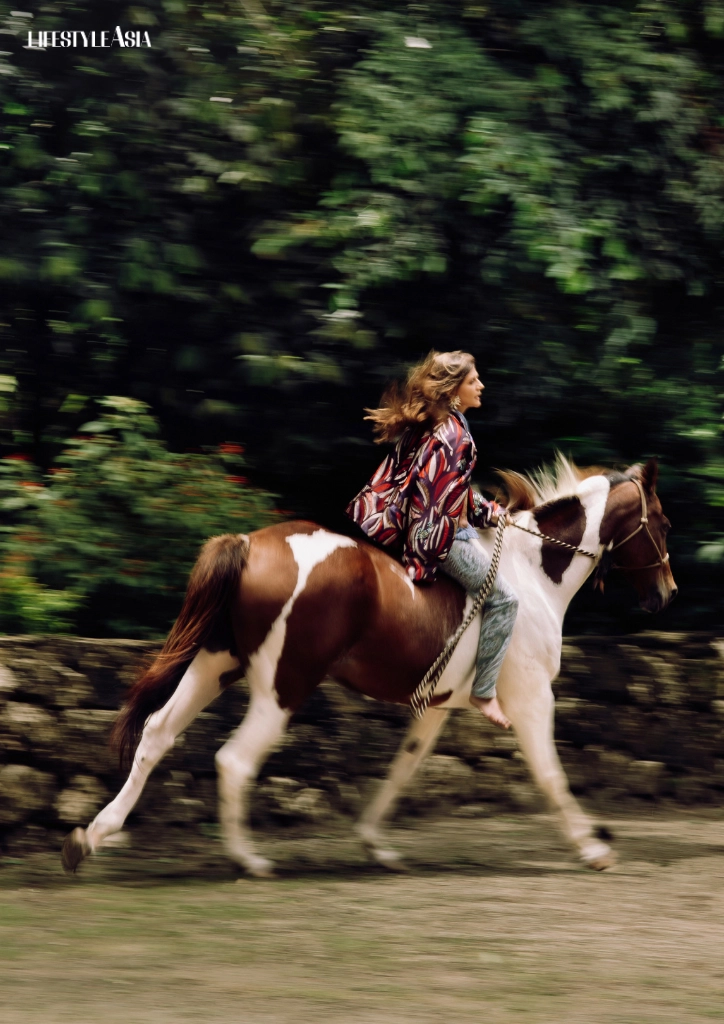
Then, almost as if it was waiting for us to arrive, the rain stops. The team smiles. We head to the barn. If Bahay Bukal in Calatagan is Paloma’s favorite place, then this is her favorite place within it. “That’s where the real work happens,” she says. She introduces us first to Odeon, or “Odie,” who quickly learns that cooperating with the photoshoot comes with a steady supply of carrots. Before long, he’s the happiest member of the production, accepting treats between frames.
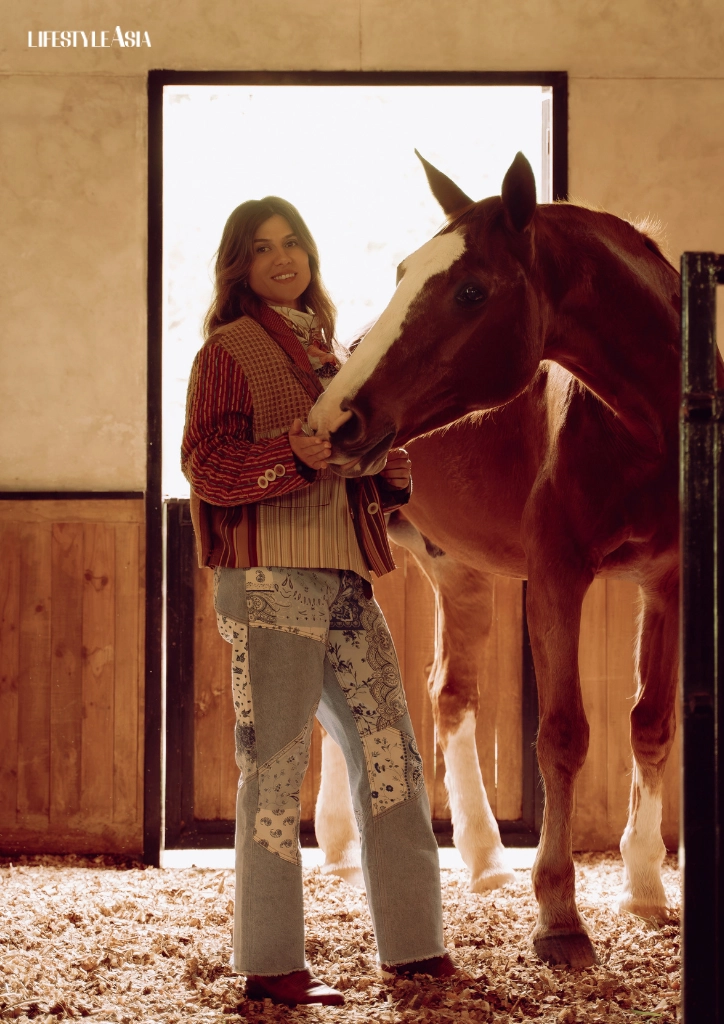
“It’s where we clean stalls, feed the horses, bathe them, walk them out to pasture, check the fences, and make sure everything is safe,” she continues. “Just like at work, you’re part of a team. Everyone has a role, and everyone’s contribution matters.”
Paloma never speaks about leadership in terms of vision alone. More often, she returns to preparation, observation, and care. “I think horses have profoundly influenced how I approach my work,” she says. “They’ve taught me that leadership starts with care, that confidence comes from preparation, and that the best outcomes rarely come from shortcuts. Whether you’re caring for animals or creating places for people, the principle is the same: you have to observe before you act, keep learning, and never stop asking how you can make life a little better for those in your care.”
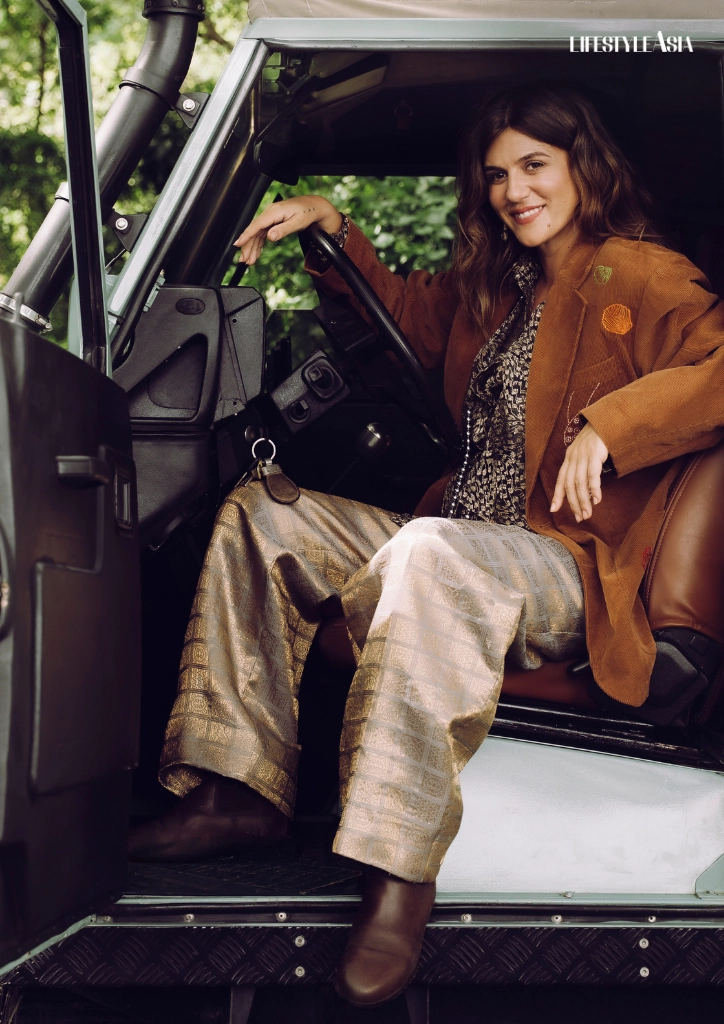
She laughs when she describes it here. On a good day, she’ll spend hours with the horses and dogs, tend to the vegetable garden, fix things around the property, or drive the 40-year-old truck that regularly reminds her to stay humble. By evening, the measure of a successful day is surprisingly simple.
“I know it’s been a good day when I have to scrub the mud off my face and boots before coming inside,” she shares.
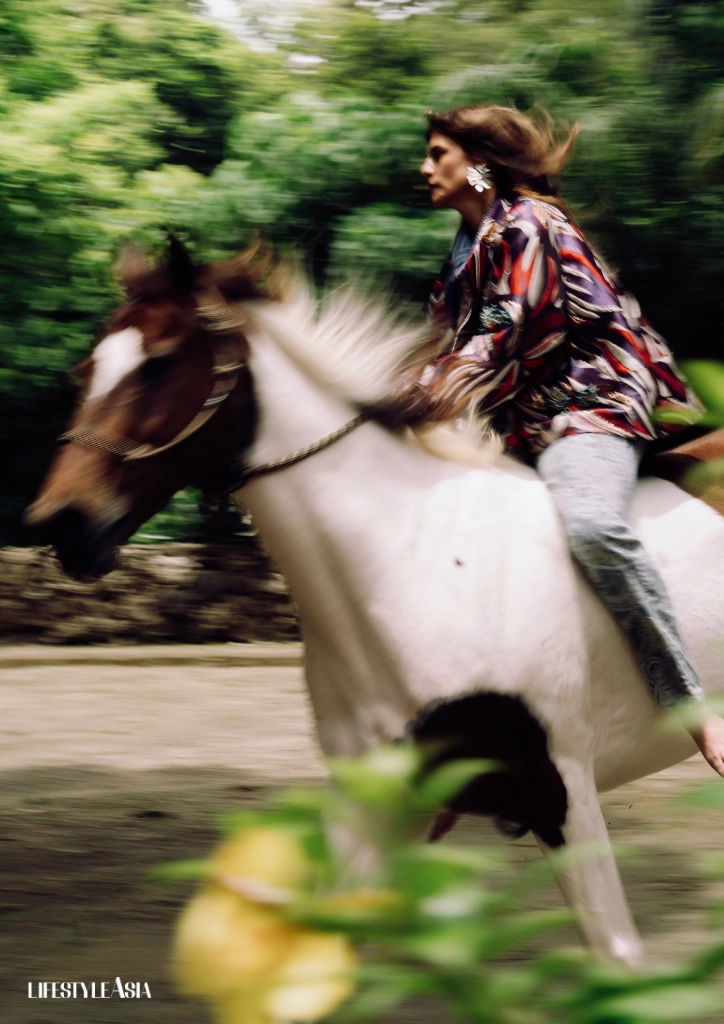
Why Paloma Believes It’s People Who Unlock Potential
If Calatagan was where Paloma learned what a place could mean, El Nido was where she began asking what a place could become.
In 2016, after completing her master’s degree in London, she moved back to the Philippines for an opportunity that would change the course of her career. Ayala Land was then developing Lio, a tourism estate in El Nido, and Paloma joined her mother in imagining a complementary concept where cultureCultureshared traditions, beliefs, values, customs, arts, and social practices that define the identity and way of life of a community, society, or nation.Go to Culture Glossary defines a place from the very beginning, instead of arriving after its structures are completed.
Kalye Artisano is a stretch within Lio that offers leasable space to local artisans. Rather than creating a traditional retail strip, Paloma and her mother conceptualized an artisan village where creatives and makers could sell their work, as well as hold workshops, host exhibits, and become part of the everyday rhythm of Lio itself. The goal was to house a creative community that could grow in tandem with the larger tourism estate.
“It wasn’t simply another development project; it was a chance to explore how culture and community could become part of a place’s identity from the very start,” Paloma explains. “The challenge wasn’t just attracting the right artists; it was building a genuine creative community that could grow organically and give Lio its own identity. Looking back, I realize we were asking a much bigger question: what if we developed places by putting community first and Filipino creativity at the heart?”
Although she would visit home now and again during her time living abroad, she didn’t yet know the country in the way she does today. Together with her mother, Kalye Artisano became the reason to travel. They went to workshops, kitchens, weaving communities, artists’ studios, and family homes across the archipelago. Banaue. Sagada. Ilocos. Siquijor. Cagayan de Oro. They went wherever stories were still being made by hand.
Read the full story in our September 2026 print issue, and through our e-magazine by subscribing to Lifestyle Asia’s digital access or purchasing your copy at Readly.
Photography by Gabriel Villareal, assisted by Rossman Hitosis and Darren Ferrer; creative direction by Paolo Torio; styling by Mano Gonzales, assisted by Josh Merilo; makeup by Cats del Rosario; hair by Ben Villegas
Frequently Asked Questions
Paloma Urquijo Zobel de Ayala is the Creative Director of Ayala Land, the parent company of Ayala Land Hospitality. Her work spans hotels and resorts, shopping centers, offices and residences, and master-planned communities across the country.
Paloma believes that whether it’s a home, a hotel, or an entire neighborhood, storytelling and meaningful human interaction matter most. Rather than focusing only on the physical framework of a place, she considers its emotional framework: how people meet, where stories happen, and what creates a sense of belonging.
Calatagan has always been the place Paloma returns to when she comes home. She describes it as the place that grounds her and where her nervous system finally slows down. Her family home, Bahay Bukal, also shaped her understanding of hospitality, home, and a sense of place.
Growing up around her mother and grandmother, both extraordinary patrons of the arts and gracious hosts, taught Paloma that true hospitality is about making people feel they belong. Her work with horses also taught her that leadership starts with care, confidence comes from preparation, and the best outcomes rarely come from shortcuts.
Paloma believes people unlock the potential of a place. Her work on Kalye Artisano in Lio explored how culture and community could become part of a place’s identity from the very start, creating a creative community where local artisans could sell their work, hold workshops, host exhibits, and become part of the everyday rhythm of Lio.