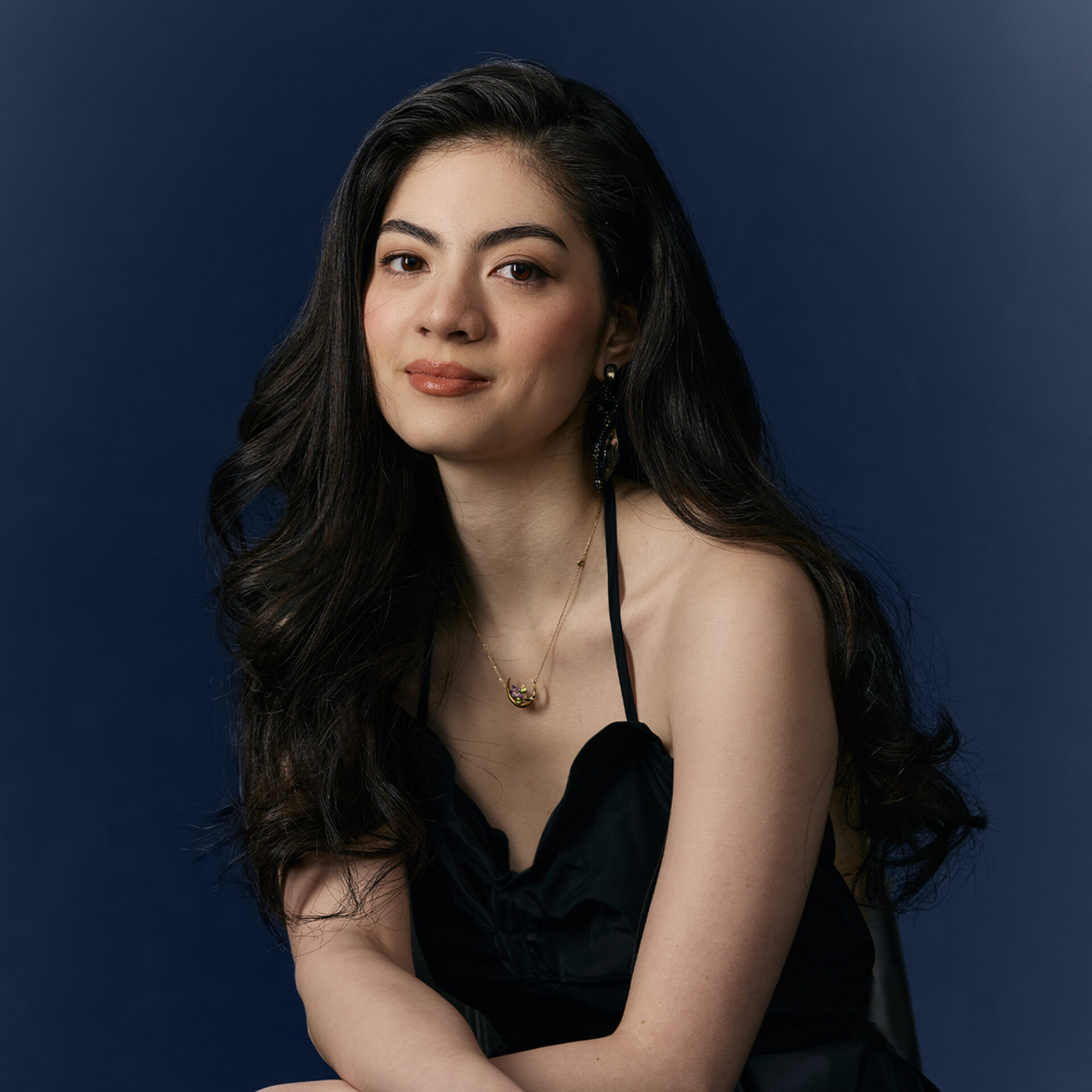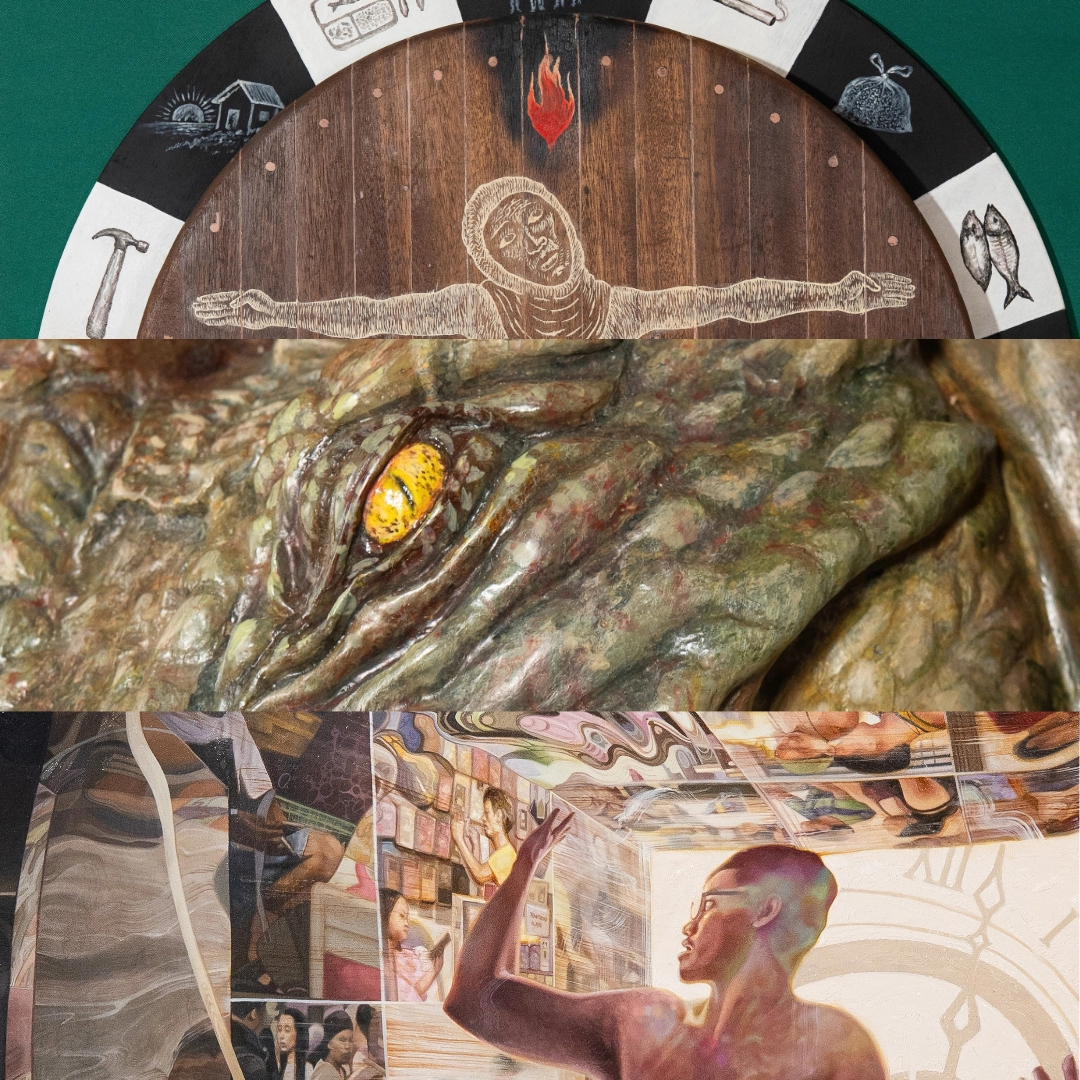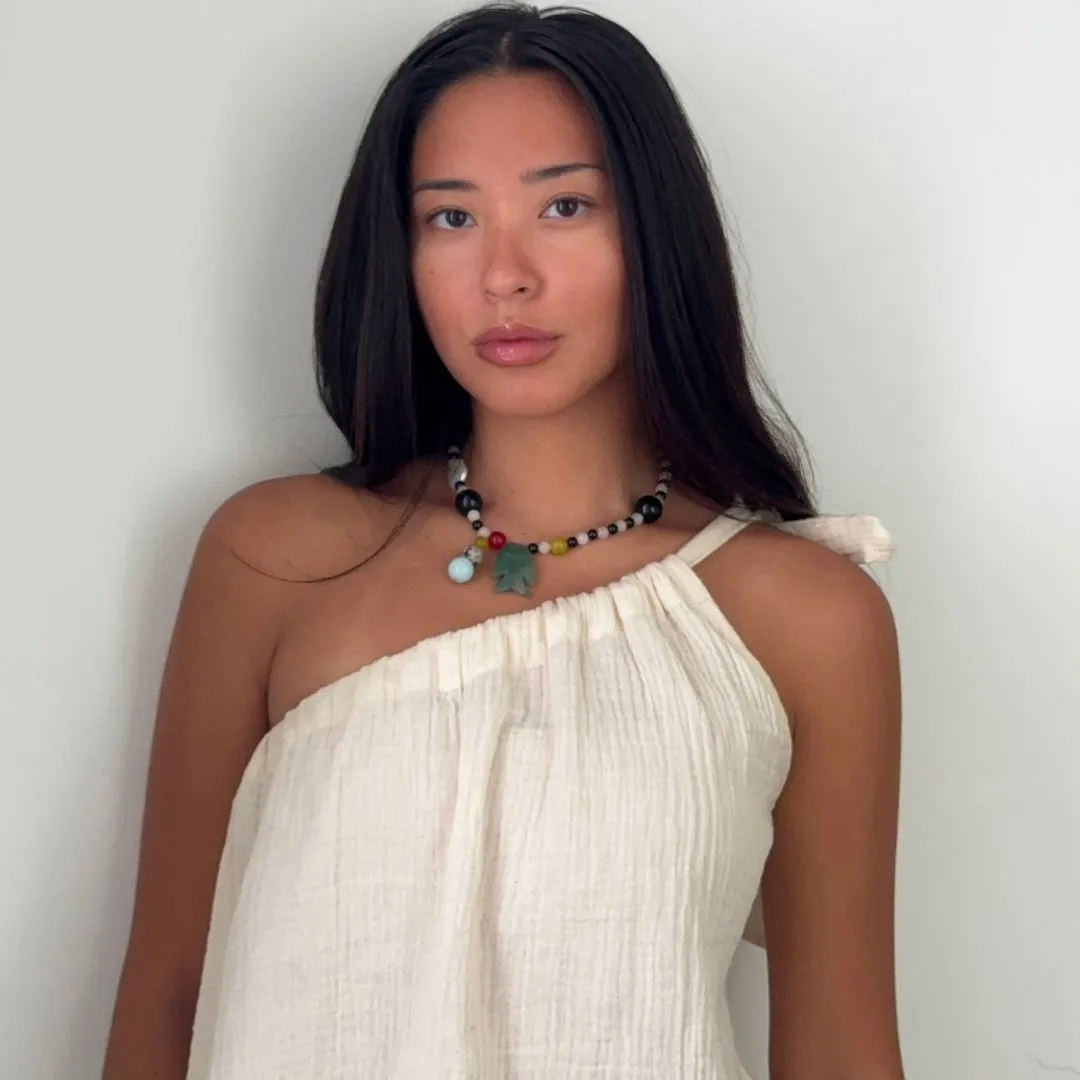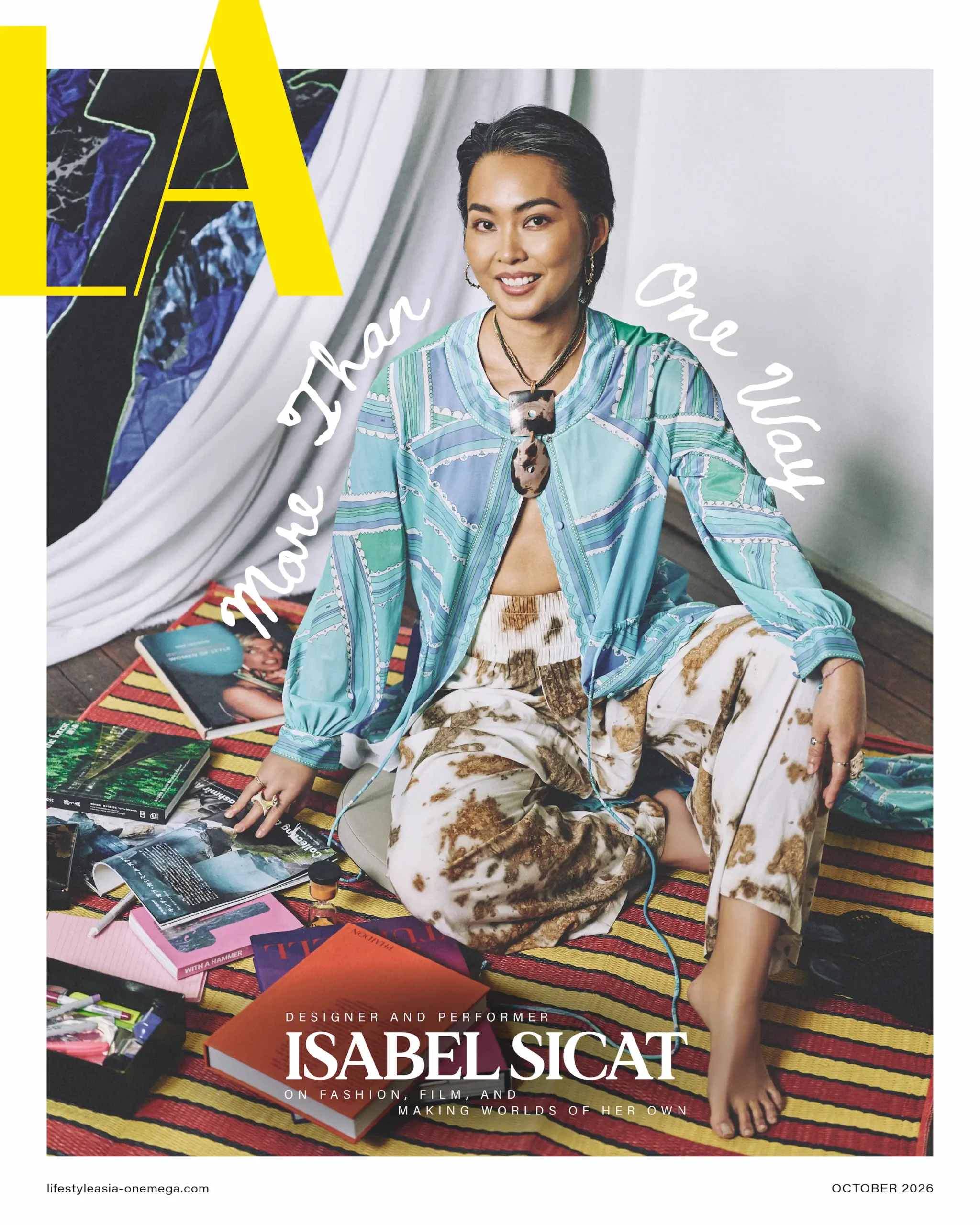
Designer, artist, and now actress, Isabel Sicat has never confined herself to a single medium. Through TOQA and projects spanning fashion, film, and textile art, she explores how performance and material can express the identities we inhabit.
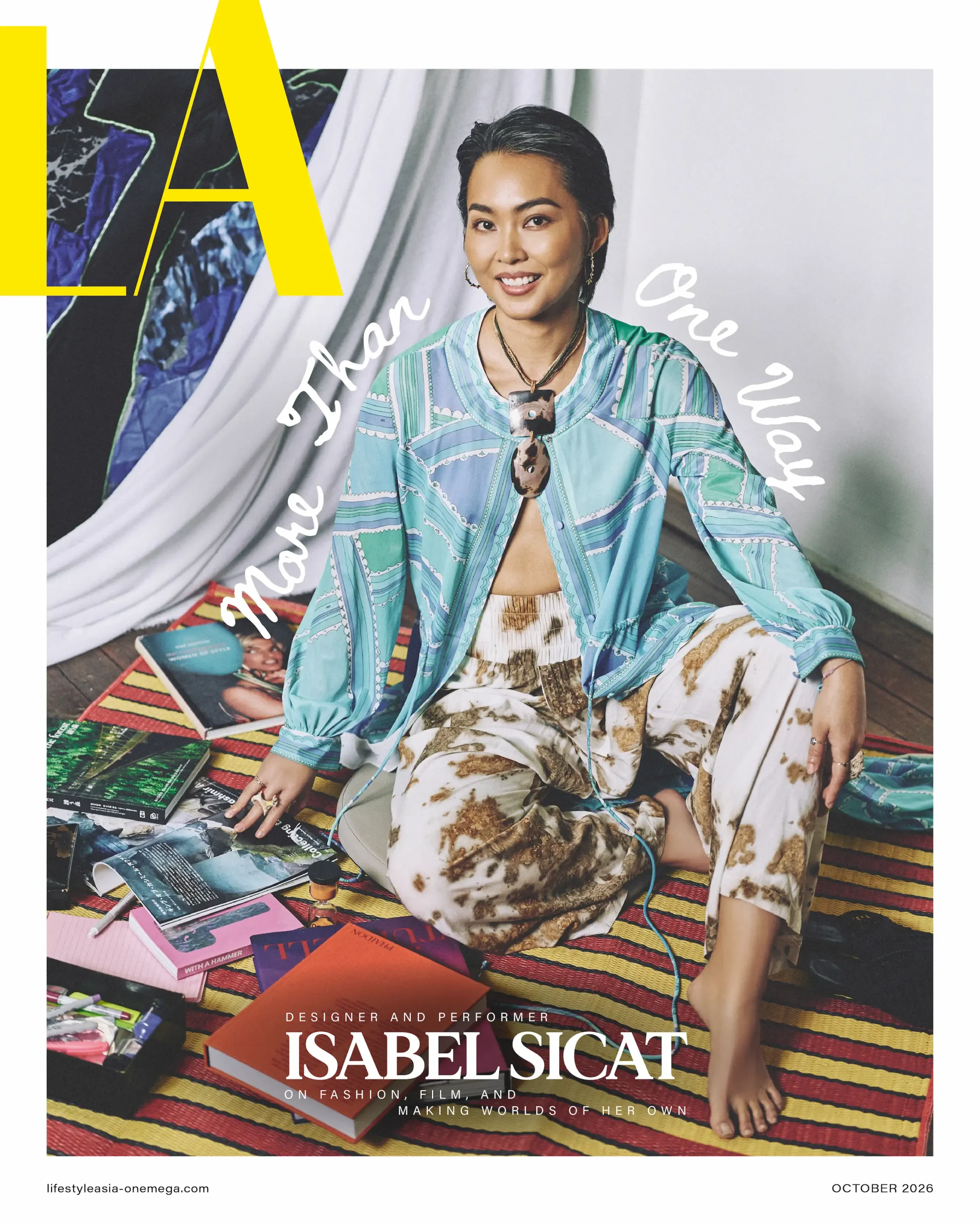
At the Cinemalaya homecoming of Filipiñana, after its screenings at Sundance and Berlin, the cast and crew gathered on stage. One actress’s outfit caught my eye: a bright orange top with a standing collar and a row of dark buttons. When I later called Isabel Sicat to congratulate her on the film and talk about this feature, I mentioned the outfit. She told me it came from her work for the Thailand BiennaleBiennaleA major international art exhibition held every two years, showcasing contemporary works by artists from around the world. The Venice Biennale is the most famous, and biennales elsewhere in AsiaGo to Biennale Glossary in Phuket. The buttons were made from coconut. She was speaking to me from Japan, where she was researching an upcoming project for the Forest Festival of the Arts Okayama.
There was already a lot to tell in one outfit.
Through TOQA, her Manila-based studio, Isabel made 120 sets of uniforms for the docents, curators, management, and installation teams working at the Biennale. The project began with a Thai ballad whose words she didn’t understand, but whose feeling she recognized.
“I wanted to share that feeling,” she says.
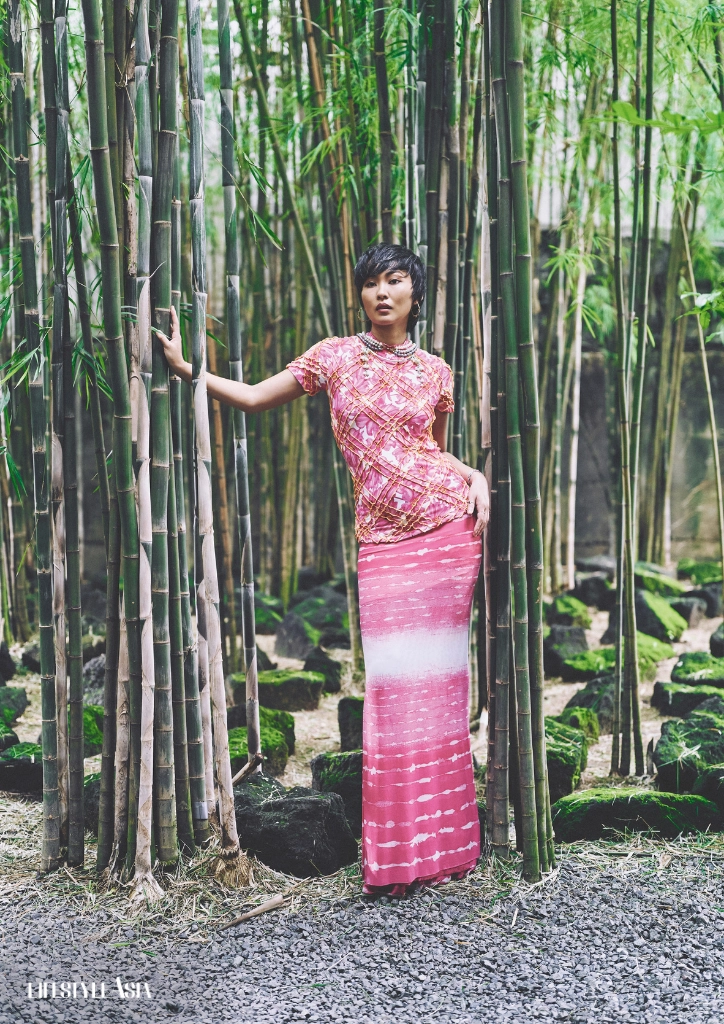
She translated it across the different forms TOQA works in, creating a film and installation alongside the uniforms.
“Together they built a world with more than one way in,” she explains. “You could encounter the work through a film, physically touch the textiles in the installation, or experience the uniforms as part of everyday life. Everyone could find a way to belong to it.”
We often look to a uniform to tell us what someone does or where they belong. Isabel’s outfit offered a more expansive introduction. She was an actress wearing something she made as a designer for an art exhibition. Her involvement in Filipiñana had itself begun through clothing: she was working with the costume team when she was asked to read for a role.
The film has since been selected as the Philippines’ entry for Best International Feature Film at the 99th Academy Awards. Isabel is now traveling with it on its global press tour, meeting audiences who are getting to know her through a character she hadn’t expected to play.
Others will have encountered her through TOQA, or will discover her through the textile art she’s preparing to show in Japan. Each offers a different introduction to the same person, and another way into a practice that has long explored how identity can be expressed.
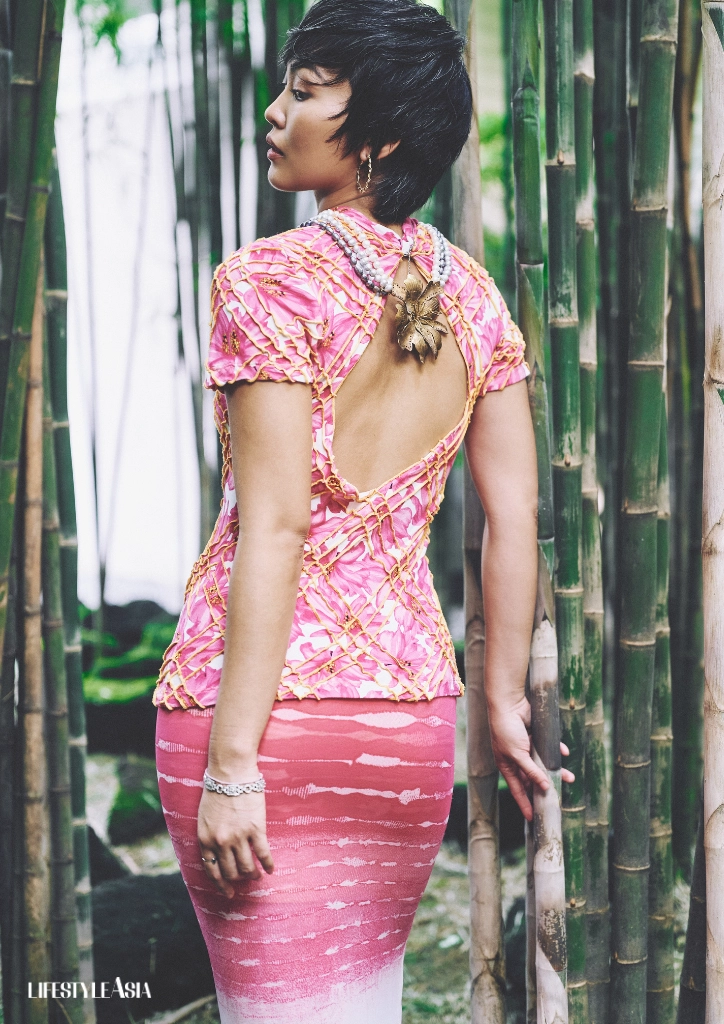
A Way Of Seeing
When Isabel returned to Manila in 2017 after studying and working abroad, she wanted, in her words, “to expand the visual vocabulary of island and Asian identities through sustainable high fashion.”
“It wasn’t that clearly defined at first,” she says, “but the instinct was there.”
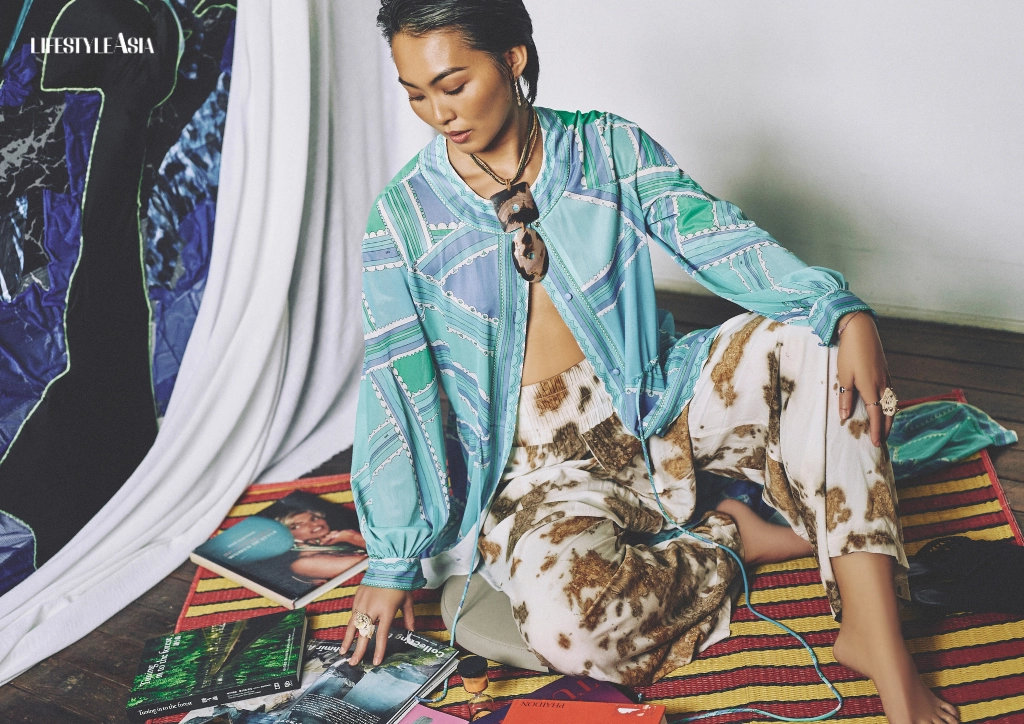
Questions of identity have occupied her throughout her higher education. In the five-year Brown-RISD Dual Degree Program, she studied international comparative political science at Brown University and apparel design at the Rhode Island School of Design (RISD). She once imagined becoming a lawyer, choosing political science because she wanted to understand the Philippines “with all its nuance and specificity.” Design gave her another way to explore identity.
“Brown gave me the vocabulary, and the academic rigor, to examine something closely,” she says. “RISD gave me my hands.”
Her experience studying and working in New York also made her conscious of whose stories were being told. She valued her education but found the cultural capital Western-centric. Manila had equally talented people, she felt, and coming home offered her the opportunity to build something collaborative around their ideas and experiences.
“Manila is the city that made me,” she says. “I wanted to share the best of its people, places, and stories through the things I love most.”
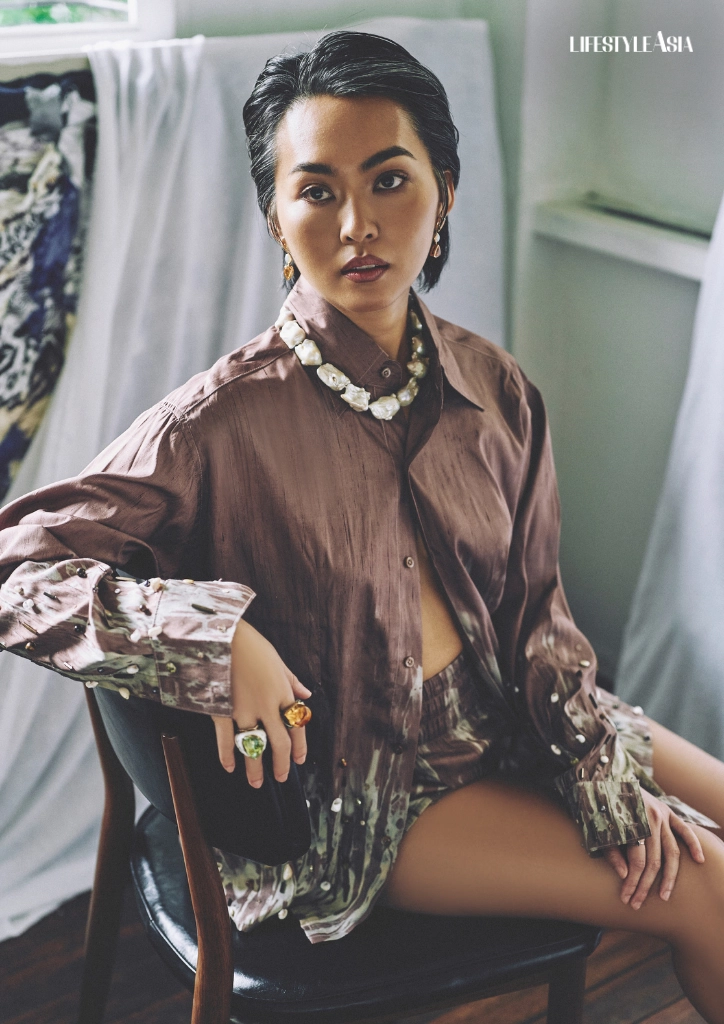
Back home, Isabel co-founded TOQA, and the label made its public debut at the 2018 Manila BiennaleBiennaleA major international art exhibition held every two years, showcasing contemporary works by artists from around the world. The Venice Biennale is the most famous, and biennales elsewhere in AsiaGo to Biennale Glossary with a fashion show in Intramuros. Its early materials included deadstock sourced in the Philippines, unused fabrics left over from fashion production that became the starting point for new garments.
TOQA called its approach “Sport Resort,” combining the ease of resortwear with the movement and function of activewear. It was a response to the conditions of tropical life. Island identity was expressed through garments made for people who lived there and the ways they moved through their days.
That practical attention remains, even as the studio’s scope has grown. Since TOQA’s exhibition at the Hawai’i Triennial in 2022, Isabel says its exploration of island identity has widened toward Asian identity more broadly. She looks for what cultures and places have in common, and how those connections might create something new.
“I’ve never really seen TOQA as simply a retail fashion brand,” she explains. “It’s much more of a studio, where clothing is one of the ways an idea can take form.”
Today, that practice has developed into couture, textile paintings, uniforms, and costuming, with commissions at its center.
“I get to know a person or an institution, then mix their personality with mine,” she says. “So the work is more focused and conceptually broader at the same time.”
For the Thailand Biennale, curator Hera Chan approached Isabel about making the uniforms. Working with Ying Batik on hand-painted textiles brought her into a relationship with local makers and the people who’d wear the garments.
“Clothing is a designed object with a job to do,” she says. “It isn’t just decoration or ornament. It has a place in the world, and it helps the person wearing it.”
Comfort, movement, and function continue to guide those decisions. Her shorthand is practical: “Look good, feel good, work better.”
These concerns also brought TOQA into Filipiñana, working on commissions from the film’s costume designer Carla Villanueva. In the film’s country-club setting, clothing helps establish the different roles of workers and guests. Isabel initially contributed through the clothes they’d wear. Then she was asked to step into that world.
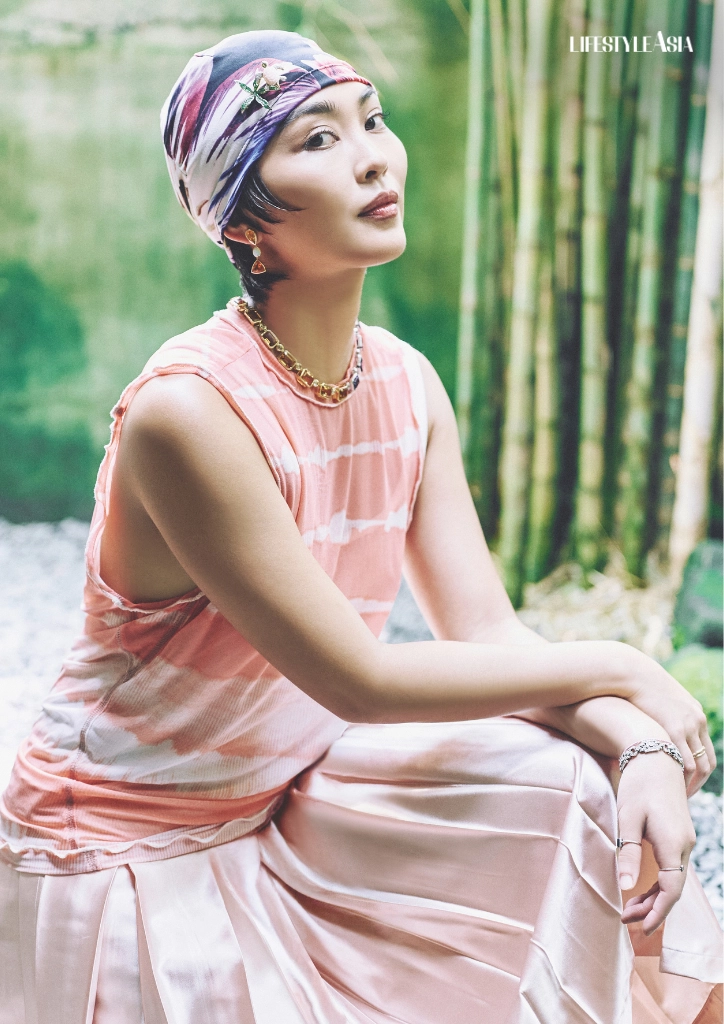
How Isabel Sicat Makes Space For Performance
“The team had already been working for about four months,” Isabel recalls. “A week and a half before shooting, I was in for a costume meeting when they asked me to read.”
An early photograph of her, taken before TOQA, had appeared on one of the first mood boards for Ina, the character she’d eventually play.
“So, in a way, I’d been brought back to her through clothing and costuming,” she says.
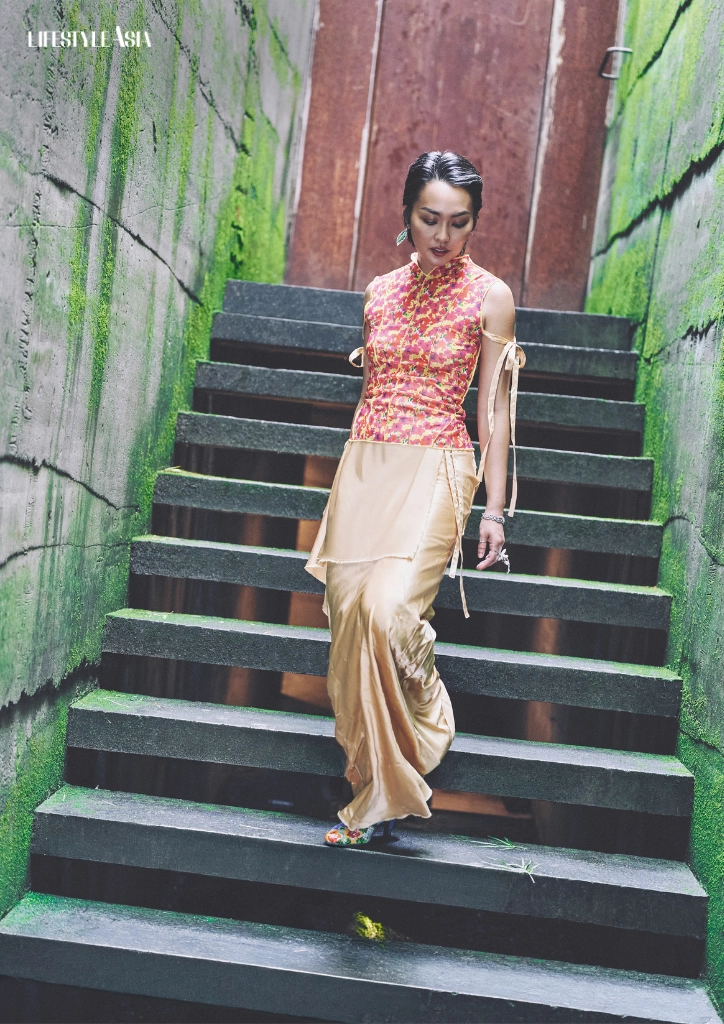
She was asked to read a scene several ways, with different intentions, to see whether she could take acting directions. She found herself enjoying the challenge.
“It felt like a new frontier, but it was familiar, too. It was meant to be.”
In Filipiñana, Isabel plays Ina, the caddie accompanying Clara—a young woman visiting from New York whose uncle Renato hopes to persuade her to return to the Philippines. Their round of golf unfolds alongside the story of a new tee girl (played by Jorrybell Agoto) encountering the same country club from a different position within it.
It’s a quiet film, with much left unsaid. The club’s routines reveal who carries the bags, who plays, and who’s permitted onto the course. Within that carefully ordered world, Isabel found her way into Ina by imagining something the film leaves unstated: that it was also her character’s first day there. It was her own first time on a golf course, and that unfamiliarity gave her something to draw on.
Performance, however, had always been part of how she worked.
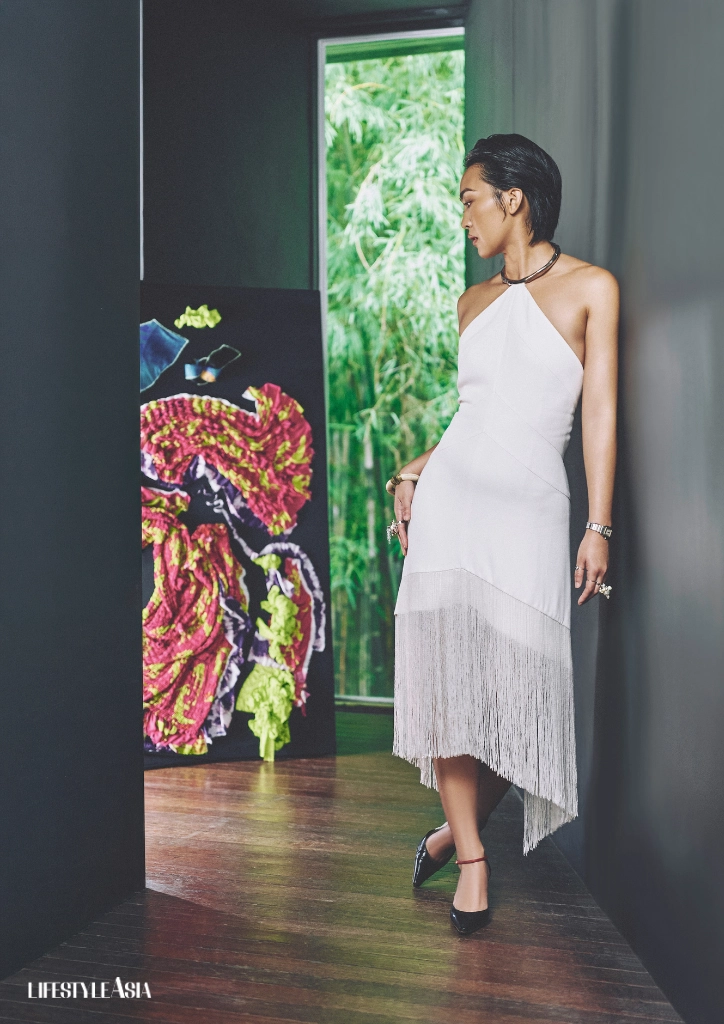
“Yes. I love attention,” she jokes when asked whether she always considered herself a performer.
In TOQA’s early editorials and image-making, she embodied the “island girl,” using her body and persona to explore the identity around which the studio was developing. Later, those ideas took the form of places audiences could enter. SPA TOQA brought together a cafe, a meditation space, and a showroom, while the TOQA Twinflame Island Museum combined an exhibition with a shop. In these instances, clothing became part of a larger experience, its designer participating in how visitors encountered it.
“Some of the strongest things I do, whether that’s a show or a pitch, have performance at their core,” she says.
A feature film asked her to bring that instinct into someone else’s production. Director Rafael Manuel and his team had already established its structure and visual world. Isabel had to build a character within it, working with a much larger cast and crew than she was used to.
“Acting was far more technical,” she says. “It was slower, and it was about building a character over time.”
Fashion, in comparison, felt immediate in terms of looking and adjusting. A test shoot could simply prompt a change in pose, expression, or direction. Manuel gave the actors an environment in which to decide what made sense for their characters. Isabel had to learn how to prepare for that freedom and use it once shooting began.
“I love prep and rituals,” she says, “but knowing how you want to get into character and actually doing it on set are two different things.”
Workshops with veteran actress Angeli Bayani taught her how preparation could make her more responsive once the camera was rolling.
“Prepare, prepare, prepare, so that when you arrive, you can simply respond to what’s there,” she says. That included paying closer attention to her body, giving her another way to understand the medium she’d long worked with through clothing and performance. This lesson has influenced her other work, too. “That isn’t only a method for acting,” she says. “It’s a way to move through life. Do the work beforehand, then be in the moment and let it flow.”
Read the full story in our October 2026 e-magazine by subscribing to Lifestyle Asia’s digital access or purchasing your copy at Readly.
Photography by Karl King Aguña, assisted by Jom Ablay; Creative Direction by PAOLO TORIO; Styling by Mano Gonzales, assisted by Josh Merilo; Hair and makeup by ZIDJIAN PAUL FLORO, assisted by ARMAN ADRIANO; Shot on location at SINE POP!
Frequently Asked Questions
Isabel Sicat is a Filipino designer, artist, and actress who co-founded TOQA, a Manila-based studio exploring island and Asian identities through fashion, textile art, costuming, and other creative forms. She also plays Ina in Filipiñana, which was selected as the Philippines’ entry for Best International Feature Film at the 99th Academy Awards.
TOQA is a Manila-based creative studio co-founded by Isabel Sicat. While it began with fashion and garments made using materials such as locally sourced deadstock, its practice has expanded to include couture, textile paintings, uniforms, costuming, film, and installations. Through these forms, Sicat explores identity, material, and the connections between cultures and places.
Isabel Sicat plays Ina, a caddie in Filipiñana, directed by Rafael Manuel. Her involvement began with costume commissions through the film’s costume designer, Carla Villanueva, before she was invited to audition for a role. She drew on her experience working with clothing and performance while learning the technical demands of acting.
Sicat studied international comparative political science at Brown University and apparel design at the Rhode Island School of Design (RISD) through their five-year dual degree program. She credits Brown with giving her the vocabulary and academic rigor to examine ideas closely, while RISD gave her the practical skills to express them through design. Together, these experiences informed her interest in Filipino, island, and Asian identities.
Isabel Sicat is preparing textile paintings for the Forest Festival of the Arts Okayama in Japan in 2027. Her textile paintings use fabric remnants from previous collections and commissions, transforming them into sculptural, wall-mounted works. For the upcoming project, she plans to work with local Japanese fabrics, techniques, and artisans, with the exhibition set at Raikyu-ji, a Zen temple in Takahashi.