Small talk doesn’t have to be awkward. Here’s how to ask better questions, find common ground, handle awkward silences, and become better at making conversation.
Working in publishing often lands me in rooms of strangers, relying on small talk to break the ice. “The traffic going here is so bad, right?” “Oh, the bread looks good.” “Your bag is so cute! Where did you get it?” These are just some of the lines I’ve thrown out while making conversation with someone I’d met only moments before.
Small talk has saved me from countless awkward—and sometimes painfully quiet—moments. It’s a skill I’ve come to be grateful for, especially after realizing that not everyone finds it as easy to strike up a conversation with someone they’ve just met. So, what exactly makes a conversation “small talk”? And, more importantly, can you actually get better at it? Today, we’re breaking down the art of small talk—and how to get better at making conversation without making it feel like a conversation at all.
READ ALSO: Hot Girl Walk: Manila Routes To Get Your Steps In
What’s Small Talk?
Researchers have described small talk as a way of managing social distance and creating a sense of sociability between people. The term is also closely tied to the concept of “phatic communion,” a form of communication coined by anthropologist Bronisław Malinowski to describe how words can establish a sense of fellowship—even when they aren’t particularly meaningful in themselves. In other words, sometimes we talk not because we have something important to say, but because saying something is a way of saying, I’m here, you’re here, and we can talk.
That might explain why a comment about the weather, a compliment about someone’s bag, or a shared complaint about traffic can feel surprisingly effective at breaking the ice. Small talk creates a low-pressure entry point into an interaction, giving two people the opportunity to gauge each other before deciding whether the conversation should go any deeper.
Therapist Alyssa Mancao similarly frames small talk as a form of connection rather than an obligatory social performance. These brief exchanges can create what she calls “micro-moments of connection”: little reminders that we’re not as isolated from the people around us as we sometimes feel. They can even become a bridge toward deeper relationships, whether that means making a new friend, expanding your social circle, or simply feeling a little more comfortable around someone you’ve just met.
How Can I Improve My Small Talk Skills?
The good news is that small talk is a skill, not an innate personality trait. You don’t have to be the most naturally outgoing person in the room, nor do you need a Rolodex of witty one-liners ready to go. In fact, being good at small talk has less to do with knowing exactly what to say and more to do with knowing how to keep a conversation moving.

Ask Better Questions
One of the easiest ways to improve your small talk is to move beyond questions that can be answered with a simple yes or no. Instead of asking, “Did you have a good weekend?” try asking, “What was the highlight of your weekend?” Rather than “Do you like your job?” ask, “How did you get into that?”
The difference is subtle, but an open-ended question gives the other person something to work with. It also gives you more opportunities to find a thread worth pulling on.
When they give you an answer, listen for that thread. If someone tells you they just came back from Japan, for instance, you don’t have to immediately jump to another topic. Ask what their favorite part was, who they went with, or whether they’d go back. Good small talk often comes from simply being curious about the answer you’ve already been given.
Don’t Be Afraid to Share, Too
Small talk can quickly start feeling like an interrogation if you’re constantly asking questions without offering anything about yourself. If someone tells you they spent their weekend trying a new restaurant, tell them about the place you’ve been wanting to try. If they mention they’re learning tennis, share that you’ve been meaning to pick up a racket yourself.
You don’t have to reveal anything particularly profound. Sometimes, an unpolished little observation is enough to give the other person something to respond to. Small talk is more akin to a game of tennis than an interview: they serve, you return, and hopefully they hit the ball back.
Stop Trying to Be Interesting
This might be the hardest part, especially when you’re meeting someone you want to impress. There can be an instinct to come up with the funniest anecdote, smartest observation, or most interesting thing to say next. But small talk isn’t really a performance.
Psychologist Amara Calder describes it as creating a “tiny bridge” between two people, an opportunity to interact without the pressure to be brilliant. The goal isn’t to make someone think you’re fascinating within the first five minutes. It’s to make the interaction feel comfortable enough that you both want to keep talking.
Sometimes, that means admitting you don’t know something, or laughing at an awkward moment. More often than not, it means simply saying, “Wait, tell me more about that.”
Let the Conversation Have Its Lulls
Not every pause needs to be rescued.
One of the biggest sources of anxiety around small talk is the feeling that silence means the conversation has failed. But pauses are a perfectly normal part of interacting with another person. Professor Adam Jaworski of the Centre for Language and Communication Research at Cardiff University, whose work focuses on small talk, points out that silence can carry different meanings depending on the relationship and cultural context; between close friends, silence can be comfortable, while between strangers, it may feel more noticeable.
So if the conversation briefly goes quiet, you don’t necessarily have to panic and reach for another question. Take a sip of your drink. Look around. Let the moment breathe.
And if you really want to keep talking, you can always return to something the other person mentioned earlier. Chances are, you don’t need a brand-new topic—you just need to pull on another thread.
Know When to Move On
Being good at small talk also means knowing when a conversation has run its course. If you’re the only one asking questions, the other person isn’t reciprocating, or the interaction simply feels forced, you don’t have to keep it alive indefinitely.
A simple, “It was really nice talking to you,” followed by an excuse to grab a drink, say hello to someone else, or return to your friends is more than enough. After all, the goal of small talk isn’t to turn every stranger you meet into a lifelong friend; it’s about making a room full of strangers feel a little less strange.
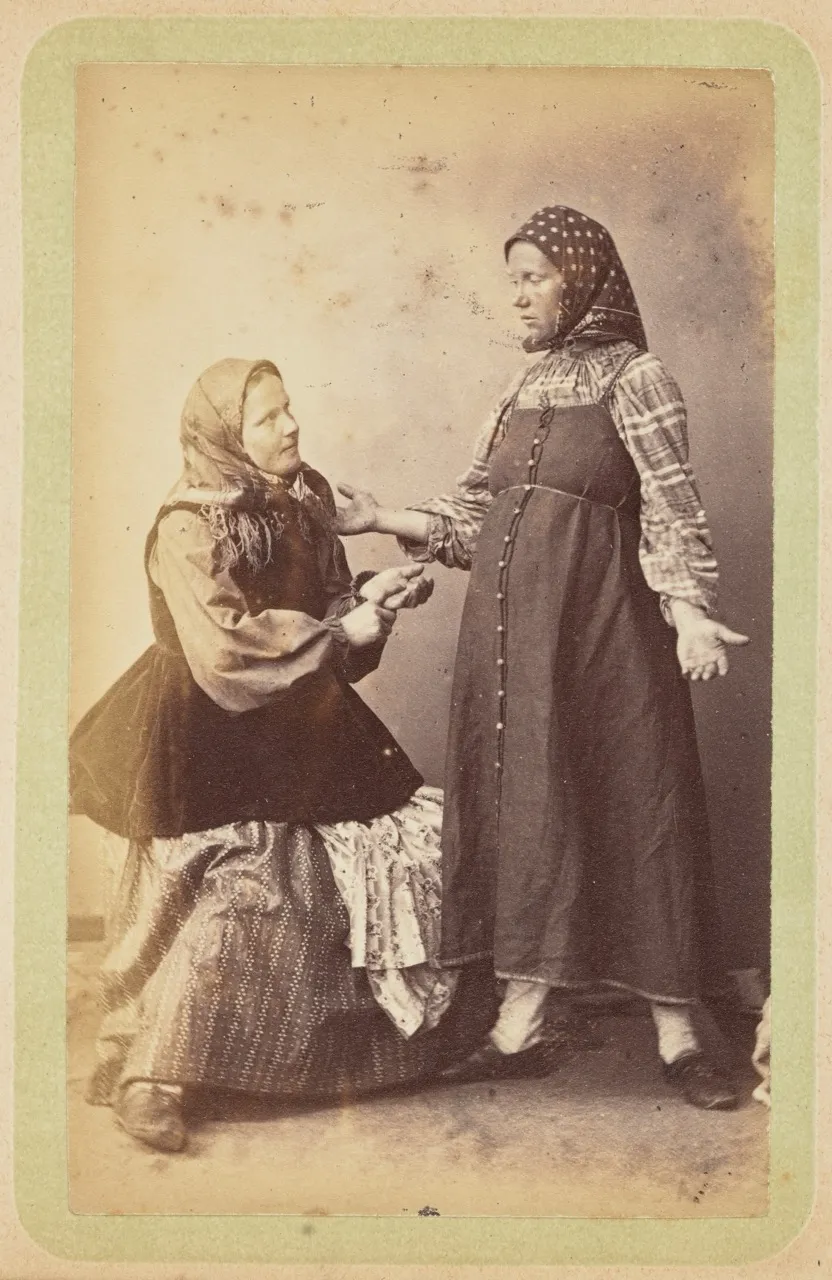
Banner image features two women in conversation (1860–1870), photography by William Carrick, courtesy of Getty Museum
Frequently Asked Questions
Small talk is casual conversation that helps people establish a sense of sociability and manage social distance. It creates a low-pressure way for people to interact, break the ice, and potentially transition into deeper conversations.
Small talk can create “micro-moments of connection” that help people feel less isolated and more comfortable around one another. It can also help strangers become acquaintances or friends by providing an easy starting point for interaction.
You can get better at small talk by asking open-ended questions, listening closely to the answers, sharing information about yourself, finding common ground, and following up on things the other person mentions. The goal isn’t to say the perfect thing but to keep the conversation comfortable and reciprocal.
Good small-talk questions are open-ended and give the other person something to build on. Instead of asking questions that can be answered with “yes” or “no,” try asking things like, “What was the highlight of your weekend?” or “How did you get into that?”
You don’t have to immediately fill every pause. Silence is a normal part of conversation, and not every lull means the interaction has gone badly. If you want to keep talking, return to something the other person mentioned earlier and ask a follow-up question. If the conversation feels one-sided or forced, it’s also perfectly fine to politely move on.