A recent observation leads one writer to dive into the Philippines’ declining birth rate. From sex education and contraception to rising costs of living and women’s changing priorities, here’s what the latest data reveals.
Though it was some time ago, a friend made an observation during a brunch session in Power Plant Mall that stuck with me: the strollers weaving through the aisles rarely carried babies; more often than not, they held dogs. At the time, it was just one of those amusing observations that made us laugh before moving on to another topic. But a few months ago, the Philippine News Agency reported that the country is experiencing a rapid decline in fertility and birth rate, among the fastest in the world right now. In hindsight, that throwaway conversation over brunch doesn’t feel so anecdotal anymore—it felt like a small yet prophetic glimpse into a much larger demographic shift. Naturally, the shock (our country, after all, has always been a shining example of overpopulation) sent me into a rabbit hole of explainer videos and demographic reports from the Philippine Statistics Authority.
Here’s what I found:
READ ALSO: The Many Realities of Coming Out And Staying Closeted
The Good News: Sex-Education Is Working
For years, conversations around sex education and family planning in the Philippines have been loud, divisive, and often politically charged. The latest numbers, however, tell a much simpler story: people are making informed choices.
The use of modern contraceptives among currently married women has climbed to 44.5% in 2025, continuing a steady rise that has been happening for more than three decades. Even more encouraging, over seven in ten married women now have a demand for family planning, and over 82% of that demand is being met through available contraceptive methods.
Then there’s teenage pregnancy. Once one of the country’s biggest reproductive health concerns, it has fallen to its lowest recorded level since the survey began. In 2025, only 4.8% of girls aged 15 to 19 had begun childbearing—considerably a sharp drop from the 10.1% recorded in 2013. Of course, none of this happened overnight. It points to improved, albeit gradual, access to reproductive healthcare and wider awareness of contraception, with young Filipinos making more deliberate decisions about when they want to have kids, or whether they want to become parents in the first place.
The Birth Rate Decline In The Philippines Is Born From Choice
Perhaps the most shocking statistic isn’t that fewer Filipinos are having children; it’s that many are consciously deciding they never will. More than half (57.3%) of currently married women between the ages of 15 and 49 say they don’t want any more children or have already undergone sterilization. Among women who already have six or more children, that figure climbs to almost 90%.
For decades, womanhood was almost inseparable from motherhood. Having children wasn’t presented as a choice as much as it was an expectation, yet that expectation is beginning to loosen. Today’s women are exercising more agency over their bodies, careers, finances, and futures. For many, family planning is no longer about spacing out pregnancies, but deciding what kind of life they want to build—and how many children, if any, fit into that picture.

How Social Realities Play A Role In Deciding Whether To Start A Family
The falling birth rate isn’t happening in a vacuum. Behind every statistic is a practical decision, and those decisions are shaped by education, money, and where people live. Education has one of the clearest relationships with fertility. Women with only some primary education have an average of 3.1 children; meanwhile, birth rates steadily decline as their educational attainment rises. This is mainly because education often brings greater career opportunities, later marriages, and better access to reproductive health information, all of which are factors that naturally influence when people choose to start families.
Money tells a similar story. Women from the poorest households have an average of 2.8 children, compared to just 1.1 among those in wealthier households. Raising children has never been cheap, and in today’s economy, many couples are doing the math before they start expanding the family.
Location also plays a role. Urban women now average 1.5 children compared to 2.0 in rural areas. City life comes with higher housing costs, longer working hours, and lifestyles that leave less room for large families. Viewed together, these numbers paint a much bigger picture than “people are having fewer babies.” They reveal a generation weighing education against timing, careers against childcare, and aspirations against affordability. Dogs, or pets, on the other hand, while costly to care for, don’t require nearly as much of the investment and resources babies do (not that they deserve less care, but you won’t need to see them through an entire education, to put it into perspective), which explains why they’re in more strollers these days.
The country’s declining birth rate was never about a simple trend of choosing not to have children, but something we’ve been steadily building up to with the implementation of sex education, better healthcare, and increased access to knowledge. Given the complex realities we currently live in, and how they’re invariably shaping the kind of life future generations are going to experience, it’s not too difficult to believe that people are thinking twice before committing to what has always been a long-haul journey of great responsibility.
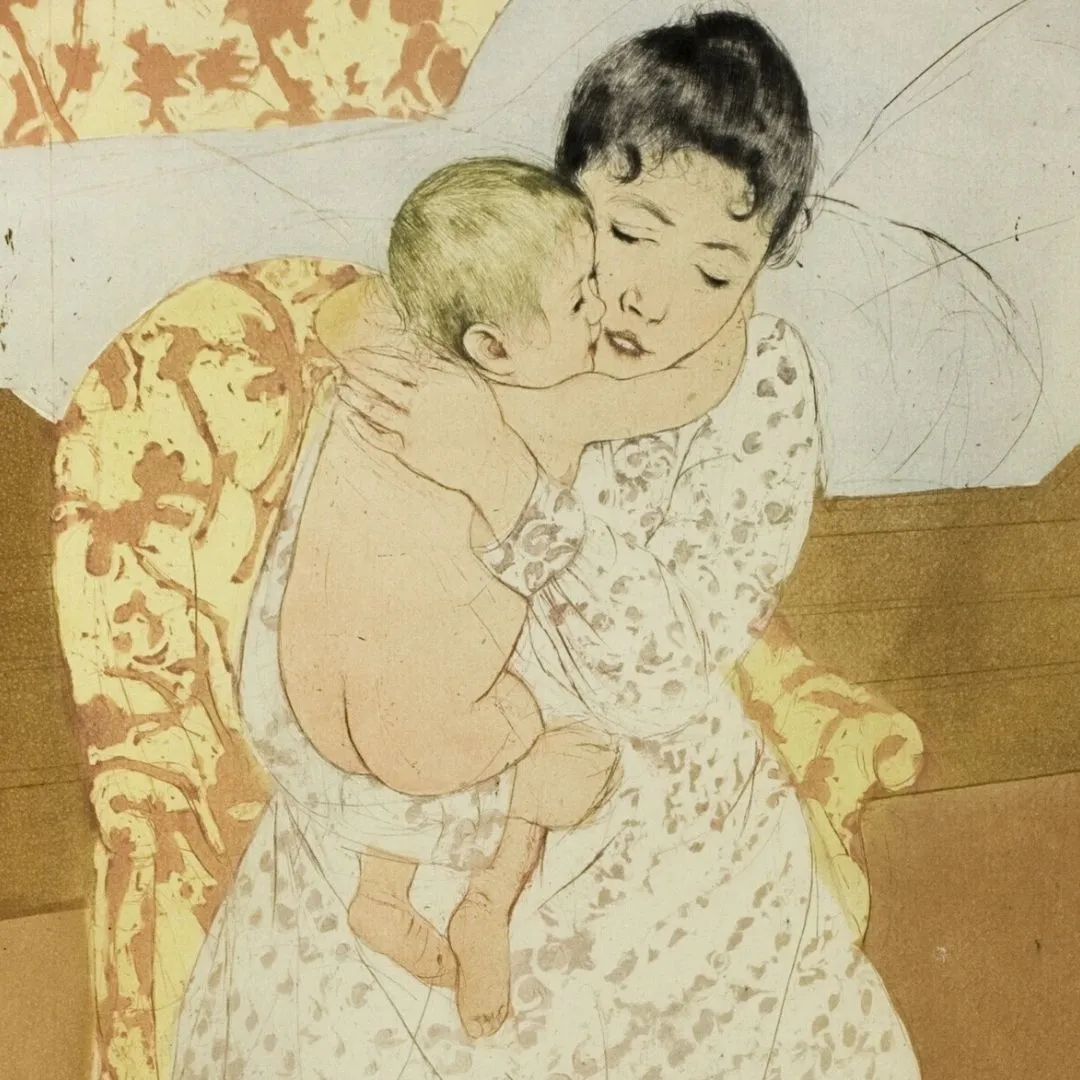
Banner image features “Maternal Caress” (1891) by Mary Cassatt, courtesy of the Art Institute of Chicago
Frequently Asked Questions
Several factors contribute to the decline, including increased access to contraception, improved family planning, higher educational attainment among women, urbanization, rising living costs, and more people choosing to delay or limit having children.
According to the 2025 National Demographic and Health Survey, the country’s total fertility rate has fallen to 1.7 children per woman, continuing a decades-long decline.
Yes. The latest data shows teenage childbearing has dropped to its lowest recorded level, with only 4.8% of girls aged 15 to 19 having begun childbearing in 2025.
Yes. Modern contraceptive use among currently married women reached 44.5% in 2025, while more than 82% of the demand for family planning is now being met.
Yes. Women with higher levels of education tend to have fewer children on average. The data also shows that fertility generally declines as household income and educational attainment increase.