For Dior Spring/Summer 2027, Jonathan Anderson turns to texture, the illusion of density, and a restrained palette to establish a distinctly lighter wardrobe.
Jonathan Anderson has made a compelling case for Sunday’s best–couturified. For the Dior Spring/Summer 2027 collection, the designer presented a wardrobe of familiar silhouettes, from summer blazers to pleated dresses, each treated with the kind of elaborate construction one might expect from the French House. The collection also marked perhaps his furthest departure from the aesthetic he established during his celebrated tenure at Loewe, suggesting that Anderson is growing increasingly comfortable with the demands and possibilities of his role at Dior.
Much of Anderson’s journey at the House has involved separating himself from the visual identities of both Loewe and his eponymous label, JW Anderson. His fascination with natural elements, material experimentation, and the occasional visual trick remains, but his latest collection suggests a different approach to these longstanding interests. Where density defined much of his work at Loewe, his Dior appears more concerned with the illusion of it.
READ ALSO: The Alice + Olivia Spring/Summer 2027 Collection Takes New York To Wonderland
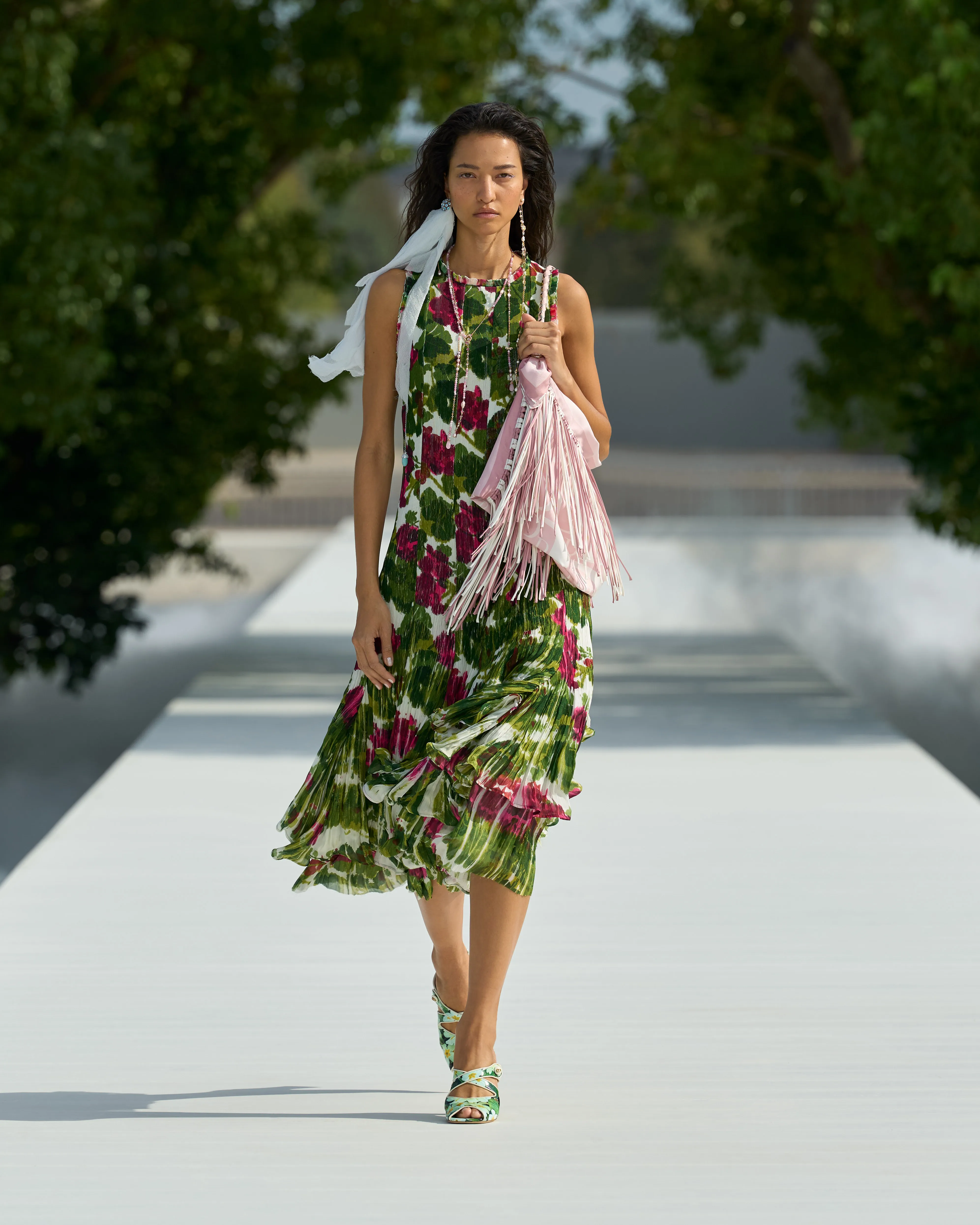
Trick Of The Eye: How Dior Spring/Summer 2027 Creates An Illusion Of Density
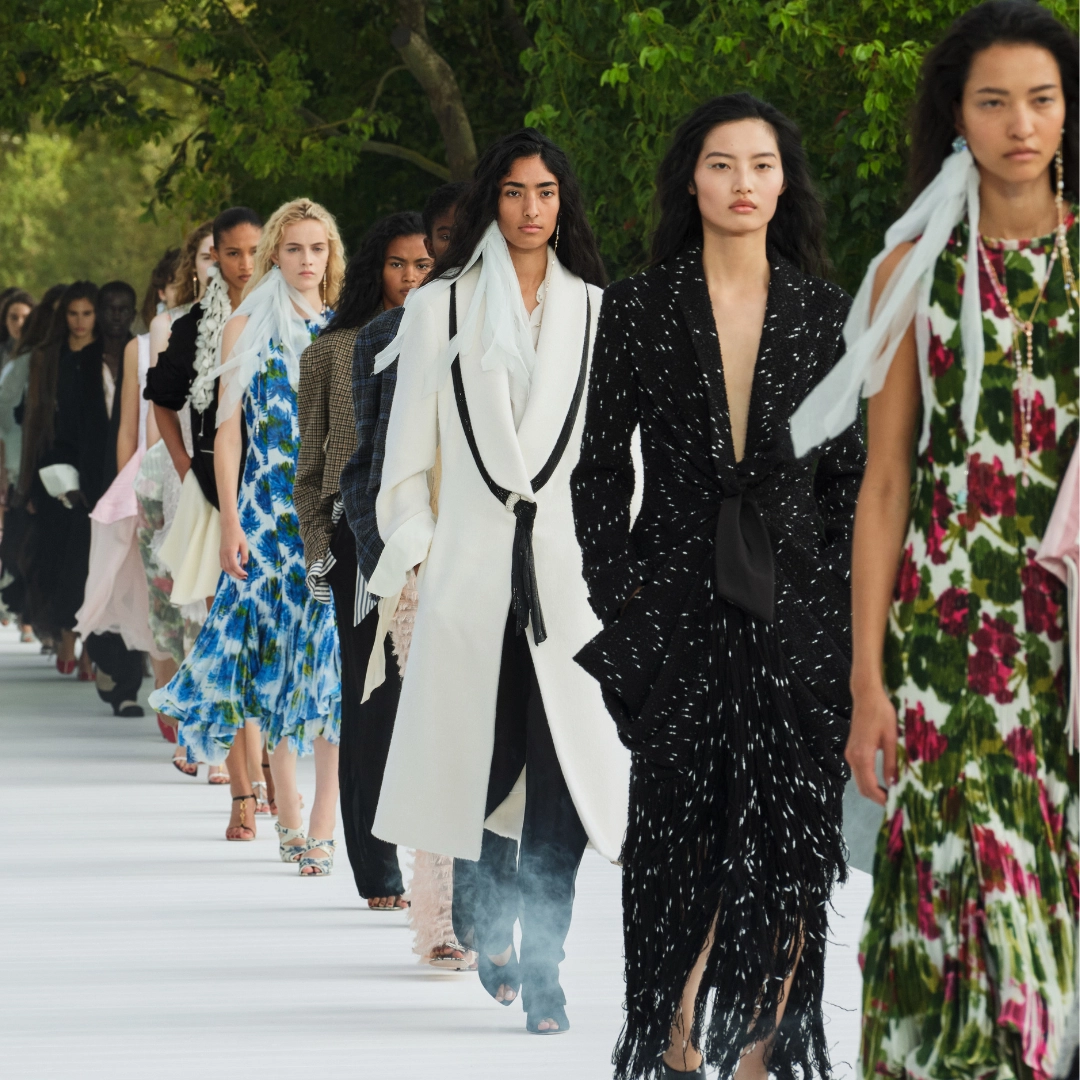
Consider the trompe l’oeil tweeds, plaids, and tartans rendered on lightweight silk, which gave otherwise substantial-looking garments an unexpected sense of ease. Anderson explored this contradiction throughout the collection, particularly in his interpretation of the summer blazer. Sheer, unstructured outerwear recalled his most recent menswear collection for the House, while fringed hems and bags introduced movement to pieces that might otherwise have appeared rather formal. Only Jonathan Anderson could convince me to wear a blazer.
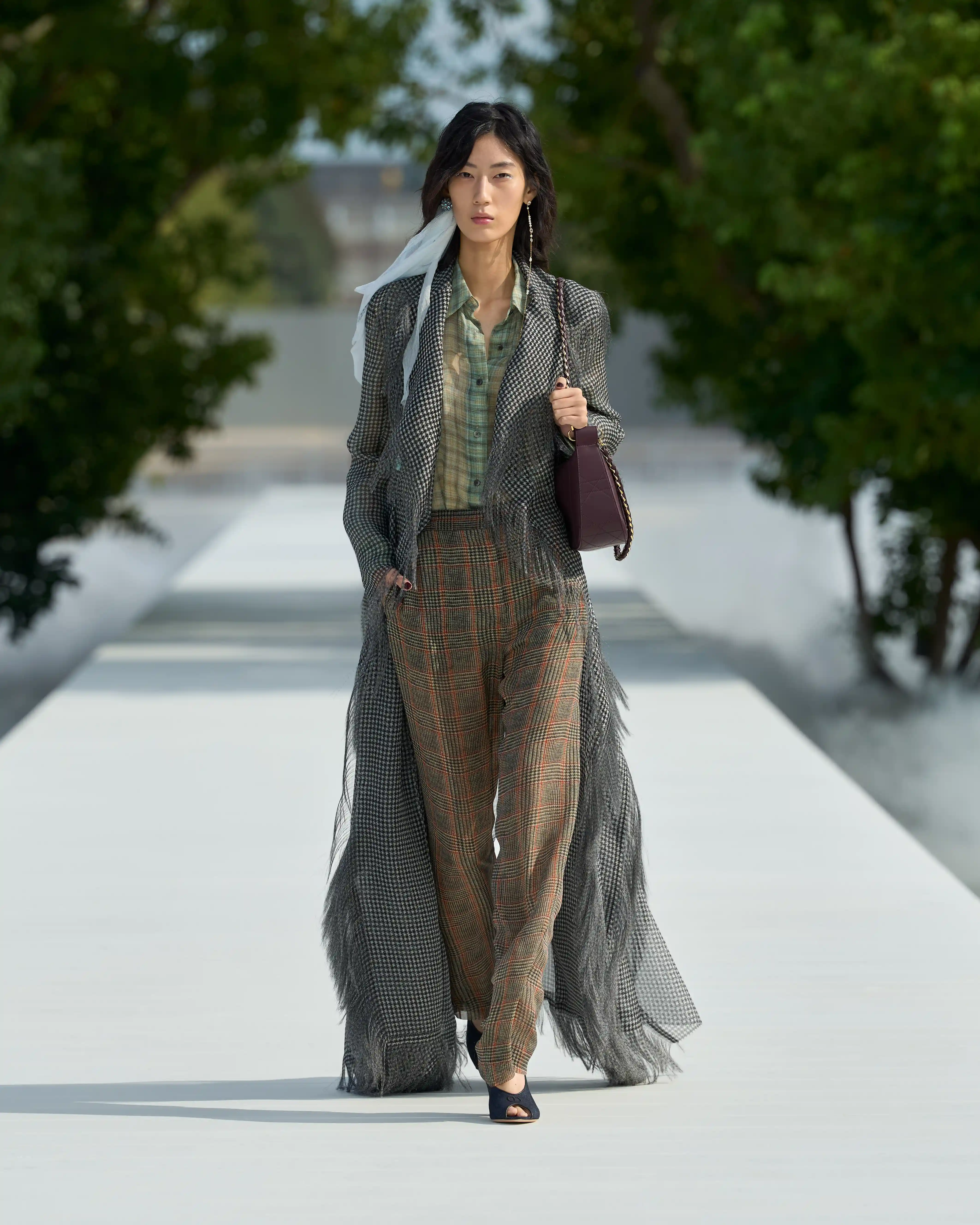
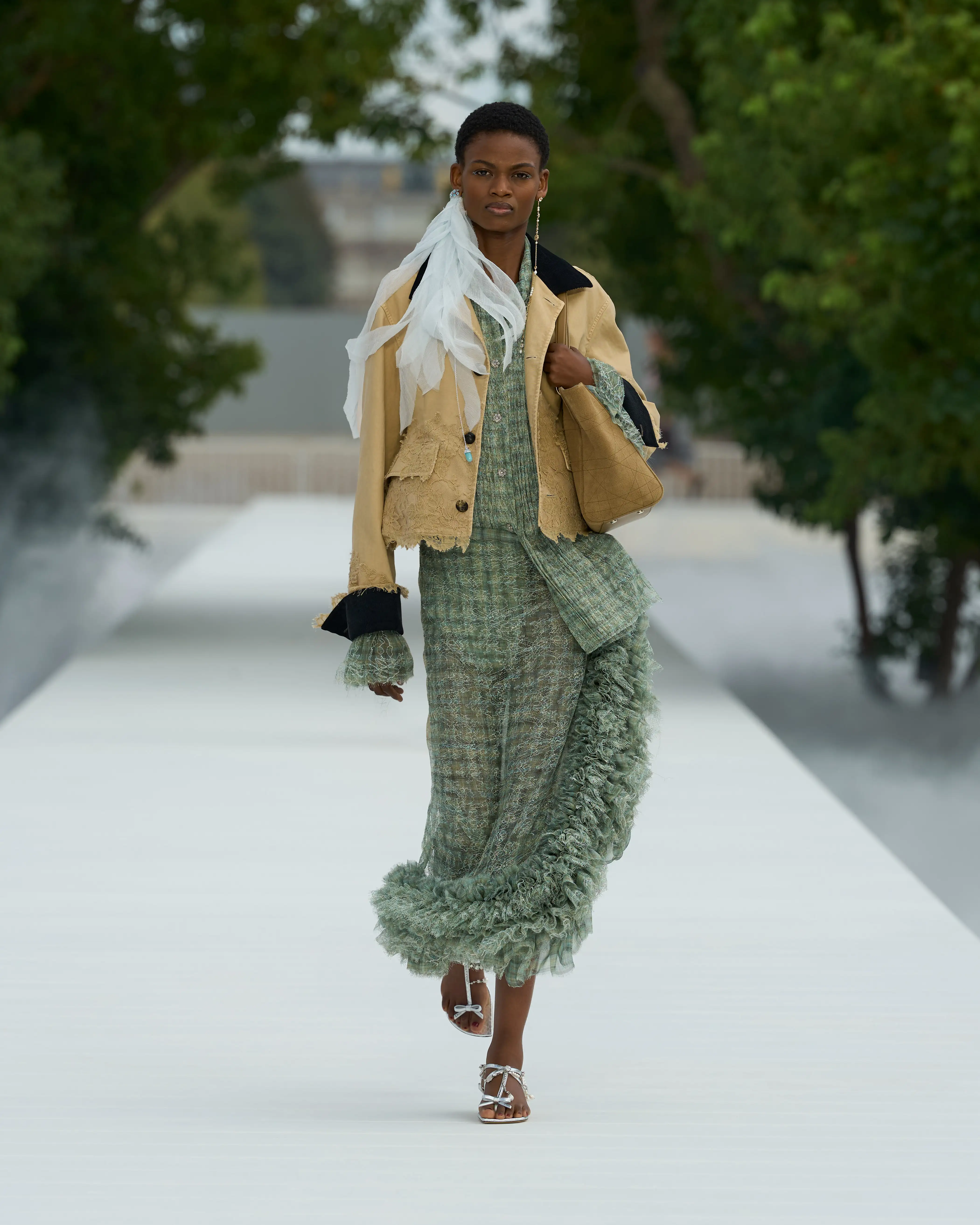
For a Spring/Summer collection, the palette was surprisingly restrained. Anderson seemed more interested in communicating the season through silhouette and fabrication than through color, allowing the lightweight construction of his garments to do much of the talking. Petal pink appeared across jackets and dresses, accompanied by delicate yellows and robin’s egg blue, while metallic trousers in gold and silver provided an unexpected contrast to the collection’s softer shades.
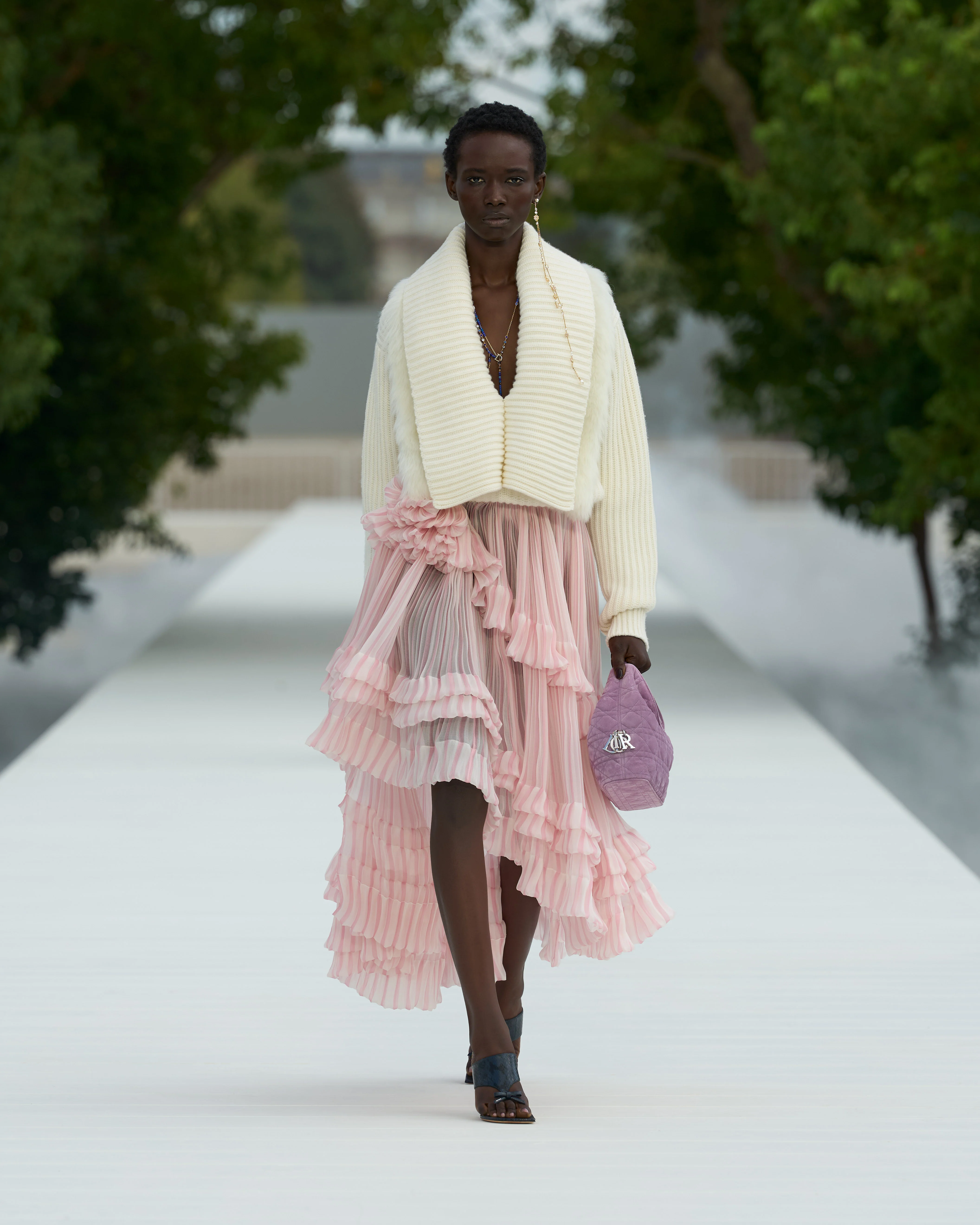
A few dresses, meanwhile, offered a more pronounced exercise in construction. Several appeared nearly identical in their composition, with micro-pleated fabrics gathered into voluminous silhouettes and an exaggerated padding-like effect around the hips, à la the “New Look” silhouette that Dior created in 1947. Anderson has always enjoyed manipulating the relationship between the body and the clothes that surround it, and here, he approached that fascination with a greater appreciation for the formal vocabulary of Dior.
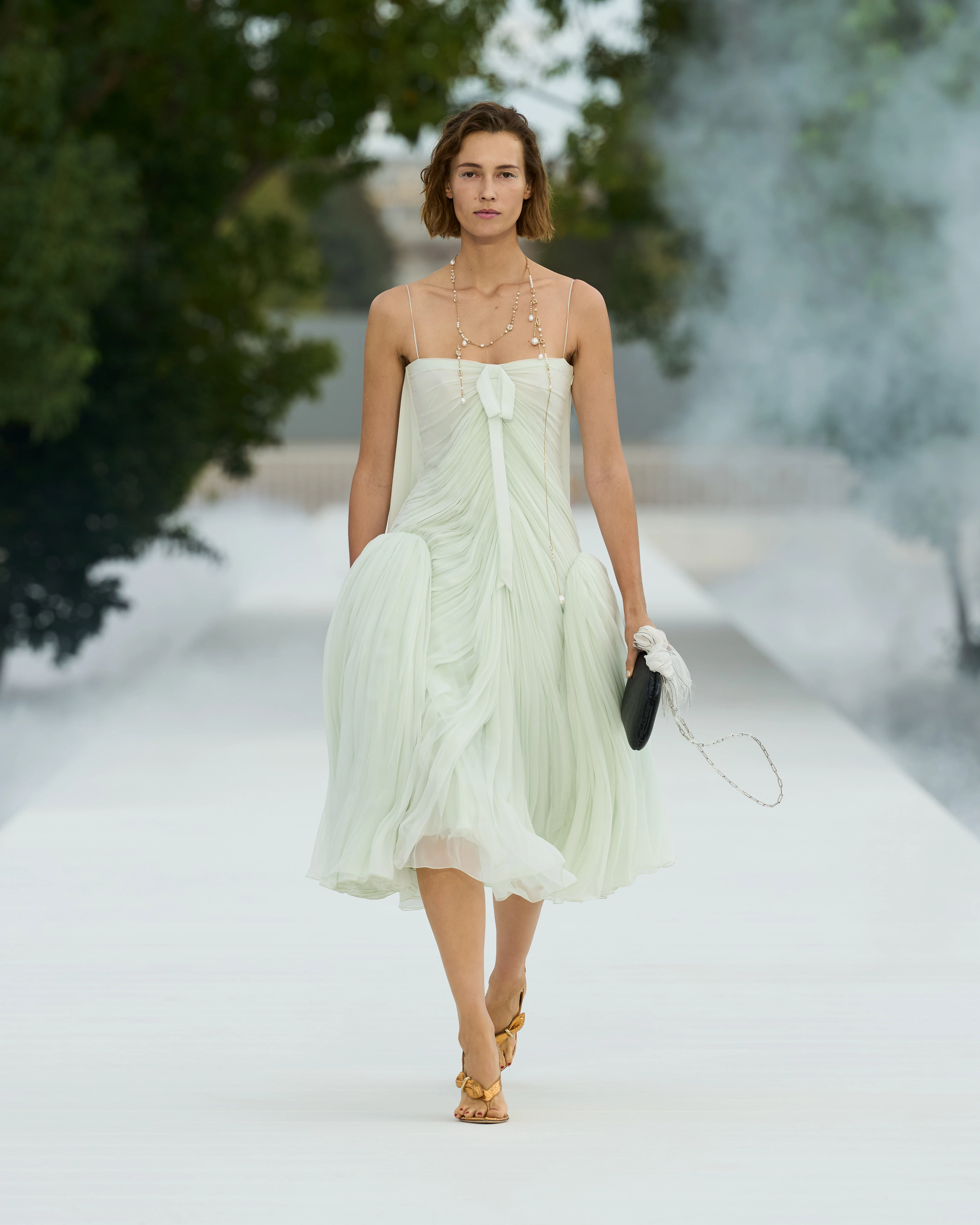
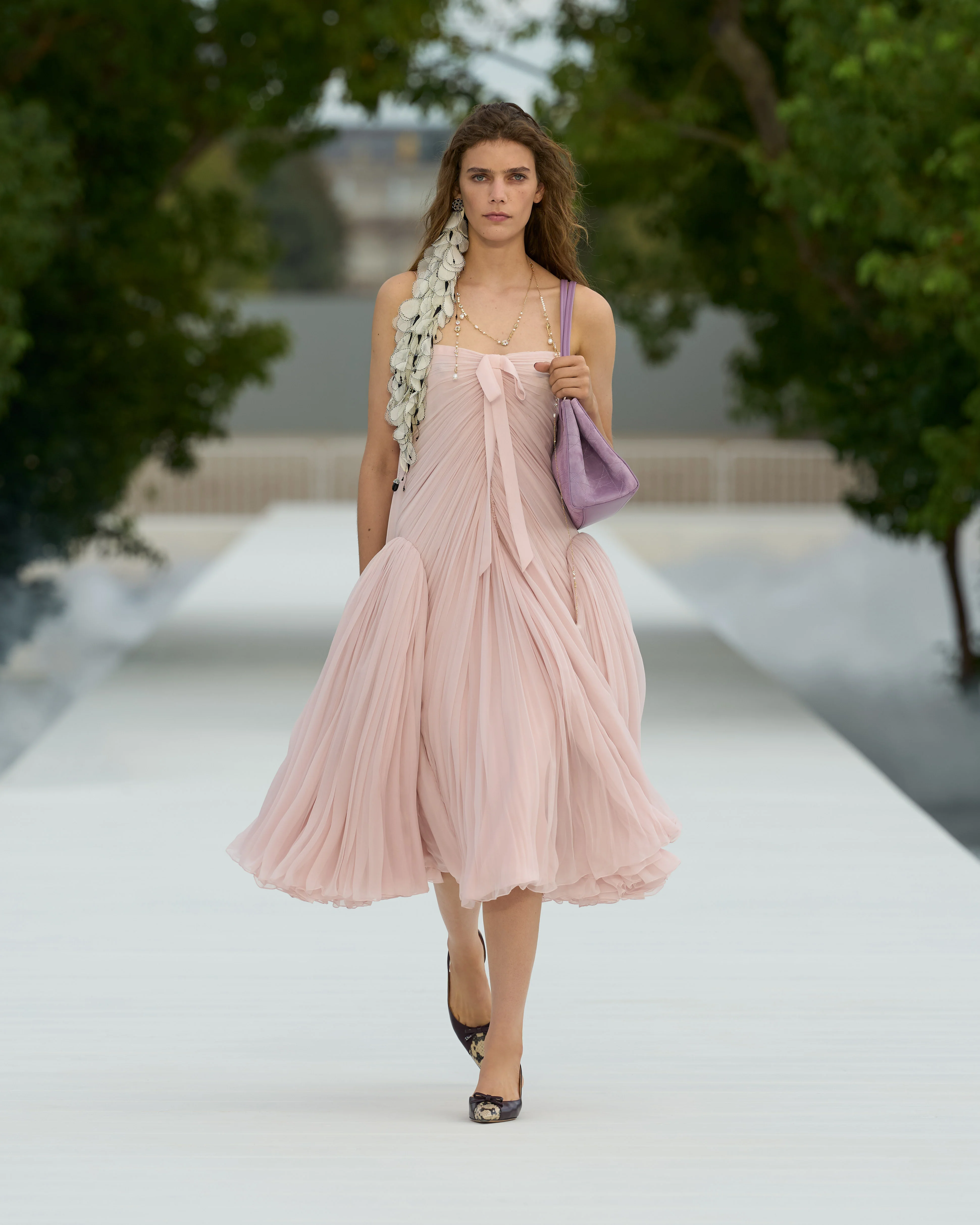
The Garden, Revisited: A Collection That Evokes Nature
Anderson’s longstanding interest in nature also found its way into the collection. Florals appeared alongside scalloped, petal-like embellishments, lending an organic quality to the more architectural silhouettes. The jewelry followed a similar direction, particularly the elongated, asymmetrical, garland and scarf-like earrings that draped over the models’ right shoulders.
There was something particularly appealing about the way Anderson reconciled these decorative elements with the collection’s lighter construction. The micro-pleats and fringes supplied much of the visual interest, while the trompe l’oeil fabrics challenged expectations of how the garments might feel against the body. Even his more elaborate pieces seemed designed to suggest weight without necessarily imposing it.
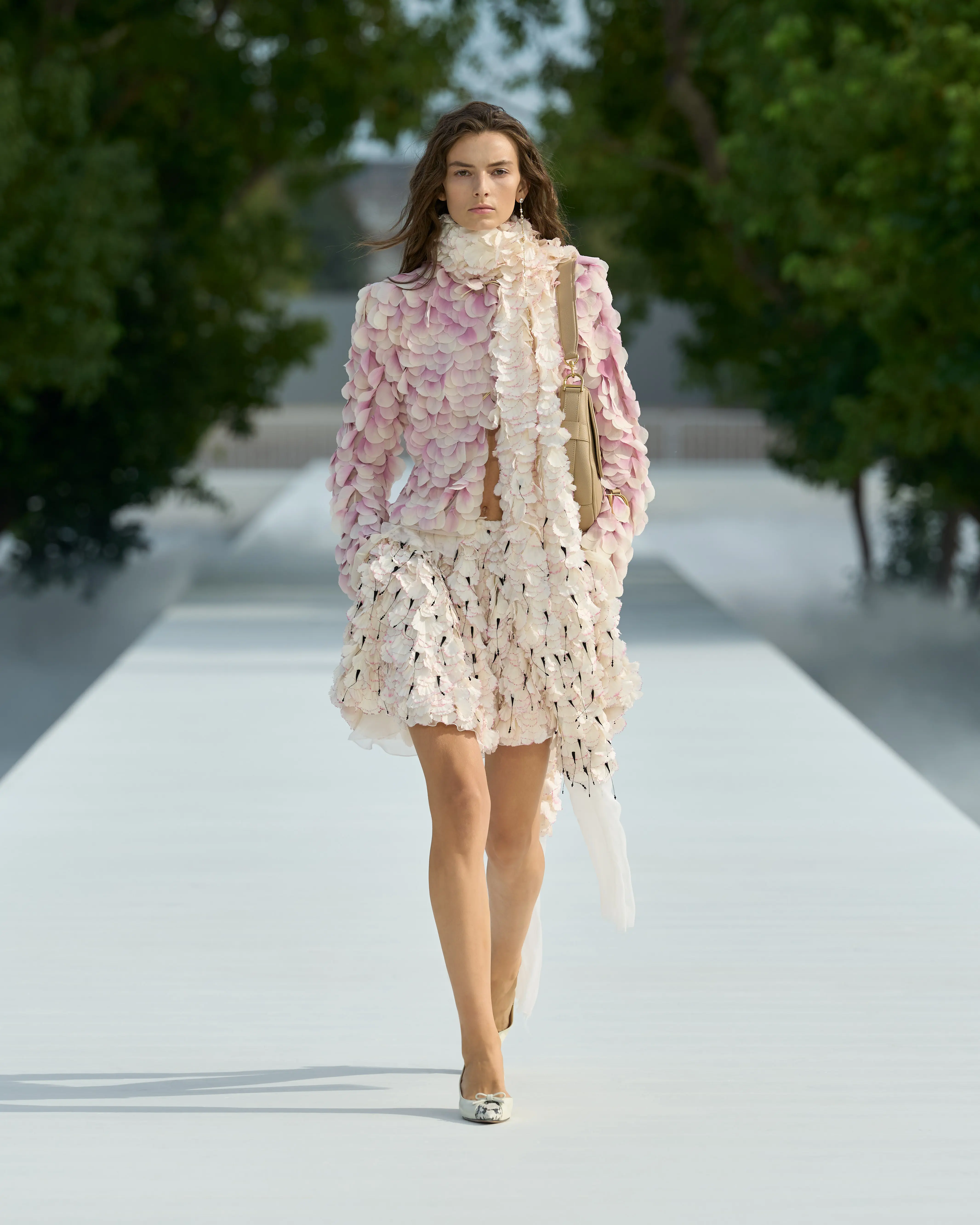
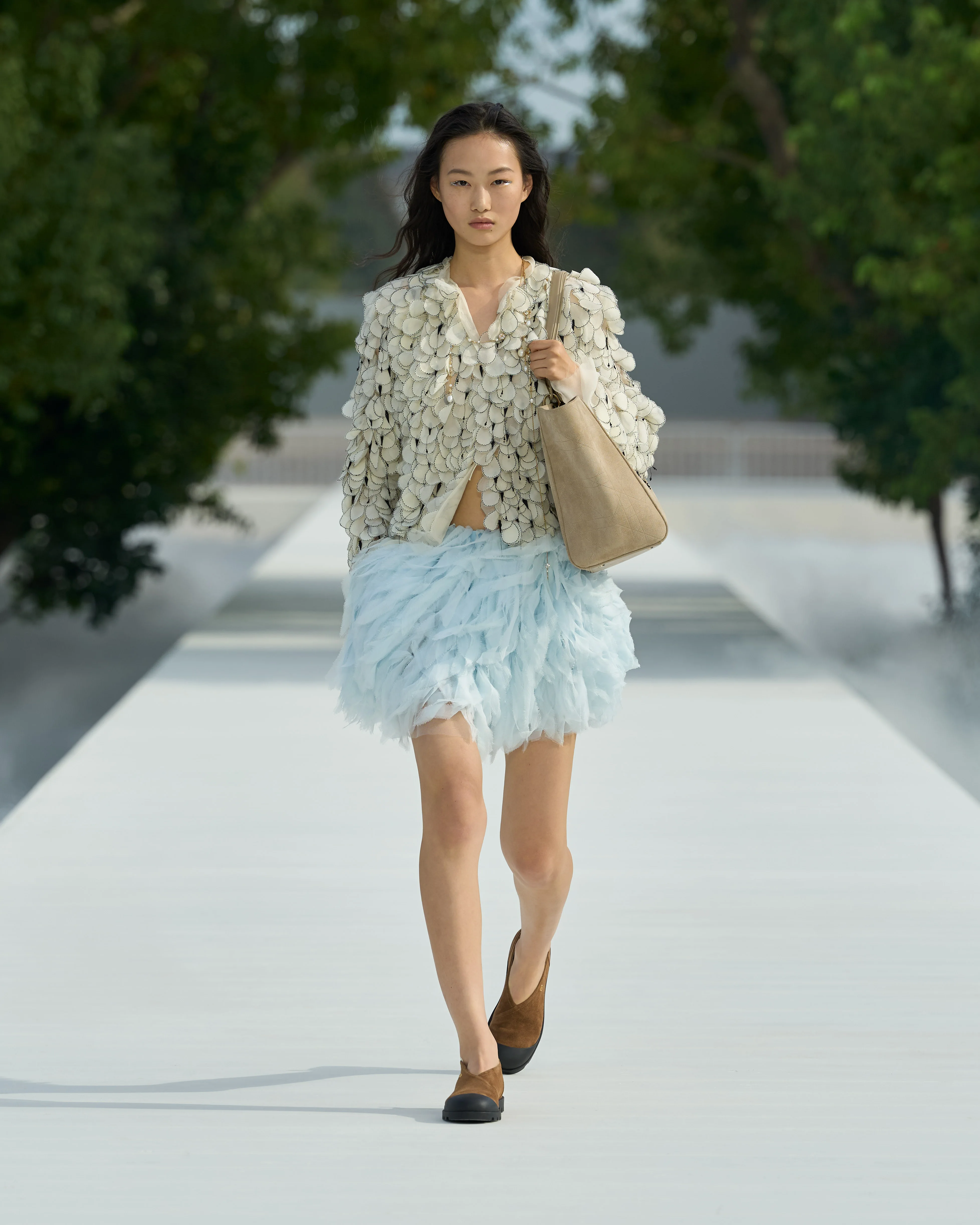
Dior, On Jonathan Anderson’s Terms
The collection also carried a personal dedication to the late Mathilde Favier, Dior’s longtime public relations executive, who passed away in August 2026. It was a fitting acknowledgment of someone whose career had been closely associated with the House, particularly at a moment when Anderson continues to establish his own relationship with its history.
What emerged from Spring/Summer 2027 was a clearer picture of how Anderson intends to inhabit Dior without abandoning the instincts that made his work at Loewe so distinctive. The collection suggested that he no longer needs to demonstrate the full extent of his technical imagination with every look.
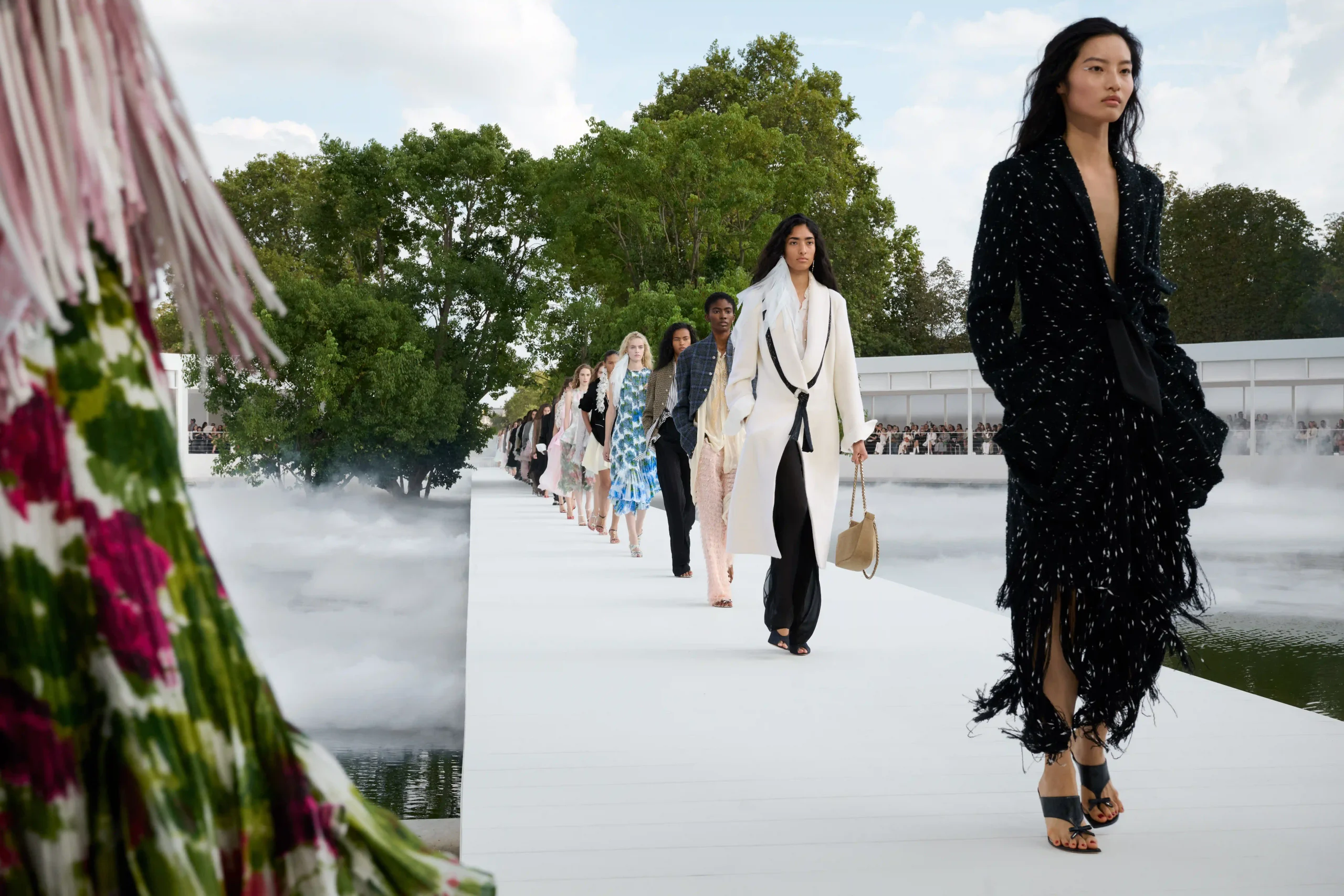
Banner image photography by Adrien Dirand, all photos courtesy of Dior
Frequently Asked Questions
Jonathan Anderson explored lightness, visual illusion, volume, nature, and Dior’s formal vocabulary while moving away from the visual density associated with his Loewe work.
The collection featured lightweight blazers, trompe l’oeil tweeds, plaid and tartan patterns, pleated dresses, sheer outerwear, fringed details, florals, and sculptural silhouettes.
The collection used a relatively muted palette with petal pink, blush, white, black, robin’s egg blue, delicate yellow, and unexpected metallic gold and silver.
Lightweight silk, trompe l’oeil tweeds, pleating, sheer fabrics, fringes, and padded hip details played a major role in the collection.
The collection was dedicated to Mathilde Favier, Dior’s longtime public relations executive, who passed away in August 2026.