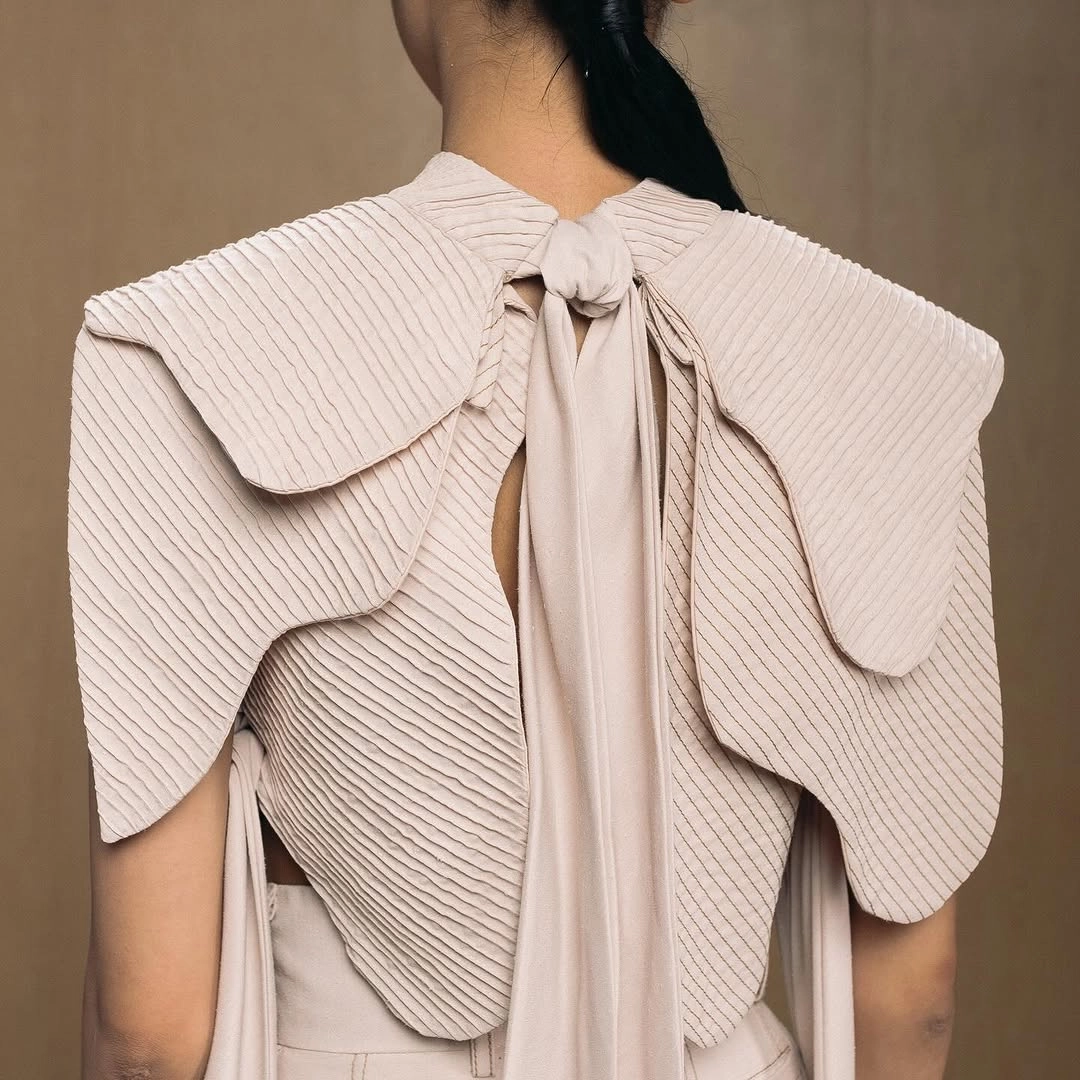
Pleats have undergone a significant evolution, though they’ve always signaled flexible and functional design.
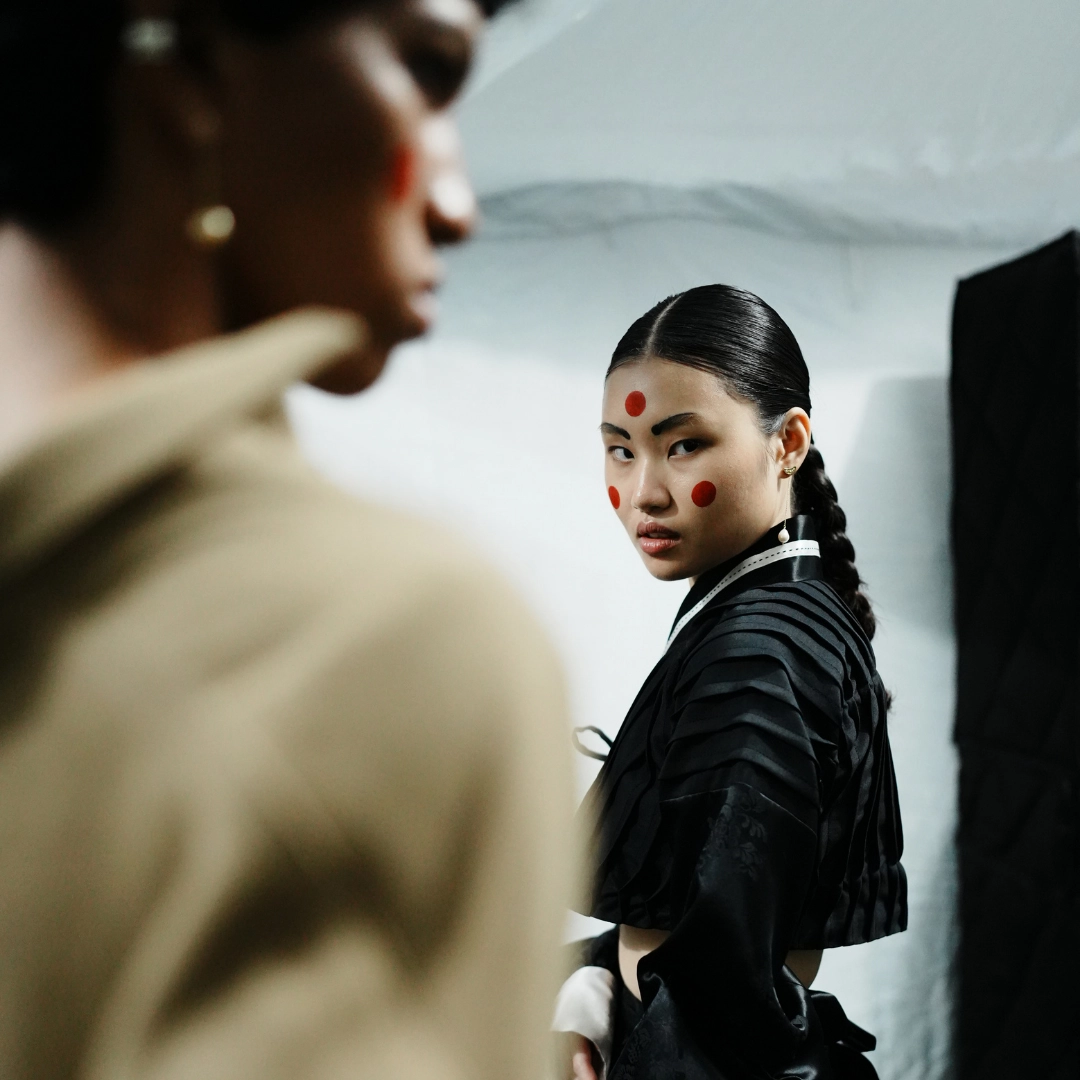
A little controlled, a little nostalgic. Pleats embody 90s fashion’s proclivity toward avant-garde minimalism. They evoke school uniforms, tailoring traditions, and antique portraits where nothing moves unless it’s meant to. For most of fashion history, the latter impression has been partly true. Pleats have long carried associations with discipline, and they’ve often been used in garments that require structure, from uniforms to formalwear. They hold shape, and historically, that shape has usually been maintained through careful upkeep. What has changed is not the presence of pleats in everyday clothing, but the range of what they can do and how they can behave.
READ ALSO: We Need To Talk About Vegan Leather In Fashion
A Shift In Culture
That shift begins with a rethinking of construction rather than invention. Pleats have existed for centuries in both tailored and utilitarian clothing. They appear in uniforms, skirts, and work garments well before modern fashion discourse, valued for their ability to create volume, support ease of movement, and manage fabric efficiently. What changed over time is less their existence than their technical evolution and conceptual framing.
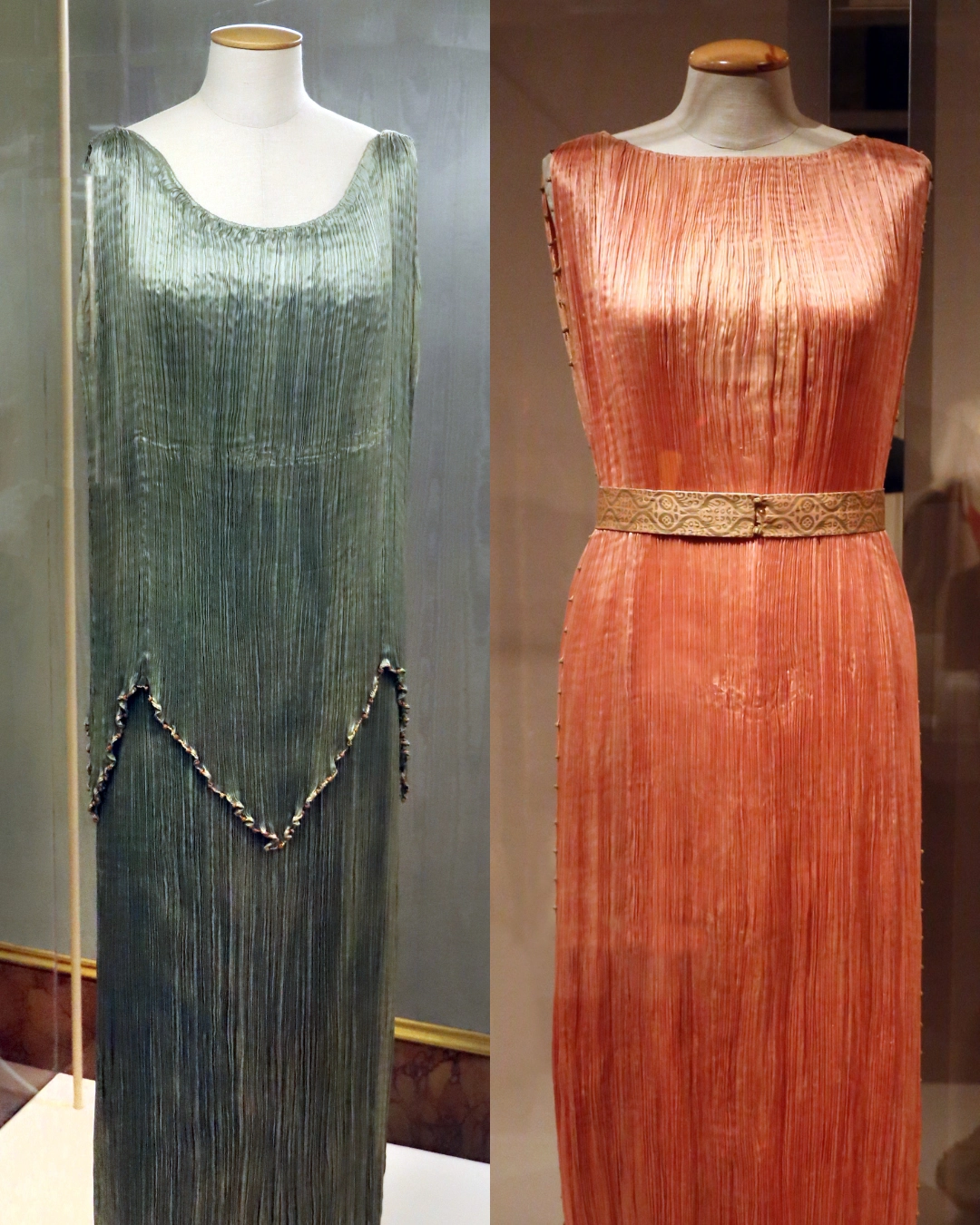
Early experiments, like those of 20th century Spanish designer Mariano Fortuny, explored pleating as a way to create fluidity and permanence in fabric, producing garments that moved with the body while retaining sculptural form. These ideas remained specialized and often dependent on artisanalArtisanalMade in small batches by skilled hands using traditional or carefully honed methods, rather than mass production. In luxury, artisanal products, from handwoven textiles to craft chocolate, carry a storyGo to Artisanal Glossary processes, rather than scalable production.
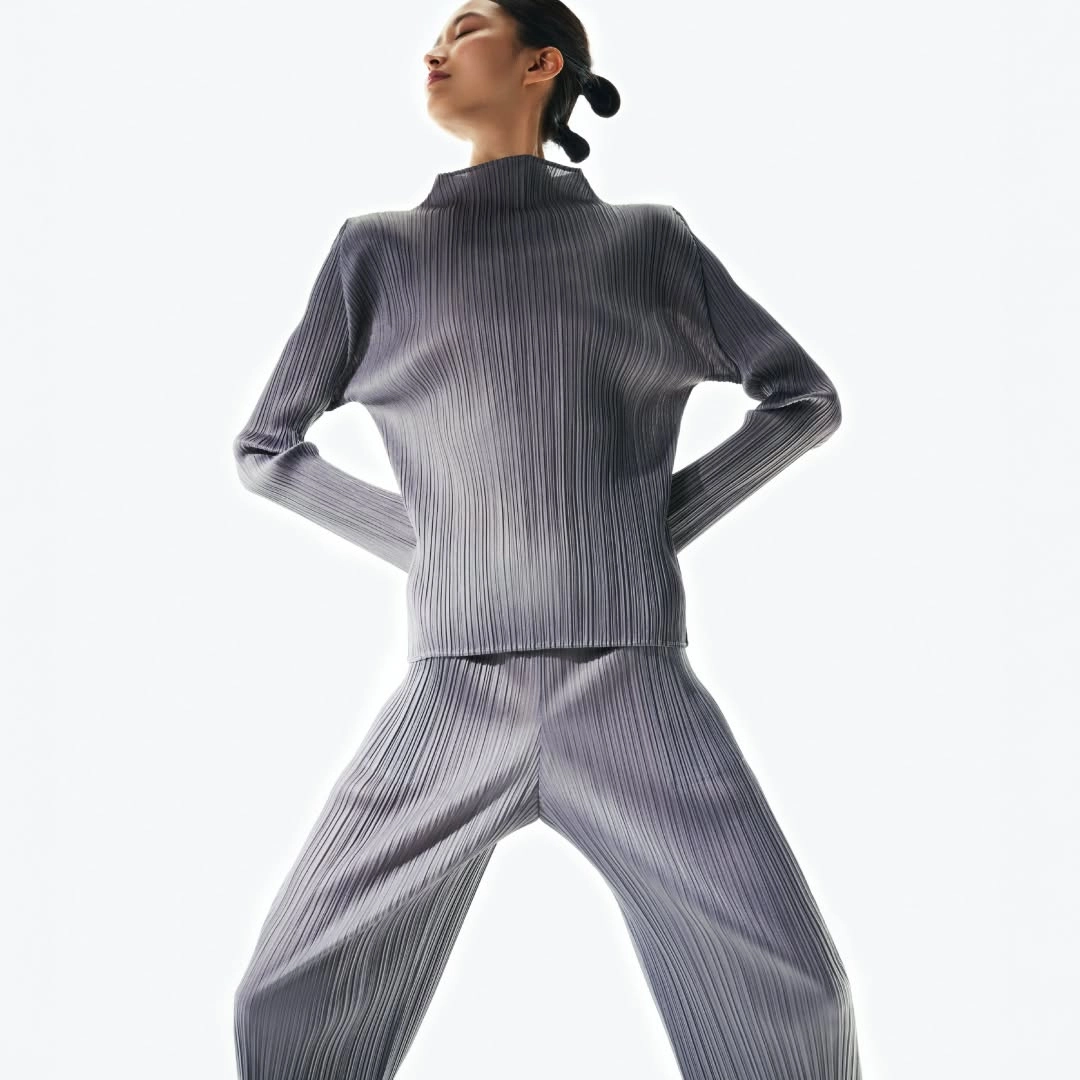
It was later, with Issey Miyake, that pleating was radically re-engineered. His Pleats Please line, introduced in 1993, developed a heat-set system in which garments were constructed oversized, then carefully folded and ironed. This innovation made pleats highly resilient, allowing them to recover from travel and repeated washing without losing structure. The significance was not that pleats became wearable, but that they became self-maintaining at scale.
From there, pleats continued their long-standing role across everyday dressing. They appear in uniforms, workwear, occasionwear, and travel-ready clothing, where they serve different functions depending on context. There are pleats for structure, pleats for movement, and pleats for shaping volume without added weight. Their value lies in this adaptability across use cases, instead of any single historical turning point.
In The Philippine Context
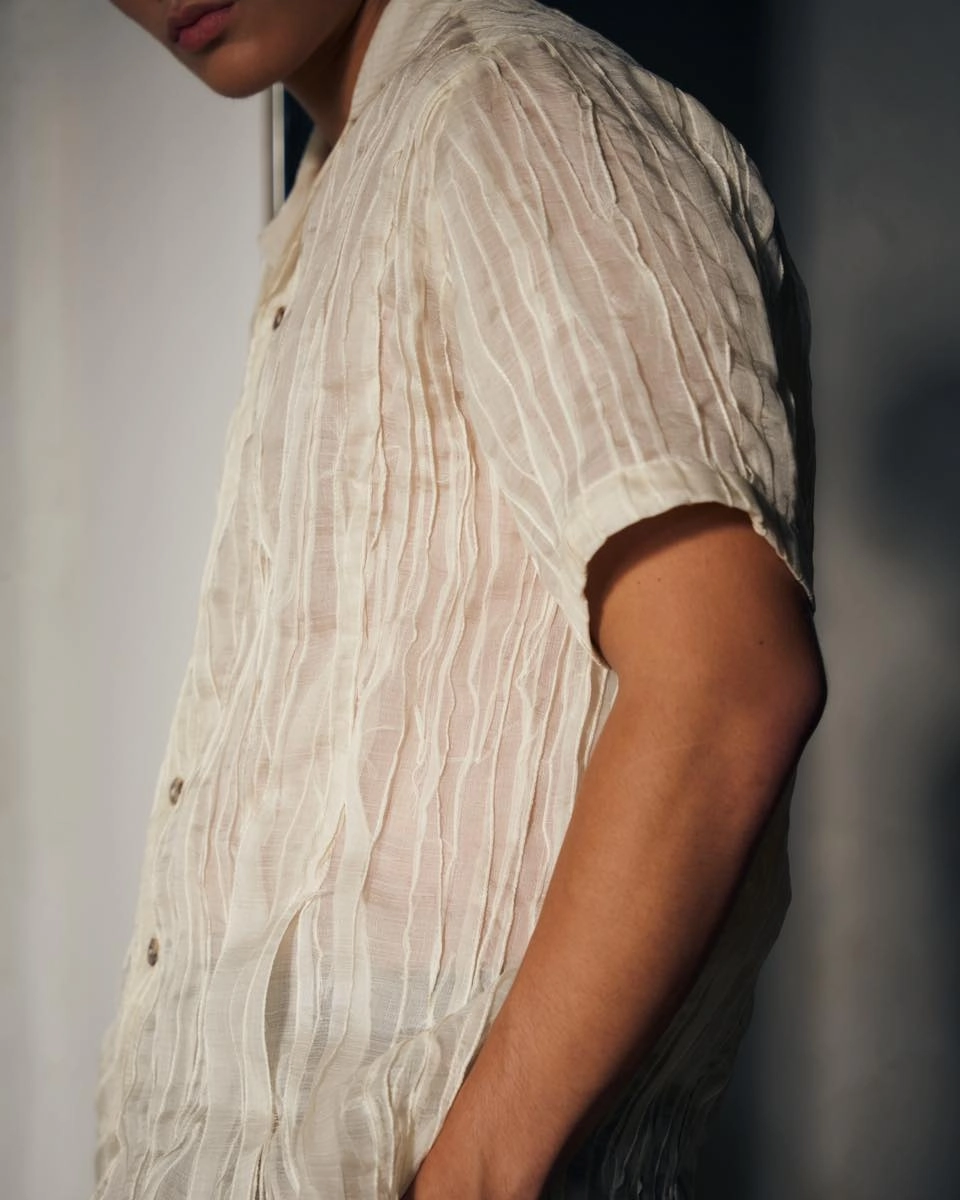
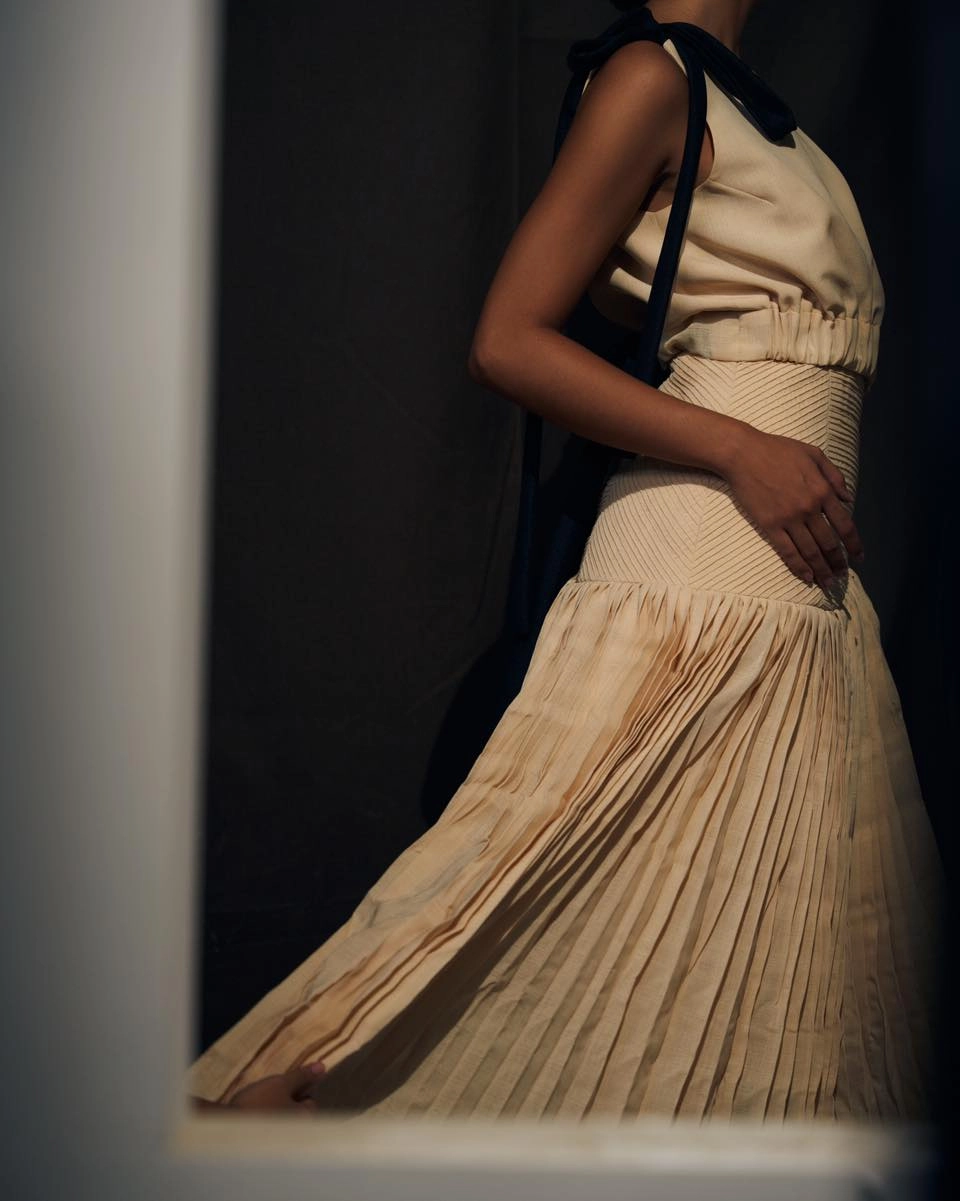
In the Philippines, pleats continue this broader lineage while adapting to local materials and conditions. Viña Romero incorporates pleating into garments using fibers such as jusi. In this context, pleating responds to climate, fabric behavior, and everyday movement. What remains consistent is function, as pleats continue to adapt and organize fabric in a way that allows structure and space to coexist.
Frequently Asked Questions
Pleats are folds of fabric that are pressed, stitched, or heat-set into place to control volume, shape, and movement in a garment. They allow fabric to expand and contract while maintaining structure.
Yes. Pleats have been used for centuries in garments across different cultures, including uniforms, tailoring, and formal dress. They have long been valued for their ability to add structure and ease of movement.
Pleats create order and structure in garments, which made them useful in uniforms, schoolwear, and tailored clothing. Their controlled folds help maintain a neat appearance while allowing functional movement.
Modern fashion expanded the technical possibilities of pleats. Innovations in materials and construction allowed pleats to become more durable, low-maintenance, and adaptable to everyday wear.
Issey Miyake developed a heat-set pleating technique in his Pleats Please line that allowed garments to retain permanent folds. This made pleated clothing more durable, flexible, and easy to care for.