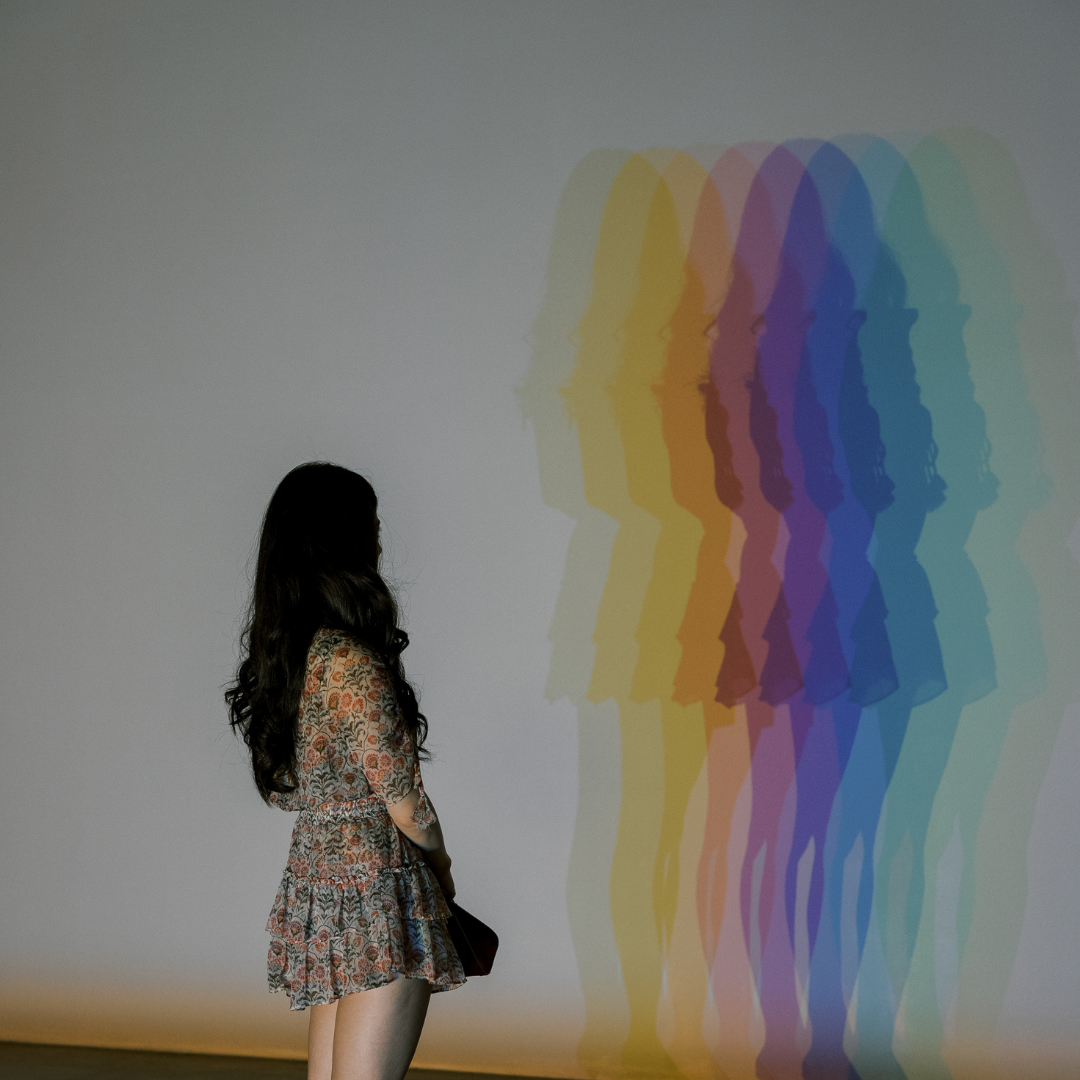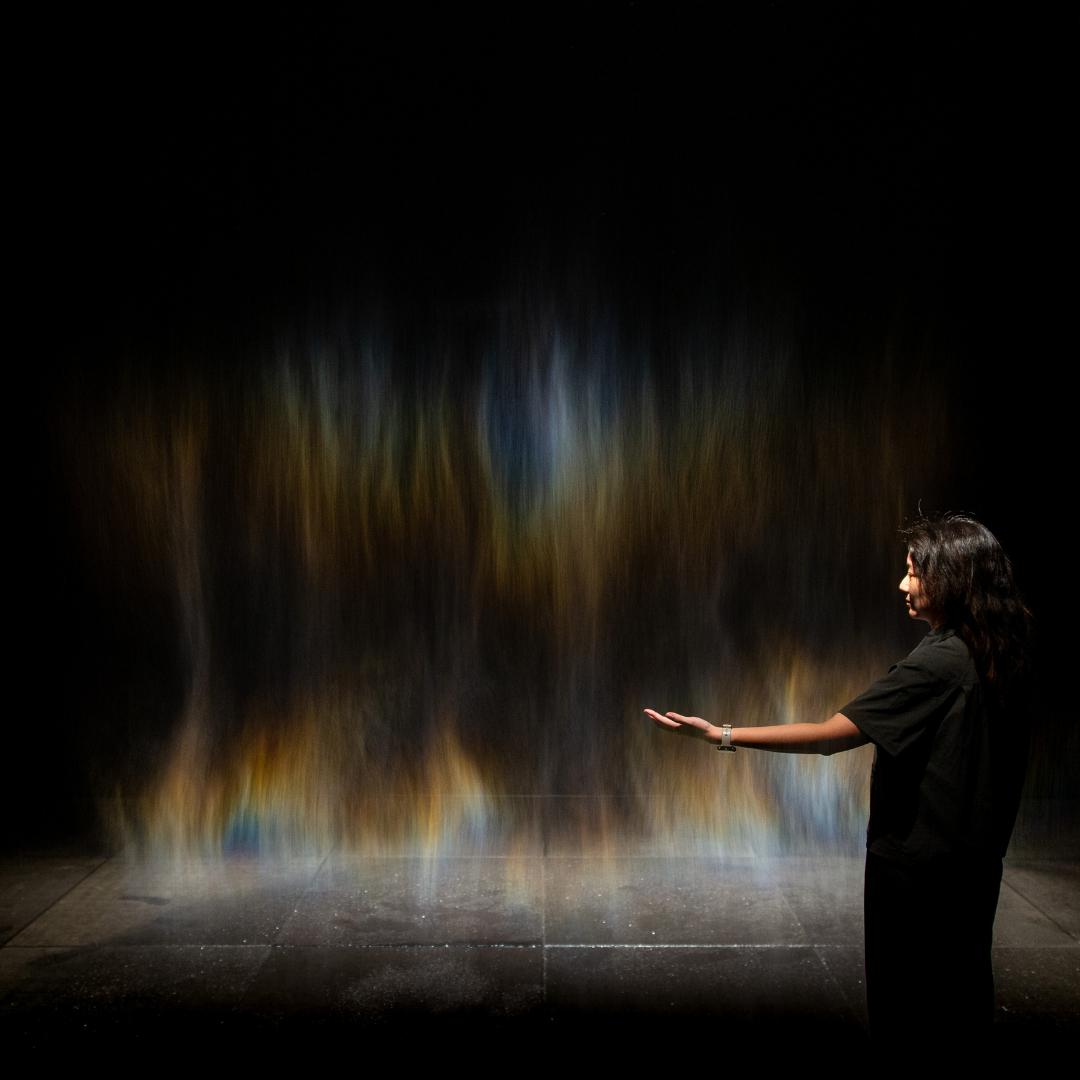
The grant initiative enters its second year with a new cohort of emerging creatives selected for compelling proposals under the theme “Extension of Nature.”
It’s a truth universally acknowledged that a country cannot have a flourishing creative scene without the proper platforms to support its young, emerging voices. Such is the foundation of initiatives like De La Salle-College of St. Benilde’s “Benilde Open Design + Art”: a grant that aims to guide Filipino creatives in developing, producing, and presenting untried and experimental projects at the intersection of art, design, technology, and sustainability. Now on its second edition, the initiative welcomes a new batch of grantees, encouraging them to move daring concepts from proposal to public presentation.
READ ALSO: There Are Only Artists: The Talents Behind The 13 Artists Award 2024
The Benilde Open: 10 New Visions, One Grant
As its name suggests, the Benilde Open Design + Art encompasses multiple disciplines, including visual art, architecture, design, and filmmaking. Grantees will be receiving production funding of up to ₱300,000 per selected project, on top of curatorial guidance and an exhibition platform for developed works. Of the hundreds of proposals received from both local and international submissions, only a small group was selected for the opportunity. The resulting works touch practices like video, installation, textile, industrial design, and jewelry making, yet refuse to be neatly defined into a single category, showcasing how contemporary practice can move fluidly between contrasting states of being, from handmade to high tech, poetic to practical.
The 10 Benilde Open grantees for its 2025 edition are: Andi Osmeña; Bianca Carague; Karl Castro; Kiri Dalena and Ben Brix; Krishner Appay; Mac Andre Arboleda; Mikael Joaquin; Nicole Racal; Niño Tayao; and Studio Unosinotra.
Running simultaneously with Benilde Open is the Best of Benilde: a category for Benilde student-led projects, which also provides funding and full curatorial assistance. This edition’s Best of Benilde grantees are Patty Malijan and multimedia artist team Tiyera, who’ll each receive a ₱50,000 grant.
Finalists for the second edition were reviewed by an international panel of judges composed of Jihoi Lee (CuratorCuratorA specialist who selects, researches, and interprets works for museums, galleries, and exhibitions, shaping the story that visitors experience. Curators also care for collections, and their vision determines how artGo to Curator Glossary of MMCA Korea and Founder of Watch & Chill); Mireia Luzárraga (Co-founder of TAKK Architecture and Assistant Professor at Columbia Graduate School of Architecture, Planning, and Preservation); Nathalie Huni (Managing Director and Head of Design at Wells Fargo); Timothy Moore (Curator of Contemporary Design and Architecture at Melbourne Design Week; Founder of Sibling Architecture; and Senior Lecturer at Monash University); and Freddy Anzures (a Filipino-American designer from the original iPhone team and holder of numerous iPhone- related patents).
Both Benilde Open Design + Art and Best of Benilde are convened in synergy with De La Salle University by Ayi Magpayo, Rita Nazareno, Gabby Lichauco, Joselina Cruz, and Dindin Araneta; with the support of Br. Dodo Fernandez FSC, President of De La Salle-College of St. Benilde.
Benilde Open Design + Art 2025 Presents “Extension Of Nature”
All finalists are working under the theme of the 2025 Benilde Open Design + Art, “Extension of Nature,” which poses a challenge for the burgeoning talents: how does one imagine a future where art and technology can work in harmony with the environment, rather than against it. In today’s world, it’s a particularly tricky prompt to navigate, as these forces seem to frequently oppose and silence each other.
“Extension of Nature” was born from the evolving history of kinetic and responsive art, referencing a lineage of works that move, respond, adapt, and interact (whether that be through sensors, reclaimed systems, material hybridity, or forces of nature like light and wind). It’s this instinctive dynamism that gives way to the possibility of collaborating with nature, rather than conquering it. How can one build machines that carry meaning; invent ecosystems that meld with existing structures; and craft material narratives that change our perceptions of interdependence, energy, and motion?
In this sense, the Benilde Open initiative transcends its status as a grant, becoming a call for experimentation that blurs the boundaries between organic and engineered, functional and expressive, real and speculative. The theme’s central aim follows its entire initiative: to build a platform that nurtures collaboration, invention, and bold thinking, supporting creatives whose work challenges conventions and resists the status quo.
Meet The Projects And Artists Of Benilde Open Design + Art 2025
Curious? Here’s a brief overview of this year’s chosen projects, their artists working with the aforementioned theme.
Waste of Space by Andi Osmeña
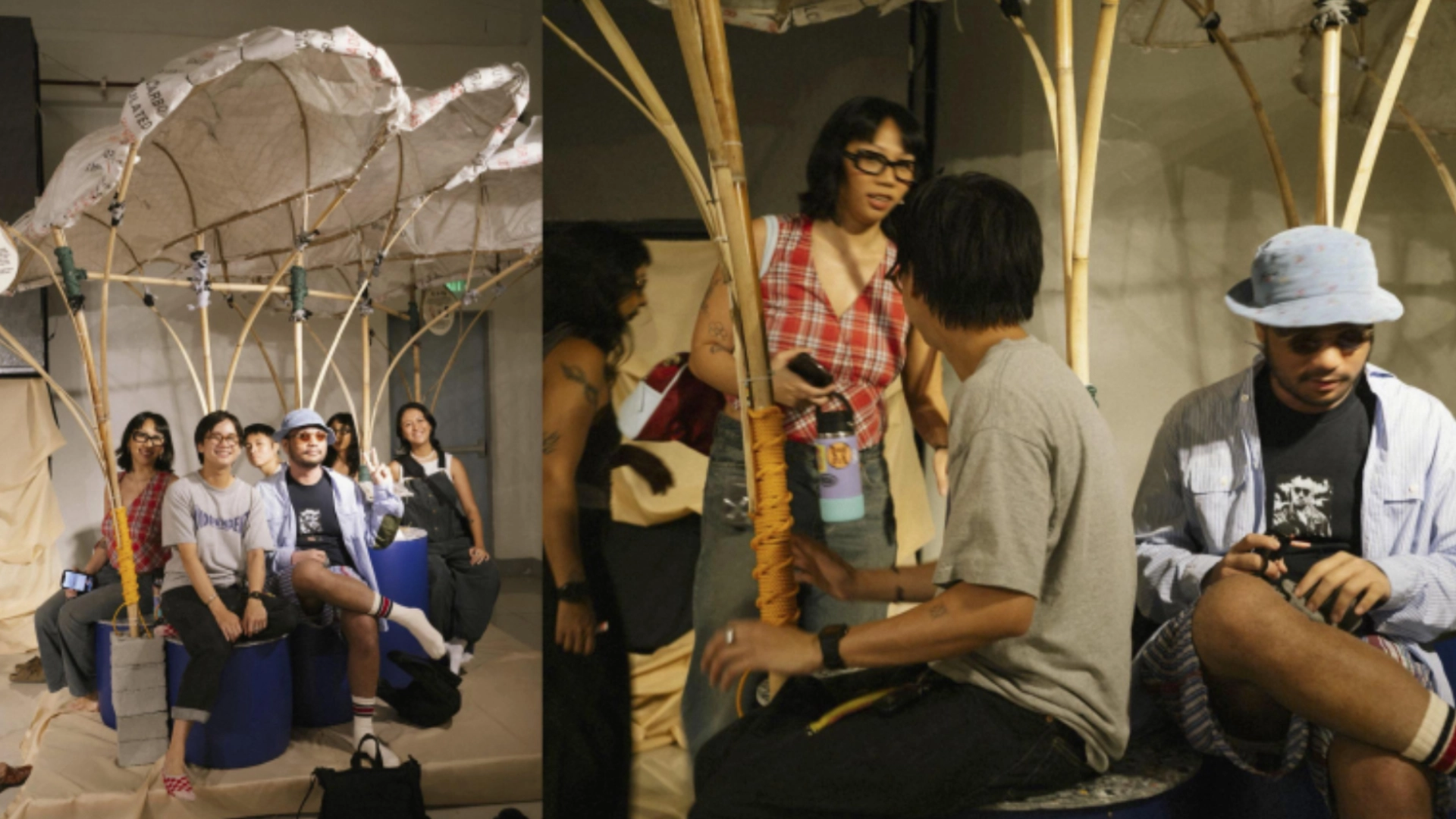
Andi Osmeña’s Waste of Space is an ongoing placemaking initiative that seeks to enrich public spaces in the Philippines through workshops, upcycled installations, and cultural programming. Rooted in a grassroots approach, it aims to foster more intimate community experiences while encouraging makers, designers, and community leaders to rethink placemaking models that often prioritize permanence, rigidity, and the pursuit of “shiny and new.”
Technospoonism by Bianca Carague
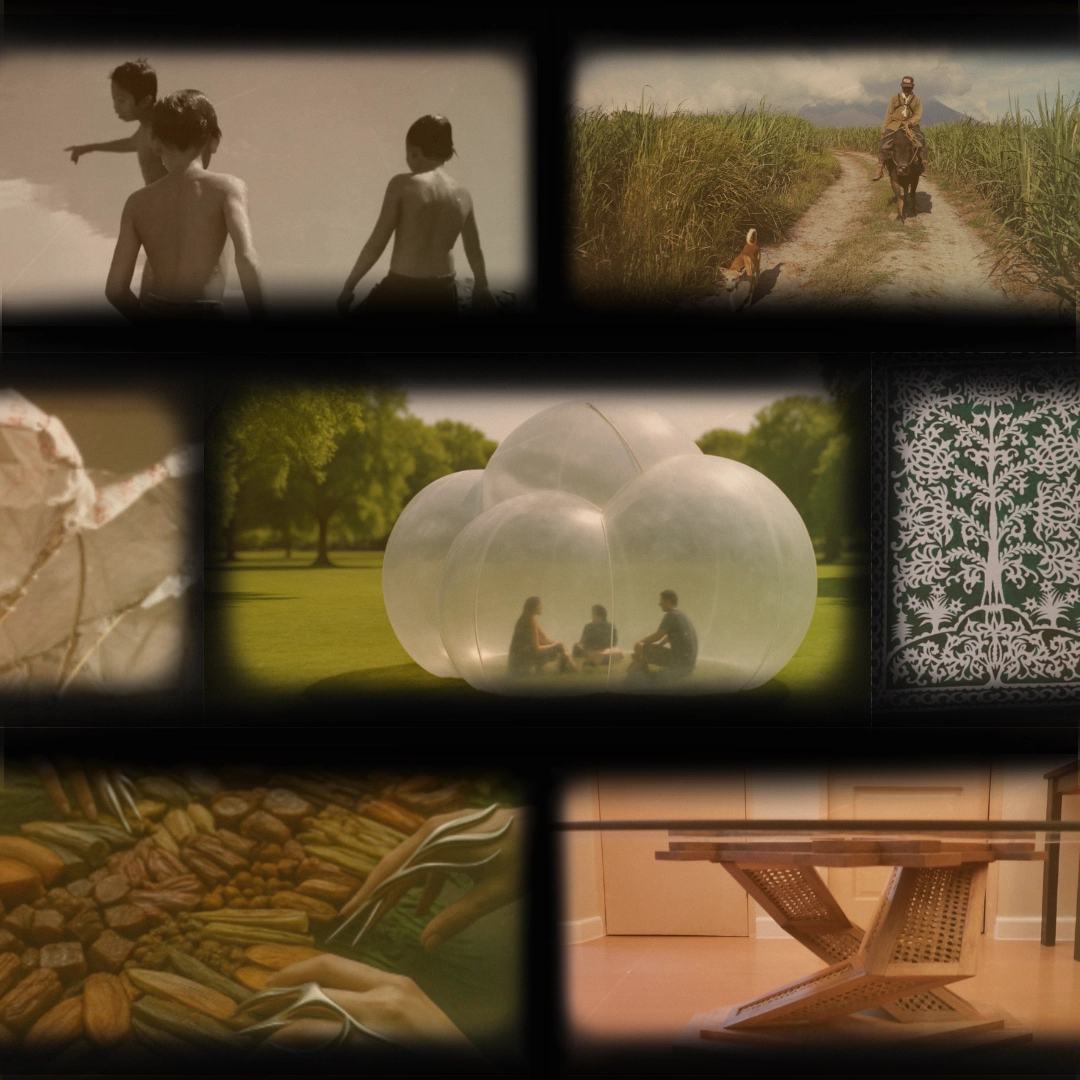
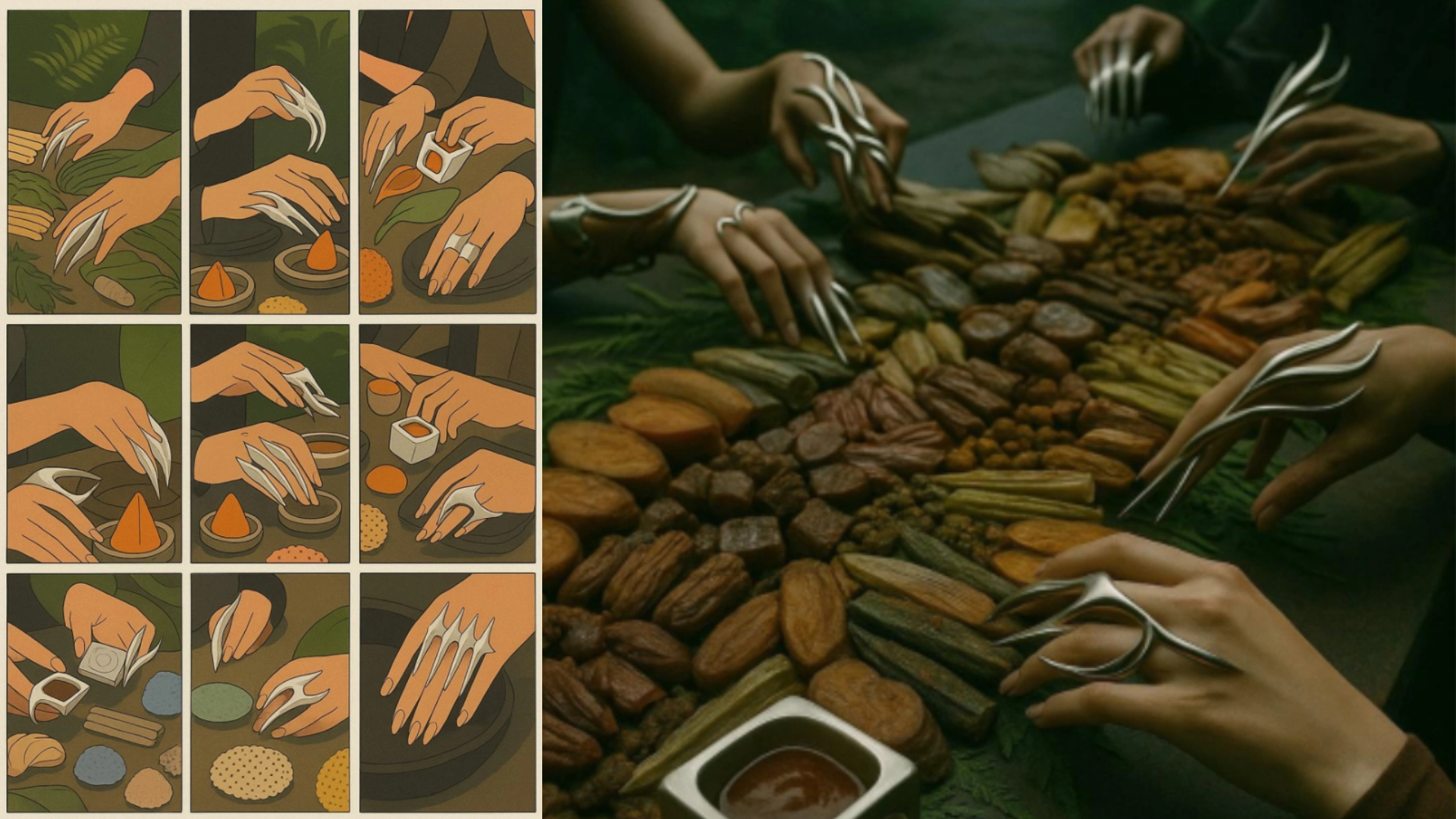
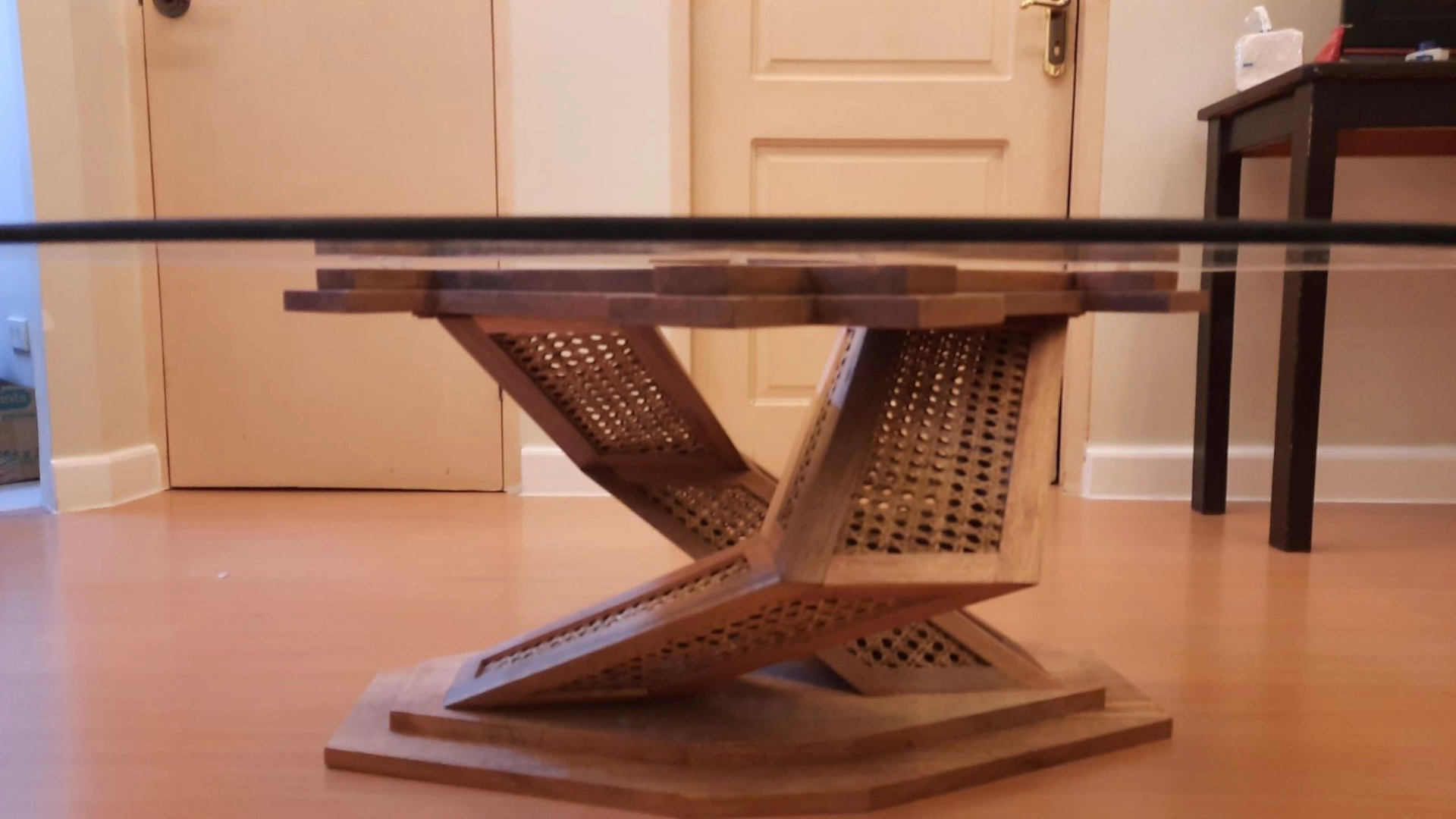
Bianca Carague’s Technospoonism imagines a speculative collection of jewelry-cutlery that doubles as tableware: cuffs as plates, rings as forks, pendants as vessels. Inspired by the Filipino communal dining tradition of kamayan, the work envisions how rituals of eating might evolve in a technologically mediated, climate-altered future. Through these wearable tools, Carague explores how cultural traditions can endure not by resisting change, but by adapting gestures, rituals, and tools to new realities.
Locus Pocus by Karl Castro
Karl Castro’s ongoing installation series Locus Pocus reframes public space as a living, kinetic system activated by human presence, ecological memory, and collective practice. Through temporary, site-specific structures, the project transforms overlooked spaces into gathering points for rest, contemplation, and shared rituals. For the installation’s new Benilde Open iteration, Maytubig, Castro draws from the labor and aesthetics of fishing culture, working with fishermen from Talim Island. Its canopy takes cues from traditional fishing tools such as the salambao lift net and sakag push net, its suspended form recalling a net mid-catch—holding not fish, but shelter, history, and human presence.
“Common Ground” (working title) by Kiri Dalena and Ben Brix
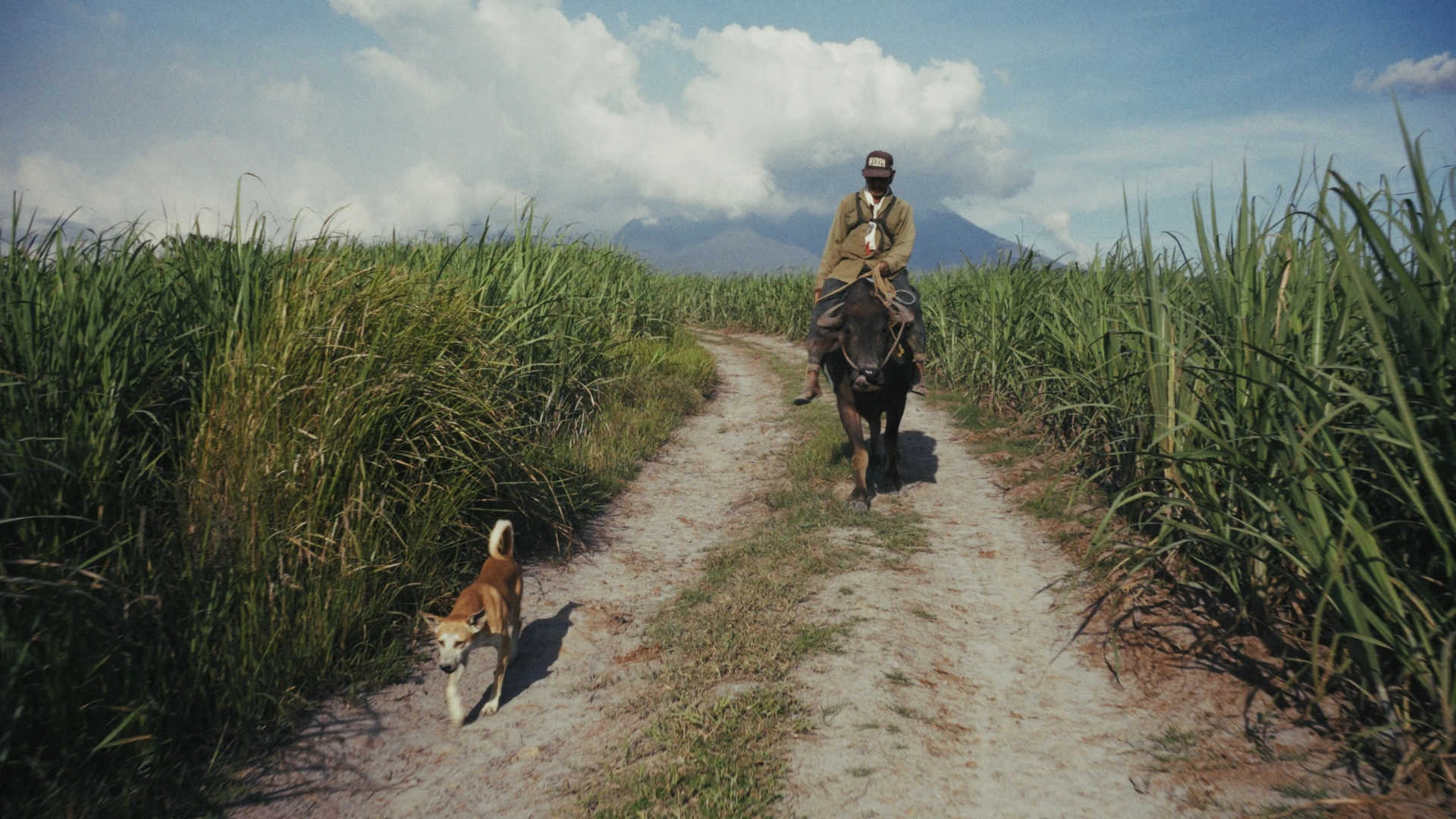
Kiri Dalena and Ben Brix’s “Common Ground” (its title yet to be finalized) is a multichannel video installation set in Negros, where everyday life unfolds amid the overlapping forces of agricultural economies, land relations, and the persistent threat of volcanic and climate activity. Combining handheld camerawork, drone footage, and visualizations derived from seismic monitoring, the work weaves together human and nonhuman perspectives within a shared landscape.
Rooted in Philippine history, the project shows how patterns of land ownership established during Spanish and American colonial rule continue to shape rural life today. In Negros (a center of the country’s sugar industry) plantation-era structures persist alongside communities tied to generations of labor and tenancy. Through these intersecting stories, “Common Ground” reveals how land, power, labor, and precarity remain entangled within the island’s shifting ecological and historical terrain.
Reviving the Luhul Giyunting (Tree of Life) applique textiles tradition of the Tausug, by Krishner Bayani Appay
Krishner Bayani Appay’s project centers on the preservation and revival of the Luhul Giyunting (Tree of Life) appliqué textile tradition of the Tausug in the Sulu Archipelago: a cultural practice now at risk of fading from the next generation.
Among Tausug communities, particularly on Jolo Island, artistic knowledge is traditionally passed down through lived practice and close interaction with self-taught artisans rather than formal institutions. Central to this visual language is the birdo motif, a curvilinear foliate design associated with fertility, prosperity, and the idea of life itself. When arranged in full composition, it forms the Tree of Life, which symbolizes continuity, eternity, and paradise through rhythmic patterns of stylized leaves, vines, and tendrils.
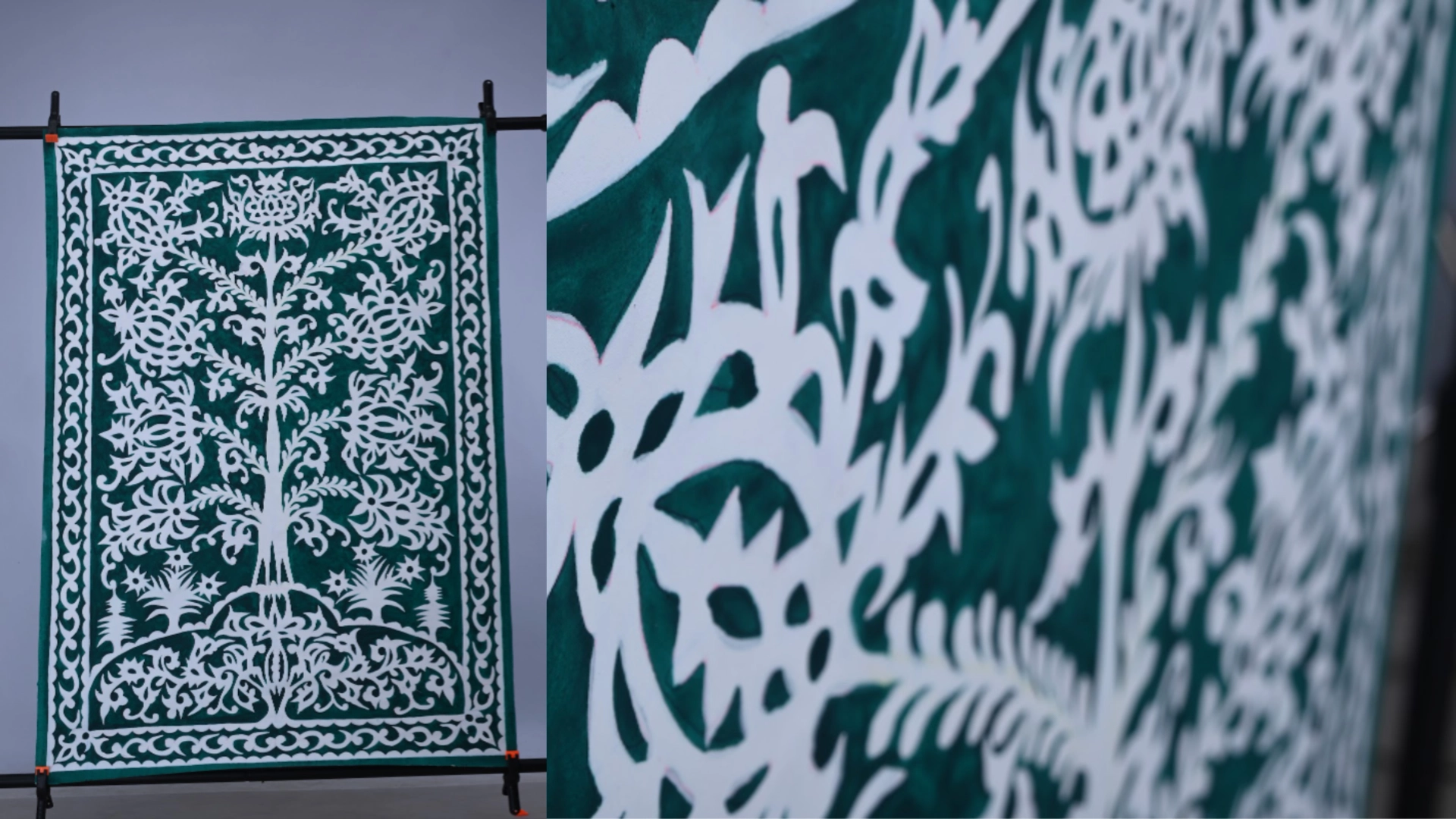
By bringing the craft into a contemporary exhibition platform, the initiative aims to showcase the depth of Tausug heritage while empowering local artisans to share their work with a wider audience.
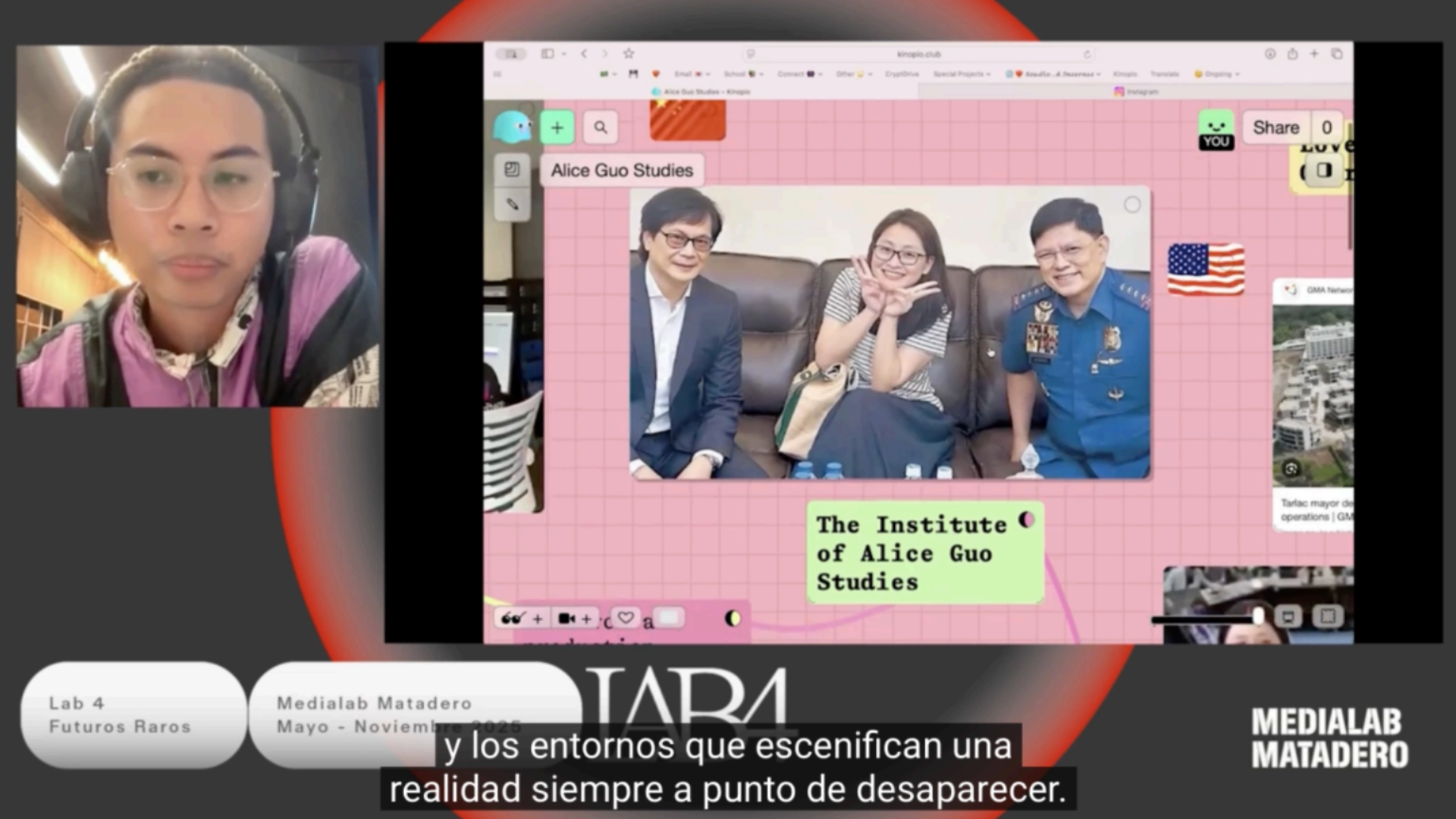
“Nutrition Month: Presented by Mayor Alice [SPONSORED POST]” by Mac Andre Arboleda
Mac Andre Arboleda’s “Nutrition Month: Presented by Mayor Alice [SPONSORED POST]” is a projection billboard and digital archive where audiences can view, read, and listen to its images, texts, and soundscapes. The project is initiated by the Institute of Alice Guo Studies, a research and production agency that examines pirate strategies, mediatic infrastructures, and governance networks shaping alternative forms of Philippine life. Operating across the Philippines, online spaces, and offshore environments, the institute uses Alice Guo as a conceptual medium through which to investigate the conditions that produce contemporary realities.
Through this lens, “Nutrition Month” explores the overlapping terrains of the affective and artificial, the illicit and imperial, and the political and precarious, revealing the tactics and environments that frame everyday life in the Philippines, which are often on the cusp of disappearing.
“The Memory of Flood” by Mikael Joaquin
Set in a speculative future Manila, Mikael Joaquin’s “The Memory of Flood” centers on a lone figure in a black suit and slack pants seated along the shoreline, facing the sea. Before him stands a simple structure: a sheet of thin cotton gauze stretched between two metal stands, serving as the projection surface. Moving images of Dolomite Beach along Roxas Boulevard are cast onto the gauze, situating the installation within one of Manila’s most recognizable coastal sites.
The gauze is intentionally unstable: lightweight and porous, it shifts with the coastal wind, subtly warping the projected image. The loose nylon stitching and constant adjustments required to keep it in place become part of the work’s process, making the image never entirely fixed but in constant negotiation with the environment. Beside the seated figure lies a sack of dolomite sand, which he eventually pours into the sea, reversing the controversial transport of crushed dolomite from Cebu to Manila Bay.
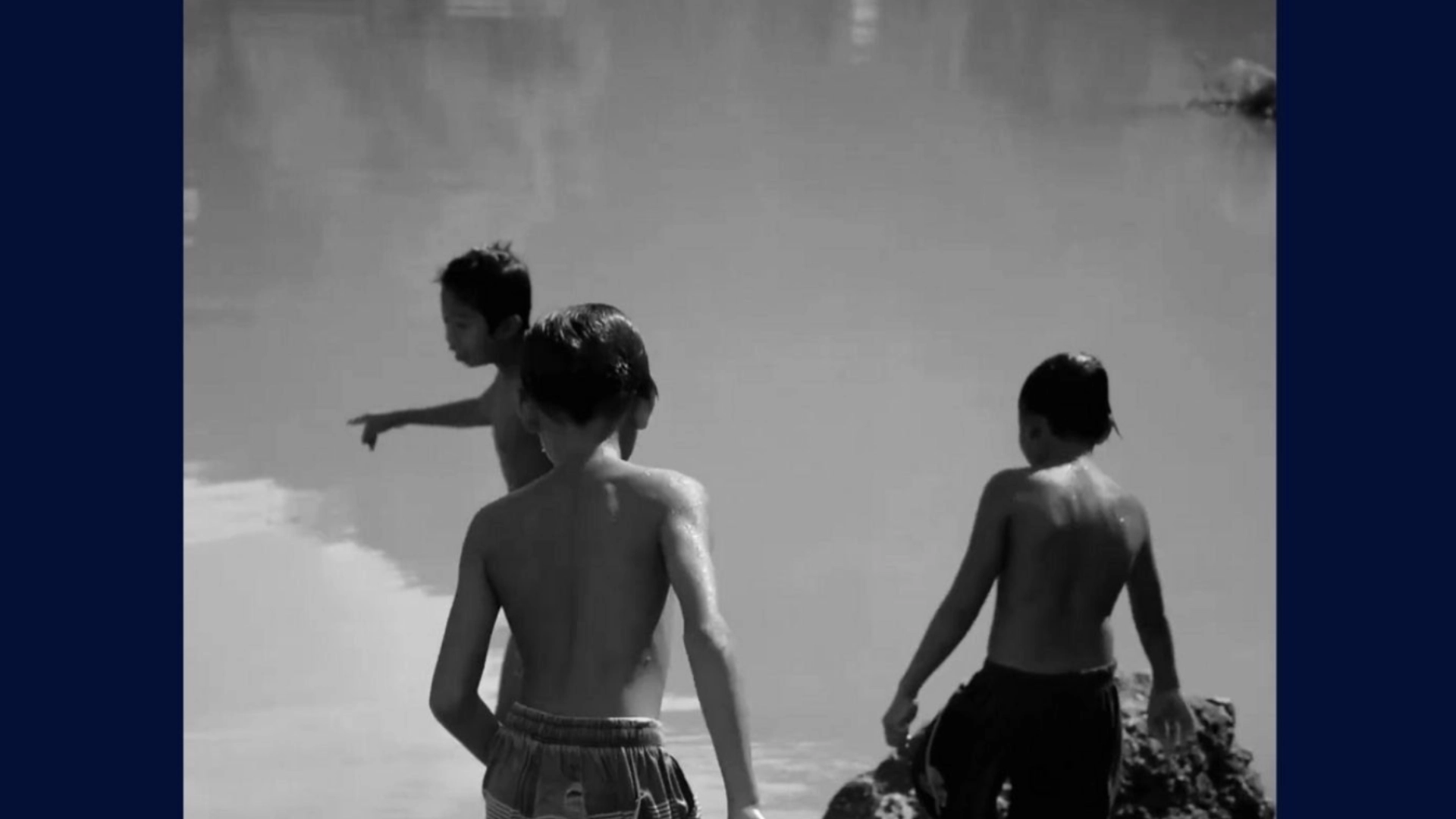
“Dati Rati” by Niño Tayao
Niño Tayao’s “Dati Rati” begins with a simple yet unsettling question: what becomes of the objects that once shaped our childhood worlds? Emerging from an adult encounter with “nostalgia-core,” the work uses memories of play not as sentimental escape, but as a lens to confront the climate crisis. By reframing nostalgia as a generative force, it explores how childhood toys can inspire ecological and social responsibility.
At the heart of the installation is a cabinet holding a rediscovered box of toys, the project’s conceptual seed. Surrounding it are fragments that evoke shared memories of play and imagination, while a reimagined toy made from rice husk, organic pigments, and natural binders suggests that the materials we need are already in the ground beneath us. Visitors are invited to engage from multiple perspectives: standing, squatting, or sitting that mirrors childhood postures and symbolically reconnecting with the earth, emphasizing that human experience remains rooted in the environments that sustain it.
WHAT IF SNOW FALLS IN THE PHILIPPINES? by Nicole Racal
“WHAT IF SNOW FALLS IN THE PHILIPPINES? imagines a chilling ecological anomaly: the sudden arrival of a lethal winter across the tropical Philippine archipelago. The presentation draws inspiration from the Japan Society Gallery’s Boro Textiles: Sustainable Aesthetics, incorporating traditional Boro and Sashiko stitching into garments crafted from repurposed textiles collected from households. Ten ensembles are suspended mid-air on industrial nylon filaments, allowing 360-degree rotation to reveal intricate construction. Below, multi-level platforms mimic piled snow, creating a stark, monochromatic landscape, while experimental soundscapes evoke the storm’s roar.
Through this narrative-driven exhibition, the artist explores the nation’s vulnerability to a climate it was never built for, capturing both the initial descent into hardship and the eventual metamorphosis of the Filipino spirit. At its core, the work celebrates fortitude and adaptation, showing how identity endures even when the environment becomes unrecognizable.
“Atlas of Water Futures” by Studio Unosinotra
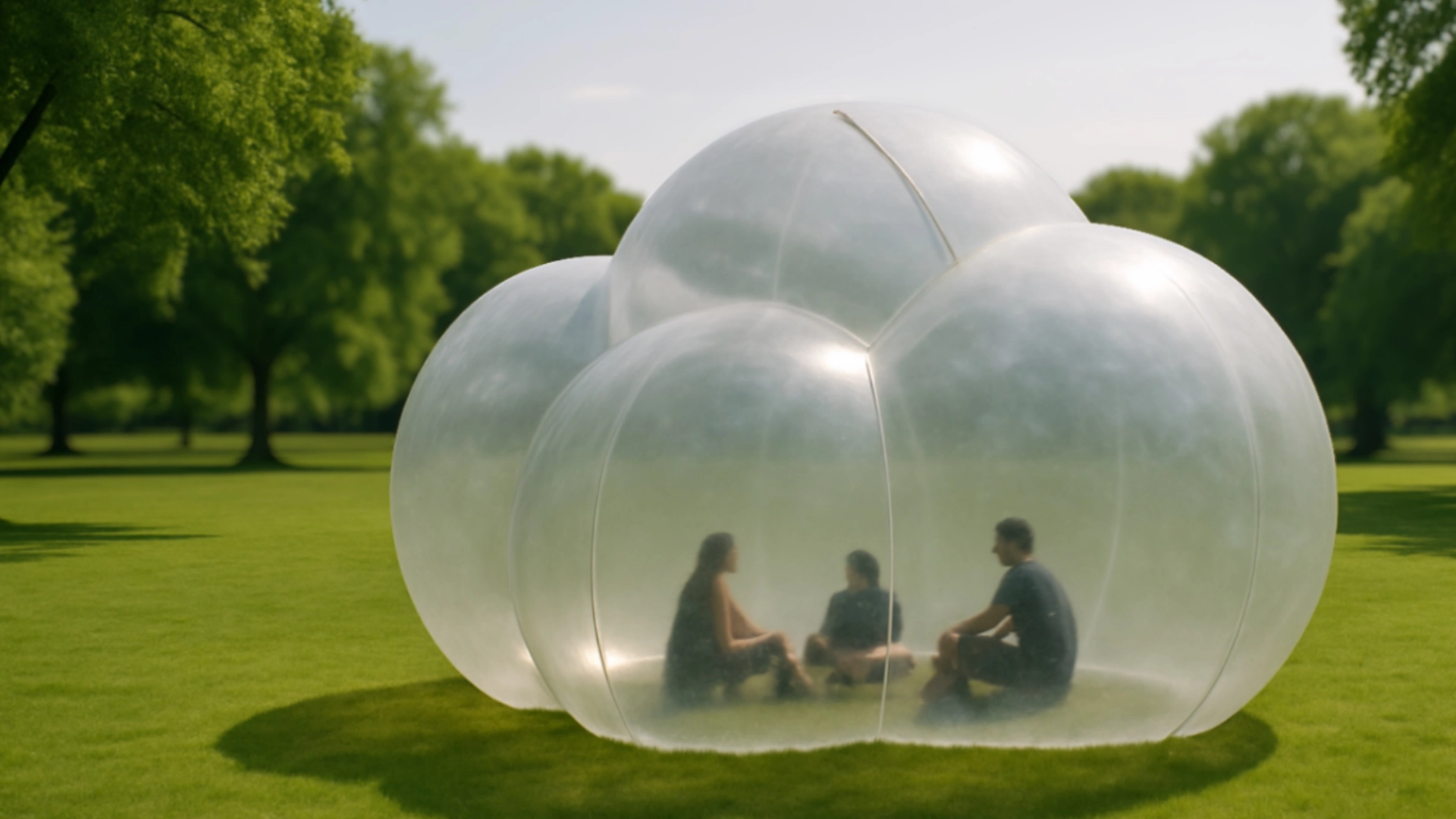
“Atlas of Water Futures” acts as a space for reflection on how coastal communities navigate chronic environmental change. In Cebu (a city marked by the memory of devastating typhoons like Yolanda, Tino, and Odette), the project offers a temporary, immersive “bubble” where people can engage in dialogue about their evolving relationship with water.
The project’s transparent form draws inspiration from children’s instinctive designs during a 2025 3D-printing workshop, where bubbles were proposed as protective structures for the future. By translating these impulses into a public installation, the work suspends rigid frameworks that often limit spatial imagination in the face of environmental disruption.
At the heart of the project is the participatory Atlas of Everyday Water, which maps the granular ways communities engage with water, from collection and storage to shared memories of shorelines. Rather than proposing immediate solutions, the project archives these lived experiences, bridging vernacular knowledge with speculative design.
The Benilde Open Design + Art 2025 exhibition opens on April 11 and will run until April 27, 2026 at several spaces in De La Salle College of Saint Benilde – School of Design + Arts (SDA) Campus. For more information and schedule of activities, you may visit www.benilde.edu.ph/benilde-open/ or social media @benildeopen.
Frequently Asked Questions
The Benilde Open Design + Art is an elite institutional grant program spearheaded by De La Salle-College of St. Benilde. The initiative provides up to ₱300,000 in production funding alongside professional curatorial mentorship for experimental, untried projects that operate at the fluid intersection of visual art, architecture, technology, industrial design, and ecological sustainability.
The physical exhibition of the developed works opens on April 11 and runs through April 27, 2026. The public showcase is hosted across multiple galleries within the De La Salle-College of St. Benilde – School of Design + Arts (SDA) Campus, located in Manila, Philippines.
The second edition cohort features ten boundary-pushing contemporary artists and collectives: Andi Osmeña (Waste of Space), Bianca Carague (Technospoonism), Karl Castro (Locus Pocus), Kiri Dalena and Ben Brix (Common Ground), Krishner Bayani Appay (Luhul Giyunting Preservation), Mac Andre Arboleda (Nutrition Month), Mikael Joaquin (The Memory of Flood), Nicole Racal (What If Snow Falls In The Philippines?), Niño Tayao (Dati Rati), and Studio Unosinotra (Atlas of Water Futures).
Proposals were selected by an esteemed international panel: Jihoi Lee (Curator, MMCA Korea); Mireia Luzárraga (Professor, Columbia GSAPP / Co-founder, TAKK Architecture); Nathalie Huni (Head of Design, Wells Fargo); Timothy Moore (Curator, Melbourne Design Week / Director, Sibling Architecture); and Freddy Anzures (Filipino-American designer from the original Apple iPhone interface development team).
The 2025 theme challenges artists to look at the history of kinetic, responsive, and data-driven art. Rather than viewing technology and the natural world as opposing forces, the artists utilize digital sensors, upcycled household textiles, bio-based binders like rice husks, and seismic data to create ecosystems that adapt alongside existing geographic realities.