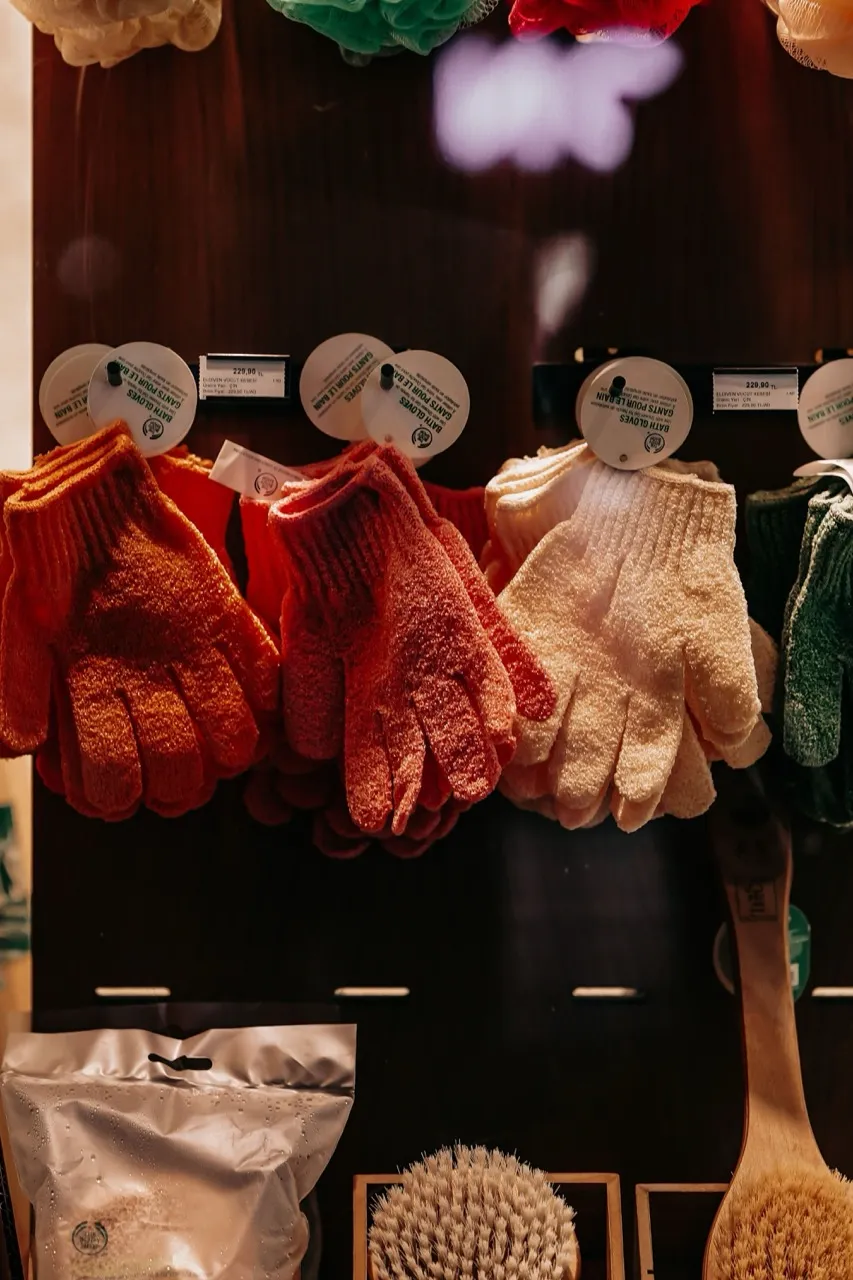
Your loofah has some competition. The exfoliating glove has been around for decades, but TikTok is giving it a fresh moment; here’s everything to know before you start scrubbing.
Showering is arguably one of the most basic routines we perform every day. Depending on your preference, it’s pretty straightforward: wet your body, shampoo, rinse, cleanse your face, lather up with body wash, scrub with a loofah, rinse again, and dry off. It’s a step-by-step process that’s simple, efficient, effective, and for the most part, steadfast: it hasn’t really changed much over the years. Rarely does the humble shower routine get an upgrade, but lo and behold, TikTok has found a way to shake up the experience. Enter the exfoliating glove, the latest viral beauty tool promising to leave your skin smoother than ever.
READ ALSO: Face Mists 101: What They Do And Which Ones To Try
What’s A Shower Exfoliating Glove?
Before it became the TikTok-approved bath time essential that’s currently making everyone’s showers a little more intense, the exfoliating glove had already been scrubbing bodies in South Korea for decades.
The version most people know today traces back to Busan in the 1960s, when a particularly coarse viscose rayon fabric imported from Italy found an unexpected purpose. The material was far too rough for a regular towel, but when used on skin softened by warm water, it proved incredibly effective at scrubbing away dead skin. And just like that, a failed towel fabric became an exfoliating tool. Koreans eventually came to call it the “Italy towel“—not because it came from an Italian bathhouse, but because the original fabric had been imported from Italy.
From there, the humble textured cloth became a familiar part of Korean bathing culture. You’ll find versions of it in homes and public bathhouses known as jjimjilbangs, where seshin, or full-body scrubbing, has long been part of the experience. After soaking in warm water, bathers—or professional scrubbers called sesinsa—use the rough mitt to work away the buildup on the skin. It sounds simple, and it is, but anyone who has ever seen those little rolls of dead skin come off knows the experience can be deeply satisfying.
The glove has since made its way far beyond Korean bathhouses, eventually landing in beauty stores, online carts, and, naturally, TikTok. Yet the concept remains pretty much the same: a rough piece of fabric, some warm water, and a surprisingly aggressive approach to exfoliation. Sometimes, all it takes to upgrade a shower routine is a glove that looks harmless until you actually put it on.
How To Use The Glove?
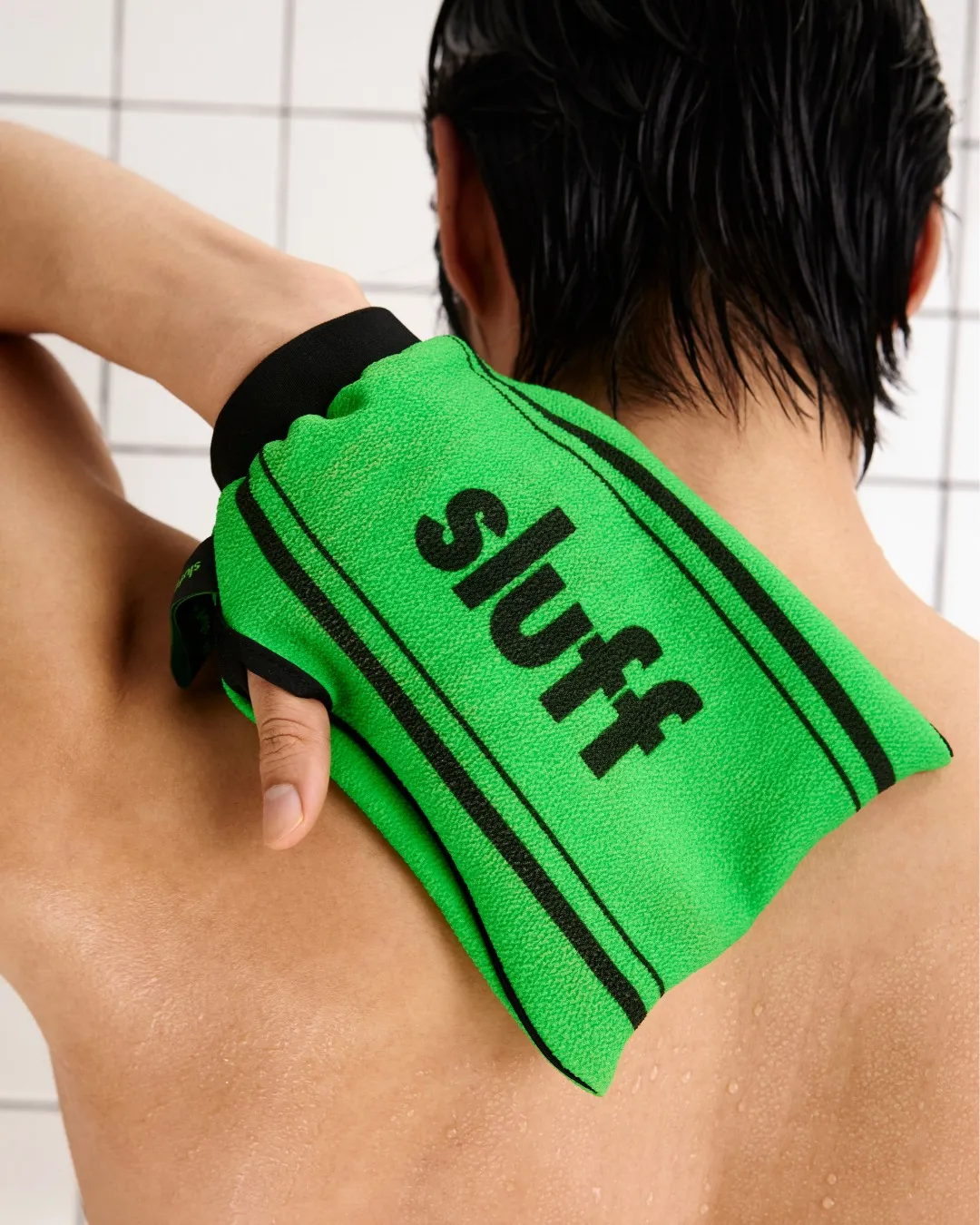
Now, before you put on your exfoliating glove and start scrubbing your body like you’re trying to remove an entire layer of skin, there’s a right way to do it. First things first: let the warm water do some of the work. Spend a few minutes under a warm shower—or soak in the bath if you’re feeling particularly indulgent—before reaching for the glove. Korean body-scrubbing traditions typically involve soaking before exfoliation, as softened skin is easier to scrub without going in with excessive force.
Once your skin has softened, dampen the glove and start working through your body using gentle, controlled strokes. Your arms, legs, elbows, knees, and other rougher areas are a good place to start. Resist the urge to go full force, though. The glove is already doing the heavy lifting, and dermatologists recommend gentle pressure when using mechanical exfoliants to avoid redness and irritation.
As satisfying as it may be to see little rolls of dead skin appear, this is also your reminder that more scrubbing doesn’t automatically mean better results. Keep the glove away from your face, open cuts, sunburn, and any areas that already feel irritated. If your skin is particularly sensitive or prone to irritation, mechanical exfoliation may be too aggressive for you altogether.
Once you’re done, rinse everything off and follow up with moisturizer. Exfoliation can leave your skin feeling smoother, but it can also leave it feeling dry when you go overboard. Most importantly: this isn’t an everyday assignment. The more intense your exfoliation method, the less frequently you should be doing it. In other words, save the full-body scrubbing session for when your skin actually needs it—your body doesn’t requiring buffing within an inch of its life every morning.
Banner photos courtesy of Sluff
Frequently Asked Questions
An exfoliating glove is a textured bath mitt designed to scrub away dead skin cells. The version commonly associated with Korean bathing culture traces its history back to Busan in the 1960s and is often called the Italy towel because the original viscose rayon fabric was imported from Italy.
Start by spending a few minutes under warm water to soften your skin. Then, dampen the exfoliating glove and gently scrub your body using controlled strokes. Focus on areas such as your arms, legs, elbows, knees, and other rougher areas before rinsing and applying moisturizer.
The exfoliating process described in this article focuses on using the glove on skin softened by warm water. The textured material and gentle pressure do the exfoliating work, so there’s no need to aggressively scrub your skin.
No. The exfoliating glove is best kept away from your face, as well as open cuts, sunburn, and areas that already feel irritated. Its rough texture can be too aggressive for more sensitive areas.
An exfoliating glove is not an everyday assignment. Because it provides a more intense form of physical exfoliation, give your skin time between full-body scrubbing sessions and avoid going overboard.