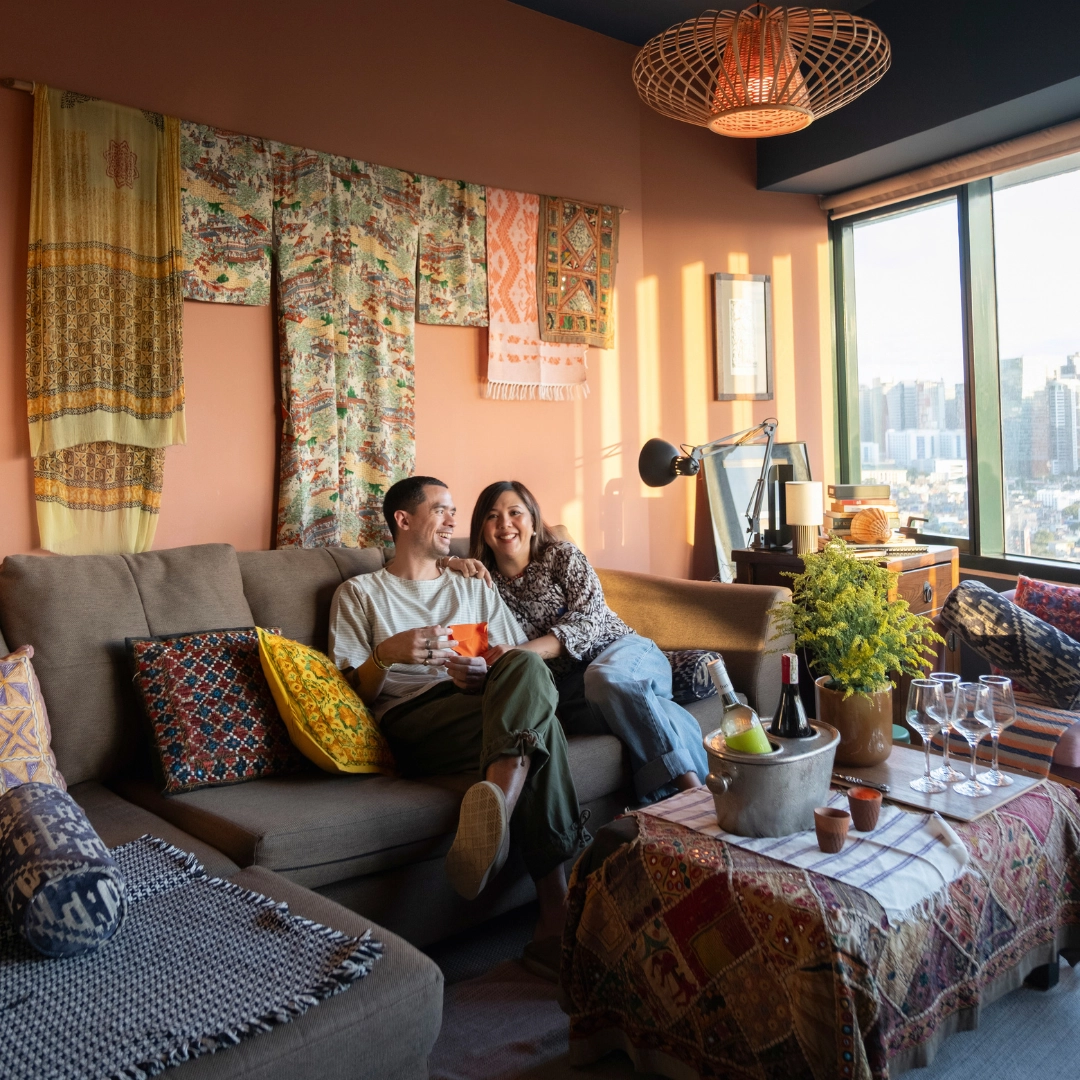
For e.c. founders Carlos del Prado and Stacy Rodriguez, making a home involves colorful collections, a little editing, and room for friends.
I spy a heart, a chair from before, three little lives, and room for one more. For their housewarming, a friend gave Carlos del Prado and Stacy Rodriguez a picture book: something from the I Spy children’s series. It’s a cheeky and fitting choice for the couple, whose apartment offers plenty to discover among its colorful walls, layered fabrics, art, and collected objects.
“We grew up with the I Spy books,” Carlos says, “But I never realized that I would end up living in a home that would kind of be informed by that sort of sensibility.”
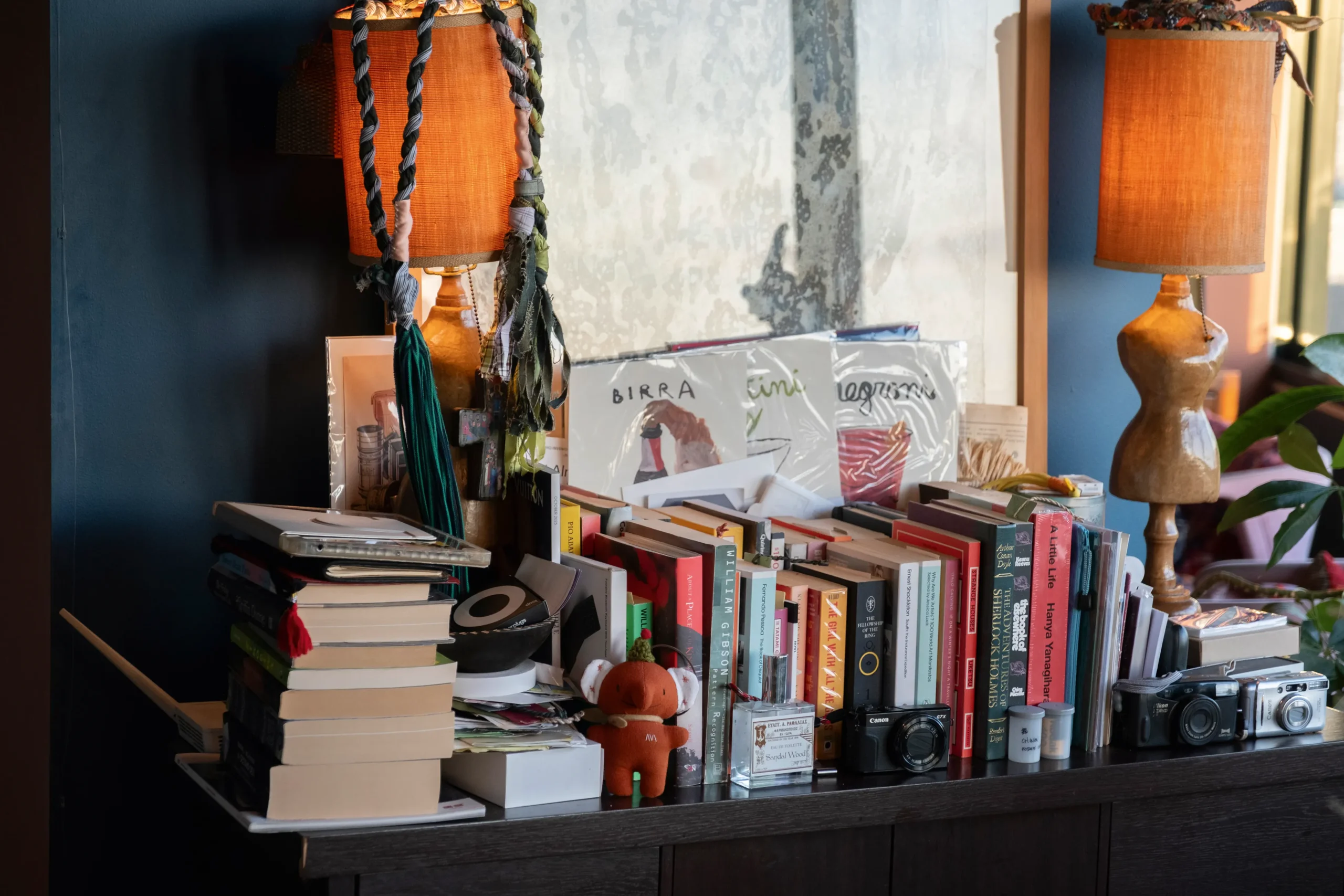
It joins books stacked throughout the apartment, including three different editions of Hanya Yanagihara’s A Little Life, a favorite that Stacy reads every year, and one copy of If on a winter’s night a traveler, which Carlos has opened, started, and closed just about every year, as well. He much prefers Italo Calvino’s other novel, Invisible Cities, a copy of which is somewhere hidden among the stacks and stacks of books that fill the space.
They co-founded e.c., a unisex fashion label conceived around the idea of a shared wardrobe. Stacy is a fashion designer and part of the events collective Thank You For The Music, while Carlos also DJs as Shrugs. Their collaborations span fashion and music, and their home is a frequent gathering place for friends.
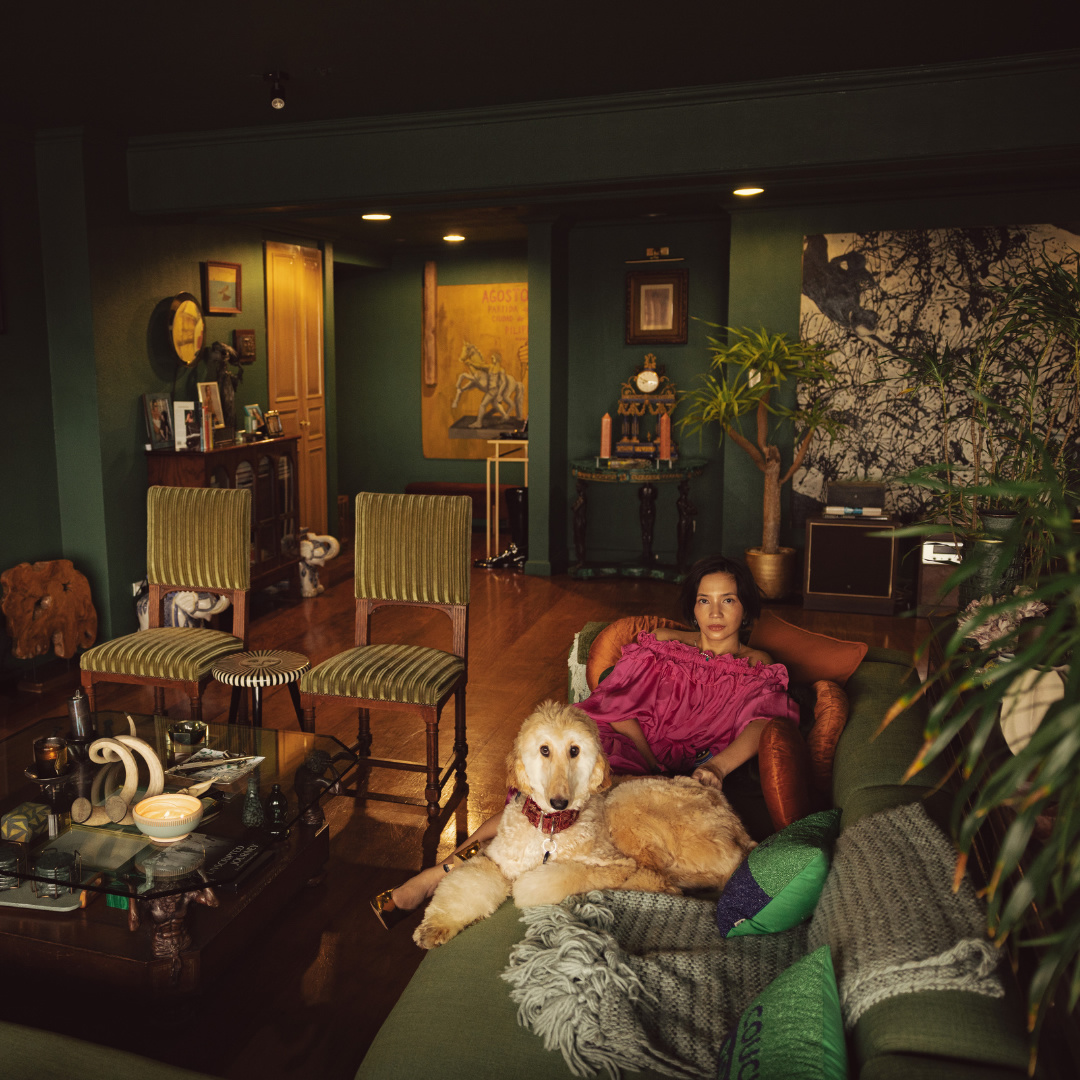
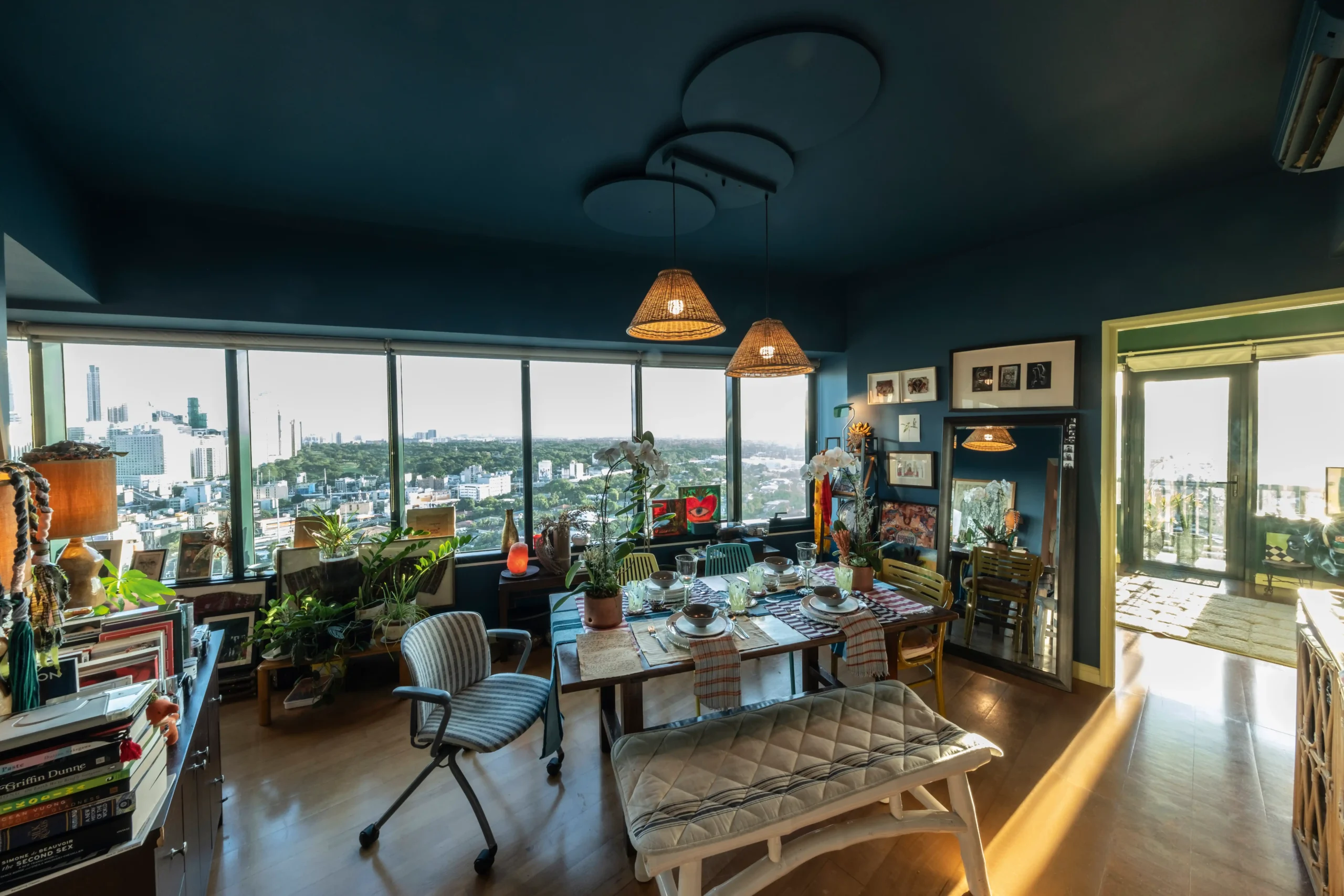
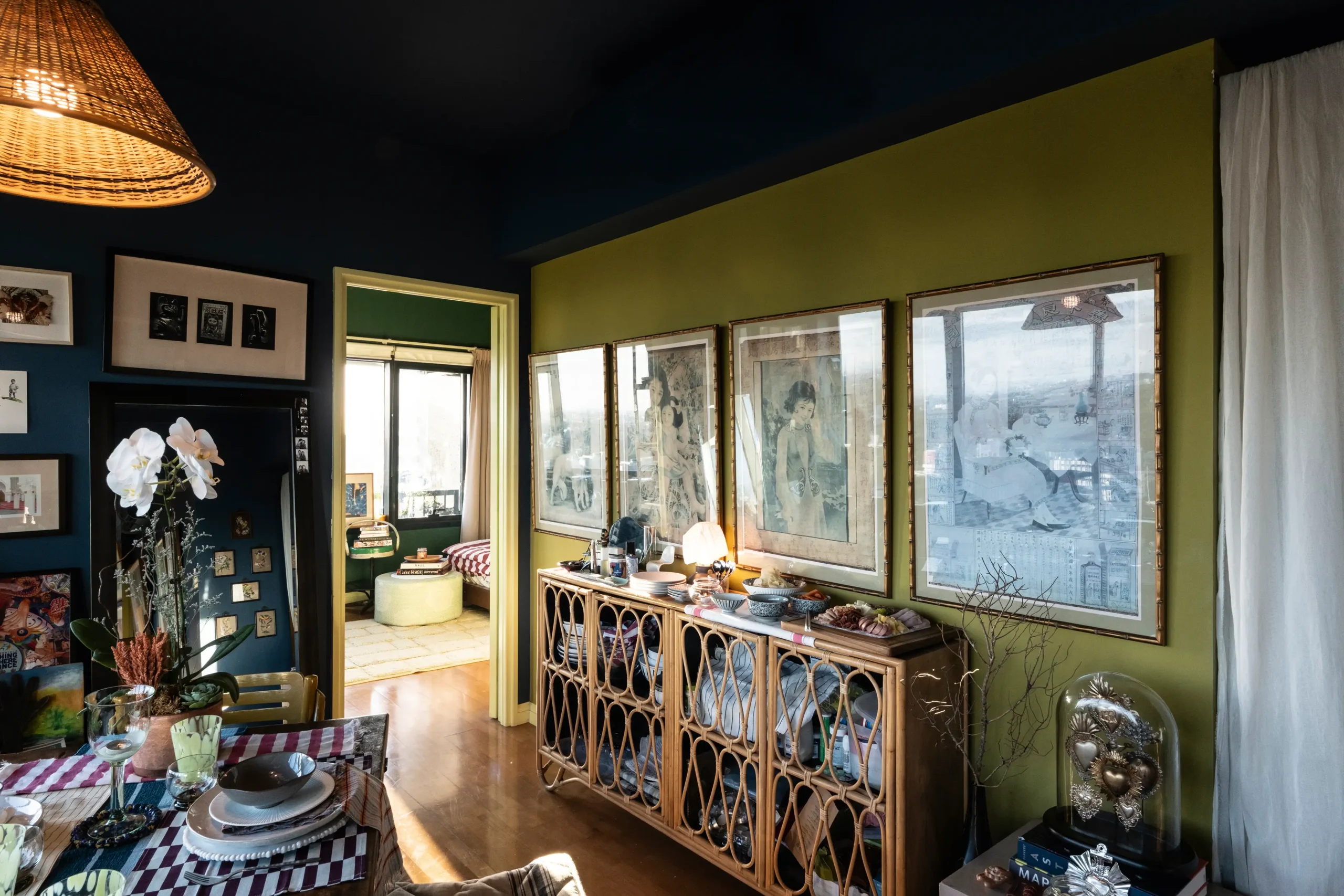
The dining space is the first thing you see when you enter, with a wide stretch of windows looking out over the city. It’s flanked by two other spaces for entertaining: the living area and sofa to the left, and a guest room to the right that houses the DJ setup. Its door is almost permanently open, encouraging movement between the rooms.
“We spend a couple of hours here, and then we move,” Stacy says as she offers us a glass of wine. “It’s kind of a revolving space, or like an experiential maze-like situation.”
READ ALSO: “Living Things” Is A Portrait Of The Homes And Objects We Hold Dear
How Carlos Del Prado And Stacy Rodriguez Make Room For Company
The view from the apartment was one of its selling points. The floor plan offered possibilities, too, particularly for a couple who enjoy having people over.
“The way we segment the home is also based on hosting,” Stacy explains.
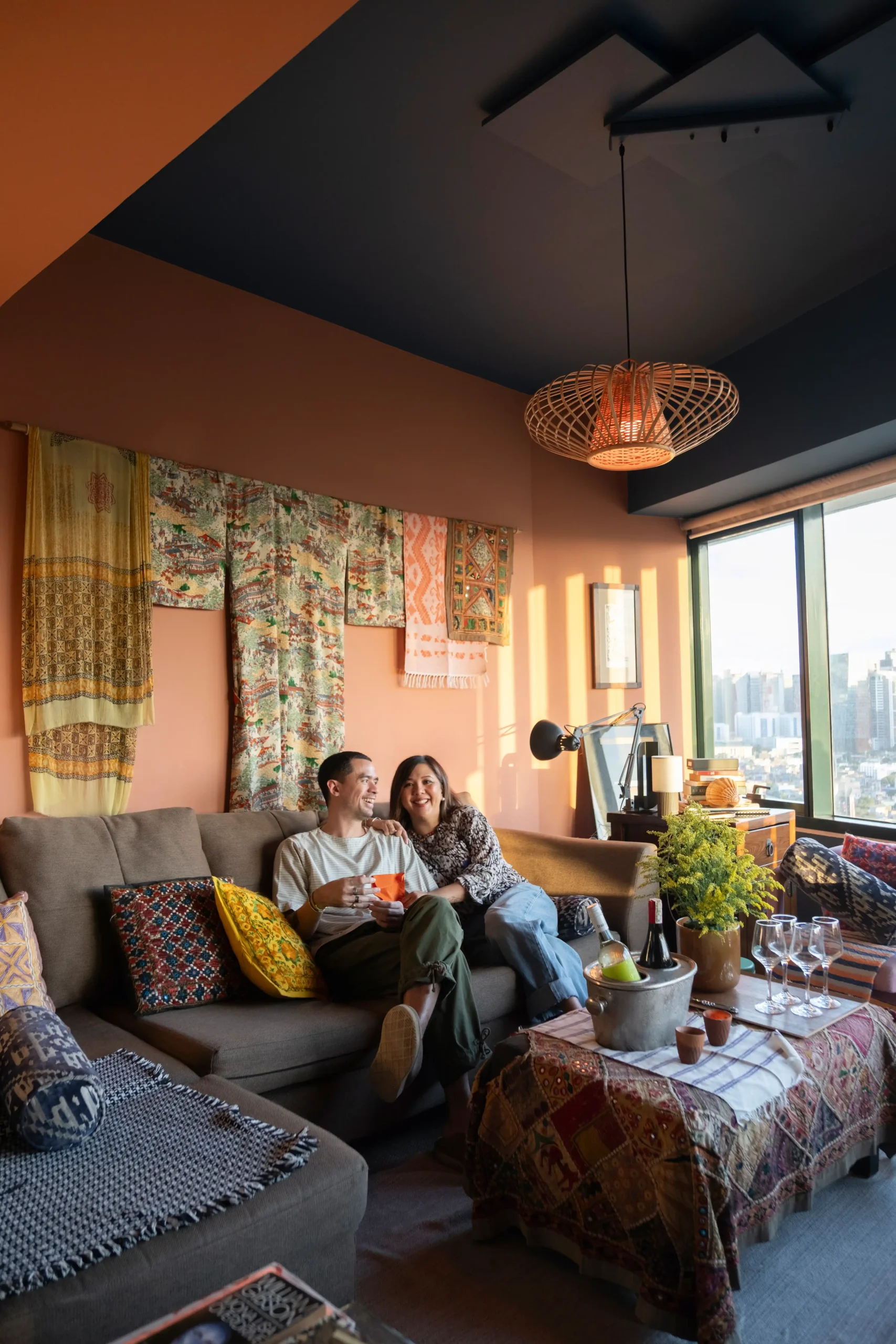
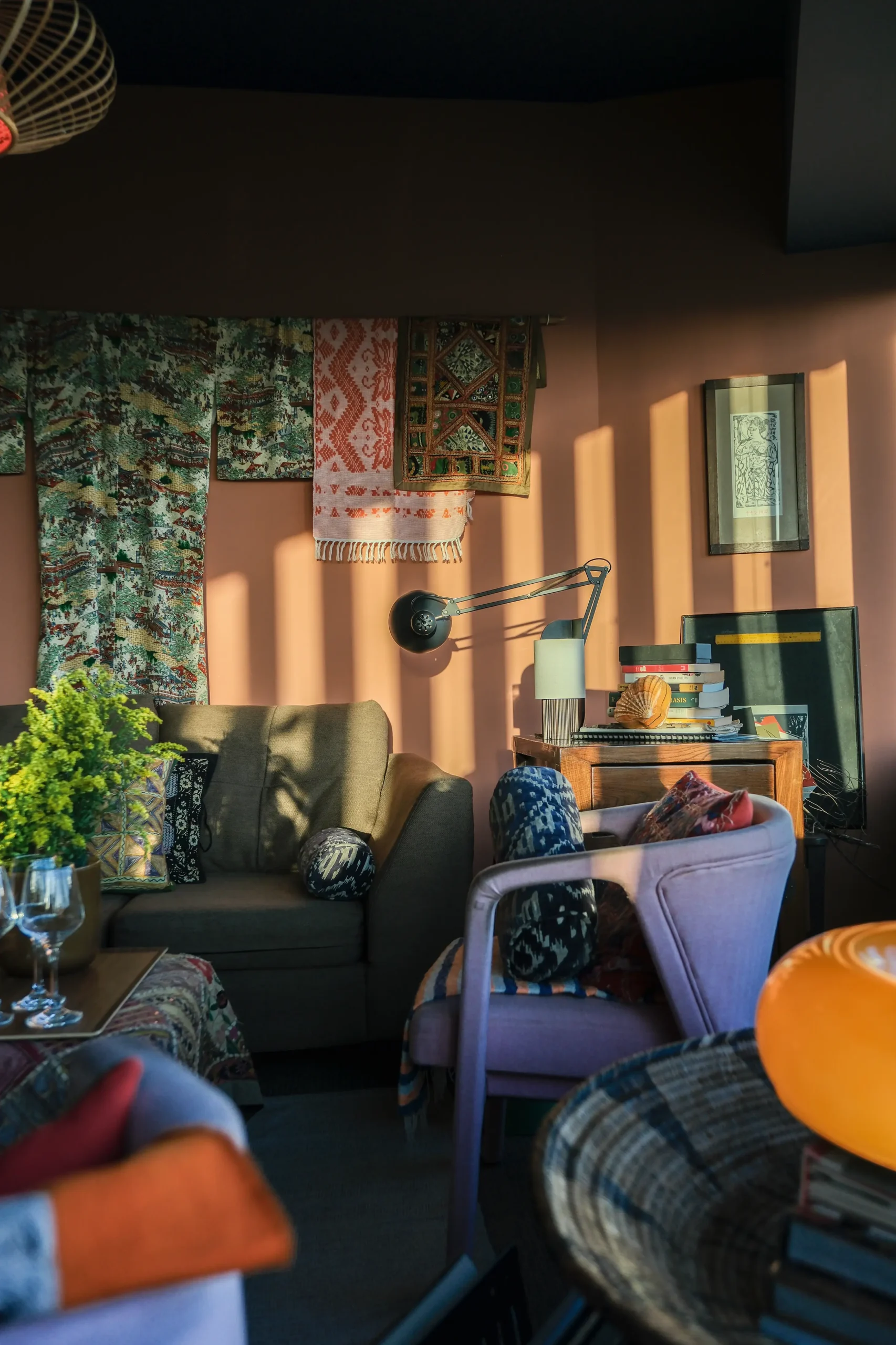
The room to the right of the dining area was originally the master bedroom. It had the apartment’s only balcony, and the couple decided to make it a space for entertaining, while accommodating friends staying overnight. Meanwhile, across the dining room, a sofa and armchairs offer another setting for drinks and conversation. Cushions and throws cover the seats, while a low table keeps glasses within reach.
“When we studied the floor plan, we thought this format was better for entertaining and for our lifestyle,” Stacy continues. “He is a DJ, and I have an events company outside of fashion; so [in] the parties we have at home, we want to be able to catch up with friends.”
More, With Feeling: A Maximalist Space For Carlos Del Prado And Stacy Rodriguez
“Our family is maximalist by nature,” Stacy shares. “More and more and more.” When she sent her mother, businesswoman and art collectorArt CollectorAn art collector is a person who acquires artworks over time, guided by taste, knowledge, and commitment rather than decoration alone. Serious collectors often generously lend works to museums, supportGo to Art Collector Glossary Fe Rodriguez, photographs of how she had arranged the apartment, the advice was to add more.
“I was like, really? I thought we were running out of space,” she recalls, laughing.
Her brother, interior designer Junie Rodriguez, helped them consider the floor plan and choose the wall colors. Deep blue, olive green, and even a warm pink-orange give their collections a colorful setting, with different surface treatments adding texture.
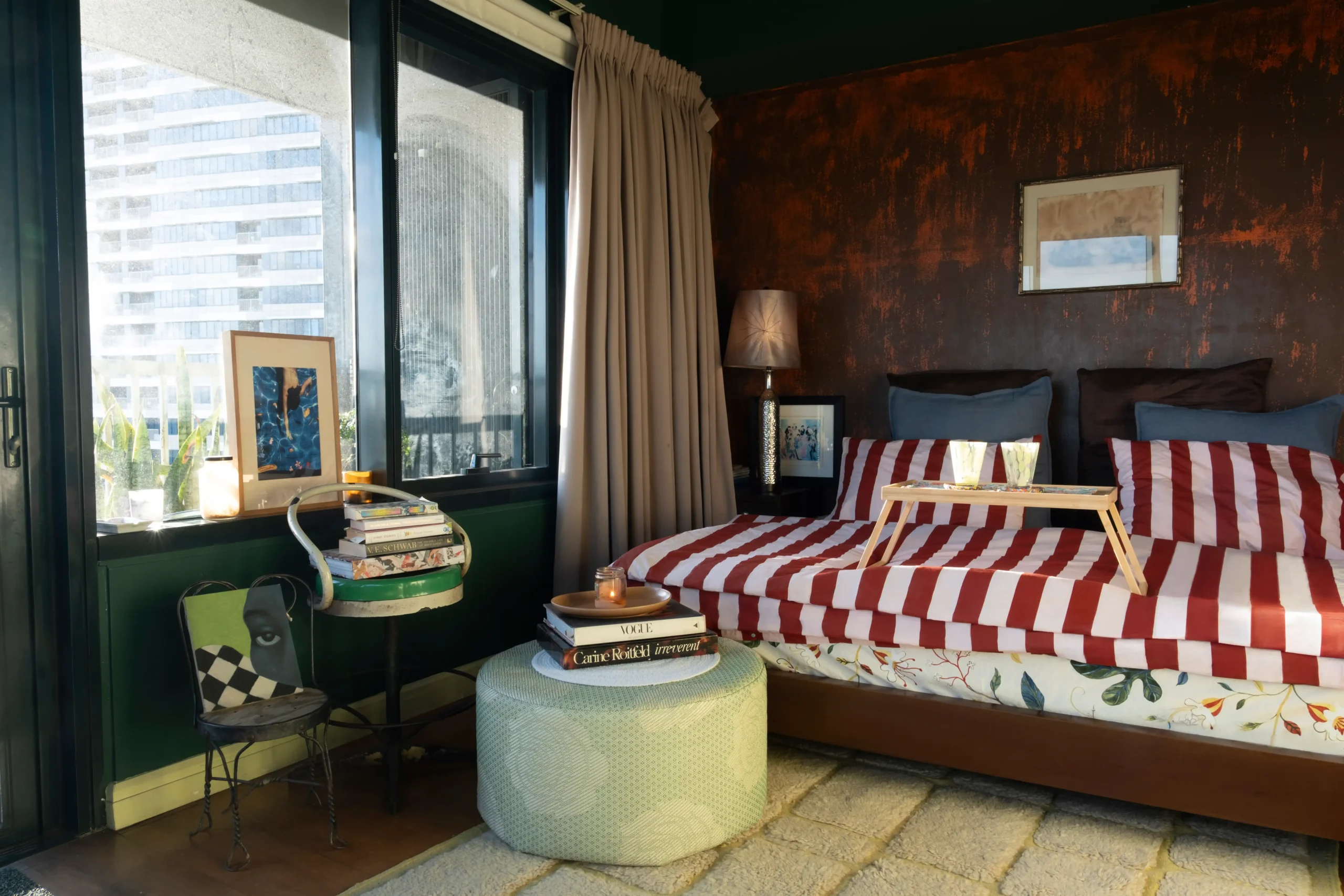
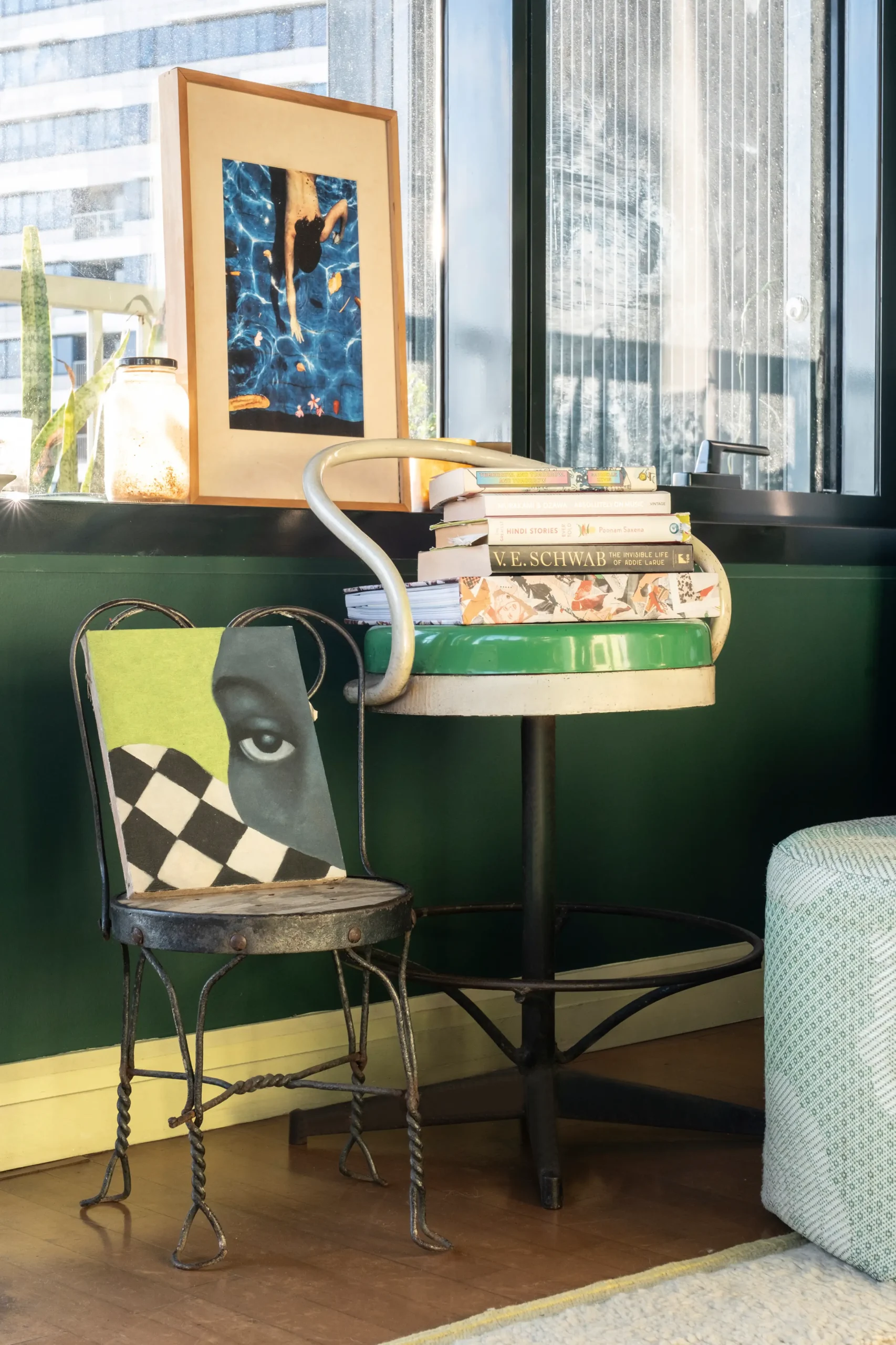
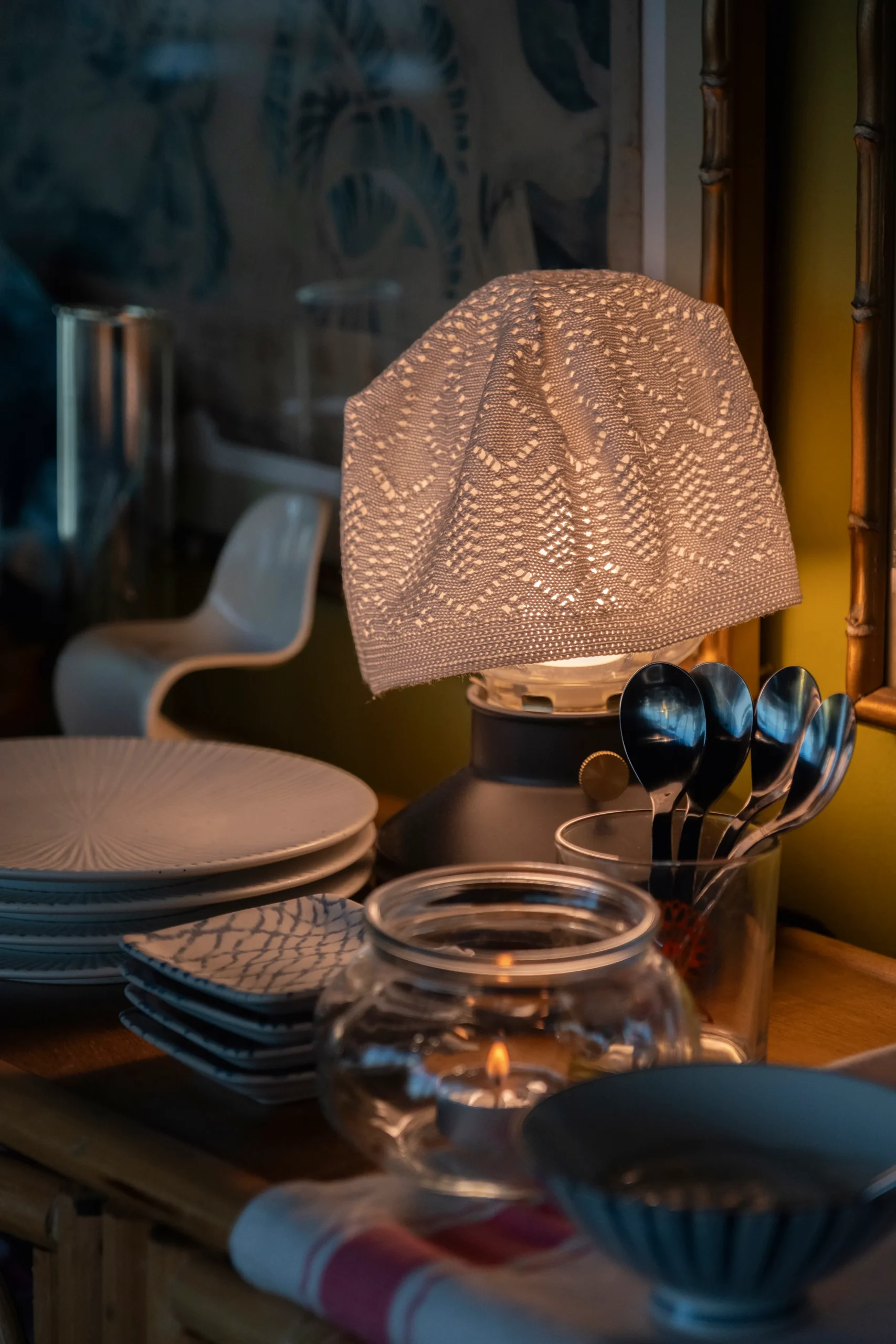
In the guest room, the walls were layered with orange, then brown, followed by floor wax. Sanding brought the orange back through. Fabrics soften the room, including lampshade covers. In the same room are a small chair from Stacy’s childhood and a metal stool from a Burger Machine stand, her family’s business.
“We also have a funny affinity for chairs,” she says.
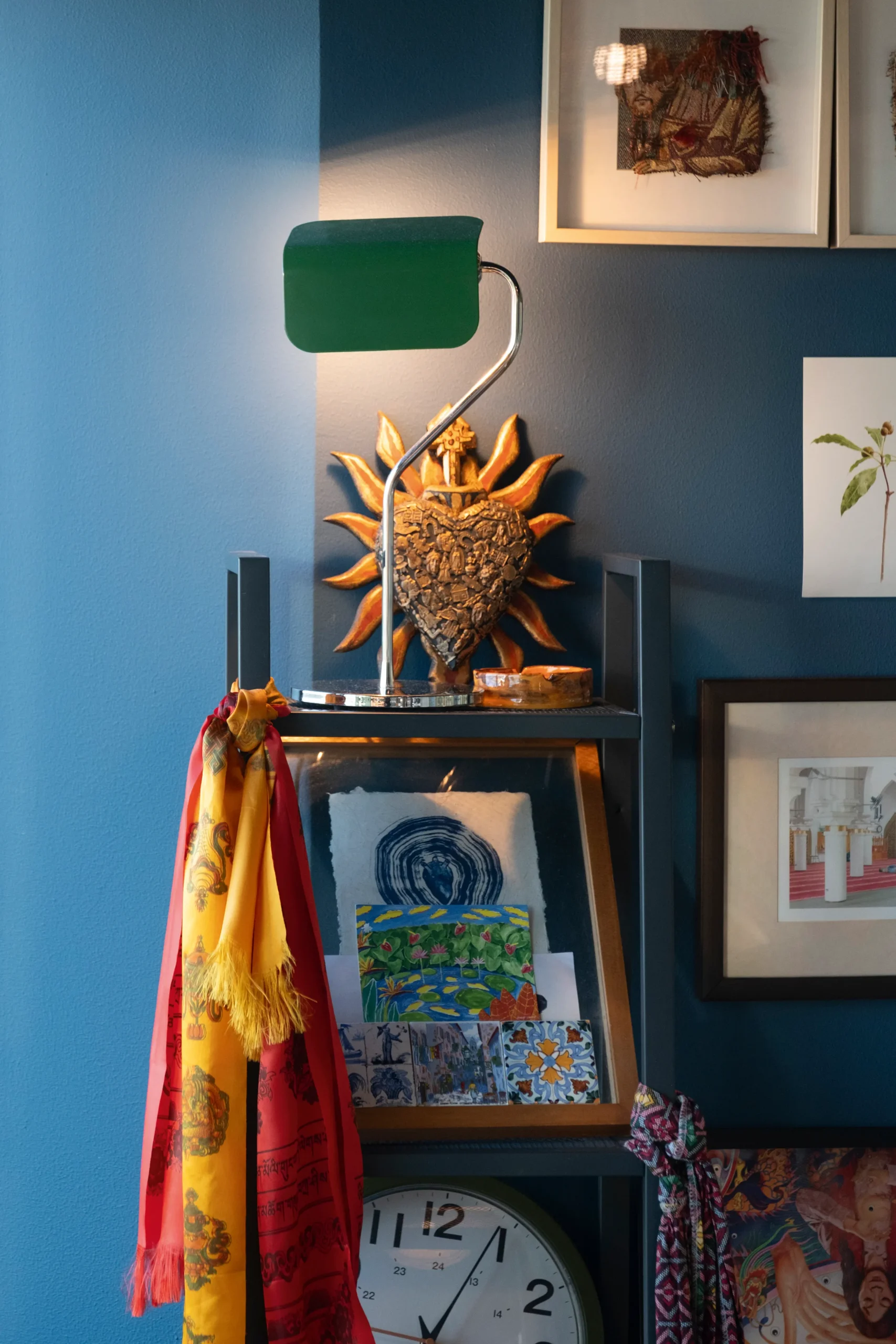
As in an I Spy book, certain things turn up in multiples. Chairs of different shapes, sizes, and colors appear throughout the apartment, including the assortment around the dining table, alongside a bench. Hearts are another recurring motif. Stacy points to a tattoo on her arm, then to the heart artworks and objects spread throughout the space, some brought back from her mother’s travels.
Other family connections are on the walls. Works by conceptual artist Roberto Chabet, her father’s uncle, form what Stacy describes as an homage to the artist.
One piece leans on a chair in a different orientation from the way it was originally intended; they prefer it that way. Elsewhere are a small sculpture by Arturo Luz and works by friends.
Their own travels appear above the living-room sofa: a bamboo rod holds textiles from India and Nepal alongside a kimono from Japan. They chose this changing display in place of paintings, allowing different fabrics a turn on the wall throughout the year.
The Art Of Editing
Making these combinations work requires an instinct for color, one developed over years of putting things together. Just as important, Stacy explains, is knowing when to take something away. Their first impulse is to add; then, they reconsider the arrangement, removing something to give it room to breathe.
“I think the beauty of editing is important,” she says. “We are always talking about editing, and I think we learned that from our sensibilities in fashion.”
The larger furniture generally stays in place, while smaller pieces and chairs shift. Carlos notices corners that feel dark, and they look for ways to open them up.
“It’s also about shifting the energy,” Stacy says. “Especially in a maximalist home, things tend to pile, so I think doing an edit and clearing is important.” For Carlos and Stacy, assembling these different elements also connects to a medium they enjoy.
“One of my favorite mediums is collaging,” she says. “And I think we apply that in our work and in our home.” In e.c., that takes the form of patchworked clothes. In their home, the materials include family furniture, fabrics from their travels, books, and art. There are pieces they continue to collect, combine, and reconsider.
“We realize that patchwork is the way to have an interesting and varied life,” Carlos says.
One last look. What else do you spy?
This article was originally published in our December 2026-January 2027 issue.
Photography by Ed Simon of KLIQ, Inc.
Frequently Asked Questions
Carlos del Prado and Stacy Rodriguez are the co-founders of e.c., a unisex fashion label conceived around the idea of a shared wardrobe. Stacy is a fashion designer and part of the events collective Thank You For The Music, while Carlos also DJs as Shrugs.
Carlos del Prado and Stacy Rodriguez designed their apartment around hosting, with a dining space overlooking the city, a living area for drinks and conversation, and a guest room that houses the DJ setup and accommodates friends staying overnight.
Carlos del Prado and Stacy Rodriguez’s apartment is maximalist by nature, featuring colorful walls, layered fabrics, art, books, and collected objects. Deep blue, olive green, and warm pink-orange give their collections a colorful setting, while different surface treatments add texture.
For Carlos del Prado and Stacy Rodriguez, making these combinations work requires an instinct for color and knowing when to take something away. Their first impulse is to add, then reconsider the arrangement, removing something to give it room to breathe. They also edit and clear their collections to shift the energy of their maximalist home.