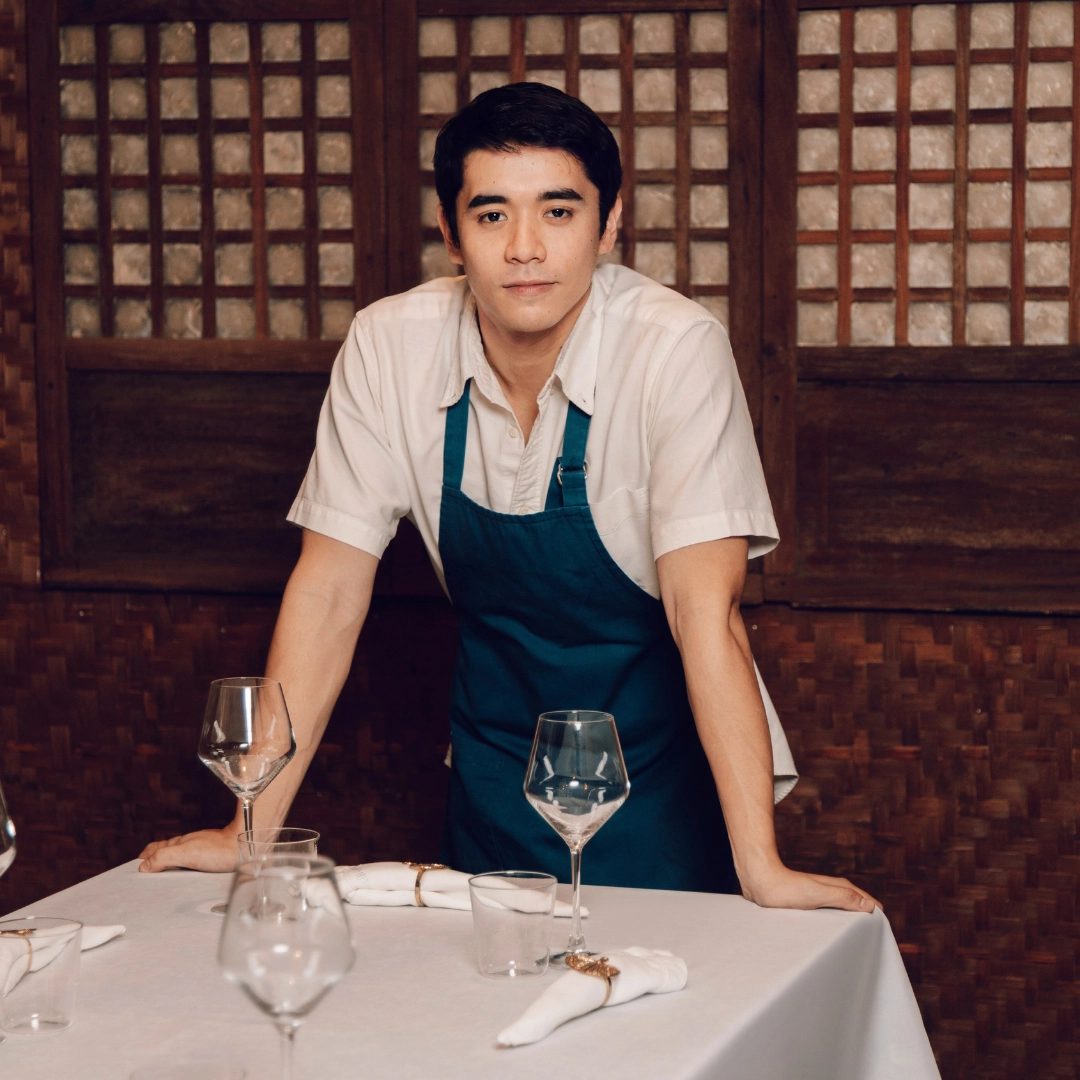
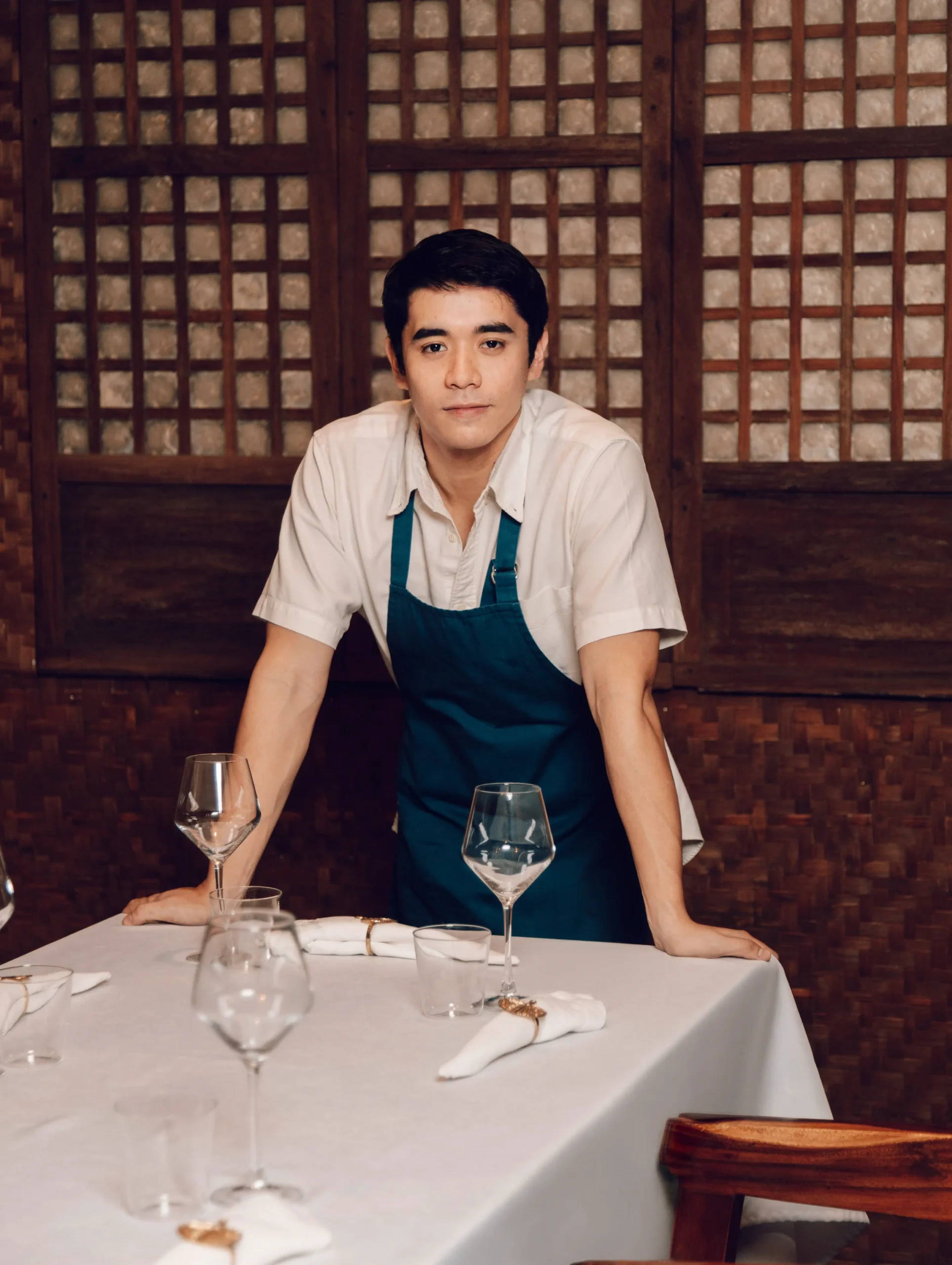
At Linamnam, Chef Don Baldosano follows his curiosity across the Philippines, translating local ways of life and culinary traditions into an ever-changing tasting menu served in his family’s intimate Parañaque home, where guests eat like old friends.
“We never thought we’d operate as a Michelin starMichelin StarA prestigious rating awarded by the Michelin Guide to restaurants of outstanding quality, with one star for high-quality cooking, two for excellent cooking worth a detour, and three for exceptionalGo to Michelin Star Glossary restaurant.” Coming from Chef Don Baldosano, it initially sounds like false modesty. His restaurant, Linamnam, received its first star in the inaugural Philippine edition of the Michelin Guide 2026, retained the following edition, while the chef himself took home the country’s first-ever Michelin Young Chef Award.
But as we spend an afternoon over lunch with him at the intimate tasting-menu restaurant, situated within his family’s Parañaque home, his surprise makes sense. For one thing, there’s no printed menu. What guests eat depends on what arrives from the farmers, fishermen, and producers he works with directly, what he encounters on his travels around the Philippines, and the occasional spontaneous idea that hits him when he steps into the kitchen.
“Sometimes we have a couple of different tables, I send them different dishes,” Don says. “My team loves me and hates me. Sometimes, they’re all prepped out for the day, and I’m like, sorry, let’s change this.”

We visit for lunch on a day the restaurant is usually closed, sitting with Don at one of the few tables in a space that accommodates just 10 to 12 guests. As we eat, he shares the stories behind the food. It feels like visiting a friend who has returned from a trip, full of discoveries and ideas of what to cook for you. That’s very much intentional. For all the thought that goes into the food, Don doesn’t want the formality that might make guests hesitant about how to eat a tasting menuTasting MenuA tasting menu is a curated, multi-course dining sequence designed by a chef to showcase technique, seasonality, and narrative across an entire meal. Within Philippine fine dining circles, tasting menusGo to Tasting Menu Glossary.
“I didn’t want a fine diningFine DiningA formal restaurant experience defined by refined cuisine, elegant presentation, attentive service, and a polished setting. Fine dining often features tasting menus, wine pairings, and highly trained staff, and itGo to Fine Dining Glossary restaurant where you feel scared to move,” he says. “We want to remove that, make you feel like you’re in a friend’s house, but still serve you the best food that we can,” he explains.
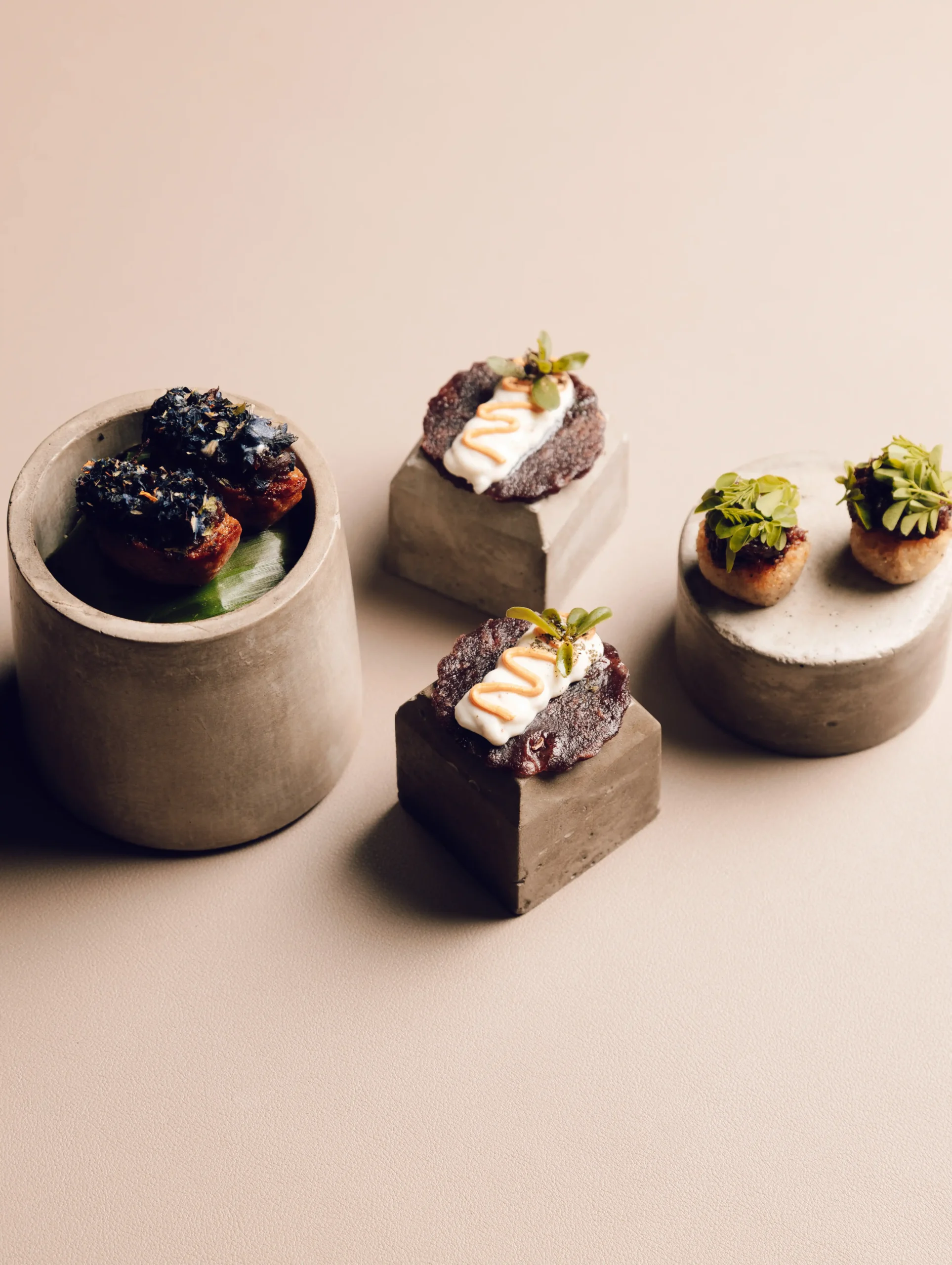
“My first line to every diner is: What we do is possibilities of Filipino food.” Those possibilities emerge from the ingredients and cooking practices he encounters across the country, each offering another direction to explore in his kitchen. The meal begins with kakanin, Don drawing on varieties from across the country. We ask if there’s an order in which to eat them. “Nope,” he says. “We always say, just have fun.”
READ ALSO: Esca House By Antonio’s Group Opens At Bridgetowne
Curiosity Takes The Lead At Linamnam By Chef Don Baldosano
Linamnam started in 2018 with one table on the patio of Don’s family home. He wanted a restaurant of his own, had little money to open one, and saw no reason to wait. Cooking at home was also familiar territory.
“Food was the center of our family when I was a kid,” he says. “Our life revolved around food. I remember, my dad would be working the whole week. On his only days off, I would be with him in the market in the morning and then cooking the entire day with him. It was about having fun with food. That’s how it all started.”
Don’s interest soon took him beyond the family kitchen. At 12, he competed in Junior MasterChef Pinoy Edition. By 16, he was working in restaurants, where he enjoyed cooking but found himself frustrated by having to do the same thing every day.
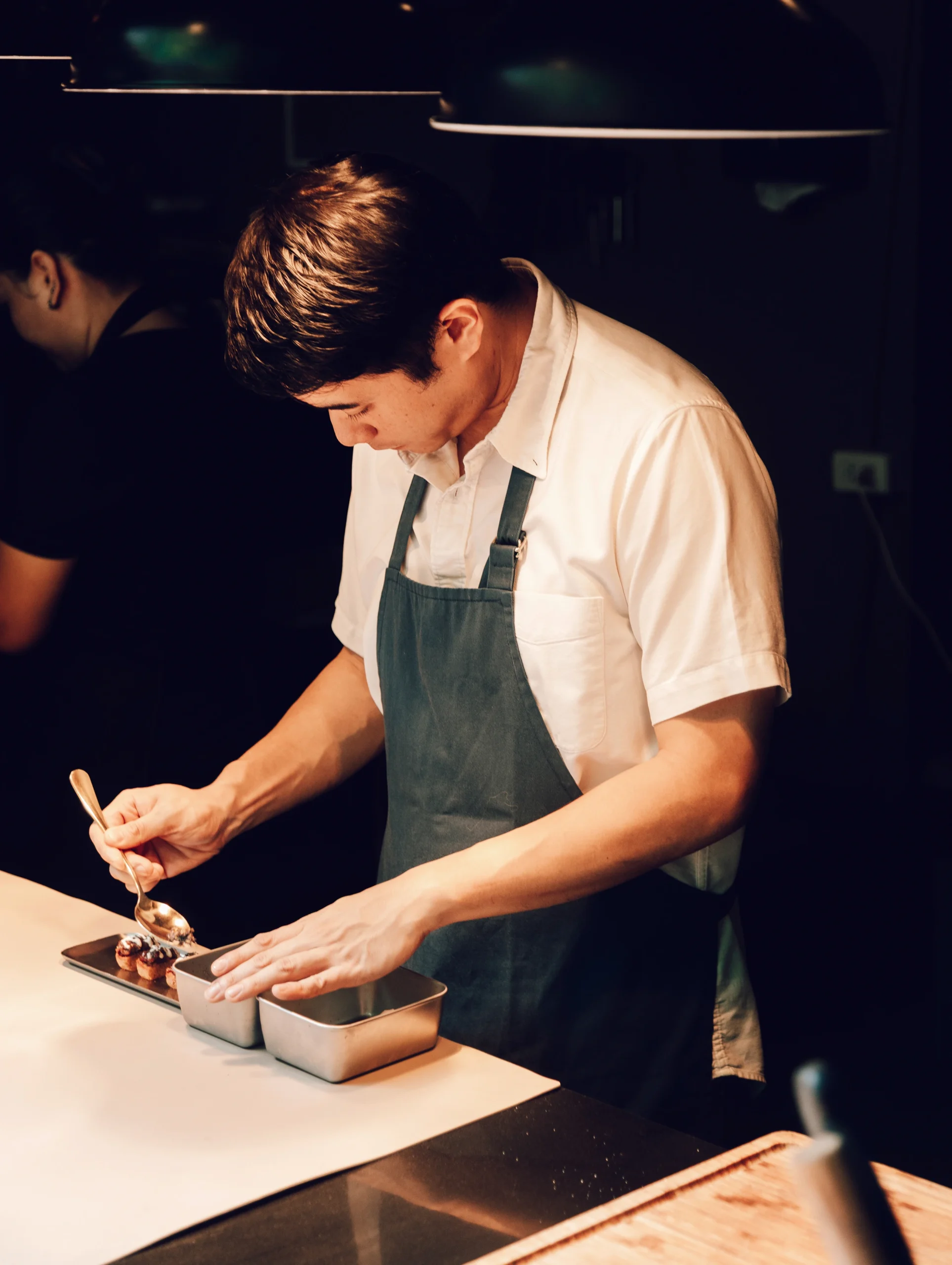
“I wanted to create a space where I could be as creative as I could be,” he says. “That’s how Linamnam evolved.” He was already having friends over every week, cooking for them. He figured he could formalize it a bit into a tasting menu. He invited 10 people for lunch, then another 10 for dinner, offering a 10-course meal. During Linamnam’s first year, it was just one server helping him through service. Guests could watch him cook from their tables, and he would explain the dishes as the meal went on.
In 2020, when restaurants suspended dine-in service amid the COVID-19 pandemic, Don and his mother took the period as an opportunity to rethink the space. They enclosed the patio and added air conditioning to make guests more comfortable, incorporating pieces salvaged from old houses in Bulacan. It remained, as Don describes it, a bahay kubo, with the same intention of making guests feel they were eating at a friend’s house.
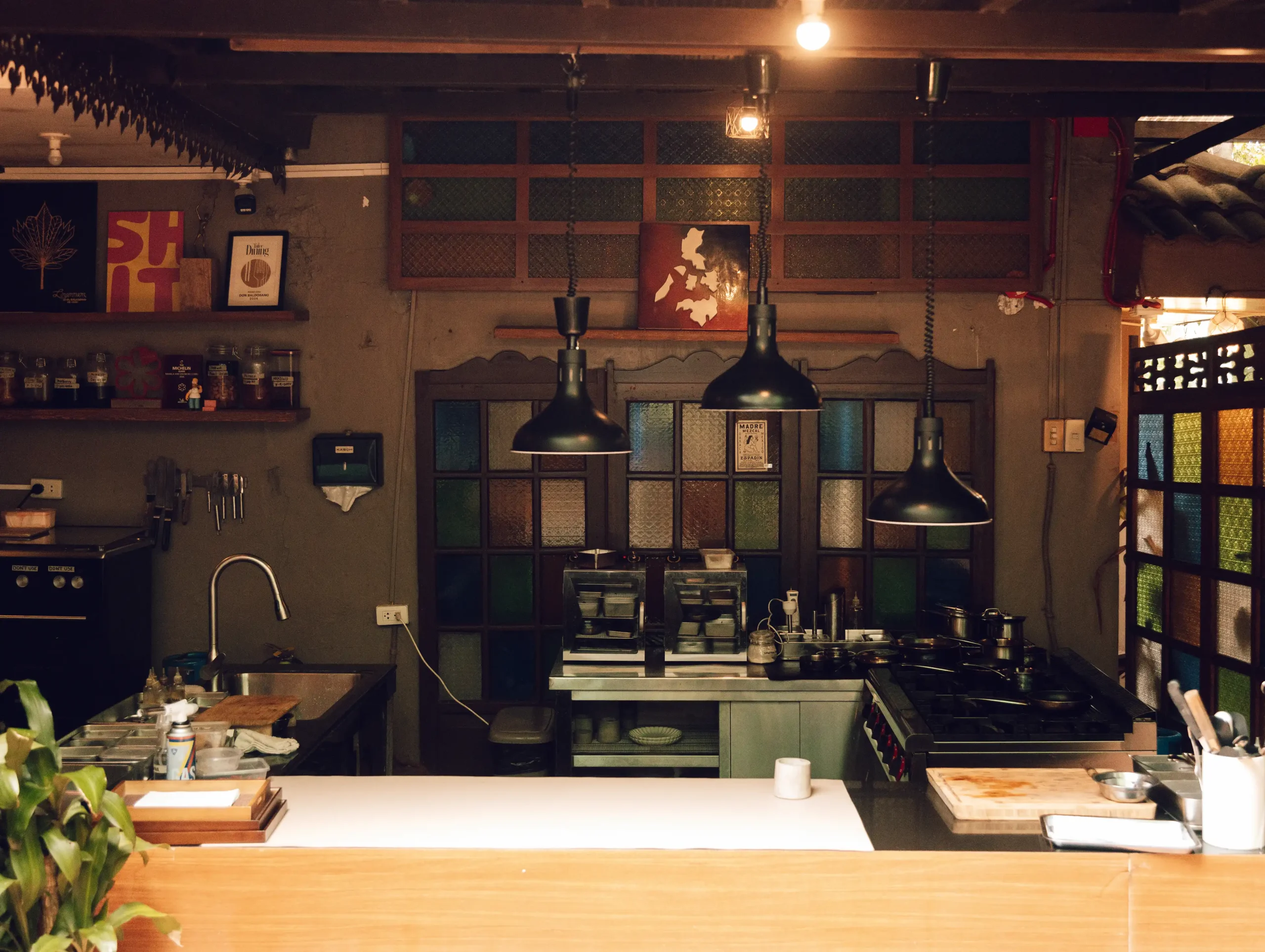
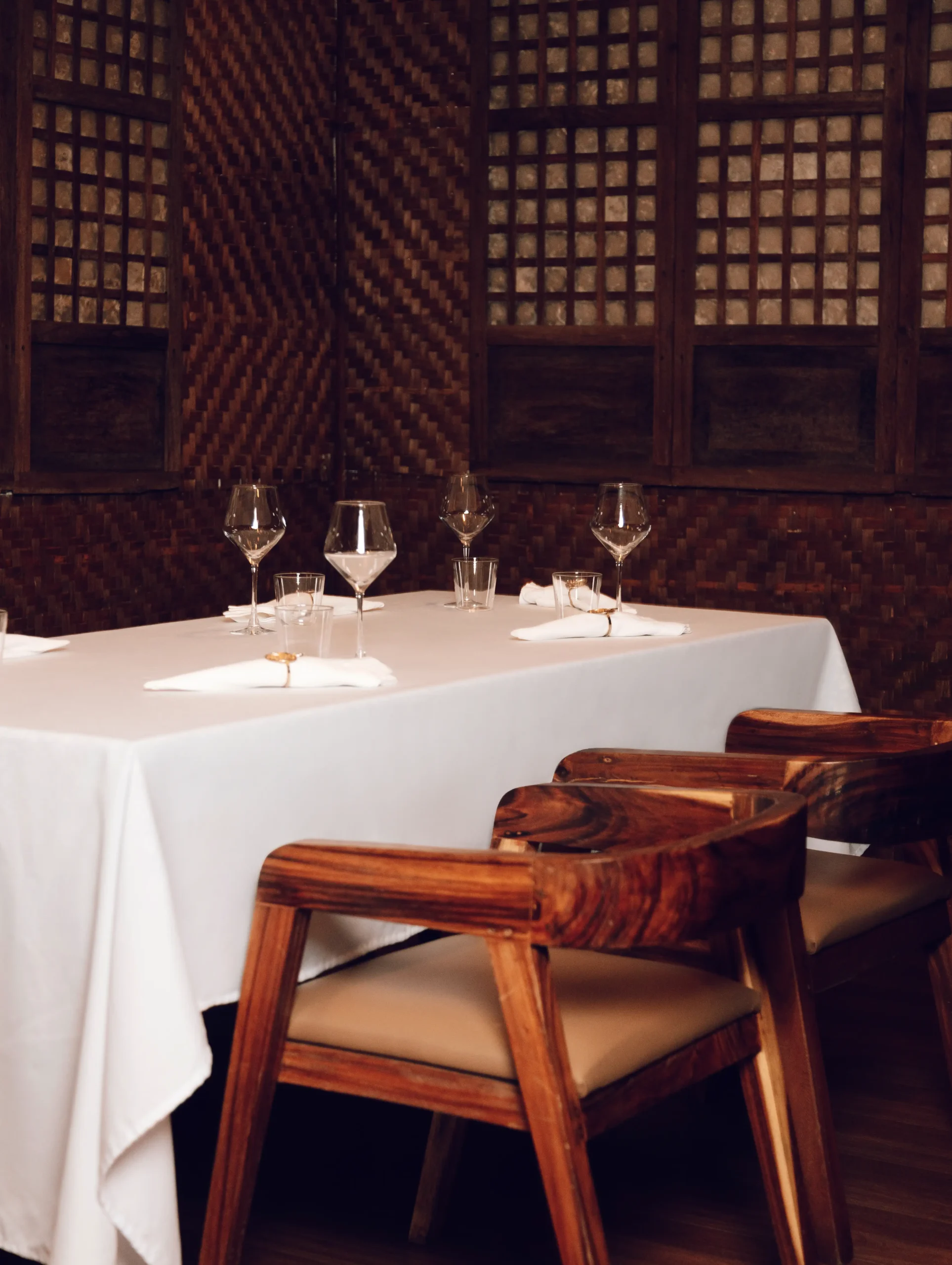
“My parents loved that it’s just out of our house, although I have kicked them out,” Don laughs. “It’s fine, my mom ate here last night. But they were happy it started at our house so they could see me work. Before, when I was working at restaurants, they never saw me. I would come home at 3 AM and leave the house at 7 AM. [When I opened Linamnam], they could see me, see who I am with food, and see how our traditions as a family come through with food.”
This year, his father’s molo became a regular part of the menu after several attempts to find a version Don was happy with. He kept the same dough and flavor, experimenting with the broth around them. His father, who has since passed, was able to taste it. He was happy, Don recalls, though he pointed out that it was a little different.
“But I said, that’s the point,” Don laughs.
More Ways To Eat Filipino At Linamnam
We’re lucky to catch Don at home. On the days of the week Linamnam is closed, he’s usually anywhere else but here: traveling around the country, meeting people, and discovering flavors. He often leaves on Sunday and is back by Wednesday morning, just in time for dinner service later in the evening.
Although he started cooking young, his early ambitions centered on French and Italian food. When he was around 15, a friend challenged him: Was there any great chef who didn’t know their own culture?
The question stayed with him and sent his curiosity in a new direction. “I realized he was right,” Don says. “After that, I started learning more about Filipino food. I started traveling. And then I realized the depth of the cuisine we have.” With a father from Iloilo and a mother from Capiz, his earliest understanding of Filipino cooking was largely Visayan. Traveling through places such as Bulacan and Pampanga introduced him to new dishes and practices. Each trip then gave him another reason to keep going.
“I realized there is so much Filipino food I can tap into,” he says, “and even now, I haven’t even tapped into a quarter of it.
Choosing a destination starts with geography. On Google Maps, he looks for towns beside mountains or along the coast, somewhere that seems likely to offer something interesting. Then off he goes. There’s no itinerary of restaurants to visit or people to meet; in fact, there are no leads at all. Don prefers to leave room for what he might discover on arrival. He asks around for a popular carinderia, starts talking to the local people, and follows their suggestions and introductions.
“The idea is to do things as naturally as possible,” he explains. “I don’t want to research anything that’s been researched well before. I would rather talk to people and let them tell me what they eat. I like it that way because the stories are more natural.”
His only travel rule is to go in a group of no more than three, himself included. Any larger, he feels, and the people they talk to might become less comfortable. Keeping the encounters small allows conversations to develop naturally. From there, the sky and the sea are the limit.
On a recent trip to Palawan, Don drove for two hours before stopping at a tindahan and asking the woman there whether she knew any fishermen. She did, and introduced them. Not long after that, Don found himself out at sea for half a day.
“I just wanted to see how they lived, how they cooked, how they caught fish, how they looked at fish,” he says. At the time of our visit, Linamnam’s menu explores coastal ingredients and practices. Seafood is only part of the story. Don is equally interested in how communities preserve their catch through preparations such as daing and tinapa, and in the kakanin made in those regions.
“It is about looking at their perspective and doing it on modern food,” he explains.
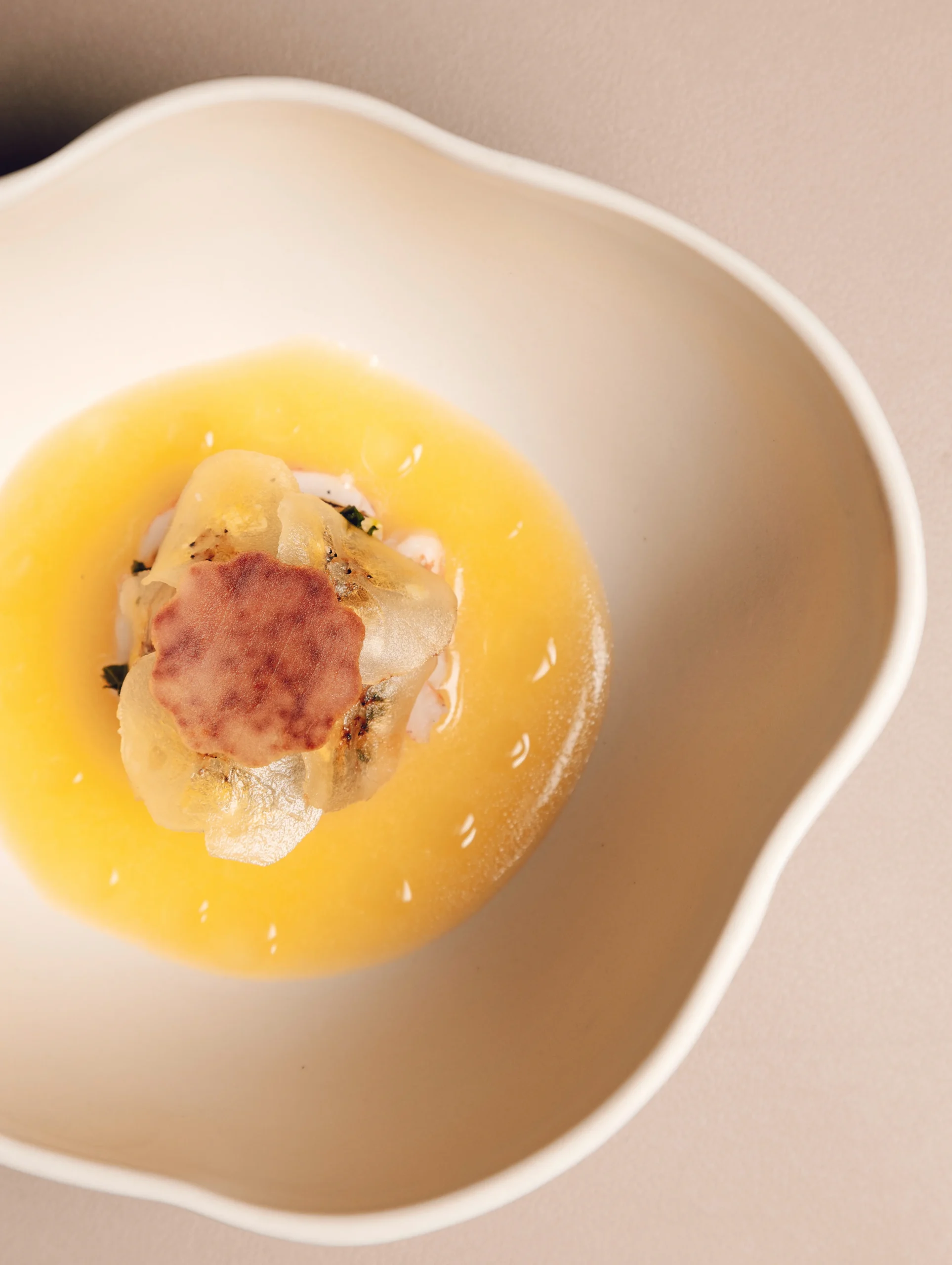
Chef Don Baldosano Goes Off The Beaten Path
Linamnam doesn’t offer a wine pairing, though guests can choose a bottle from Don’s selection of natural wines, which he finds particularly well suited to Filipino food.
In 2023, one of his regular suppliers, Bombvinos, invited him to their newly opened bodega in Makati. Part wine shop, part neighborhood hangout, it offered guests a place to browse the bottles or open one over a few snacks. At the time, they were serving pizza alongside the wines. Don was straightforward in his comments.
“I told them: what the hell are you guys doing, you need Filipino food.” He went outside, bought inasal, brought it back and said, “This is what you’re supposed to be doing.” The next day, the Bombvinos team invited him back and asked whether he wanted to work with them.
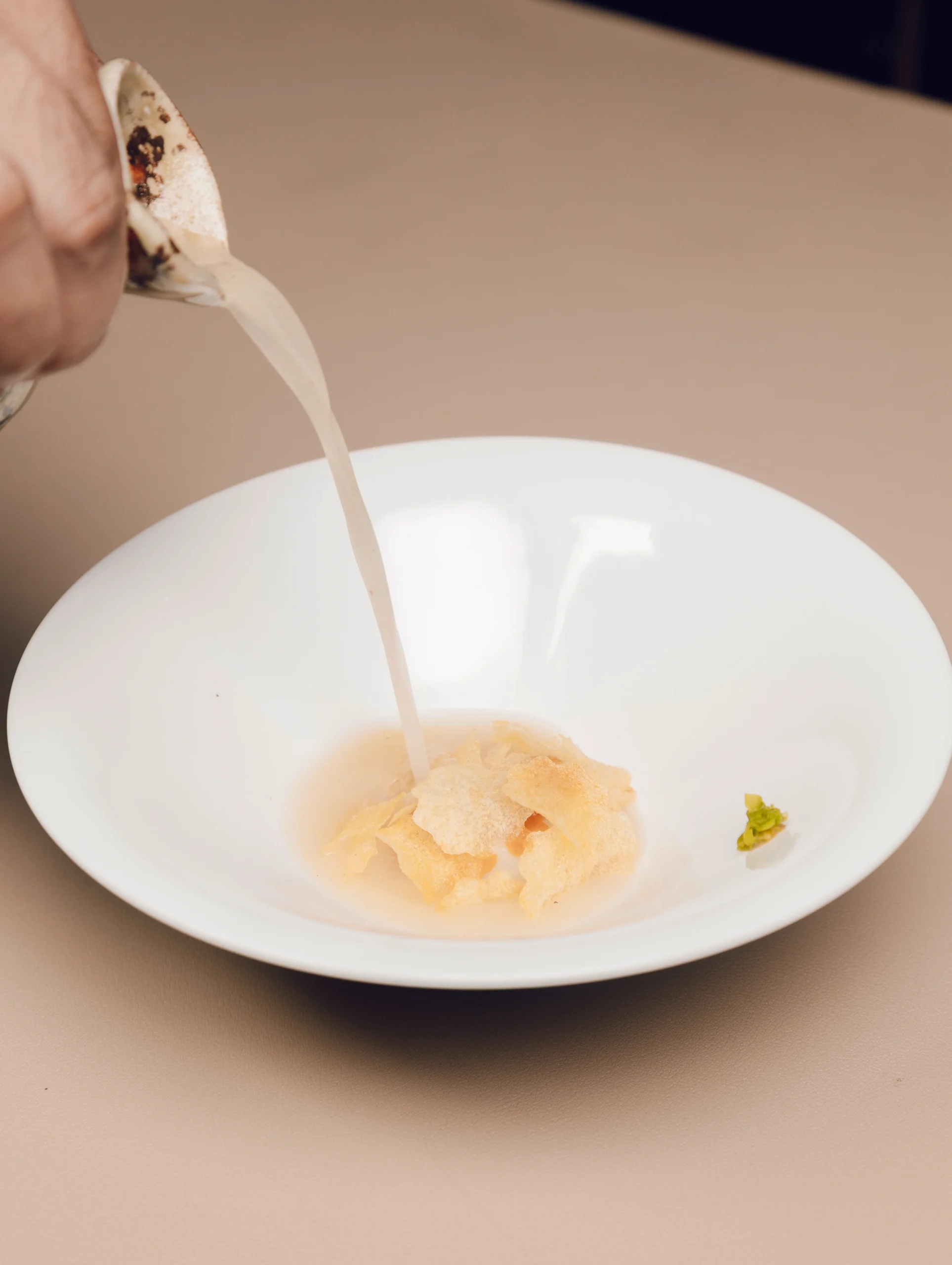
Today, Bombvinos Bodega serves his take on Filipino food alongside its selection of natural wines, giving Don a different setting in which to develop his ideas. Working with partners has also meant learning to consider those ideas from other perspectives. He credits the team with giving him room to experiment while asking questions that helped him think things through.
“I am very lucky to have partners who understand who I am as a chef,” Don says of the Bombvinos team. “They know I have this creative mind that needs to be chained a little bit. Whatever ideas I have, they let me go through with it, and then let me learn. They question me, in a good way. That’s why I am always all in for my team at Bombvinos, because they’re there for me to grow, and grow with them.”
At the time of our conversation, they’re developing another venture together, with Don involved from the beginning. This time, the idea is to bring modern Filipino food into a fast-casual setting.
“My whole goal with opening different genres of Filipino food is to change how we look at Filipino food, and how we eat every day,” he explains. Sometimes, that means returning to dishes people have stopped paying attention to. At Offbeat Bistro—which opened in 2025 at Ayala Triangle Gardens—Don, alongside chef and food writer Angelo Comsti, revisits retro Filipino dishes from the ‘60s through the ‘90s. Close friends and frequent travel companions, the two had spent years exploring Filipino food together. Offbeat grew from the conversations they kept returning to along the way.
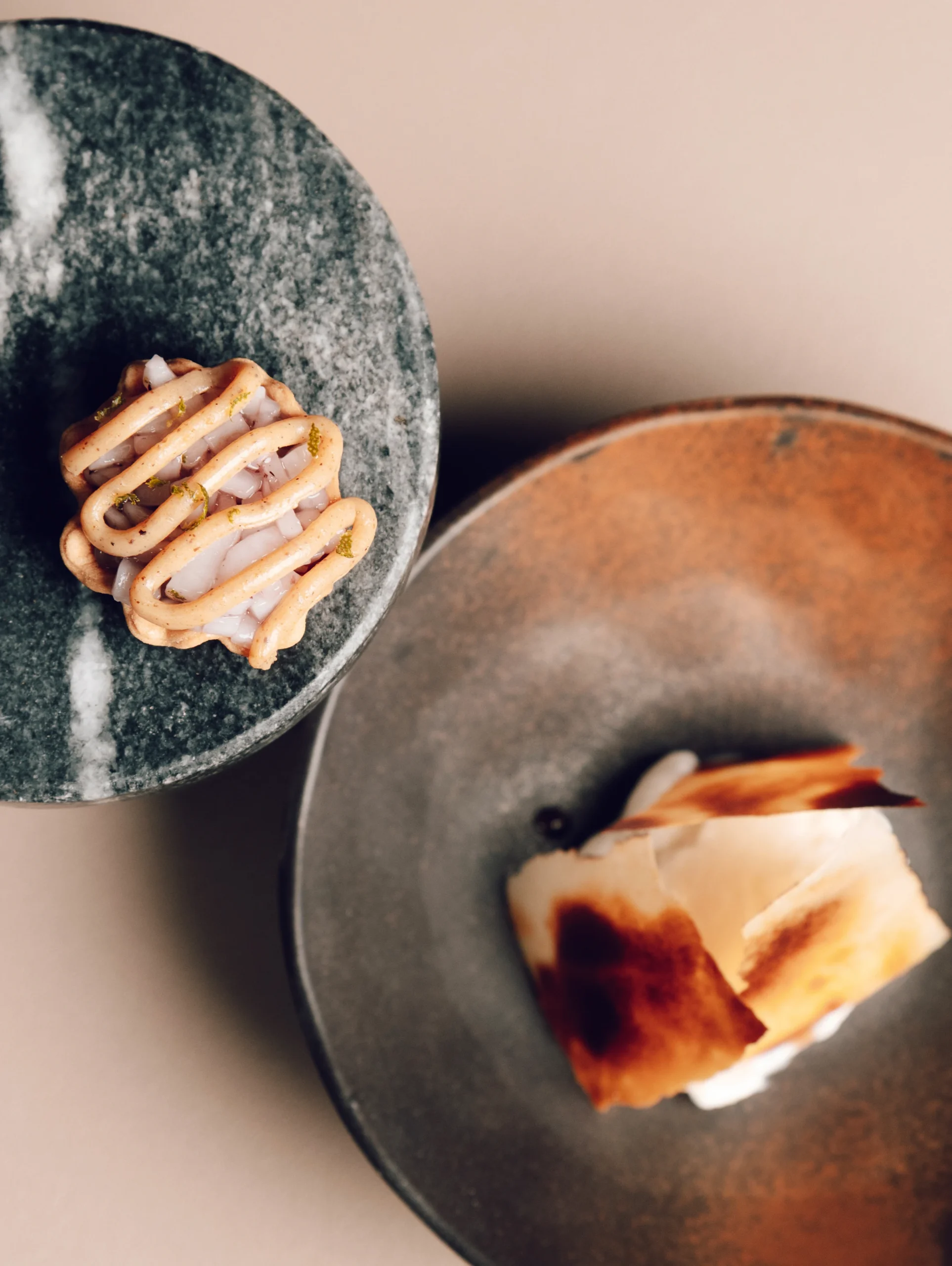
“It was a no-brainer to start a restaurant with him,” Don says. “We wanted to focus on what we always talk about, which was old Filipino food, the dishes that we don’t look at anymore these days, and we can highlight that in a restaurant.”
These different settings allow Don to explore how Filipino food can be inventive, nostalgic, or part of an everyday meal. At Linamnam, he has the freedom to make that exploration especially personal. “The idea is that I have a playground where I can be myself,” he explains. “For me, this is the best place where I can tell my message.”
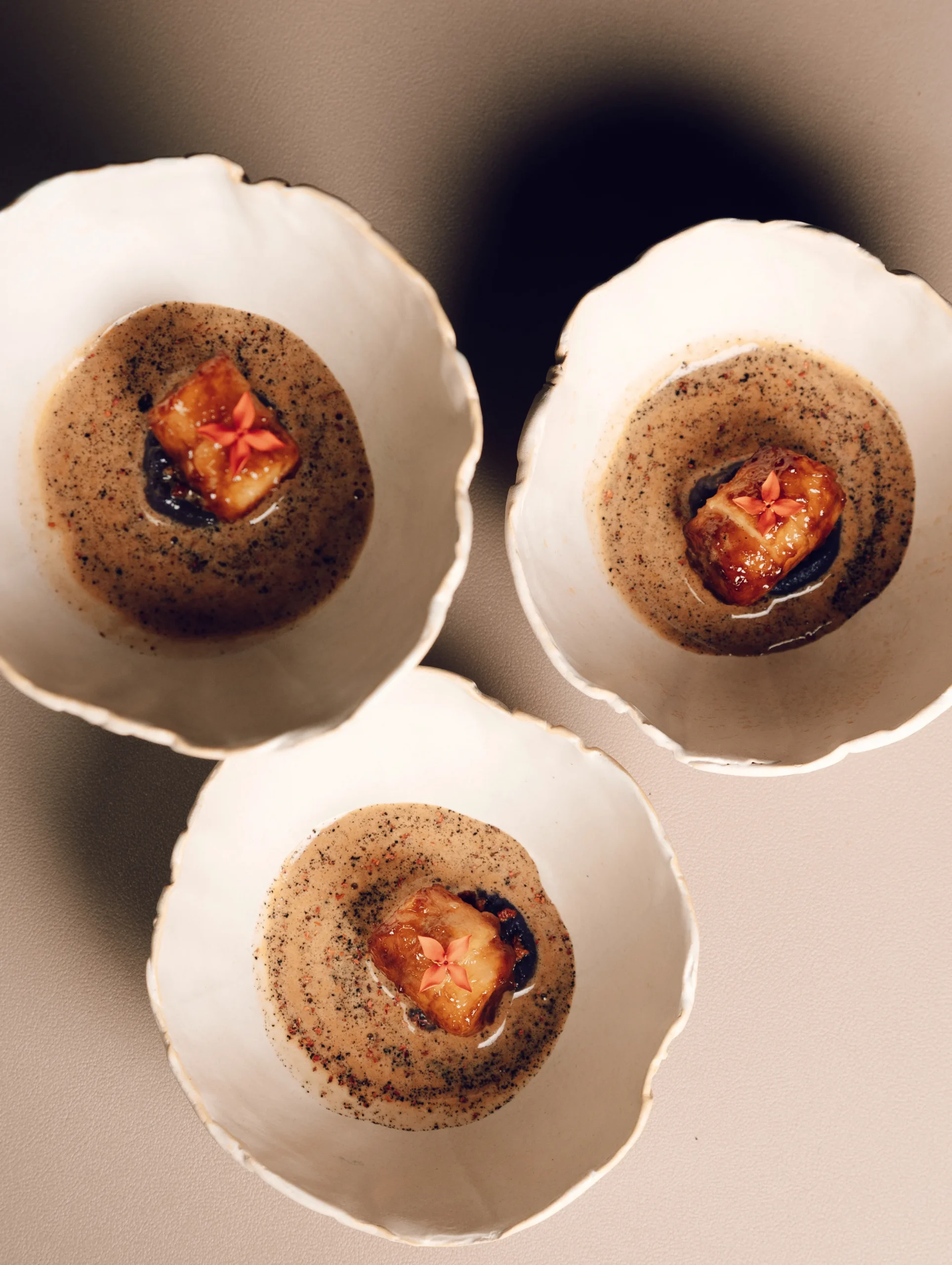
Keeping The Table Small
For all the different directions his work has taken, Don wants Linamnam to remain small.
“For Linamnam, we never wanted it to grow, really, but we wanted it to keep getting better,” he says. That means polishing the details that make guests comfortable and maintaining the relationships with farmers, fishermen, and producers that sustain the restaurant.
Michelin recognition has brought new expectations, but Don still makes it a point to welcome everyone himself, even saying goodbye before they leave. His team is more than capable of working without his constant presence; he wants to be there for the guests.
Aside from cooking, Don is also writing a book, gathering stories from his travels around the Philippines and the ingredients he encounters, as well as some of the dishes developed at Linamnam. It gives him another way to share the discoveries that already find their way into conversations at the restaurant.
Some guests return every few weeks or every month, knowing the food will likely have changed. For a chef who once grew restless cooking the same things every day, it’s an arrangement that suits him well.
“They’re not looking forward to a specific dish, but they’re looking forward to the feeling that they might have while they’re here,” Don says. “That’s what we wanted to hone in on.”
This article was originally published in our December 2026-January 2027 issue.
Photography by Excel Panlaque of KLIQ, Inc.
Frequently Asked Questions
Chef Don Baldosano is the chef and founder of Linamnam, an intimate tasting-menu restaurant situated within his family’s Parañaque home. He received the country’s first-ever Michelin Young Chef Award, while Linamnam received its first Michelin star in the inaugural Philippine edition of the Michelin Guide 2026 and retained it the following edition.
Linamnam serves an ever-changing tasting menu that explores the possibilities of Filipino food. The dishes draw on ingredients and cooking practices Don encounters across the Philippines, as well as what arrives from the farmers, fishermen, and producers he works with directly.
Chef Don Baldosano travels around the Philippines, looking for towns beside mountains or along the coast. He asks around for a popular carinderia, talks to local people, and follows their suggestions and introductions to discover what they eat, how they cook, and how they look at ingredients.
Chef Don Baldosano wants Linamnam to remain small while continuing to get better. This allows him to polish the details that make guests comfortable and maintain the relationships with farmers, fishermen, and producers that sustain the restaurant. He also wants to welcome guests himself and give them the feeling that they might have while they’re there.