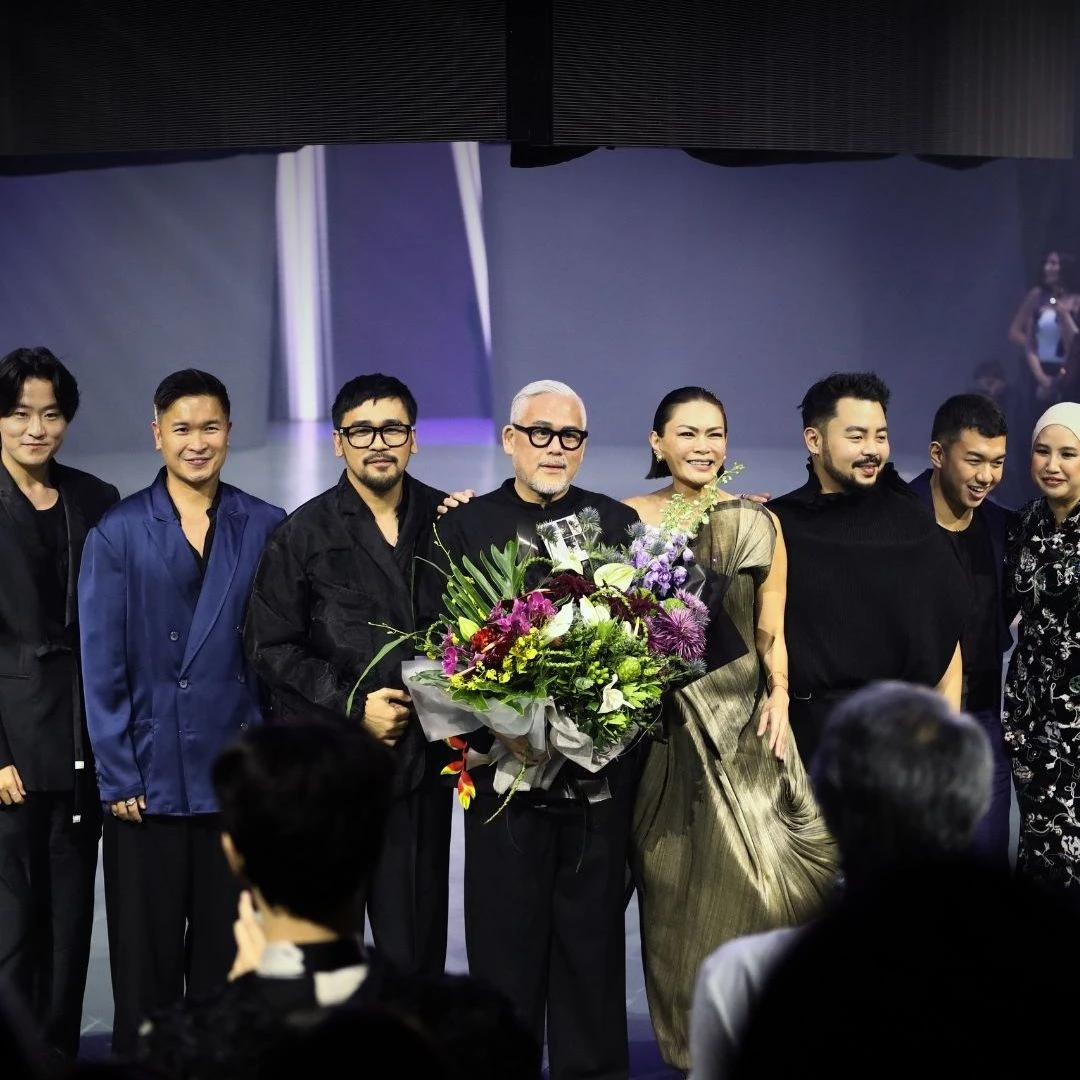
Years into building a name in menswear, Kelvin Morales finally answers the question of what his womenswear might look like.
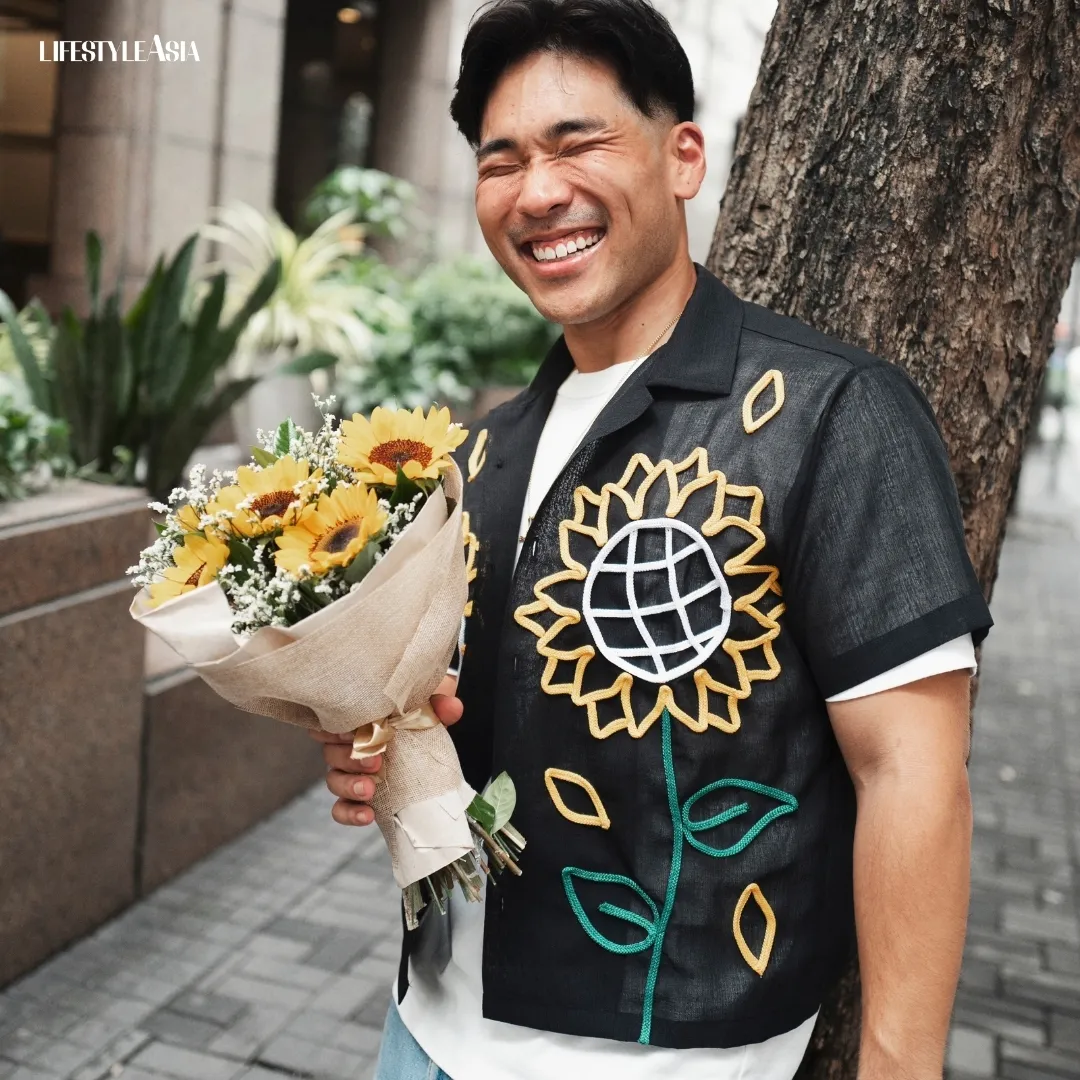
For years, Kelvin Morales’ name has been shorthand for a very specific image of embroidered barongs. Aura, the designer’s first-ever collection dedicated to womenswear, steps away from that signature. The move didn’t come from a desire to expand for its own sake. The designer, a fixture in the local contemporary fashion scene, had spent his career building fluency in menswear before he let himself approach women’s clothing, reasoning that “I never wanted to release something I didn’t fully understand.” That commitment meant studying how women’s bodies move, how they dress differently across contexts, and where an actual gap existed in the local market, rather than simply resizing what he already knew. What makes Aura distinct isn’t the pivot to womenswear on its own, but the concept driving it, one that arrived from somewhere unexpected.
READ ALSO: Why Fashion Keeps Returning To Ancient Greece
Where The Idea For Aura Came From
Kelvin describes becoming unusually sensitive to the energy of people around him, to the point where he began seeing what he calls “aura colors.” He’s upfront about how the claim lands. “I know it sounds strange, but it became something I couldn’t ignore,” he says. What held his attention was that the colors shifted with what a person was going through, and as he moved into researching womenswear, he noticed something that felt specific to the women around him: more frequent and visible physical and emotional change across different stages of life. So, transformation became the collection’s organizing idea.
That’s a different starting point than his previous collection, Pirate Bae, which treated the self as a vessel. Aura moves in a different direction: instead of a body that holds an identity steady, this collection imagines a body that’s constantly shifting, and clothing that has to keep up.
Translating The Intangible
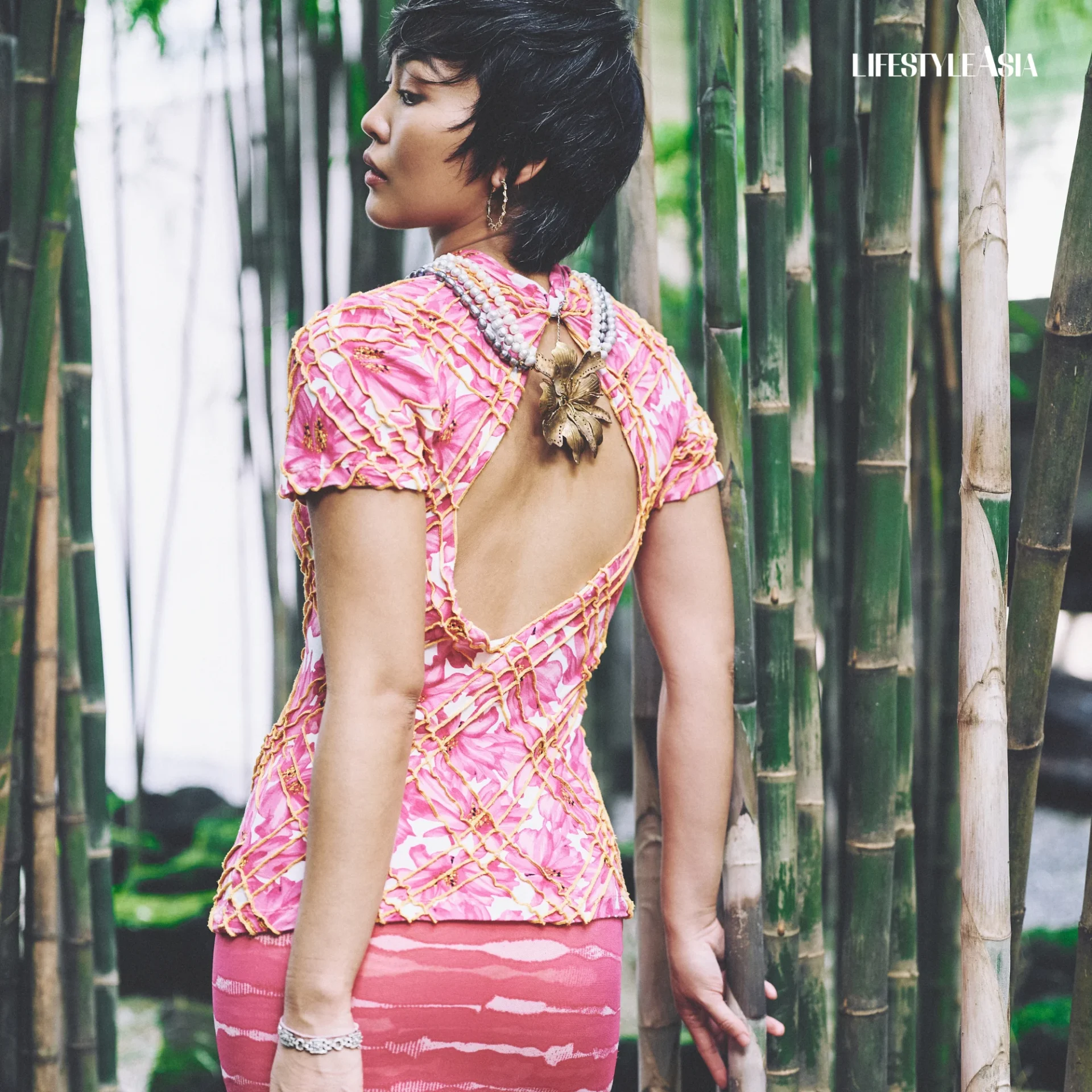
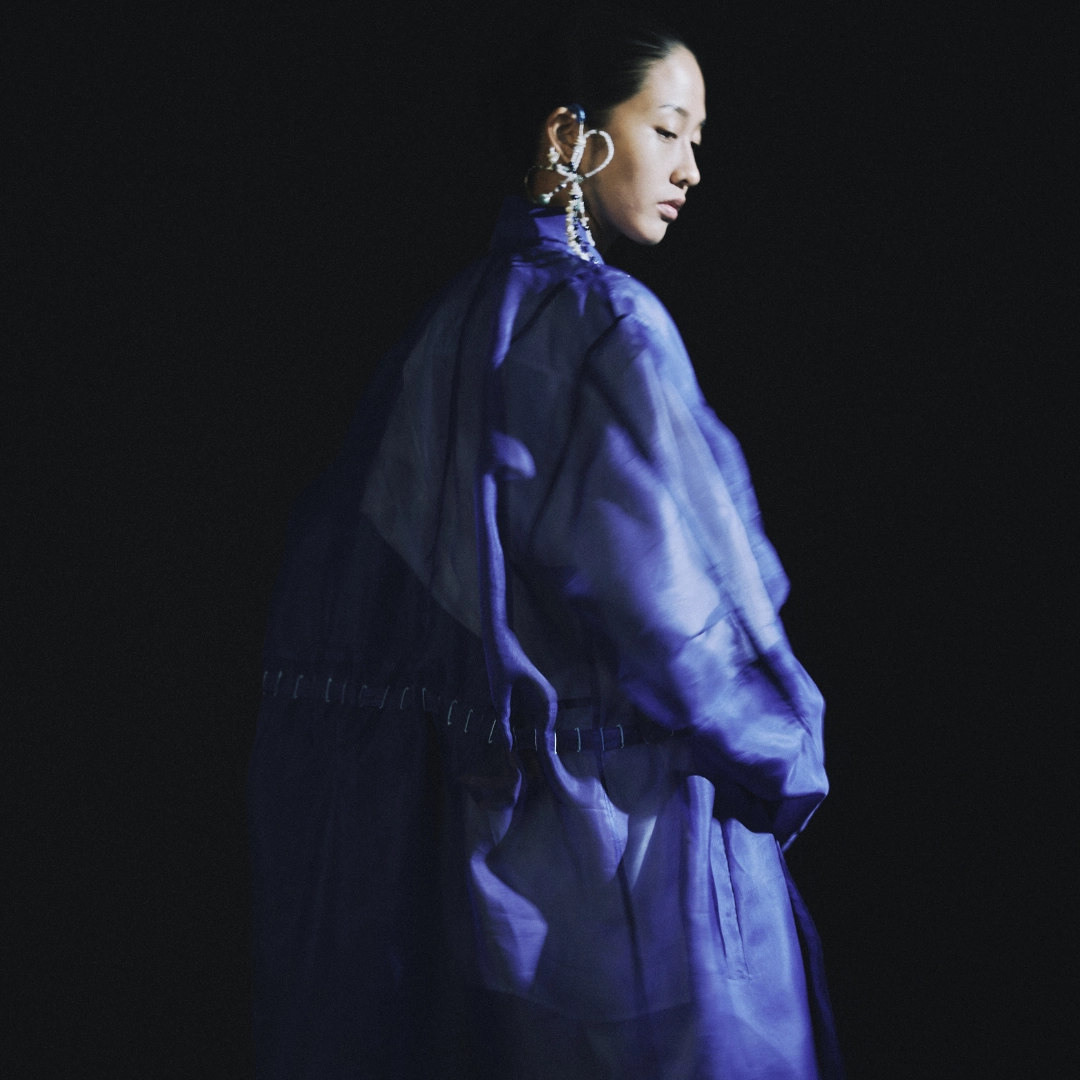
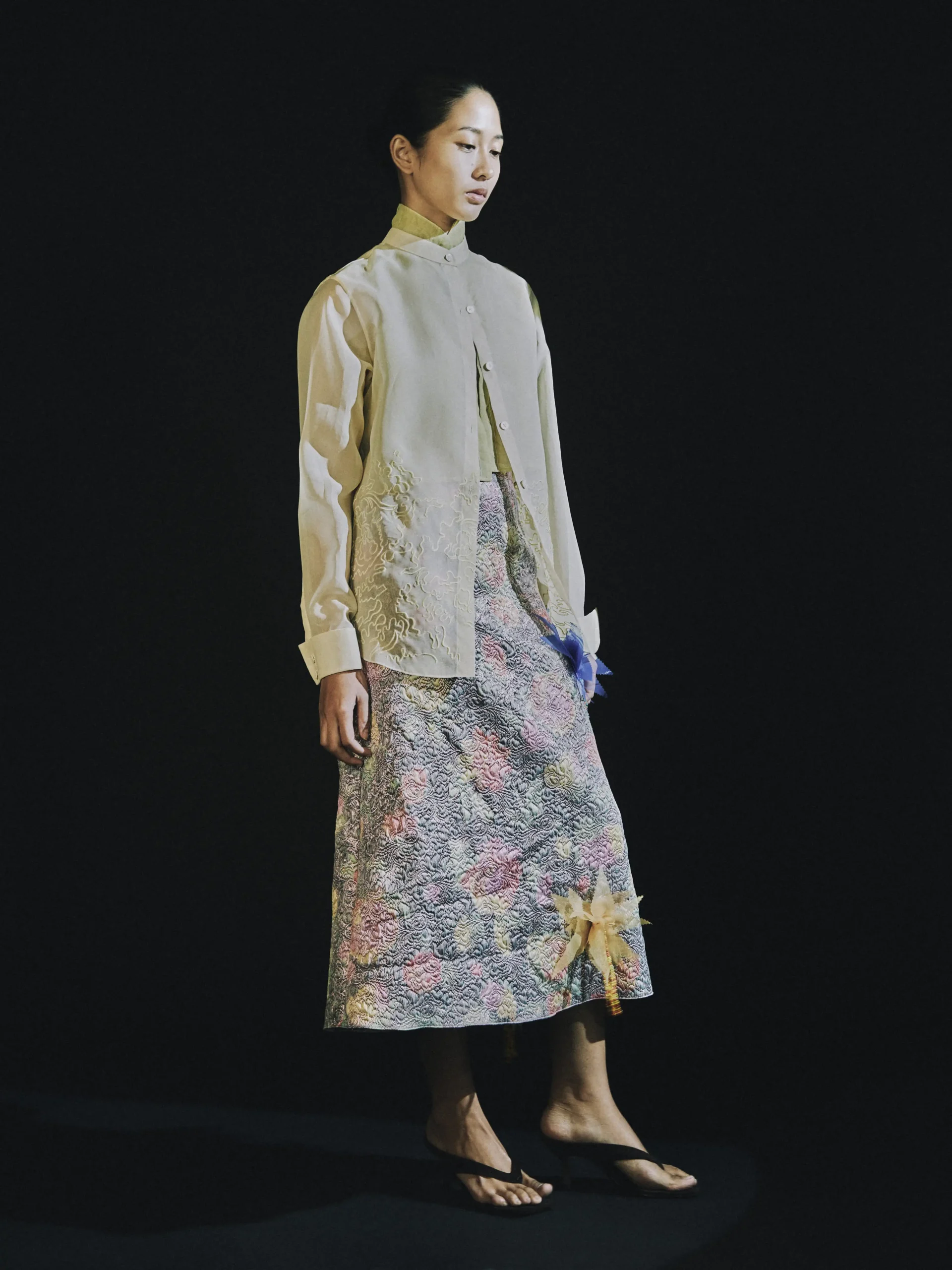
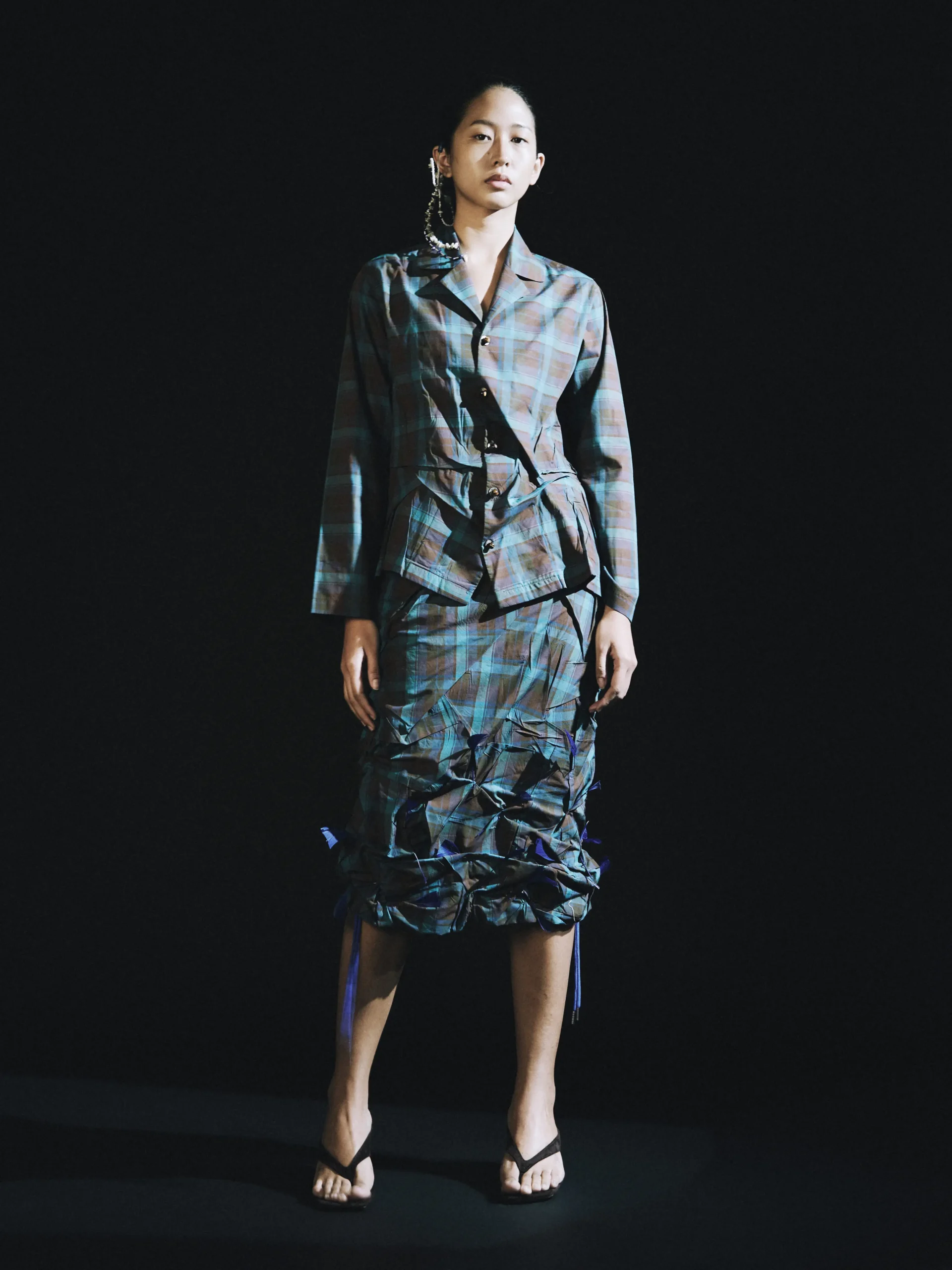
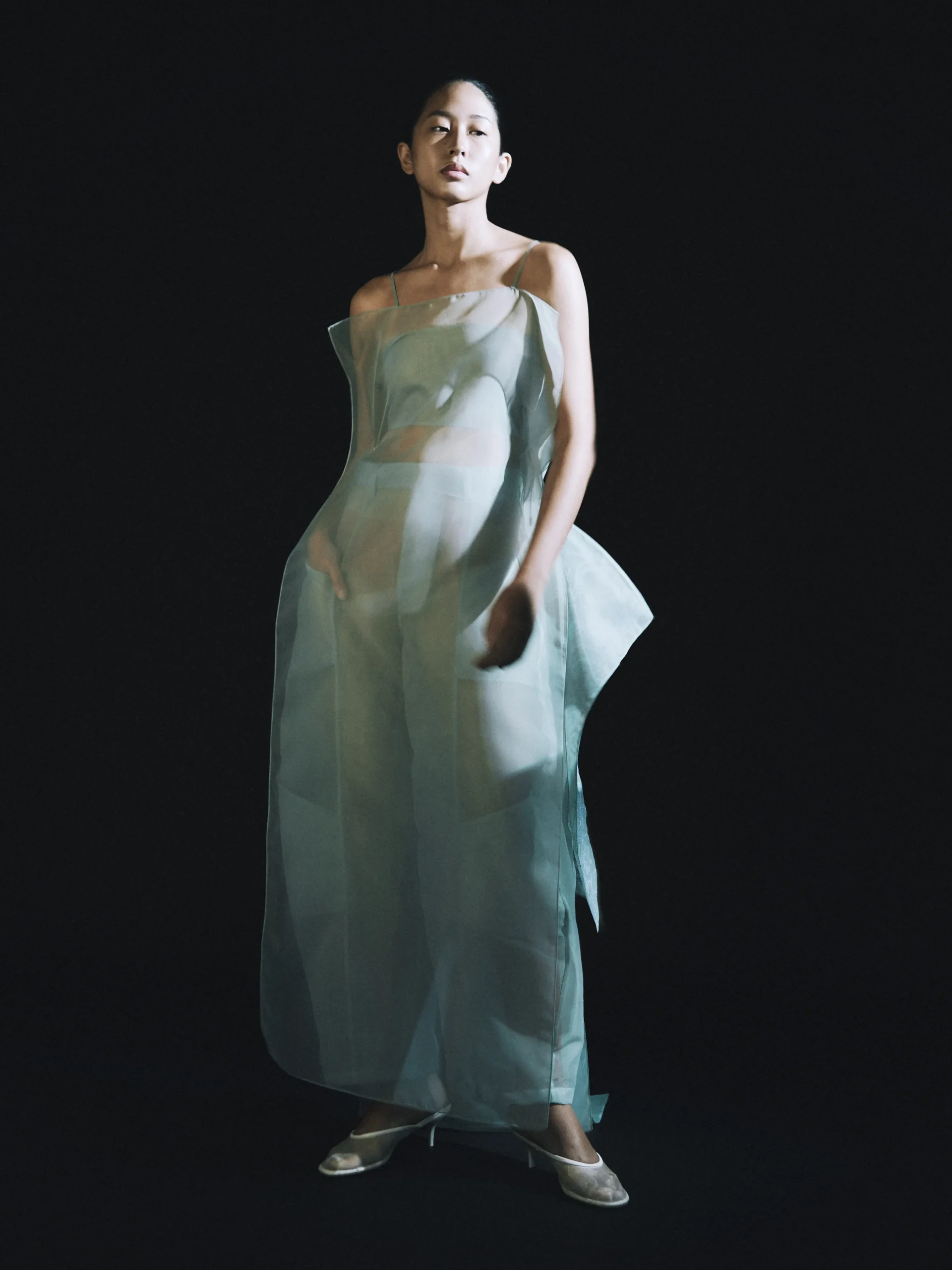
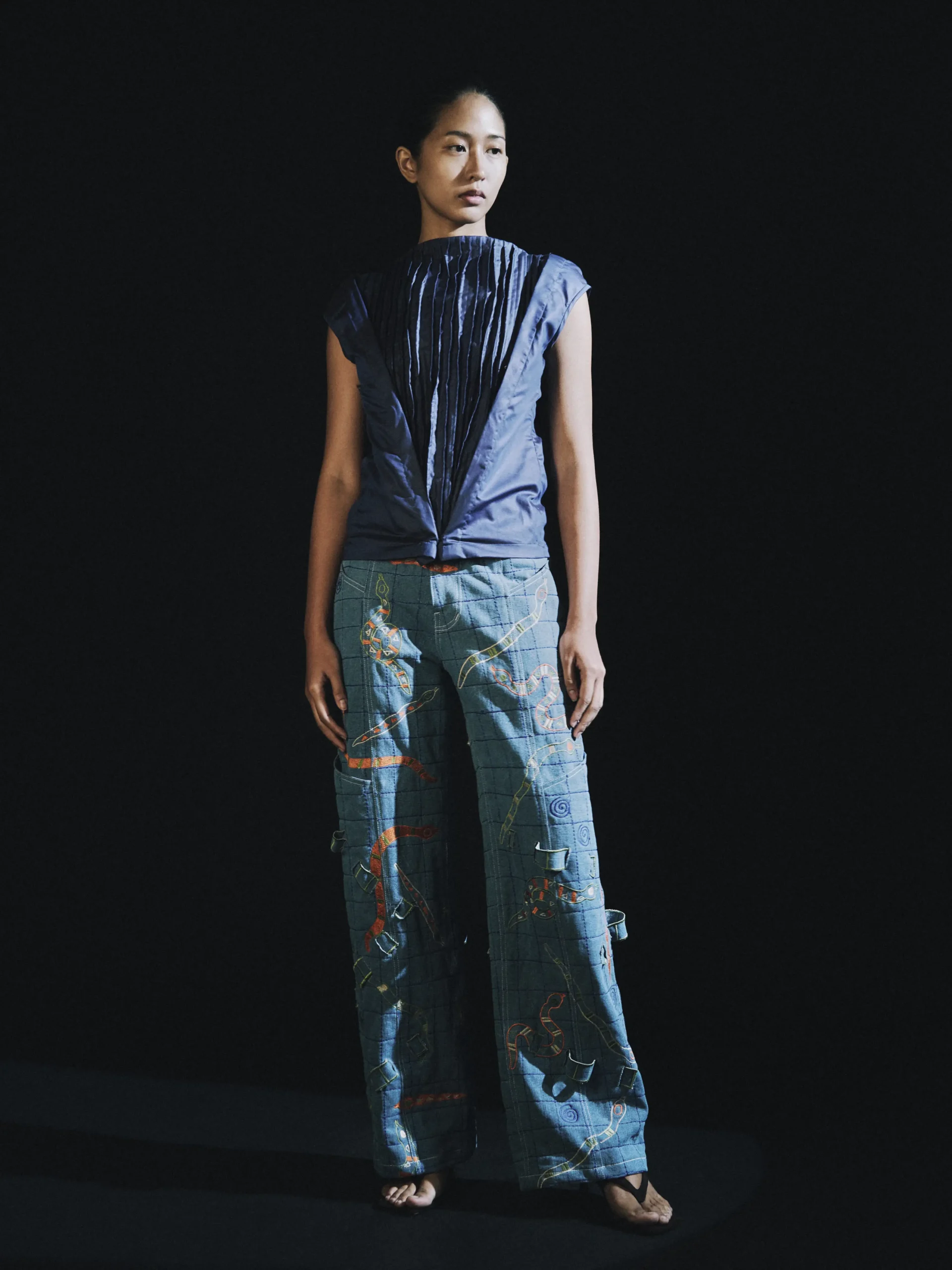
The harder problem was making an idea like “aura” physical. Kelvin worked it into the clothes through layers of transparency, textured surfaces, and construction that shifts mid-garment; in his words, moving from flat textile into laminated folds within a single piece. The effect is meant to visualize an energy shift, one state becoming another without a hard seam between them.
Versatility became part of the same logic. Several looks in the collection can be worn or configured multiple ways, and the designer frames that as more than a practical feature. “People themselves are constantly changing,” he says. “I wanted the garments to reflect that evolution instead of remaining fixed in one form.”
The Color Problem
Color, he admits, was the collection’s real challenge, and by his own description, one of his weaknesses as a designer. Aura as a concept invites an obvious, almost literal palette of bright, rainbow-toned, festive hues. Kelvin resisted it. The aura colors he says he actually perceived were subtler than that, muted and layered, sometimes close to dull, but possessing a genuine weight. Balancing that instinct against a Kelvin Morales collection, rather than a costume of the idea, took considerable research.
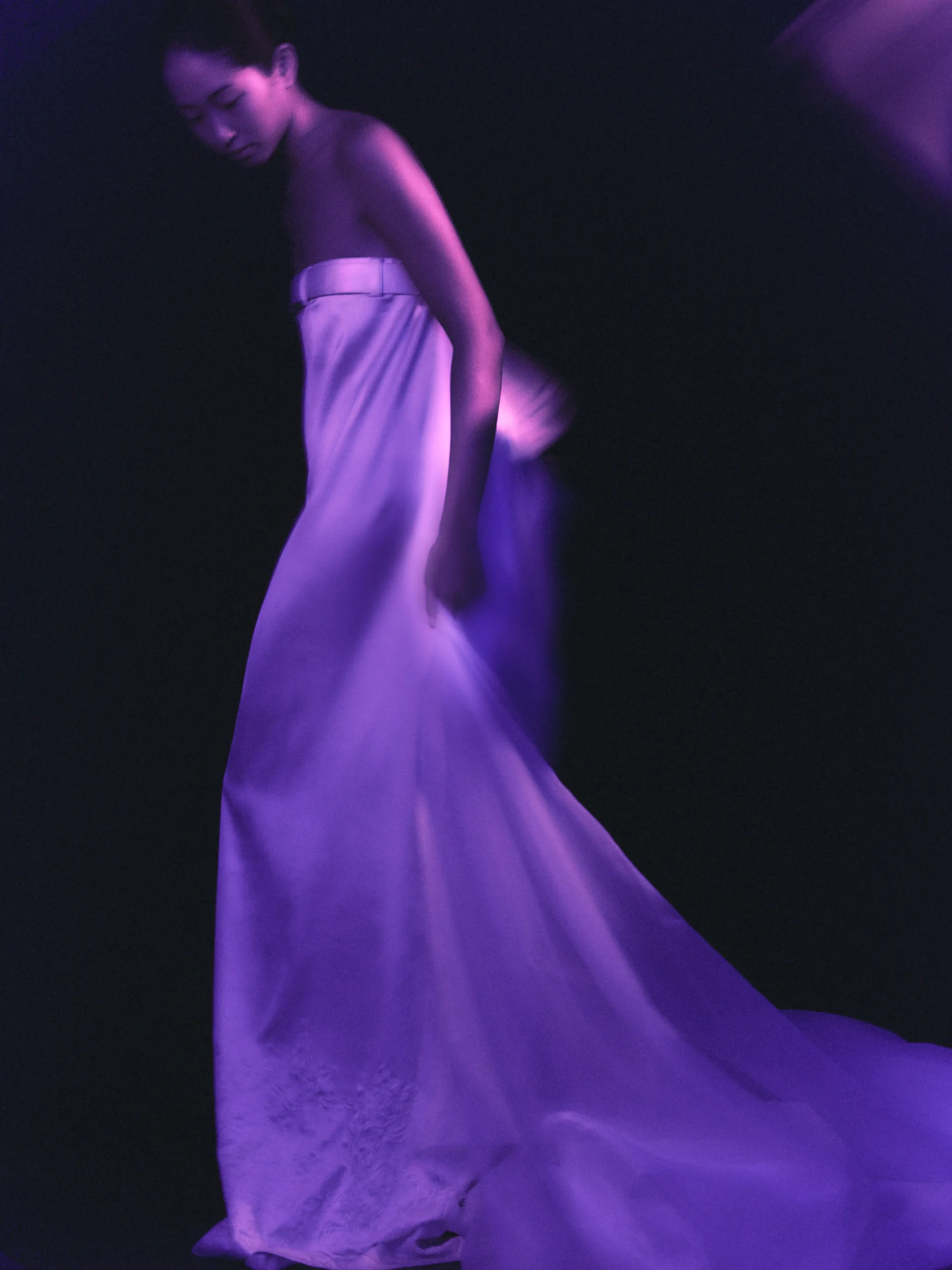
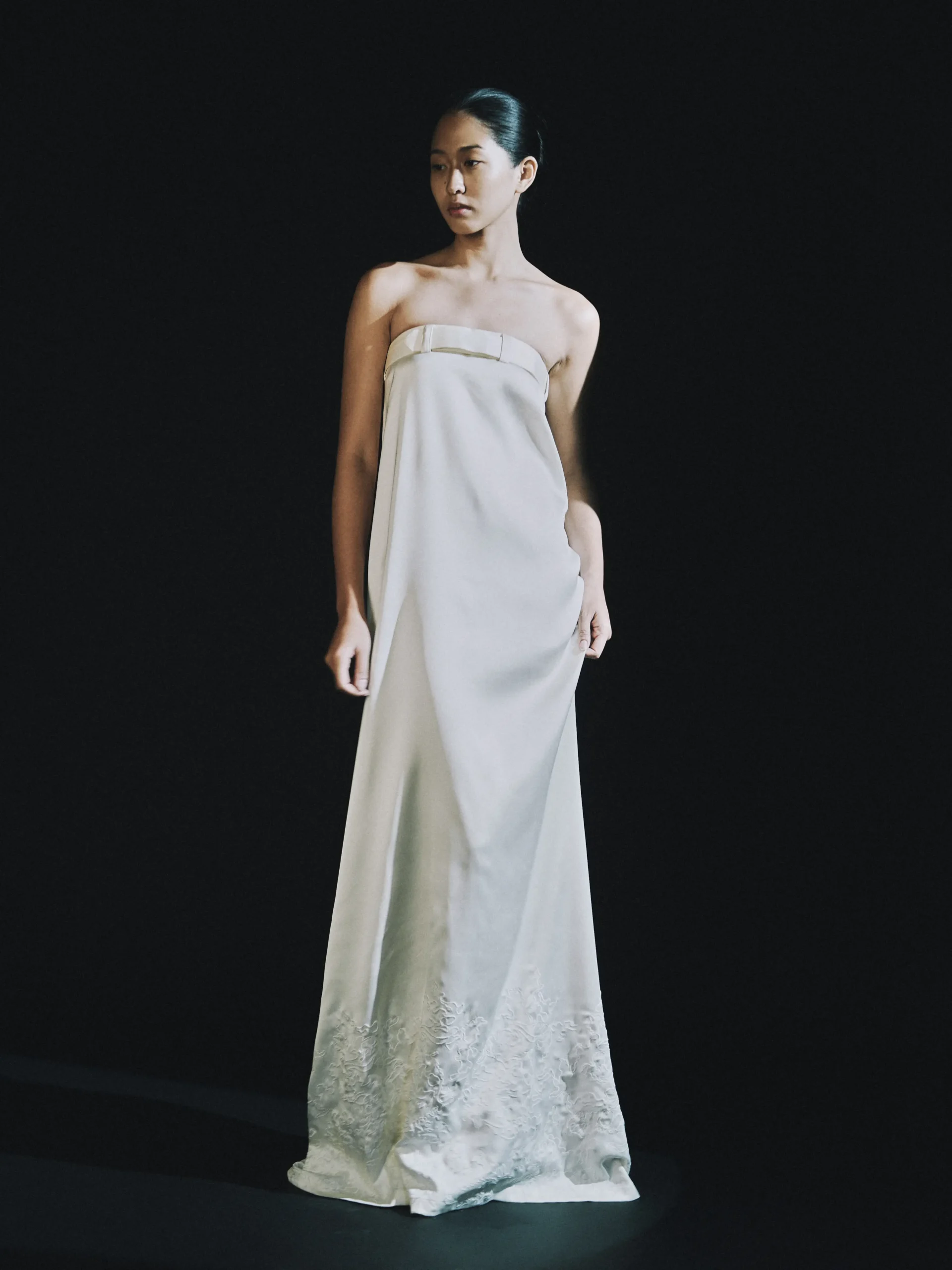
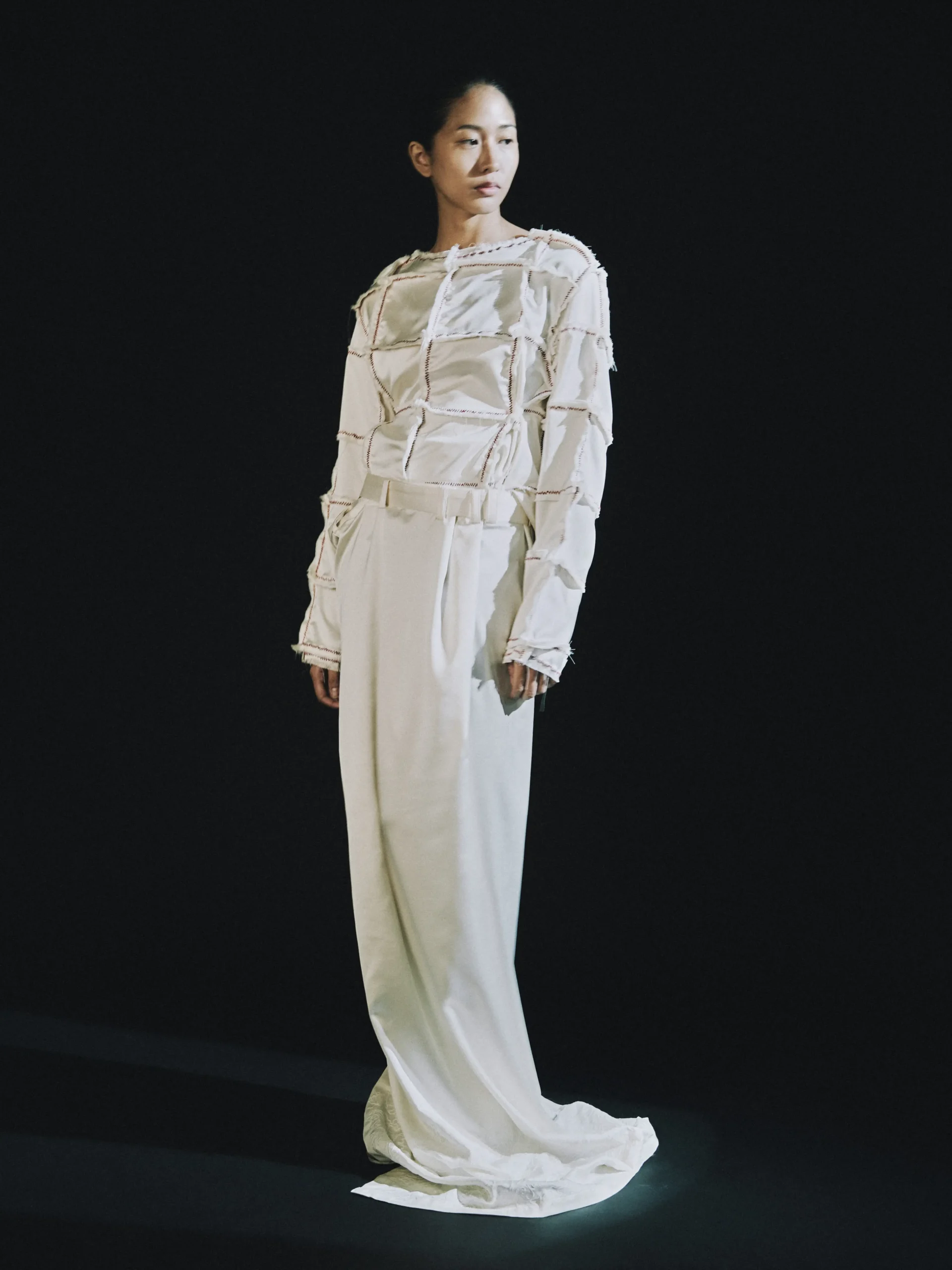
White ended up mattering most to him, more than any single color in the collection. He connects it to new beginnings and clarity, a reading that runs counter to the rainbow associations the word “aura” tends to summon. That belief shows up most directly in one of the collection’s key pieces, a white adjustable dress with a belt, inspired by a close friend preparing for her wedding.
What Carries Forward
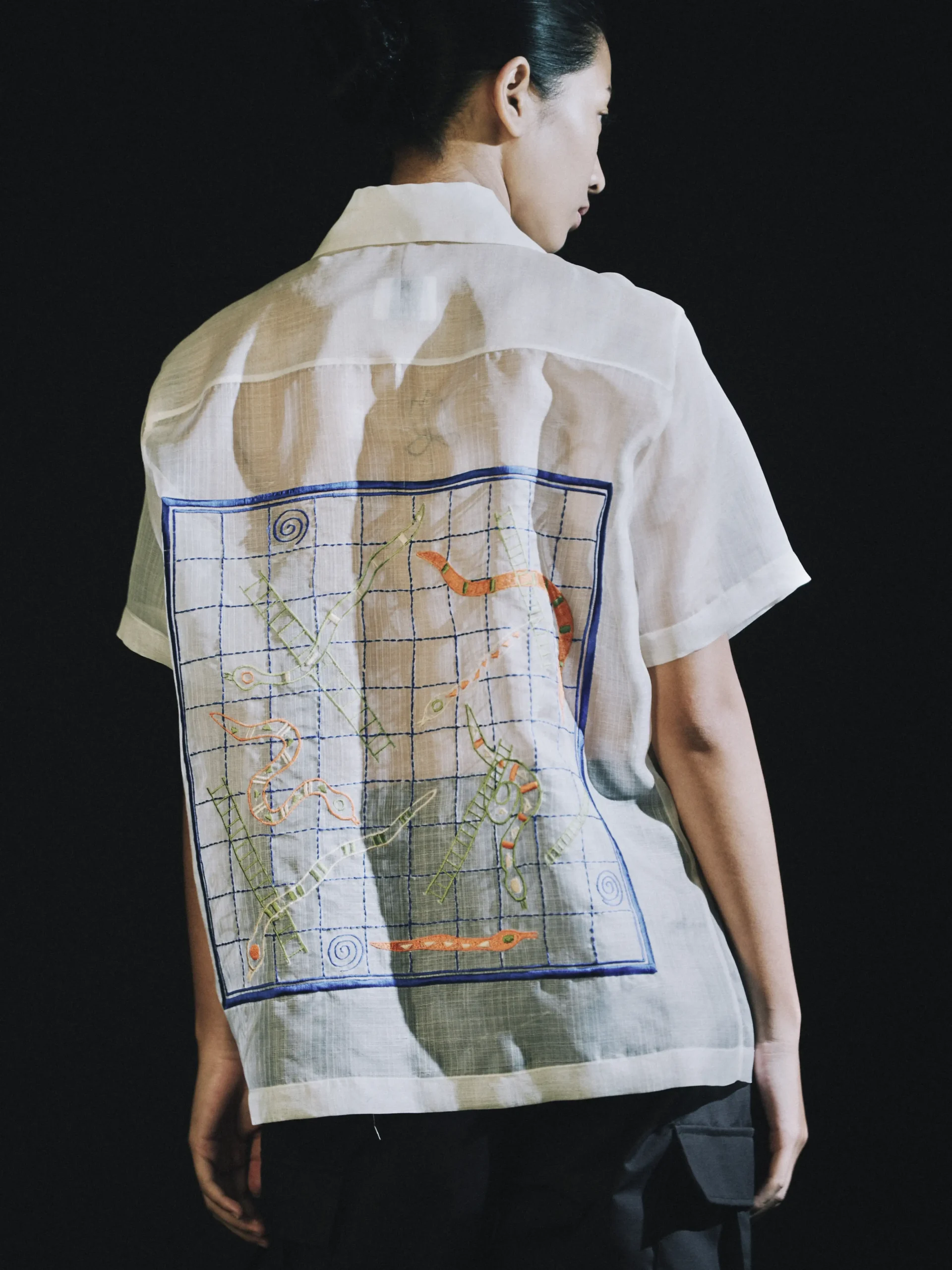
Even with the conceptual departure, some of Kelvin’s habits stayed intact. The precision in pattern-making and construction he built through menswear carries over; so does the hand-guided embroidery. His laminated textile technique, developed earlier in his work, becomes one of the brand’s house codes here, a construction signature rather than a one-off effect.
His outside references also mark a departure from typical fashion-interview territory. Rather than citing other designers, Kelvin points to Kenjiro Okazaki: Retrospective Strata and Marina Abramović’s Transforming Energy—books concerned with transformation from very different angles—as the materials that shaped how he thought through the collection conceptually.
Not A One-Time Thing
Kelvin is clear that the collection isn’t a detour from his menswear work so much as a second track running alongside it. He aims to release a collection in each category every year going forward, continuing to build out his craftsmanship and creative language across both. What Aura suggests, more than anything, is a designer testing how far a very personal, slightly uncanny experience can be translated into something wearable, without losing the precision that built his name in the first place.
Photography by Karl King Aguña, creative direction by Kelvin Morales, styling by Geno Espidol and Anz Hizon, makeup and hair by Zinjian Paul, courtesy of Kelvin Morales
Frequently Asked Questions
Kelvin Morales is a Filipino fashion designer known for his contemporary designs, embroidered barongs, and precise craftsmanship. With Aura, he expands his work into womenswear for the first time.
Aura is Kelvin Morales’ debut womenswear collection. It explores the idea of personal transformation through adaptable garments, layered textiles, and refined construction.
Morales waited until he felt he fully understood womenswear, studying how women move, dress, and experience different stages of life before designing his first collection.
The collection was inspired by Morales’ belief that people have changing “aura colors” that reflect emotional and personal transformation, which became the central concept behind the designs.
Aura focuses on transformation, evolution, adaptability, and personal growth, using clothing to represent how people constantly change over time.