
From disposable pieces associated with fast fashion to technically advanced garments by Issey Miyake and Jean Paul Gaultier, the fabric’s reputation is anything but one-dimensional.
Over the past few weeks, the term “polyester” has become a buzzword at the center of some heated online discourse. It all started when British rapper Fakemink casually declared in an interview, “I don’t want to wear polyester. I don’t think anyone should be wearing polyester.” The bold statement caused considerable tumult in the fashion side of the internet, the quote making its rounds on X, where opinions came in hot and fast, ranging from “He’s right” to “Does anyone here actually know what polyester is?” Because, as one user quickly pointed out, “The way y’all don’t even know what polyester is… Jean Paul Gaultier’s mesh and Issey Miyake’s Pleats Please pieces wouldn’t exist without polyester.” And with that single statement, the discourse transformed into something far more divisive and complicated.
From the perspective of one side, polyester is the villain: cheap, unsustainable, and synonymous with fast fashion giants like Shein. Meanwhile, others choose to give credit where credit is due, seeing it as fashion’s creative fuel; it is, after all, the very material behind many iconic, technically impressive pieces. Same fabric, wildly different reputations.
Polyester is experiencing an identity crisis, and naturally, the complexity of the situation drew me in, urging me to get to the bottom of the “fast fashion polyester vs. designer polyester” dilemma; here’s what I learned.
READ ALSO: We Need To Talk About Vegan Leather In Fashion
What Is Polyester?
For something that’s literally everywhere, polyester is oddly misunderstood. Case in point: most people can wear it head-to-toe and still not really know what it is, or where it came from. As one researcher puts it, “we seem to know very little about this most important fiber for textiles and apparel.”
At its core, polyester is a synthetic fiber, meaning it’s entirely man-made. Unlike cotton or silk, it doesn’t come from plants or animals, but a factory. More specifically, it’s a chemical compound taken from crude oil (usually petroleum), then built through long chains of molecules called polymers—which is just a more scientific way of saying it’s a form of plastic that’s turned into a textile.
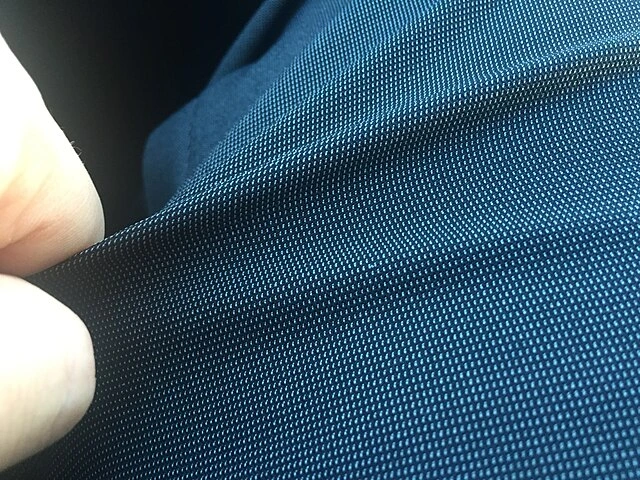
Polyester was first developed in the early 1940s, a time when scientists were more motivated than ever to “invent the future.” By the 1950s, the textile entered the market as a kind of miracle material: lightweight, durable, wrinkle-resistant, and, most importantly, low-maintenance. In a post-war world tired of labor-intensive laundry routines, its wash-and-wear appeal was a game changer. But things really took off in the 1960s; by then, polyester was everywhere, riding the wave of what was essentially a “plastic fantastic” era of optimism around synthetic materials. It promised modernity: clothes that held their shape, dried quickly, and didn’t demand constant ironing. Fashion loved it for its versatility; consumers loved it for its convenience.
But polyester isn’t constrained to a single look or texture, and that’s where the conversation becomes more nuanced. Yes, it can be stiff, shiny, and sweat-trapping, but it can also be surprisingly soft, lightweight, and fluid. In many cases, garments can conform easily, maintain their structure, remain highly durable, and take to processes like dyeing exceptionally well. In other words, polyester is just as capable of producing a striking, high-fashion runway piece as it is a cheaper, fast-fashion one—which brings us to the next point of this discussion.
High Fashion Plastic
Polyester, for all its baggage (and whether we like to admit it or not), has also been responsible for some of fashion’s most memorable moments. Strip away the fast fashion associations, and you’re left with a material that designers have used as a tool for innovation.
Take Issey Miyake, whose Pleats Please line essentially redefined what polyester could do. Instead of treating it like a basic fabric, Miyake leaned into its heat-responsive properties, developing a technique where garments are pleated after construction. This gave way to permanently pleated pieces that move with the body yet manage to hold their architectural silhouettes, fusing design with chemical engineering.


Then there’s Jean Paul Gaultier, who used polyester to create his now-iconic mesh tops: sheer, second-skin pieces that hug the body like a tattoo, a feat that was made possible by their material’s elasticity and durability. These garments blurred the line between clothing and illusion, turning synthetic material into something sensual, subversive, and high fashion.
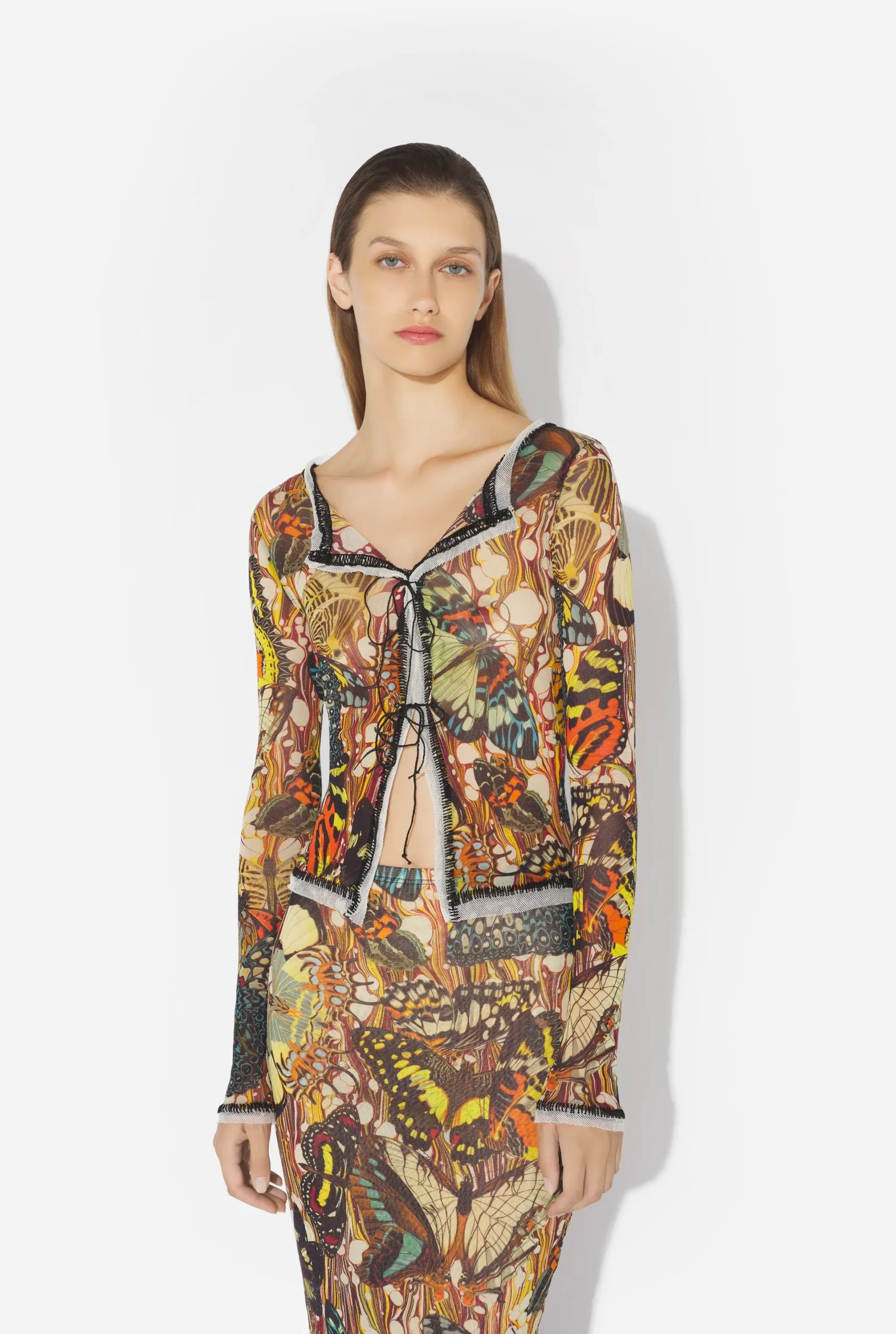

Yet even if they share the same name and similar properties, these types of polyester are worlds away from the mass-produced kinds you’ll find in fast fashion like Shein. High-grade polyester exists, and it distinguishes itself not in price point, but in factors that relate to quality and construction.
Where fast fashion polyester often feels thin, plasticky, and disposable, high fashion iterations are engineered for greater texture, structure, and longevity. So same base material, completely different finish. What’s more, assuming that designer labels or companies are being transparent about their processes, high-grade polyester can be more sustainable if it’s rPET (recycled polyester), usually derived from post-consumer bottles or textile waste.
This is the part that often gets lost in the discourse: polyester isn’t inherently “cheap,” and that’s because it’s scalable. The same qualities that allow it to be mass-produced at low cost are also what make it incredibly adaptable. Polyester can be harmful and disposable, but in the hands of the right designer, it doesn’t have to be. Returning to the arguments that began this entire feature, it’s clear that the textile’s place in fashion isn’t dichotomous, though with the current state of the world, it’s simpler to find a “big bad” to eradicate. This doesn’t mean no damage has been done, of course; but in understanding this unassuming and common material, we might be able to find better ways to create and use it.
Banner photos via Instagram @pleatspleaseisseymiyake.
Frequently Asked Questions
Polyester is a synthetic, manufactured fiber constructed from long-chain synthetic polymers. Most commonly derived from purified terephthalic acid and ethylene glycol (petroleum compounds), it is essentially a highly pliable form of plastic engineered into a woven or knitted textile.
Issey Miyake revolutionized textile design by leveraging the high thermoplasticity (heat responsiveness) of high-grade polyester. By cutting and sewing garments two-and-a-half times larger than their final shape and feeding them through a heat press between sheets of paper, the polymer bonds were permanently locked into an architectural, wrinkle-resistant shape.
Jean Paul Gaultier utilized polyester-based mesh because of the fiber’s remarkable tensile strength, elasticity, and affinity for complex dye sublimation. The high-performance synthetic knit allows garments to stretch tightly across the silhouette like a second skin without warping or tearing the intricate graphic illustrations printed on the fabric.
Fast-fashion polyester typically utilizes short, low-density staple fibers resulting in a thin, abrasive weave that traps heat and degrades rapidly. In contrast, luxury-grade alternatives often feature continuous-filament configurations or premium rPET (recycled polyethylene terephthalate) sourced from post-consumer waste, which are optimized for structural drape, texture, and durability.
Recycled polyester (rPET) reduces reliance on crude oil extraction and diverts plastic waste from landfills, using significantly less energy during manufacturing than virgin polymers. However, it remains part of a linear lifecycle regarding microplastic shedding during domestic washing cycles, prompting luxury houses to invest heavily in specialized fiber coatings and bio-synthetic research.