Kawayan de Guia makes his U.S. solo debut at Silverlens New York with a haunting exhibition exploring colonialism, commodity culture, and resistance.
As contemporary Filipino art continues to gain global attention, Silverlens brings another powerful voice to the forefront with the New York debut and first U.S. solo exhibition of artist Kawayan de Guia. Titled Excavations from the land of not so plenty, the show runs until June 27, 2026 at Silverlens New York.
READ ALSO: Upcoming: “Star Wars: Return Of The Jedi” Gets Full Concert Experience This September 2026
A Closer Look At Excavations from the land of not so plenty By Kawayan De Guia
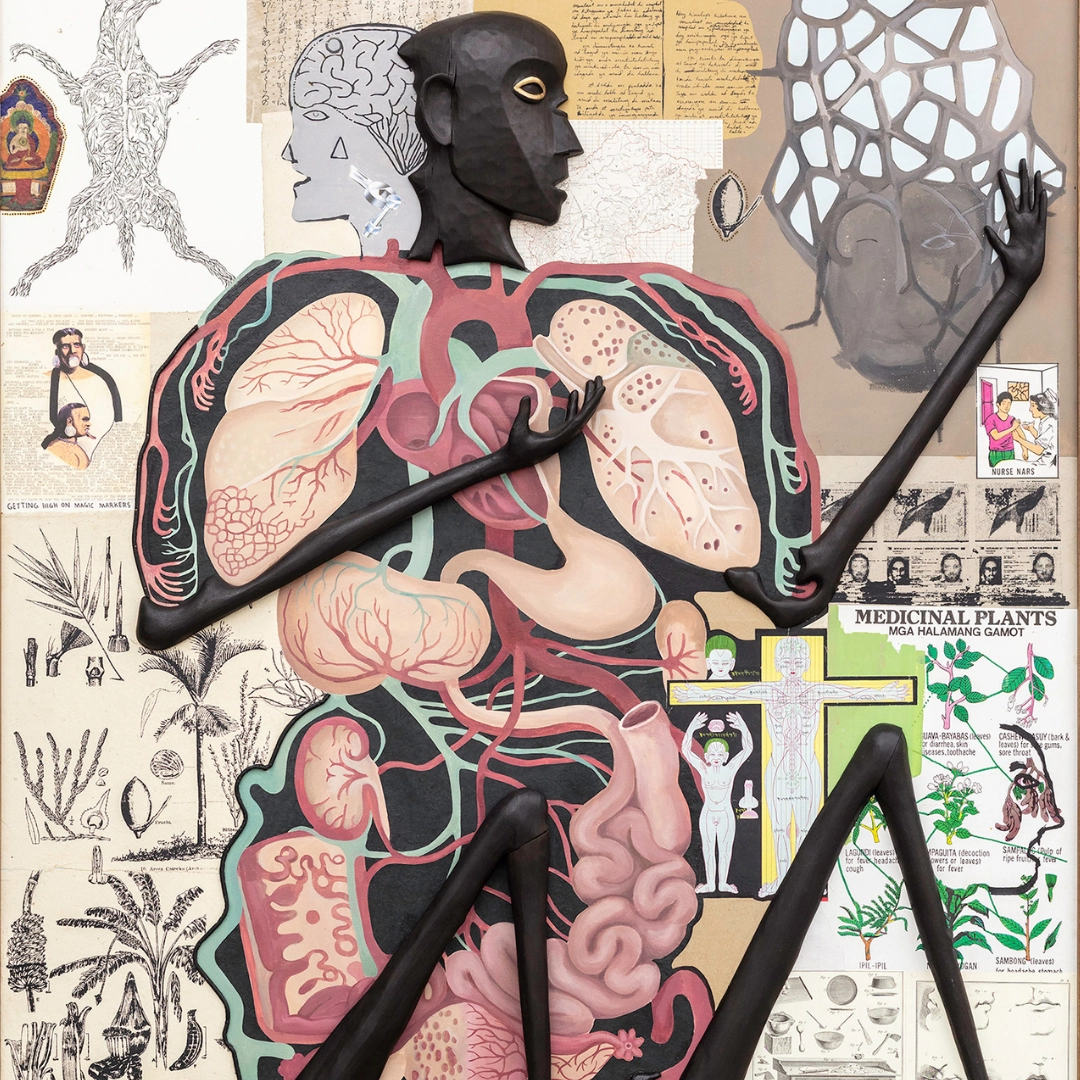
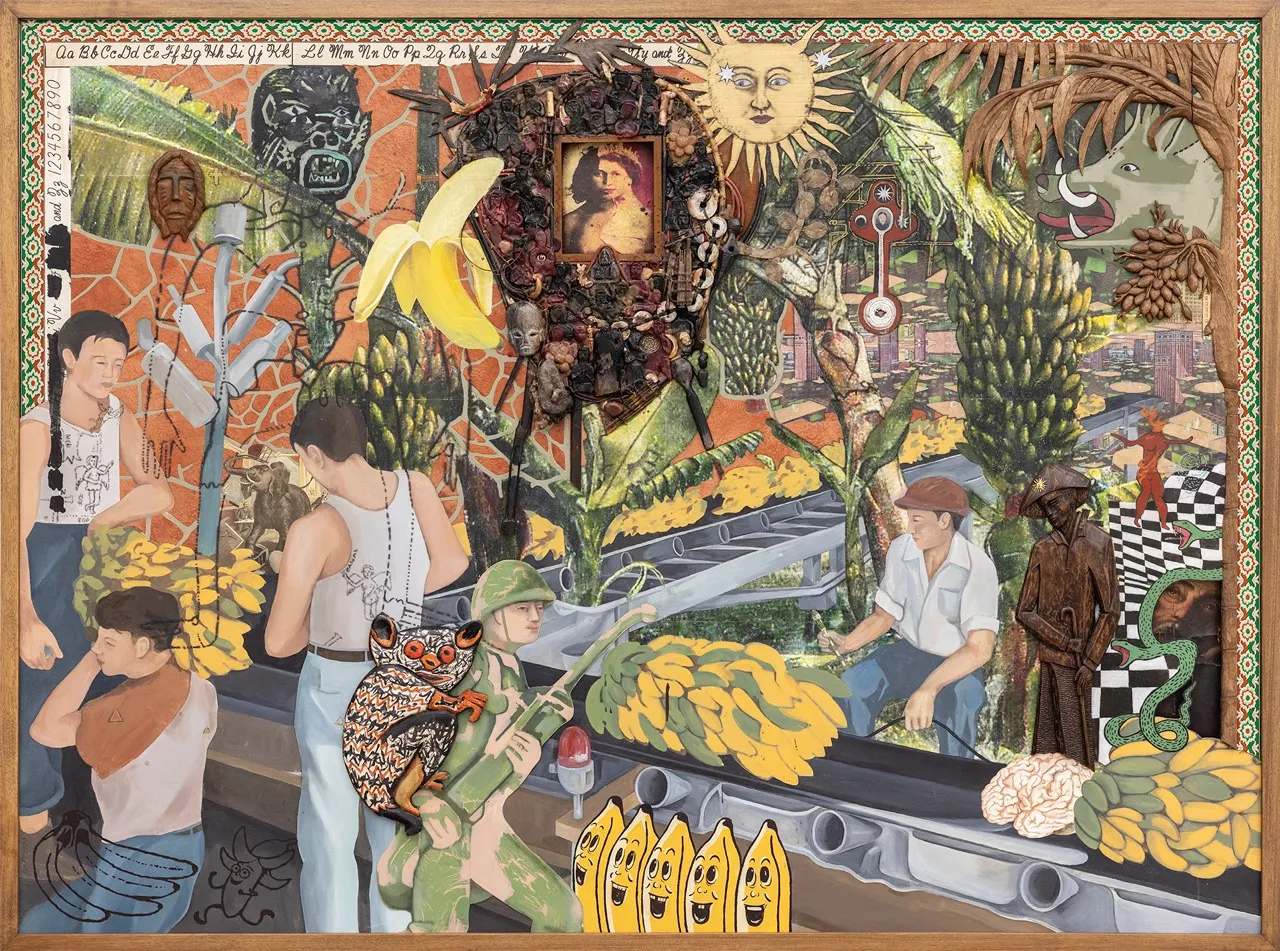
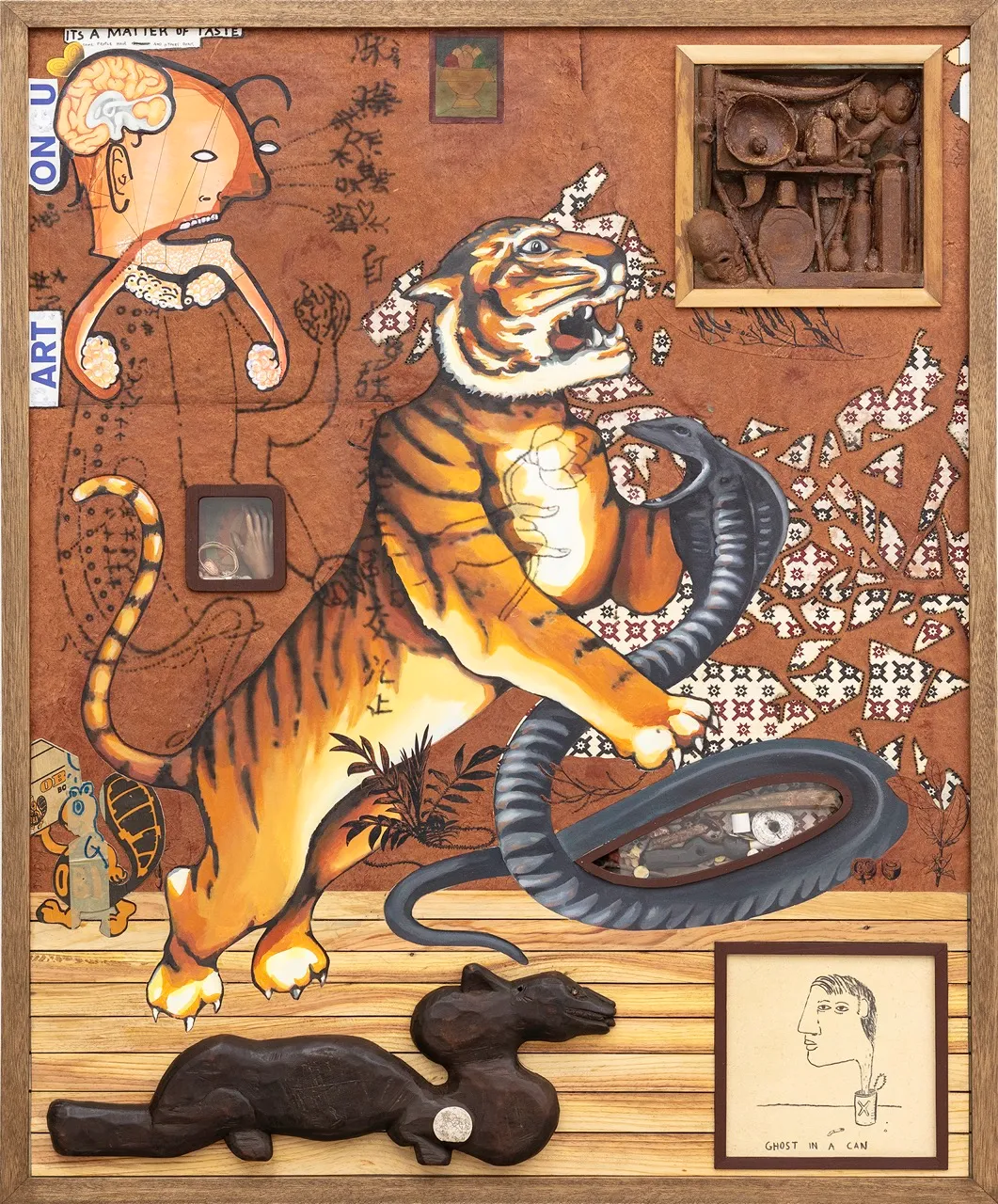
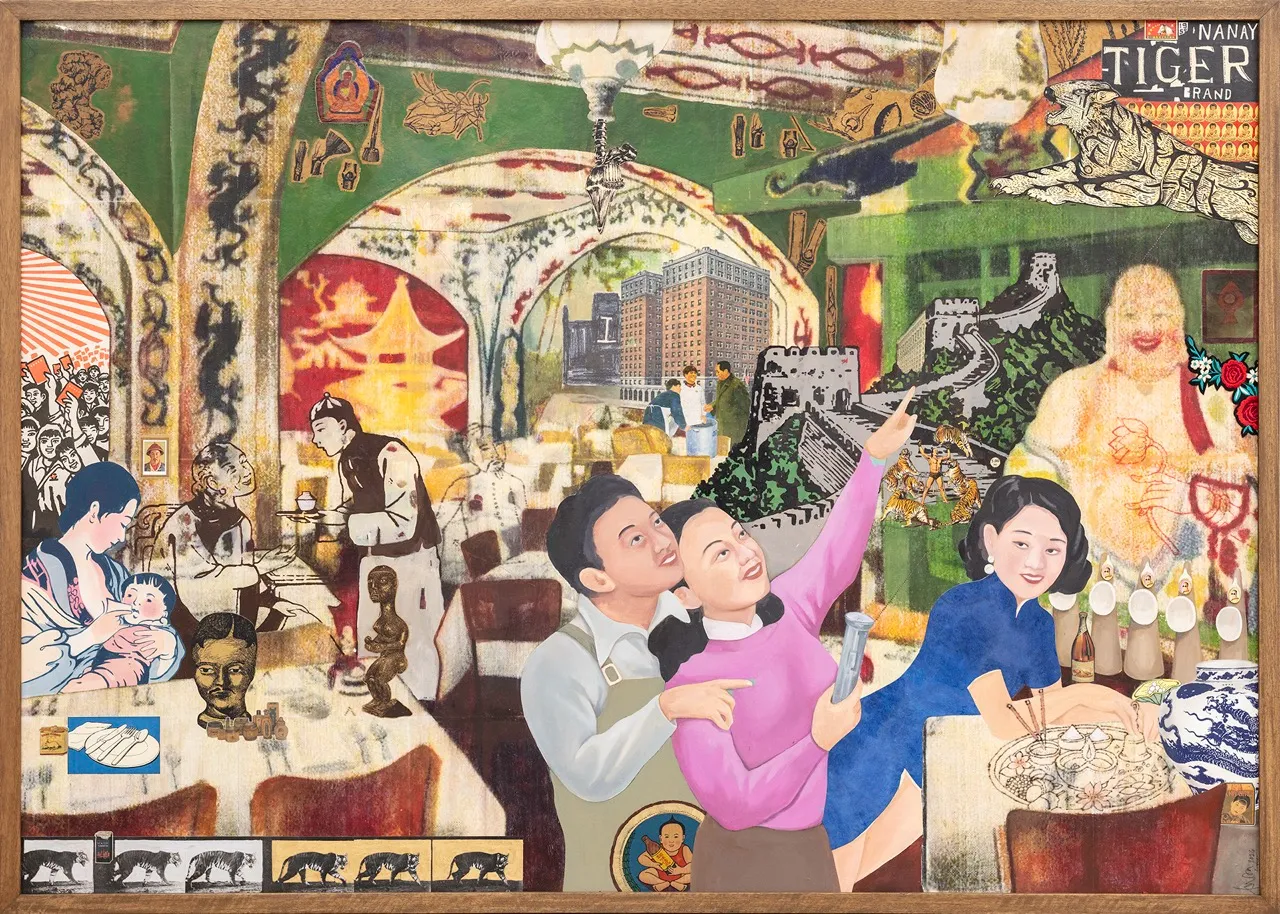
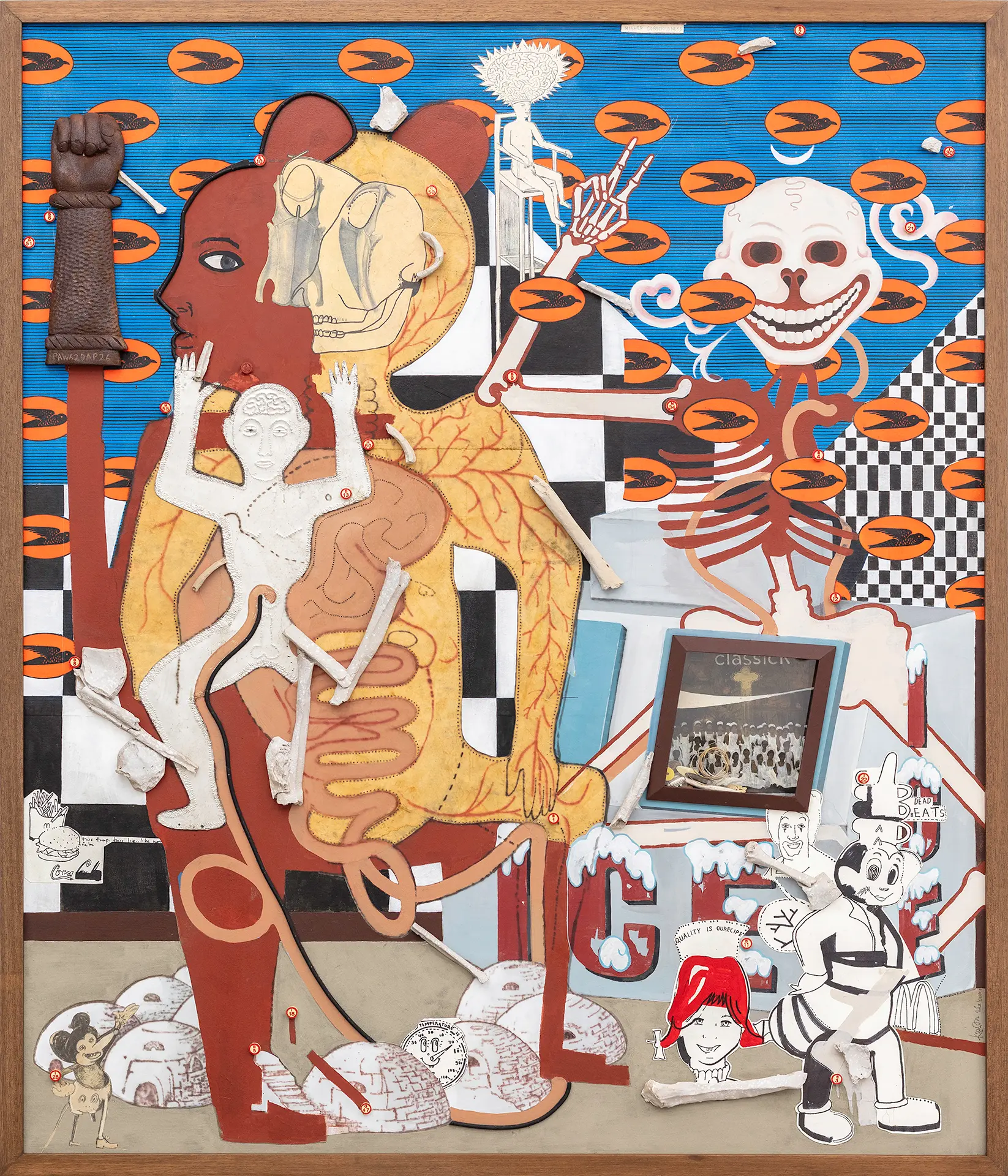
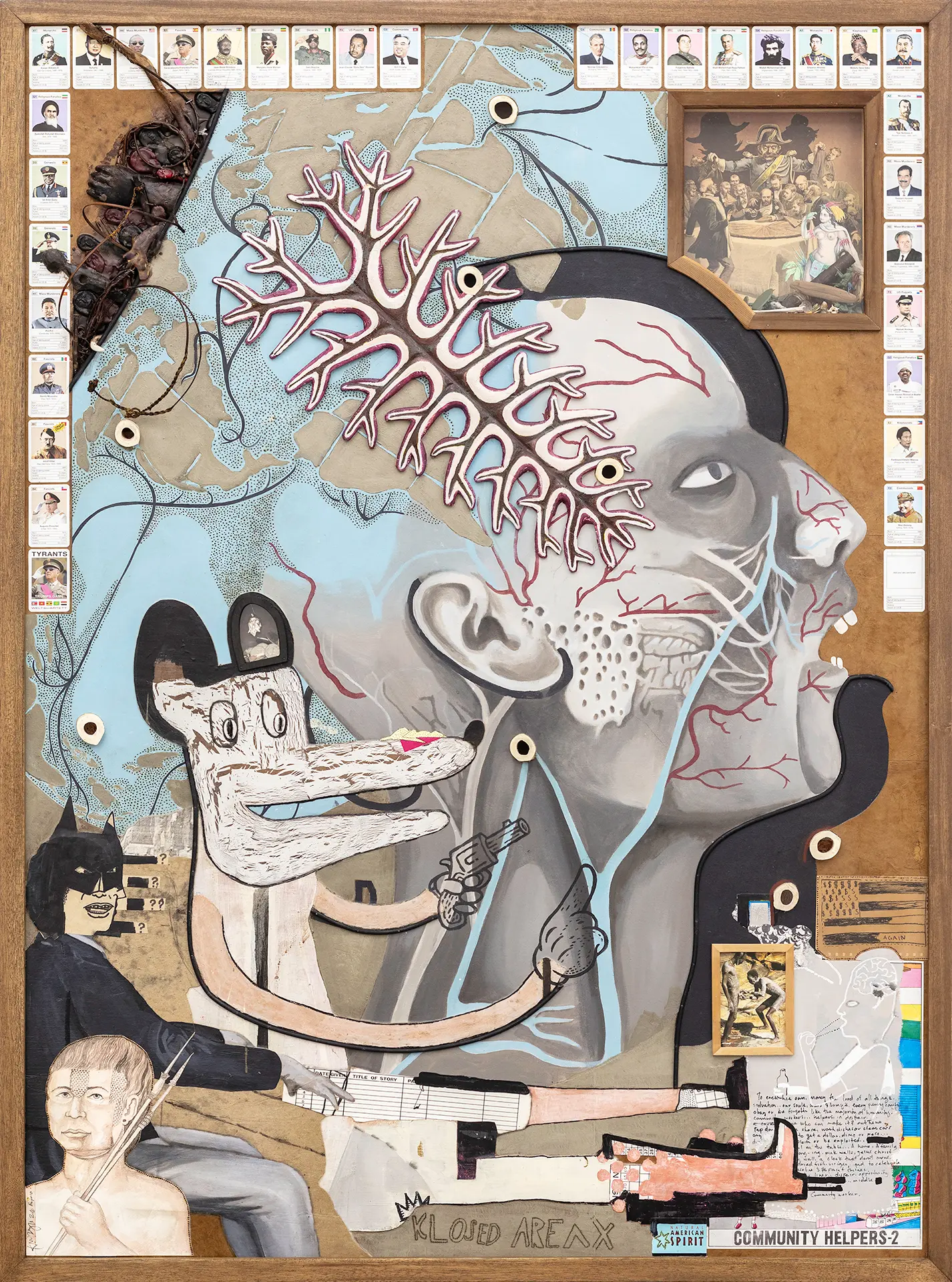
The exhibition’s title gestures toward a society where abundance is staged as spectacle while the laborers beneath it endure scarcity, dispossession, and exhaustion. Large-scale assemblage paintings serve as feverish storyboards to a film about empire, desire, and extraction, combining visual motifs of colonialism, consumerism, religion, and commodity culture into dense visual narratives.
Conveyor belts overflowing with bananas sit beneath watchful soldiers. Tropical resort imagery bleeds into plantation landscapes. Anatomical diagrams merge with devotional iconography, agricultural charts, and export branding. Across the works, sacred objects and commercial imagery are pressed tightly together, exposing the uneasy relationship between tradition and commodification.
A Visual Language Of Fragments And Found Objects
De Guia’s assemblage works incorporate inset sculptural elements, antiques, found objects, and sourced trinkets. Ifugao rice gods, medical charts, religious prints, decorative torpedo bombs, and fragments of propaganda are layered into compositions that are equal parts playful and unsettling. His process is described as a perpetual excavation: cutting, repainting, distorting, and rearranging fragments of shared visual culture until hidden fractures within narratives of progress and development reveal themselves.
Throughout the exhibition, humor and horror coexist. Cartoonish imagery appears beside references to dictatorship and militarization. A bomb becomes a disco ball, a cowboy wanders through surreal landscapes, the works oscillating between parody and pain, reflecting the overwhelming realities of lands shaped by colonization, extraction, and political violence.
How The Cordilleras Shaped Kawayan De Guia’s Artistic Practice
Born and based in Baguio City, de Guia’s practice is deeply informed by the layered histories of the Cordilleras, a region shaped by indigenous traditions, colonial occupation, and cultural resistance. Raised in a community where ritual, filmmaking, activism, and ancestral knowledge coexisted, the artist approaches art not as a static object but as a living interface between memory, spirituality, and present-day realities. Despite the haunting imagery present in his work, de Guia’s practice remains anchored in resilience and community.
The exhibition also functions as a homage to spirituality, collective memory, and survival—honoring communities that continue to gather, organize, worship, and imagine futures amid instability.
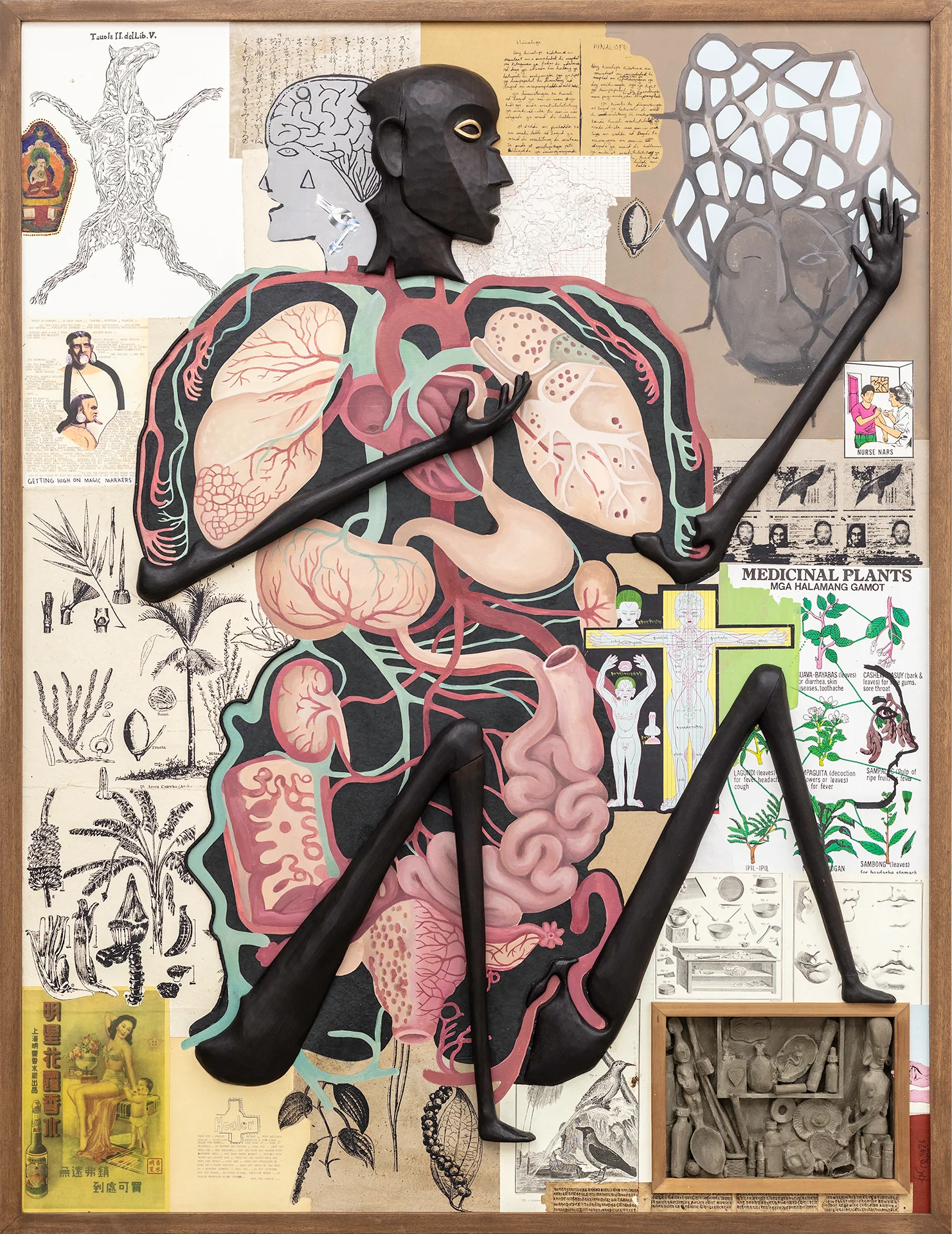
“Excavations from the land of not so plenty” is now running at Silverlens New York and will remain on view until June 27, 2026.
Photos courtesy of Silverlens
Frequently Asked Questions
The exhibition explores themes of colonialism, consumerism, spirituality, and resource extraction through layered assemblage paintings and sculptural works by Kawayan de Guia.
The exhibition is on view at Silverlens New York from May 14 to June 27, 2026, with an opening reception on May 14 from 6:00 PM to 8:00 PM.
De Guia incorporates found objects, antiques, religious imagery, medical charts, propaganda materials, Ifugao rice gods, and sculptural elements into his large-scale assemblage paintings.
Kawayan de Guia is a Filipino contemporary artist whose first U.S. solo exhibition, Excavations from the land of not so plenty, is on view at Silverlens New York until June 27, 2026. The show examines colonialism, commodity culture, and Filipino resistance through large-scale assemblage paintings.
The exhibition addresses the tension between staged abundance and structural scarcity in post-colonial societies. De Guia’s assemblage paintings combine plantation imagery, devotional iconography, agricultural charts, and export branding to expose the overlapping histories of empire, extraction, consumerism, and dispossession in the Filipino experience.